By:
Dr. Yogesh Kumar
Additional Professor
AIIMS Patna
Introduction to Nerve and
Muscle
At the end of the session
you should be able to:-
1. Name the parts of a neuron and their
functions.
2. Name the various types of glia and their
functions.
3. Classify the nerve fibres and tell its
functions.
4. Classify the different types of muscles.
Neuron
 Basic structural & functional unit of the
nervous system.
 Neuron is used to describe the nerve cell and
it’s processes, the dendrite and the axon.
 5μm to 120μm in diameter.
 100 billion neurons in the human nervous
system.
Glial Cells
 Glial cells (or glia) are CNS connective tissue
 Microglia are scavenger cells that resemble tissue
macrophages and remove debris resulting from
injury, infection, and disease .
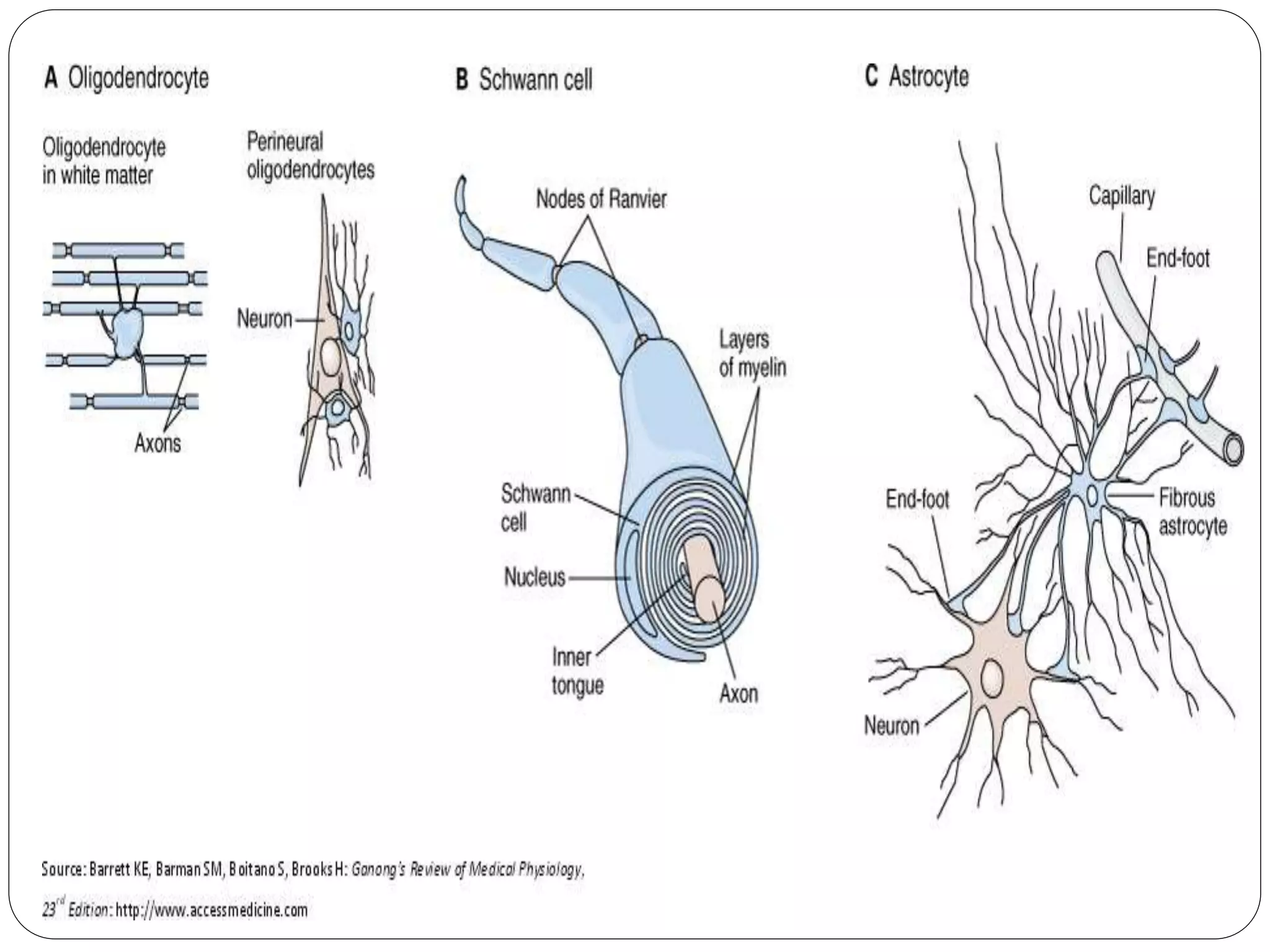
 There are three types of Macroglia:
1. Oligodendrocytes,
2. Schwann cells,
3. Astrocytes
1. Fibrous astrocytes.
2. Protoplasmic astrocytes.
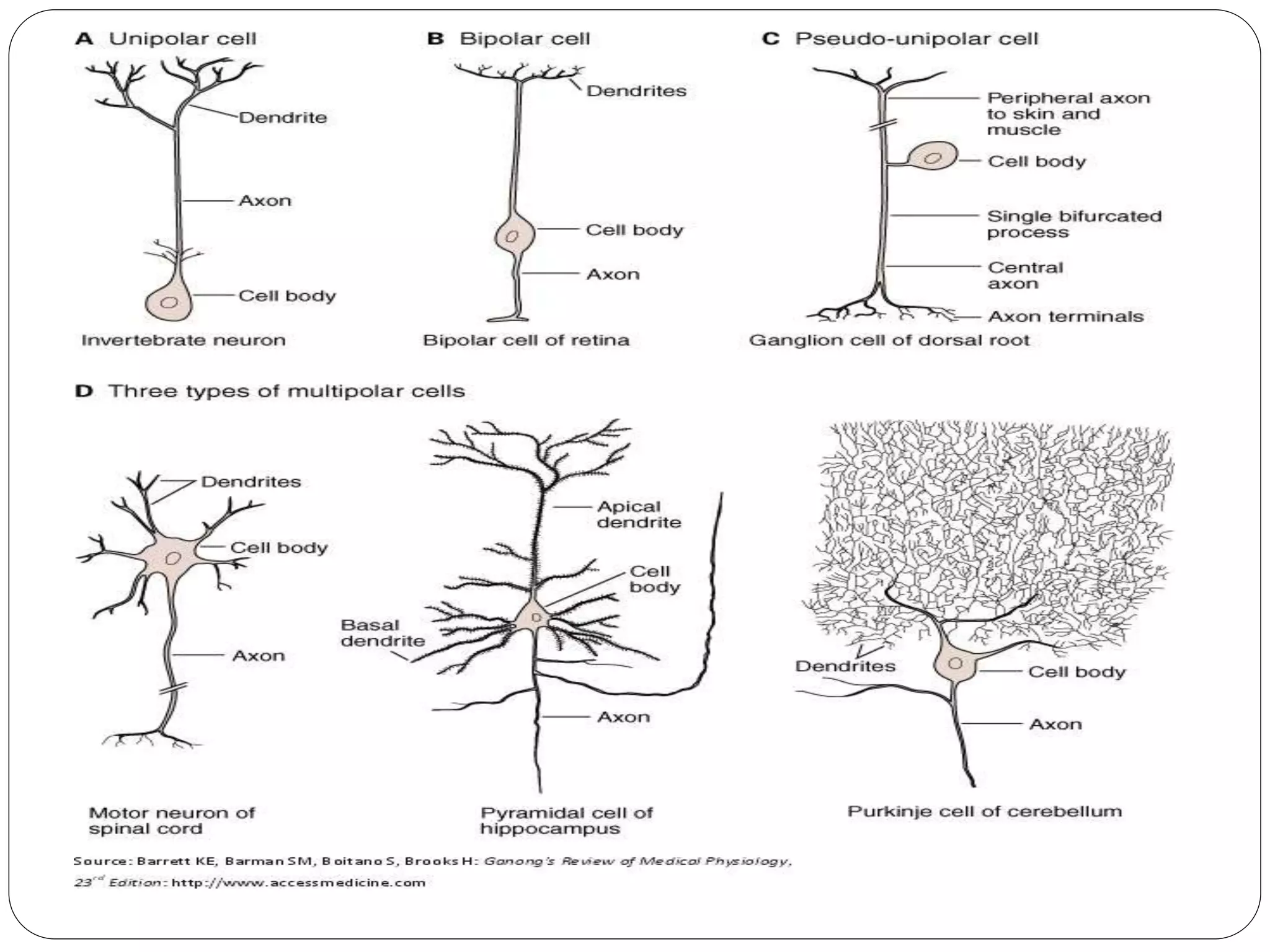
Structure of Neuron
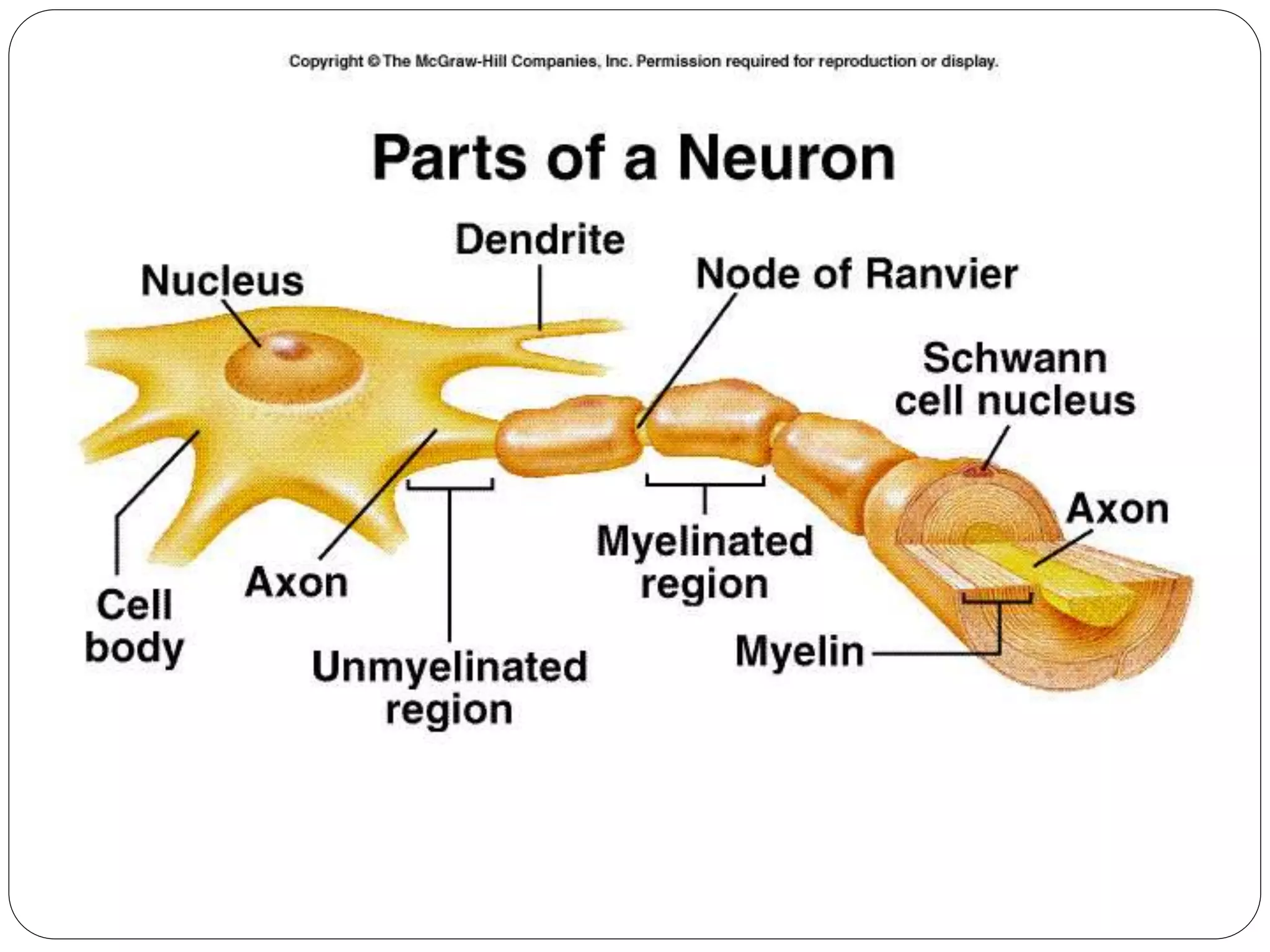
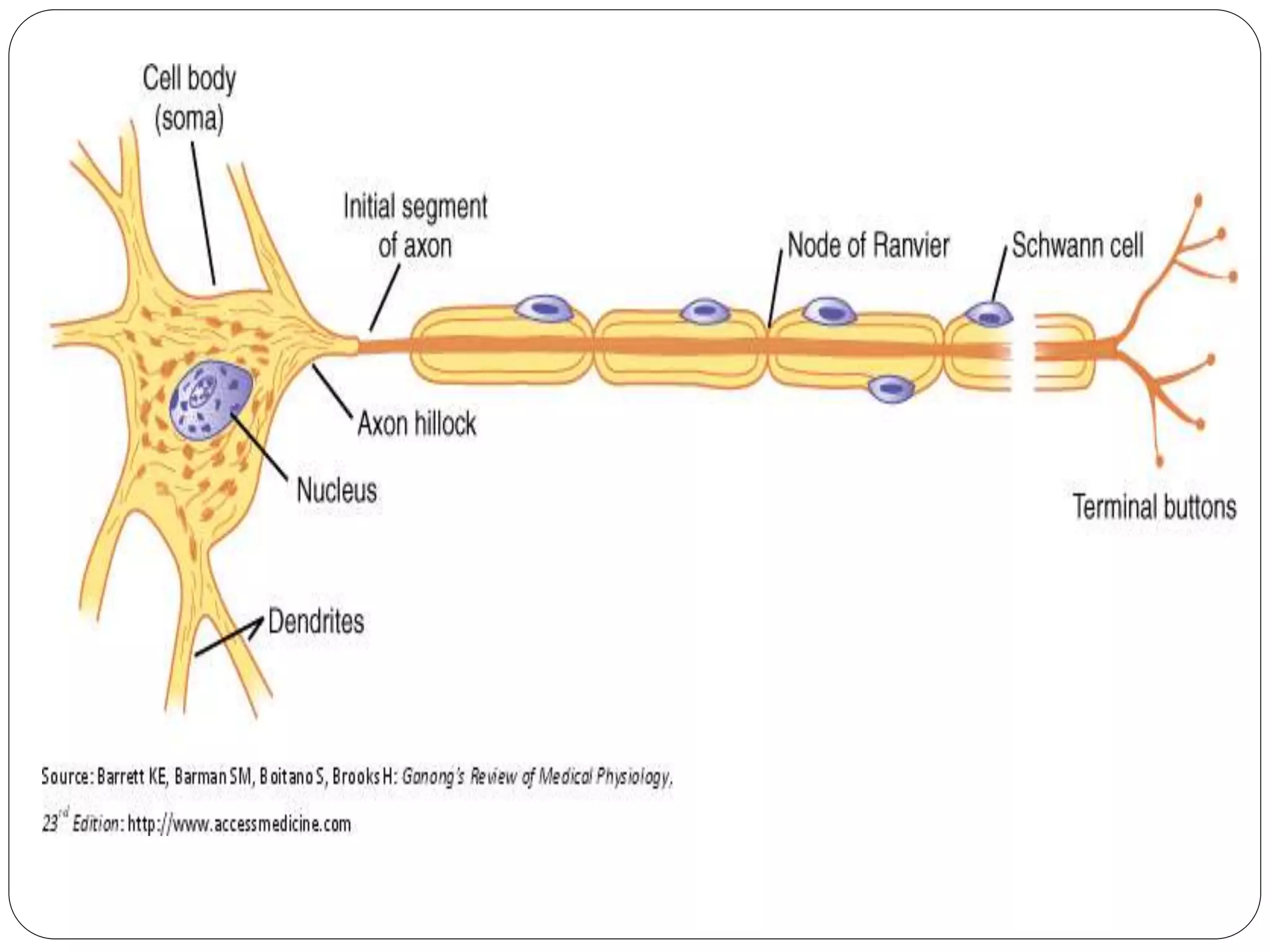
 Three main parts of a neuron :
1. Dendrite
2. Body
3. Axon
Dendrite
 Outward extensions from the cell body.
 Five to seven in number.
 Aroborize extensively.
 Have small knobby projections called
dendritic spines especially in cerebral &
cerebellar cortex.
Neuronal Body
 Also called soma.
 It contain nucleus, nissl granules & cell organelles
except centriole so the neuron can’t divide.
 Cell body synthesize proteins which are
transported to the axonal ending by axoplasmic
flow.
 Cell body maintains the functional & anatomical
integrity of the axon.
 Wallerian degeneration: If axon is cut, the part
distal to the cut degenerates.
Axon
 Long fibrous structure.
 Originates from axonal hillock.
 First portion is called initial segment.
 Terminal end divides to form synaptic knobs /
terminal buttons / axonal telodendria.
 Synaptic knobs contain vesicles which stores
neurotransmitter.
Types of axons
1. Myelinated – surrounded by myelin sheath.
2. Unmyelinated – myelin sheath absent.
Myelin
 Produced by schwann cells outside the CNS &
oligodendrocytes in CNS.
 Myelin sheath is multiple layers of cell membrane of
schwann cell / oligodendrocyts containing protein-
lipid complex sphingomyelin.
 Myelin sheath is absent at the initial portion of axon,
at the ending & node of ranvier.
 Function:
 Electrical insulation of axon.
 To increase the velocity of impulse transmission.
Nerve
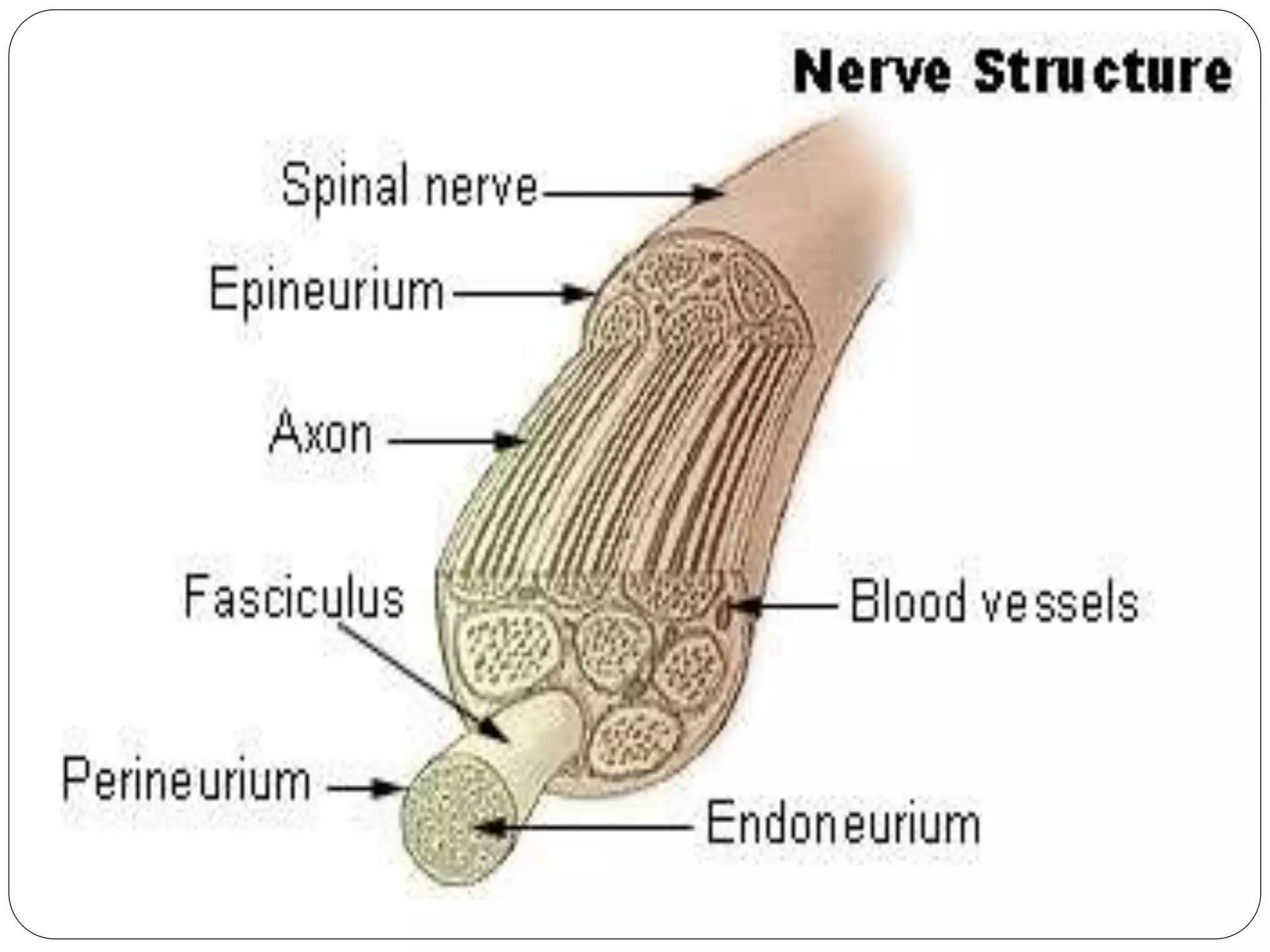
 An enclosed, cable-like bundle of peripheral axons.
 Provides a common pathway for the electrochemical
nerve impulses carried by individual nerve fiber.
 Found only in the peripheral nervous system.
 covered externally by epineurium.
 Underlying this is a layer of flat cells, the
perineurium.
 Surrounding each fibre is the endoneurium.
 Endoneurium consists of an inner sleeve of glycocalyx
and an outer meshwork of collagen fibers.
 Within the endoneurium, the individual nerve
fibers are surrounded by a low protein liquid
called endoneurial fluid.
 The endoneurium prevents certain molecules
from crossing from the blood into the endoneurial
fluid.
 Applied physiology:
During the development of nerve edema from
nerve irritation or injury, the amount of
endoneurial fluid may increase at the site of
irritation.
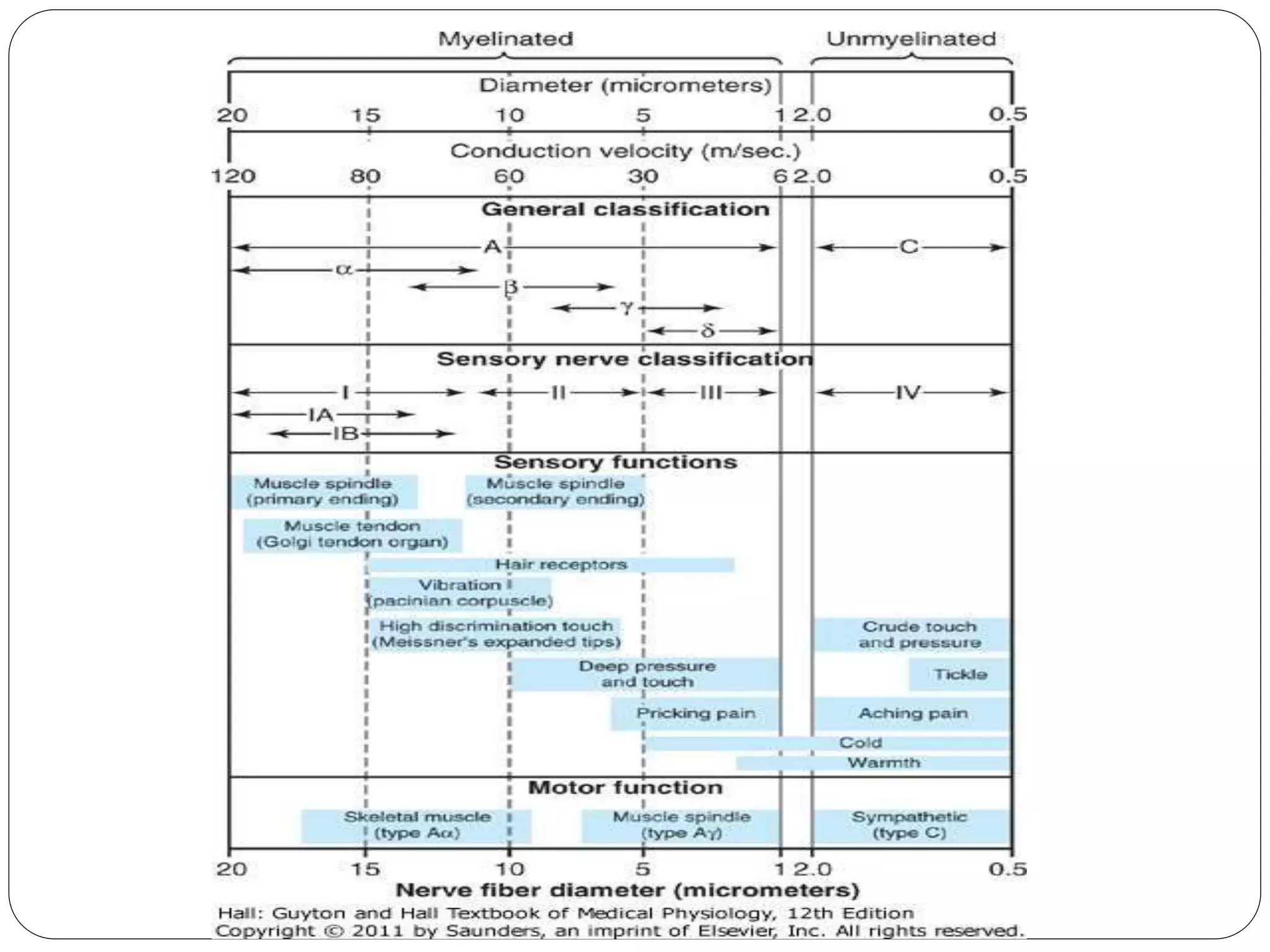
Classification of Nerve Fibers
 Three classifications:
1. Erlanger & Gasser Classification
2. Numerical Classification
3. Physio-clinical classification
Erlanger & Gasser
Classification
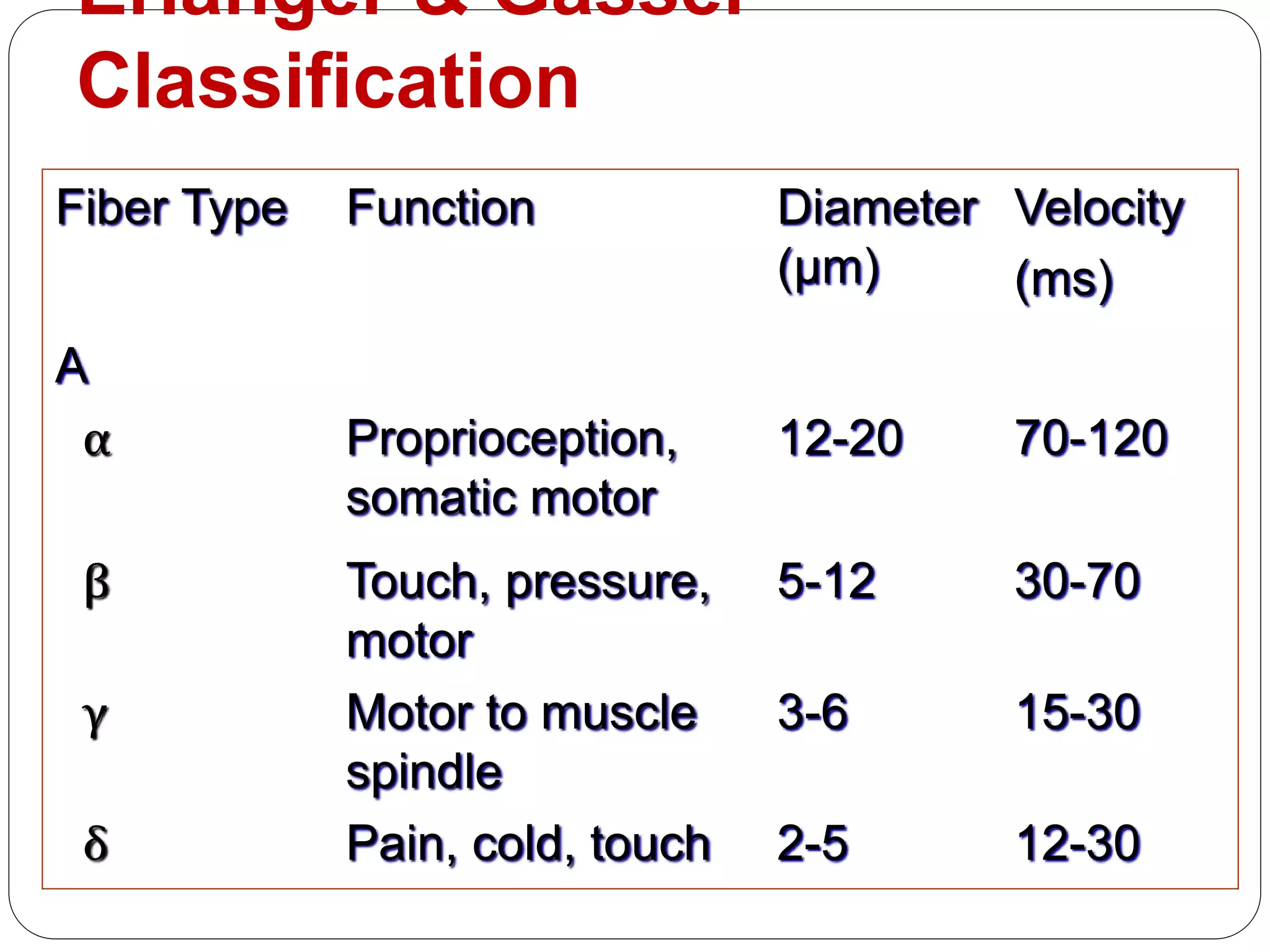
Fiber Type Function Diameter
(µm)
Velocity
(ms)
A
α Proprioception,
somatic motor
12-20 70-120
β Touch, pressure,
motor
5-12 30-70
γ Motor to muscle
spindle
3-6 15-30
δ Pain, cold, touch 2-5 12-30
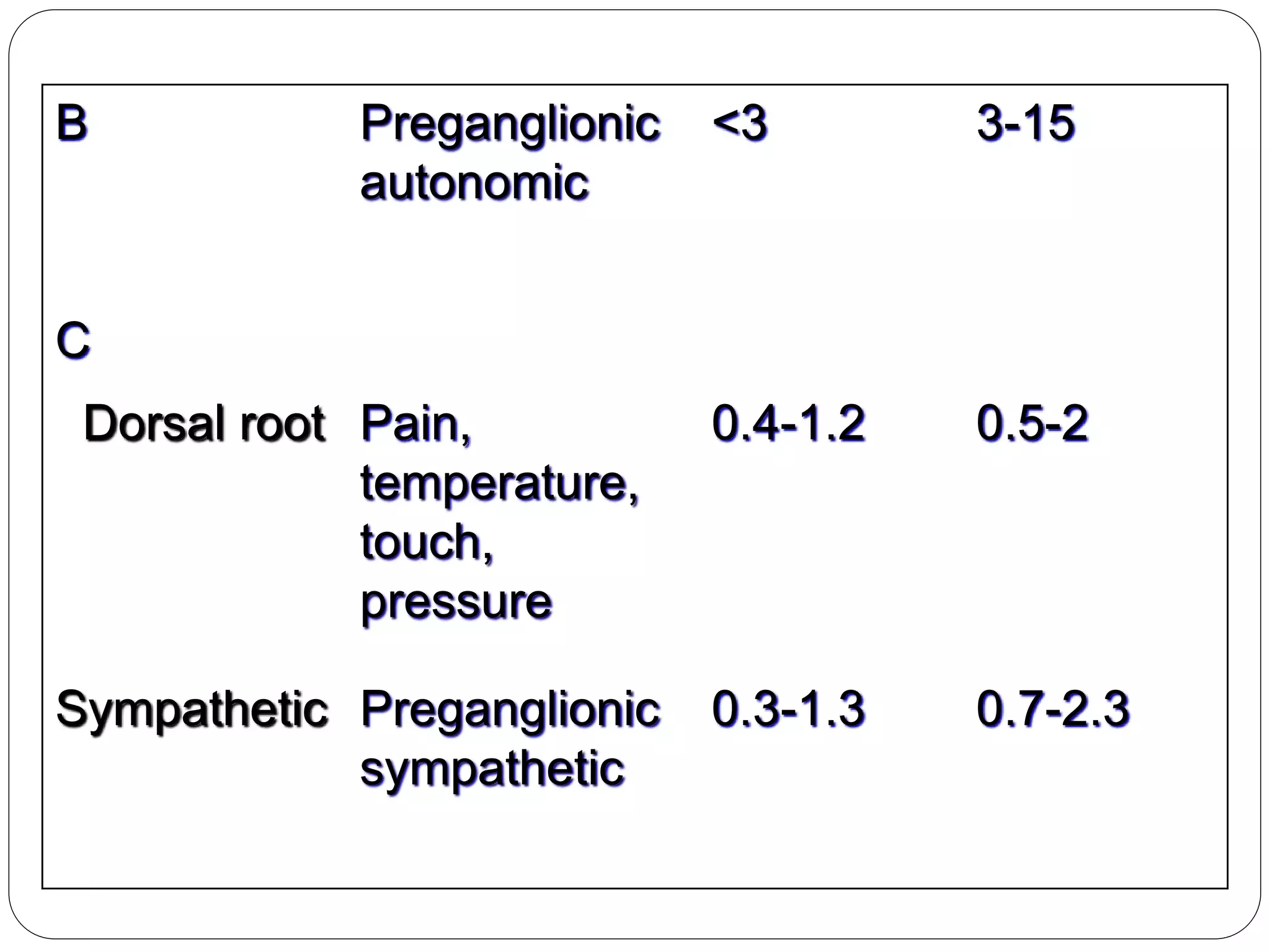
B Preganglionic
autonomic
<3 3-15
C
Dorsal root Pain,
temperature,
touch,
pressure
0.4-1.2 0.5-2
Sympathetic Preganglionic
sympathetic
0.3-1.3 0.7-2.3
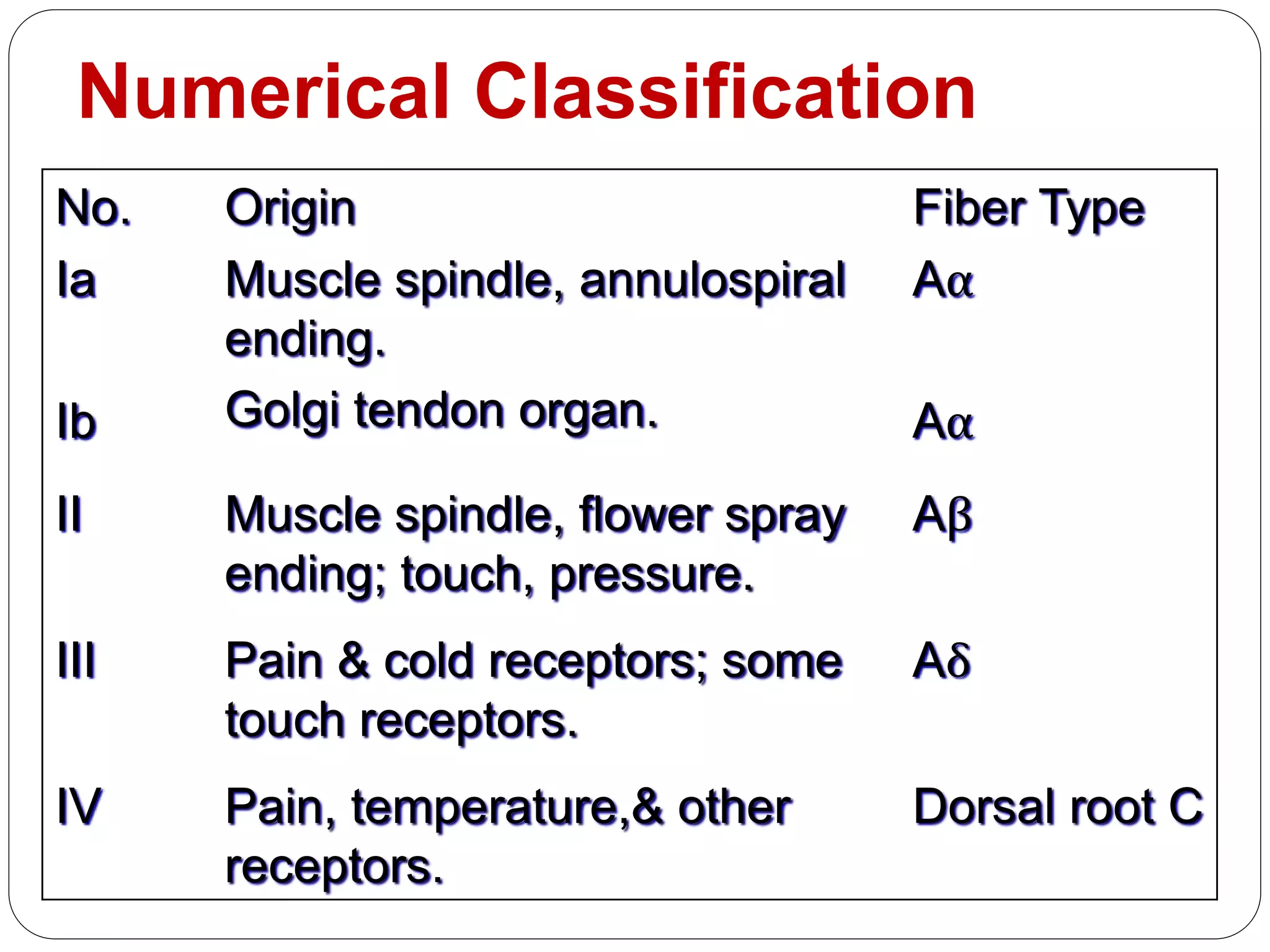
Numerical Classification
No. Origin Fiber Type
Ia
Ib
Muscle spindle, annulospiral
ending.
Golgi tendon organ.
Aα
Aα
II Muscle spindle, flower spray
ending; touch, pressure.
Aβ
III Pain & cold receptors; some
touch receptors.
Aδ
IV Pain, temperature,& other
receptors.
Dorsal root C
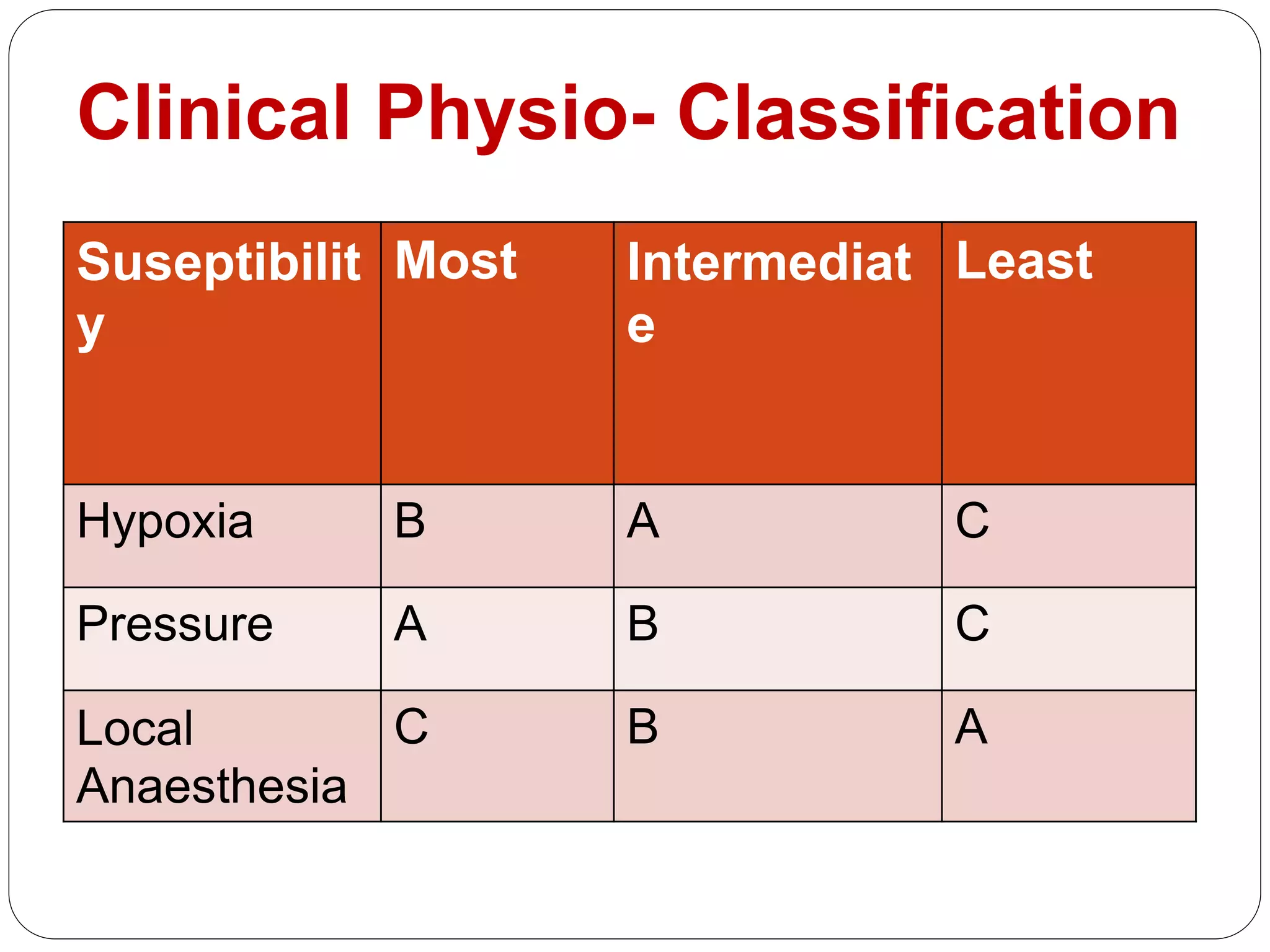
Clinical Physio- Classification
Suseptibilit
y
Most Intermediat
e
Least
Hypoxia B A C
Pressure A B C
Local
Anaesthesia
C B A
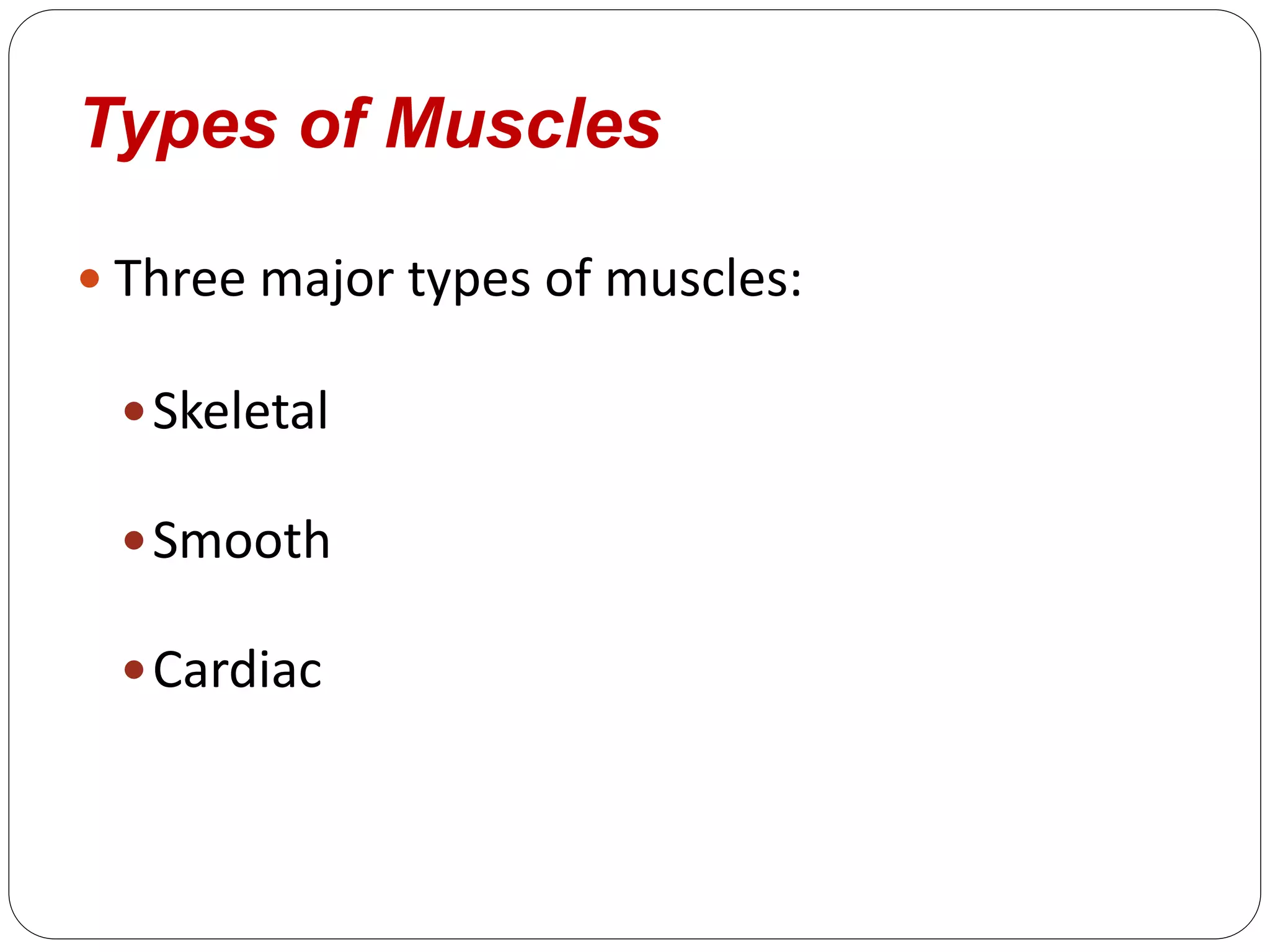
Types of Muscles
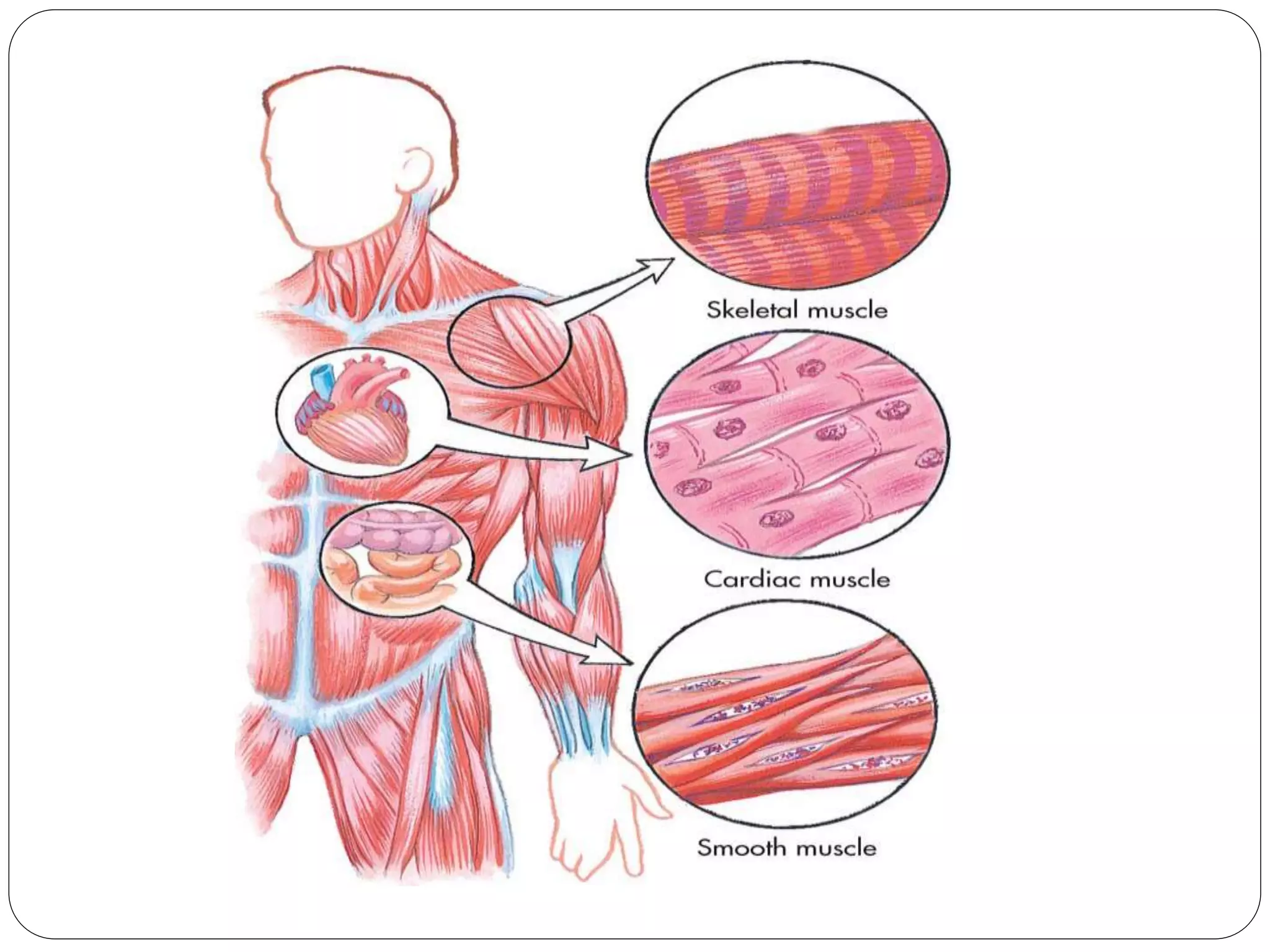
 Three major types of muscles:
Skeletal
Smooth
Cardiac
Skeletal Muscle
 Voluntary muscles, attach to bones of skeletal
system
 Fibers appear striped, so sometimes called
striated muscle
 Allow external movement and are developed
through exercise
 Smooth muscles
Involuntary muscles, called smooth
because don’t have striped appearance of
skeletal muscles
Found within certain organs, blood
vessels, and airways, and allow for
internal movement
Change in blood vessel diameter is one
example
 Cardiac muscle
Completely involuntary; specialized
muscle with striated appearance
Found solely in heart
Contraction of muscle causes heart beat,
internal movement
Answer the following:-
1. What are Glial cells? Innumerate its type.
2. Classification of nerve fibers.

1 Introduction to Nerve and Muscle.ppt

  • 1.
    By: Dr. Yogesh Kumar AdditionalProfessor AIIMS Patna Introduction to Nerve and Muscle
  • 2.
    At the endof the session you should be able to:- 1. Name the parts of a neuron and their functions. 2. Name the various types of glia and their functions. 3. Classify the nerve fibres and tell its functions. 4. Classify the different types of muscles.
  • 3.
    Neuron  Basic structural& functional unit of the nervous system.  Neuron is used to describe the nerve cell and it’s processes, the dendrite and the axon.  5μm to 120μm in diameter.  100 billion neurons in the human nervous system.
  • 4.
    Glial Cells  Glialcells (or glia) are CNS connective tissue  Microglia are scavenger cells that resemble tissue macrophages and remove debris resulting from injury, infection, and disease .  There are three types of Macroglia: 1. Oligodendrocytes, 2. Schwann cells, 3. Astrocytes 1. Fibrous astrocytes. 2. Protoplasmic astrocytes.
  • 6.
    Structure of Neuron Three main parts of a neuron : 1. Dendrite 2. Body 3. Axon
  • 8.
    Dendrite  Outward extensionsfrom the cell body.  Five to seven in number.  Aroborize extensively.  Have small knobby projections called dendritic spines especially in cerebral & cerebellar cortex.
  • 9.
    Neuronal Body  Alsocalled soma.  It contain nucleus, nissl granules & cell organelles except centriole so the neuron can’t divide.  Cell body synthesize proteins which are transported to the axonal ending by axoplasmic flow.  Cell body maintains the functional & anatomical integrity of the axon.  Wallerian degeneration: If axon is cut, the part distal to the cut degenerates.
  • 10.
    Axon  Long fibrousstructure.  Originates from axonal hillock.  First portion is called initial segment.  Terminal end divides to form synaptic knobs / terminal buttons / axonal telodendria.  Synaptic knobs contain vesicles which stores neurotransmitter.
  • 11.
    Types of axons 1.Myelinated – surrounded by myelin sheath. 2. Unmyelinated – myelin sheath absent.
  • 13.
    Myelin  Produced byschwann cells outside the CNS & oligodendrocytes in CNS.  Myelin sheath is multiple layers of cell membrane of schwann cell / oligodendrocyts containing protein- lipid complex sphingomyelin.  Myelin sheath is absent at the initial portion of axon, at the ending & node of ranvier.  Function:  Electrical insulation of axon.  To increase the velocity of impulse transmission.
  • 15.
    Nerve  An enclosed,cable-like bundle of peripheral axons.  Provides a common pathway for the electrochemical nerve impulses carried by individual nerve fiber.  Found only in the peripheral nervous system.  covered externally by epineurium.  Underlying this is a layer of flat cells, the perineurium.  Surrounding each fibre is the endoneurium.  Endoneurium consists of an inner sleeve of glycocalyx and an outer meshwork of collagen fibers.
  • 16.
     Within theendoneurium, the individual nerve fibers are surrounded by a low protein liquid called endoneurial fluid.  The endoneurium prevents certain molecules from crossing from the blood into the endoneurial fluid.  Applied physiology: During the development of nerve edema from nerve irritation or injury, the amount of endoneurial fluid may increase at the site of irritation.
  • 19.
    Classification of NerveFibers  Three classifications: 1. Erlanger & Gasser Classification 2. Numerical Classification 3. Physio-clinical classification
  • 20.
    Erlanger & Gasser Classification FiberType Function Diameter (µm) Velocity (ms) A α Proprioception, somatic motor 12-20 70-120 β Touch, pressure, motor 5-12 30-70 γ Motor to muscle spindle 3-6 15-30 δ Pain, cold, touch 2-5 12-30
  • 21.
    B Preganglionic autonomic <3 3-15 C Dorsalroot Pain, temperature, touch, pressure 0.4-1.2 0.5-2 Sympathetic Preganglionic sympathetic 0.3-1.3 0.7-2.3
  • 22.
    Numerical Classification No. OriginFiber Type Ia Ib Muscle spindle, annulospiral ending. Golgi tendon organ. Aα Aα II Muscle spindle, flower spray ending; touch, pressure. Aβ III Pain & cold receptors; some touch receptors. Aδ IV Pain, temperature,& other receptors. Dorsal root C
  • 23.
    Clinical Physio- Classification Suseptibilit y MostIntermediat e Least Hypoxia B A C Pressure A B C Local Anaesthesia C B A
  • 24.
    Types of Muscles Three major types of muscles: Skeletal Smooth Cardiac
  • 25.
    Skeletal Muscle  Voluntarymuscles, attach to bones of skeletal system  Fibers appear striped, so sometimes called striated muscle  Allow external movement and are developed through exercise
  • 26.
     Smooth muscles Involuntarymuscles, called smooth because don’t have striped appearance of skeletal muscles Found within certain organs, blood vessels, and airways, and allow for internal movement Change in blood vessel diameter is one example
  • 27.
     Cardiac muscle Completelyinvoluntary; specialized muscle with striated appearance Found solely in heart Contraction of muscle causes heart beat, internal movement
  • 29.
    Answer the following:- 1.What are Glial cells? Innumerate its type. 2. Classification of nerve fibers.