CNS- 2
Dr Vishwajit Deshmukh
MBBS, M.D.
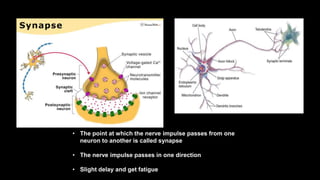
• The point at which the nerve impulse passes from one
neuron to another is called synapse
• The nerve impulse passes in one direction
• Slight delay and get fatigue
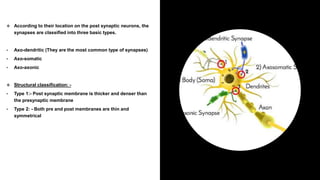
 According to their location on the post synaptic neurons, the
synapses are classified into three basic types.
• Axo-dendritic (They are the most common type of synapses)
• Axo-somatic
• Axo-axonic
 Structural classification: -
• Type 1:- Post synaptic membrane is thicker and denser than
the presynaptic membrane
• Type 2: - Both pre and post membranes are thin and
symmetrical
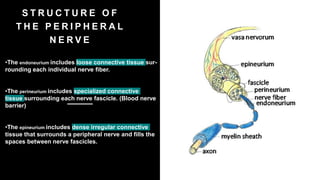
S T R U C T U R E O F
T H E P E R I P H E R A L
N E R V E
•The endoneurium includes loose connective tissue sur-
rounding each individual nerve fiber.
•The perineurium includes specialized connective
tissue surrounding each nerve fascicle. (Blood nerve
barrier)
•The epineurium includes dense irregular connective
tissue that surrounds a peripheral nerve and fills the
spaces between nerve fascicles.
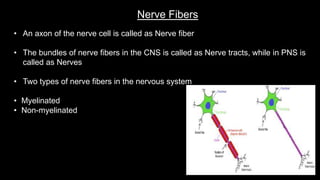
Nerve Fibers
• An axon of the nerve cell is called as Nerve fiber
• The bundles of nerve fibers in the CNS is called as Nerve tracts, while in PNS is
called as Nerves
• Two types of nerve fibers in the nervous system
• Myelinated
• Non-myelinated
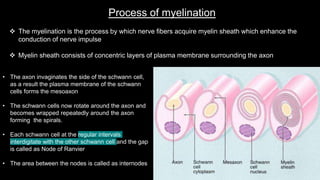
Process of myelination
 The myelination is the process by which nerve fibers acquire myelin sheath which enhance the
conduction of nerve impulse
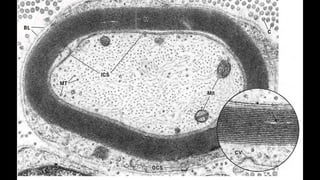
 Myelin sheath consists of concentric layers of plasma membrane surrounding the axon
• The axon invaginates the side of the schwann cell,
as a result the plasma membrane of the schwann
cells forms the mesoaxon
• The schwann cells now rotate around the axon and
becomes wrapped repeatedly around the axon
forming the spirals.
• Each schwann cell at the regular intervals
interdigitate with the other schwann cell and the gap
is called as Node of Ranvier
• The area between the nodes is called as internodes
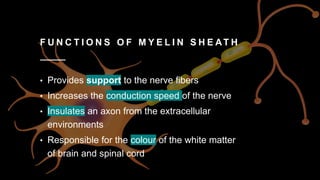
F U N C T I O N S O F M Y E L I N S H E AT H
• Provides support to the nerve fibers
• Increases the conduction speed of the nerve
• Insulates an axon from the extracellular
environments
• Responsible for the colour of the white matter
of brain and spinal cord
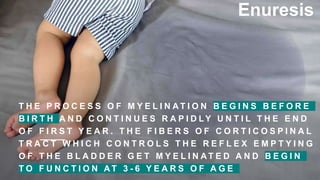
T H E P R O C E S S O F M Y E L I N A T I O N B E G I N S B E F O R E
B I R T H A N D C O N T I N U E S R A P I D LY U N T I L T H E E N D
O F F I R S T Y E A R . T H E F I B E R S O F C O R T I C O S P I N A L
T R A C T W H I C H C O N T R O L S T H E R E F L E X E M P T Y I N G
O F T H E B L A D D E R G E T M Y E L I N A T E D A N D B E G I N
T O F U N C T I O N A T 3 - 6 Y E A R S O F A G E
Enuresis
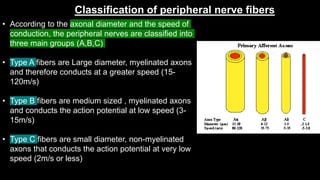
Classification of peripheral nerve fibers
• According to the axonal diameter and the speed of
conduction, the peripheral nerves are classified into
three main groups (A,B,C)
• Type A fibers are Large diameter, myelinated axons
and therefore conducts at a greater speed (15-
120m/s)
• Type B fibers are medium sized , myelinated axons
and conducts the action potential at low speed (3-
15m/s)
• Type C fibers are small diameter, non-myelinated
axons that conducts the action potential at very low
speed (2m/s or less)
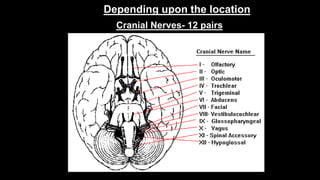
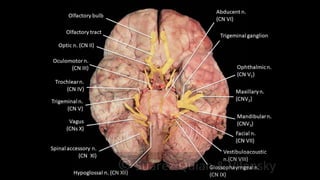
Depending upon the location
Cranial Nerves- 12 pairs
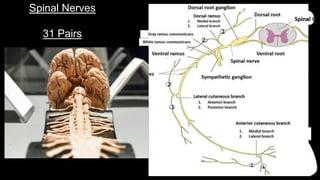
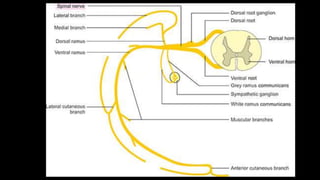
Spinal Nerves
31 Pairs
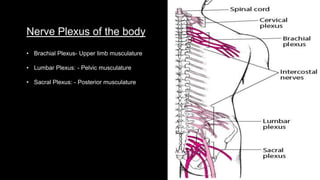
Nerve Plexus of the body
• Brachial Plexus- Upper limb musculature
• Lumbar Plexus: - Pelvic musculature
• Sacral Plexus: - Posterior musculature
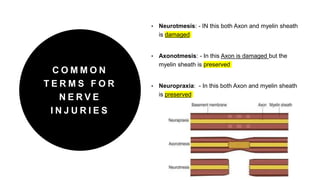
C O M M O N
T E R M S F O R
N E R V E
I N J U R I E S
• Neurotmesis: - IN this both Axon and myelin sheath
is damaged
• Axonotmesis: - In this Axon is damaged but the
myelin sheath is preserved
• Neuropraxia: - In this both Axon and myelin sheath
is preserved
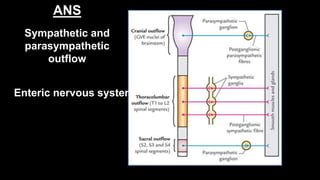
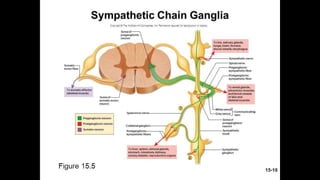
Sympathetic and
parasympathetic
outflow
ANS
Enteric nervous system
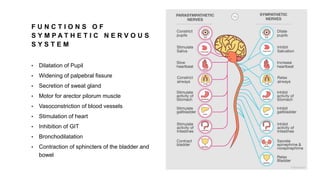
F U N C T I O N S O F
S Y M P A T H E T I C N E R V O U S
S Y S T E M
• Dilatation of Pupil
• Widening of palpebral fissure
• Secretion of sweat gland
• Motor for arector pilorum muscle
• Vasoconstriction of blood vessels
• Stimulation of heart
• Inhibition of GIT
• Bronchodilatation
• Contraction of sphincters of the bladder and
bowel
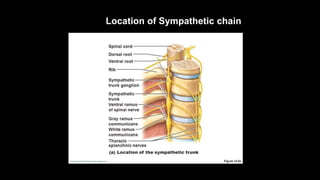
Location of Sympathetic chain
Autonomic nervous system
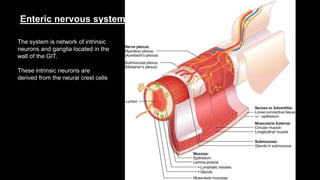
Enteric nervous system
The system is network of intrinsic
neurons and ganglia located in the
wall of the GIT.
These intrinsic neurons are
derived from the neural crest cells
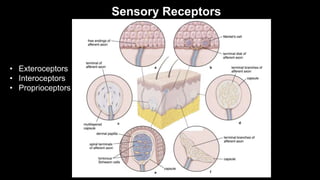
Sensory Receptors
• Exteroceptors
• Interoceptors
• Proprioceptors
T H A N K S

CNS-2.pptx

  • 1.
    CNS- 2 Dr VishwajitDeshmukh MBBS, M.D.
  • 2.
    • The pointat which the nerve impulse passes from one neuron to another is called synapse • The nerve impulse passes in one direction • Slight delay and get fatigue
  • 3.
     According totheir location on the post synaptic neurons, the synapses are classified into three basic types. • Axo-dendritic (They are the most common type of synapses) • Axo-somatic • Axo-axonic  Structural classification: - • Type 1:- Post synaptic membrane is thicker and denser than the presynaptic membrane • Type 2: - Both pre and post membranes are thin and symmetrical
  • 5.
    S T RU C T U R E O F T H E P E R I P H E R A L N E R V E •The endoneurium includes loose connective tissue sur- rounding each individual nerve fiber. •The perineurium includes specialized connective tissue surrounding each nerve fascicle. (Blood nerve barrier) •The epineurium includes dense irregular connective tissue that surrounds a peripheral nerve and fills the spaces between nerve fascicles.
  • 6.
    Nerve Fibers • Anaxon of the nerve cell is called as Nerve fiber • The bundles of nerve fibers in the CNS is called as Nerve tracts, while in PNS is called as Nerves • Two types of nerve fibers in the nervous system • Myelinated • Non-myelinated
  • 7.
    Process of myelination The myelination is the process by which nerve fibers acquire myelin sheath which enhance the conduction of nerve impulse  Myelin sheath consists of concentric layers of plasma membrane surrounding the axon • The axon invaginates the side of the schwann cell, as a result the plasma membrane of the schwann cells forms the mesoaxon • The schwann cells now rotate around the axon and becomes wrapped repeatedly around the axon forming the spirals. • Each schwann cell at the regular intervals interdigitate with the other schwann cell and the gap is called as Node of Ranvier • The area between the nodes is called as internodes
  • 9.
    F U NC T I O N S O F M Y E L I N S H E AT H • Provides support to the nerve fibers • Increases the conduction speed of the nerve • Insulates an axon from the extracellular environments • Responsible for the colour of the white matter of brain and spinal cord
  • 10.
    T H EP R O C E S S O F M Y E L I N A T I O N B E G I N S B E F O R E B I R T H A N D C O N T I N U E S R A P I D LY U N T I L T H E E N D O F F I R S T Y E A R . T H E F I B E R S O F C O R T I C O S P I N A L T R A C T W H I C H C O N T R O L S T H E R E F L E X E M P T Y I N G O F T H E B L A D D E R G E T M Y E L I N A T E D A N D B E G I N T O F U N C T I O N A T 3 - 6 Y E A R S O F A G E Enuresis
  • 11.
    Classification of peripheralnerve fibers • According to the axonal diameter and the speed of conduction, the peripheral nerves are classified into three main groups (A,B,C) • Type A fibers are Large diameter, myelinated axons and therefore conducts at a greater speed (15- 120m/s) • Type B fibers are medium sized , myelinated axons and conducts the action potential at low speed (3- 15m/s) • Type C fibers are small diameter, non-myelinated axons that conducts the action potential at very low speed (2m/s or less)
  • 12.
    Depending upon thelocation Cranial Nerves- 12 pairs
  • 14.
  • 16.
    Nerve Plexus ofthe body • Brachial Plexus- Upper limb musculature • Lumbar Plexus: - Pelvic musculature • Sacral Plexus: - Posterior musculature
  • 17.
    C O MM O N T E R M S F O R N E R V E I N J U R I E S • Neurotmesis: - IN this both Axon and myelin sheath is damaged • Axonotmesis: - In this Axon is damaged but the myelin sheath is preserved • Neuropraxia: - In this both Axon and myelin sheath is preserved
  • 18.
  • 19.
    F U NC T I O N S O F S Y M P A T H E T I C N E R V O U S S Y S T E M • Dilatation of Pupil • Widening of palpebral fissure • Secretion of sweat gland • Motor for arector pilorum muscle • Vasoconstriction of blood vessels • Stimulation of heart • Inhibition of GIT • Bronchodilatation • Contraction of sphincters of the bladder and bowel
  • 20.
  • 21.
  • 22.
    Enteric nervous system Thesystem is network of intrinsic neurons and ganglia located in the wall of the GIT. These intrinsic neurons are derived from the neural crest cells
  • 23.
    Sensory Receptors • Exteroceptors •Interoceptors • Proprioceptors
  • 24.
    T H AN K S