REGULATION OF ACID BASE BALANCE WITH
REFERENCE TO THE KIDNEY
METABOLIC ACIDOSIS & ALKALOSIS
IMPORTANCE OF ACIDIFICATION OF URINE
FATIMA WAHID MANGRIO
fatimawahid1234@gmail.com
ACID BASE BALANCE WITH
REFERENCE TO THE KIDNEY
• Metabolic reactions produce acids.
• The only way to eliminate this huge acid load is
to excrete H+ in the urine.
• Given the magnitude of these contributions to
acid–base balance, it’s not surprising that renal
failure can quickly cause death.
• Cells in both the proximal convoluted tubules
(PCT) and the collecting ducts of the kidneys
secrete hydrogen ions into the tubular fluid.
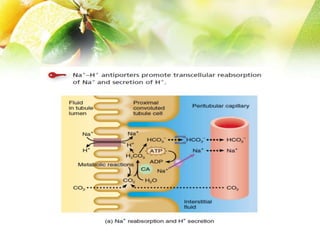
• In the PCT, Na+ – H+ antiporters secrete H+ as
they reabsorb Na+.
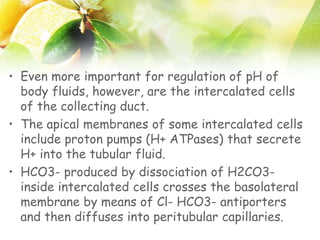
• Even more important for regulation of pH of
body fluids, however, are the intercalated cells
of the collecting duct.
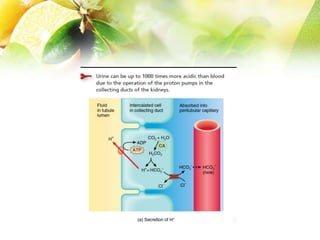
• The apical membranes of some intercalated cells
include proton pumps (H+ ATPases) that secrete
H+ into the tubular fluid.
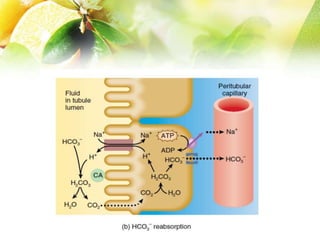
• HCO3- produced by dissociation of H2CO3-
inside intercalated cells crosses the basolateral
membrane by means of Cl- HCO3- antiporters
and then diffuses into peritubular capillaries.
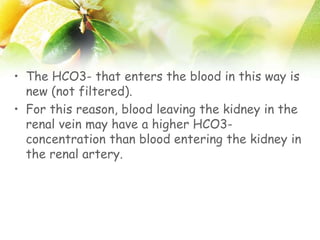
• The HCO3- that enters the blood in this way is
new (not filtered).
• For this reason, blood leaving the kidney in the
renal vein may have a higher HCO3-
concentration than blood entering the kidney in
the renal artery.
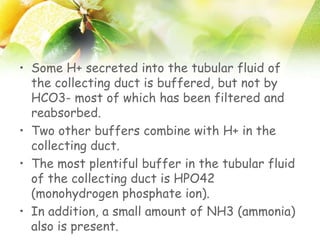
• Some H+ secreted into the tubular fluid of
the collecting duct is buffered, but not by
HCO3- most of which has been filtered and
reabsorbed.
• Two other buffers combine with H+ in the
collecting duct.
• The most plentiful buffer in the tubular fluid
of the collecting duct is HPO42
(monohydrogen phosphate ion).
• In addition, a small amount of NH3 (ammonia)
also is present.
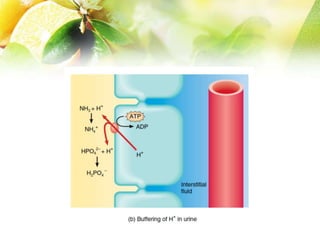
• H+ combines with HPO42- to form H2PO4
(dihydrogen phosphate ion) and with NH3
to form NH4+ (ammonium ion).
• Because these ions cannot diffuse back
into tubule cells, they are excreted in the
urine.
Metabolic Acidosis
• In metabolic acidosis, the systemic arterial
blood HCO3- level drops below 22 mEq/liter.
• Such a decline in this important buffer causes
the blood pH to decrease. Three situations may
lower the blood level of HCO3-
• (1) actual loss of HCO3- such as may occur with
severe diarrhea or renal dysfunction;
• (2) accumulation of an acid other than carbonic
acid, as may occur in ketosis
• (3) failure of the kidneys to excrete H+ from
metabolism of dietary proteins.
• If the problem is not too severe,
hyperventilation can help bring blood pH into
the normal range (respiratory compensation).
• Treatment of metabolic acidosis consists of
administering intravenous solutions of sodium
bicarbonate and correcting the cause of the
acidosis.
Metabolic Alkalosis
• In metabolic alkalosis, the systemic arterial
blood HCO3- concentration is above 26
mEq/liter. A nonrespiratory loss of acid or
excessive intake of alkaline drugs causes the
blood pH to increase above 7.45.
• Excessive vomiting of gastric contents, which
results in a substantial loss of hydrochloric
acid, is probably the most frequent cause of
metabolic alkalosis.
• Other causes include gastric suctioning, use of
certain diuretics, endocrine disorders,
excessive intake of alkaline drugs (antacids),
and severe dehydration.
• Respiratory compensation through
hypoventilation may bring blood pH into the
normal range.
• Treatment of metabolic alkalosis consists
ofgiving fluid solutions to correct Cl-, K+, and
other electrolyte deficiencies plus correcting
the cause of alkalosis.
Importance Of Acidification Of Urine
• To promote antibacterial action of
methenamine in urine:
• Below pH 5.5, methenamine releases
formaldehyde, which is antibacterial.
Acidifying agents are given with
methenamine to lower urinary pH.
•
• Prevention of calcium phosphate renal
stones: An alkaline pH favors the
crystallization of calcium- and phosphate-
containing stones hence acidification of
urine will prevent the formation of these
stones.
Acid Base Balance.pptx

Acid Base Balance.pptx

  • 1.
    REGULATION OF ACIDBASE BALANCE WITH REFERENCE TO THE KIDNEY METABOLIC ACIDOSIS & ALKALOSIS IMPORTANCE OF ACIDIFICATION OF URINE FATIMA WAHID MANGRIO fatimawahid1234@gmail.com
  • 2.
    ACID BASE BALANCEWITH REFERENCE TO THE KIDNEY • Metabolic reactions produce acids. • The only way to eliminate this huge acid load is to excrete H+ in the urine. • Given the magnitude of these contributions to acid–base balance, it’s not surprising that renal failure can quickly cause death.
  • 3.
    • Cells inboth the proximal convoluted tubules (PCT) and the collecting ducts of the kidneys secrete hydrogen ions into the tubular fluid. • In the PCT, Na+ – H+ antiporters secrete H+ as they reabsorb Na+.
  • 6.
    • Even moreimportant for regulation of pH of body fluids, however, are the intercalated cells of the collecting duct. • The apical membranes of some intercalated cells include proton pumps (H+ ATPases) that secrete H+ into the tubular fluid. • HCO3- produced by dissociation of H2CO3- inside intercalated cells crosses the basolateral membrane by means of Cl- HCO3- antiporters and then diffuses into peritubular capillaries.
  • 7.
    • The HCO3-that enters the blood in this way is new (not filtered). • For this reason, blood leaving the kidney in the renal vein may have a higher HCO3- concentration than blood entering the kidney in the renal artery.
  • 9.
    • Some H+secreted into the tubular fluid of the collecting duct is buffered, but not by HCO3- most of which has been filtered and reabsorbed. • Two other buffers combine with H+ in the collecting duct. • The most plentiful buffer in the tubular fluid of the collecting duct is HPO42 (monohydrogen phosphate ion). • In addition, a small amount of NH3 (ammonia) also is present.
  • 10.
    • H+ combineswith HPO42- to form H2PO4 (dihydrogen phosphate ion) and with NH3 to form NH4+ (ammonium ion). • Because these ions cannot diffuse back into tubule cells, they are excreted in the urine.
  • 12.
    Metabolic Acidosis • Inmetabolic acidosis, the systemic arterial blood HCO3- level drops below 22 mEq/liter. • Such a decline in this important buffer causes the blood pH to decrease. Three situations may lower the blood level of HCO3-
  • 13.
    • (1) actualloss of HCO3- such as may occur with severe diarrhea or renal dysfunction; • (2) accumulation of an acid other than carbonic acid, as may occur in ketosis • (3) failure of the kidneys to excrete H+ from metabolism of dietary proteins.
  • 14.
    • If theproblem is not too severe, hyperventilation can help bring blood pH into the normal range (respiratory compensation). • Treatment of metabolic acidosis consists of administering intravenous solutions of sodium bicarbonate and correcting the cause of the acidosis.
  • 15.
    Metabolic Alkalosis • Inmetabolic alkalosis, the systemic arterial blood HCO3- concentration is above 26 mEq/liter. A nonrespiratory loss of acid or excessive intake of alkaline drugs causes the blood pH to increase above 7.45. • Excessive vomiting of gastric contents, which results in a substantial loss of hydrochloric acid, is probably the most frequent cause of metabolic alkalosis.
  • 16.
    • Other causesinclude gastric suctioning, use of certain diuretics, endocrine disorders, excessive intake of alkaline drugs (antacids), and severe dehydration. • Respiratory compensation through hypoventilation may bring blood pH into the normal range. • Treatment of metabolic alkalosis consists ofgiving fluid solutions to correct Cl-, K+, and other electrolyte deficiencies plus correcting the cause of alkalosis.
  • 17.
    Importance Of AcidificationOf Urine • To promote antibacterial action of methenamine in urine: • Below pH 5.5, methenamine releases formaldehyde, which is antibacterial. Acidifying agents are given with methenamine to lower urinary pH. •
  • 18.
    • Prevention ofcalcium phosphate renal stones: An alkaline pH favors the crystallization of calcium- and phosphate- containing stones hence acidification of urine will prevent the formation of these stones.