LEARNING GOALS VIDEO : II
• TERRESTRIAL HABITAT
• ACCLIMATISATION
• AQUATIC HABITAT
• BIOTIC AND ABIOTIC
COMPONENTS
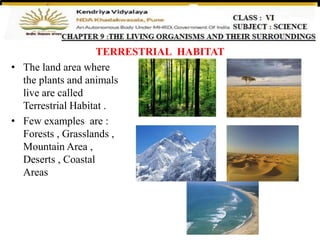
TERRESTRIAL HABITAT
• The land area where
the plants and animals
live are called
Terrestrial Habitat .
• Few examples are :
Forests , Grasslands ,
Mountain Area ,
Deserts , Coastal
Areas
ACCLIMATISATION
• There are some changes that can happen in an organism over a
short period of time to help them adjust in their surroundings .
These small changes that take place in the body of a single
organism over short periods, to overcome small problems due to
changes in the surroundings, are called Acclimatisation.
• These changes are different from the adaptations that take place
over thousands of years.
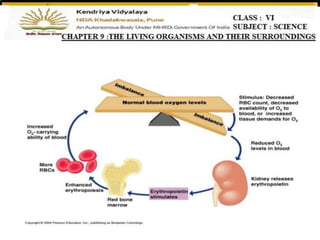
• E.g During acclimatization over a few days to weeks, the body produces
more red blood cells to counteract the lower oxygen saturation in blood in high
altitudes. Full adaptation to high altitude is achieved when the increase of red
blood cells reaches a plateau and stops.
AQUATIC HABITAT
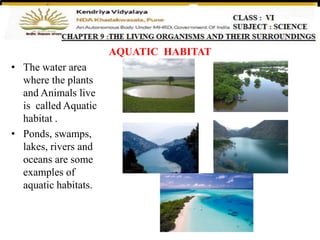
• The water area
where the plants
and Animals live
is called Aquatic
habitat .
• Ponds, swamps,
lakes, rivers and
oceans are some
examples of
aquatic habitats.
BIOTIC AND ABIOTIC COMPONENTS
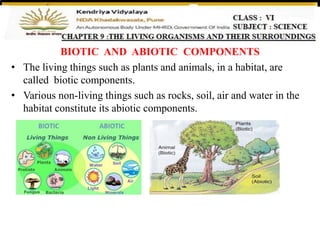
• The living things such as plants and animals, in a habitat, are
called biotic components.
• Various non-living things such as rocks, soil, air and water in the
habitat constitute its abiotic components.
SUMMARY
• TERRESTRIAL HABITAT
• AQUATIC HABITAT
• BIOTIC AND ABIOTIC
COMPONENTS

Class 6 ppt 2 living organisms

  • 1.
    LEARNING GOALS VIDEO: II • TERRESTRIAL HABITAT • ACCLIMATISATION • AQUATIC HABITAT • BIOTIC AND ABIOTIC COMPONENTS
  • 2.
    TERRESTRIAL HABITAT • Theland area where the plants and animals live are called Terrestrial Habitat . • Few examples are : Forests , Grasslands , Mountain Area , Deserts , Coastal Areas
  • 3.
    ACCLIMATISATION • There aresome changes that can happen in an organism over a short period of time to help them adjust in their surroundings . These small changes that take place in the body of a single organism over short periods, to overcome small problems due to changes in the surroundings, are called Acclimatisation. • These changes are different from the adaptations that take place over thousands of years. • E.g During acclimatization over a few days to weeks, the body produces more red blood cells to counteract the lower oxygen saturation in blood in high altitudes. Full adaptation to high altitude is achieved when the increase of red blood cells reaches a plateau and stops.
  • 5.
    AQUATIC HABITAT • Thewater area where the plants and Animals live is called Aquatic habitat . • Ponds, swamps, lakes, rivers and oceans are some examples of aquatic habitats.
  • 6.
    BIOTIC AND ABIOTICCOMPONENTS • The living things such as plants and animals, in a habitat, are called biotic components. • Various non-living things such as rocks, soil, air and water in the habitat constitute its abiotic components.
  • 7.
    SUMMARY • TERRESTRIAL HABITAT •AQUATIC HABITAT • BIOTIC AND ABIOTIC COMPONENTS