At the end of this chapter the pupil will be able to:
 Differentiate between sexual reproduction and asexual
reproduction
 Identify the parts of male reproductive system and female
reproductive
system
 Distinguish between internal fertilisation and external
fertilisation.
 Cite examples of viviparous animals and oviparous animals.
 Develop skill in drawing diagrams like reproductive system,
life cycle of frog, binary fission in amoeba etc.
 Observe and identify various stages in the development of frog
 Develop interest and enthusiasm in learning biology.
 Apply the gained knowledge in daily life and derive conclusion
from experiences.
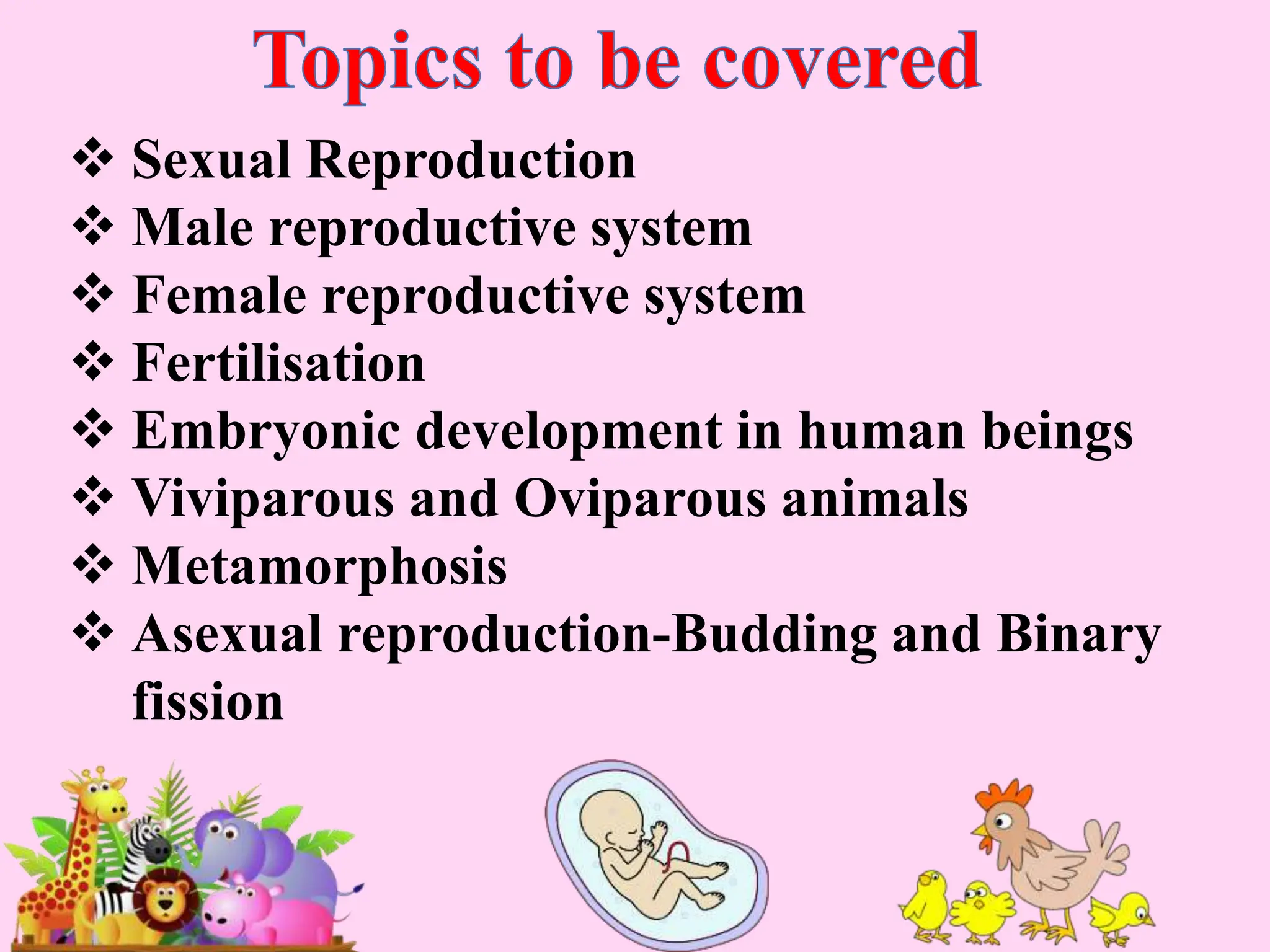
 Sexual Reproduction
 Male reproductive system
 Female reproductive system
 Fertilisation
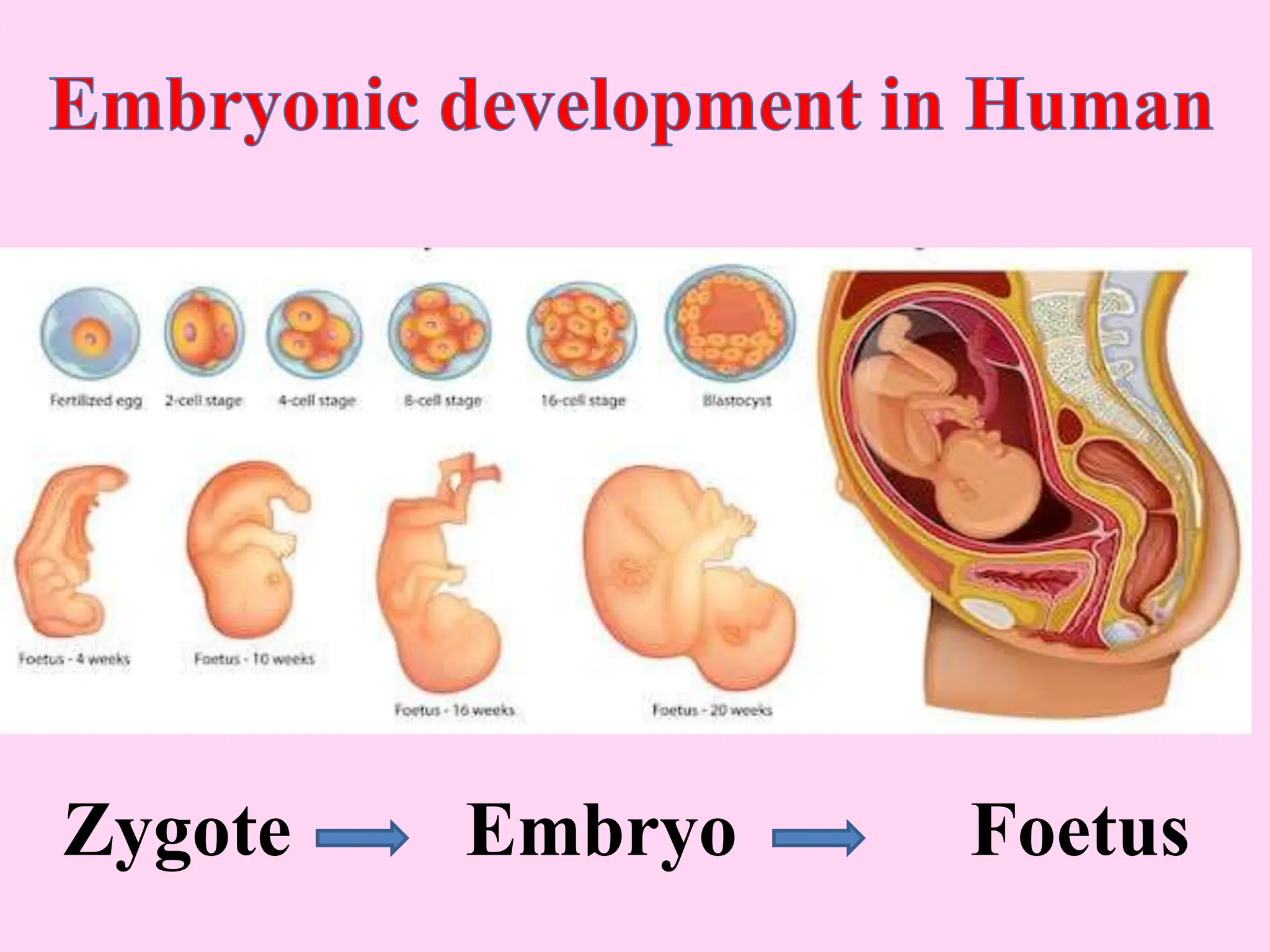
 Embryonic development in human beings
 Viviparous and Oviparous animals
 Metamorphosis
 Asexual reproduction-Budding and Binary
fission
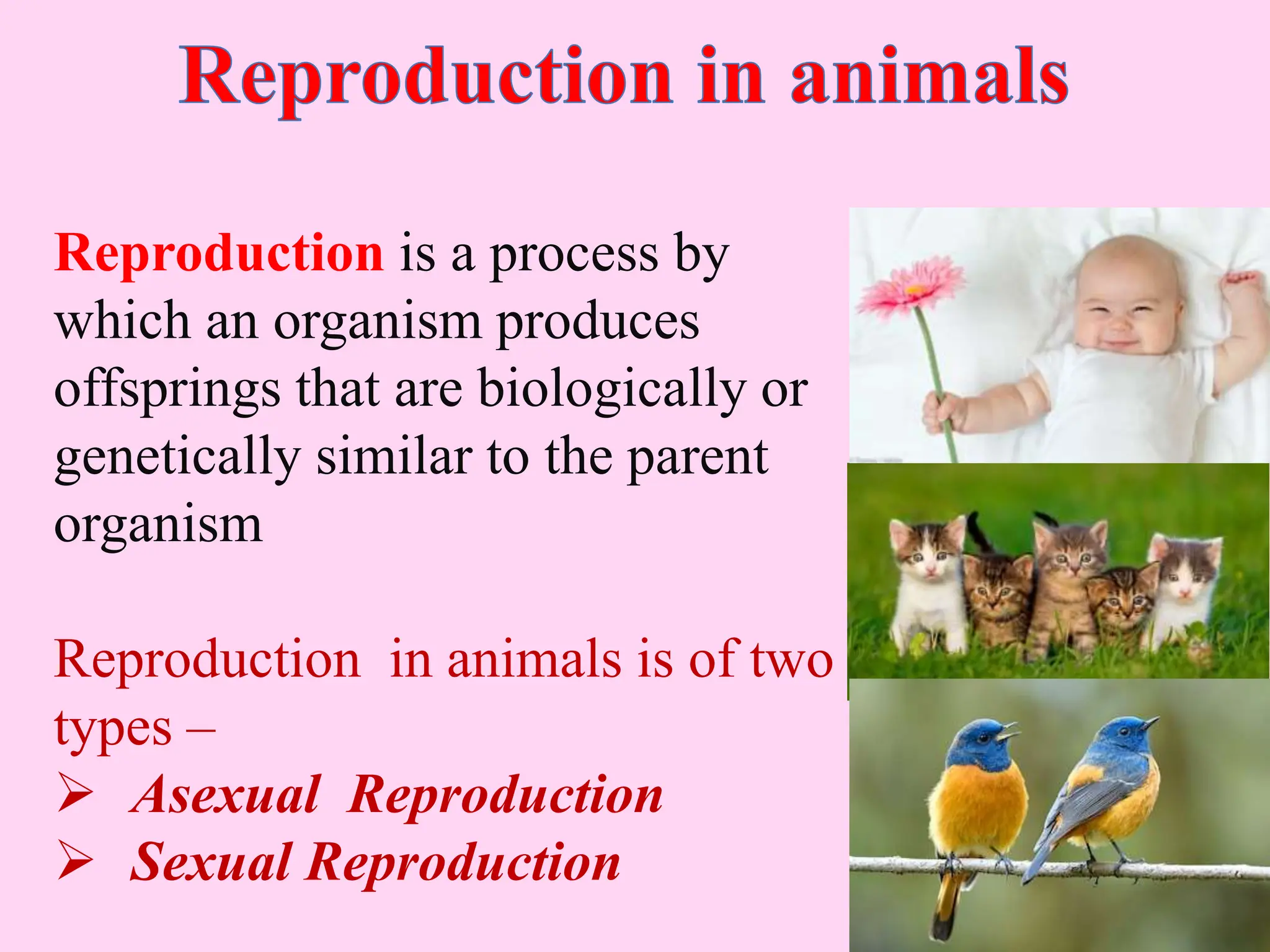
Reproduction is a process by
which an organism produces
offsprings that are biologically or
genetically similar to the parent
organism
Reproduction in animals is of two
types –
 Asexual Reproduction
 Sexual Reproduction
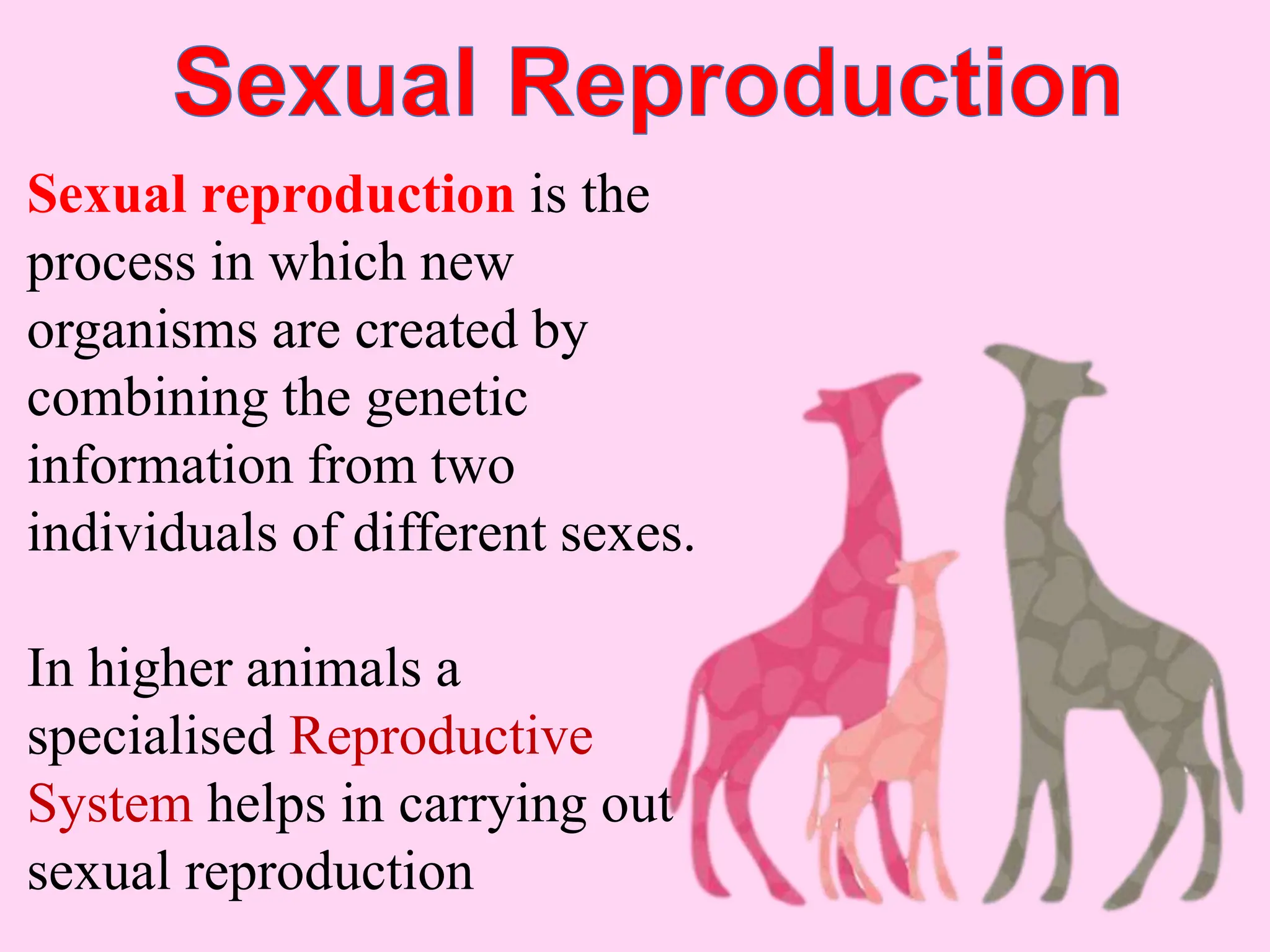
Sexual reproduction is the
process in which new
organisms are created by
combining the genetic
information from two
individuals of different sexes.
In higher animals a
specialised Reproductive
System helps in carrying out
sexual reproduction
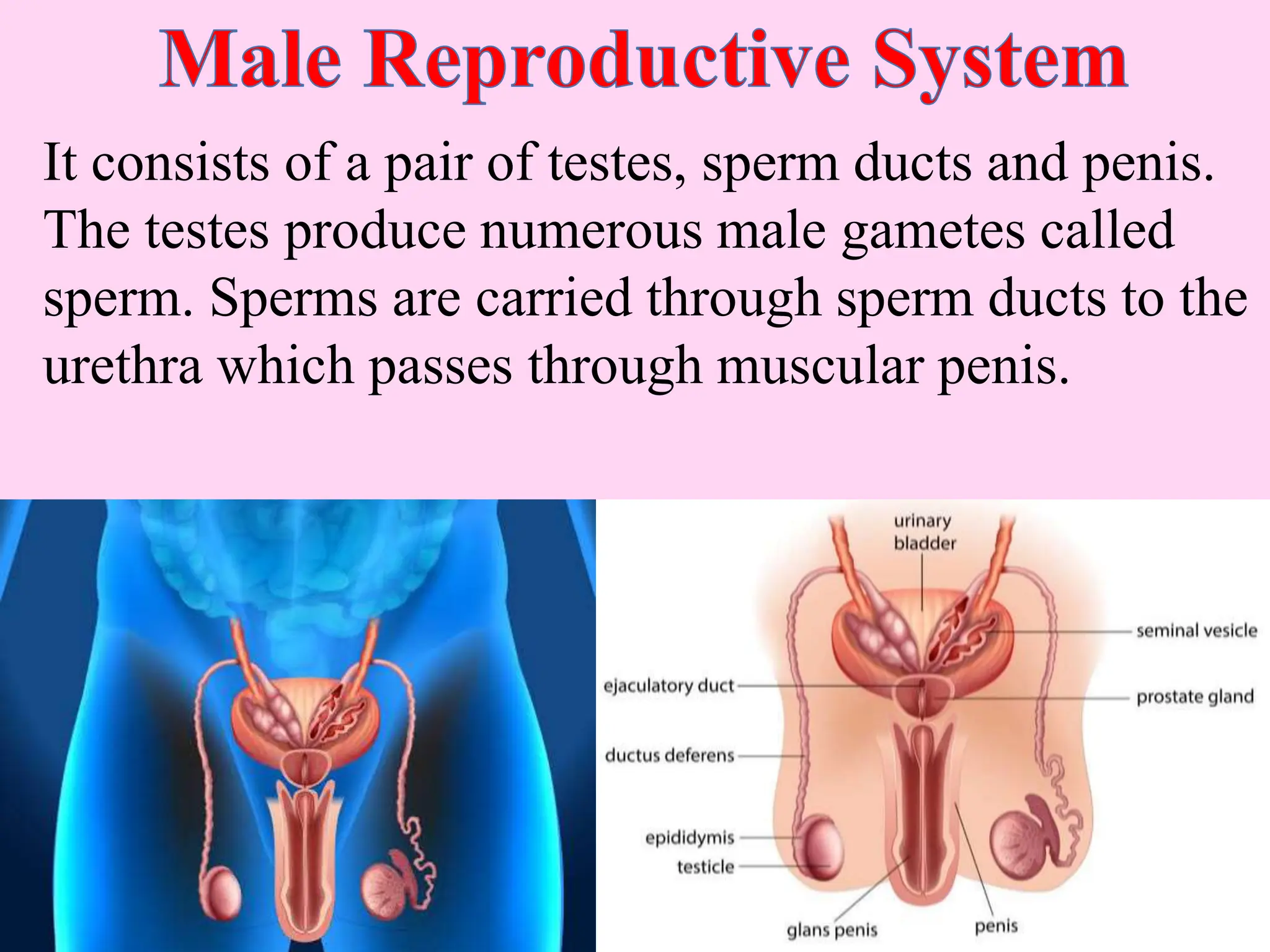
It consists of a pair of testes, sperm ducts and penis.
The testes produce numerous male gametes called
sperm. Sperms are carried through sperm ducts to the
urethra which passes through muscular penis.
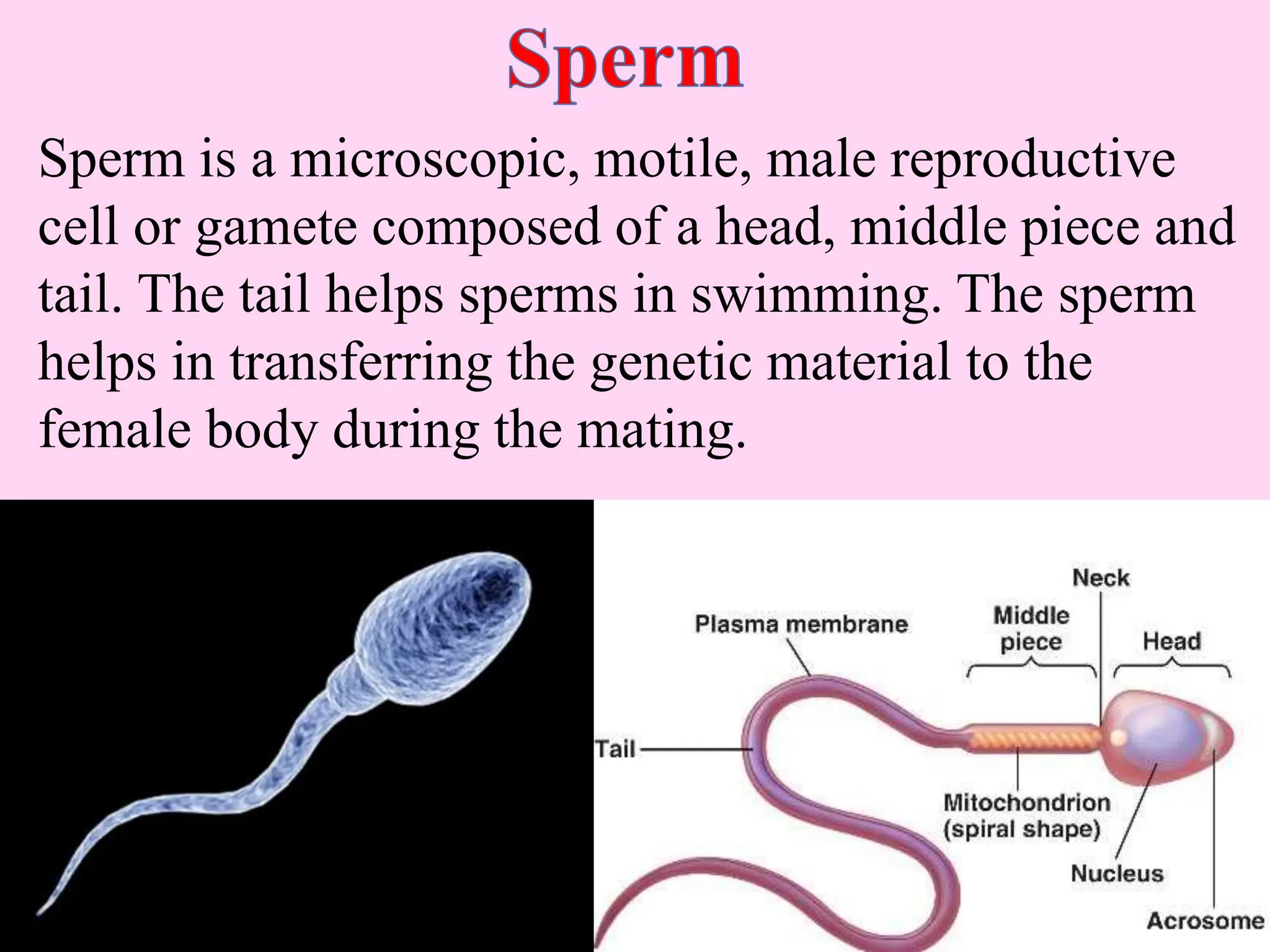
Sperm is a microscopic, motile, male reproductive
cell or gamete composed of a head, middle piece and
tail. The tail helps sperms in swimming. The sperm
helps in transferring the genetic material to the
female body during the mating.
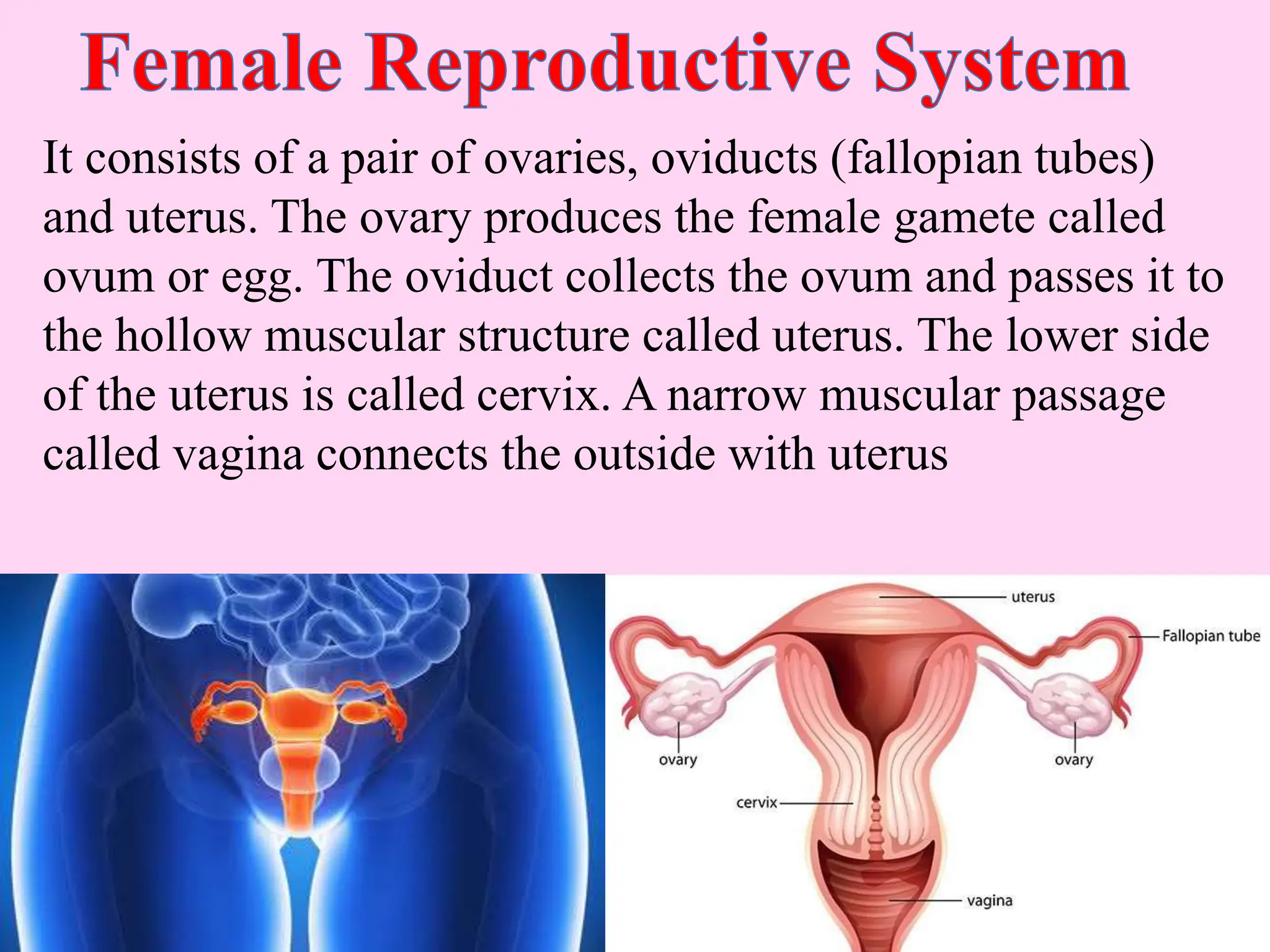
It consists of a pair of ovaries, oviducts (fallopian tubes)
and uterus. The ovary produces the female gamete called
ovum or egg. The oviduct collects the ovum and passes it to
the hollow muscular structure called uterus. The lower side
of the uterus is called cervix. A narrow muscular passage
called vagina connects the outside with uterus
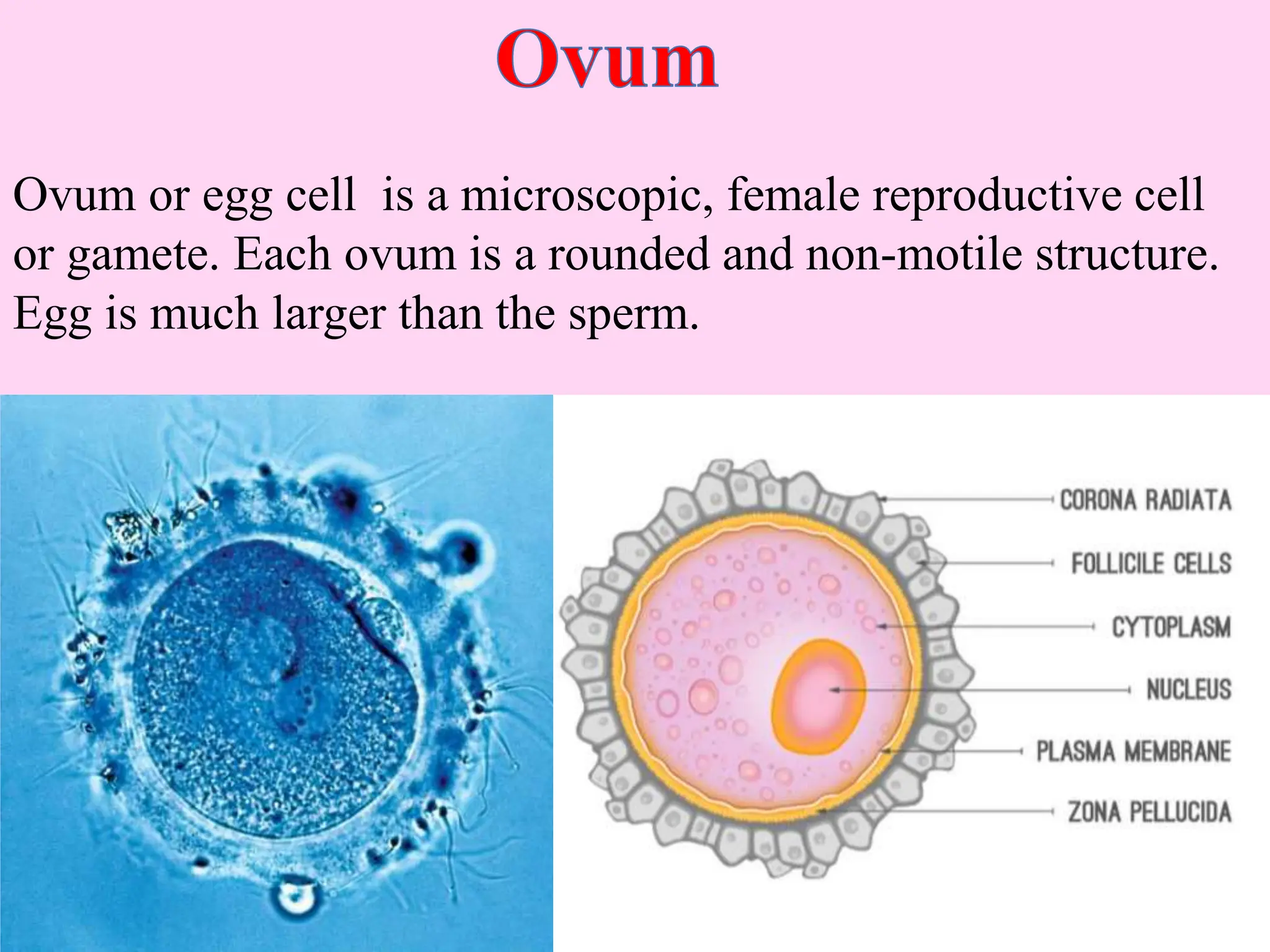
Ovum or egg cell is a microscopic, female reproductive cell
or gamete. Each ovum is a rounded and non-motile structure.
Egg is much larger than the sperm.
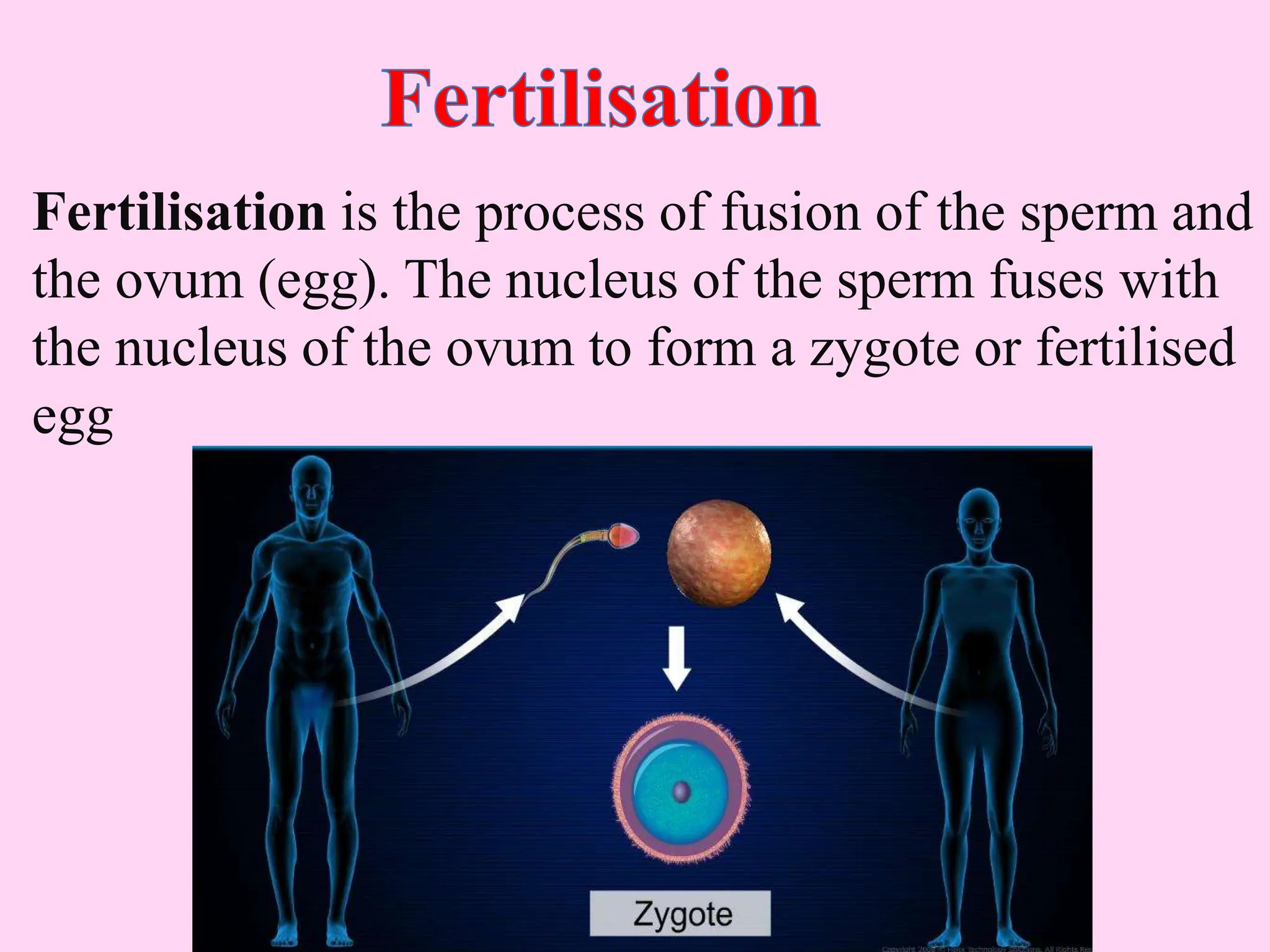
Fertilisation is the process of fusion of the sperm and
the ovum (egg). The nucleus of the sperm fuses with
the nucleus of the ovum to form a zygote or fertilised
egg
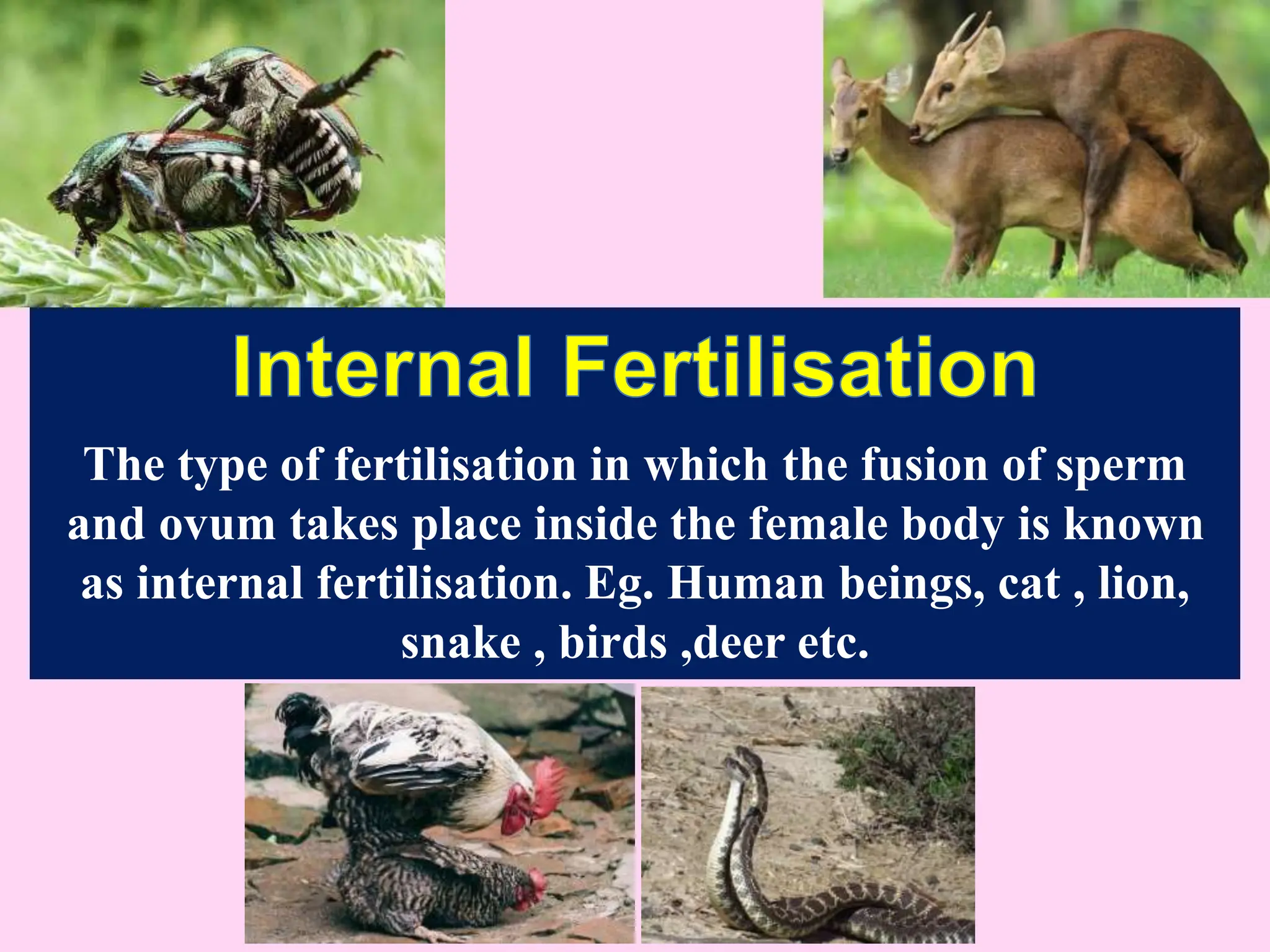
The type of fertilisation in which the fusion of sperm
and ovum takes place inside the female body is known
as internal fertilisation. Eg. Human beings, cat , lion,
snake , birds ,deer etc.
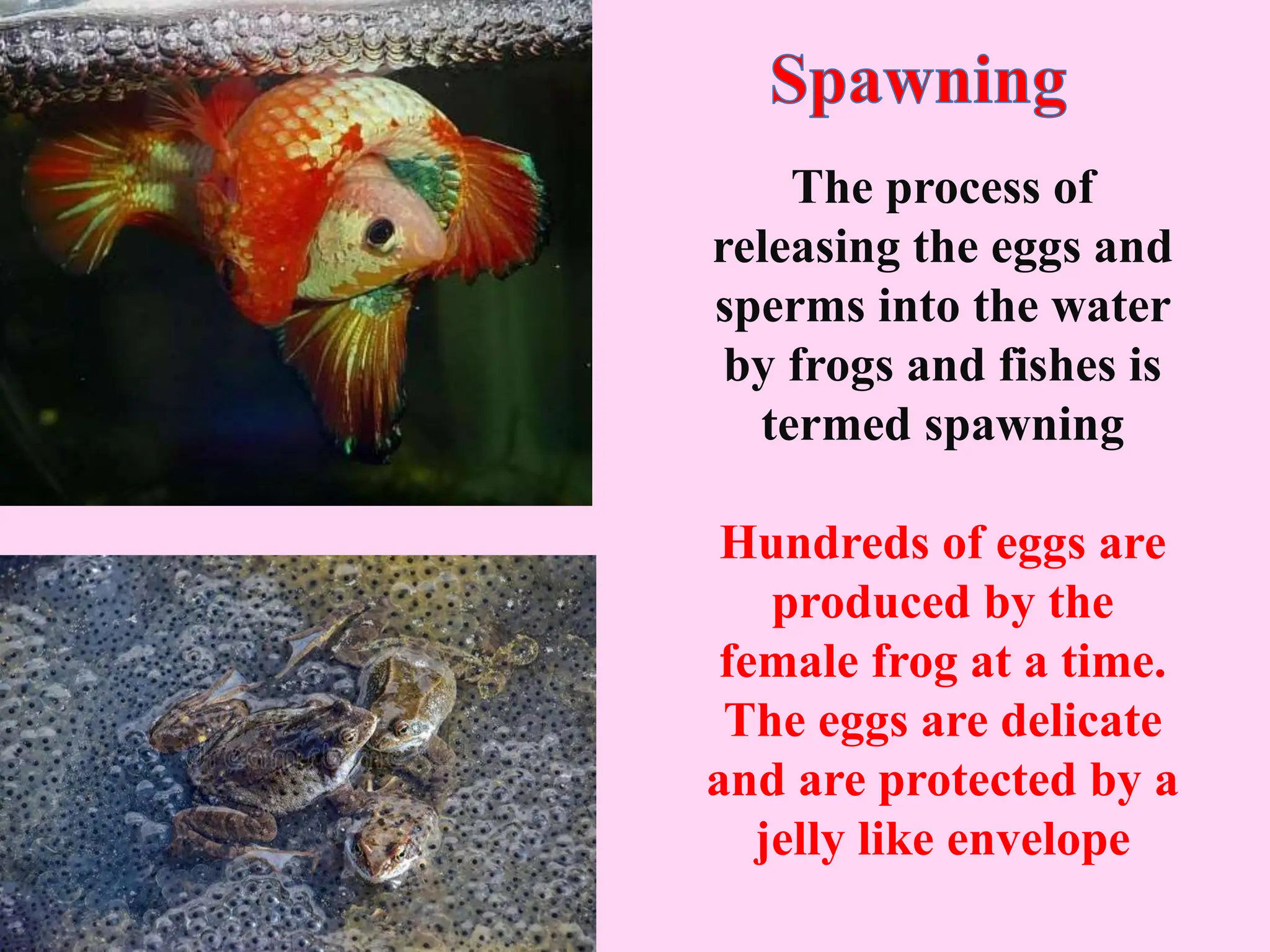
The process of
releasing the eggs and
sperms into the water
by frogs and fishes is
termed spawning
Hundreds of eggs are
produced by the
female frog at a time.
The eggs are delicate
and are protected by a
jelly like envelope
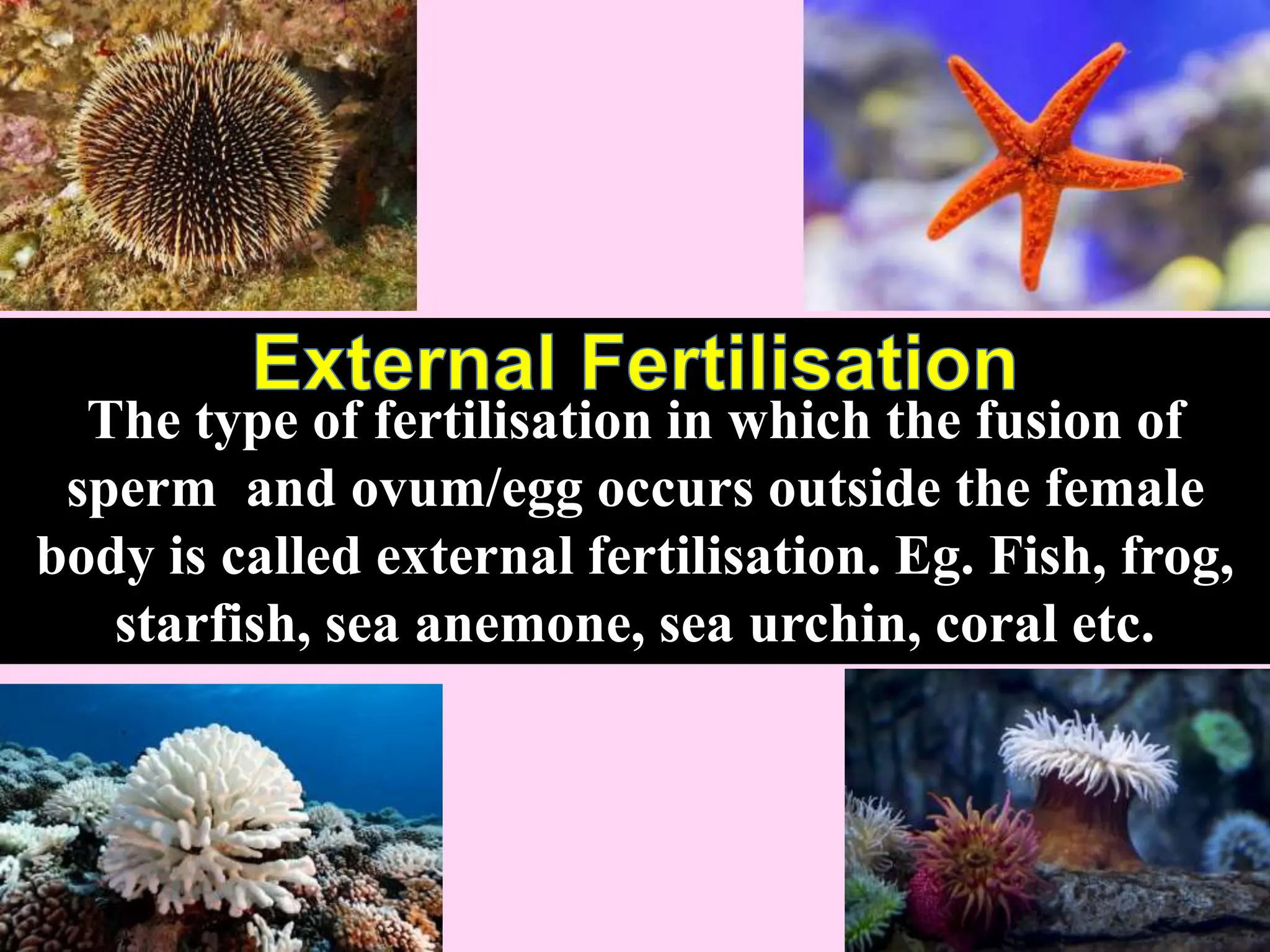
The type of fertilisation in which the fusion of
sperm and ovum/egg occurs outside the female
body is called external fertilisation. Eg. Fish, frog,
starfish, sea anemone, sea urchin, coral etc.
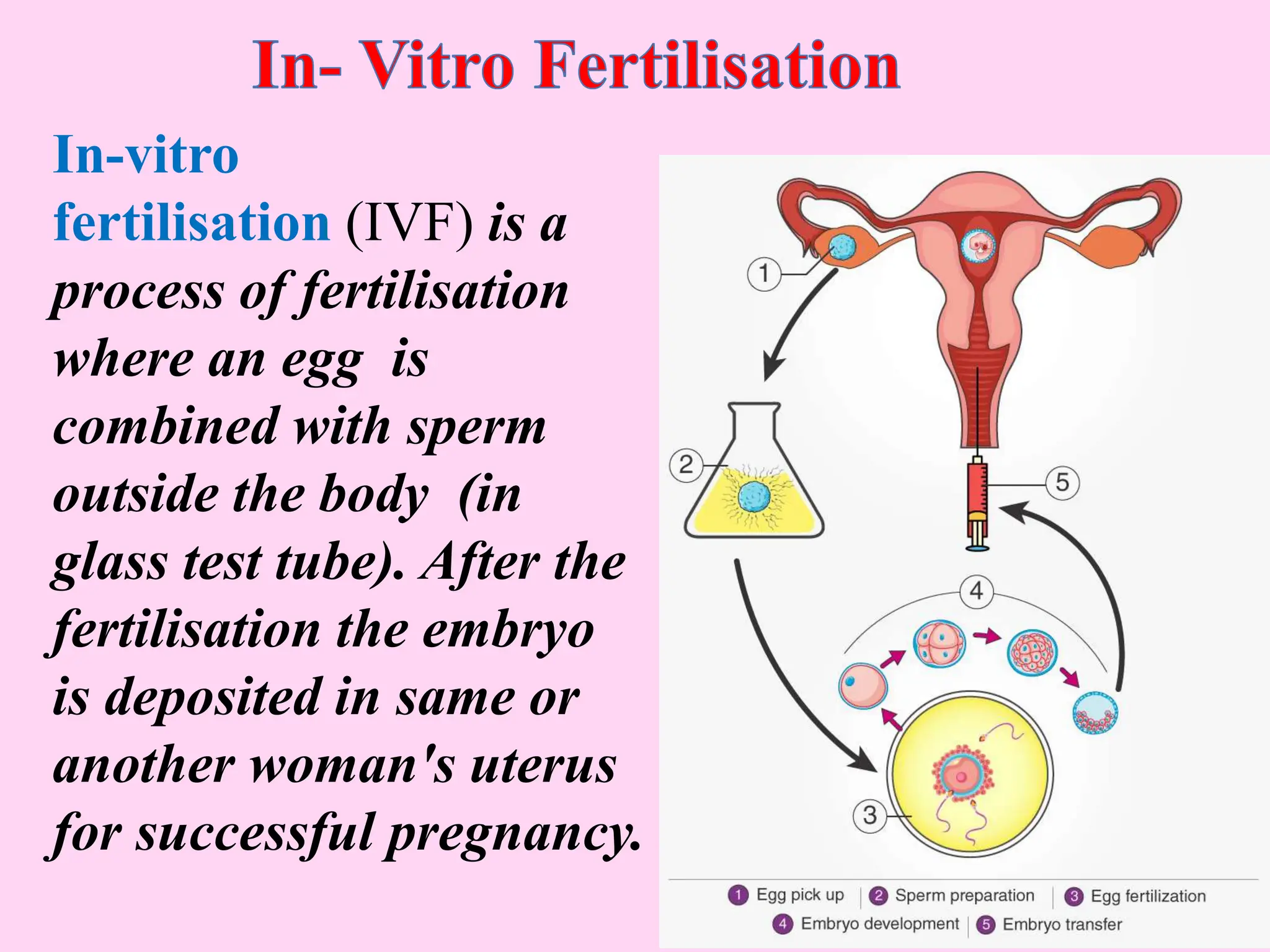
In-vitro
fertilisation (IVF) is a
process of fertilisation
where an egg is
combined with sperm
outside the body (in
glass test tube). After the
fertilisation the embryo
is deposited in same or
another woman's uterus
for successful pregnancy.
Zygote Embryo Foetus
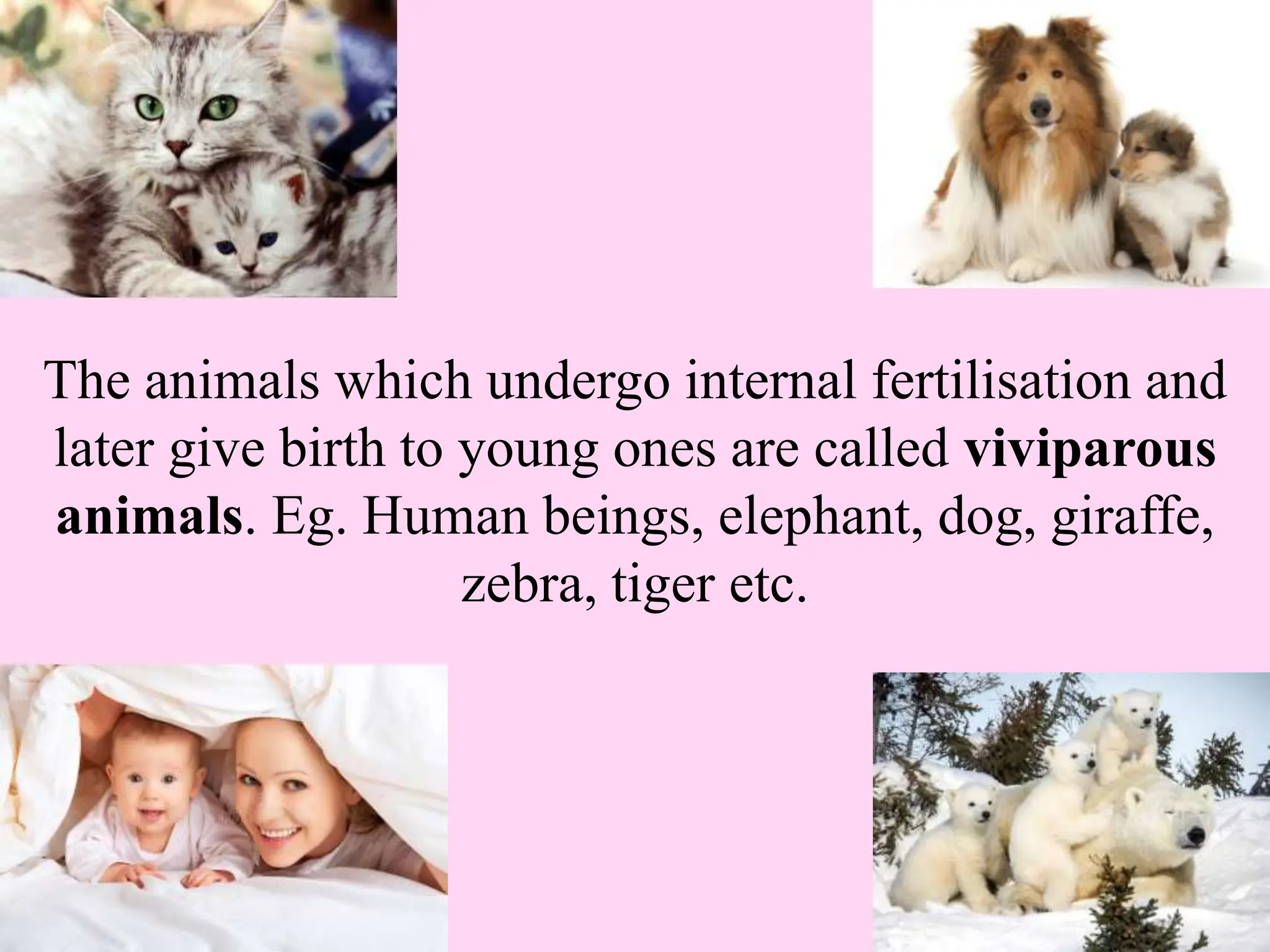
The animals which undergo internal fertilisation and
later give birth to young ones are called viviparous
animals. Eg. Human beings, elephant, dog, giraffe,
zebra, tiger etc.
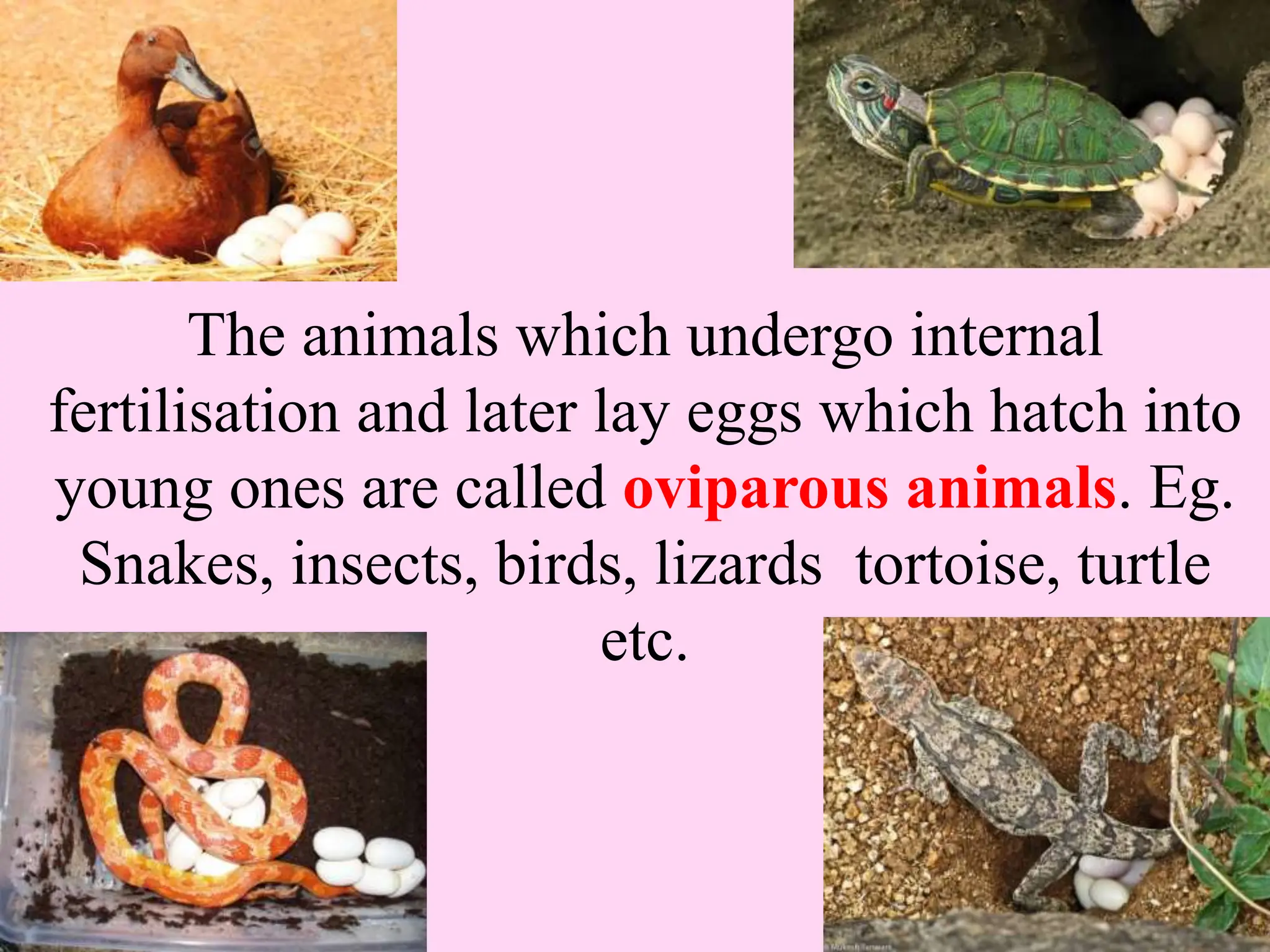
The animals which undergo internal
fertilisation and later lay eggs which hatch into
young ones are called oviparous animals. Eg.
Snakes, insects, birds, lizards tortoise, turtle
etc.
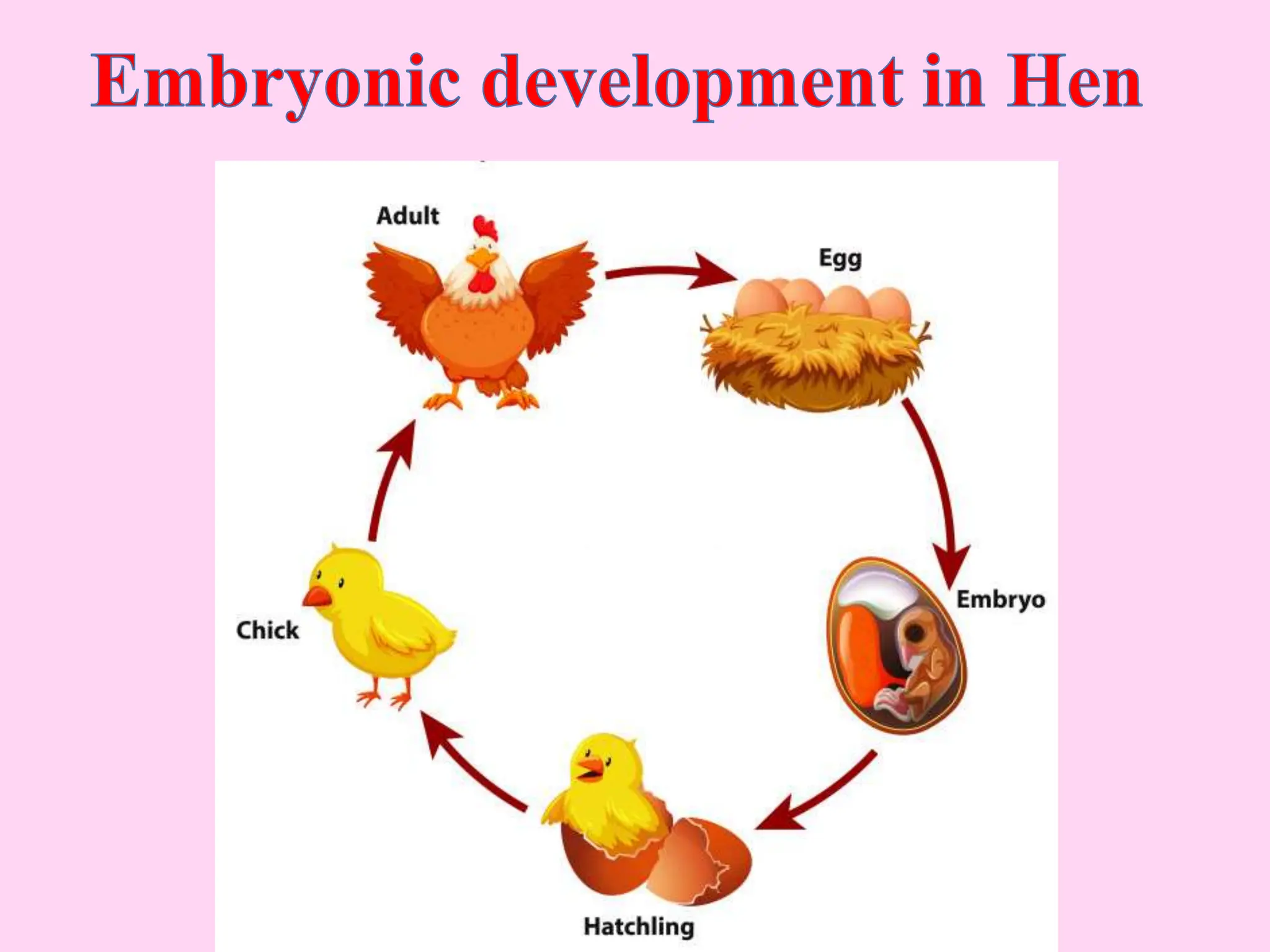
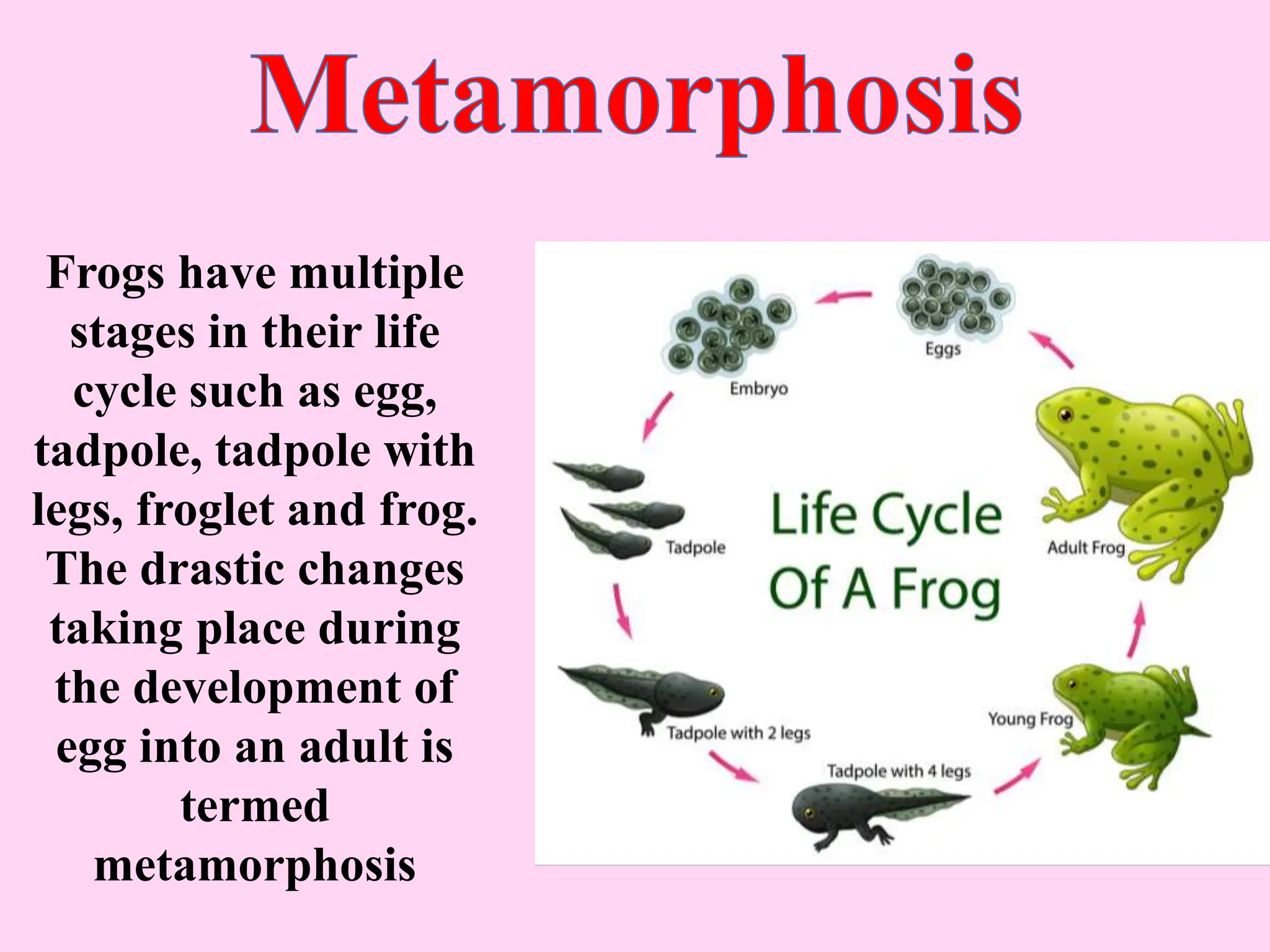
Frogs have multiple
stages in their life
cycle such as egg,
tadpole, tadpole with
legs, froglet and frog.
The drastic changes
taking place during
the development of
egg into an adult is
termed
metamorphosis
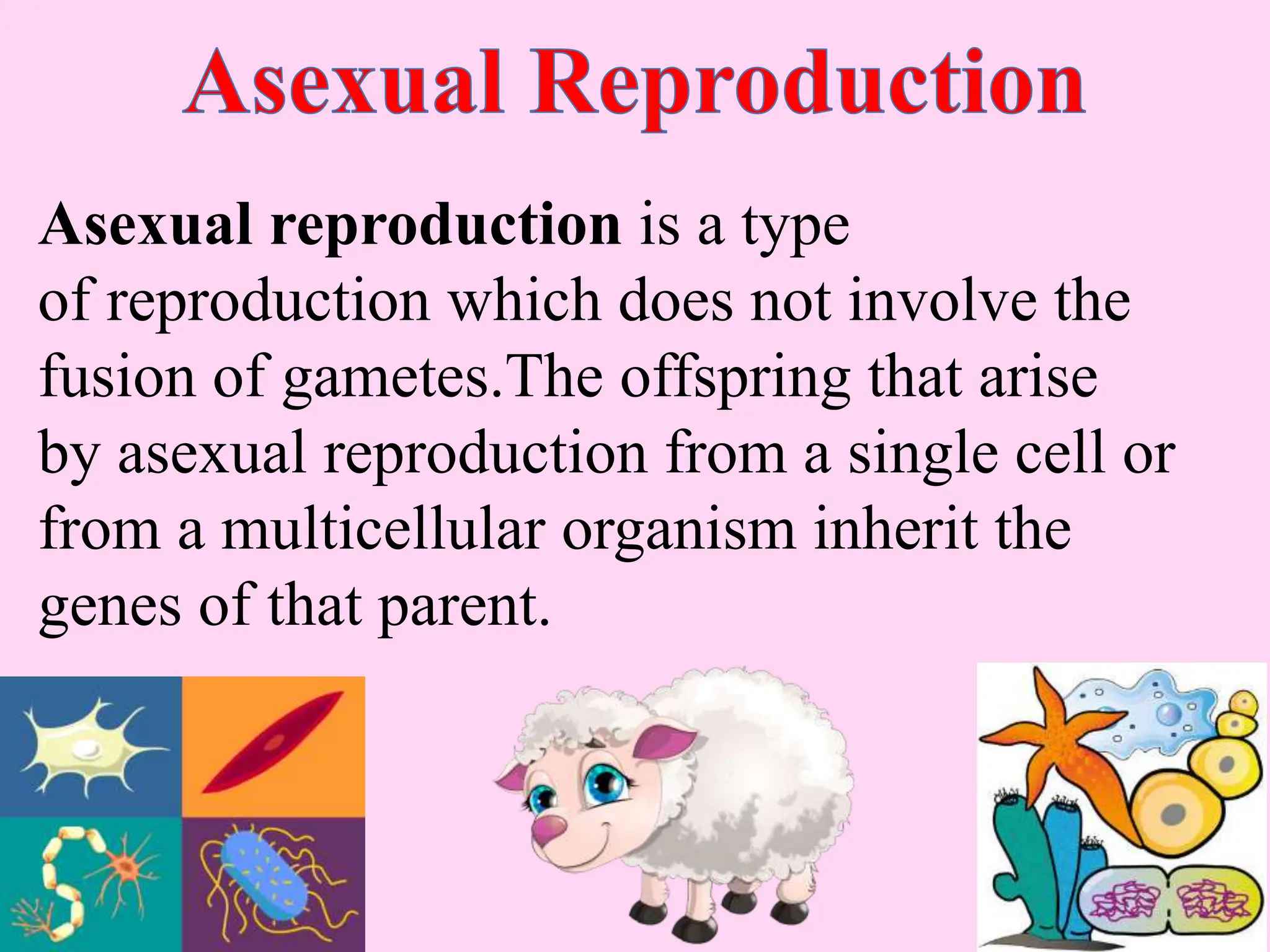
Asexual reproduction is a type
of reproduction which does not involve the
fusion of gametes.The offspring that arise
by asexual reproduction from a single cell or
from a multicellular organism inherit the
genes of that parent.
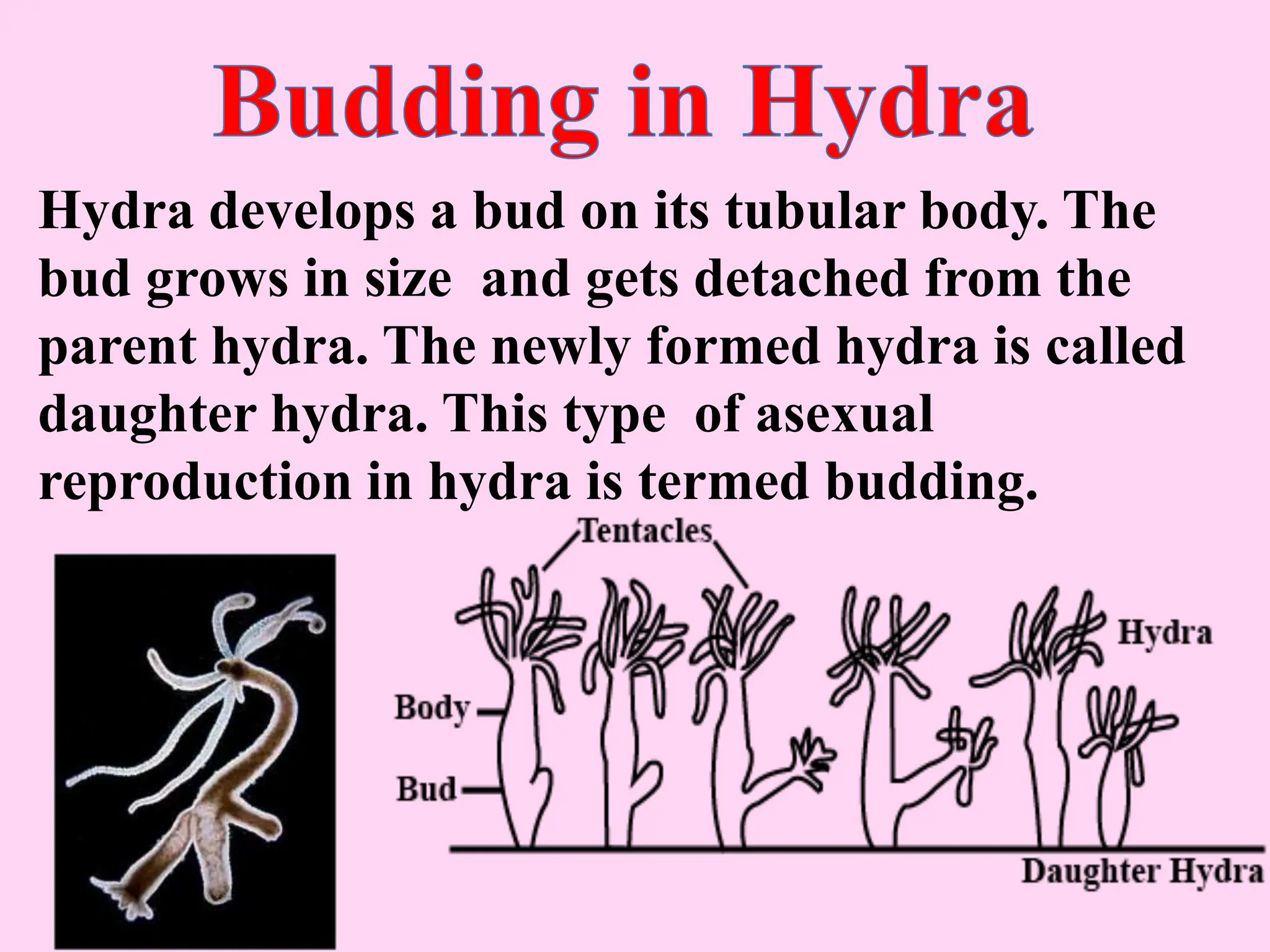
Hydra develops a bud on its tubular body. The
bud grows in size and gets detached from the
parent hydra. The newly formed hydra is called
daughter hydra. This type of asexual
reproduction in hydra is termed budding.
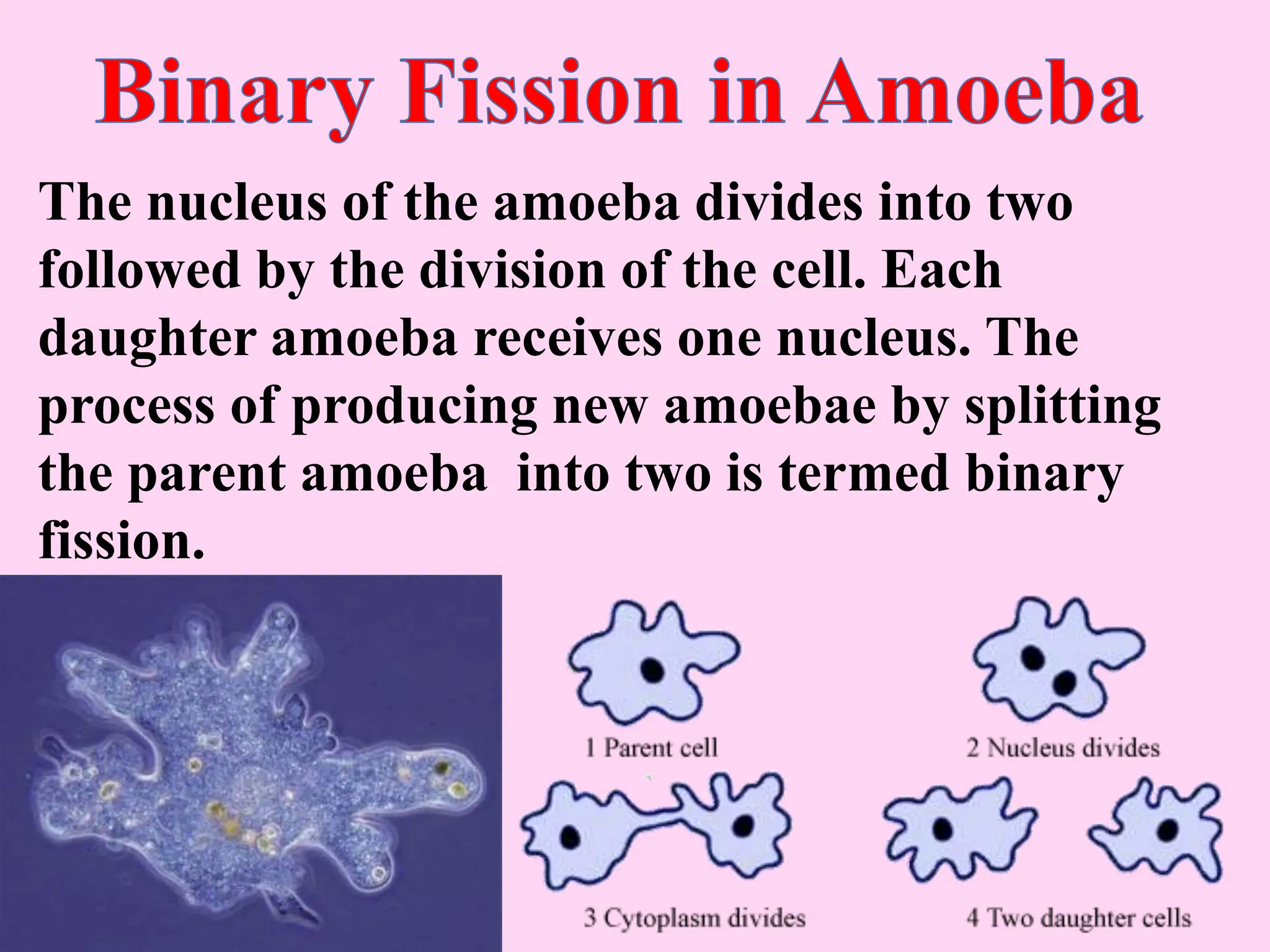
The nucleus of the amoeba divides into two
followed by the division of the cell. Each
daughter amoeba receives one nucleus. The
process of producing new amoebae by splitting
the parent amoeba into two is termed binary
fission.
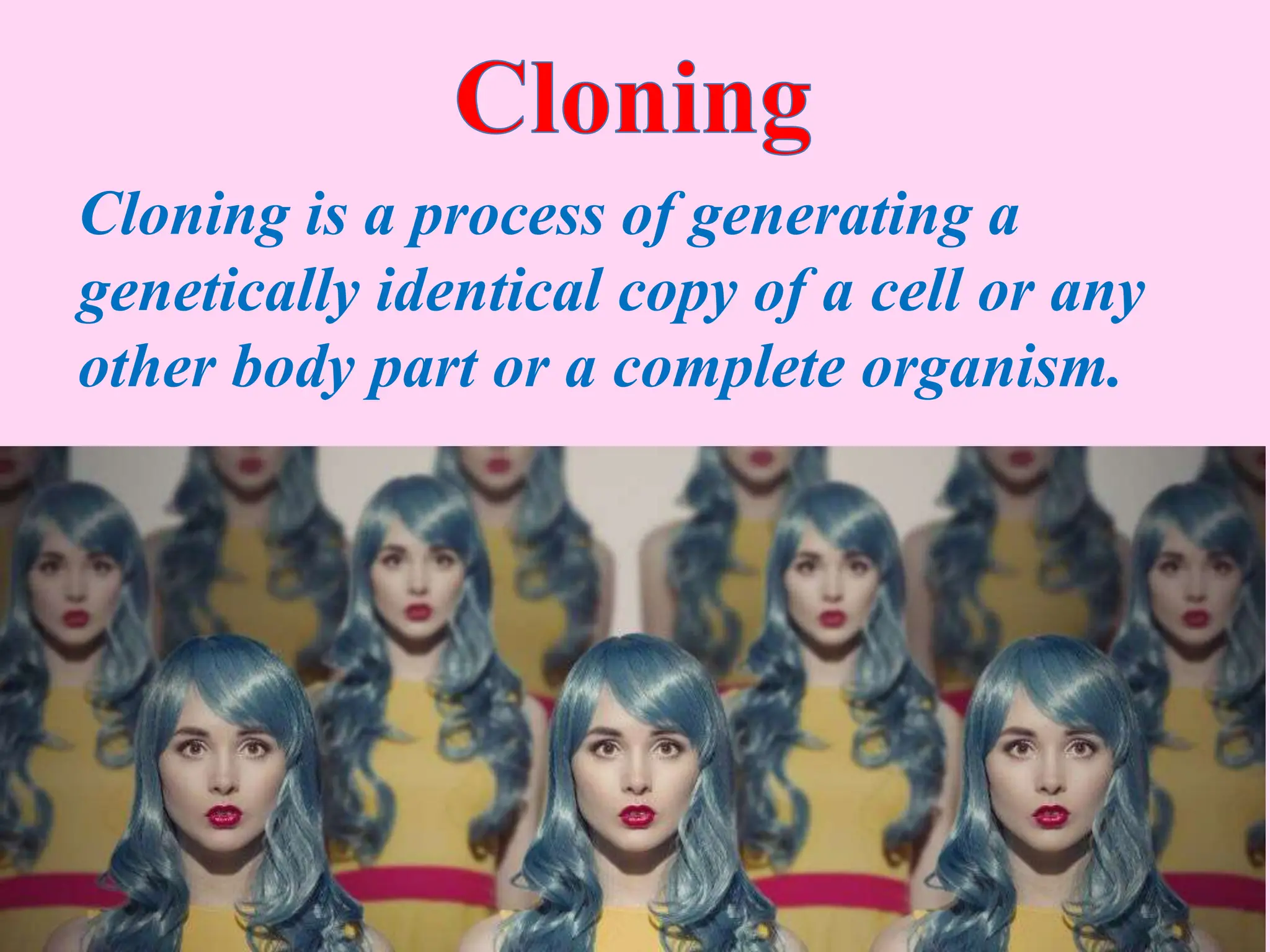
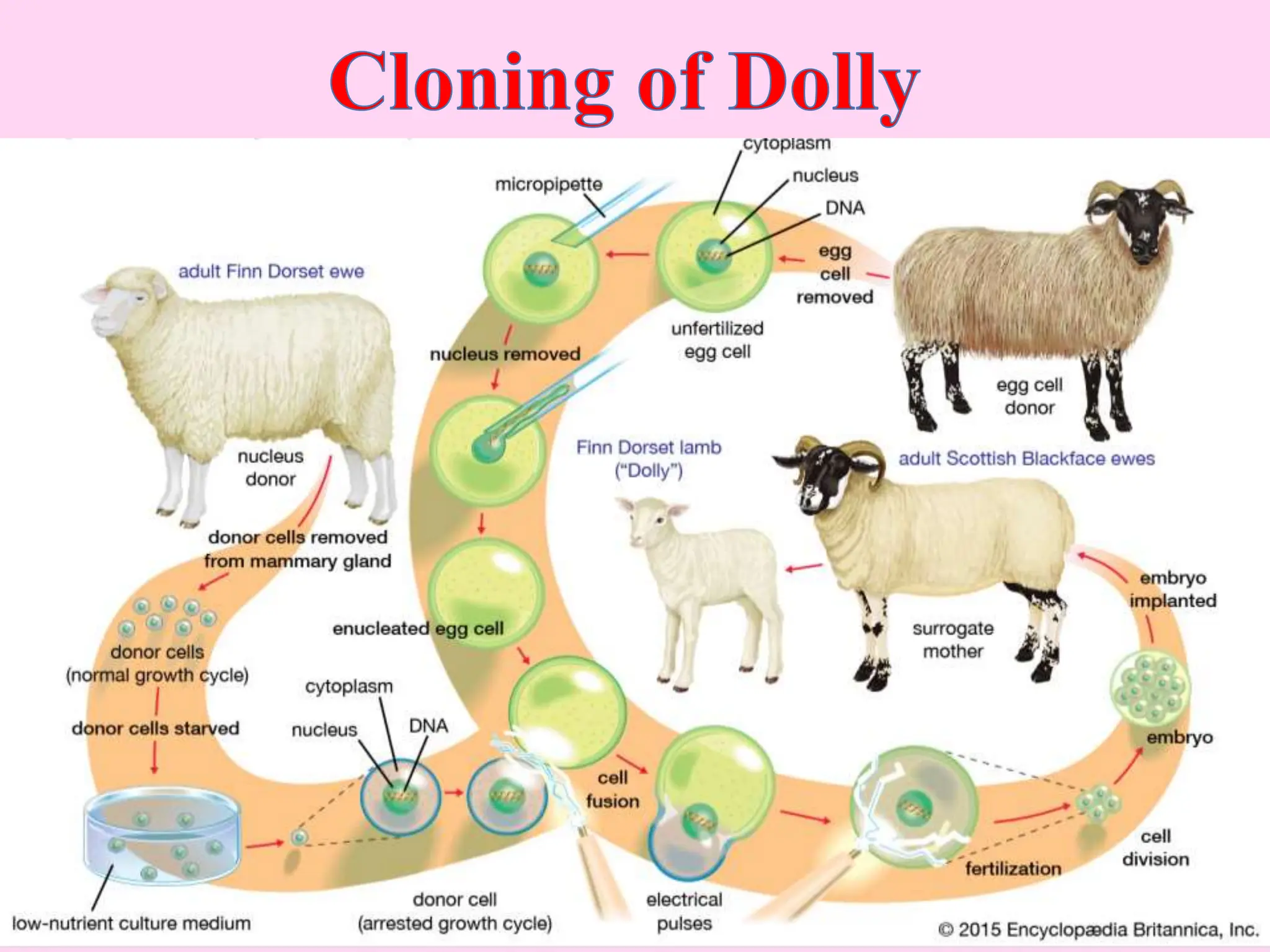
Cloning is a process of generating a
genetically identical copy of a cell or any
other body part or a complete organism.
1. What is the function of sperm?
2. Where does fertilisation take place in fish ?
3. Why do female frogs produce hundreds of
eggs at a time?
4. What is the difference between frog’s egg and
hen’s egg?
5. Mention some examples of oviparous
animals.
6. What is common between budding and
binary fission?
Reproduction in Animals Class 8 basic concepts

Reproduction in Animals Class 8 basic concepts

  • 1.
    At the endof this chapter the pupil will be able to:  Differentiate between sexual reproduction and asexual reproduction  Identify the parts of male reproductive system and female reproductive system  Distinguish between internal fertilisation and external fertilisation.  Cite examples of viviparous animals and oviparous animals.  Develop skill in drawing diagrams like reproductive system, life cycle of frog, binary fission in amoeba etc.  Observe and identify various stages in the development of frog  Develop interest and enthusiasm in learning biology.  Apply the gained knowledge in daily life and derive conclusion from experiences.
  • 2.
     Sexual Reproduction Male reproductive system  Female reproductive system  Fertilisation  Embryonic development in human beings  Viviparous and Oviparous animals  Metamorphosis  Asexual reproduction-Budding and Binary fission
  • 3.
    Reproduction is aprocess by which an organism produces offsprings that are biologically or genetically similar to the parent organism Reproduction in animals is of two types –  Asexual Reproduction  Sexual Reproduction
  • 4.
    Sexual reproduction isthe process in which new organisms are created by combining the genetic information from two individuals of different sexes. In higher animals a specialised Reproductive System helps in carrying out sexual reproduction
  • 5.
    It consists ofa pair of testes, sperm ducts and penis. The testes produce numerous male gametes called sperm. Sperms are carried through sperm ducts to the urethra which passes through muscular penis.
  • 6.
    Sperm is amicroscopic, motile, male reproductive cell or gamete composed of a head, middle piece and tail. The tail helps sperms in swimming. The sperm helps in transferring the genetic material to the female body during the mating.
  • 7.
    It consists ofa pair of ovaries, oviducts (fallopian tubes) and uterus. The ovary produces the female gamete called ovum or egg. The oviduct collects the ovum and passes it to the hollow muscular structure called uterus. The lower side of the uterus is called cervix. A narrow muscular passage called vagina connects the outside with uterus
  • 8.
    Ovum or eggcell is a microscopic, female reproductive cell or gamete. Each ovum is a rounded and non-motile structure. Egg is much larger than the sperm.
  • 9.
    Fertilisation is theprocess of fusion of the sperm and the ovum (egg). The nucleus of the sperm fuses with the nucleus of the ovum to form a zygote or fertilised egg
  • 10.
    The type offertilisation in which the fusion of sperm and ovum takes place inside the female body is known as internal fertilisation. Eg. Human beings, cat , lion, snake , birds ,deer etc.
  • 11.
    The process of releasingthe eggs and sperms into the water by frogs and fishes is termed spawning Hundreds of eggs are produced by the female frog at a time. The eggs are delicate and are protected by a jelly like envelope
  • 12.
    The type offertilisation in which the fusion of sperm and ovum/egg occurs outside the female body is called external fertilisation. Eg. Fish, frog, starfish, sea anemone, sea urchin, coral etc.
  • 13.
    In-vitro fertilisation (IVF) isa process of fertilisation where an egg is combined with sperm outside the body (in glass test tube). After the fertilisation the embryo is deposited in same or another woman's uterus for successful pregnancy.
  • 14.
  • 16.
    The animals whichundergo internal fertilisation and later give birth to young ones are called viviparous animals. Eg. Human beings, elephant, dog, giraffe, zebra, tiger etc.
  • 17.
    The animals whichundergo internal fertilisation and later lay eggs which hatch into young ones are called oviparous animals. Eg. Snakes, insects, birds, lizards tortoise, turtle etc.
  • 18.
    Frogs have multiple stagesin their life cycle such as egg, tadpole, tadpole with legs, froglet and frog. The drastic changes taking place during the development of egg into an adult is termed metamorphosis
  • 19.
    Asexual reproduction isa type of reproduction which does not involve the fusion of gametes.The offspring that arise by asexual reproduction from a single cell or from a multicellular organism inherit the genes of that parent.
  • 20.
    Hydra develops abud on its tubular body. The bud grows in size and gets detached from the parent hydra. The newly formed hydra is called daughter hydra. This type of asexual reproduction in hydra is termed budding.
  • 21.
    The nucleus ofthe amoeba divides into two followed by the division of the cell. Each daughter amoeba receives one nucleus. The process of producing new amoebae by splitting the parent amoeba into two is termed binary fission.
  • 22.
    Cloning is aprocess of generating a genetically identical copy of a cell or any other body part or a complete organism.
  • 24.
    1. What isthe function of sperm? 2. Where does fertilisation take place in fish ? 3. Why do female frogs produce hundreds of eggs at a time? 4. What is the difference between frog’s egg and hen’s egg? 5. Mention some examples of oviparous animals. 6. What is common between budding and binary fission?

Editor's Notes

  • #6 It consists of a pair of testes, sperm ducts and penis. The testes produce numerous male gametes called sperm