Downloaded 270 times




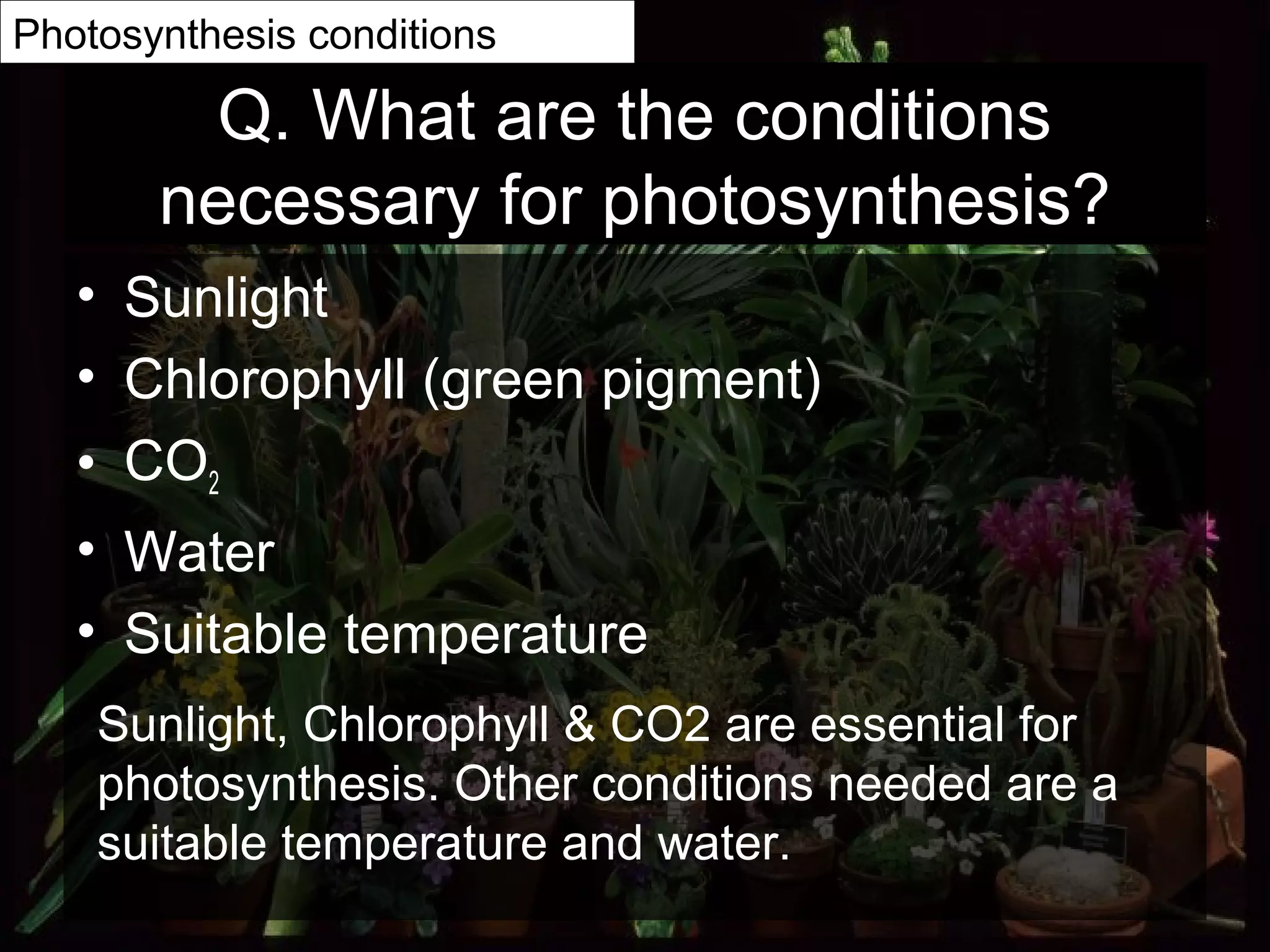


1) Photosynthesis is the process by which plants produce their own food, using carbon dioxide, water, and sunlight as raw materials. Chlorophyll in the leaves captures energy from sunlight and transforms it into chemical energy stored in carbohydrates. 2) The key conditions for photosynthesis are sunlight, chlorophyll, carbon dioxide, water, and a suitable temperature. Carbon dioxide enters the plant through stomata, and water and minerals are absorbed from the soil. 3) Guard cells play an important role in gas exchange by regulating the opening and closing of stomata, allowing carbon dioxide to enter while minimizing water loss. Photosynthesis is essential as it provides food for plants and oxygen for other organisms.


