Presented By
Pankaj Gothi
M.Sc Environmental Science
Sem- 1
Outline
 Introduction
 Abiotic Components
 Biotic Components
 Difference between abiotic & biotic
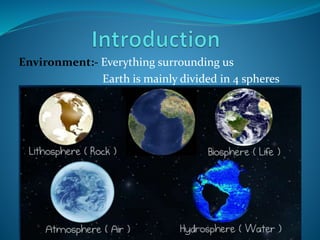
Environment:- Everything surrounding us
Earth is mainly divided in 4 spheres
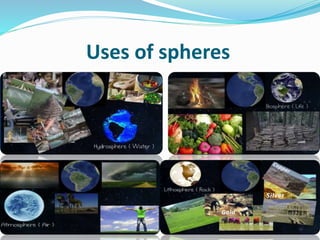
Uses of spheres
 There are many important components of environment but
two main components exist in an ecosystem
1. Biotic
2. Abiotic
 The Abiotic components of any ecosystem are the property
of an environment.
 The biotic components are the life forms that occupy a
given ecosystem.
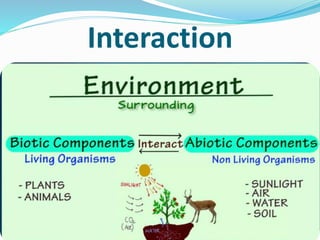
 Everything that is around us it can be living or non-living
things, it includes physical, chemical and natural forces.
 Abiotic components are the non-living
things in an ecosystem.
 Every biotic components is in some way
dependent on abiotic components
Abiotic Components
 Air :-
Air plays a vital role in recycling one of Earth's most important
substances: carbon.
 Water:-
All plants and animals must have water to survive. If there was no
water there would be no life on earth.
 Soil:-
It influences the distribution of plant species and provides a habitat for
a wide range of organisms.
 Sun light:-
Without the Sun's heat and light, the Earth would be a lifeless ball of
ice-coated rock. so without sunlight life is impossible on earth.
 Temperature:-
influences the growth of many living organisms
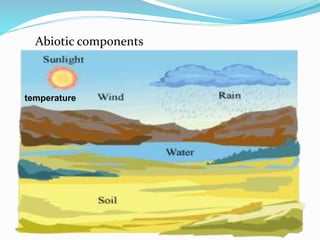
Abiotic components
temperature
 Biotic components are all the living things in an
ecosystem
 There are different topic levels in the ecosystem
 E.g. :- green plants, animals, microorganism
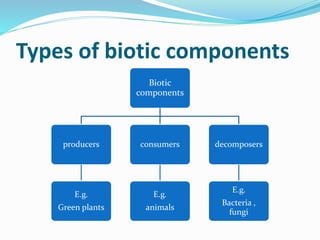
Types of biotic components
Biotic
components
producers
E.g.
Green plants
consumers
E.g.
animals
decomposers
E.g.
Bacteria ,
fungi
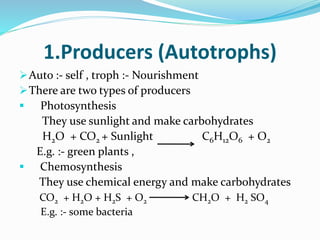
1.Producers (Autotrophs)
Auto :- self , troph :- Nourishment
There are two types of producers
 Photosynthesis
They use sunlight and make carbohydrates
H2O + CO2 + Sunlight C6H12O6 + O2
E.g. :- green plants ,
 Chemosynthesis
They use chemical energy and make carbohydrates
CO2 + H2O + H2S + O2 CH2O + H2 SO4
E.g. :- some bacteria
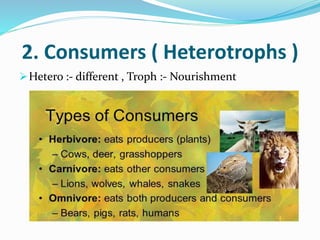
2. Consumers ( Heterotrophs )
Hetero :- different , Troph :- Nourishment
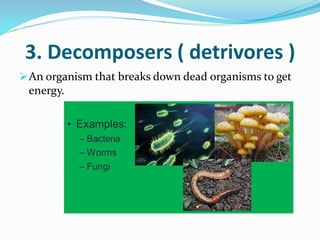
3. Decomposers ( detrivores )
An organism that breaks down dead organisms to get
energy.
Interaction
Important component of enviroment

Important component of enviroment

  • 1.
    Presented By Pankaj Gothi M.ScEnvironmental Science Sem- 1
  • 2.
    Outline  Introduction  AbioticComponents  Biotic Components  Difference between abiotic & biotic
  • 3.
    Environment:- Everything surroundingus Earth is mainly divided in 4 spheres
  • 4.
  • 5.
     There aremany important components of environment but two main components exist in an ecosystem 1. Biotic 2. Abiotic  The Abiotic components of any ecosystem are the property of an environment.  The biotic components are the life forms that occupy a given ecosystem.  Everything that is around us it can be living or non-living things, it includes physical, chemical and natural forces.
  • 6.
     Abiotic componentsare the non-living things in an ecosystem.  Every biotic components is in some way dependent on abiotic components
  • 7.
    Abiotic Components  Air:- Air plays a vital role in recycling one of Earth's most important substances: carbon.  Water:- All plants and animals must have water to survive. If there was no water there would be no life on earth.  Soil:- It influences the distribution of plant species and provides a habitat for a wide range of organisms.  Sun light:- Without the Sun's heat and light, the Earth would be a lifeless ball of ice-coated rock. so without sunlight life is impossible on earth.  Temperature:- influences the growth of many living organisms
  • 8.
  • 9.
     Biotic componentsare all the living things in an ecosystem  There are different topic levels in the ecosystem  E.g. :- green plants, animals, microorganism
  • 10.
    Types of bioticcomponents Biotic components producers E.g. Green plants consumers E.g. animals decomposers E.g. Bacteria , fungi
  • 11.
    1.Producers (Autotrophs) Auto :-self , troph :- Nourishment There are two types of producers  Photosynthesis They use sunlight and make carbohydrates H2O + CO2 + Sunlight C6H12O6 + O2 E.g. :- green plants ,  Chemosynthesis They use chemical energy and make carbohydrates CO2 + H2O + H2S + O2 CH2O + H2 SO4 E.g. :- some bacteria
  • 12.
    2. Consumers (Heterotrophs ) Hetero :- different , Troph :- Nourishment
  • 13.
    3. Decomposers (detrivores ) An organism that breaks down dead organisms to get energy.
  • 14.