Adaptations of
organisms
Class 6
By Shweta Deveshwar
Terrestrial Habitat
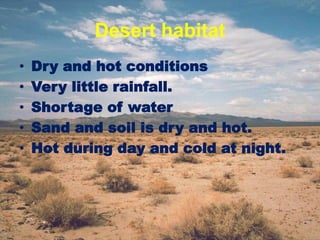
Desert habitat
• Dry and hot conditions
• Very little rainfall.
• Shortage of water
• Sand and soil is dry and hot.
• Hot during day and cold at night.
Cactus
• Leaves reduced to
spines.
• Stem is green to carry
photosynthesis.
• Stem covered with thick
waxy layer of cuticle .
• Fleshy stem store water
• Few and sunken
stomata.
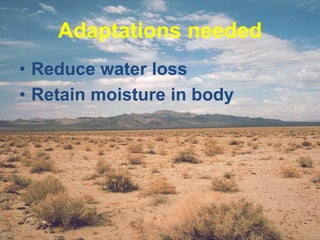
Adaptations needed
• Reduce water loss
• Retain moisture in body
Camel
Fat stored in hump
padded feet to
walk on hot
sand
Long legs to
keep body away
from heat of
sand
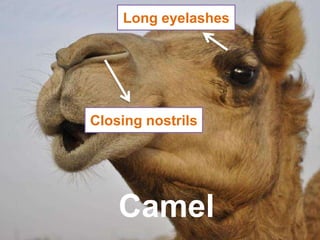
Camel
Long eyelashes
Closing nostrils
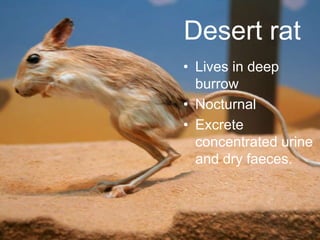
Desert rat
• Hops like a
Kangaroo to
protect
themselves
from
predators.
Long hind legs
Short upper
legs
Desert rat
• Lives in deep
burrow
• Nocturnal
• Excrete
concentrated urine
and dry faeces.
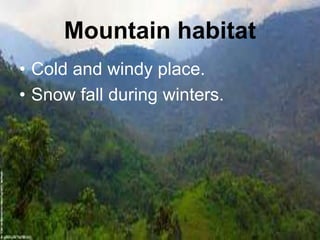
Mountain habitat
• Cold and windy place.
• Snow fall during winters.
Adaptations in plants
• Cone shaped trees
with sloping branches.
• It helps rainfall and
snow slide easily.
Adaptations in plants
• Needle like leaves
• Gives conical shape to plant
• Helps in shedding the snow from
leaves
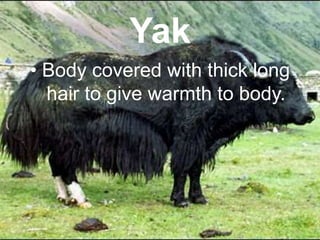
Yak
• Body covered with thick long
hair to give warmth to body.
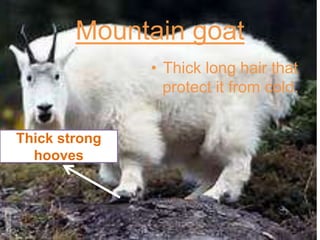
Mountain goat
• Thick long hair that
protect it from cold.
Thick strong
hooves
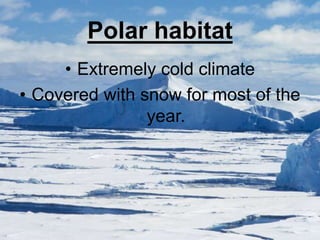
Polar habitat
• Extremely cold climate
• Covered with snow for most of the
year.
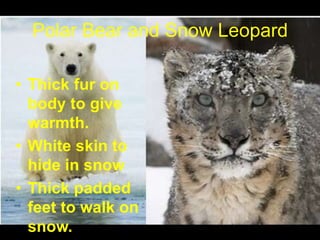
Polar Bear and Snow Leopard
• Thick fur on
body to give
warmth.
• White skin to
hide in snow
• Thick padded
feet to walk on
snow.
Hibernation
• Winter sleep of animals or
physiological inactive state to
conserve energy.
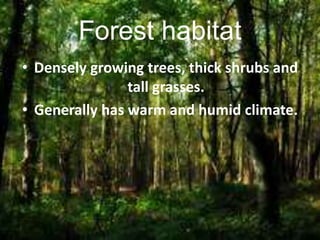
Forest habitat
• Densely growing trees, thick shrubs and
tall grasses.
• Generally has warm and humid climate.
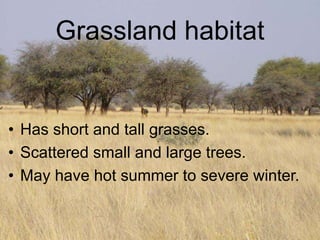
Grassland habitat
• Has short and tall grasses.
• Scattered small and large trees.
• May have hot summer to severe winter.
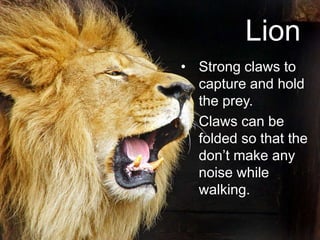
Lion
• Strong claws to
capture and hold
the prey.
• Claws can be
folded so that the
don’t make any
noise while
walking.
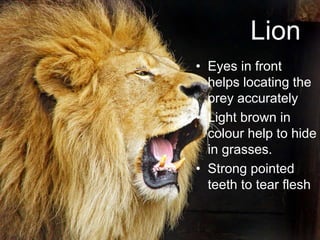
Lion
• Eyes in front
helps locating the
prey accurately
• Light brown in
colour help to hide
in grasses.
• Strong pointed
teeth to tear flesh
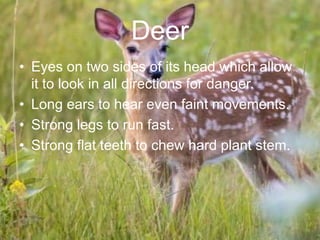
Deer
• Eyes on two sides of its head which allow
it to look in all directions for danger.
• Long ears to hear even faint movements.
• Strong legs to run fast.
• Strong flat teeth to chew hard plant stem.
Aquatic habitat
(habitat in water)
Ocean habitat Fresh water habitat
(Pond and lake)
Fish
• Streamlined body
• Paired flat fins.
• Gills for respiration
• Scales on body to
protect body from
water.
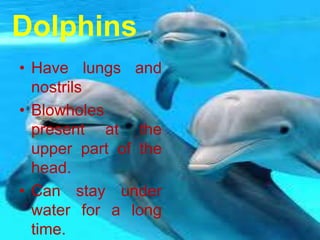
Dolphins
• Have lungs and
nostrils
• Blowholes
present at the
upper part of the
head.
• Can stay under
water for a long
time.
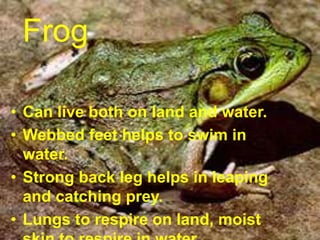
Frog
• Can live both on land and water.
• Webbed feet helps to swim in
water.
• Strong back leg helps in leaping
and catching prey.
• Lungs to respire on land, moist