Page 1
Getting to know Plants
Page 2
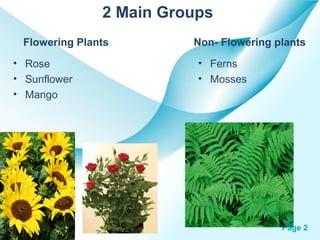
2 Main Groups
Flowering Plants
• Rose
• Sunflower
• Mango
Non- Flowering plants
• Ferns
• Mosses
Page 3
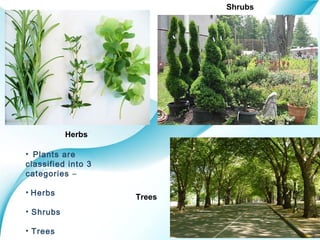
Herbs
Trees
Shrubs
• Plants are
classified into 3
categories –
• Herbs
• Shrubs
• Trees
Page 4
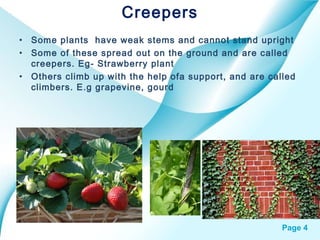
Creepers
• Some plants have weak stems and cannot stand upright
• Some of these spread out on the ground and are called
creepers. Eg- Strawberry plant
• Others climb up with the help ofa support, and are called
climbers. E.g grapevine, gourd
Page 5
Plant Systems
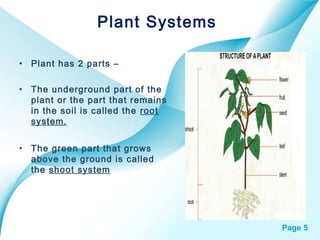
• Plant has 2 parts –
• The underground part of the
plant or the part that remains
in the soil is called the root
system.
• The green part that grows
above the ground is called
the shoot system
Page 6
Roots
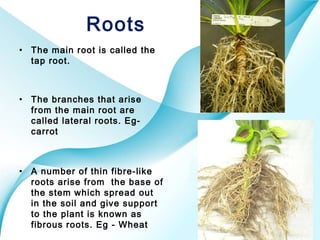
• The main root is called the
tap root.
• The branches that arise
from the main root are
called lateral roots. Eg-
carrot
• A number of thin fibre-like
roots arise from the base of
the stem which spread out
in the soil and give support
to the plant is known as
fibrous roots. Eg - Wheat
Page 7
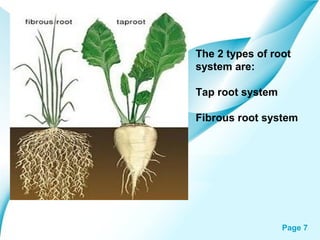
The 2 types of root
system are:
Tap root system
Fibrous root system
Page 8
Functions of the root
• Roots anchor the plant to the soil.
• Roots absorb water and minerals present
in the soil.
• Water and mineral salts reach the stem
and the branches through a system of
thin tubes present in the roots and the
stem.
• Roots bind the soil particles together and
prevent soil erosion.
Page 9
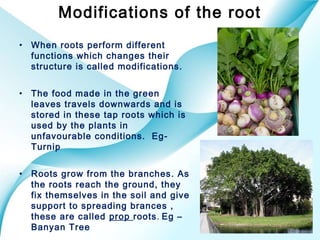
Modifications of the root
• When roots perform different
functions which changes their
structure is called modifications.
• The food made in the green
leaves travels downwards and is
stored in these tap roots which is
used by the plants in
unfavourable conditions. Eg-
Turnip
• Roots grow from the branches. As
the roots reach the ground, they
fix themselves in the soil and give
support to spreading brances ,
these are called prop roots. Eg –
Banyan Tree
Page 10
Functions of the stem
• The stem keeps the
plant upright.
• The stem bears
branches, leaves,
flowers and fruits.
 The main function
is-
• Stem transports
water, minerals and
food to all parts of
the plant .
Page 11
Modifications of the stem
• Thin, thread like structures on
the stems are called stem
tendrils.
• Stems are modified to give
support
• Stems are modified to store
food Eg – Ginger, Potato
• Stems are modified
to make food
Eg- Cactus
Page 12
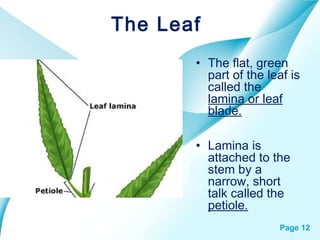
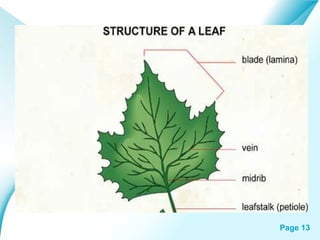
The Leaf
• The flat, green
part of the leaf is
called the
lamina or leaf
blade.
• Lamina is
attached to the
stem by a
narrow, short
talk called the
petiole.
Page 13
Page 14
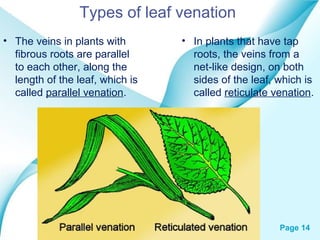
Types of leaf venation
• In plants that have tap
roots, the veins from a
net-like design, on both
sides of the leaf, which is
called reticulate venation.
• The veins in plants with
fibrous roots are parallel
to each other, along the
length of the leaf, which is
called parallel venation.
Page 15
Functions of the leaf
• The presence of a green pigment is called chlorophyll.
• Chlorophyll uses sunlight and provides energy to the
plant for making food, this process of making food by the
leaves is called photosynthesis.
• The food that the leaf prepares is a kind of sugar called
glucose.
• The glucose changes into starch before the plant stores
it.
• Plants use some of this food to perform their life
functions and store the rest in fruits, roots, stems or
leaves.
• Leaves provides food to the entire living world.
Page 16
Functions of leaf
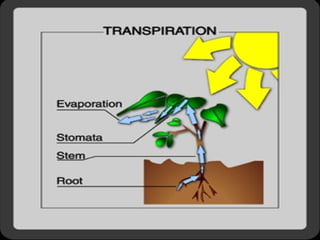
• Leaves release water from the plant
through stomata, which is called
transpiration.
The 2 important functions of transpiration
are:
a.It helps in cooling down the leaves.
a.It plays an important role in water cycle,
by increasing the moisture in the air.
Page 17
Page 18
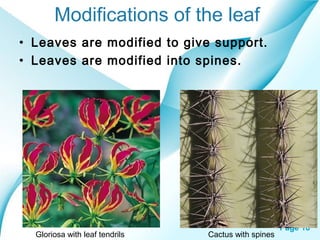
Modifications of the leaf
• Leaves are modified to give support.
• Leaves are modified into spines.
Gloriosa with leaf tendrils Cactus with spines
Page 19
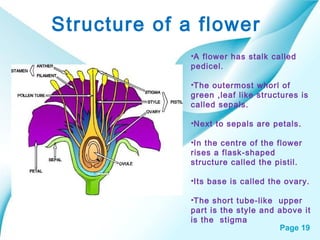
Structure of a flower
•A flower has stalk called
pedicel.
•The outermost whorl of
green ,leaf like structures is
called sepals.
•Next to sepals are petals.
•In the centre of the flower
rises a flask-shaped
structure called the pistil.
•Its base is called the ovary.
•The short tube-like upper
part is the style and above it
is the stigma
Page 20
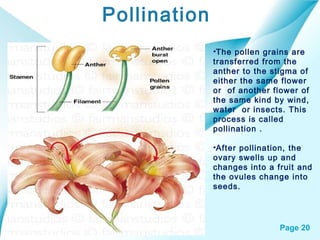
Pollination
•The pollen grains are
transferred from the
anther to the stigma of
either the same flower
or of another flower of
the same kind by wind,
water or insects. This
process is called
pollination .
•After pollination, the
ovary swells up and
changes into a fruit and
the ovules change into
seeds.
Page 21
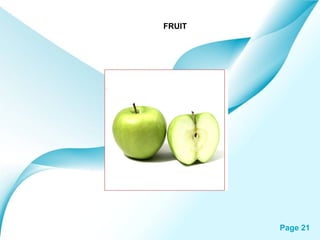
FRUIT
Page 22
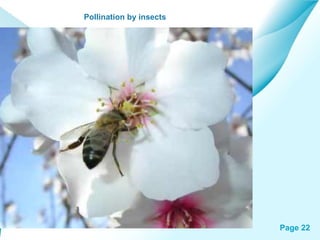
Pollination by insects
Page 23
Page 24
Link for activities- Plant life cycles
http://www.teachersdomain.org/resource/tdc02.sci.life.c

Getting to know plants

  • 1.
    Page 1 Getting toknow Plants
  • 2.
    Page 2 2 MainGroups Flowering Plants • Rose • Sunflower • Mango Non- Flowering plants • Ferns • Mosses
  • 3.
    Page 3 Herbs Trees Shrubs • Plantsare classified into 3 categories – • Herbs • Shrubs • Trees
  • 4.
    Page 4 Creepers • Someplants have weak stems and cannot stand upright • Some of these spread out on the ground and are called creepers. Eg- Strawberry plant • Others climb up with the help ofa support, and are called climbers. E.g grapevine, gourd
  • 5.
    Page 5 Plant Systems •Plant has 2 parts – • The underground part of the plant or the part that remains in the soil is called the root system. • The green part that grows above the ground is called the shoot system
  • 6.
    Page 6 Roots • Themain root is called the tap root. • The branches that arise from the main root are called lateral roots. Eg- carrot • A number of thin fibre-like roots arise from the base of the stem which spread out in the soil and give support to the plant is known as fibrous roots. Eg - Wheat
  • 7.
    Page 7 The 2types of root system are: Tap root system Fibrous root system
  • 8.
    Page 8 Functions ofthe root • Roots anchor the plant to the soil. • Roots absorb water and minerals present in the soil. • Water and mineral salts reach the stem and the branches through a system of thin tubes present in the roots and the stem. • Roots bind the soil particles together and prevent soil erosion.
  • 9.
    Page 9 Modifications ofthe root • When roots perform different functions which changes their structure is called modifications. • The food made in the green leaves travels downwards and is stored in these tap roots which is used by the plants in unfavourable conditions. Eg- Turnip • Roots grow from the branches. As the roots reach the ground, they fix themselves in the soil and give support to spreading brances , these are called prop roots. Eg – Banyan Tree
  • 10.
    Page 10 Functions ofthe stem • The stem keeps the plant upright. • The stem bears branches, leaves, flowers and fruits.  The main function is- • Stem transports water, minerals and food to all parts of the plant .
  • 11.
    Page 11 Modifications ofthe stem • Thin, thread like structures on the stems are called stem tendrils. • Stems are modified to give support • Stems are modified to store food Eg – Ginger, Potato • Stems are modified to make food Eg- Cactus
  • 12.
    Page 12 The Leaf •The flat, green part of the leaf is called the lamina or leaf blade. • Lamina is attached to the stem by a narrow, short talk called the petiole.
  • 13.
  • 14.
    Page 14 Types ofleaf venation • In plants that have tap roots, the veins from a net-like design, on both sides of the leaf, which is called reticulate venation. • The veins in plants with fibrous roots are parallel to each other, along the length of the leaf, which is called parallel venation.
  • 15.
    Page 15 Functions ofthe leaf • The presence of a green pigment is called chlorophyll. • Chlorophyll uses sunlight and provides energy to the plant for making food, this process of making food by the leaves is called photosynthesis. • The food that the leaf prepares is a kind of sugar called glucose. • The glucose changes into starch before the plant stores it. • Plants use some of this food to perform their life functions and store the rest in fruits, roots, stems or leaves. • Leaves provides food to the entire living world.
  • 16.
    Page 16 Functions ofleaf • Leaves release water from the plant through stomata, which is called transpiration. The 2 important functions of transpiration are: a.It helps in cooling down the leaves. a.It plays an important role in water cycle, by increasing the moisture in the air.
  • 17.
  • 18.
    Page 18 Modifications ofthe leaf • Leaves are modified to give support. • Leaves are modified into spines. Gloriosa with leaf tendrils Cactus with spines
  • 19.
    Page 19 Structure ofa flower •A flower has stalk called pedicel. •The outermost whorl of green ,leaf like structures is called sepals. •Next to sepals are petals. •In the centre of the flower rises a flask-shaped structure called the pistil. •Its base is called the ovary. •The short tube-like upper part is the style and above it is the stigma
  • 20.
    Page 20 Pollination •The pollengrains are transferred from the anther to the stigma of either the same flower or of another flower of the same kind by wind, water or insects. This process is called pollination . •After pollination, the ovary swells up and changes into a fruit and the ovules change into seeds.
  • 21.
  • 22.
  • 23.
  • 24.
    Page 24 Link foractivities- Plant life cycles http://www.teachersdomain.org/resource/tdc02.sci.life.c