PRINCIPLES AND APPLICATION
OF CHROMATOGRAPHY
1
By;- SANCHIT DHANKHAR
CHROMATOGRAPHY
 Laboratory technique for the Separation of mixtures
 Chroma -"color" and graphein - "to write”.
 Colour bands - separation of individual compounds
 Measured or analysed.
2
PURPOSE OF CHROMATOGRAPHY
 Analytical
 Determine Chemical composition of a sample
 Preparative
 Used to purify sufficient quantities of a
substance
3
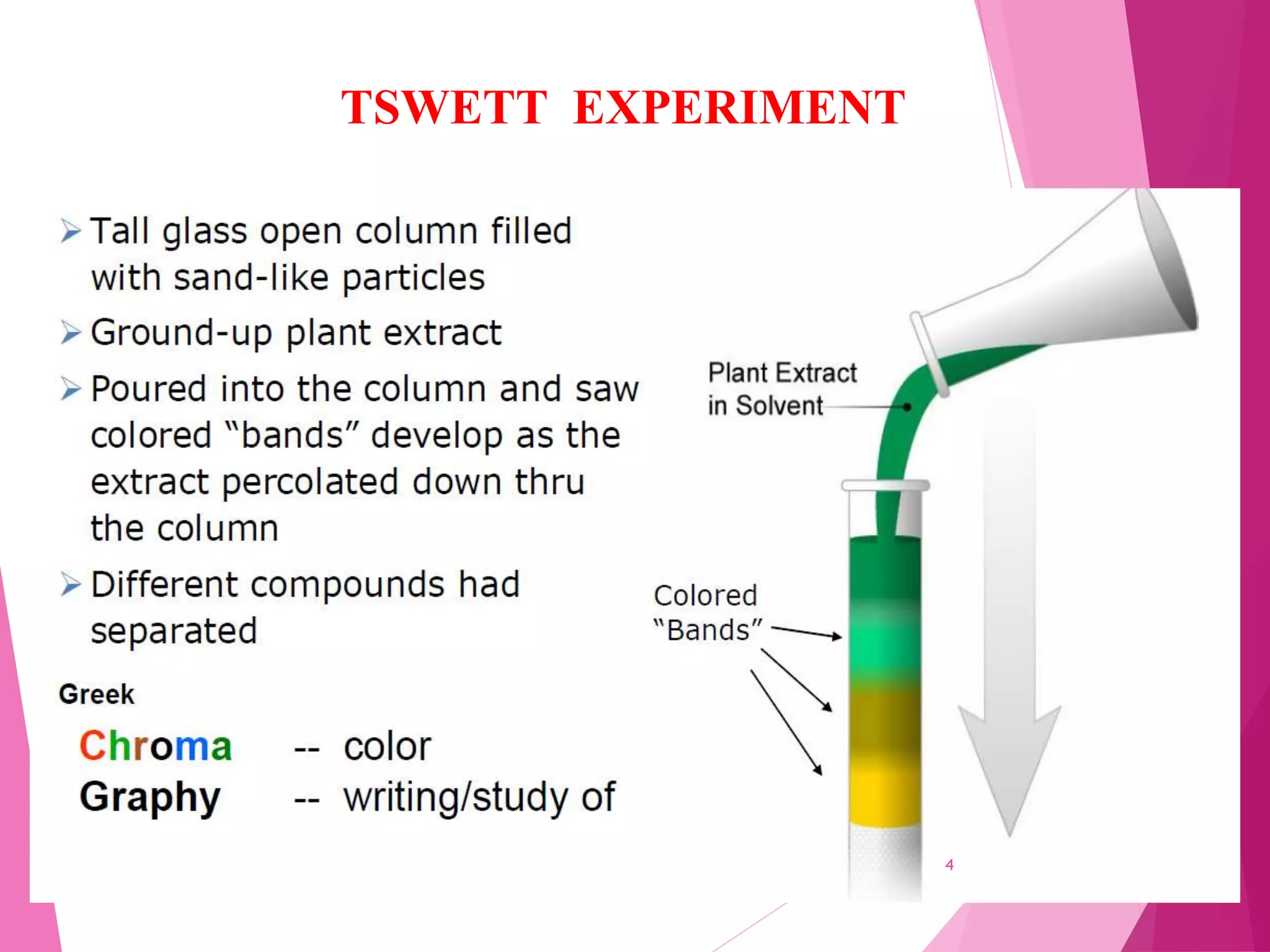
TSWETT EXPERIMENT
4
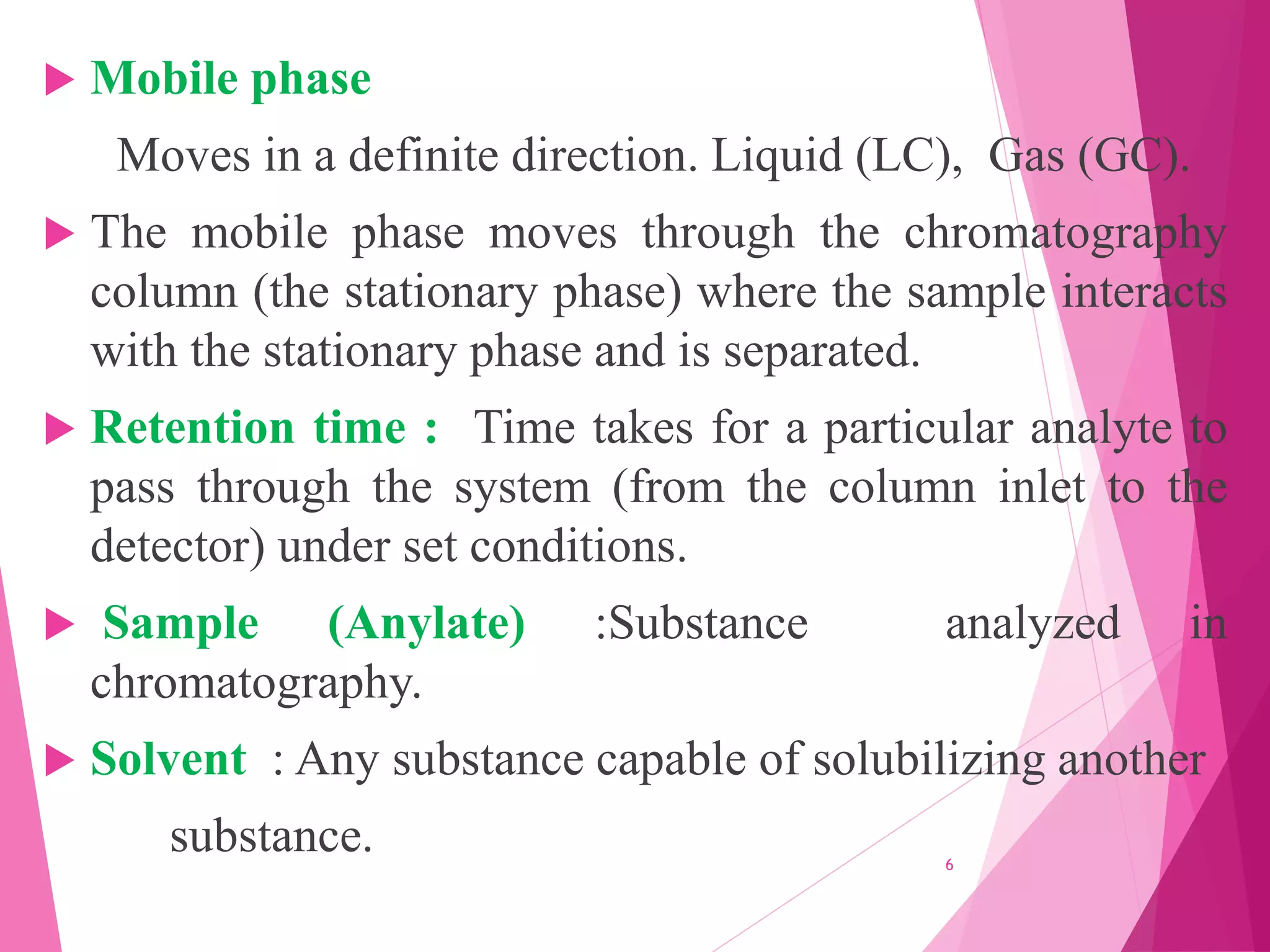
 Chromatograph - equipment that enables a sophisticated
separation
EX. Gas chromatography or Liquid chromatography
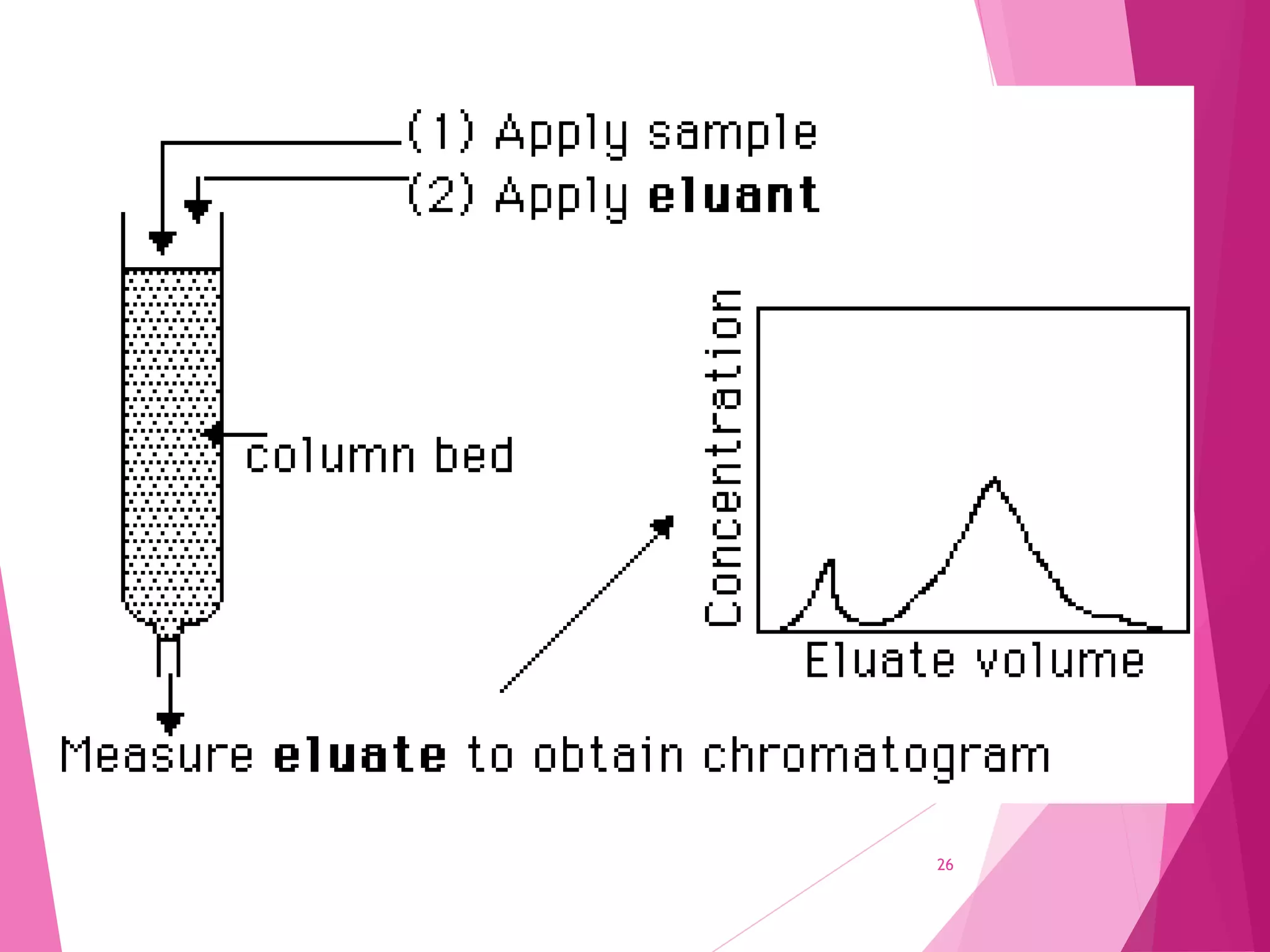
 Eluent - Fluid entering column/ solvent that carries the analyte.
 Eluate - Mobile phase leaving the column.
 Stationary phase - Immobilized phase
 Immobilized on the support particles or on the inner wall of the
column tubing.
 Examples : Silica layer - Thin Layer Chromatography
5
CHROMATOGRAPHY TERMS
 Mobile phase
Moves in a definite direction. Liquid (LC), Gas (GC).
 The mobile phase moves through the chromatography
column (the stationary phase) where the sample interacts
with the stationary phase and is separated.
 Retention time : Time takes for a particular analyte to
pass through the system (from the column inlet to the
detector) under set conditions.
 Sample (Anylate) :Substance analyzed in
chromatography.
 Solvent : Any substance capable of solubilizing another
substance. 6
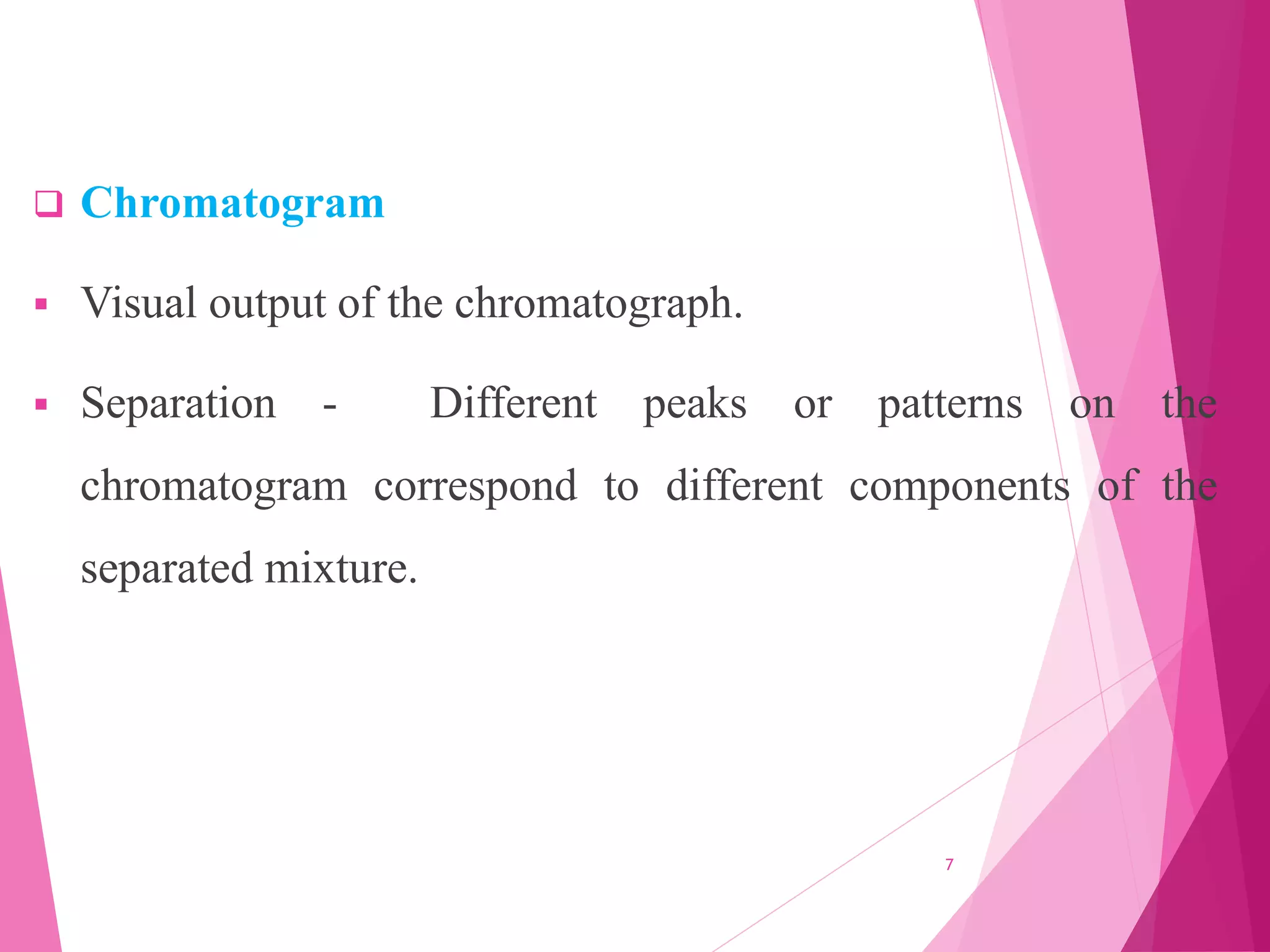
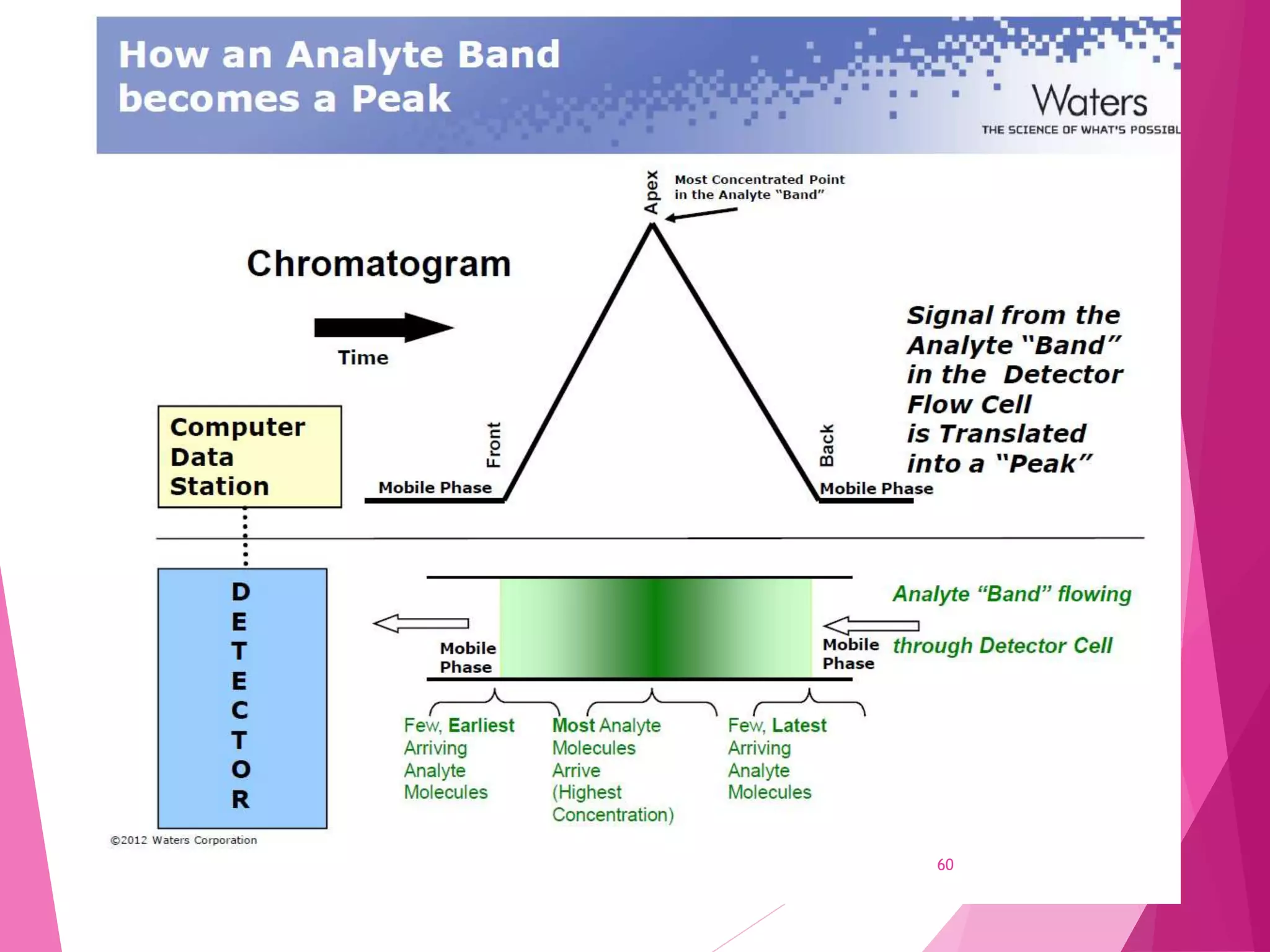
 Chromatogram
 Visual output of the chromatograph.
 Separation - Different peaks or patterns on the
chromatogram correspond to different components of the
separated mixture.
7
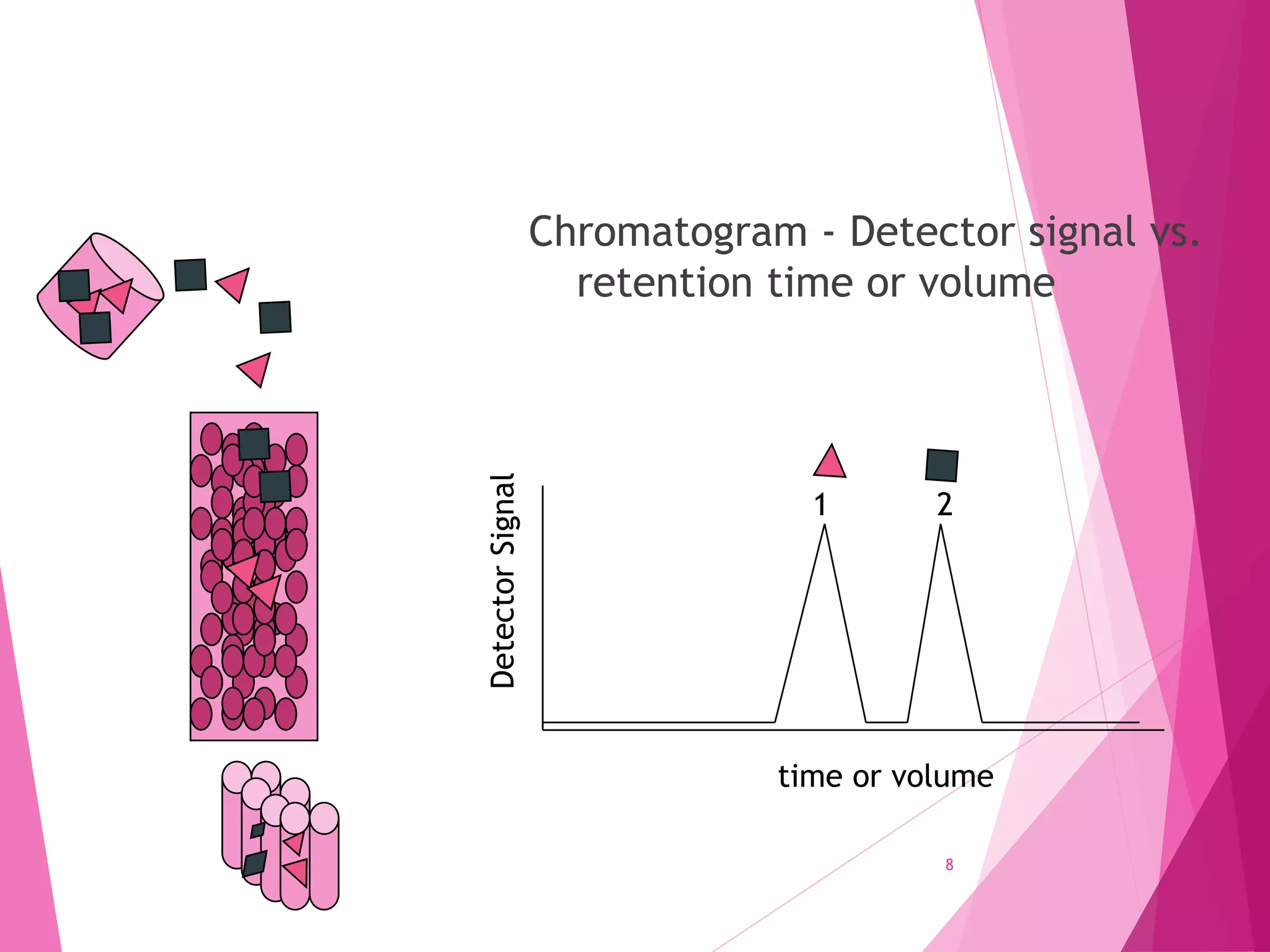
Chromatogram - Detector signal vs.
retention time or volume
8
time or volume
Detector
Signal 1 2
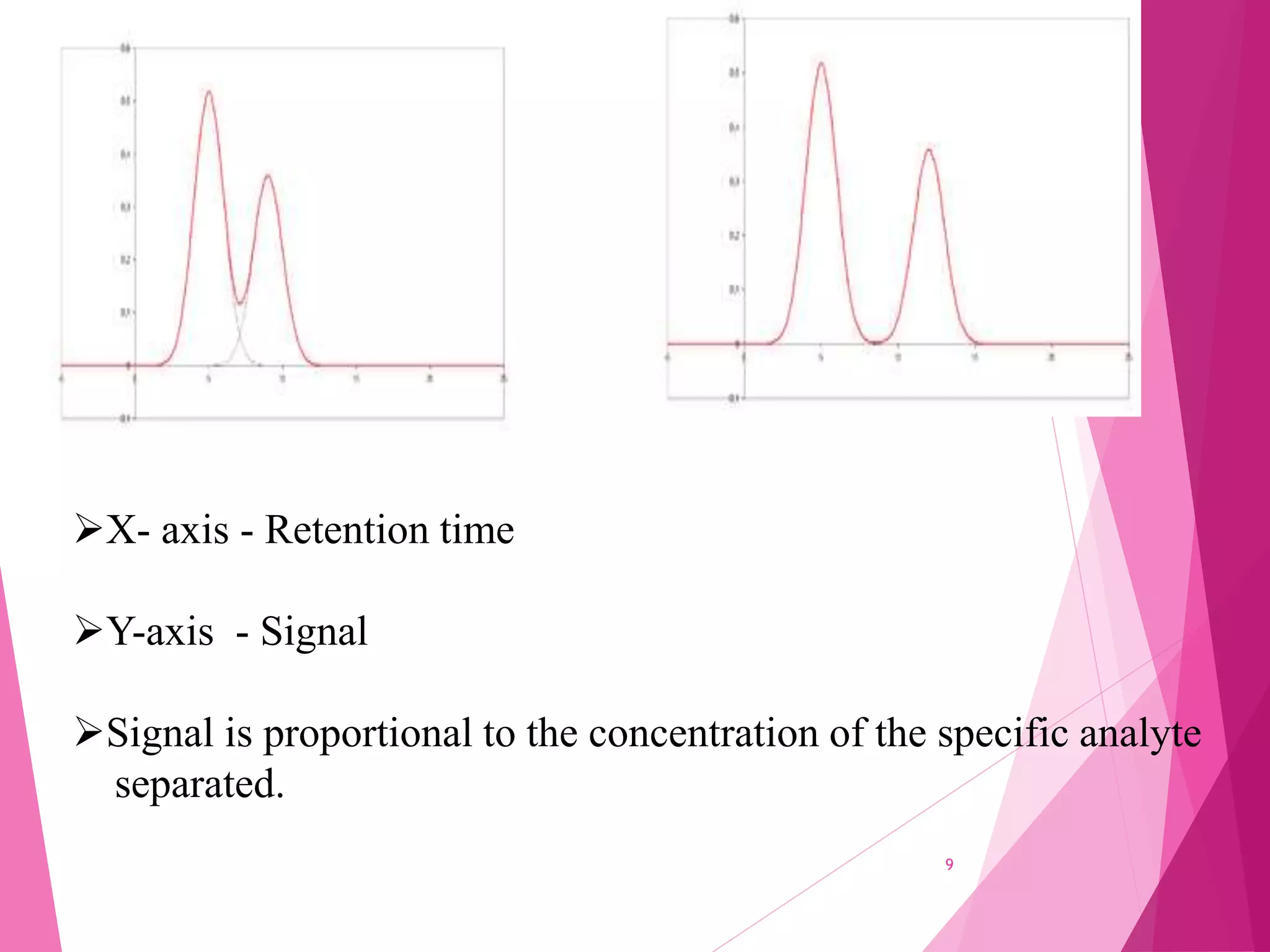
X- axis - Retention time
Y-axis - Signal
Signal is proportional to the concentration of the specific analyte
separated.
9
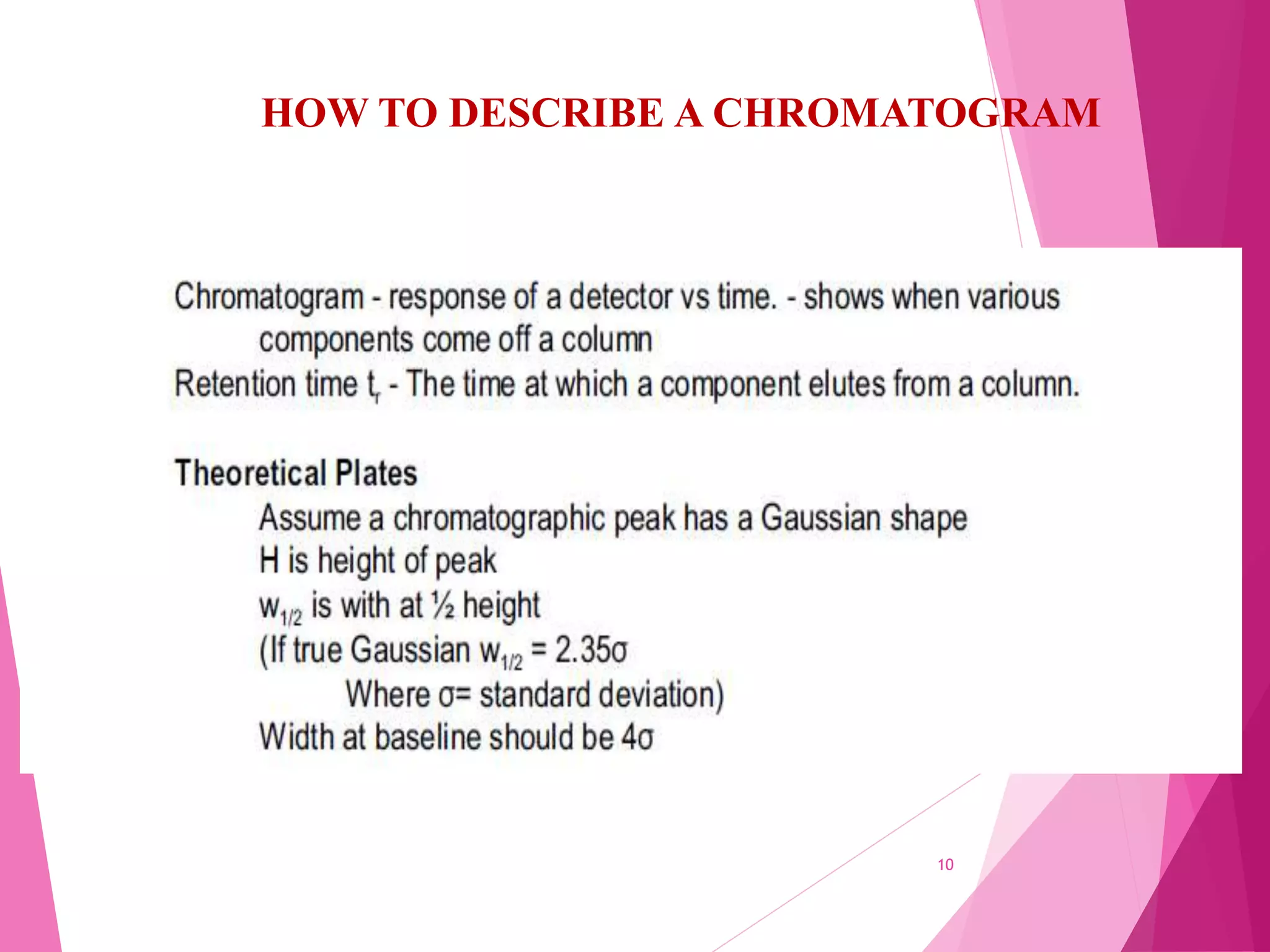
HOW TO DESCRIBE A CHROMATOGRAM
10
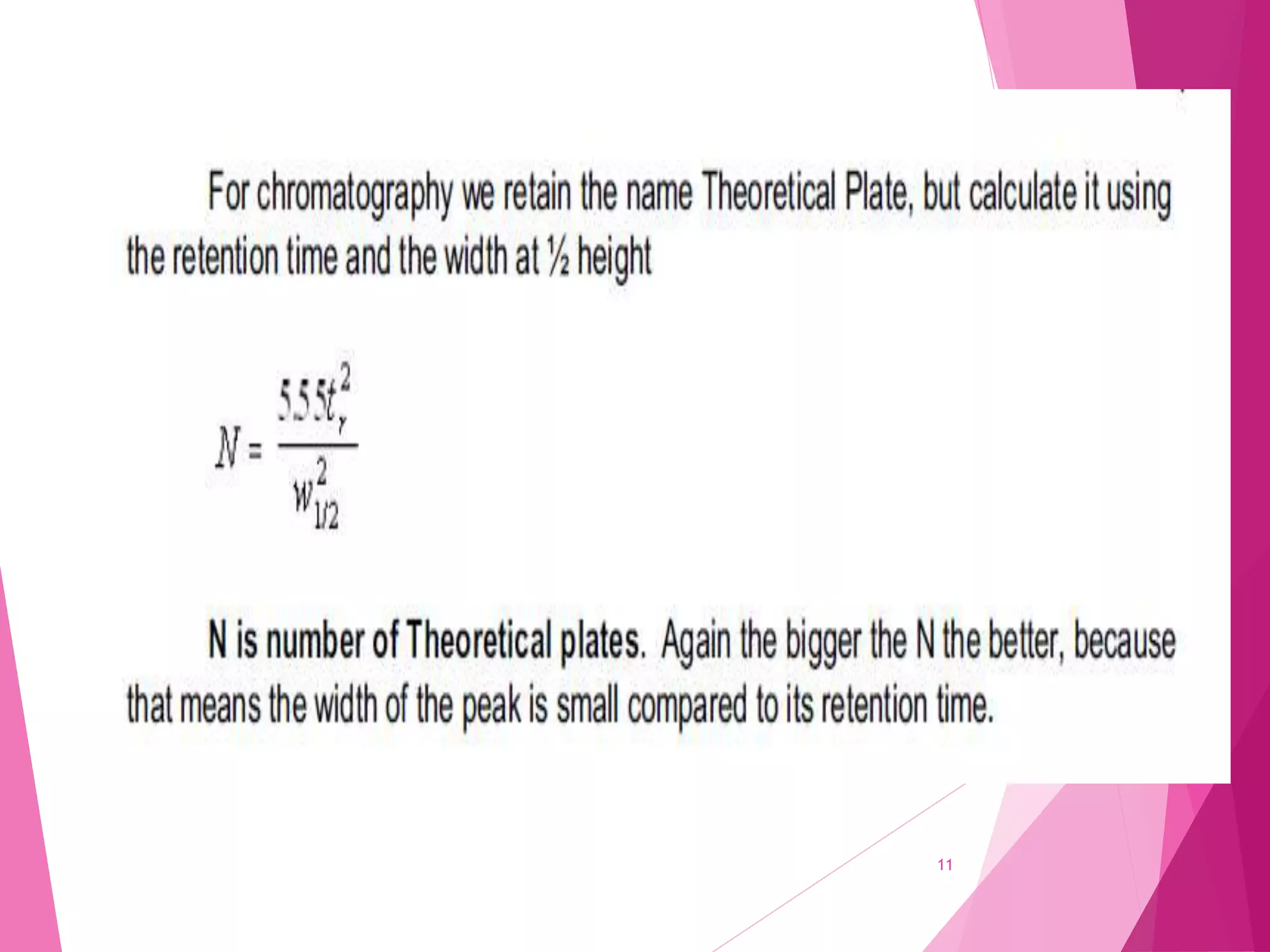
11
PRICNIPLES OF CHROMATOGRAPGHY
 Physical method of separation that distributes components
to separate between two phases moves in a definite
direction.
 Substances are separated based on their differential
distribution between two phases
 Substances will move with the mobile phase at different
rate depending upon their Partition or Distribution co-
efficients.
12
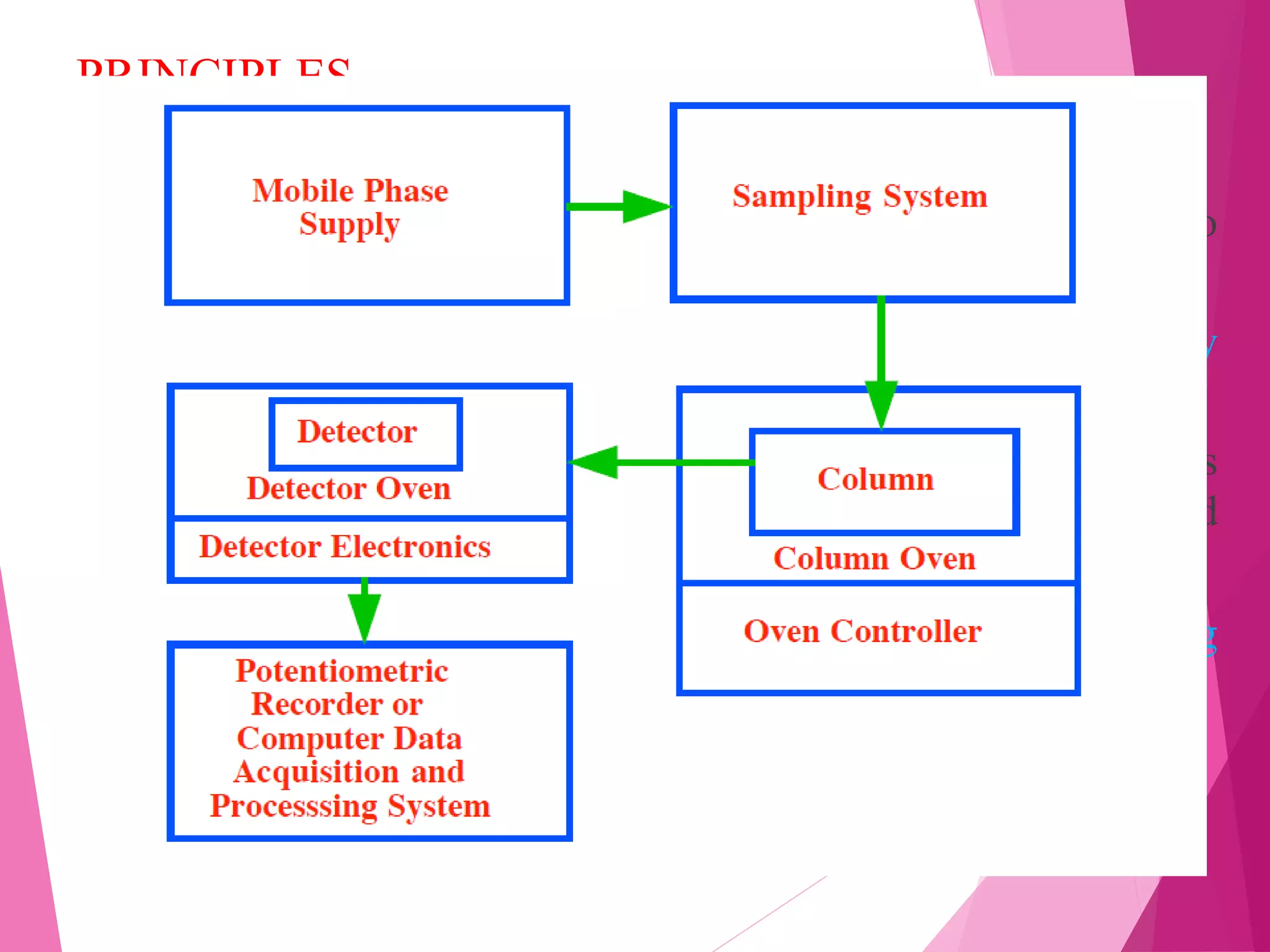
PRINCIPLES
 The samples are subjected to flow by mobile liquid phase onto
or through the stable stationary phase.
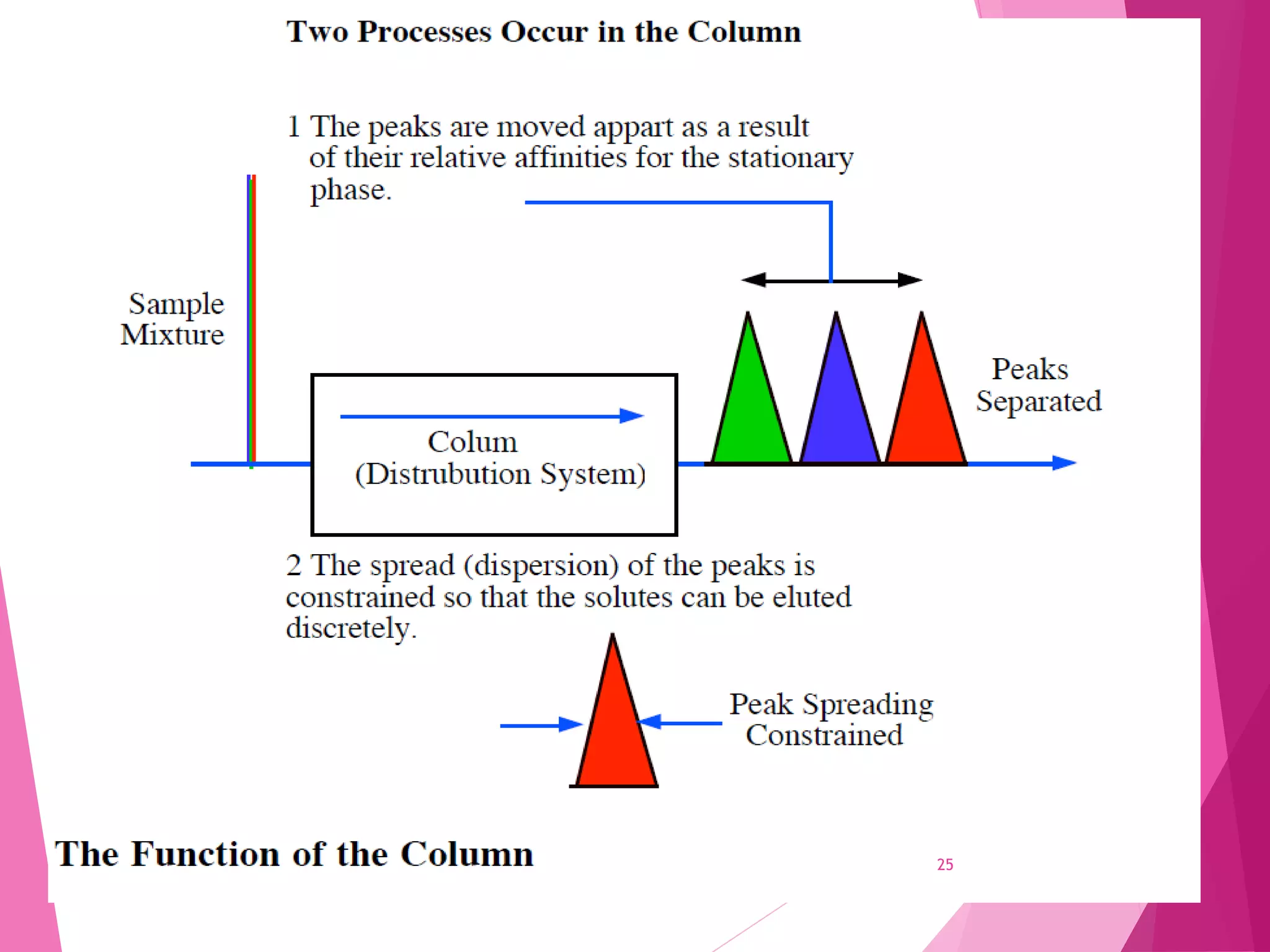
 Separation of fractions of mixture based on their relative affinity
towards the two phases during their travel.
 The fraction with greater affinity to stationary phase travels
slower and shorter while that with less affinity travels faster and
longer.
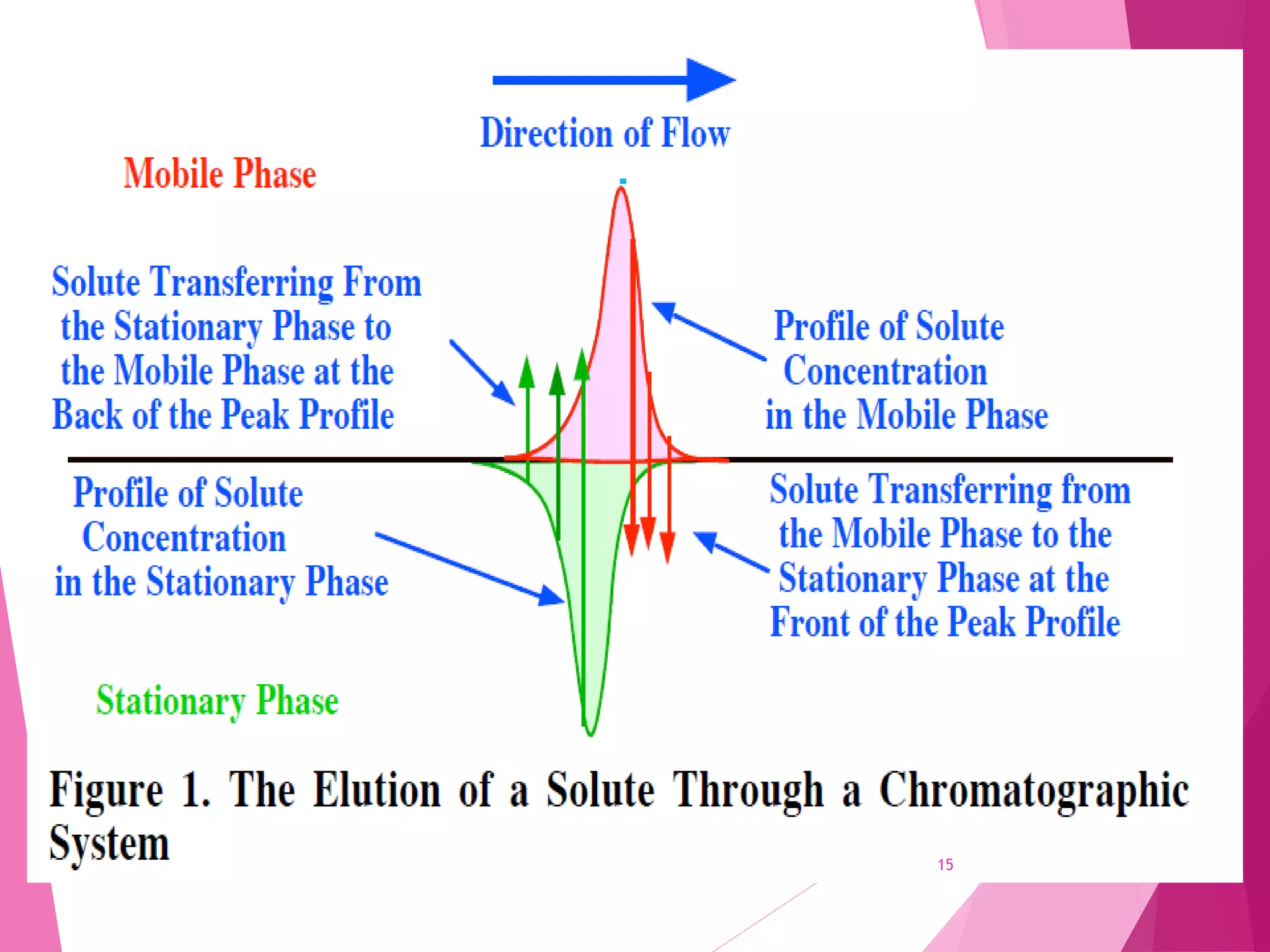
 The separation is based on Differential partitioning
between the mobile and stationary phases.
13
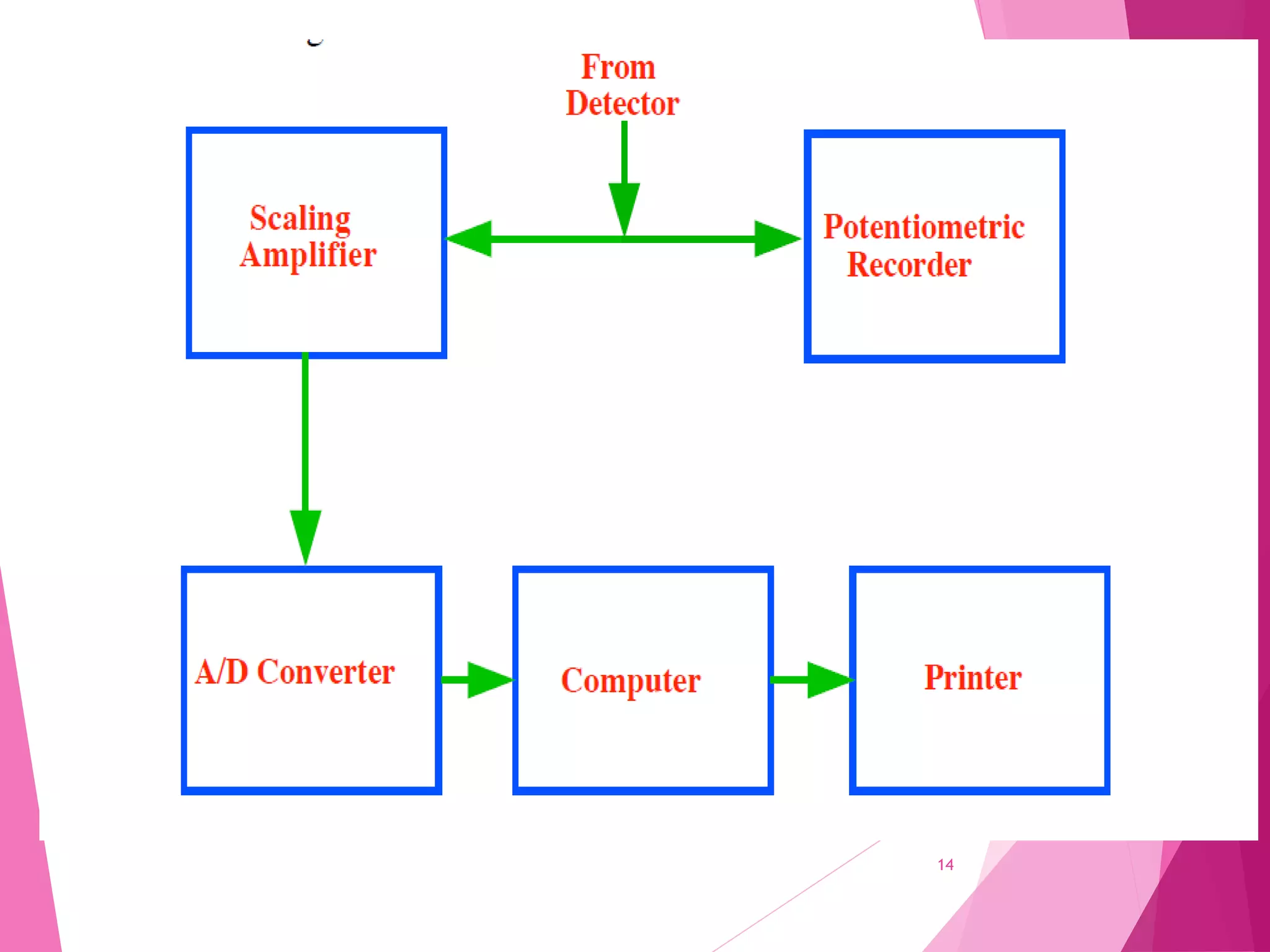
14
15
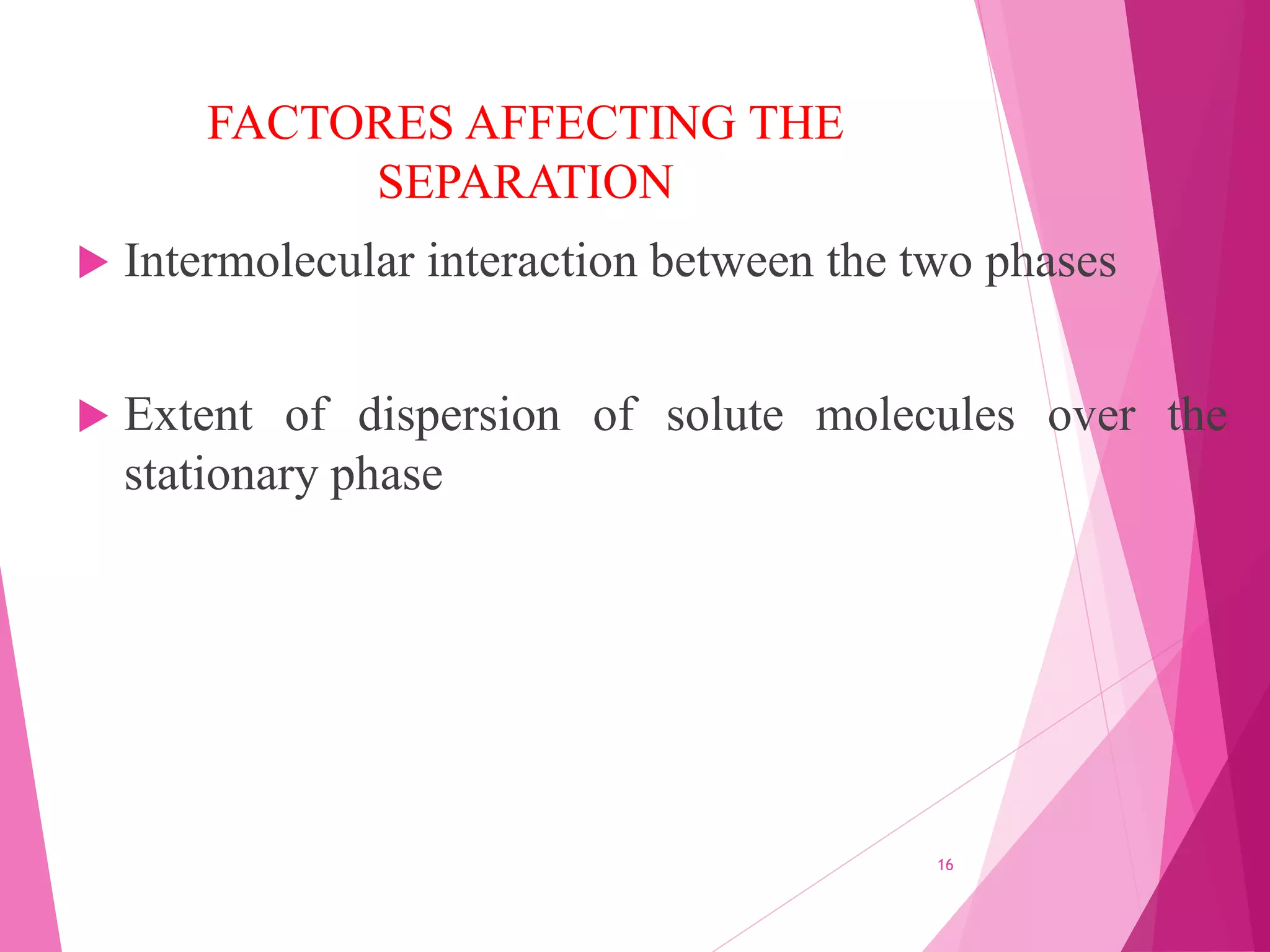
FACTORES AFFECTING THE
SEPARATION
 Intermolecular interaction between the two phases
 Extent of dispersion of solute molecules over the
stationary phase
16
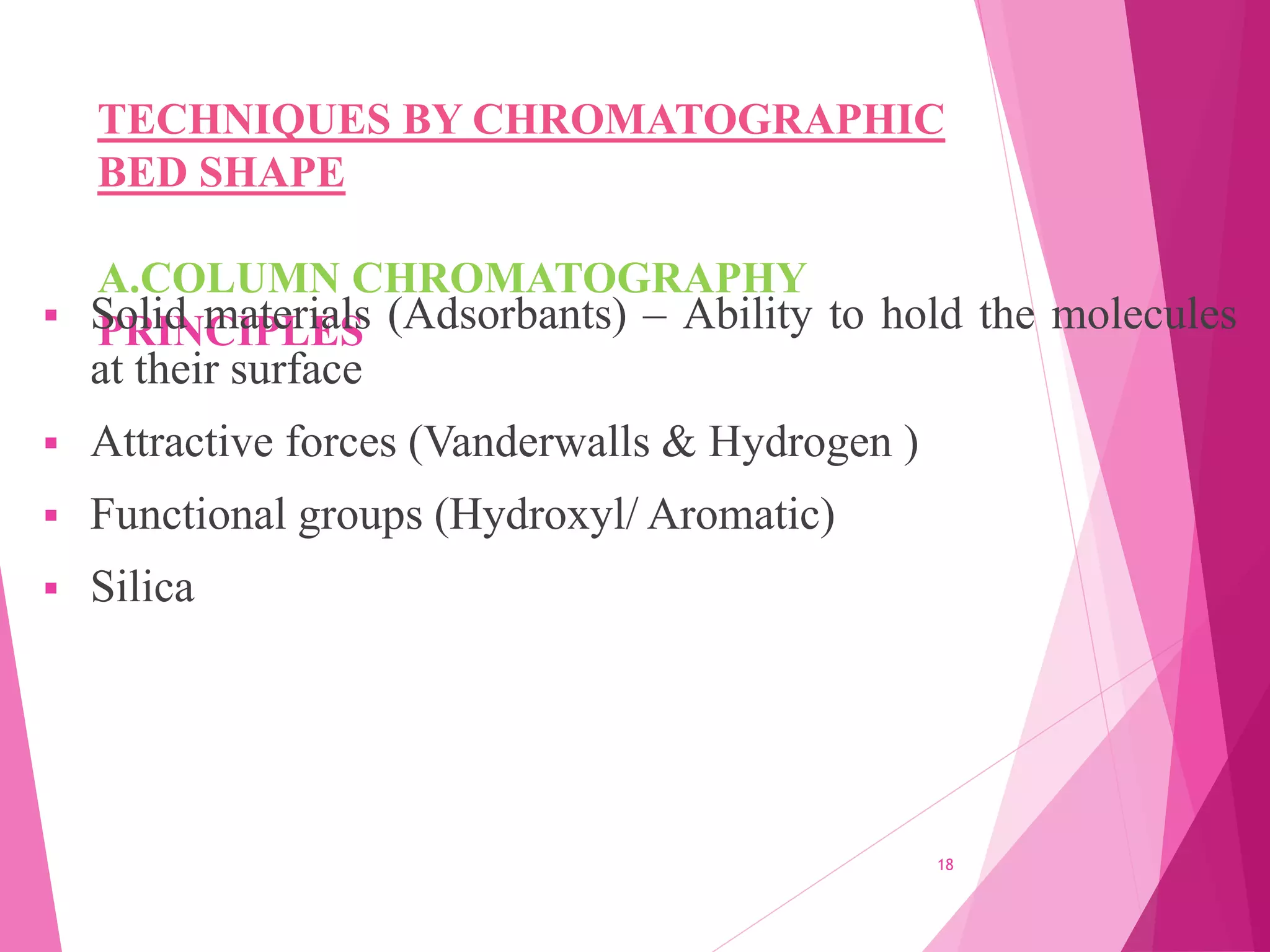
CLASSIFICATION OF CHROMATOGRAPHY
 Techniques by Chromatographic bed shape
 Column chromatography
 Planar chromatography
 Paper chromatography
 Thin layer chromatography
 Techniques by Physical state of mobile phase
 Gas chromatography
 Liquid chromatography
 Affinity chromatography
 Supercritical fluid chromatography
17
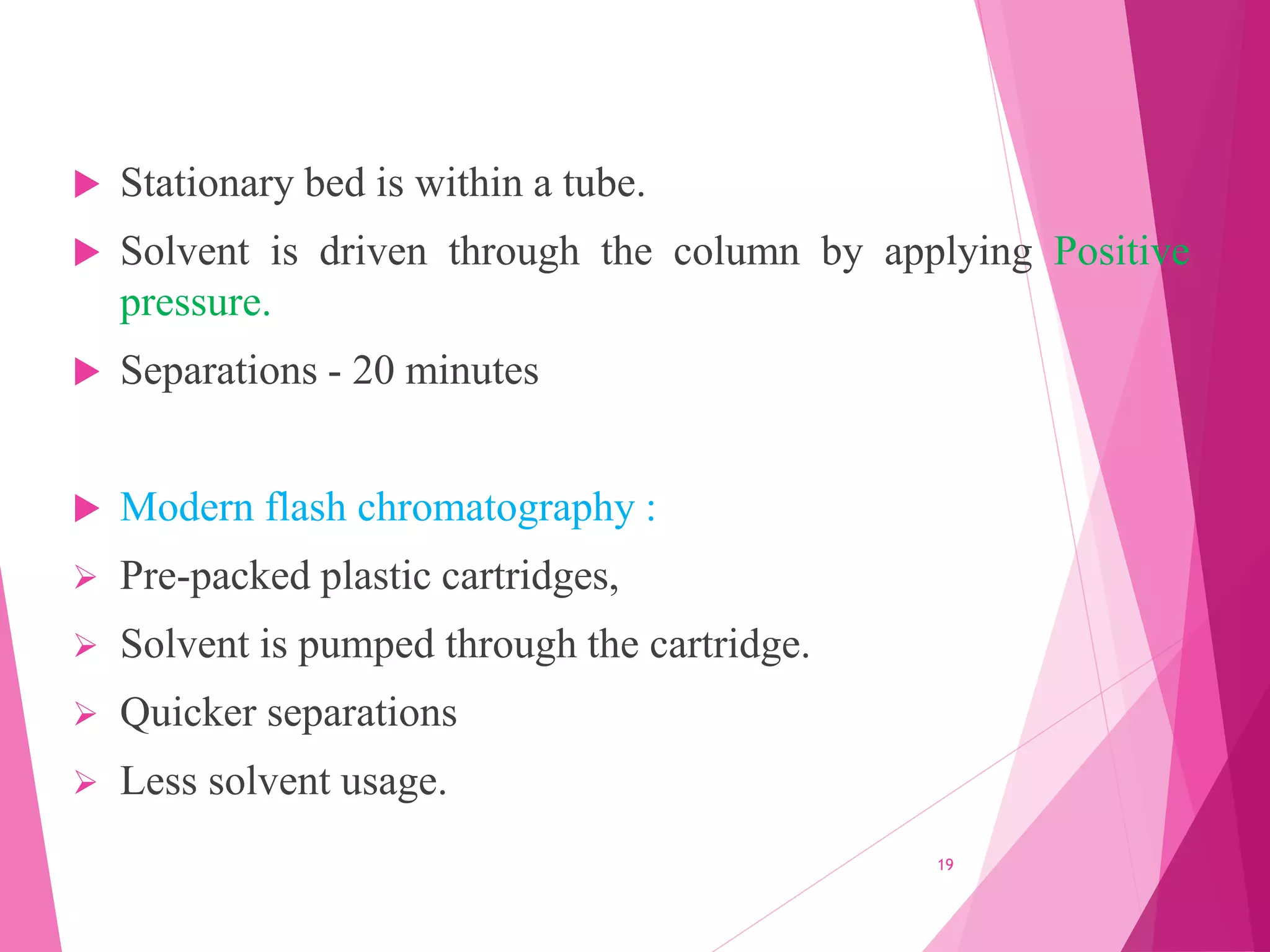
TECHNIQUES BY CHROMATOGRAPHIC
BED SHAPE
A.COLUMN CHROMATOGRAPHY
PRINCIPLES
 Solid materials (Adsorbants) – Ability to hold the molecules
at their surface
 Attractive forces (Vanderwalls & Hydrogen )
 Functional groups (Hydroxyl/ Aromatic)
 Silica
18
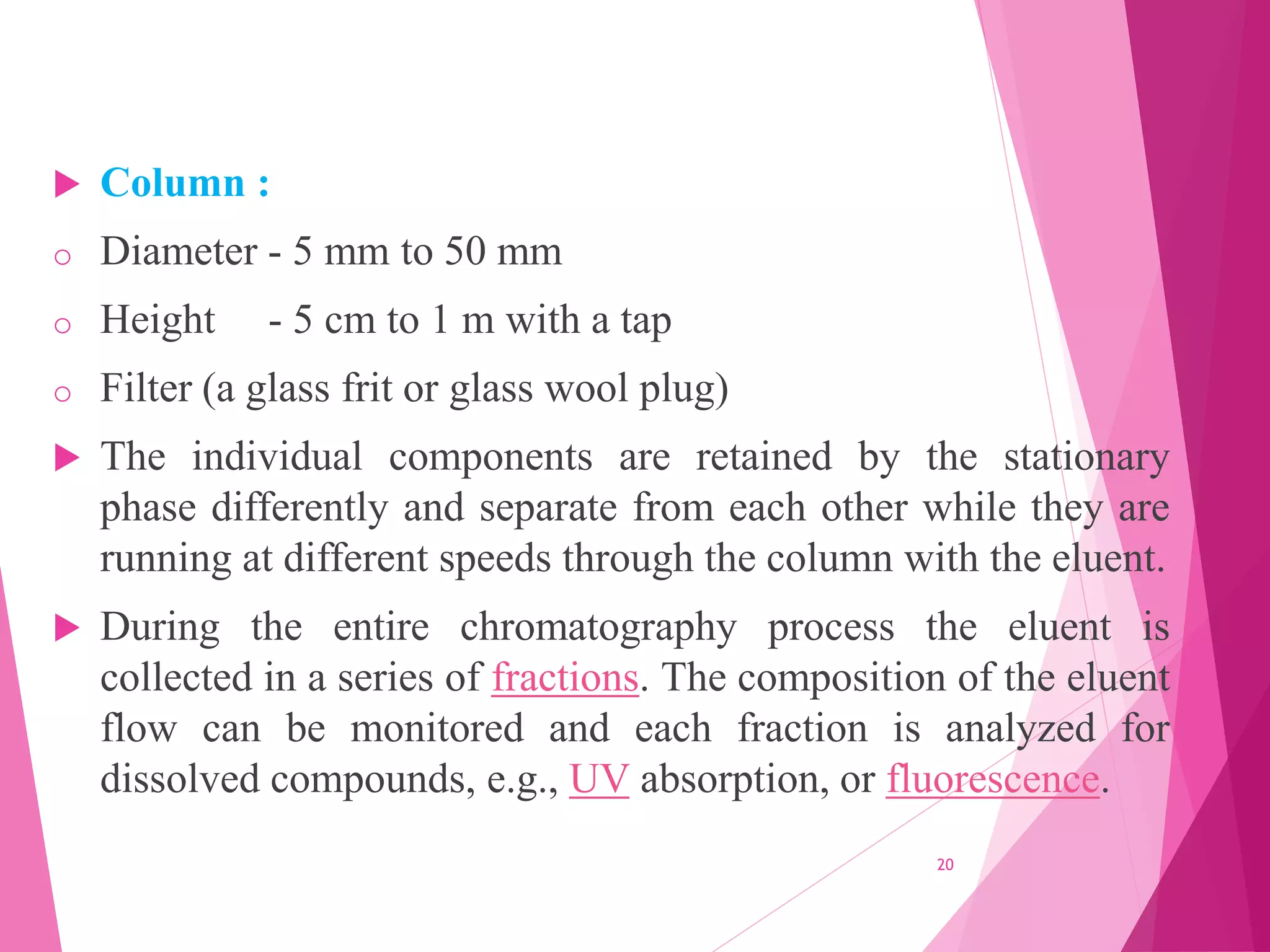
 Stationary bed is within a tube.
 Solvent is driven through the column by applying Positive
pressure.
 Separations - 20 minutes
 Modern flash chromatography :
 Pre-packed plastic cartridges,
 Solvent is pumped through the cartridge.
 Quicker separations
 Less solvent usage.
19
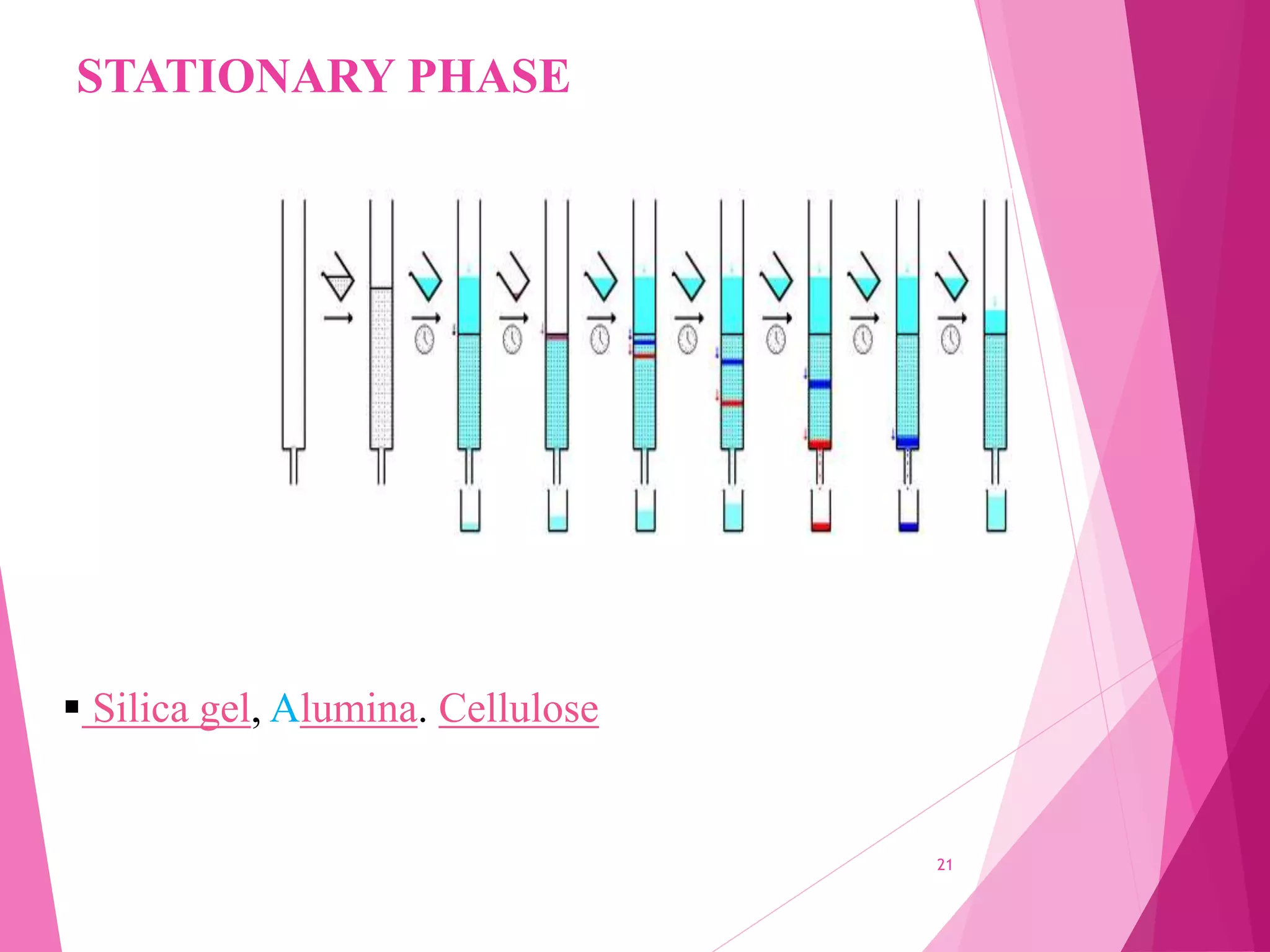
 Column :
o Diameter - 5 mm to 50 mm
o Height - 5 cm to 1 m with a tap
o Filter (a glass frit or glass wool plug)
 The individual components are retained by the stationary
phase differently and separate from each other while they are
running at different speeds through the column with the eluent.
 During the entire chromatography process the eluent is
collected in a series of fractions. The composition of the eluent
flow can be monitored and each fraction is analyzed for
dissolved compounds, e.g., UV absorption, or fluorescence.
20
STATIONARY PHASE
21
 Silica gel, Alumina. Cellulose
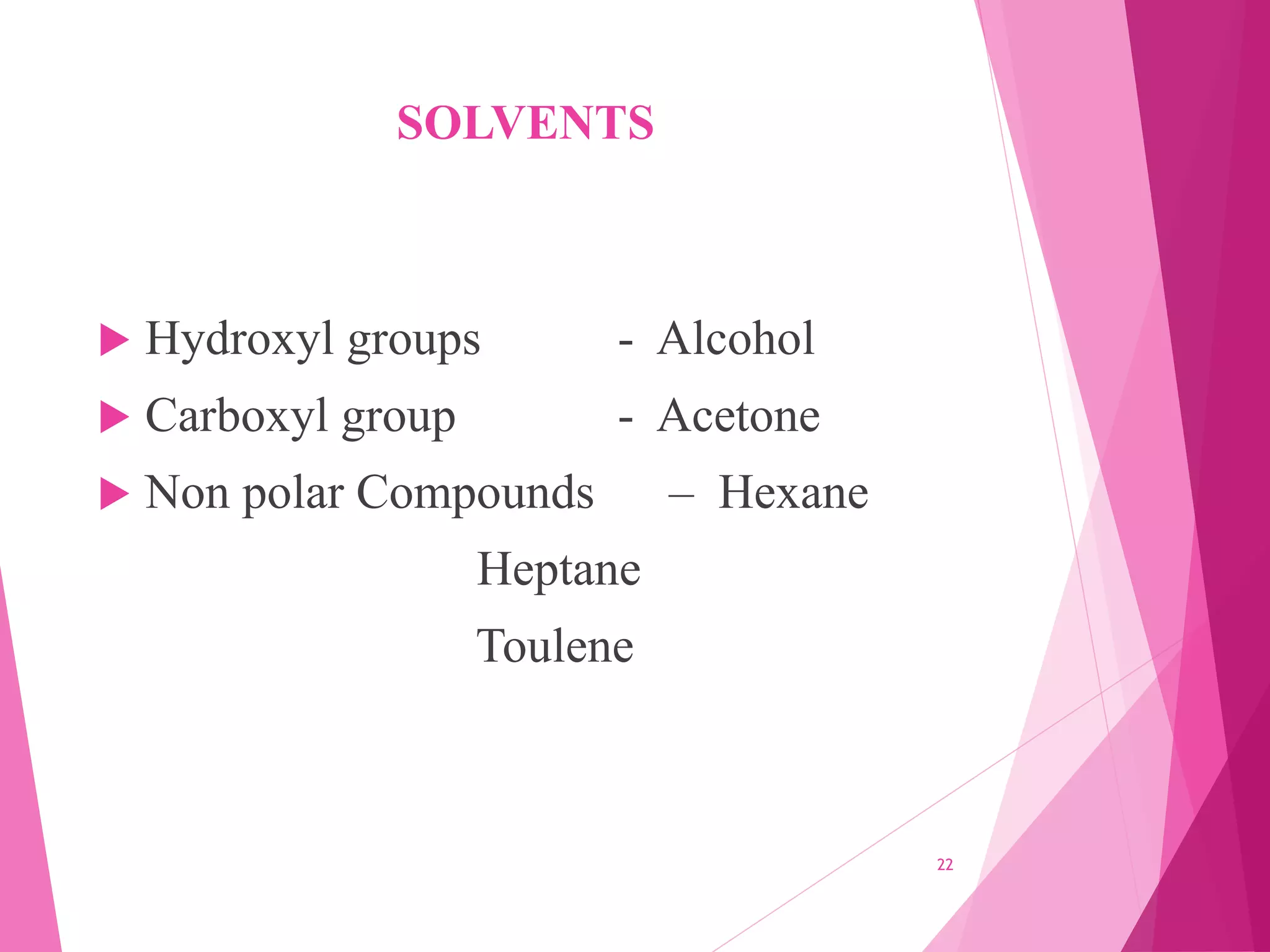
SOLVENTS
 Hydroxyl groups - Alcohol
 Carboxyl group - Acetone
 Non polar Compounds – Hexane
Heptane
Toulene
22
 Flow rate - Separation.
 Pump or compressed gas (e.g. Air, Nitrogen, Argon)
 A faster flow rate of the eluent:
 Minimizes the time required to run a column
 Minimizes diffusion
 Better separation.
23
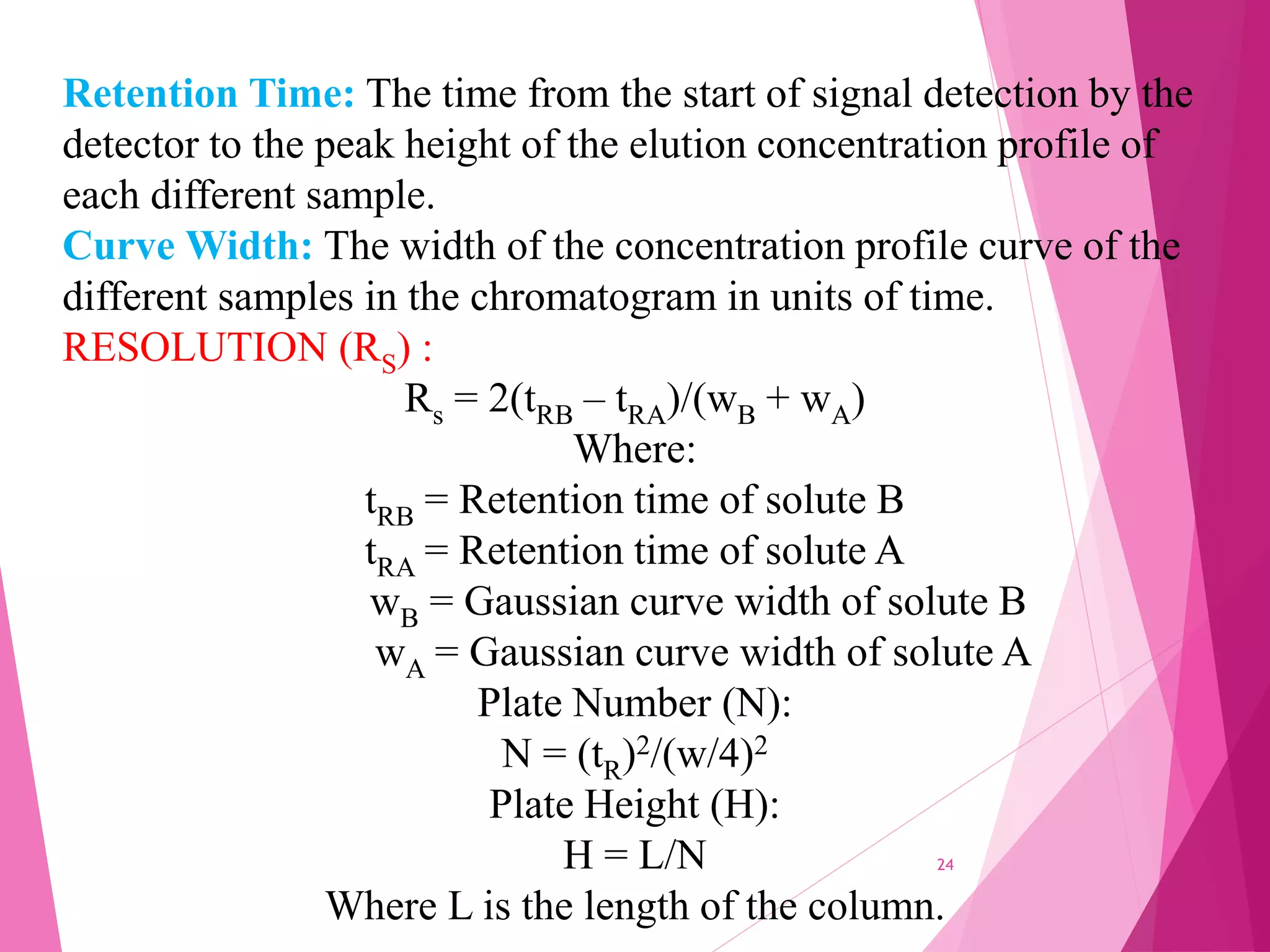
Retention Time: The time from the start of signal detection by the
detector to the peak height of the elution concentration profile of
each different sample.
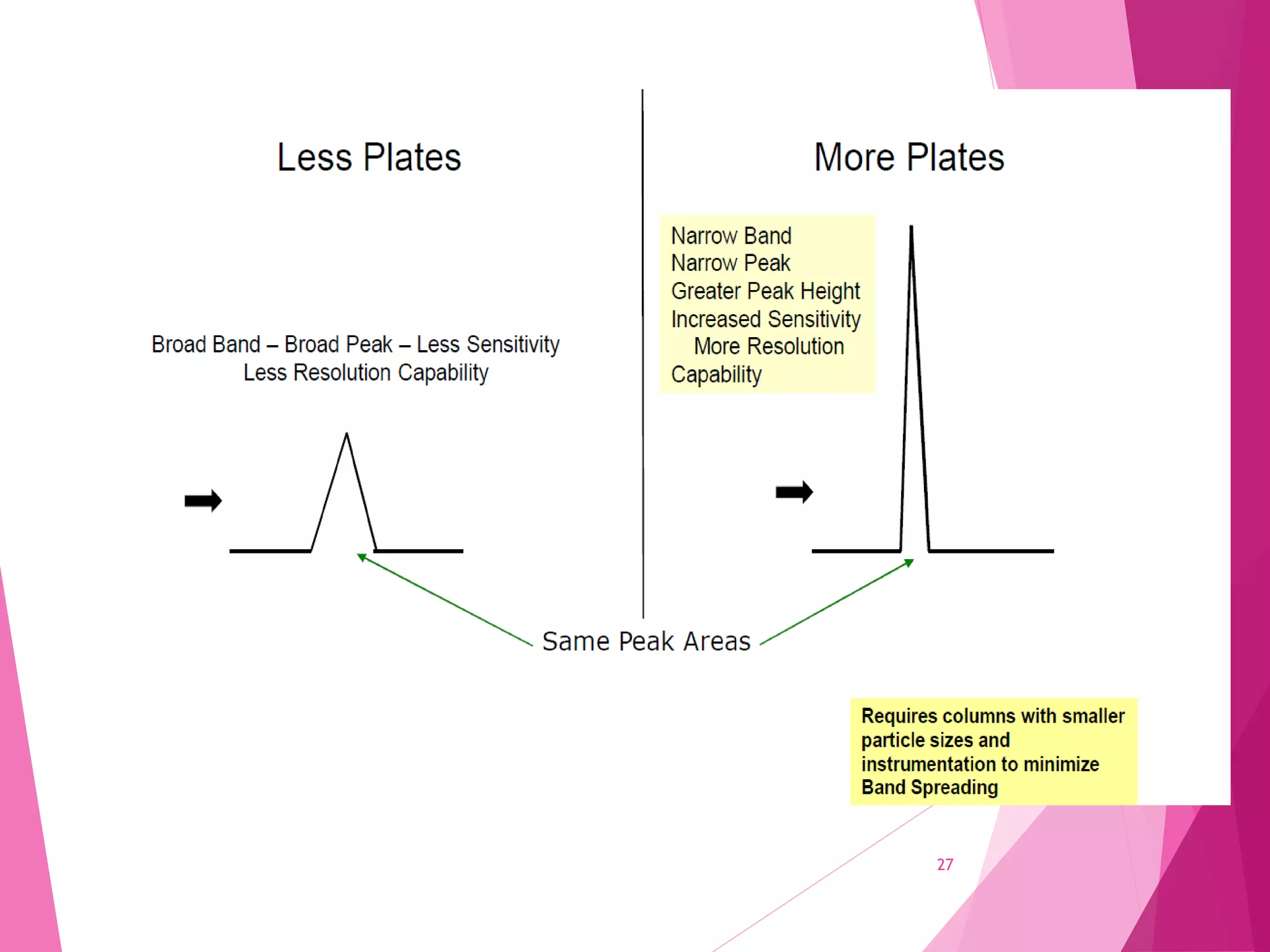
Curve Width: The width of the concentration profile curve of the
different samples in the chromatogram in units of time.
RESOLUTION (RS) :
Rs = 2(tRB – tRA)/(wB + wA)
Where:
tRB = Retention time of solute B
tRA = Retention time of solute A
wB = Gaussian curve width of solute B
wA = Gaussian curve width of solute A
Plate Number (N):
N = (tR)2/(w/4)2
Plate Height (H):
H = L/N
Where L is the length of the column.
24
25
26
27
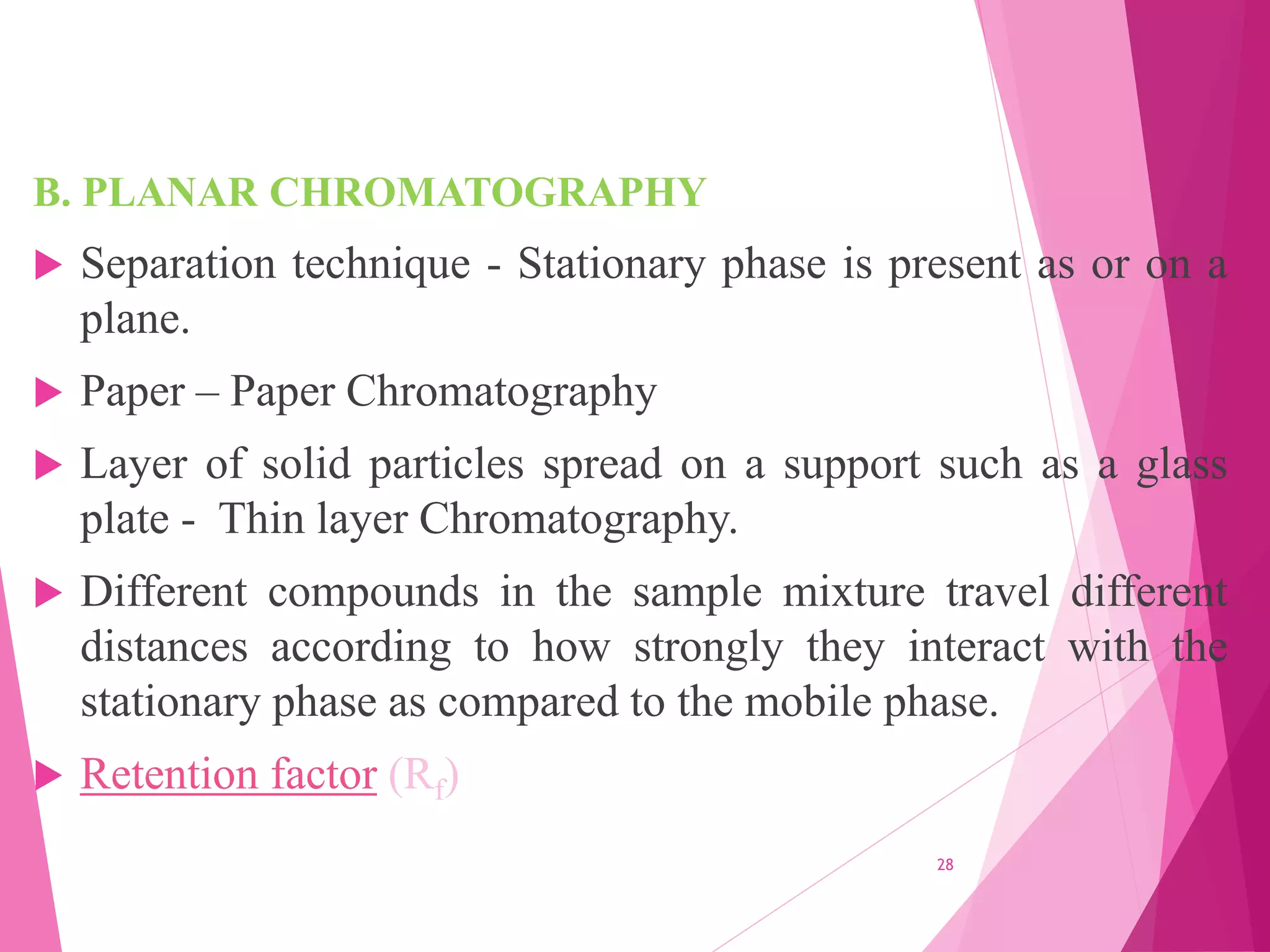
B. PLANAR CHROMATOGRAPHY
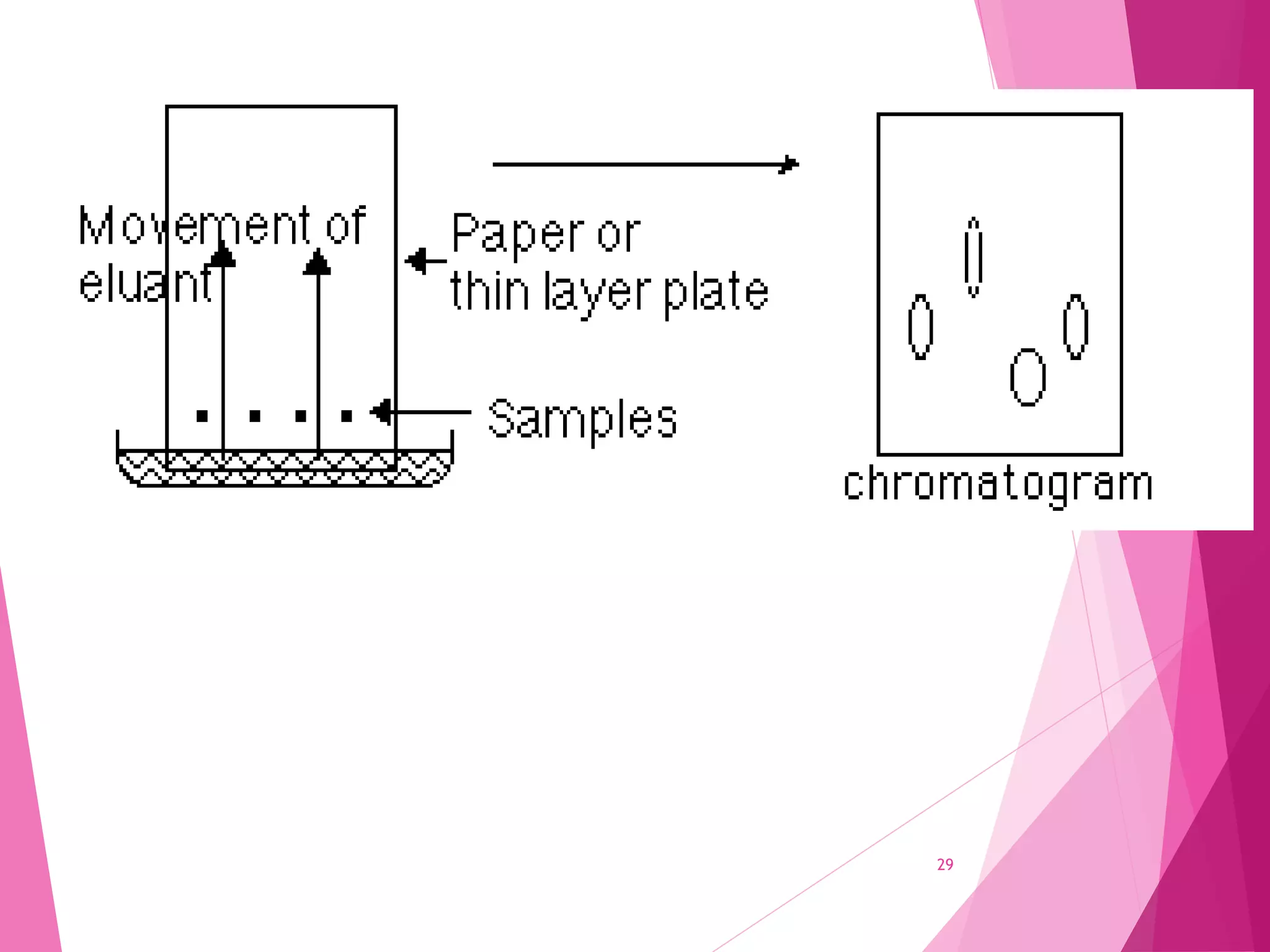
 Separation technique - Stationary phase is present as or on a
plane.
 Paper – Paper Chromatography
 Layer of solid particles spread on a support such as a glass
plate - Thin layer Chromatography.
 Different compounds in the sample mixture travel different
distances according to how strongly they interact with the
stationary phase as compared to the mobile phase.
 Retention factor (Rf)
28
29
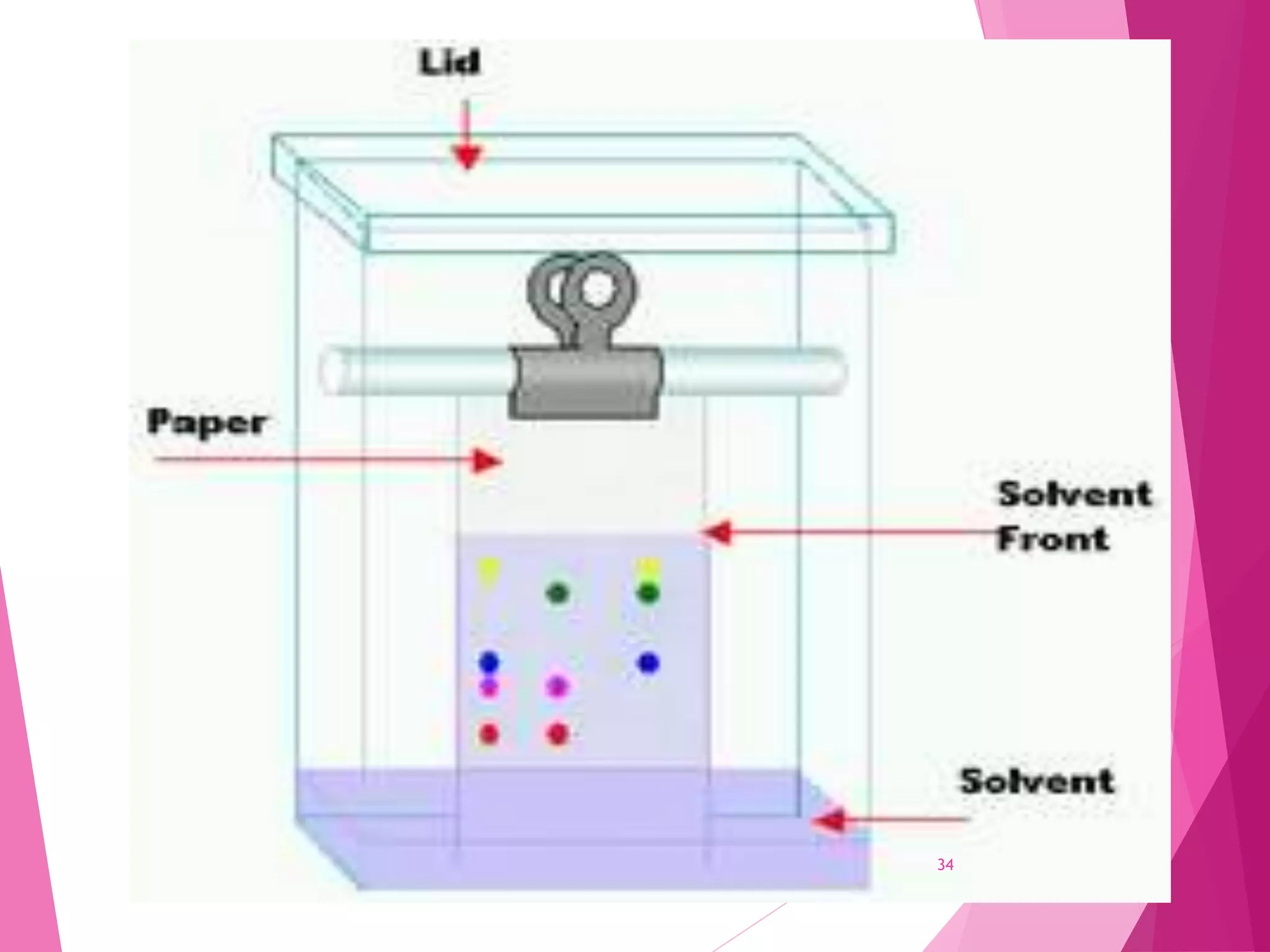
PAPER CHROMATOGRAPHY
30
31
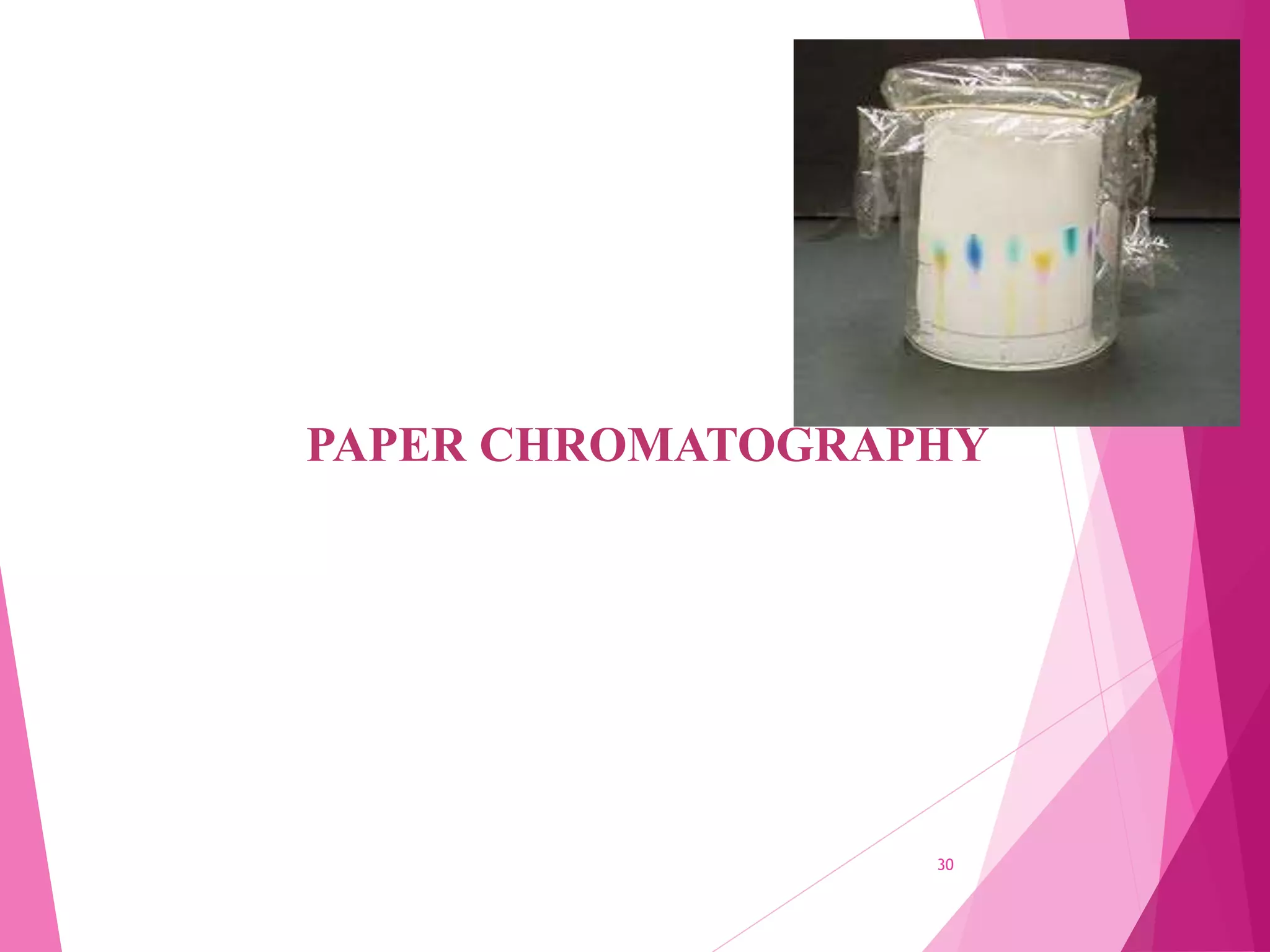
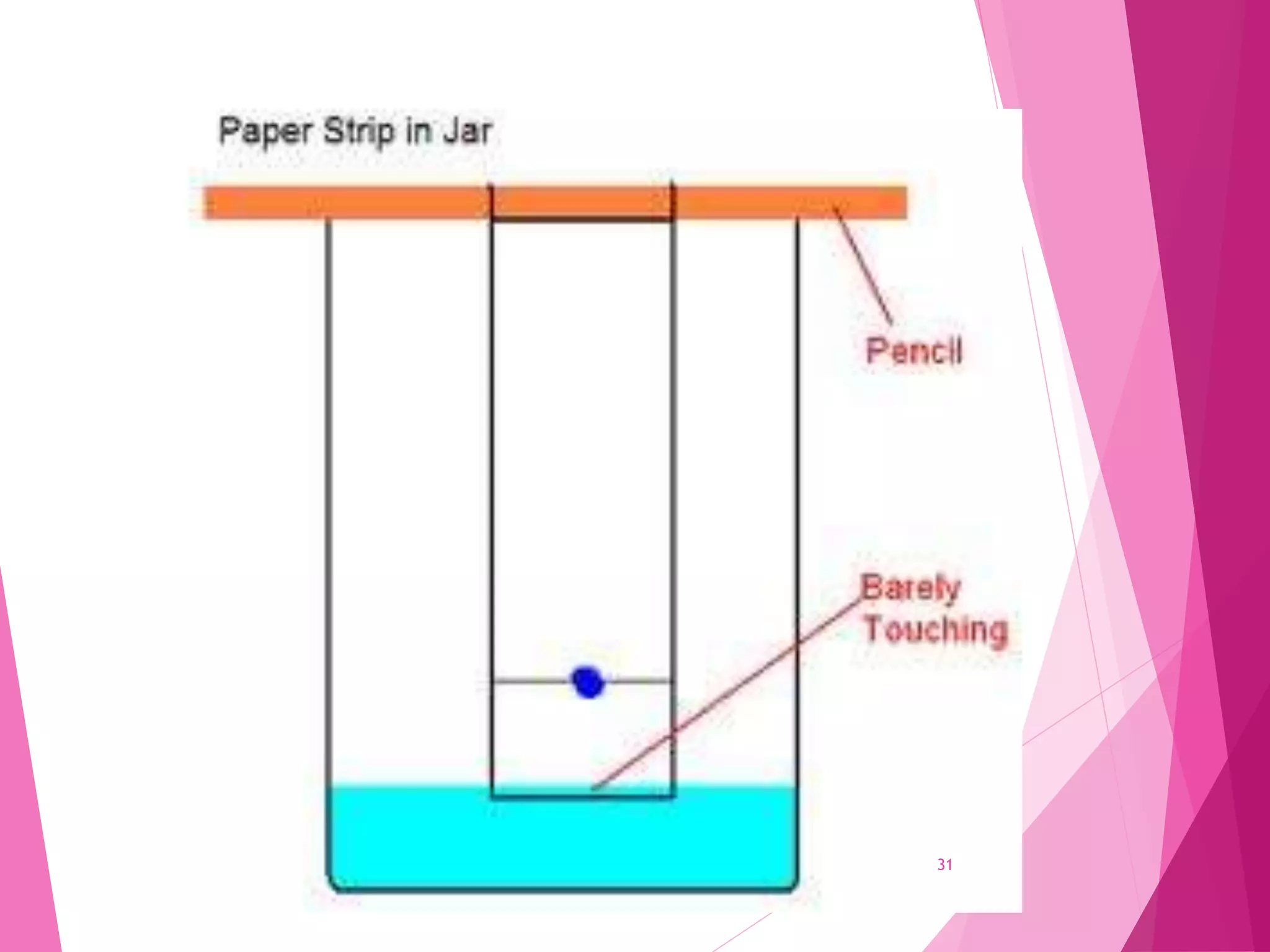
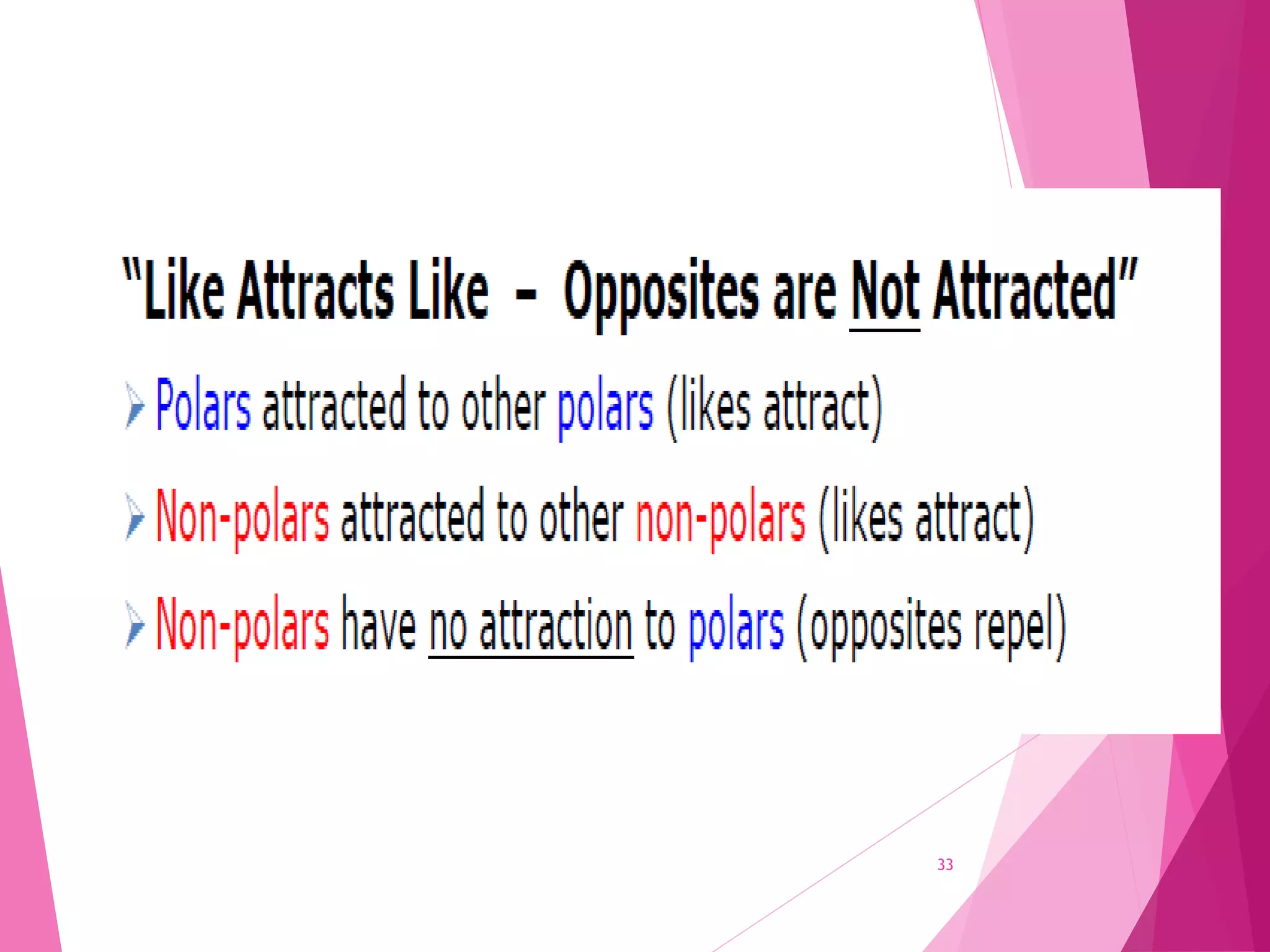
 This paper is made of cellulose, a polar substance, and the
compounds within the mixture travel farther if they are non-
polar.
 More polar substances bond with the cellulose paper more
quickly, and therefore do not travel as far.
32
PRINCIPLE
33
34
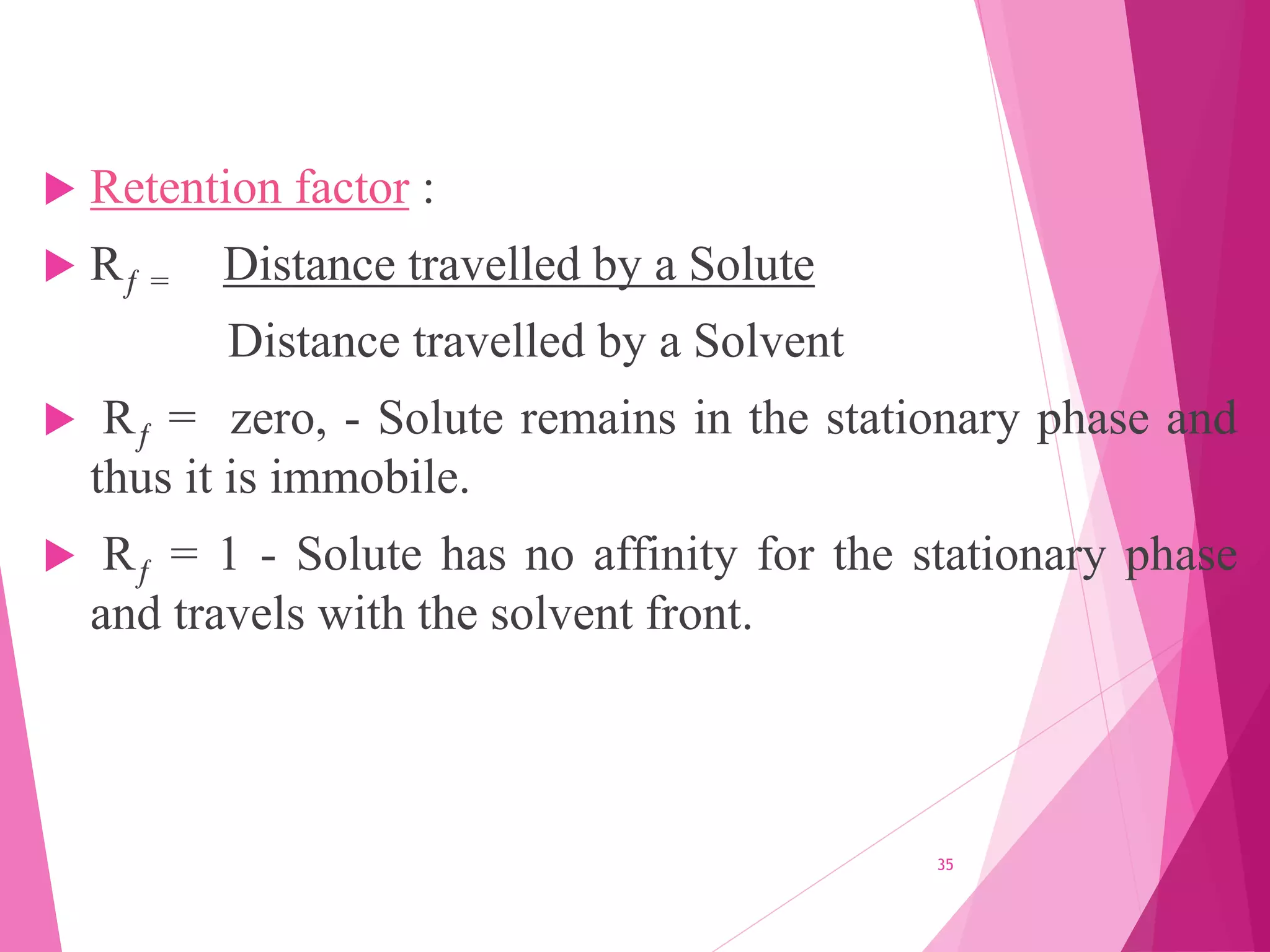
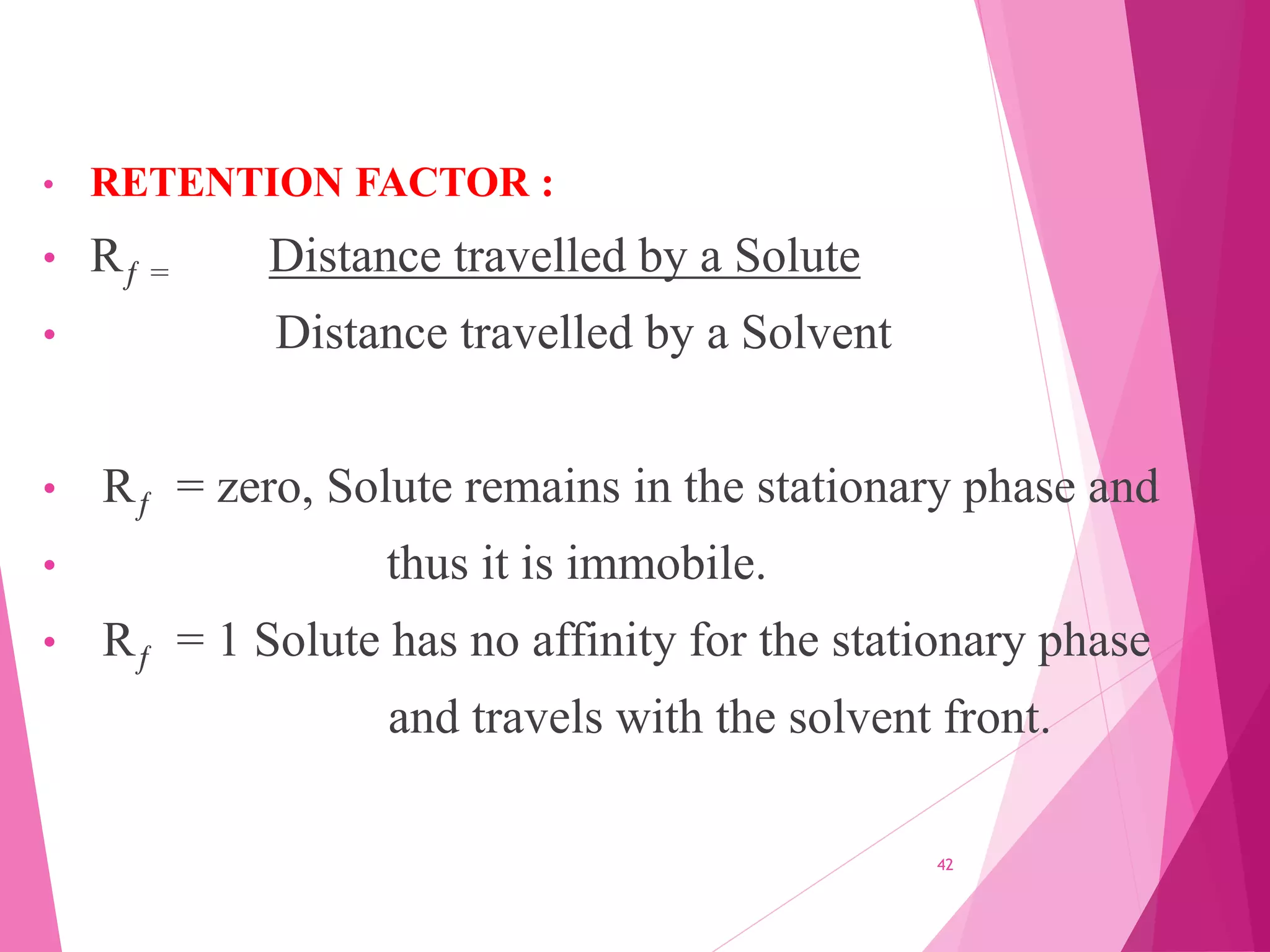
 Retention factor :
 Rƒ = Distance travelled by a Solute
Distance travelled by a Solvent
 Rƒ = zero, - Solute remains in the stationary phase and
thus it is immobile.
 Rƒ = 1 - Solute has no affinity for the stationary phase
and travels with the solvent front.
35
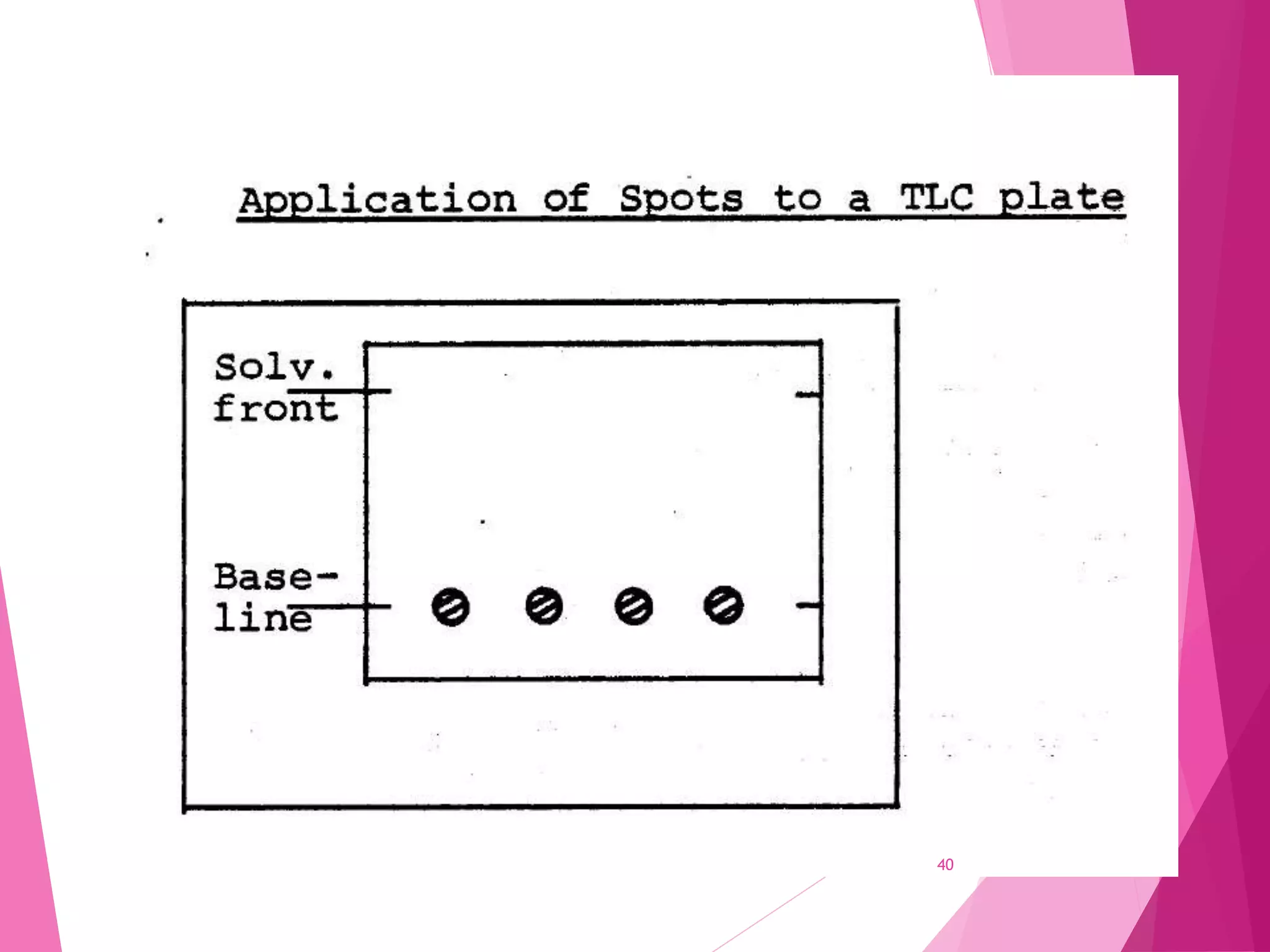
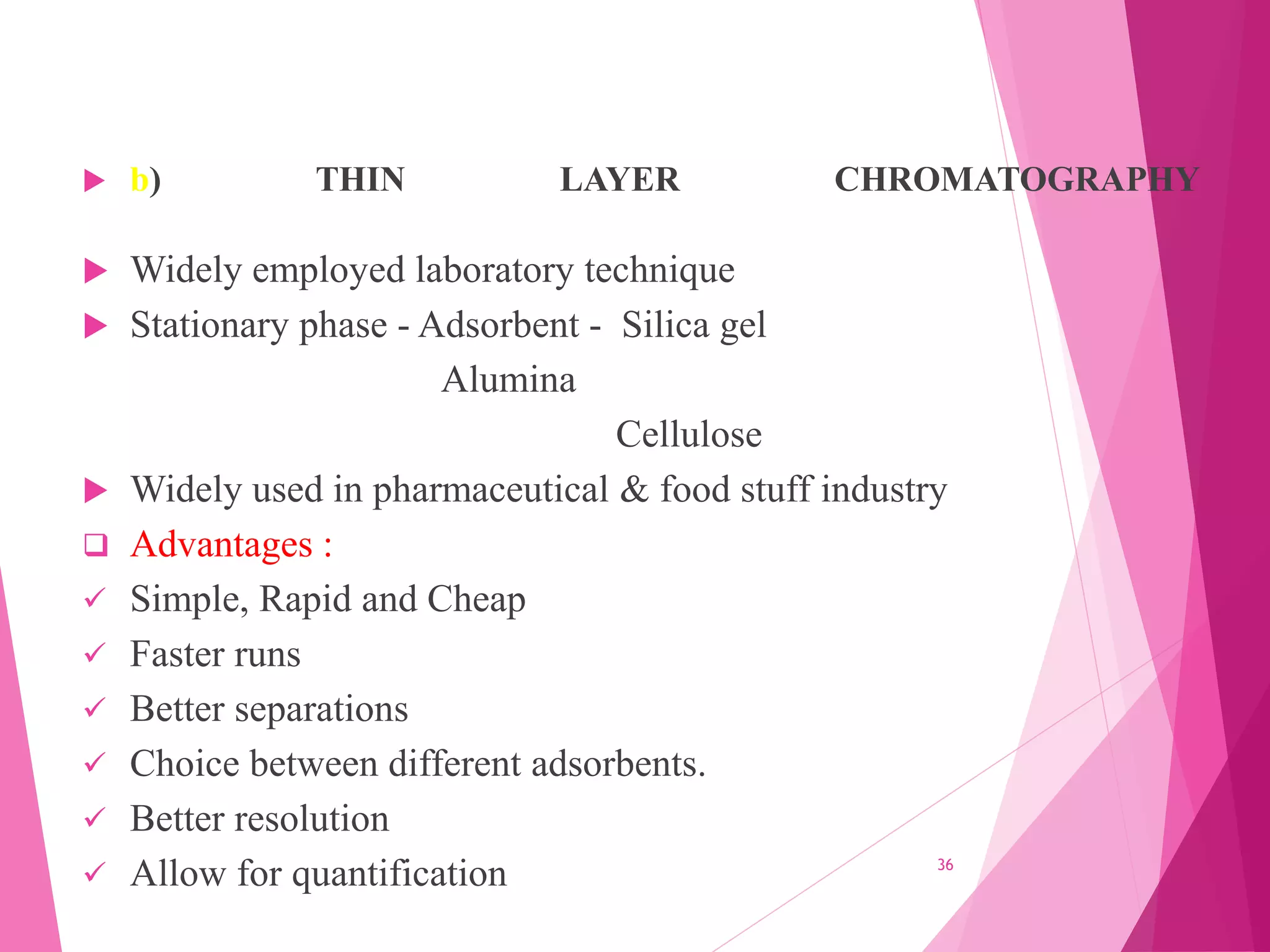
 b) THIN LAYER CHROMATOGRAPHY
 Widely employed laboratory technique
 Stationary phase - Adsorbent - Silica gel
Alumina
Cellulose
 Widely used in pharmaceutical & food stuff industry
 Advantages :
 Simple, Rapid and Cheap
 Faster runs
 Better separations
 Choice between different adsorbents.
 Better resolution
 Allow for quantification 36
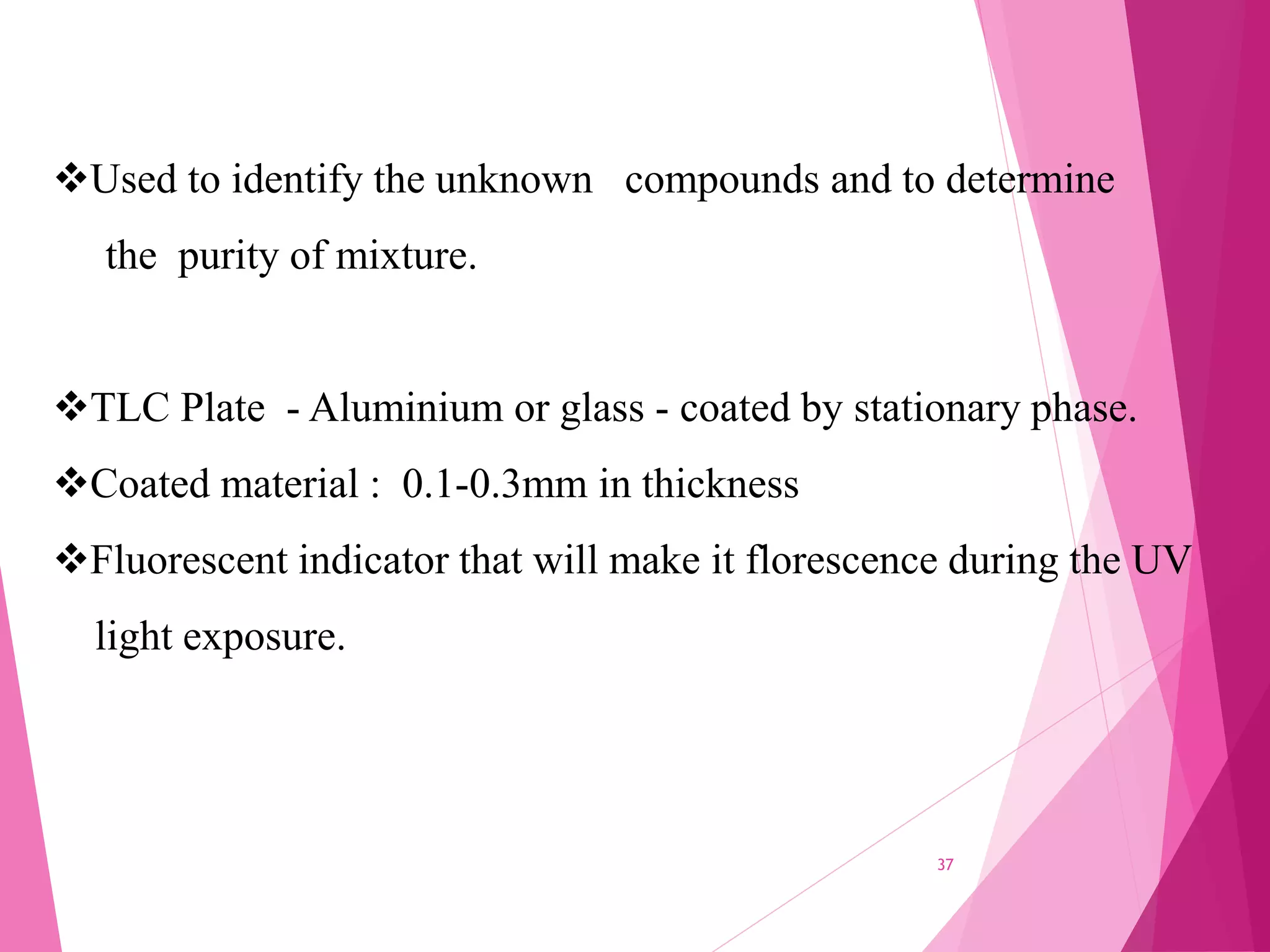
Used to identify the unknown compounds and to determine
the purity of mixture.
TLC Plate - Aluminium or glass - coated by stationary phase.
Coated material : 0.1-0.3mm in thickness
Fluorescent indicator that will make it florescence during the UV
light exposure.
37
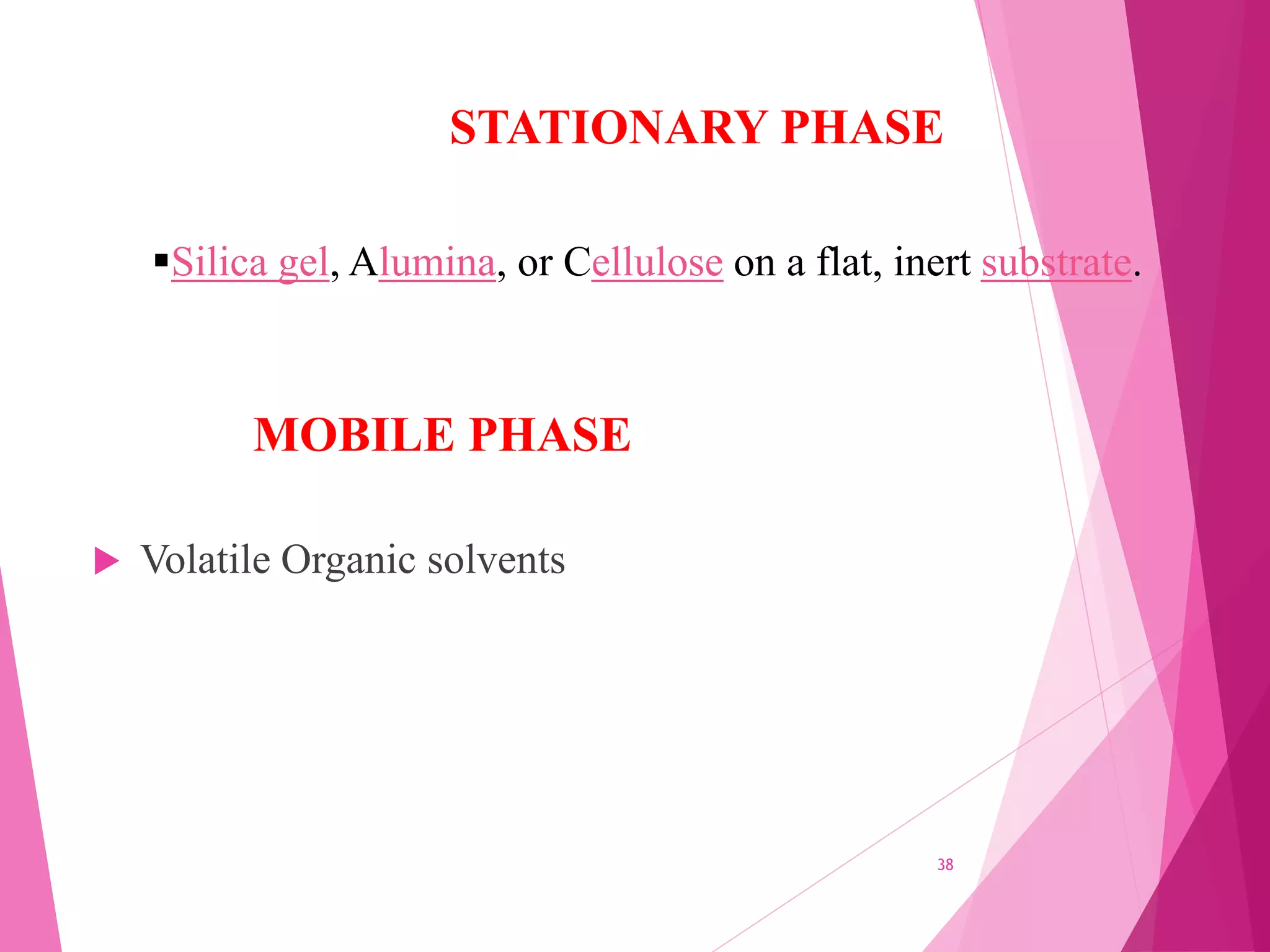
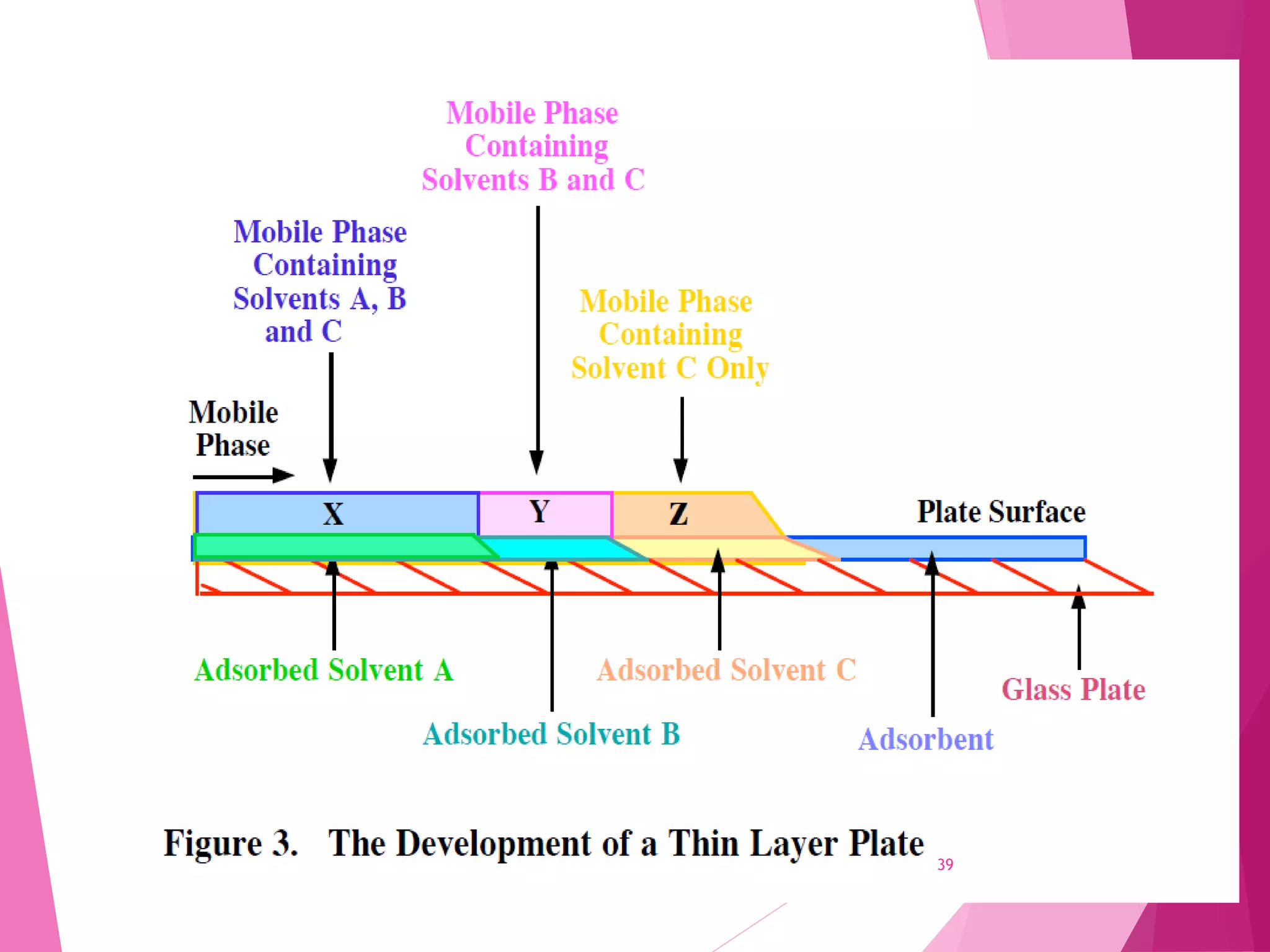
MOBILE PHASE
 Volatile Organic solvents
38
STATIONARY PHASE
Silica gel, Alumina, or Cellulose on a flat, inert substrate.
39
40
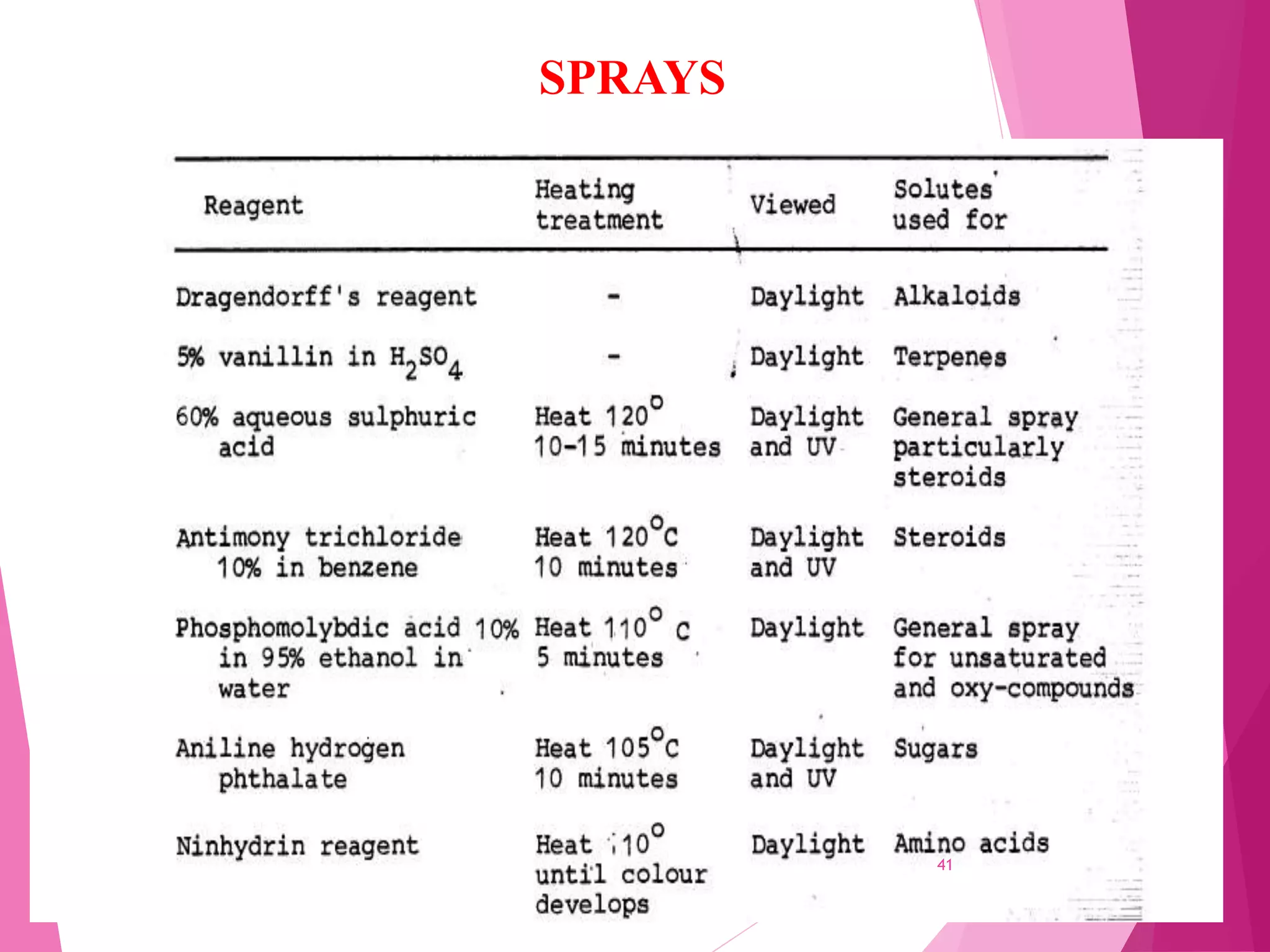
SPRAYS
41
• RETENTION FACTOR :
• Rƒ = Distance travelled by a Solute
• Distance travelled by a Solvent
• Rƒ = zero, Solute remains in the stationary phase and
• thus it is immobile.
• Rƒ = 1 Solute has no affinity for the stationary phase
and travels with the solvent front.
42
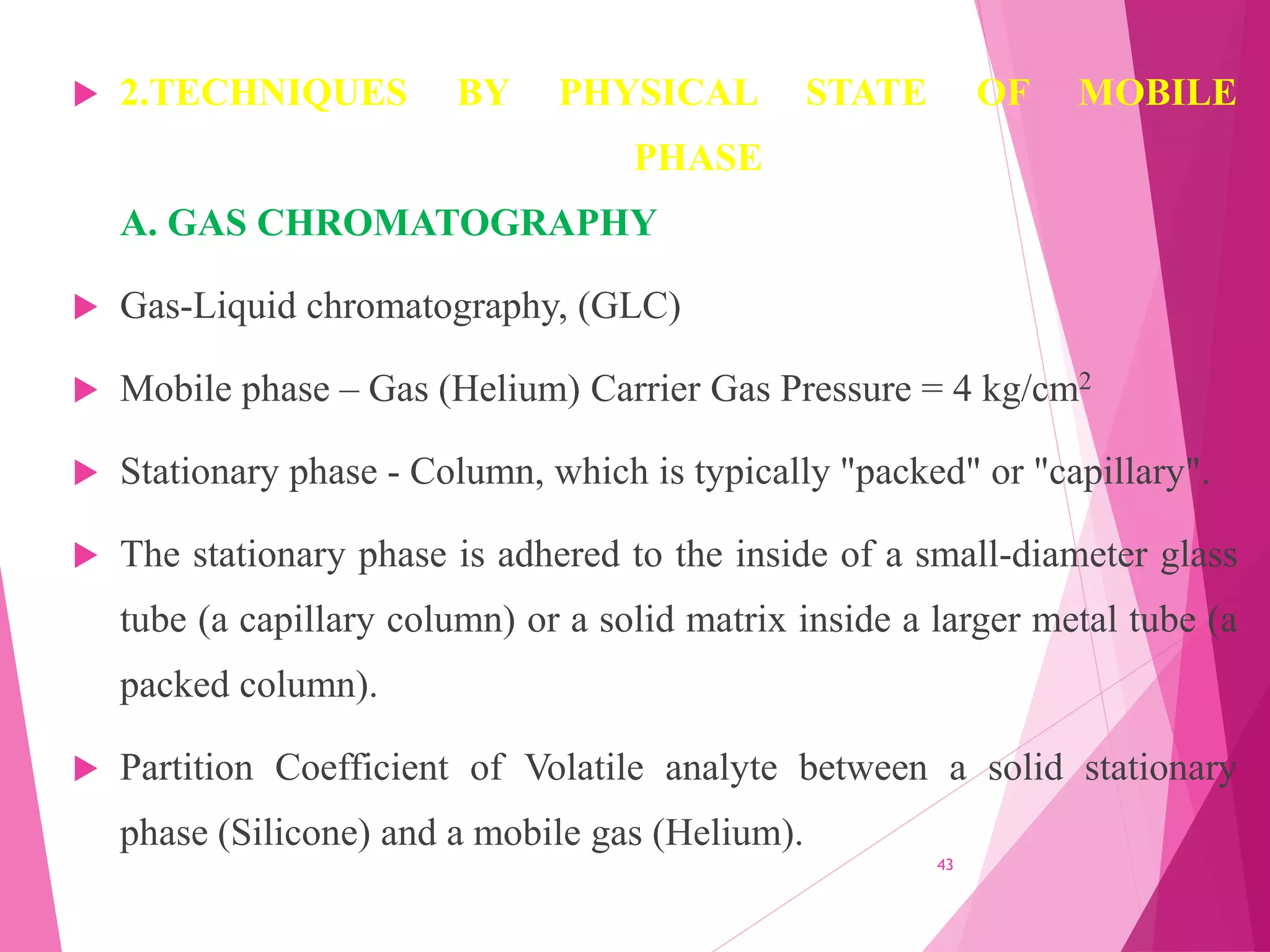
 2.TECHNIQUES BY PHYSICAL STATE OF MOBILE
PHASE
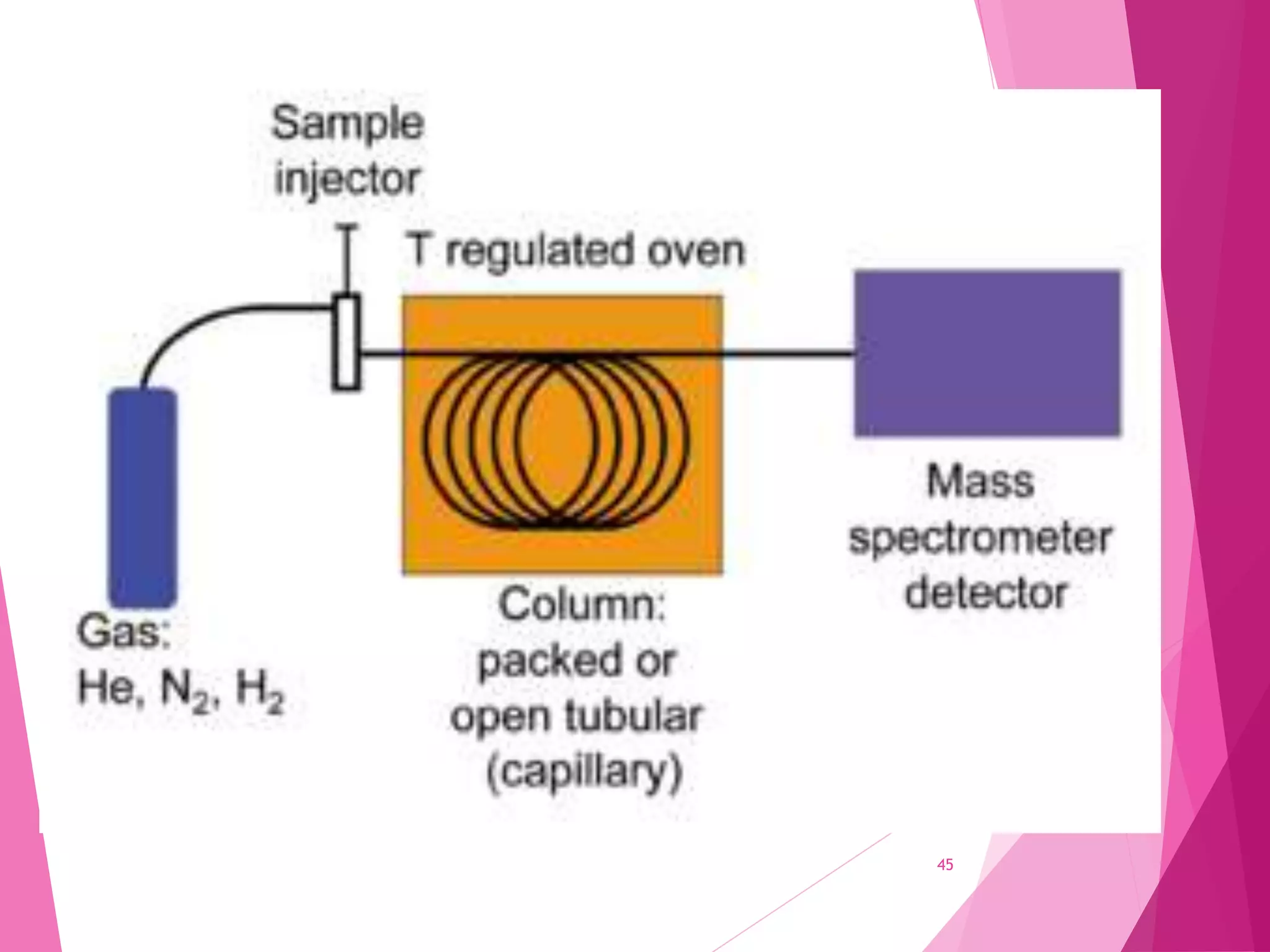
A. GAS CHROMATOGRAPHY
 Gas-Liquid chromatography, (GLC)
 Mobile phase – Gas (Helium) Carrier Gas Pressure = 4 kg/cm2
 Stationary phase - Column, which is typically "packed" or "capillary".
 The stationary phase is adhered to the inside of a small-diameter glass
tube (a capillary column) or a solid matrix inside a larger metal tube (a
packed column).
 Partition Coefficient of Volatile analyte between a solid stationary
phase (Silicone) and a mobile gas (Helium).
43
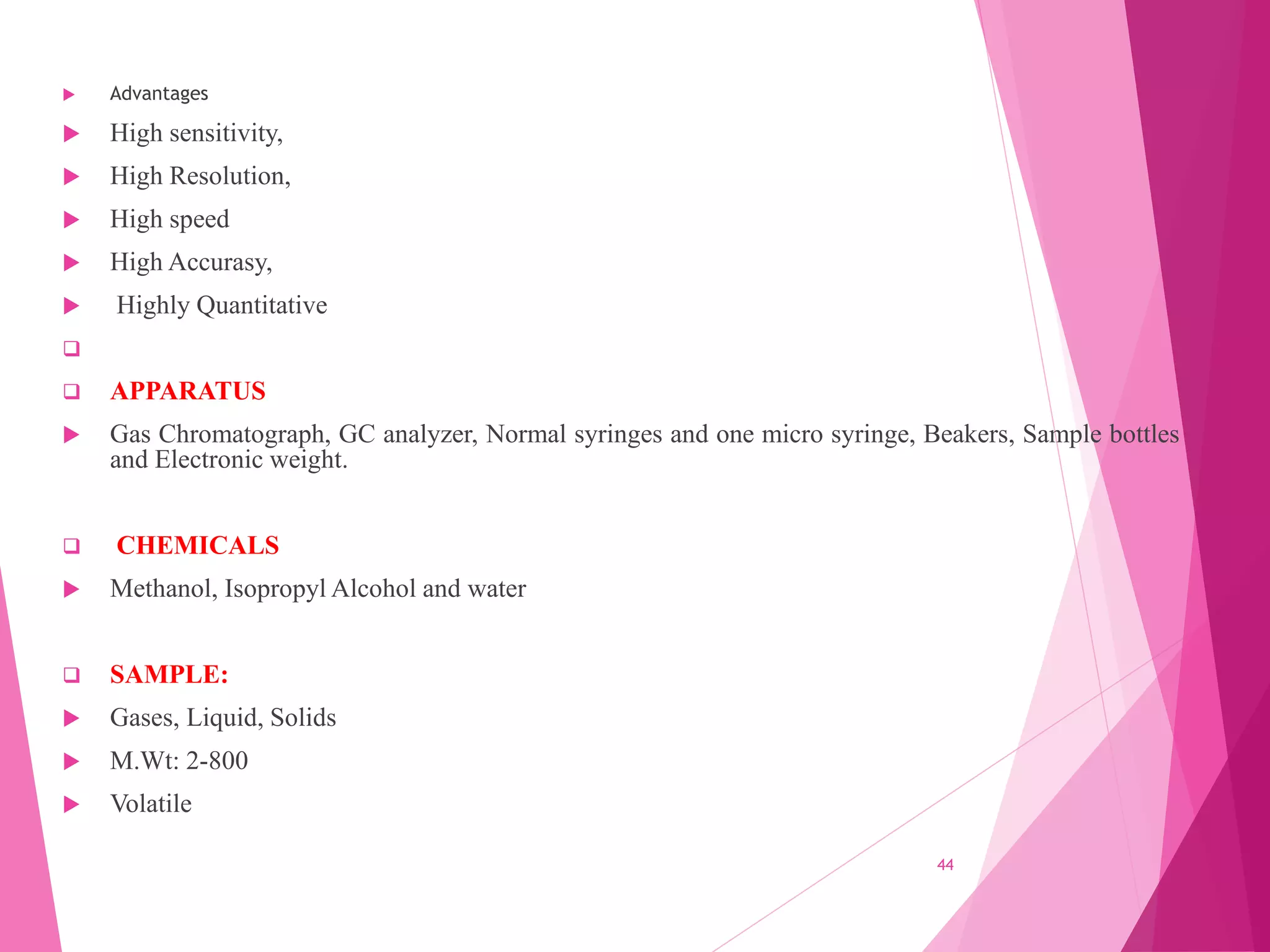
 Advantages
 High sensitivity,
 High Resolution,
 High speed
 High Accurasy,
 Highly Quantitative

 APPARATUS
 Gas Chromatograph, GC analyzer, Normal syringes and one micro syringe, Beakers, Sample bottles
and Electronic weight.
 CHEMICALS
 Methanol, Isopropyl Alcohol and water
 SAMPLE:
 Gases, Liquid, Solids
 M.Wt: 2-800
 Volatile
44
45
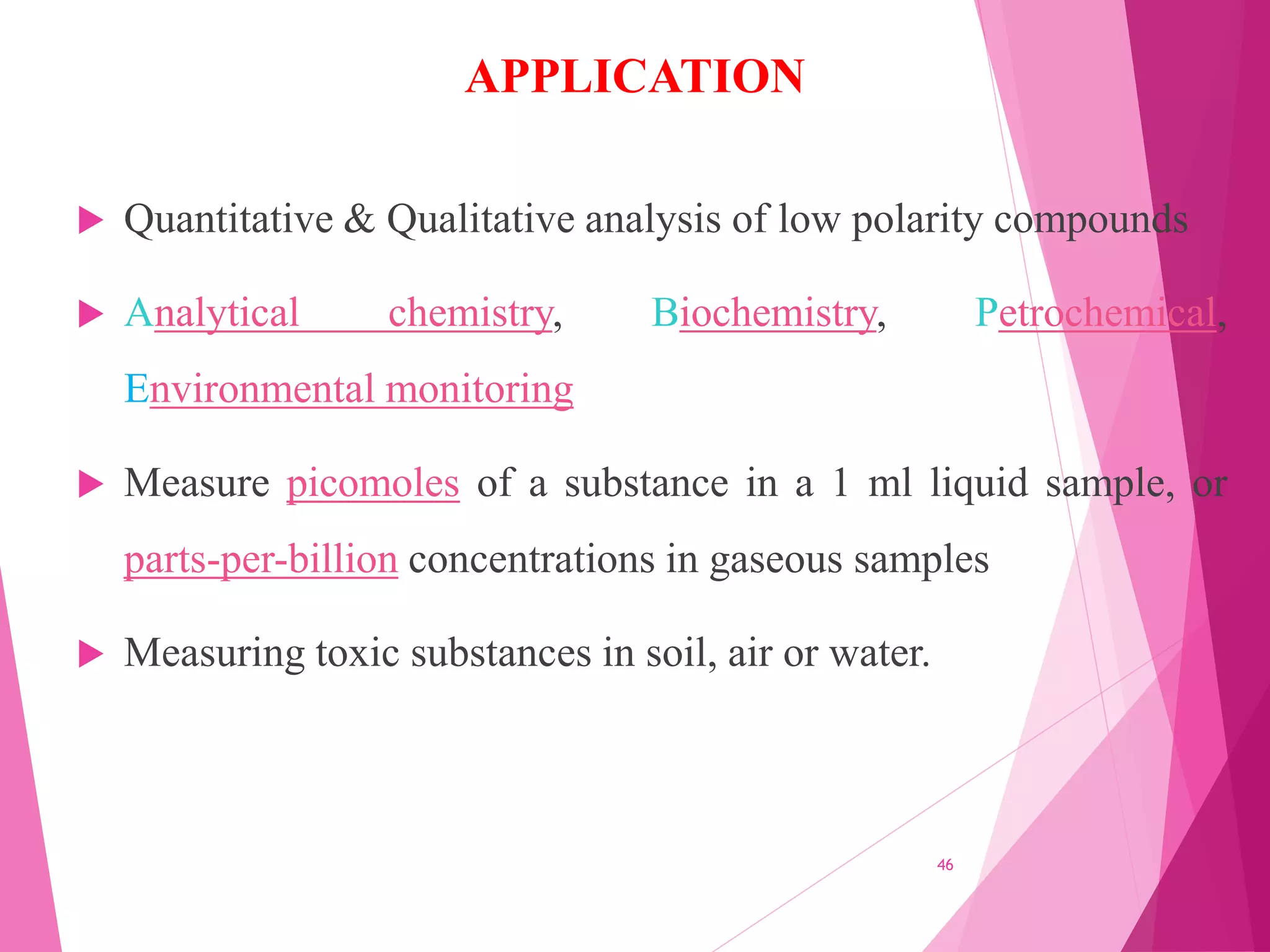
APPLICATION
 Quantitative & Qualitative analysis of low polarity compounds
 Analytical chemistry, Biochemistry, Petrochemical,
Environmental monitoring
 Measure picomoles of a substance in a 1 ml liquid sample, or
parts-per-billion concentrations in gaseous samples
 Measuring toxic substances in soil, air or water.
46
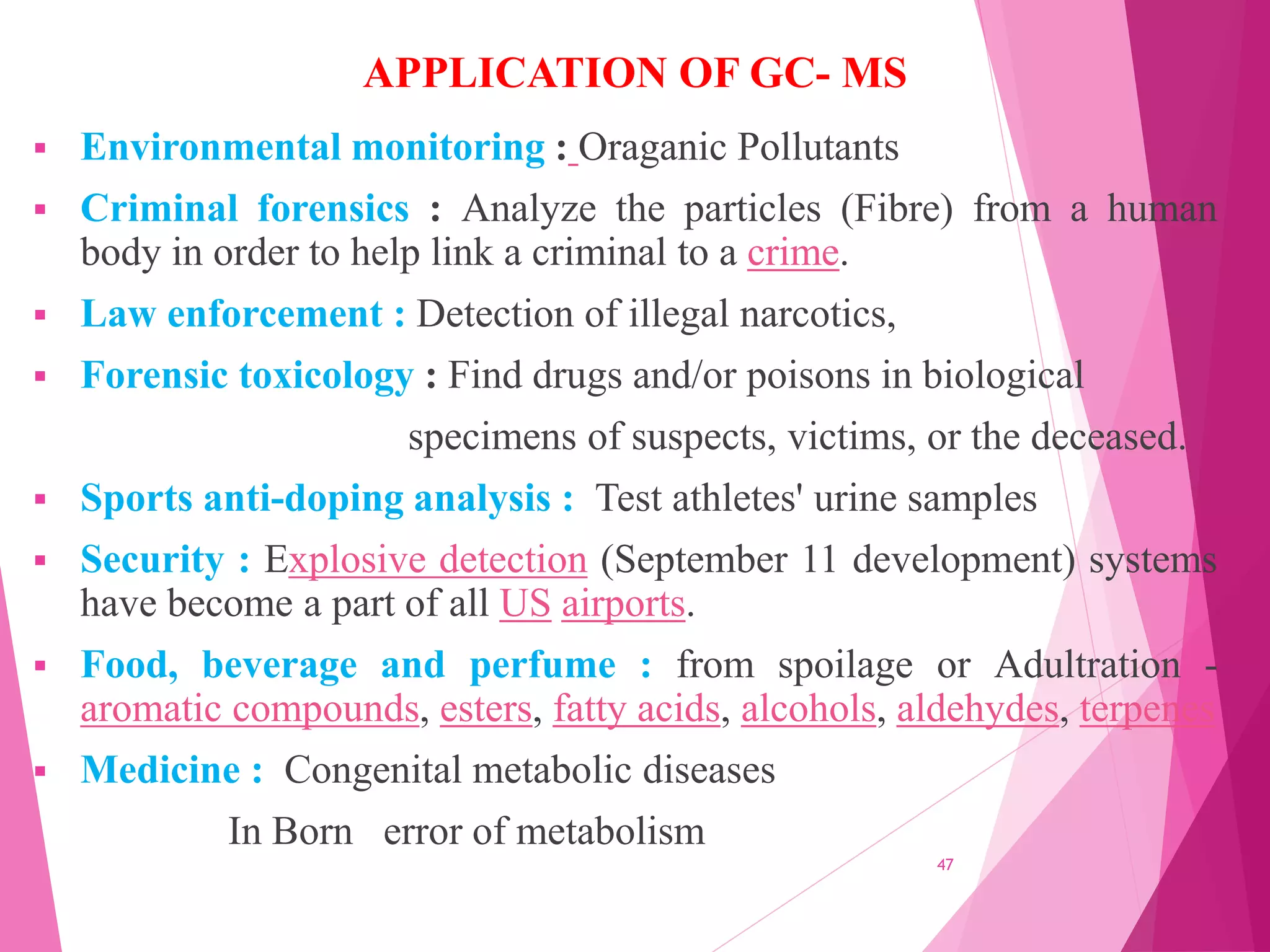
APPLICATION OF GC- MS
 Environmental monitoring : Oraganic Pollutants
 Criminal forensics : Analyze the particles (Fibre) from a human
body in order to help link a criminal to a crime.
 Law enforcement : Detection of illegal narcotics,
 Forensic toxicology : Find drugs and/or poisons in biological
specimens of suspects, victims, or the deceased.
 Sports anti-doping analysis : Test athletes' urine samples
 Security : Explosive detection (September 11 development) systems
have become a part of all US airports.
 Food, beverage and perfume : from spoilage or Adultration -
aromatic compounds, esters, fatty acids, alcohols, aldehydes, terpenes
 Medicine : Congenital metabolic diseases
In Born error of metabolism
47
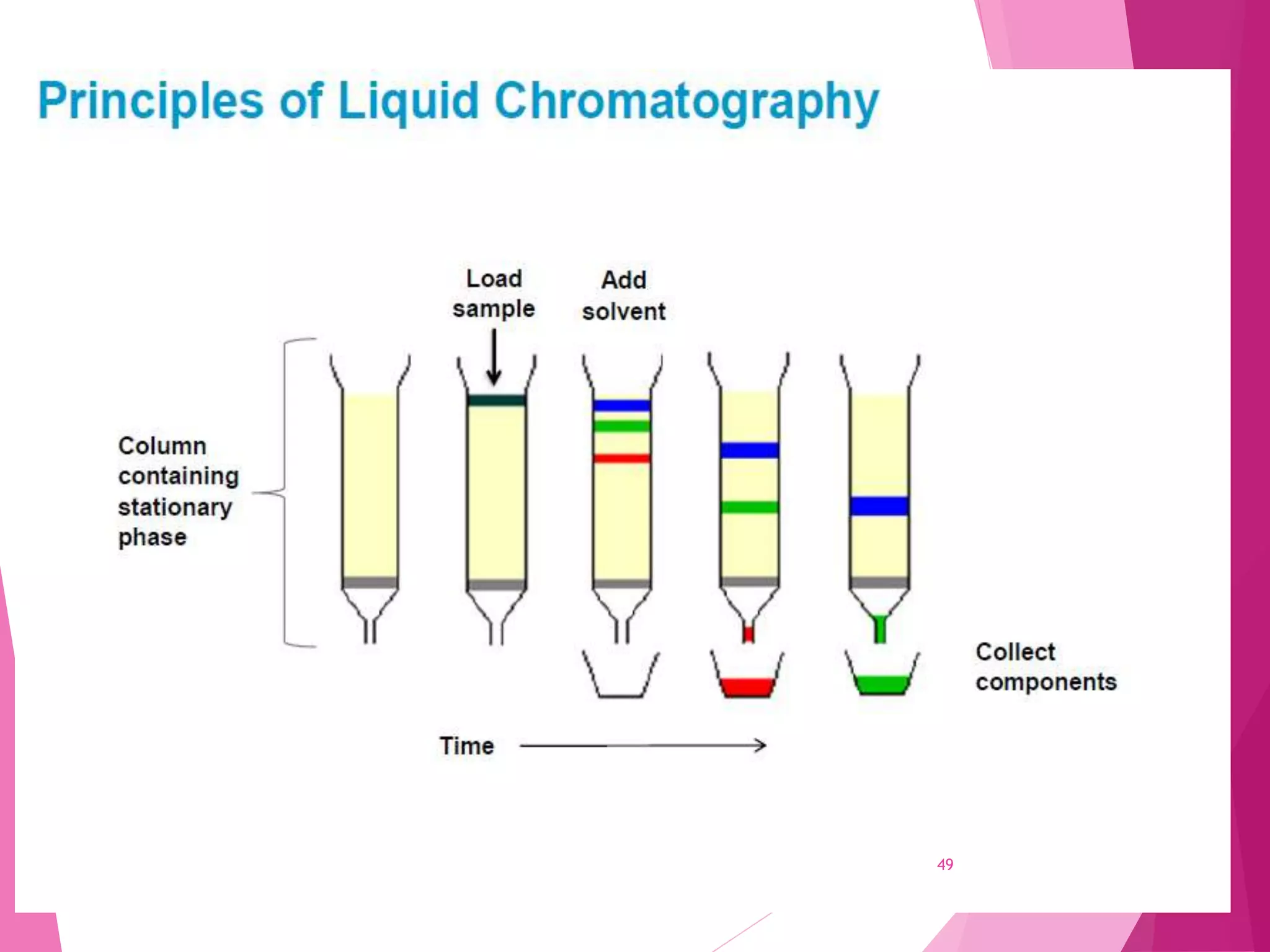
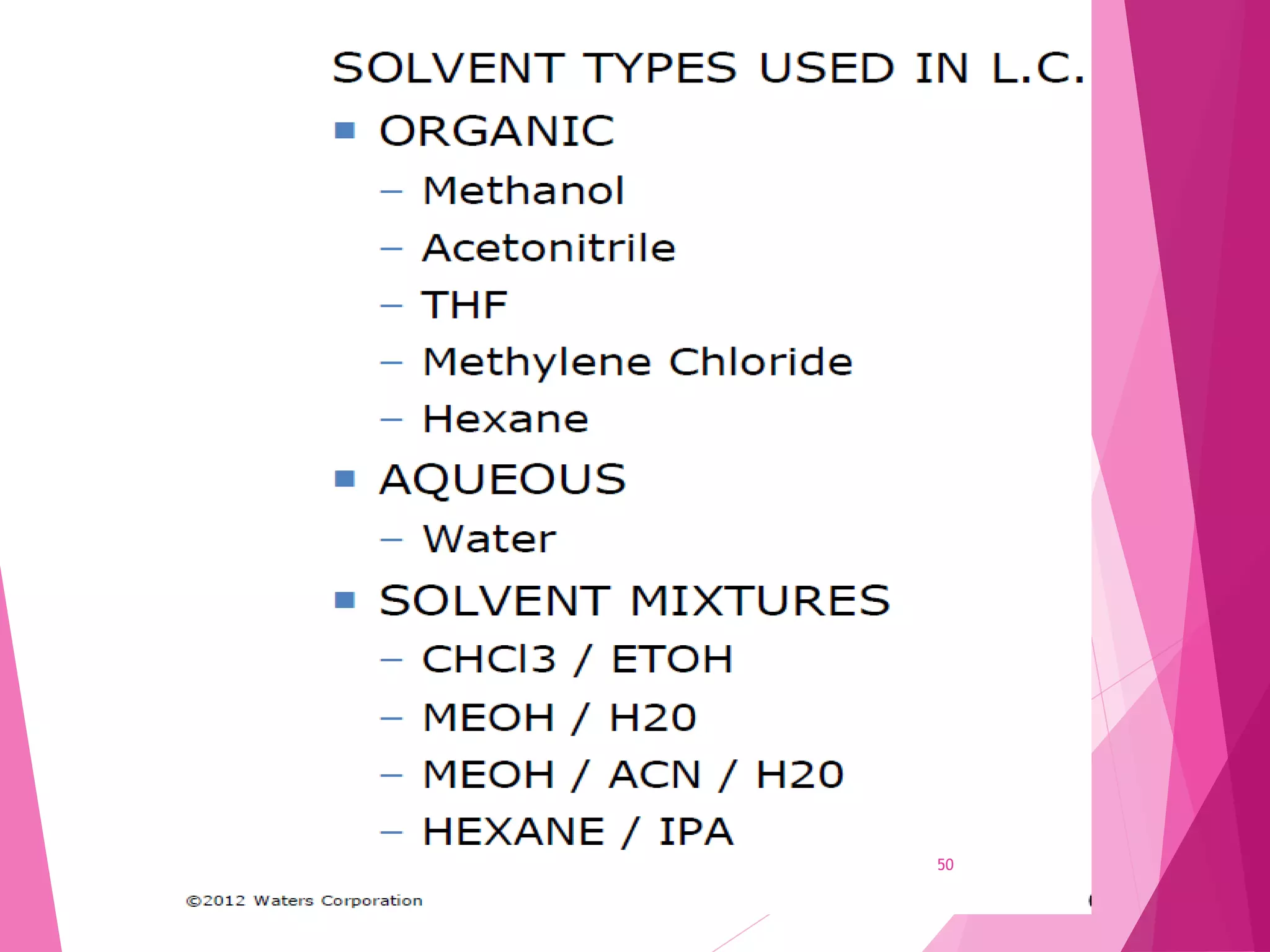
 B. LIQUID CHROMATOGRAPHY
 Mobile phase - Liquid.
 Column or a plane.
 Very small packing particles and a relatively high pressure -
High Performance Liquid Chromatography (HPLC).
48
49
50
51
52
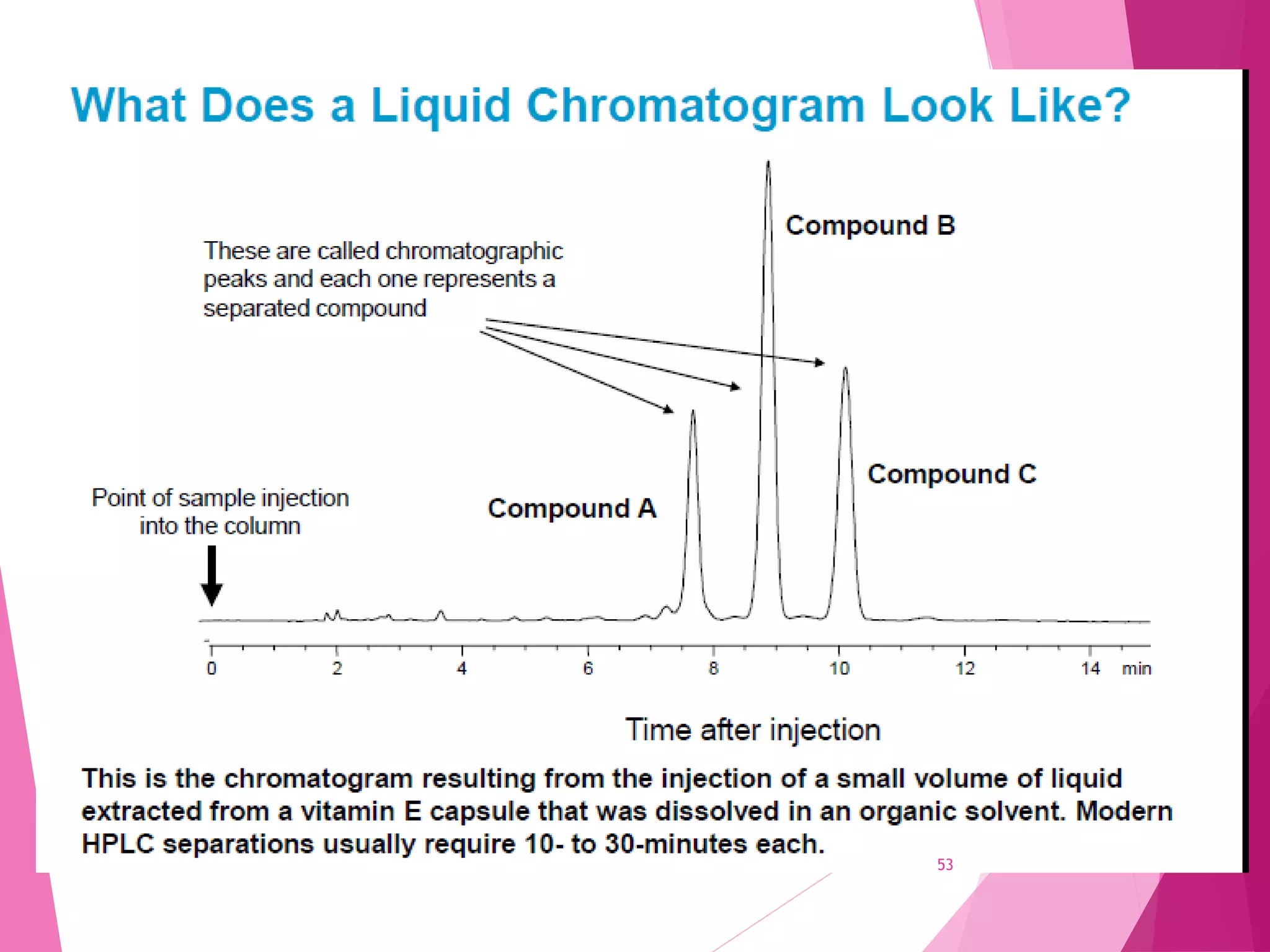
53
LC- MS
 Mass spectra is obtained rapidly
 Small amount of material is required to form the spectra.
 Data collected is highly informative with respect to
molecular structure.
54
APPLICATION
 Pharmacokinetics : How quickly a drug will be cleared from the
hepatic blood flow and organs of the body.
 Proteomics : Peptide mass fingerprinting
 Drug development: Peptide Mapping, Glycoprotein Mapping, Natural
Products Dereplication, Bioaffinity Screening, In Vivo Drug Screening,
Metabolic Stability Screening, Metabolite Identification, Impurity
Identification, Degradant Identification, Quantitative Bioanalysis, and
Quality Control.
 Fungal toxins
 Pesticides, Herbicides
55
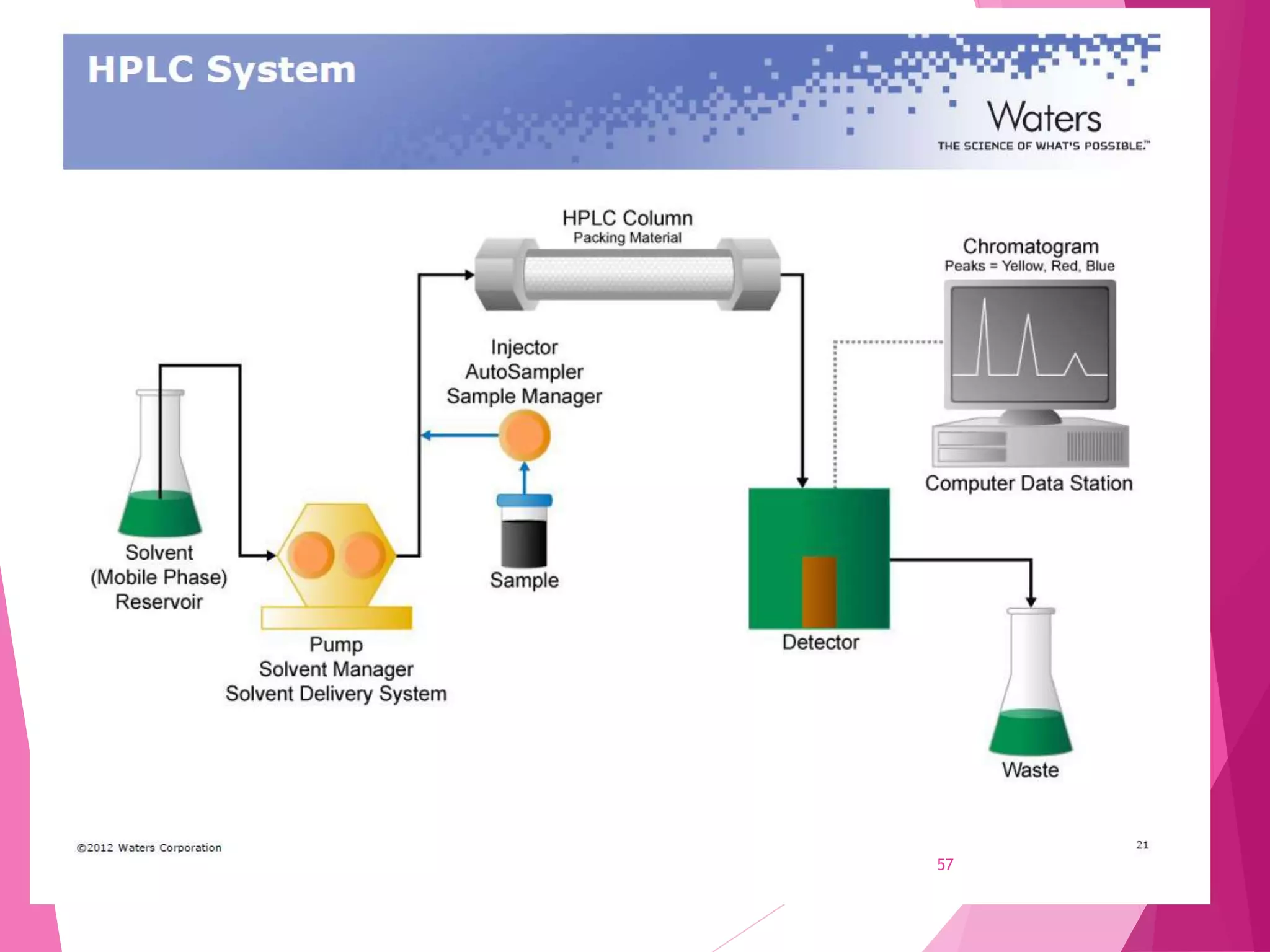
HIGH PERFORMANCE LIQUID CHROMATOGRAPHY
HPLC V/S LC TECHNIQUE
 Columns : Small diameter (4.6 mm), stainless steel, glass or
titanium.
 Column packing with very small (3, 5 and 10 μm) particles
 Relatively high inlet pressures and controlled flow of the
mobile phase.
 Detecting very small amounts
 High resolution
 Rapid analysis
 Speed, efficiency, sensitivity and ease of operation
 High degree of versatility
 Easily separate a wide variety of chemical mixtures
 400 atmospheres.
PUMP PRESSURE
 "Ultra High Performance Liquid Chromatography" systems 1000 atmospheres.
56
57
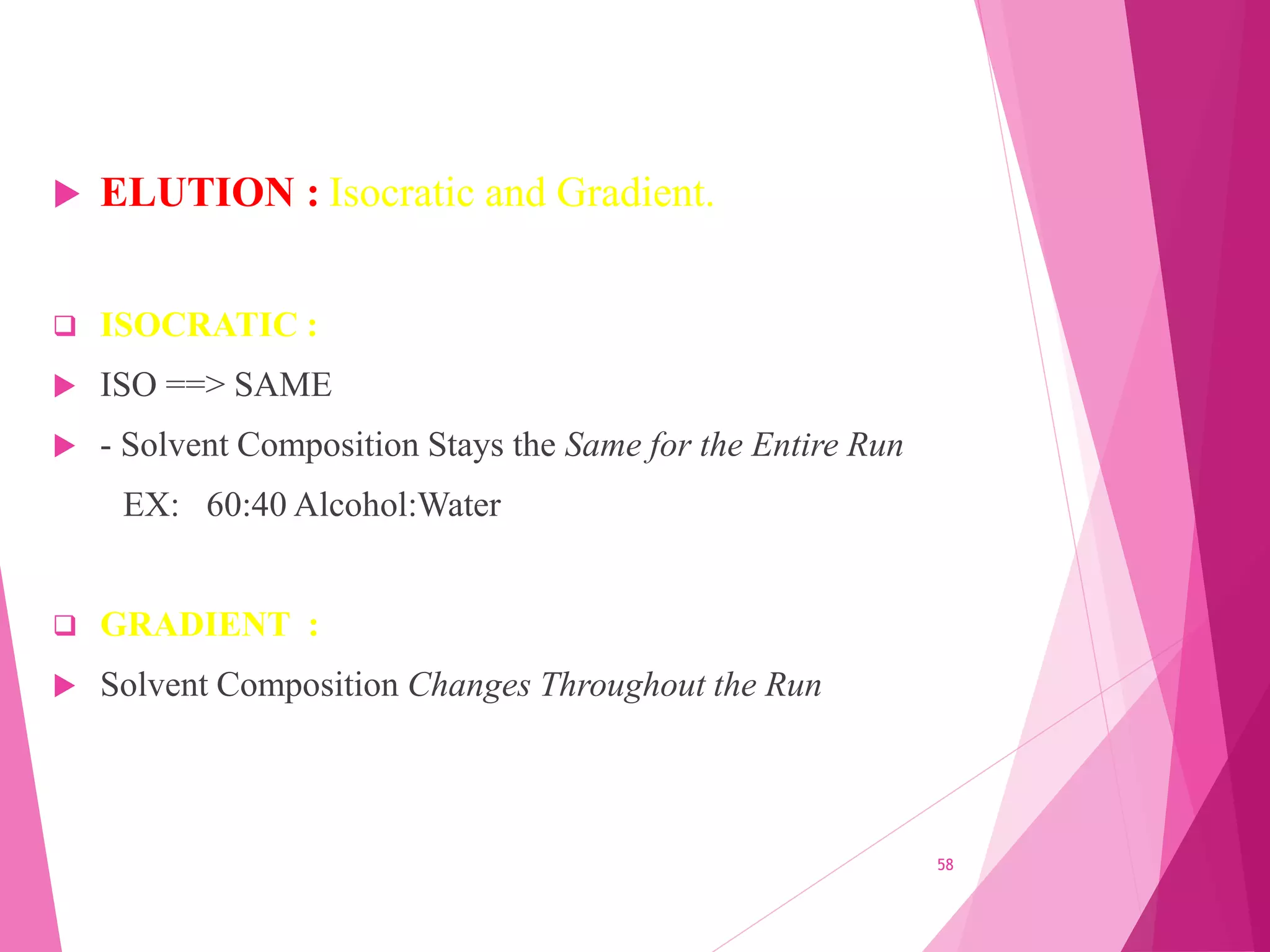
 ELUTION : Isocratic and Gradient.
 ISOCRATIC :
 ISO ==> SAME
 - Solvent Composition Stays the Same for the Entire Run
EX: 60:40 Alcohol:Water
 GRADIENT :
 Solvent Composition Changes Throughout the Run
58
59
60
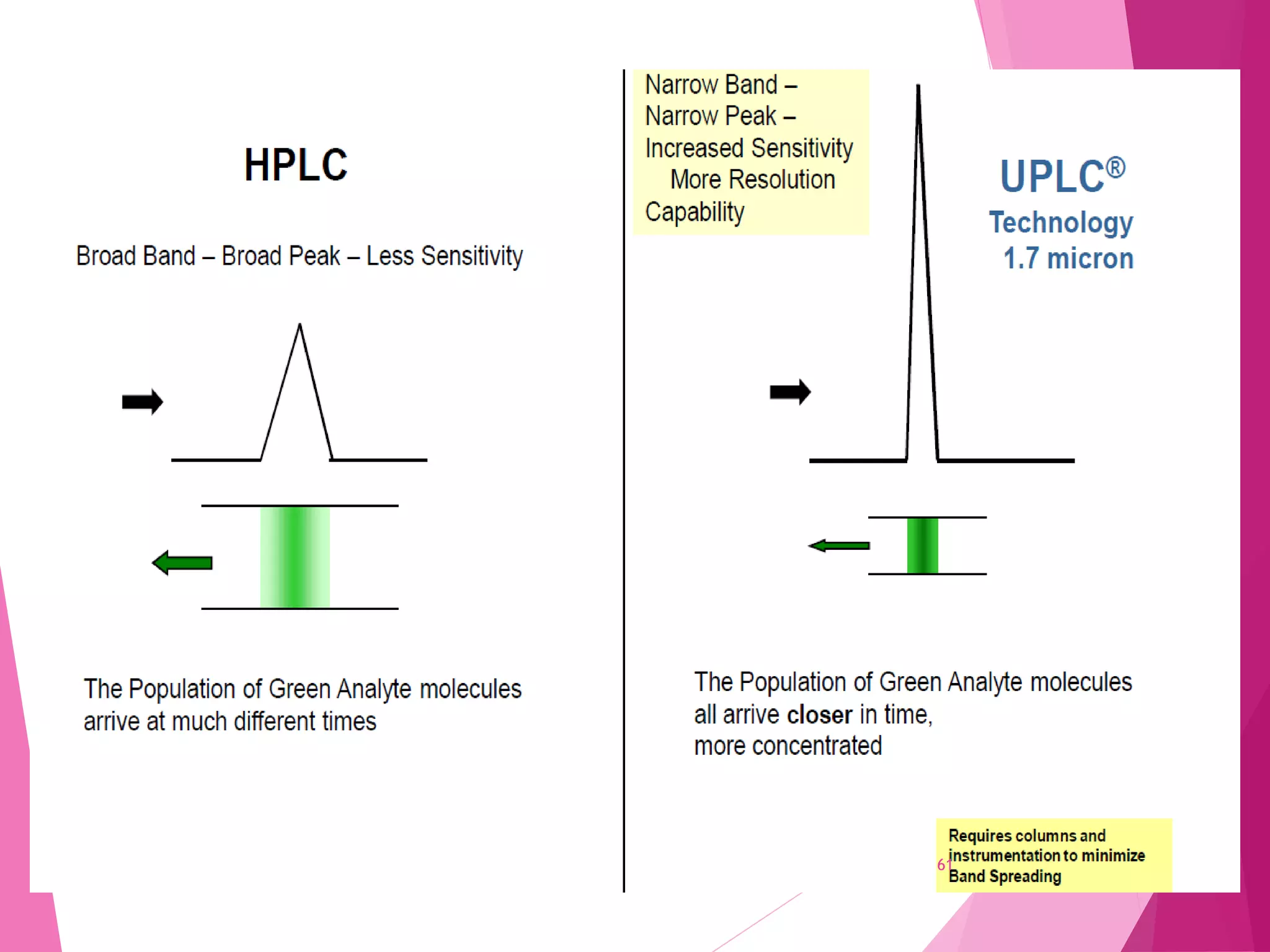
61
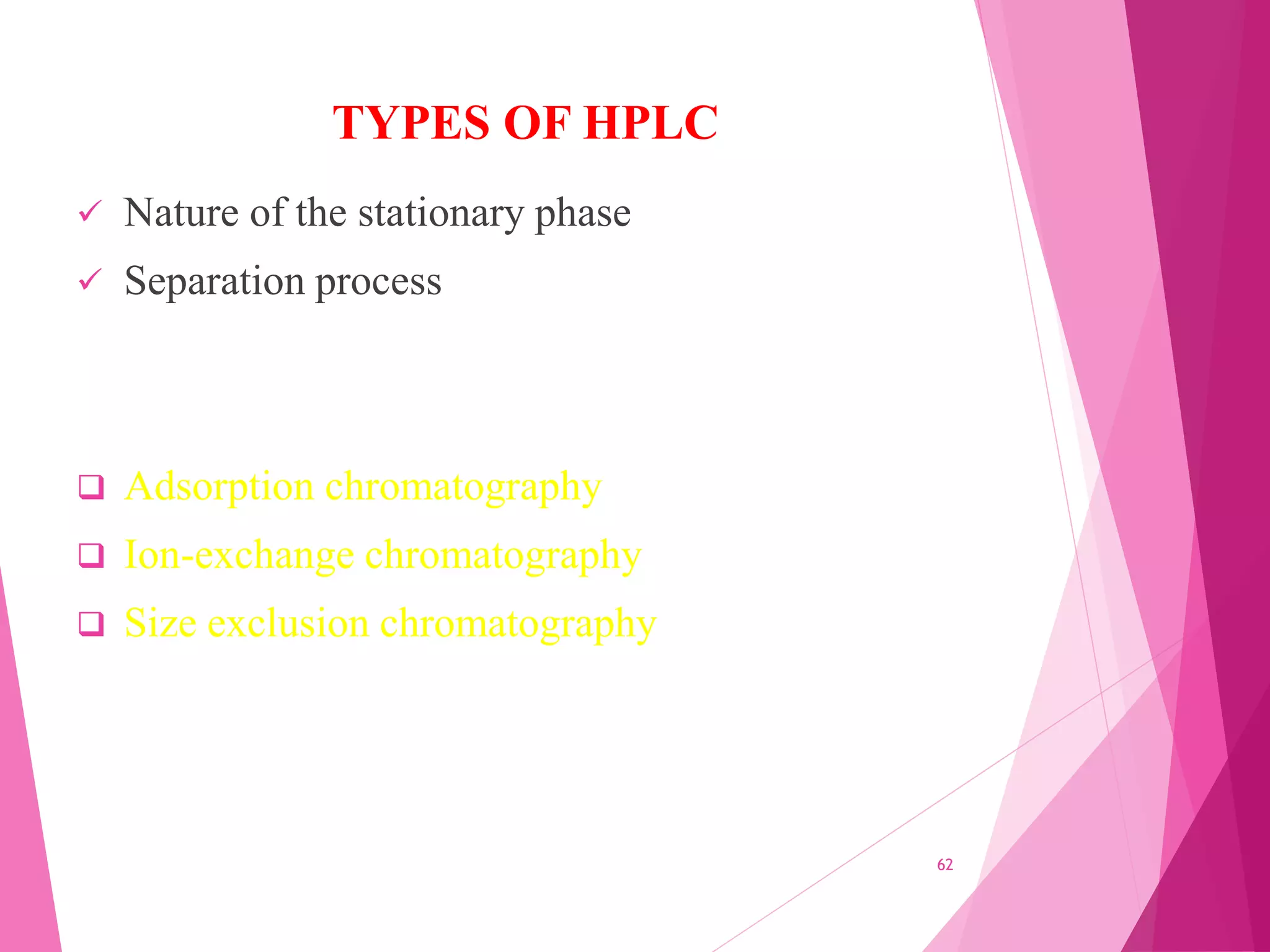
TYPES OF HPLC
 Nature of the stationary phase
 Separation process
 Adsorption chromatography
 Ion-exchange chromatography
 Size exclusion chromatography
62
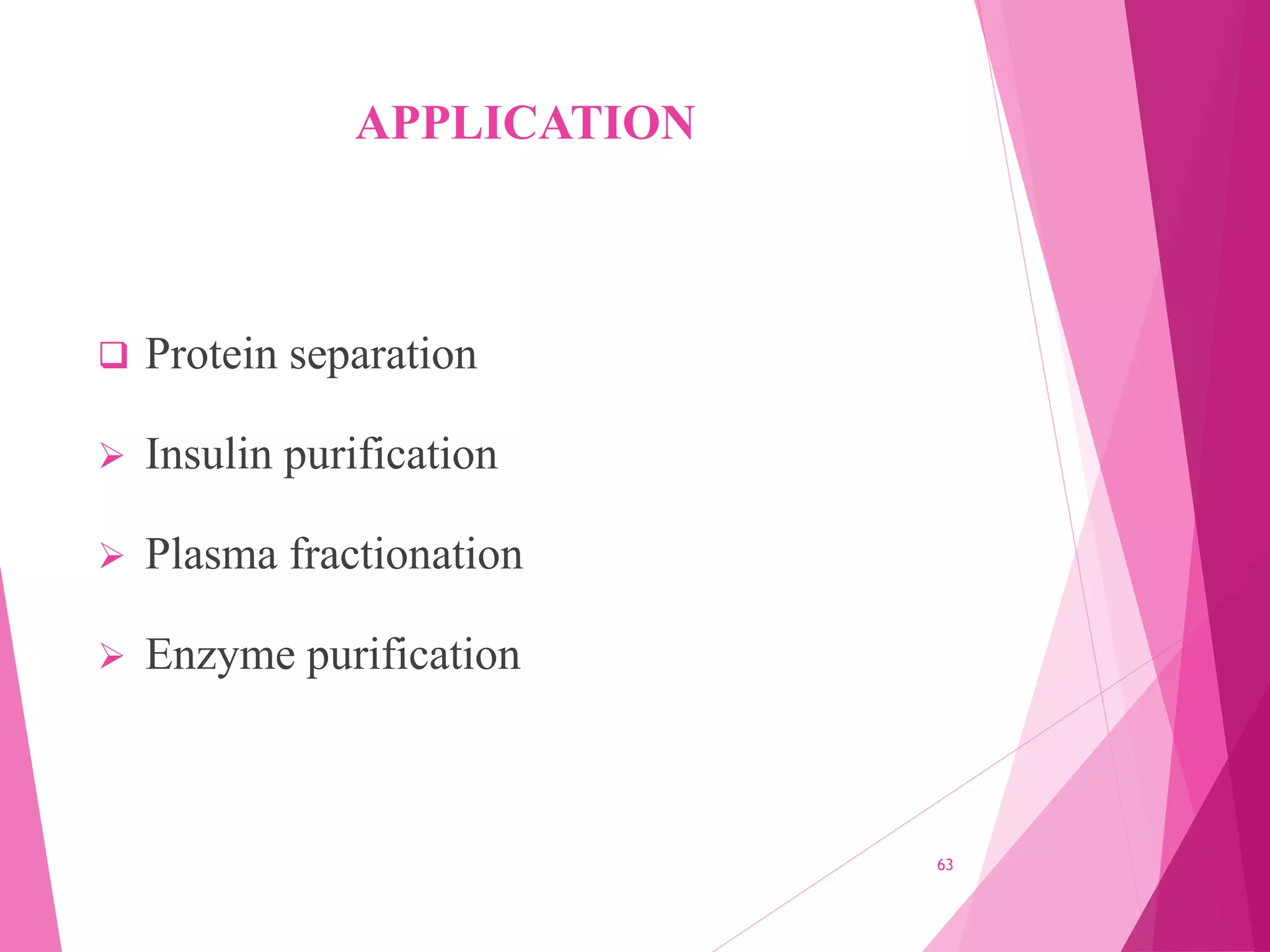
APPLICATION
 Protein separation
 Insulin purification
 Plasma fractionation
 Enzyme purification
63
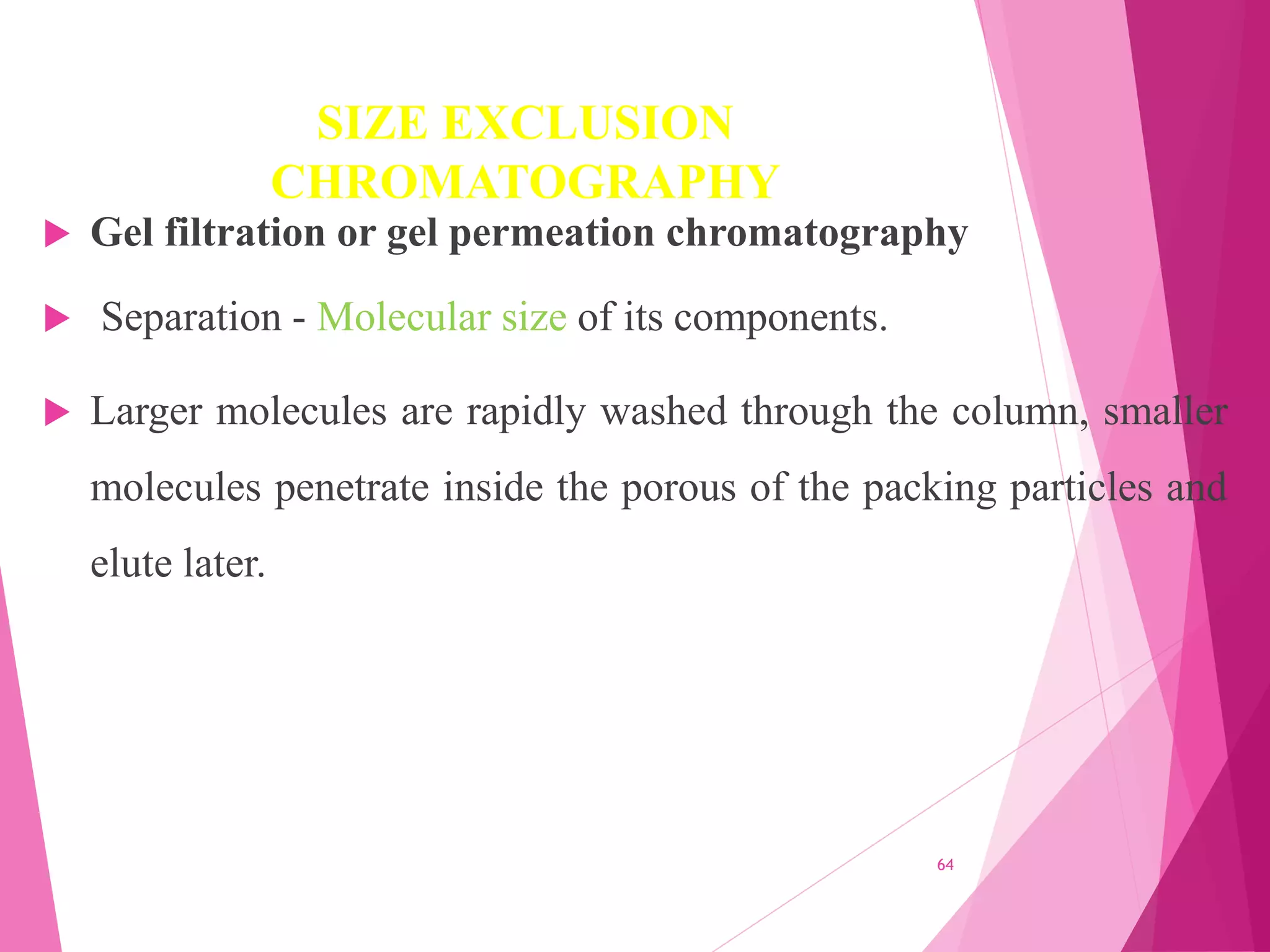
SIZE EXCLUSION
CHROMATOGRAPHY
 Gel filtration or gel permeation chromatography
 Separation - Molecular size of its components.
 Larger molecules are rapidly washed through the column, smaller
molecules penetrate inside the porous of the packing particles and
elute later.
64
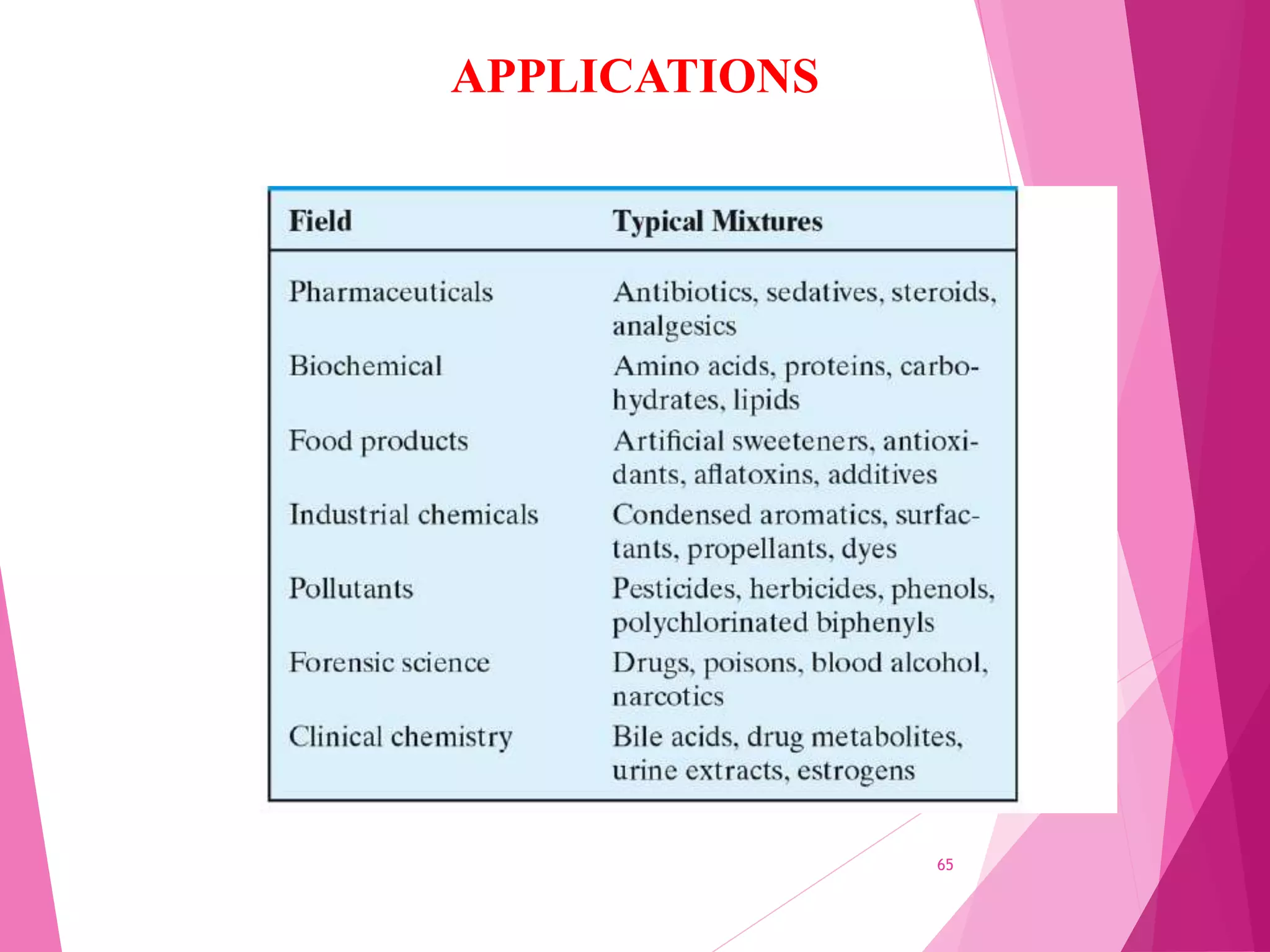
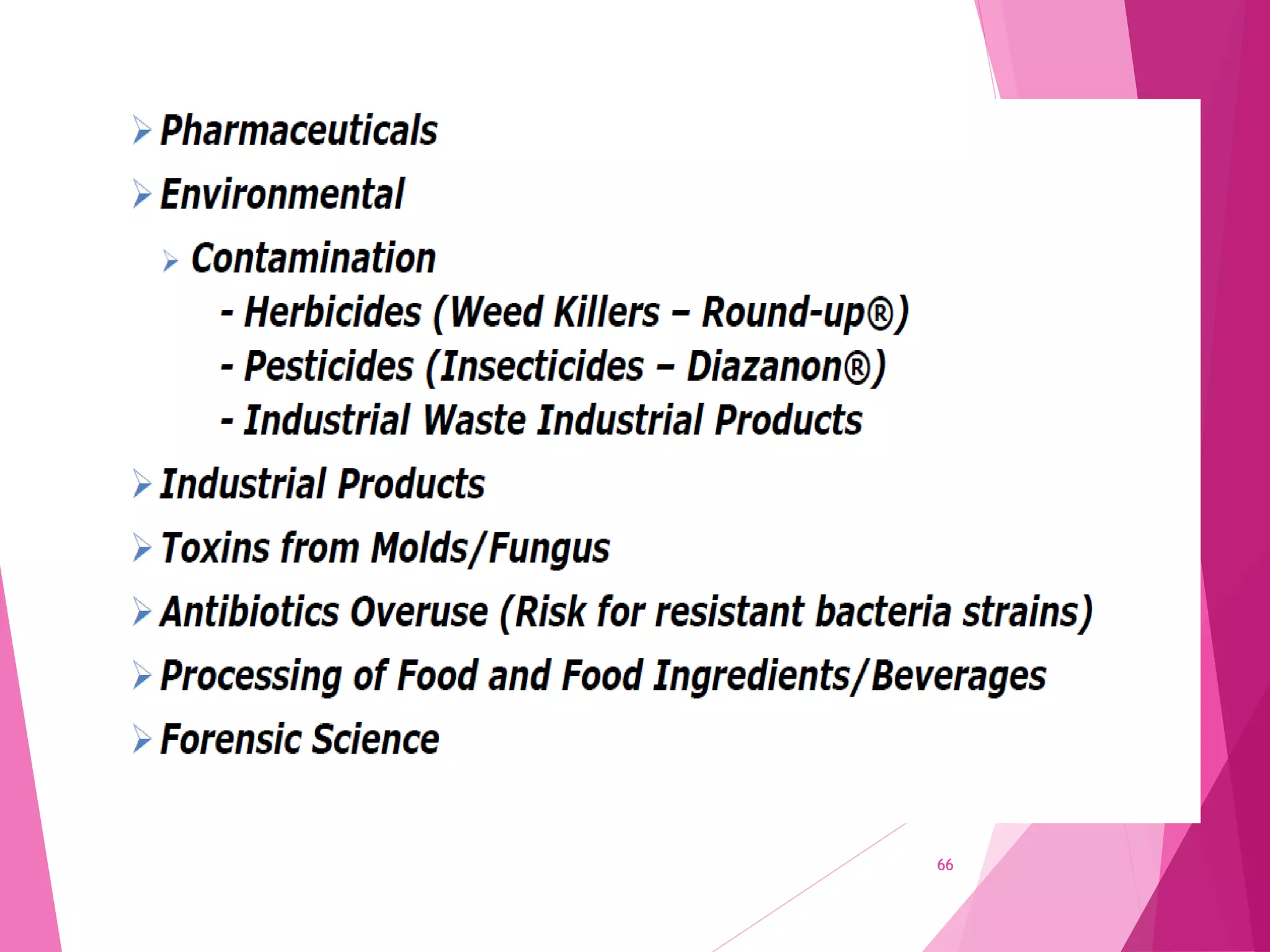
APPLICATIONS
65
66
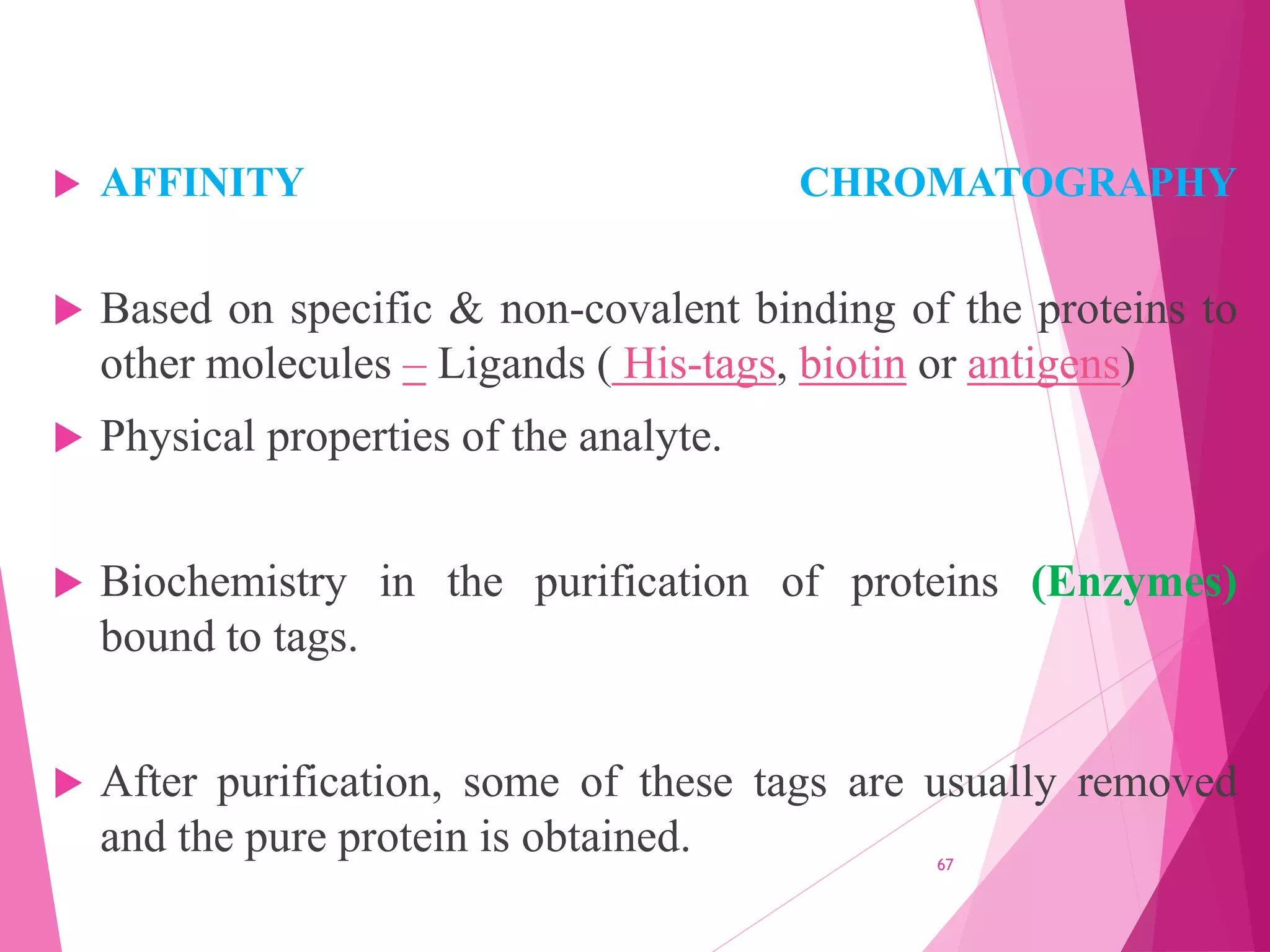
 AFFINITY CHROMATOGRAPHY
 Based on specific & non-covalent binding of the proteins to
other molecules – Ligands ( His-tags, biotin or antigens)
 Physical properties of the analyte.
 Biochemistry in the purification of proteins (Enzymes)
bound to tags.
 After purification, some of these tags are usually removed
and the pure protein is obtained. 67
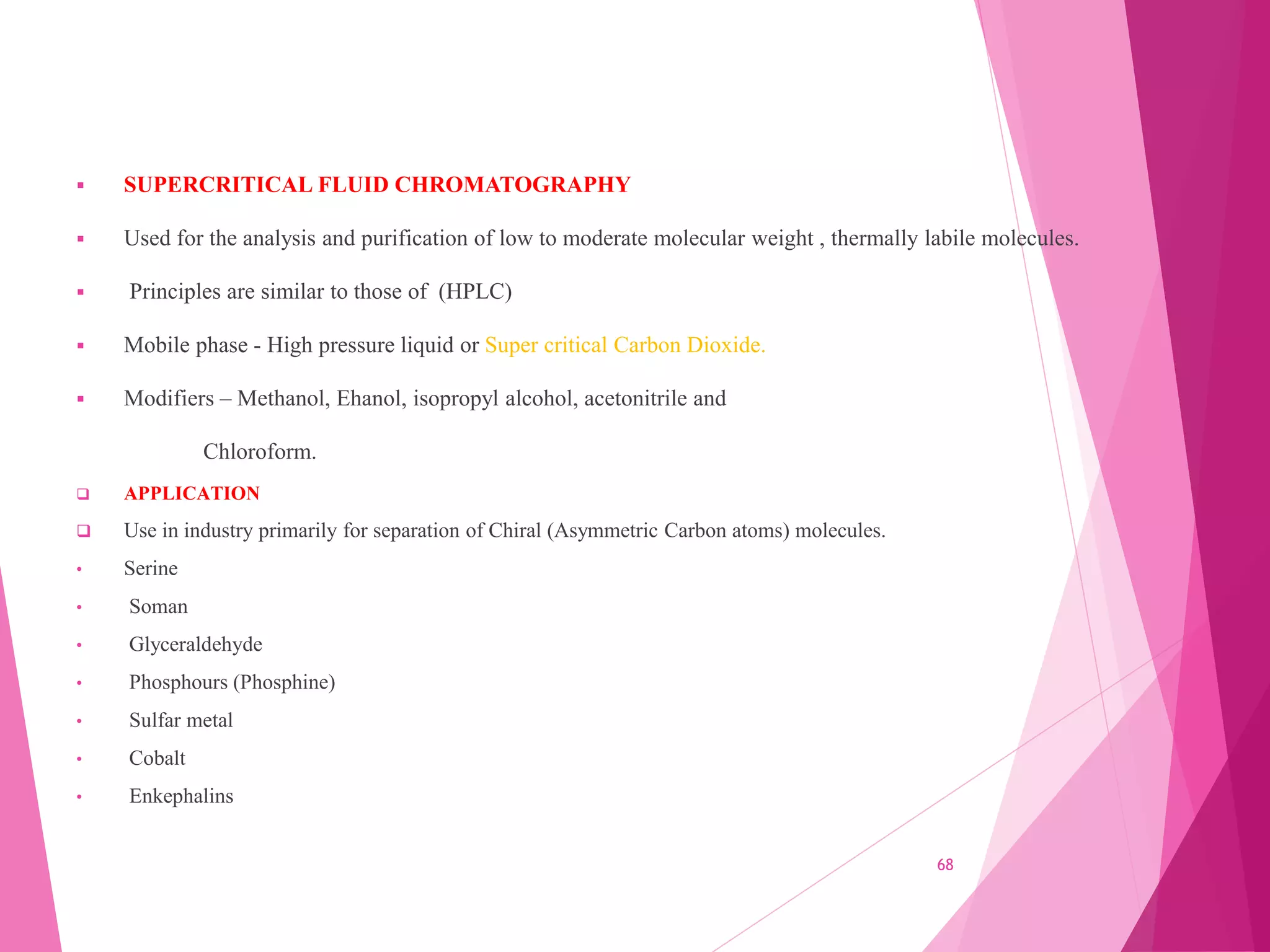
 SUPERCRITICAL FLUID CHROMATOGRAPHY
 Used for the analysis and purification of low to moderate molecular weight , thermally labile molecules.
 Principles are similar to those of (HPLC)
 Mobile phase - High pressure liquid or Super critical Carbon Dioxide.
 Modifiers – Methanol, Ehanol, isopropyl alcohol, acetonitrile and
Chloroform.
 APPLICATION
 Use in industry primarily for separation of Chiral (Asymmetric Carbon atoms) molecules.
• Serine
• Soman
• Glyceraldehyde
• Phosphours (Phosphine)
• Sulfar metal
• Cobalt
• Enkephalins
68
DETECTOR
 Gas Chromatography or liquid Chromatography
 To visualize components of the mixture being eluted off the
chromatography column.
69
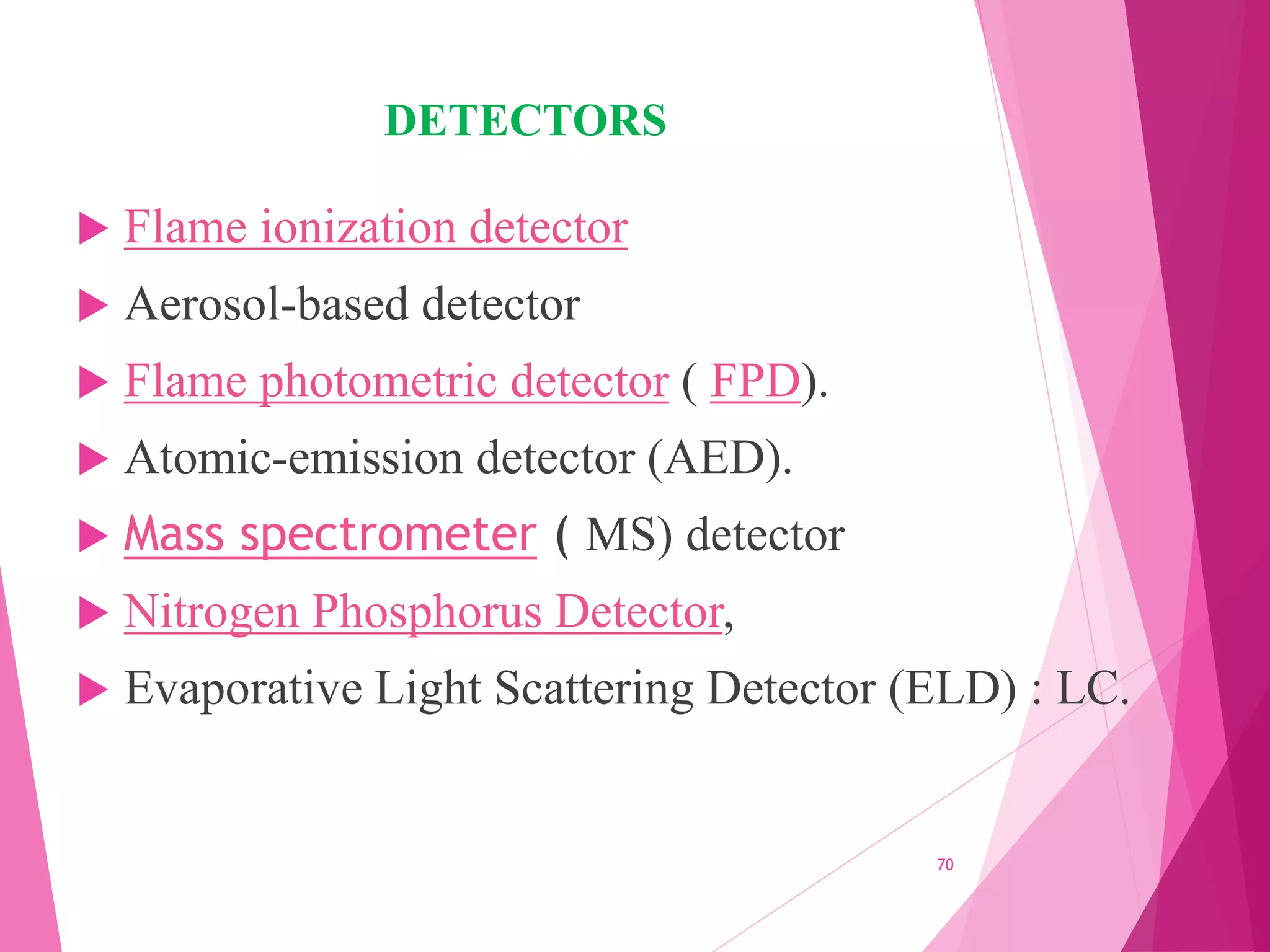
DETECTORS
 Flame ionization detector
 Aerosol-based detector
 Flame photometric detector ( FPD).
 Atomic-emission detector (AED).
 Mass spectrometer ( MS) detector
 Nitrogen Phosphorus Detector,
 Evaporative Light Scattering Detector (ELD) : LC.
70
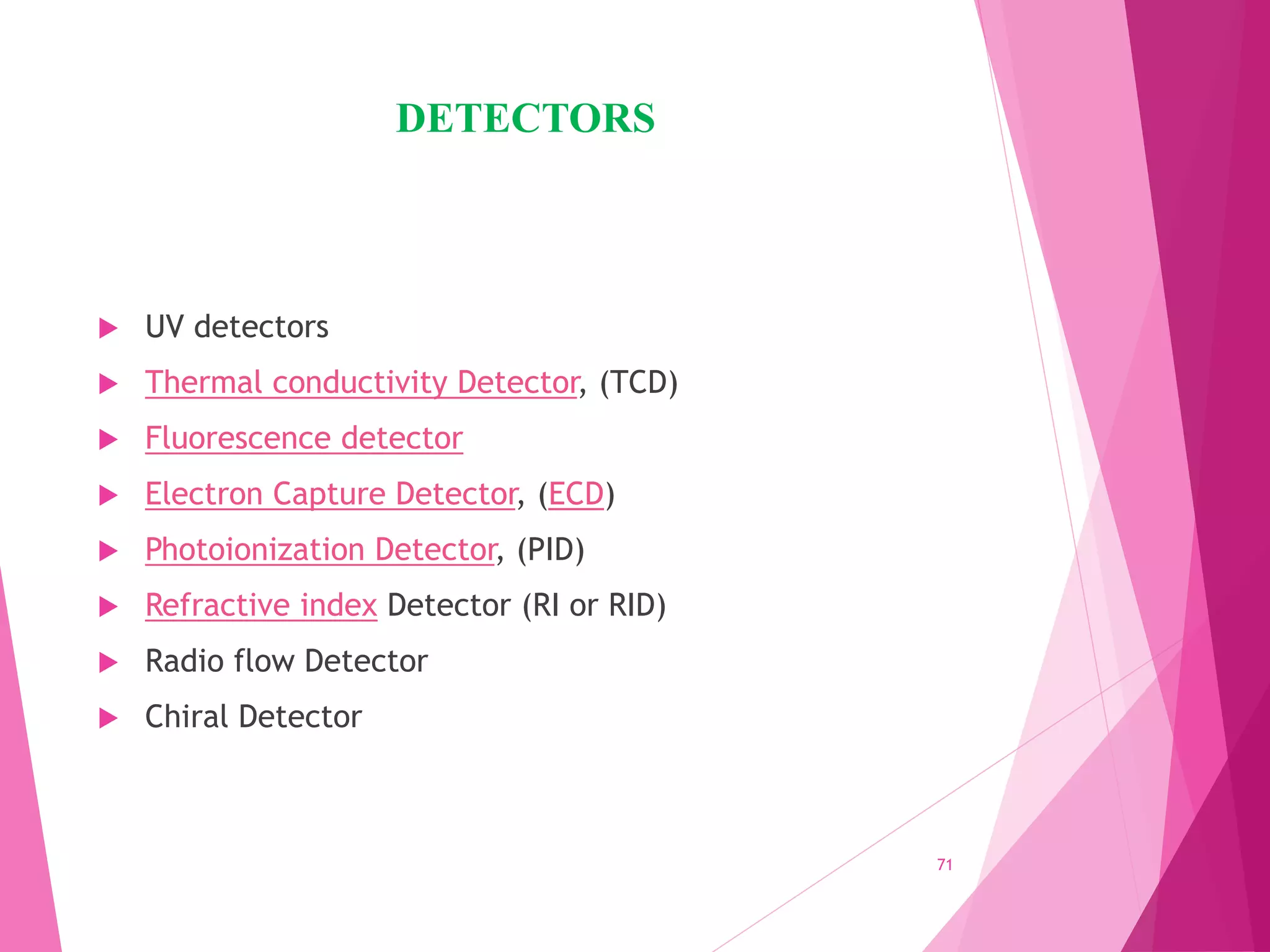
DETECTORS
 UV detectors
 Thermal conductivity Detector, (TCD)
 Fluorescence detector
 Electron Capture Detector, (ECD)
 Photoionization Detector, (PID)
 Refractive index Detector (RI or RID)
 Radio flow Detector
 Chiral Detector
71
72
THANKYOU
73

Chromatography- Principles and application of chromatography

  • 1.
    PRINCIPLES AND APPLICATION OFCHROMATOGRAPHY 1 By;- SANCHIT DHANKHAR
  • 2.
    CHROMATOGRAPHY  Laboratory techniquefor the Separation of mixtures  Chroma -"color" and graphein - "to write”.  Colour bands - separation of individual compounds  Measured or analysed. 2
  • 3.
    PURPOSE OF CHROMATOGRAPHY Analytical  Determine Chemical composition of a sample  Preparative  Used to purify sufficient quantities of a substance 3
  • 4.
  • 5.
     Chromatograph -equipment that enables a sophisticated separation EX. Gas chromatography or Liquid chromatography  Eluent - Fluid entering column/ solvent that carries the analyte.  Eluate - Mobile phase leaving the column.  Stationary phase - Immobilized phase  Immobilized on the support particles or on the inner wall of the column tubing.  Examples : Silica layer - Thin Layer Chromatography 5 CHROMATOGRAPHY TERMS
  • 6.
     Mobile phase Movesin a definite direction. Liquid (LC), Gas (GC).  The mobile phase moves through the chromatography column (the stationary phase) where the sample interacts with the stationary phase and is separated.  Retention time : Time takes for a particular analyte to pass through the system (from the column inlet to the detector) under set conditions.  Sample (Anylate) :Substance analyzed in chromatography.  Solvent : Any substance capable of solubilizing another substance. 6
  • 7.
     Chromatogram  Visualoutput of the chromatograph.  Separation - Different peaks or patterns on the chromatogram correspond to different components of the separated mixture. 7
  • 8.
    Chromatogram - Detectorsignal vs. retention time or volume 8 time or volume Detector Signal 1 2
  • 9.
    X- axis -Retention time Y-axis - Signal Signal is proportional to the concentration of the specific analyte separated. 9
  • 10.
    HOW TO DESCRIBEA CHROMATOGRAM 10
  • 11.
  • 12.
    PRICNIPLES OF CHROMATOGRAPGHY Physical method of separation that distributes components to separate between two phases moves in a definite direction.  Substances are separated based on their differential distribution between two phases  Substances will move with the mobile phase at different rate depending upon their Partition or Distribution co- efficients. 12
  • 13.
    PRINCIPLES  The samplesare subjected to flow by mobile liquid phase onto or through the stable stationary phase.  Separation of fractions of mixture based on their relative affinity towards the two phases during their travel.  The fraction with greater affinity to stationary phase travels slower and shorter while that with less affinity travels faster and longer.  The separation is based on Differential partitioning between the mobile and stationary phases. 13
  • 14.
  • 15.
  • 16.
    FACTORES AFFECTING THE SEPARATION Intermolecular interaction between the two phases  Extent of dispersion of solute molecules over the stationary phase 16
  • 17.
    CLASSIFICATION OF CHROMATOGRAPHY Techniques by Chromatographic bed shape  Column chromatography  Planar chromatography  Paper chromatography  Thin layer chromatography  Techniques by Physical state of mobile phase  Gas chromatography  Liquid chromatography  Affinity chromatography  Supercritical fluid chromatography 17
  • 18.
    TECHNIQUES BY CHROMATOGRAPHIC BEDSHAPE A.COLUMN CHROMATOGRAPHY PRINCIPLES  Solid materials (Adsorbants) – Ability to hold the molecules at their surface  Attractive forces (Vanderwalls & Hydrogen )  Functional groups (Hydroxyl/ Aromatic)  Silica 18
  • 19.
     Stationary bedis within a tube.  Solvent is driven through the column by applying Positive pressure.  Separations - 20 minutes  Modern flash chromatography :  Pre-packed plastic cartridges,  Solvent is pumped through the cartridge.  Quicker separations  Less solvent usage. 19
  • 20.
     Column : oDiameter - 5 mm to 50 mm o Height - 5 cm to 1 m with a tap o Filter (a glass frit or glass wool plug)  The individual components are retained by the stationary phase differently and separate from each other while they are running at different speeds through the column with the eluent.  During the entire chromatography process the eluent is collected in a series of fractions. The composition of the eluent flow can be monitored and each fraction is analyzed for dissolved compounds, e.g., UV absorption, or fluorescence. 20
  • 21.
    STATIONARY PHASE 21  Silicagel, Alumina. Cellulose
  • 22.
    SOLVENTS  Hydroxyl groups- Alcohol  Carboxyl group - Acetone  Non polar Compounds – Hexane Heptane Toulene 22
  • 23.
     Flow rate- Separation.  Pump or compressed gas (e.g. Air, Nitrogen, Argon)  A faster flow rate of the eluent:  Minimizes the time required to run a column  Minimizes diffusion  Better separation. 23
  • 24.
    Retention Time: Thetime from the start of signal detection by the detector to the peak height of the elution concentration profile of each different sample. Curve Width: The width of the concentration profile curve of the different samples in the chromatogram in units of time. RESOLUTION (RS) : Rs = 2(tRB – tRA)/(wB + wA) Where: tRB = Retention time of solute B tRA = Retention time of solute A wB = Gaussian curve width of solute B wA = Gaussian curve width of solute A Plate Number (N): N = (tR)2/(w/4)2 Plate Height (H): H = L/N Where L is the length of the column. 24
  • 25.
  • 26.
  • 27.
  • 28.
    B. PLANAR CHROMATOGRAPHY Separation technique - Stationary phase is present as or on a plane.  Paper – Paper Chromatography  Layer of solid particles spread on a support such as a glass plate - Thin layer Chromatography.  Different compounds in the sample mixture travel different distances according to how strongly they interact with the stationary phase as compared to the mobile phase.  Retention factor (Rf) 28
  • 29.
  • 30.
  • 31.
  • 32.
     This paperis made of cellulose, a polar substance, and the compounds within the mixture travel farther if they are non- polar.  More polar substances bond with the cellulose paper more quickly, and therefore do not travel as far. 32 PRINCIPLE
  • 33.
  • 34.
  • 35.
     Retention factor:  Rƒ = Distance travelled by a Solute Distance travelled by a Solvent  Rƒ = zero, - Solute remains in the stationary phase and thus it is immobile.  Rƒ = 1 - Solute has no affinity for the stationary phase and travels with the solvent front. 35
  • 36.
     b) THINLAYER CHROMATOGRAPHY  Widely employed laboratory technique  Stationary phase - Adsorbent - Silica gel Alumina Cellulose  Widely used in pharmaceutical & food stuff industry  Advantages :  Simple, Rapid and Cheap  Faster runs  Better separations  Choice between different adsorbents.  Better resolution  Allow for quantification 36
  • 37.
    Used to identifythe unknown compounds and to determine the purity of mixture. TLC Plate - Aluminium or glass - coated by stationary phase. Coated material : 0.1-0.3mm in thickness Fluorescent indicator that will make it florescence during the UV light exposure. 37
  • 38.
    MOBILE PHASE  VolatileOrganic solvents 38 STATIONARY PHASE Silica gel, Alumina, or Cellulose on a flat, inert substrate.
  • 39.
  • 40.
  • 41.
  • 42.
    • RETENTION FACTOR: • Rƒ = Distance travelled by a Solute • Distance travelled by a Solvent • Rƒ = zero, Solute remains in the stationary phase and • thus it is immobile. • Rƒ = 1 Solute has no affinity for the stationary phase and travels with the solvent front. 42
  • 43.
     2.TECHNIQUES BYPHYSICAL STATE OF MOBILE PHASE A. GAS CHROMATOGRAPHY  Gas-Liquid chromatography, (GLC)  Mobile phase – Gas (Helium) Carrier Gas Pressure = 4 kg/cm2  Stationary phase - Column, which is typically "packed" or "capillary".  The stationary phase is adhered to the inside of a small-diameter glass tube (a capillary column) or a solid matrix inside a larger metal tube (a packed column).  Partition Coefficient of Volatile analyte between a solid stationary phase (Silicone) and a mobile gas (Helium). 43
  • 44.
     Advantages  Highsensitivity,  High Resolution,  High speed  High Accurasy,  Highly Quantitative   APPARATUS  Gas Chromatograph, GC analyzer, Normal syringes and one micro syringe, Beakers, Sample bottles and Electronic weight.  CHEMICALS  Methanol, Isopropyl Alcohol and water  SAMPLE:  Gases, Liquid, Solids  M.Wt: 2-800  Volatile 44
  • 45.
  • 46.
    APPLICATION  Quantitative &Qualitative analysis of low polarity compounds  Analytical chemistry, Biochemistry, Petrochemical, Environmental monitoring  Measure picomoles of a substance in a 1 ml liquid sample, or parts-per-billion concentrations in gaseous samples  Measuring toxic substances in soil, air or water. 46
  • 47.
    APPLICATION OF GC-MS  Environmental monitoring : Oraganic Pollutants  Criminal forensics : Analyze the particles (Fibre) from a human body in order to help link a criminal to a crime.  Law enforcement : Detection of illegal narcotics,  Forensic toxicology : Find drugs and/or poisons in biological specimens of suspects, victims, or the deceased.  Sports anti-doping analysis : Test athletes' urine samples  Security : Explosive detection (September 11 development) systems have become a part of all US airports.  Food, beverage and perfume : from spoilage or Adultration - aromatic compounds, esters, fatty acids, alcohols, aldehydes, terpenes  Medicine : Congenital metabolic diseases In Born error of metabolism 47
  • 48.
     B. LIQUIDCHROMATOGRAPHY  Mobile phase - Liquid.  Column or a plane.  Very small packing particles and a relatively high pressure - High Performance Liquid Chromatography (HPLC). 48
  • 49.
  • 50.
  • 51.
  • 52.
  • 53.
  • 54.
    LC- MS  Massspectra is obtained rapidly  Small amount of material is required to form the spectra.  Data collected is highly informative with respect to molecular structure. 54
  • 55.
    APPLICATION  Pharmacokinetics :How quickly a drug will be cleared from the hepatic blood flow and organs of the body.  Proteomics : Peptide mass fingerprinting  Drug development: Peptide Mapping, Glycoprotein Mapping, Natural Products Dereplication, Bioaffinity Screening, In Vivo Drug Screening, Metabolic Stability Screening, Metabolite Identification, Impurity Identification, Degradant Identification, Quantitative Bioanalysis, and Quality Control.  Fungal toxins  Pesticides, Herbicides 55
  • 56.
    HIGH PERFORMANCE LIQUIDCHROMATOGRAPHY HPLC V/S LC TECHNIQUE  Columns : Small diameter (4.6 mm), stainless steel, glass or titanium.  Column packing with very small (3, 5 and 10 μm) particles  Relatively high inlet pressures and controlled flow of the mobile phase.  Detecting very small amounts  High resolution  Rapid analysis  Speed, efficiency, sensitivity and ease of operation  High degree of versatility  Easily separate a wide variety of chemical mixtures  400 atmospheres. PUMP PRESSURE  "Ultra High Performance Liquid Chromatography" systems 1000 atmospheres. 56
  • 57.
  • 58.
     ELUTION :Isocratic and Gradient.  ISOCRATIC :  ISO ==> SAME  - Solvent Composition Stays the Same for the Entire Run EX: 60:40 Alcohol:Water  GRADIENT :  Solvent Composition Changes Throughout the Run 58
  • 59.
  • 60.
  • 61.
  • 62.
    TYPES OF HPLC Nature of the stationary phase  Separation process  Adsorption chromatography  Ion-exchange chromatography  Size exclusion chromatography 62
  • 63.
    APPLICATION  Protein separation Insulin purification  Plasma fractionation  Enzyme purification 63
  • 64.
    SIZE EXCLUSION CHROMATOGRAPHY  Gelfiltration or gel permeation chromatography  Separation - Molecular size of its components.  Larger molecules are rapidly washed through the column, smaller molecules penetrate inside the porous of the packing particles and elute later. 64
  • 65.
  • 66.
  • 67.
     AFFINITY CHROMATOGRAPHY Based on specific & non-covalent binding of the proteins to other molecules – Ligands ( His-tags, biotin or antigens)  Physical properties of the analyte.  Biochemistry in the purification of proteins (Enzymes) bound to tags.  After purification, some of these tags are usually removed and the pure protein is obtained. 67
  • 68.
     SUPERCRITICAL FLUIDCHROMATOGRAPHY  Used for the analysis and purification of low to moderate molecular weight , thermally labile molecules.  Principles are similar to those of (HPLC)  Mobile phase - High pressure liquid or Super critical Carbon Dioxide.  Modifiers – Methanol, Ehanol, isopropyl alcohol, acetonitrile and Chloroform.  APPLICATION  Use in industry primarily for separation of Chiral (Asymmetric Carbon atoms) molecules. • Serine • Soman • Glyceraldehyde • Phosphours (Phosphine) • Sulfar metal • Cobalt • Enkephalins 68
  • 69.
    DETECTOR  Gas Chromatographyor liquid Chromatography  To visualize components of the mixture being eluted off the chromatography column. 69
  • 70.
    DETECTORS  Flame ionizationdetector  Aerosol-based detector  Flame photometric detector ( FPD).  Atomic-emission detector (AED).  Mass spectrometer ( MS) detector  Nitrogen Phosphorus Detector,  Evaporative Light Scattering Detector (ELD) : LC. 70
  • 71.
    DETECTORS  UV detectors Thermal conductivity Detector, (TCD)  Fluorescence detector  Electron Capture Detector, (ECD)  Photoionization Detector, (PID)  Refractive index Detector (RI or RID)  Radio flow Detector  Chiral Detector 71
  • 72.
  • 73.