STERILIZATION
BY- SANCHIT DHANKHAR
2
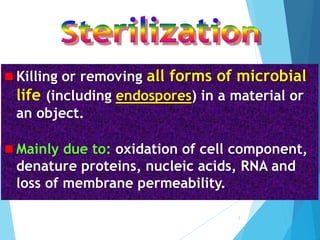
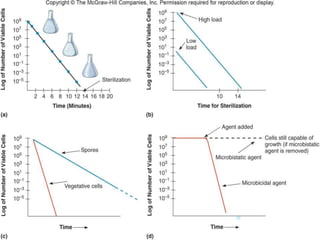
 Killing or removing all forms of microbial
life (including endospores) in a material or
an object.
 Mainly due to: oxidation of cell component,
denature proteins, nucleic acids, RNA and
loss of membrane permeability.
3
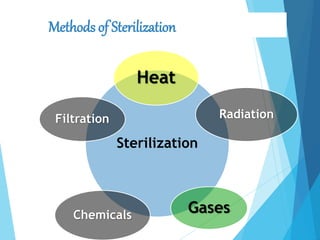
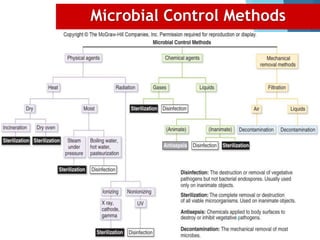
Sterilization
Heat
Radiation
Gases
Chemicals
Filtration
Methods of Sterilization
4
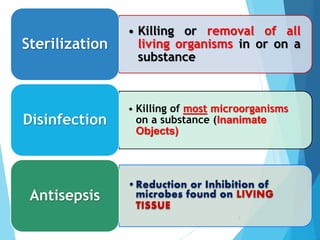
• Killing or removal of all
living organisms in or on a
substance
Sterilization
• Killing of most microorganisms
on a substance (Inanimate
Objects)
Disinfection
•Reduction or Inhibition of
microbes found on LIVING
TISSUE
Antisepsis
5
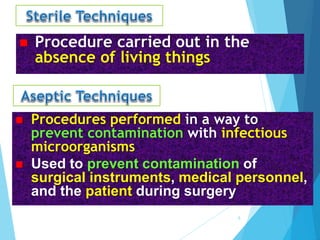
 Procedure carried out in the
absence of living things
 Procedures performed in a way to
prevent contamination with infectious
microorganisms
 Used to prevent contamination of
surgical instruments, medical personnel,
and the patient during surgery
6
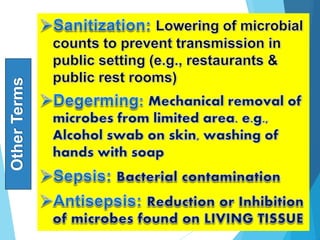
Other
Terms
7
Other
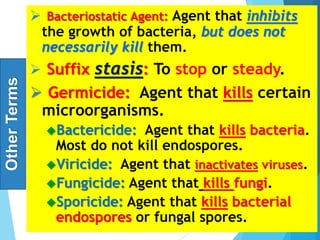
Terms  Bacteriostatic Agent: Agent that inhibits
the growth of bacteria, but does not
necessarily kill them.
 Suffix stasis: To stop or steady.
 Germicide: Agent that kills certain
microorganisms.
Bactericide: Agent that kills bacteria.
Most do not kill endospores.
Viricide: Agent that inactivates viruses.
Fungicide: Agent that kills fungi.
Sporicide: Agent that kills bacterial
endospores or fungal spores.
8
Microbial Control Methods
9
10
11
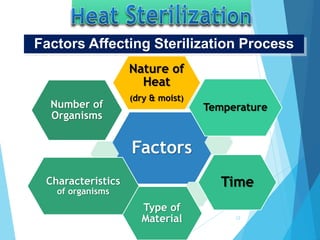
Factors
Nature of
Heat
(dry & moist)
Temperature
Time
Type of
Material
Characteristics
of organisms
Number of
Organisms
Factors Affecting Sterilization Process
12
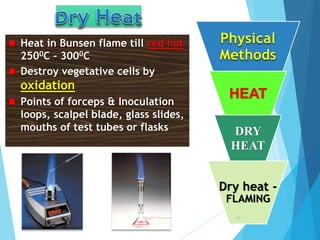
 Heat in Bunsen flame till red hot
2500C – 3000C
 Destroy vegetative cells by
oxidation
 Points of forceps & Inoculation
loops, scalpel blade, glass slides,
mouths of test tubes or flasks
Physical
Methods
HEAT
DRY
HEAT
Dry heat -
FLAMING
13
Dry Heat: Incineration
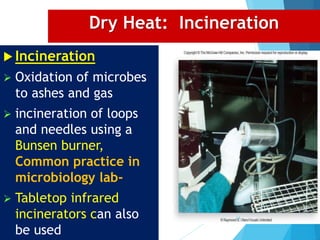
 Incineration
 Oxidation of microbes
to ashes and gas
 incineration of loops
and needles using a
Bunsen burner,
Common practice in
microbiology lab-
 Tabletop infrared
incinerators can also
be used
14
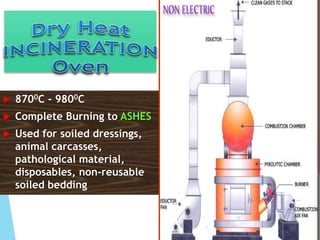
 8700C - 9800C
 Complete Burning to ASHES
 Used for soiled dressings,
animal carcasses,
pathological material,
disposables, non-reusable
soiled bedding
15
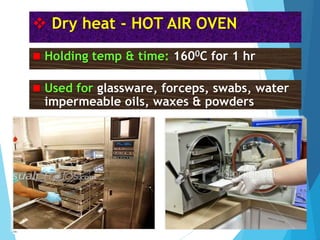
 Dry heat - HOT AIR OVEN
 Used for glassware, forceps, swabs, water
impermeable oils, waxes & powders
 Holding temp & time: 1600C for 1 hr
16
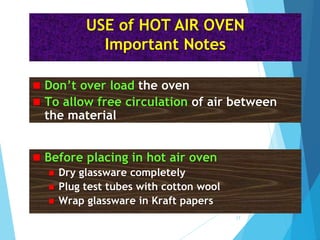
 Before placing in hot air oven
 Dry glassware completely
 Plug test tubes with cotton wool
 Wrap glassware in Kraft papers
 Don’t over load the oven
 To allow free circulation of air between
the material
USE of HOT AIR OVEN
Important Notes
17
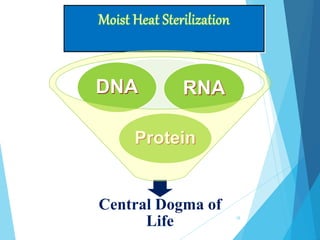
Central Dogma of
Life
Protein
DNA RNA
18
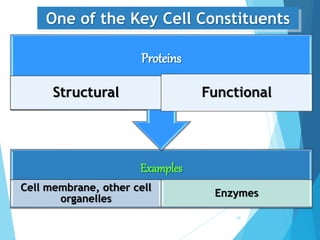
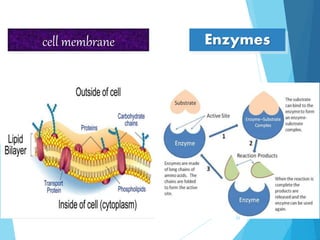
One of the Key Cell Constituents
Examples
Cell membrane, other cell
organelles
Enzymes
Proteins
Structural Functional
19
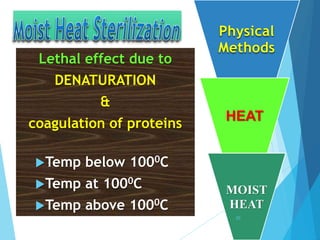
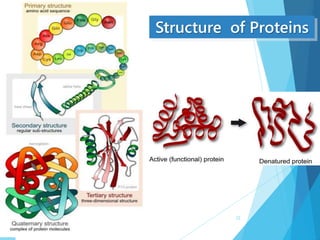
Lethal effect due to
DENATURATION
&
coagulation of proteins
Temp below 1000C
Temp at 1000C
Temp above 1000C
Physical
Methods
HEAT
MOIST
HEAT
20
cell membrane Enzymes
21
Structure of Proteins
22
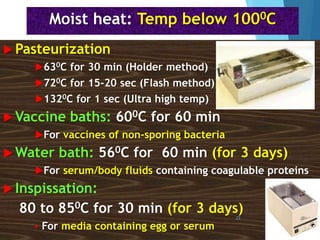
Moist heat: Temp below 1000C
 Pasteurization
630C for 30 min (Holder method)
720C for 15-20 sec (Flash method)
1320C for 1 sec (Ultra high temp)
 Vaccine baths: 600C for 60 min
For vaccines of non-sporing bacteria
 Water bath: 560C for 60 min (for 3 days)
For serum/body fluids containing coagulable proteins
 Inspissation:
80 to 850C for 30 min (for 3 days)
 For media containing egg or serum
23
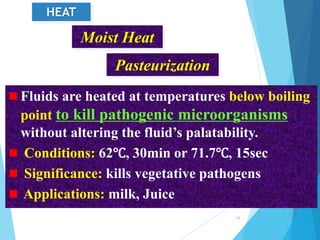
HEAT
Moist Heat
 Fluids are heated at temperatures below boiling
point to kill pathogenic microorganisms
without altering the fluid’s palatability.
 Conditions: 62℃, 30min or 71.7℃, 15sec
 Significance: kills vegetative pathogens
 Applications: milk, Juice
Pasteurization
24
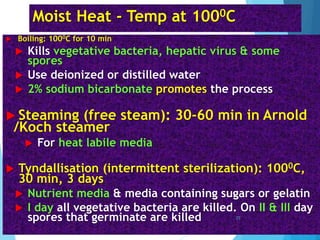
Moist Heat - Temp at 1000C
 Boiling: 1000C for 10 min
 Kills vegetative bacteria, hepatic virus & some
spores
 Use deionized or distilled water
 2% sodium bicarbonate promotes the process
 Steaming (free steam): 30-60 min in Arnold
/Koch steamer
 For heat labile media
 Tyndallisation (intermittent sterilization): 1000C,
30 min, 3 days
 Nutrient media & media containing sugars or gelatin
 I day all vegetative bacteria are killed. On II & III day
spores that germinate are killed 25
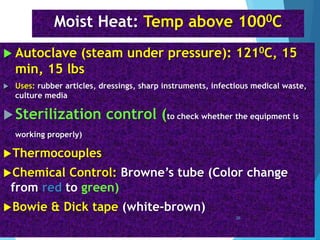
Moist Heat: Temp above 1000C
 Autoclave (steam under pressure): 1210C, 15
min, 15 lbs
 Uses: rubber articles, dressings, sharp instruments, infectious medical waste,
culture media
Sterilization control (to check whether the equipment is
working properly)
Thermocouples
Chemical Control: Browne’s tube (Color change
from red to green)
Bowie & Dick tape (white-brown)
26
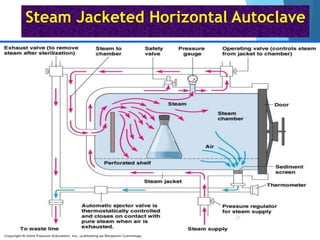
Steam Jacketed Horizontal Autoclave
27
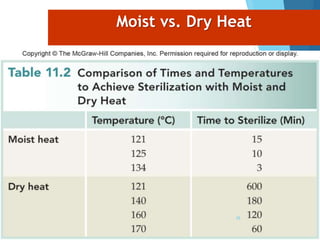
Moist vs. Dry Heat
28
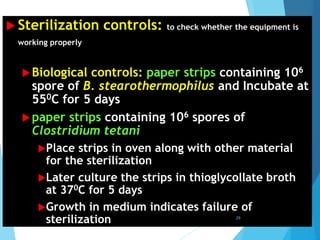
 Sterilization controls: to check whether the equipment is
working properly
Biological controls: paper strips containing 106
spore of B. stearothermophilus and Incubate at
550C for 5 days
paper strips containing 106 spores of
Clostridium tetani
Place strips in oven along with other material
for the sterilization
Later culture the strips in thioglycollate broth
at 370C for 5 days
Growth in medium indicates failure of
sterilization 29
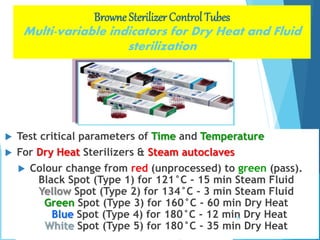
Browne Sterilizer Control Tubes
Multi-variable indicators for Dry Heat and Fluid
sterilization
 Test critical parameters of Time and Temperature
 For Dry Heat Sterilizers & Steam autoclaves
 Colour change from red (unprocessed) to green (pass).
Black Spot (Type 1) for 121°C - 15 min Steam Fluid
Yellow Spot (Type 2) for 134°C - 3 min Steam Fluid
Green Spot (Type 3) for 160°C - 60 min Dry Heat
Blue Spot (Type 4) for 180°C - 12 min Dry Heat
White Spot (Type 5) for 180°C - 35 min Dry Heat
30
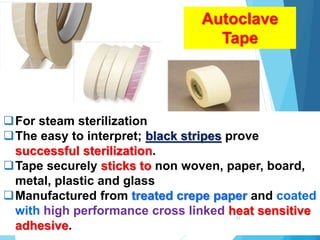
For steam sterilization
The easy to interpret; black stripes prove
successful sterilization.
Tape securely sticks to non woven, paper, board,
metal, plastic and glass
Manufactured from treated crepe paper and coated
with high performance cross linked heat sensitive
adhesive.
Autoclave
Tape
31
32
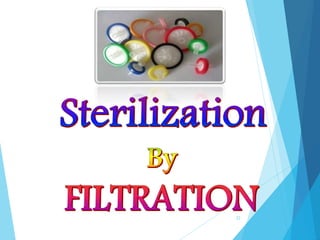
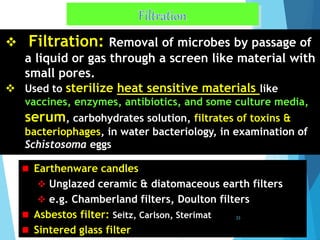
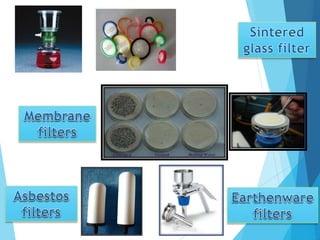
 Filtration: Removal of microbes by passage of
a liquid or gas through a screen like material with
small pores.
 Used to sterilize heat sensitive materials like
vaccines, enzymes, antibiotics, and some culture media,
serum, carbohydrates solution, filtrates of toxins &
bacteriophages, in water bacteriology, in examination of
Schistosoma eggs
 Earthenware candles
 Unglazed ceramic & diatomaceous earth filters
 e.g. Chamberland filters, Doulton filters
 Asbestos filter: Seitz, Carlson, Sterimat
 Sintered glass filter
33
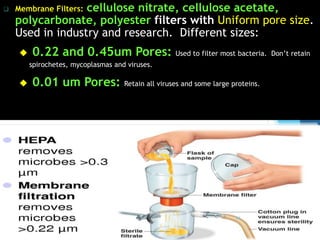
 Membrane Filters: cellulose nitrate, cellulose acetate,
polycarbonate, polyester filters with Uniform pore size.
Used in industry and research. Different sizes:
 0.22 and 0.45um Pores: Used to filter most bacteria. Don’t retain
spirochetes, mycoplasmas and viruses.
 0.01 um Pores: Retain all viruses and some large proteins.
34
35
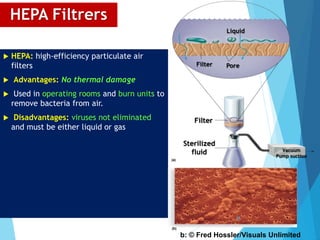
HEPA Filtrers
 HEPA: high-efficiency particulate air
filters
 Advantages: No thermal damage
 Used in operating rooms and burn units to
remove bacteria from air.
 Disadvantages: viruses not eliminated
and must be either liquid or gas
Filter
Sterilized
fluid
(a)
Vacuum
Pump suction
Filter
Liquid
Pore
(b)
b: © Fred Hossler/Visuals Unlimited
36
37
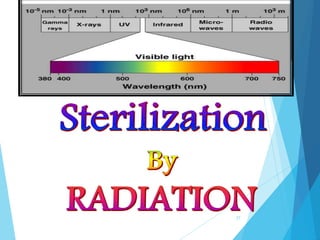
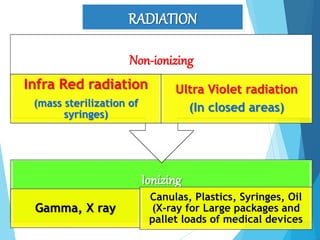
RADIATION
Ionizing
Gamma, X ray
Canulas, Plastics, Syringes, Oil
(X-ray for Large packages and
pallet loads of medical devices
Non-ionizing
Infra Red radiation
(mass sterilization of
syringes)
Ultra Violet radiation
(In closed areas)
38
39
Ultraviolet
Radiation
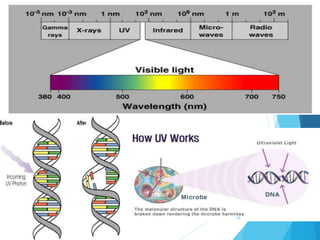
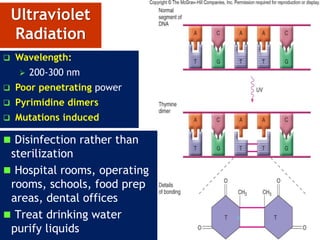
 Wavelength:
 200-300 nm
 Poor penetrating power
 Pyrimidine dimers
 Mutations induced
 Disinfection rather than
sterilization
 Hospital rooms, operating
rooms, schools, food prep
areas, dental offices
 Treat drinking water
purify liquids
40
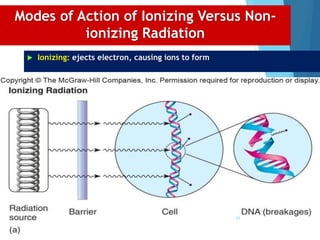
Modes of Action of Ionizing Versus Non-
ionizing Radiation
 Ionizing: ejects electron, causing ions to form
41
 Wavelength ranges from 1 millimeter to 1
meter.
 Heat is absorbed by water molecules.
 May kill vegetative cells in moist foods.
 Bacterial endospores, which do not contain
water, are not damaged by microwave
radiation.
 Solid foods are unevenly penetrated by
microwaves.
Microwave Radiation
42
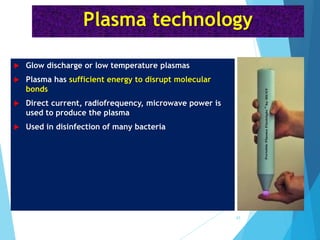
Plasma technology
 Glow discharge or low temperature plasmas
 Plasma has sufficient energy to disrupt molecular
bonds
 Direct current, radiofrequency, microwave power is
used to produce the plasma
 Used in disinfection of many bacteria
43
44
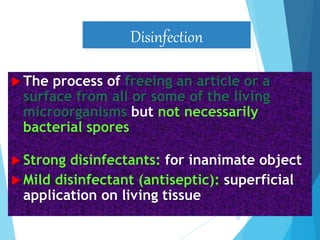
 The process of freeing an article or a
surface from all or some of the living
microorganisms but not necessarily
bacterial spores
 Strong disinfectants: for inanimate object
 Mild disinfectant (antiseptic): superficial
application on living tissue
Disinfection
45
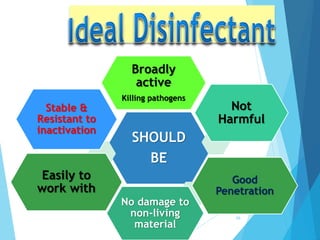
SHOULD
BE
Broadly
active
Killing pathogens
Not
Harmful
Good
Penetration
No damage to
non-living
material
Easily to
work with
Stable &
Resistant to
inactivation
46
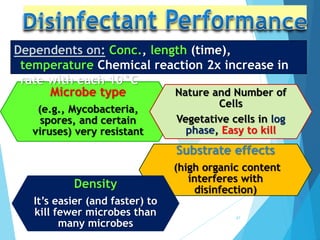
Microbe type
(e.g., Mycobacteria,
spores, and certain
viruses) very resistant
Nature and Number of
Cells
Vegetative cells in log
phase, Easy to kill
Substrate effects
(high organic content
interferes with
disinfection)
Density
It’s easier (and faster) to
kill fewer microbes than
many microbes
Dependents on: Conc., length (time),
temperature Chemical reaction 2x increase in
rate with each 10°C
47
48
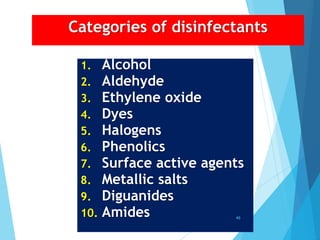
Categories of disinfectants
1. Alcohol
2. Aldehyde
3. Ethylene oxide
4. Dyes
5. Halogens
6. Phenolics
7. Surface active agents
8. Metallic salts
9. Diguanides
10. Amides 49
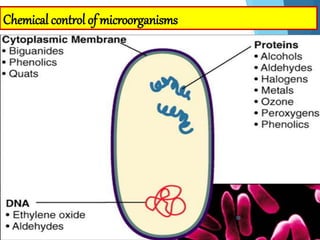
Chemical control of microorganisms
50
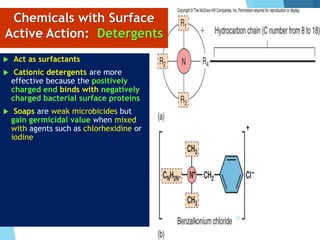
 Act as surfactants
 Cationic detergents are more
effective because the positively
charged end binds with negatively
charged bacterial surface proteins
 Soaps are weak microbicides but
gain germicidal value when mixed
with agents such as chlorhexidine or
iodine
Chemicals with Surface
Active Action: Detergents
51
SOAPS and SURFACE ACTIVE AGENTS
 Soaps & surfactants DISRUPT cell membrane
 Soaps are Na- or K- salts of fatty acids, a natural product
 There are 4 main groups of surface Active Agents
I. Anionic surfactants: strong detergent action, weak antimicrobial action
II. Non-ionic surfactants
III. Cationic surfactants: Quaternary ammonium compounds: cetrimide,
benzalkonium chloride: bacteriostatic
IV. Amphoteric surfactants: both detergent & antimicrobial properties
52
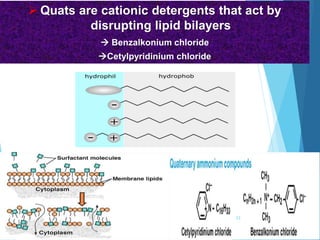
 Quats are cationic detergents that act by
disrupting lipid bilayers
 Benzalkonium chloride
Cetylpyridinium chloride
53
 Quats are bactericidal, fungicidal, viricidal
(enveloped), and amoebicidal
 Most effective against Gram-positive
bacteria, less effective against gram-
negative bacteria.
 Quats do not kill endospores, Mycobacteria
spp., nor non-enveloped viruses
 Disadvantages: rapidly inactivated by
organics including cotton, soap and anionic
detergents
 Advantages: Strong antimicrobial action,
colorless, odorless, tasteless, stable, and
nontoxic. 54
ALCOHOL
Ethanol, isopropyl alcohol
 Skin antiseptics at 70%
 Kills bacteria and fungi
 Less effective on spores (Less sporicidal activity) & non-enveloped viruses
(Less virucidal activity)
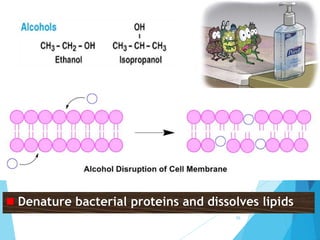
 Denature bacterial proteins and dissolves lipids
 Flammable; also may damage rubber, plastic, etc.
 Methyl alcohol: to treat cabinets / incubators affected by fungal spores
 Others: benzyl alcohol, chlorbutol, phenylethanol
55
 Denature bacterial proteins and dissolves lipids
56
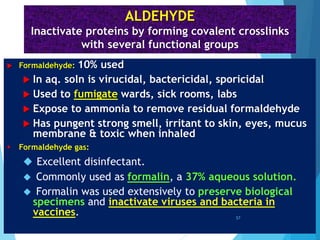
ALDEHYDE
Inactivate proteins by forming covalent crosslinks
with several functional groups
 Formaldehyde: 10% used
 In aq. soln is virucidal, bactericidal, sporicidal
 Used to fumigate wards, sick rooms, labs
 Expose to ammonia to remove residual formaldehyde
 Has pungent strong smell, irritant to skin, eyes, mucus
membrane & toxic when inhaled
 Formaldehyde gas:
 Excellent disinfectant.
 Commonly used as formalin, a 37% aqueous solution.
 Formalin was used extensively to preserve biological
specimens and inactivate viruses and bacteria in
vaccines. 57
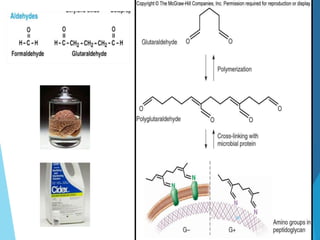
58
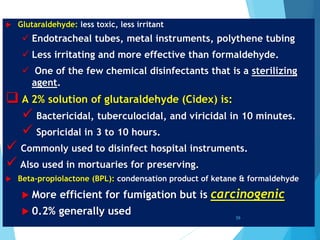
 Glutaraldehyde: less toxic, less irritant
 Endotracheal tubes, metal instruments, polythene tubing
 Less irritating and more effective than formaldehyde.
 One of the few chemical disinfectants that is a sterilizing
agent.
 A 2% solution of glutaraldehyde (Cidex) is:
 Bactericidal, tuberculocidal, and viricidal in 10 minutes.
 Sporicidal in 3 to 10 hours.
 Commonly used to disinfect hospital instruments.
 Also used in mortuaries for preserving.
 Βeta-propiolactone (BPL): condensation product of ketane & formaldehyde
 More efficient for fumigation but is carcinogenic
 0.2% generally used 59
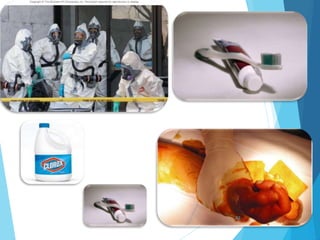
HALOGENS
 Kills by oxidation
 Iodine: 2.5% in 70% alcohol, Skin antiseptic
 Iodophores: (iodine + non-ionic surface active agent) – betadine – non
staining, less irritant, less toxic
 Chlorine: disinfect water supplies, swimming pools
 Sodium hypochlorite: 1% for HIV
 Organic chloramines: antiseptic for wound dressings
60
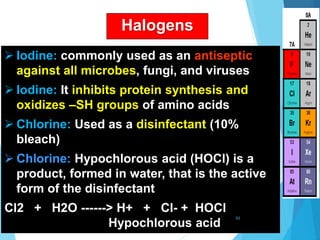
Halogens
 Iodine: commonly used as an antiseptic
against all microbes, fungi, and viruses
 Iodine: It inhibits protein synthesis and
oxidizes –SH groups of amino acids
 Chlorine: Used as a disinfectant (10%
bleach)
 Chlorine: Hypochlorous acid (HOCl) is a
product, formed in water, that is the active
form of the disinfectant
Cl2 + H2O ------> H+ + Cl- + HOCl
Hypochlorous acid
61
62
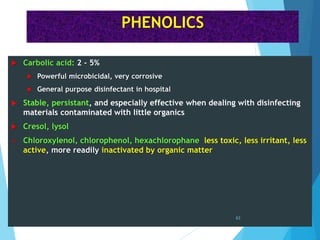
PHENOLICS
 Carbolic acid: 2 - 5%
 Powerful microbicidal, very corrosive
 General purpose disinfectant in hospital
 Stable, persistant, and especially effective when dealing with disinfecting
materials contaminated with little organics
 Cresol, lysol
 Chloroxylenol, chlorophenol, hexachlorophane less toxic, less irritant, less
active, more readily inactivated by organic matter
63
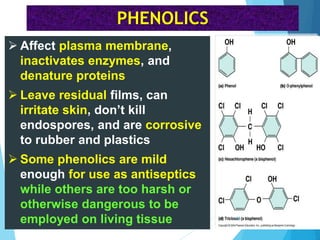
 Affect plasma membrane,
inactivates enzymes, and
denature proteins
 Leave residual films, can
irritate skin, don’t kill
endospores, and are corrosive
to rubber and plastics
 Some phenolics are mild
enough for use as antiseptics
while others are too harsh or
otherwise dangerous to be
employed on living tissue
PHENOLICS
64
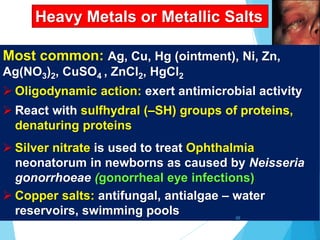
Heavy Metals or Metallic Salts
Most common: Ag, Cu, Hg (ointment), Ni, Zn,
Ag(NO3)2, CuSO4 , ZnCl2, HgCl2
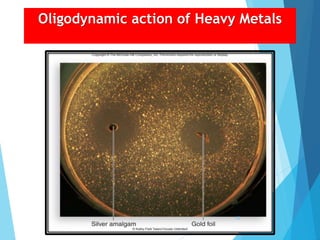
 Oligodynamic action: exert antimicrobial activity
 React with sulfhydral (–SH) groups of proteins,
denaturing proteins
 Silver nitrate is used to treat Ophthalmia
neonatorum in newborns as caused by Neisseria
gonorrhoeae (gonorrheal eye infections)
 Copper salts: antifungal, antialgae – water
reservoirs, swimming pools 65
Oligodynamic action of Heavy Metals
66
Heavy Metals or Metallic Salts
 Mercury: Organic mercury compounds like
merthiolate and mercurochrome are used to
disinfect skin wounds.
 Selenium
 Kills fungi and their spores. Used for fungal
infections.
 Also used in dandruff shampoos.
 Zinc
 Zinc chloride is used in mouthwashes.
 Zinc oxide is used as antifungal agent in
paints.
67
Peroxygens (Oxidizing
Agents)
A. Ozone
 Used along with chlorine to disinfect water.
 Helps neutralize unpleasant tastes and odors.
 More effective killing agent than chlorine, but
less stable and more expensive.
 Highly reactive form of oxygen.
 Made by exposing oxygen to electricity or UV
light.
 Oxidize cellular components of treated microbes.
 Oxidize DNA & Disrupt membranes and proteins.
68
Peroxygens
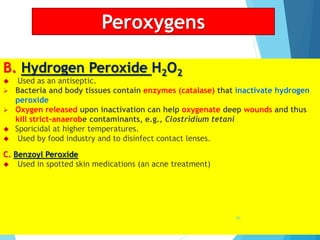
B. Hydrogen Peroxide H2O2
 Used as an antiseptic.
 Bacteria and body tissues contain enzymes (catalase) that inactivate hydrogen
peroxide
 Oxygen released upon inactivation can help oxygenate deep wounds and thus
kill strict-anaerobe contaminants, e.g., Clostridium tetani
 Sporicidal at higher temperatures.
 Used by food industry and to disinfect contact lenses.
C. Benzoyl Peroxide
 Used in spotted skin medications (an acne treatment)
69
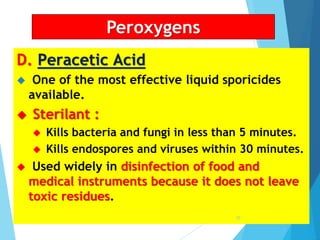
D. Peracetic Acid
 One of the most effective liquid sporicides
available.
 Sterilant :
 Kills bacteria and fungi in less than 5 minutes.
 Kills endospores and viruses within 30 minutes.
 Used widely in disinfection of food and
medical instruments because it does not leave
toxic residues.
Peroxygens
70
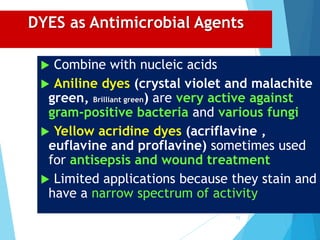
DYES as Antimicrobial Agents
 Combine with nucleic acids
 Aniline dyes (crystal violet and malachite
green, Brilliant green) are very active against
gram-positive bacteria and various fungi
 Yellow acridine dyes (acriflavine ,
euflavine and proflavine) sometimes used
for antisepsis and wound treatment
 Limited applications because they stain and
have a narrow spectrum of activity
71
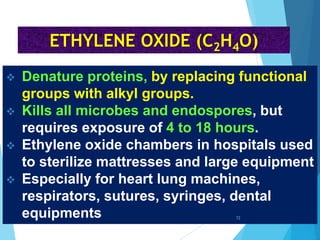
 Denature proteins, by replacing functional
groups with alkyl groups.
 Kills all microbes and endospores, but
requires exposure of 4 to 18 hours.
 Ethylene oxide chambers in hospitals used
to sterilize mattresses and large equipment
 Especially for heart lung machines,
respirators, sutures, syringes, dental
equipments
ETHYLENE OXIDE (C2H4O)
72
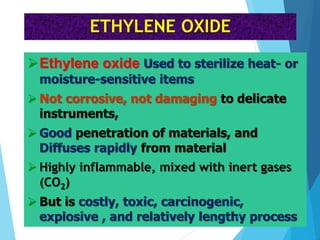
ETHYLENE OXIDE
Ethylene oxide Used to sterilize heat- or
moisture-sensitive items
 Not corrosive, not damaging to delicate
instruments,
 Good penetration of materials, and
Diffuses rapidly from material
 Highly inflammable, mixed with inert gases
(CO2)
 But is costly, toxic, carcinogenic,
explosive , and relatively lengthy process
73
THANKYOU
74

Sterilization- Pharmaceutical Microbiology

  • 1.
  • 2.
  • 3.
     Killing orremoving all forms of microbial life (including endospores) in a material or an object.  Mainly due to: oxidation of cell component, denature proteins, nucleic acids, RNA and loss of membrane permeability. 3
  • 4.
  • 5.
    • Killing orremoval of all living organisms in or on a substance Sterilization • Killing of most microorganisms on a substance (Inanimate Objects) Disinfection •Reduction or Inhibition of microbes found on LIVING TISSUE Antisepsis 5
  • 6.
     Procedure carriedout in the absence of living things  Procedures performed in a way to prevent contamination with infectious microorganisms  Used to prevent contamination of surgical instruments, medical personnel, and the patient during surgery 6
  • 7.
  • 8.
    Other Terms  BacteriostaticAgent: Agent that inhibits the growth of bacteria, but does not necessarily kill them.  Suffix stasis: To stop or steady.  Germicide: Agent that kills certain microorganisms. Bactericide: Agent that kills bacteria. Most do not kill endospores. Viricide: Agent that inactivates viruses. Fungicide: Agent that kills fungi. Sporicide: Agent that kills bacterial endospores or fungal spores. 8
  • 9.
  • 10.
  • 11.
  • 12.
    Factors Nature of Heat (dry &moist) Temperature Time Type of Material Characteristics of organisms Number of Organisms Factors Affecting Sterilization Process 12
  • 13.
     Heat inBunsen flame till red hot 2500C – 3000C  Destroy vegetative cells by oxidation  Points of forceps & Inoculation loops, scalpel blade, glass slides, mouths of test tubes or flasks Physical Methods HEAT DRY HEAT Dry heat - FLAMING 13
  • 14.
    Dry Heat: Incineration Incineration  Oxidation of microbes to ashes and gas  incineration of loops and needles using a Bunsen burner, Common practice in microbiology lab-  Tabletop infrared incinerators can also be used 14
  • 15.
     8700C -9800C  Complete Burning to ASHES  Used for soiled dressings, animal carcasses, pathological material, disposables, non-reusable soiled bedding 15
  • 16.
     Dry heat- HOT AIR OVEN  Used for glassware, forceps, swabs, water impermeable oils, waxes & powders  Holding temp & time: 1600C for 1 hr 16
  • 17.
     Before placingin hot air oven  Dry glassware completely  Plug test tubes with cotton wool  Wrap glassware in Kraft papers  Don’t over load the oven  To allow free circulation of air between the material USE of HOT AIR OVEN Important Notes 17
  • 18.
  • 19.
    One of theKey Cell Constituents Examples Cell membrane, other cell organelles Enzymes Proteins Structural Functional 19
  • 20.
    Lethal effect dueto DENATURATION & coagulation of proteins Temp below 1000C Temp at 1000C Temp above 1000C Physical Methods HEAT MOIST HEAT 20
  • 21.
  • 22.
  • 23.
    Moist heat: Tempbelow 1000C  Pasteurization 630C for 30 min (Holder method) 720C for 15-20 sec (Flash method) 1320C for 1 sec (Ultra high temp)  Vaccine baths: 600C for 60 min For vaccines of non-sporing bacteria  Water bath: 560C for 60 min (for 3 days) For serum/body fluids containing coagulable proteins  Inspissation: 80 to 850C for 30 min (for 3 days)  For media containing egg or serum 23
  • 24.
    HEAT Moist Heat  Fluidsare heated at temperatures below boiling point to kill pathogenic microorganisms without altering the fluid’s palatability.  Conditions: 62℃, 30min or 71.7℃, 15sec  Significance: kills vegetative pathogens  Applications: milk, Juice Pasteurization 24
  • 25.
    Moist Heat -Temp at 1000C  Boiling: 1000C for 10 min  Kills vegetative bacteria, hepatic virus & some spores  Use deionized or distilled water  2% sodium bicarbonate promotes the process  Steaming (free steam): 30-60 min in Arnold /Koch steamer  For heat labile media  Tyndallisation (intermittent sterilization): 1000C, 30 min, 3 days  Nutrient media & media containing sugars or gelatin  I day all vegetative bacteria are killed. On II & III day spores that germinate are killed 25
  • 26.
    Moist Heat: Tempabove 1000C  Autoclave (steam under pressure): 1210C, 15 min, 15 lbs  Uses: rubber articles, dressings, sharp instruments, infectious medical waste, culture media Sterilization control (to check whether the equipment is working properly) Thermocouples Chemical Control: Browne’s tube (Color change from red to green) Bowie & Dick tape (white-brown) 26
  • 27.
  • 28.
  • 29.
     Sterilization controls:to check whether the equipment is working properly Biological controls: paper strips containing 106 spore of B. stearothermophilus and Incubate at 550C for 5 days paper strips containing 106 spores of Clostridium tetani Place strips in oven along with other material for the sterilization Later culture the strips in thioglycollate broth at 370C for 5 days Growth in medium indicates failure of sterilization 29
  • 30.
    Browne Sterilizer ControlTubes Multi-variable indicators for Dry Heat and Fluid sterilization  Test critical parameters of Time and Temperature  For Dry Heat Sterilizers & Steam autoclaves  Colour change from red (unprocessed) to green (pass). Black Spot (Type 1) for 121°C - 15 min Steam Fluid Yellow Spot (Type 2) for 134°C - 3 min Steam Fluid Green Spot (Type 3) for 160°C - 60 min Dry Heat Blue Spot (Type 4) for 180°C - 12 min Dry Heat White Spot (Type 5) for 180°C - 35 min Dry Heat 30
  • 31.
    For steam sterilization Theeasy to interpret; black stripes prove successful sterilization. Tape securely sticks to non woven, paper, board, metal, plastic and glass Manufactured from treated crepe paper and coated with high performance cross linked heat sensitive adhesive. Autoclave Tape 31
  • 32.
  • 33.
     Filtration: Removalof microbes by passage of a liquid or gas through a screen like material with small pores.  Used to sterilize heat sensitive materials like vaccines, enzymes, antibiotics, and some culture media, serum, carbohydrates solution, filtrates of toxins & bacteriophages, in water bacteriology, in examination of Schistosoma eggs  Earthenware candles  Unglazed ceramic & diatomaceous earth filters  e.g. Chamberland filters, Doulton filters  Asbestos filter: Seitz, Carlson, Sterimat  Sintered glass filter 33
  • 34.
     Membrane Filters:cellulose nitrate, cellulose acetate, polycarbonate, polyester filters with Uniform pore size. Used in industry and research. Different sizes:  0.22 and 0.45um Pores: Used to filter most bacteria. Don’t retain spirochetes, mycoplasmas and viruses.  0.01 um Pores: Retain all viruses and some large proteins. 34
  • 35.
  • 36.
    HEPA Filtrers  HEPA:high-efficiency particulate air filters  Advantages: No thermal damage  Used in operating rooms and burn units to remove bacteria from air.  Disadvantages: viruses not eliminated and must be either liquid or gas Filter Sterilized fluid (a) Vacuum Pump suction Filter Liquid Pore (b) b: © Fred Hossler/Visuals Unlimited 36
  • 37.
  • 38.
    RADIATION Ionizing Gamma, X ray Canulas,Plastics, Syringes, Oil (X-ray for Large packages and pallet loads of medical devices Non-ionizing Infra Red radiation (mass sterilization of syringes) Ultra Violet radiation (In closed areas) 38
  • 39.
  • 40.
    Ultraviolet Radiation  Wavelength:  200-300nm  Poor penetrating power  Pyrimidine dimers  Mutations induced  Disinfection rather than sterilization  Hospital rooms, operating rooms, schools, food prep areas, dental offices  Treat drinking water purify liquids 40
  • 41.
    Modes of Actionof Ionizing Versus Non- ionizing Radiation  Ionizing: ejects electron, causing ions to form 41
  • 42.
     Wavelength rangesfrom 1 millimeter to 1 meter.  Heat is absorbed by water molecules.  May kill vegetative cells in moist foods.  Bacterial endospores, which do not contain water, are not damaged by microwave radiation.  Solid foods are unevenly penetrated by microwaves. Microwave Radiation 42
  • 43.
    Plasma technology  Glowdischarge or low temperature plasmas  Plasma has sufficient energy to disrupt molecular bonds  Direct current, radiofrequency, microwave power is used to produce the plasma  Used in disinfection of many bacteria 43
  • 44.
  • 45.
     The processof freeing an article or a surface from all or some of the living microorganisms but not necessarily bacterial spores  Strong disinfectants: for inanimate object  Mild disinfectant (antiseptic): superficial application on living tissue Disinfection 45
  • 46.
    SHOULD BE Broadly active Killing pathogens Not Harmful Good Penetration No damageto non-living material Easily to work with Stable & Resistant to inactivation 46
  • 47.
    Microbe type (e.g., Mycobacteria, spores,and certain viruses) very resistant Nature and Number of Cells Vegetative cells in log phase, Easy to kill Substrate effects (high organic content interferes with disinfection) Density It’s easier (and faster) to kill fewer microbes than many microbes Dependents on: Conc., length (time), temperature Chemical reaction 2x increase in rate with each 10°C 47
  • 48.
  • 49.
    Categories of disinfectants 1.Alcohol 2. Aldehyde 3. Ethylene oxide 4. Dyes 5. Halogens 6. Phenolics 7. Surface active agents 8. Metallic salts 9. Diguanides 10. Amides 49
  • 50.
    Chemical control ofmicroorganisms 50
  • 51.
     Act assurfactants  Cationic detergents are more effective because the positively charged end binds with negatively charged bacterial surface proteins  Soaps are weak microbicides but gain germicidal value when mixed with agents such as chlorhexidine or iodine Chemicals with Surface Active Action: Detergents 51
  • 52.
    SOAPS and SURFACEACTIVE AGENTS  Soaps & surfactants DISRUPT cell membrane  Soaps are Na- or K- salts of fatty acids, a natural product  There are 4 main groups of surface Active Agents I. Anionic surfactants: strong detergent action, weak antimicrobial action II. Non-ionic surfactants III. Cationic surfactants: Quaternary ammonium compounds: cetrimide, benzalkonium chloride: bacteriostatic IV. Amphoteric surfactants: both detergent & antimicrobial properties 52
  • 53.
     Quats arecationic detergents that act by disrupting lipid bilayers  Benzalkonium chloride Cetylpyridinium chloride 53
  • 54.
     Quats arebactericidal, fungicidal, viricidal (enveloped), and amoebicidal  Most effective against Gram-positive bacteria, less effective against gram- negative bacteria.  Quats do not kill endospores, Mycobacteria spp., nor non-enveloped viruses  Disadvantages: rapidly inactivated by organics including cotton, soap and anionic detergents  Advantages: Strong antimicrobial action, colorless, odorless, tasteless, stable, and nontoxic. 54
  • 55.
    ALCOHOL Ethanol, isopropyl alcohol Skin antiseptics at 70%  Kills bacteria and fungi  Less effective on spores (Less sporicidal activity) & non-enveloped viruses (Less virucidal activity)  Denature bacterial proteins and dissolves lipids  Flammable; also may damage rubber, plastic, etc.  Methyl alcohol: to treat cabinets / incubators affected by fungal spores  Others: benzyl alcohol, chlorbutol, phenylethanol 55
  • 56.
     Denature bacterialproteins and dissolves lipids 56
  • 57.
    ALDEHYDE Inactivate proteins byforming covalent crosslinks with several functional groups  Formaldehyde: 10% used  In aq. soln is virucidal, bactericidal, sporicidal  Used to fumigate wards, sick rooms, labs  Expose to ammonia to remove residual formaldehyde  Has pungent strong smell, irritant to skin, eyes, mucus membrane & toxic when inhaled  Formaldehyde gas:  Excellent disinfectant.  Commonly used as formalin, a 37% aqueous solution.  Formalin was used extensively to preserve biological specimens and inactivate viruses and bacteria in vaccines. 57
  • 58.
  • 59.
     Glutaraldehyde: lesstoxic, less irritant  Endotracheal tubes, metal instruments, polythene tubing  Less irritating and more effective than formaldehyde.  One of the few chemical disinfectants that is a sterilizing agent.  A 2% solution of glutaraldehyde (Cidex) is:  Bactericidal, tuberculocidal, and viricidal in 10 minutes.  Sporicidal in 3 to 10 hours.  Commonly used to disinfect hospital instruments.  Also used in mortuaries for preserving.  Βeta-propiolactone (BPL): condensation product of ketane & formaldehyde  More efficient for fumigation but is carcinogenic  0.2% generally used 59
  • 60.
    HALOGENS  Kills byoxidation  Iodine: 2.5% in 70% alcohol, Skin antiseptic  Iodophores: (iodine + non-ionic surface active agent) – betadine – non staining, less irritant, less toxic  Chlorine: disinfect water supplies, swimming pools  Sodium hypochlorite: 1% for HIV  Organic chloramines: antiseptic for wound dressings 60
  • 61.
    Halogens  Iodine: commonlyused as an antiseptic against all microbes, fungi, and viruses  Iodine: It inhibits protein synthesis and oxidizes –SH groups of amino acids  Chlorine: Used as a disinfectant (10% bleach)  Chlorine: Hypochlorous acid (HOCl) is a product, formed in water, that is the active form of the disinfectant Cl2 + H2O ------> H+ + Cl- + HOCl Hypochlorous acid 61
  • 62.
  • 63.
    PHENOLICS  Carbolic acid:2 - 5%  Powerful microbicidal, very corrosive  General purpose disinfectant in hospital  Stable, persistant, and especially effective when dealing with disinfecting materials contaminated with little organics  Cresol, lysol  Chloroxylenol, chlorophenol, hexachlorophane less toxic, less irritant, less active, more readily inactivated by organic matter 63
  • 64.
     Affect plasmamembrane, inactivates enzymes, and denature proteins  Leave residual films, can irritate skin, don’t kill endospores, and are corrosive to rubber and plastics  Some phenolics are mild enough for use as antiseptics while others are too harsh or otherwise dangerous to be employed on living tissue PHENOLICS 64
  • 65.
    Heavy Metals orMetallic Salts Most common: Ag, Cu, Hg (ointment), Ni, Zn, Ag(NO3)2, CuSO4 , ZnCl2, HgCl2  Oligodynamic action: exert antimicrobial activity  React with sulfhydral (–SH) groups of proteins, denaturing proteins  Silver nitrate is used to treat Ophthalmia neonatorum in newborns as caused by Neisseria gonorrhoeae (gonorrheal eye infections)  Copper salts: antifungal, antialgae – water reservoirs, swimming pools 65
  • 66.
    Oligodynamic action ofHeavy Metals 66
  • 67.
    Heavy Metals orMetallic Salts  Mercury: Organic mercury compounds like merthiolate and mercurochrome are used to disinfect skin wounds.  Selenium  Kills fungi and their spores. Used for fungal infections.  Also used in dandruff shampoos.  Zinc  Zinc chloride is used in mouthwashes.  Zinc oxide is used as antifungal agent in paints. 67
  • 68.
    Peroxygens (Oxidizing Agents) A. Ozone Used along with chlorine to disinfect water.  Helps neutralize unpleasant tastes and odors.  More effective killing agent than chlorine, but less stable and more expensive.  Highly reactive form of oxygen.  Made by exposing oxygen to electricity or UV light.  Oxidize cellular components of treated microbes.  Oxidize DNA & Disrupt membranes and proteins. 68
  • 69.
    Peroxygens B. Hydrogen PeroxideH2O2  Used as an antiseptic.  Bacteria and body tissues contain enzymes (catalase) that inactivate hydrogen peroxide  Oxygen released upon inactivation can help oxygenate deep wounds and thus kill strict-anaerobe contaminants, e.g., Clostridium tetani  Sporicidal at higher temperatures.  Used by food industry and to disinfect contact lenses. C. Benzoyl Peroxide  Used in spotted skin medications (an acne treatment) 69
  • 70.
    D. Peracetic Acid One of the most effective liquid sporicides available.  Sterilant :  Kills bacteria and fungi in less than 5 minutes.  Kills endospores and viruses within 30 minutes.  Used widely in disinfection of food and medical instruments because it does not leave toxic residues. Peroxygens 70
  • 71.
    DYES as AntimicrobialAgents  Combine with nucleic acids  Aniline dyes (crystal violet and malachite green, Brilliant green) are very active against gram-positive bacteria and various fungi  Yellow acridine dyes (acriflavine , euflavine and proflavine) sometimes used for antisepsis and wound treatment  Limited applications because they stain and have a narrow spectrum of activity 71
  • 72.
     Denature proteins,by replacing functional groups with alkyl groups.  Kills all microbes and endospores, but requires exposure of 4 to 18 hours.  Ethylene oxide chambers in hospitals used to sterilize mattresses and large equipment  Especially for heart lung machines, respirators, sutures, syringes, dental equipments ETHYLENE OXIDE (C2H4O) 72
  • 73.
    ETHYLENE OXIDE Ethylene oxideUsed to sterilize heat- or moisture-sensitive items  Not corrosive, not damaging to delicate instruments,  Good penetration of materials, and Diffuses rapidly from material  Highly inflammable, mixed with inert gases (CO2)  But is costly, toxic, carcinogenic, explosive , and relatively lengthy process 73
  • 74.