Chapter 15: Darwin’s
Theory of Evolution
    Pages 368-386
Chapter 15-1: The Puzzle
   of Life’s Diversity
       Pages 369-372
Vocabulary 15-1
evolution
theory
fossil
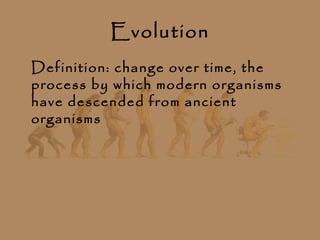
Evolution
Definition: change over time, the
process by which modern organisms
have descended from ancient
organisms
The Theory of Evolution
 helps us understand how:
• fossils fit into life’s history
• bacteria become resistant to
  antibiotics & insects to pesticides
• determine the relationships among
  the different groups of organisms on
  Earth
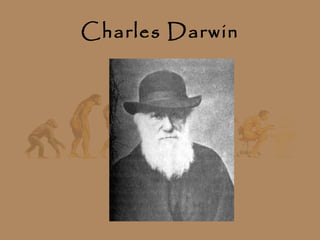
Charles Darwin
• Born Feb.12, 1809 in England
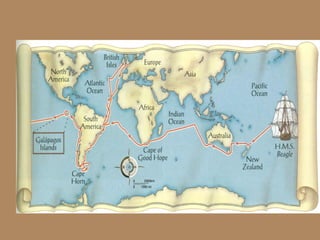
• Sailed on the H.M.S. Beagle in
  1831 for a 5 year voyage around the
  world
• Made many observations & collected
  evidence that caused him to
  hypothesize about how life changes
  over time
• His observations were influenced by
  reading the ideas of other scientists
Charles Darwin
Scientific beliefs before
          Darwin:
• Species were unchanging – the same
  organisms always existed.
• Earth was about 10,000 years old.
Darwin’s Observations
1. A large variety of organisms inhabit the
   Earth
     • Example: He collected 68 species of
       beetles in 1 day in a rainforest in Brazil
2. Organisms were well suited for the
   different environments in which they were
   found
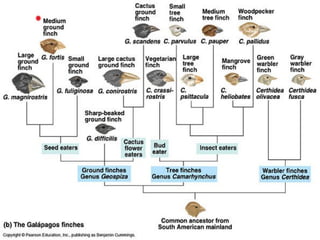
     •   Examples: On the Galapagos Islands, t ortoises
         from different islands have different shaped
         shells & neck lengths and different finches (birds)
         have different shaped beaks
Fossils
•   Definition: preserved remains of ancient
    organisms
•   Fossil evidence raises many questions:
     • Why have so many species disappeared?
     • How do extinct organisms relate to living
       organisms?
•   Darwin based most of his beliefs on the
    fossils he found and wondered if animals
    on different islands once belonged to the
    same species
Review: Species
Definition: organisms belong to the
same species if they can interbreed
(produce fertile offspring) under
natural conditions
Good News:

We are skipping
Chapter 15-2.
To summarize Chapter
           15-2:
Many scientists contributed ideas that
  helped frame Darwin’s theory, ideas such
  as:

3) The Earth is actually millions of years
   old and is still changing…
4) Organisms acquired or lost certain traits
   during their lifetime that could be passed
   onto offspring, thus changing a species
   (later proved false)…
5) If a population grows unchecked, sooner
   or later, food and space will run out…
Chapter 15-3: Darwin
 Presents His Case
     Pages 378-386
Vocabulary 15-3
natural variation
struggle for existence
fitness
adaptation
survival of the fittest
natural selection
common descent
homologous structure
vestigial organ
Darwin’s Book
• Darwin collected his ideas and
  published the book “On the
  Origin of Species” which
  proposed:
  – A mechanism of evolution he called
    natural selection, based on three
    major principles
  – That the process of evolution has
    been taking place for millions of
    years
Principle #1: Natural
           Variation
• Definition: differences among
  individuals of a species
• Darwin argued that natural variation
  is found in all species
• These “variations” can be passed on
  to the next generation
These natural variations occur
          through:
• Sexual reproduction
• Independent assortment of
  chromosomes
• Segregation of alleles
• Crossing-over during meiosis
• Mutations in DNA
Principle #2: Struggle for
           Existence
Members of each species compete
 for living space, food, and other
 things needed for them to:
  SURVIVE AND
 REPRODUCE.
Principle #3: Survival of the
              Fittest
1) The greater fitness an organism has, the
   more likely it is to survive in an
   environment (i.e. “win the struggle”).

   Fitness: is the ability of an organism to survive and
   reproduce in an environment

2) Fitness is the result of adaptations .
   Adaptations: any inherited characteristic that
   increases an organism’s chance of survival

     •   Example: can be physical (porcupine quills) or
         behavioral
         (hunting in a pack)
Darwin’s Theory of Evolution
   by Natural Selection
• Individuals with high levels of
  fitness survive and reproduce the
  most offspring – survival of the
  fittest.
• Individuals not suited to their
  environment (low fitness) either
  die or produce small number of
  offspring.
Common Ancestry
• Definition: all living organisms are
  related to one another
• Common descent: all species –
  living and extinct – came from
  common ancestors
Evidence for
 Evolution
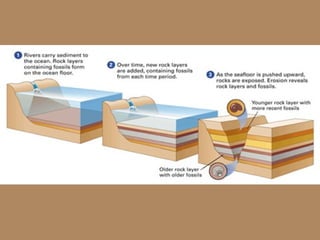
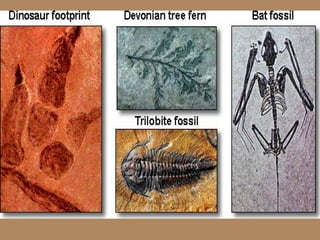
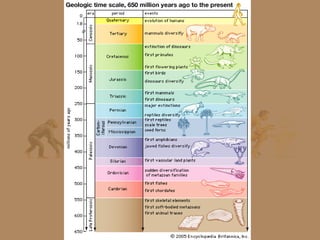
1. The Fossil Record
• Fossil: preserved remains of an ancient
  organism; formed by sediment settling over
  remains
• Fossil records are incomplete – many
  organisms have lived and died and were
  never preserved
• Fossils in the same layer of rock lived at
  the same time
• Shows how some organisms change slowly
  over time
• Show how complex animals and plants of
  today were preceded by simpler ones
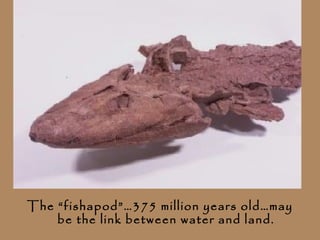
The “fishapod”…375 million years old…may
    be the link between water and land.
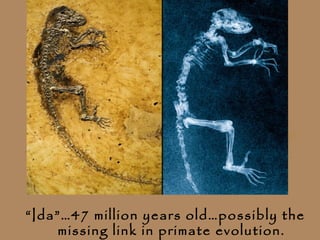
“Ida”…47 million years old…possibly the
    missing link in primate evolution.
2. Geographic Distribution of
         Species
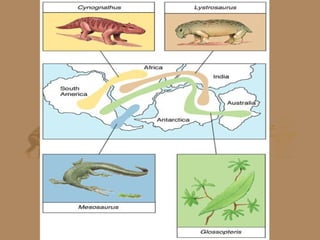
• Isolated land areas and island groups
  evolve their own distinct plants and
  animals fit to the environment
• The same kinds of fossils are found
  in areas which were once connected
  (ex. Pangaea, the “supercontinent”)
  but now separated as a result of
  continental drift
3. Homologous Body
   Structures & Vestigial
         Organs
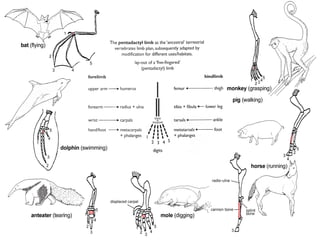
• Many different organisms have similar
  body structures – which may perform
  different functions but are
  constructed of the same basic bones
  and tissues
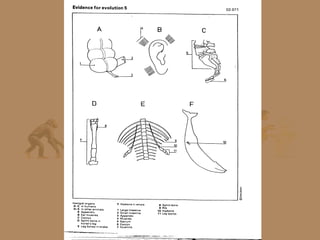
• Vestigial organ: organ that is so
  reduced in size it does not perform a
  function
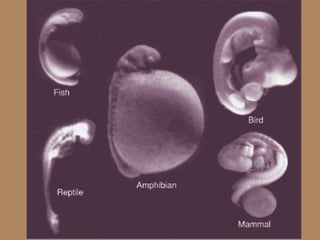
4. Embryonic Development
• Embryos of closely related organisms
  have similar early stages of
  development
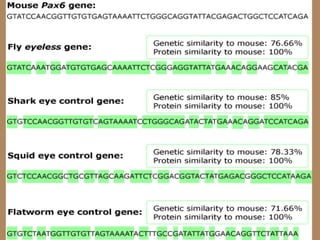
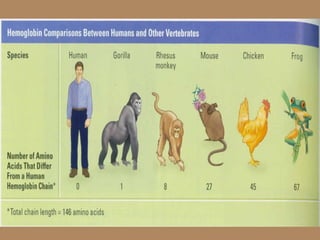
5. Molecular Analysis
• If two species have genes and
  proteins sequences that match
  closely, biologists conclude that the
  sequence was copied from a relatively
  recent common ancestor
Chapter15 evolution(darwin)

Chapter15 evolution(darwin)

  • 1.
    Chapter 15: Darwin’s Theoryof Evolution Pages 368-386
  • 2.
    Chapter 15-1: ThePuzzle of Life’s Diversity Pages 369-372
  • 3.
  • 4.
    Evolution Definition: change overtime, the process by which modern organisms have descended from ancient organisms
  • 5.
    The Theory ofEvolution helps us understand how: • fossils fit into life’s history • bacteria become resistant to antibiotics & insects to pesticides • determine the relationships among the different groups of organisms on Earth
  • 6.
    Charles Darwin • BornFeb.12, 1809 in England • Sailed on the H.M.S. Beagle in 1831 for a 5 year voyage around the world • Made many observations & collected evidence that caused him to hypothesize about how life changes over time • His observations were influenced by reading the ideas of other scientists
  • 7.
  • 9.
    Scientific beliefs before Darwin: • Species were unchanging – the same organisms always existed. • Earth was about 10,000 years old.
  • 10.
    Darwin’s Observations 1. Alarge variety of organisms inhabit the Earth • Example: He collected 68 species of beetles in 1 day in a rainforest in Brazil 2. Organisms were well suited for the different environments in which they were found • Examples: On the Galapagos Islands, t ortoises from different islands have different shaped shells & neck lengths and different finches (birds) have different shaped beaks
  • 11.
    Fossils • Definition: preserved remains of ancient organisms • Fossil evidence raises many questions: • Why have so many species disappeared? • How do extinct organisms relate to living organisms? • Darwin based most of his beliefs on the fossils he found and wondered if animals on different islands once belonged to the same species
  • 12.
    Review: Species Definition: organismsbelong to the same species if they can interbreed (produce fertile offspring) under natural conditions
  • 13.
    Good News: We areskipping Chapter 15-2.
  • 14.
    To summarize Chapter 15-2: Many scientists contributed ideas that helped frame Darwin’s theory, ideas such as: 3) The Earth is actually millions of years old and is still changing… 4) Organisms acquired or lost certain traits during their lifetime that could be passed onto offspring, thus changing a species (later proved false)… 5) If a population grows unchecked, sooner or later, food and space will run out…
  • 15.
    Chapter 15-3: Darwin Presents His Case Pages 378-386
  • 16.
    Vocabulary 15-3 natural variation strugglefor existence fitness adaptation survival of the fittest natural selection common descent homologous structure vestigial organ
  • 17.
    Darwin’s Book • Darwincollected his ideas and published the book “On the Origin of Species” which proposed: – A mechanism of evolution he called natural selection, based on three major principles – That the process of evolution has been taking place for millions of years
  • 18.
    Principle #1: Natural Variation • Definition: differences among individuals of a species • Darwin argued that natural variation is found in all species • These “variations” can be passed on to the next generation
  • 19.
    These natural variationsoccur through: • Sexual reproduction • Independent assortment of chromosomes • Segregation of alleles • Crossing-over during meiosis • Mutations in DNA
  • 20.
    Principle #2: Strugglefor Existence Members of each species compete for living space, food, and other things needed for them to: SURVIVE AND REPRODUCE.
  • 21.
    Principle #3: Survivalof the Fittest 1) The greater fitness an organism has, the more likely it is to survive in an environment (i.e. “win the struggle”). Fitness: is the ability of an organism to survive and reproduce in an environment 2) Fitness is the result of adaptations . Adaptations: any inherited characteristic that increases an organism’s chance of survival • Example: can be physical (porcupine quills) or behavioral (hunting in a pack)
  • 22.
    Darwin’s Theory ofEvolution by Natural Selection • Individuals with high levels of fitness survive and reproduce the most offspring – survival of the fittest. • Individuals not suited to their environment (low fitness) either die or produce small number of offspring.
  • 23.
    Common Ancestry • Definition:all living organisms are related to one another • Common descent: all species – living and extinct – came from common ancestors
  • 24.
  • 25.
    1. The FossilRecord • Fossil: preserved remains of an ancient organism; formed by sediment settling over remains • Fossil records are incomplete – many organisms have lived and died and were never preserved • Fossils in the same layer of rock lived at the same time • Shows how some organisms change slowly over time • Show how complex animals and plants of today were preceded by simpler ones
  • 28.
    The “fishapod”…375 millionyears old…may be the link between water and land.
  • 29.
    “Ida”…47 million yearsold…possibly the missing link in primate evolution.
  • 31.
    2. Geographic Distributionof Species • Isolated land areas and island groups evolve their own distinct plants and animals fit to the environment • The same kinds of fossils are found in areas which were once connected (ex. Pangaea, the “supercontinent”) but now separated as a result of continental drift
  • 34.
    3. Homologous Body Structures & Vestigial Organs • Many different organisms have similar body structures – which may perform different functions but are constructed of the same basic bones and tissues • Vestigial organ: organ that is so reduced in size it does not perform a function
  • 37.
    4. Embryonic Development •Embryos of closely related organisms have similar early stages of development
  • 39.
    5. Molecular Analysis •If two species have genes and proteins sequences that match closely, biologists conclude that the sequence was copied from a relatively recent common ancestor