Evolution
Learning Goals
 1. Define "Evolution" & "Natural Selection".
 2. Describe the 4 steps of Natural Selection,
giving an example of each.
 3. Explain the importance of "Variation".
 4. Does Natural Selection act on an
organism phenotype or genotoype? Explain!
 5. List the 5 evidences that support the
Theory of Evolution.
Theory of Evolution
Theory of Evolution
 Evolution
The process of change over time.
 Specifically, a change in the frequency
of a gene or allele in a population over
time
Charles Darwin
Charles Darwin
 Father of Evolution
 Proposed a mechanism for
evolution, natural selection
natural selection
 Darwin went on a 5-year trip
around the world on the ship,
the HMS Beagle
 As the ship’s naturalist, he made
observations of organisms in
South America and the Galapagos
Islands
•Wrote a book,
Wrote a book, “
“Origin of the Species
Origin of the Species”
”
Voyage of the Beagle
Voyage of Beagle
 Dates: February 12th, 1831
 Captain: Charles Darwin
 Ship: H.M.S. Beagle
 Destination: Voyage around the world.
 Findings: evidence to propose a
revolutionary hypothesis about how life
changes over time
Video on Darwin
https://youtu.be/6GNUlZhE_jE -Darwin
https://youtu.be/ZbITQ0dqxCQ
Galapagos Island
https://youtu.be/XOiUZ3ycZwU
Theory
Patterns of Diversity
Darwin visited Argentina and Australia which
had similar grassland ecosystems.
those grasslands were inhabited by very different
animals.
neither Argentina nor Australia was home to the
sorts of animals that lived in European
grasslands.
Patterns of Diversity
 Darwin posed challenging questions.

Why were there no rabbits in Australia, despite
the presence of habitats that seemed perfect for
them?

Why were there no kangaroos in England?
Patterns of Diversity
Darwin collected the preserved remains
of ancient organisms, called fossils.
Some of those fossils resembled
organisms that were still alive today.
The Galapagos Island
 Darwin was fascinated in particular by the
land tortoises and marine iguanas in the
Galápagos.
 Giant tortoises varied in predictable ways
from one island to another.
 The shape of a tortoise's shell could be used
to identify which island a particular tortoise
inhabited.
Animals found in the Galapagos
Land Tortoises
Darwin Finches
Marine Iguanas
Darwin’s Finches
The Journey Home
Darwin Observed that characteristics of
many plants and animals vary greatly
among the islands.
Hypothesis: Separate species may
have arose from an original ancestor
Natural Selection
Natural Selection
 Natural Selection:
Organisms that are best adapted to an
environment survive and reproduce more
than others
 Darwin’s Theory of Natural Selection
occurs in four steps:
 Overproduction
 Variation
 Competition
 Selection
1. Overproduction
1. Overproduction
 Each species produces more
offspring that can survive
2. Variation
2. Variation
 Each individual has a
unique combination of
inherited traits.
 Adaptation:
Adaptation: an inherited
trait that increases an
organism’s chances of
survival
Why is Variation Important?
 Because the environment changes.
 The more variation
variation within
within a species
a species, the more
likely it will survive
survive
 EX: If everyone is the same, they are all vulnerable
to the same environmental changes or diseases
 The more variation of
variation of types of
types of species
species in an
habitat, the more likely at least some will
some will
survive
survive
 EX: Dinosaurs replaced by mammals
Which community has a better
chance of surviving a natural
disaster?
disaster?
Community A
Community A Community B
Community B
3
3. Competition
. Competition
 Individuals COMPETE for limited
resources:
 Food, water, space, mates
 Natural selection occurs through
“Survival of the fittest
Survival of the fittest”
 Fitness
Fitness: the ability to survive and reproduce
 Not all individuals survive to adulthood
4. Selection
4. Selection
 The individuals with the best traits /
best traits /
adaptations will survive and have the
opportunity to pass on it
opportunity to pass on it’
’s traits
s traits to offspring.
 Natural selection acts on the phenotype
(physical appearance), not the genotype (genetic
makeup)
 Ex: When a predator finds its prey, it is due to
the prey’s physical characteristics, like color or
slow speed, not the alleles (BB, Bb)
 Individuals with traits that are not well
suited to their environment either die or
leave few offspring.
 Evolution occurs when good traits build
good traits build
up in a population
up in a population over many
generations and bad traits are eliminated
bad traits are eliminated
by the death of the individuals
by the death of the individuals.
Peppered Moth
 Which moth will the bird catch?
A
B
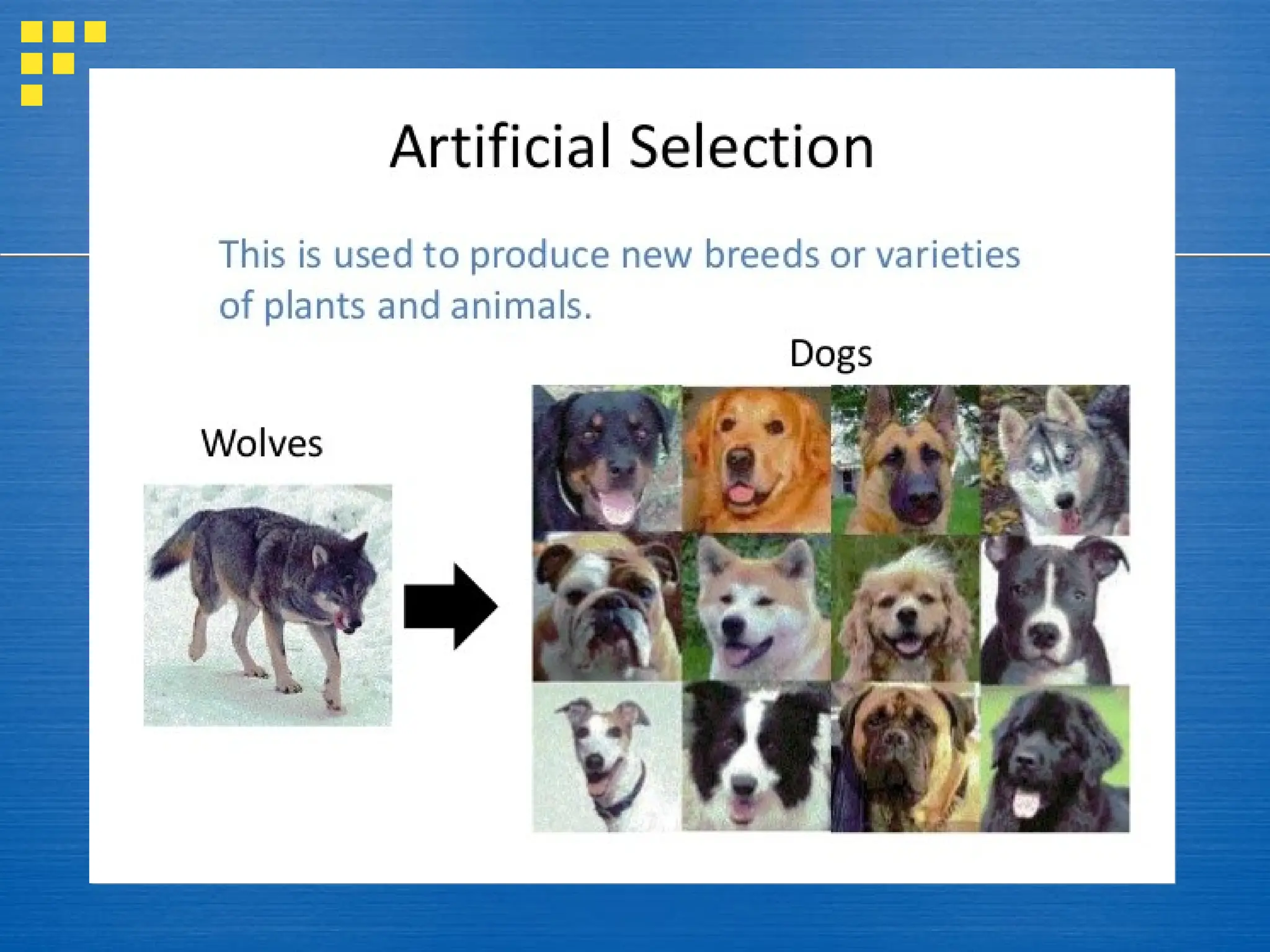
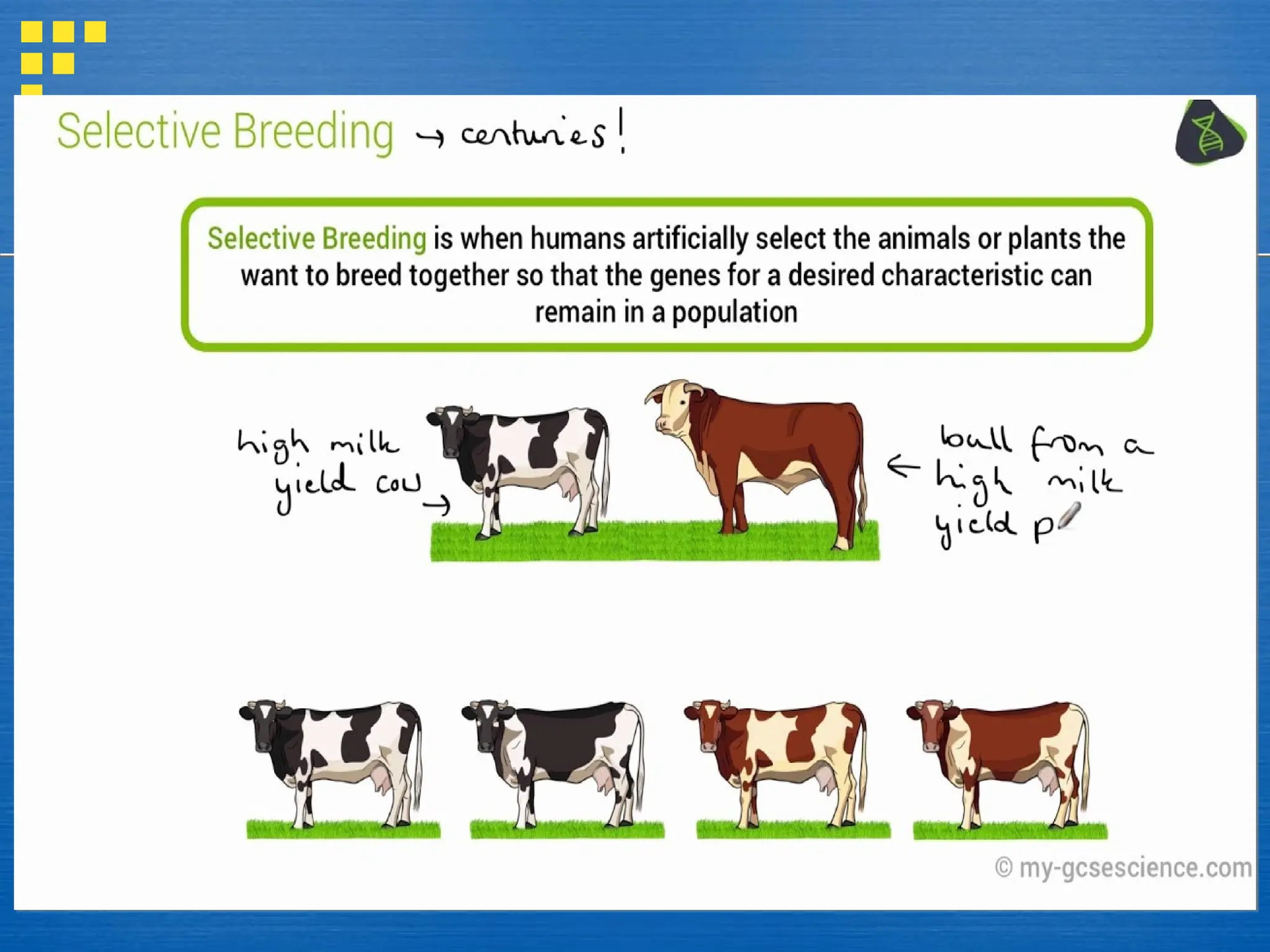
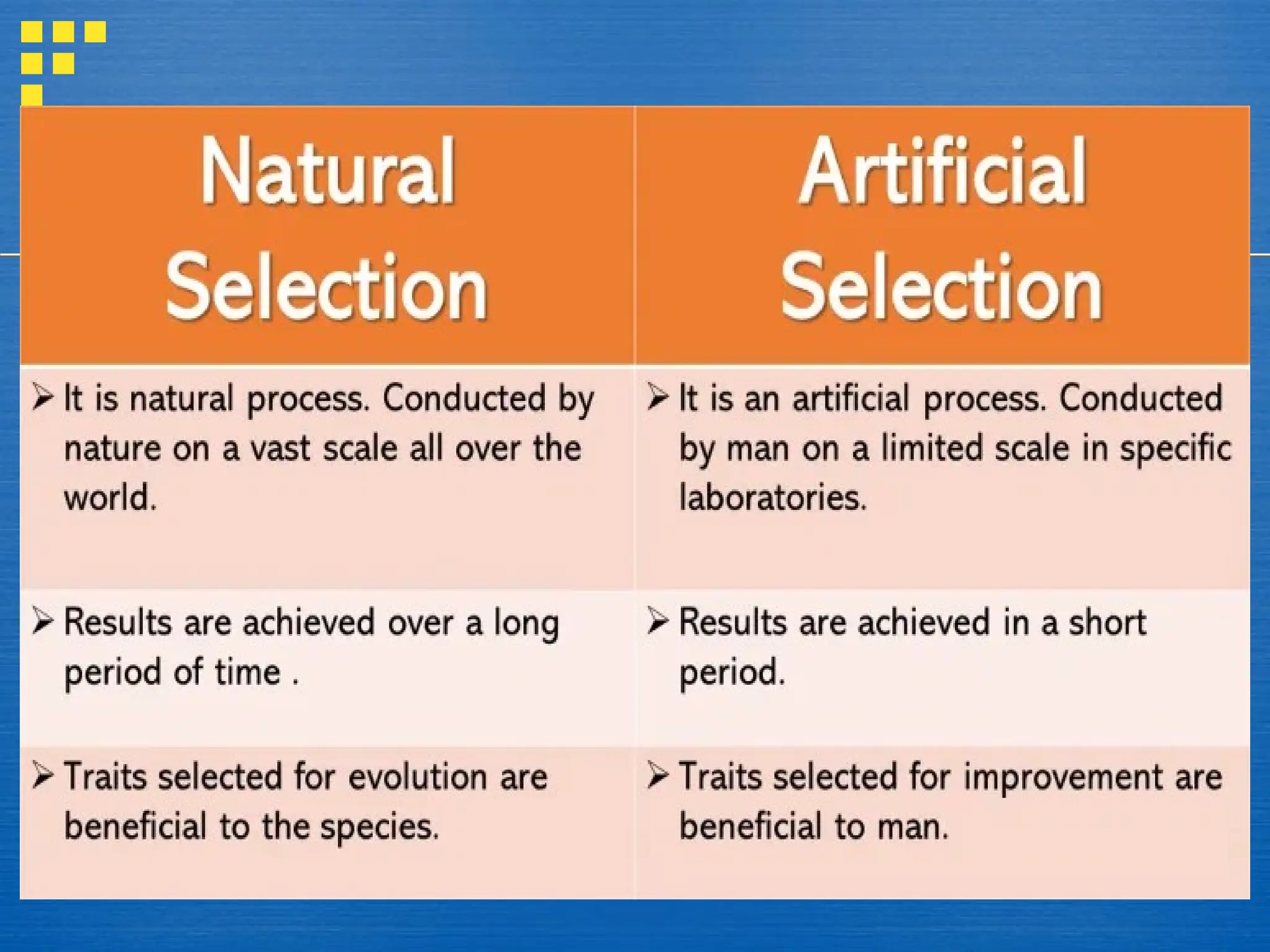
What is Artificial Selection?
Biology Evolution and Natural Selection.ppt

Biology Evolution and Natural Selection.ppt

  • 1.
  • 2.
    Learning Goals  1.Define "Evolution" & "Natural Selection".  2. Describe the 4 steps of Natural Selection, giving an example of each.  3. Explain the importance of "Variation".  4. Does Natural Selection act on an organism phenotype or genotoype? Explain!  5. List the 5 evidences that support the Theory of Evolution.
  • 3.
    Theory of Evolution Theoryof Evolution  Evolution The process of change over time.  Specifically, a change in the frequency of a gene or allele in a population over time
  • 4.
    Charles Darwin Charles Darwin Father of Evolution  Proposed a mechanism for evolution, natural selection natural selection  Darwin went on a 5-year trip around the world on the ship, the HMS Beagle  As the ship’s naturalist, he made observations of organisms in South America and the Galapagos Islands •Wrote a book, Wrote a book, “ “Origin of the Species Origin of the Species” ”
  • 5.
  • 6.
    Voyage of Beagle Dates: February 12th, 1831  Captain: Charles Darwin  Ship: H.M.S. Beagle  Destination: Voyage around the world.  Findings: evidence to propose a revolutionary hypothesis about how life changes over time
  • 8.
    Video on Darwin https://youtu.be/6GNUlZhE_jE-Darwin https://youtu.be/ZbITQ0dqxCQ Galapagos Island https://youtu.be/XOiUZ3ycZwU Theory
  • 10.
    Patterns of Diversity Darwinvisited Argentina and Australia which had similar grassland ecosystems. those grasslands were inhabited by very different animals. neither Argentina nor Australia was home to the sorts of animals that lived in European grasslands.
  • 11.
    Patterns of Diversity Darwin posed challenging questions.  Why were there no rabbits in Australia, despite the presence of habitats that seemed perfect for them?  Why were there no kangaroos in England?
  • 12.
    Patterns of Diversity Darwincollected the preserved remains of ancient organisms, called fossils. Some of those fossils resembled organisms that were still alive today.
  • 13.
  • 14.
    The Galapagos Island Darwin was fascinated in particular by the land tortoises and marine iguanas in the Galápagos.  Giant tortoises varied in predictable ways from one island to another.  The shape of a tortoise's shell could be used to identify which island a particular tortoise inhabited.
  • 15.
    Animals found inthe Galapagos Land Tortoises Darwin Finches Marine Iguanas
  • 16.
  • 17.
    The Journey Home DarwinObserved that characteristics of many plants and animals vary greatly among the islands. Hypothesis: Separate species may have arose from an original ancestor
  • 19.
    Natural Selection Natural Selection Natural Selection: Organisms that are best adapted to an environment survive and reproduce more than others
  • 20.
     Darwin’s Theoryof Natural Selection occurs in four steps:  Overproduction  Variation  Competition  Selection
  • 21.
    1. Overproduction 1. Overproduction Each species produces more offspring that can survive
  • 22.
    2. Variation 2. Variation Each individual has a unique combination of inherited traits.  Adaptation: Adaptation: an inherited trait that increases an organism’s chances of survival
  • 23.
    Why is VariationImportant?  Because the environment changes.  The more variation variation within within a species a species, the more likely it will survive survive  EX: If everyone is the same, they are all vulnerable to the same environmental changes or diseases  The more variation of variation of types of types of species species in an habitat, the more likely at least some will some will survive survive  EX: Dinosaurs replaced by mammals
  • 24.
    Which community hasa better Which community has a better chance of surviving a natural chance of surviving a natural disaster? disaster? Community A Community A Community B Community B
  • 25.
    3 3. Competition . Competition Individuals COMPETE for limited resources:  Food, water, space, mates  Natural selection occurs through “Survival of the fittest Survival of the fittest”  Fitness Fitness: the ability to survive and reproduce  Not all individuals survive to adulthood
  • 26.
    4. Selection 4. Selection The individuals with the best traits / best traits / adaptations will survive and have the adaptations will survive and have the opportunity to pass on it opportunity to pass on it’ ’s traits s traits to offspring.  Natural selection acts on the phenotype (physical appearance), not the genotype (genetic makeup)  Ex: When a predator finds its prey, it is due to the prey’s physical characteristics, like color or slow speed, not the alleles (BB, Bb)
  • 27.
     Individuals withtraits that are not well suited to their environment either die or leave few offspring.  Evolution occurs when good traits build good traits build up in a population up in a population over many generations and bad traits are eliminated bad traits are eliminated by the death of the individuals by the death of the individuals.
  • 28.
    Peppered Moth  Whichmoth will the bird catch? A B
  • 35.