
Introduction to
Darwinian Evolution
Moises Von Rosauro R. De Gracia
BSE - III
What is Evolution?
O Evolution is the accumulation of genetic

changes within populations over time.
O The term evolution does not refer to changes

that occur in an individual within its lifetime.
Instead, it refers to the changes in the
characteristics of population over the course
of generation.
Ideas About Evolution
B.C.
Plato’s
inspired “ideal form”

O 427-347

divinely

O 384-322 B.C. Aristotle’s “Ladder of

Nature”

O Aristotle visualized organisms as being

imperfect “moving toward a more perfect
state”
O 1700s Creationism
O Each species was created individually
by God
O Earth was the center of the universe
O Man stood atop creation
O Leonardo Da Vinci (1452 – 1519)
O The first to interpret the unusual finding

of animals in the rocks high on
mountain.
O 1707-1788 George LeClerc (Comte of

Buffon)

O creation provided a relatively small number

of founding species that evolved through
natural processes

O Idea was not accepted
O Did not provide a mechanism for evolution
O Earth was not old enough to allow time for
the process of evolution
O Jean Baptisté de Lamarck (1744-

1829)
O He was the first to propose that

organisms undergo change over time
as a result of some natural
phenomenon rather than divine
intervention.
O 1769-1832 G. Cuvier
O Theory of catastrophism (creationist

w/extinction)
O 1726-1797 James Hutton
O developed uniformitarianism –

gradual change
O 1797-1875 Charles Lyell’s
O “Old Earth Hypothesis” supported

Hutton,
change

gave

time

for

gradual
O 1809-1882 Charles Darwin
O Developed the theory of evolution
O Species evolved through natural selection;
O Adaptation to their ever-changing environment

O 1823-1913 Alfred Wallace
O supported

Darwin's theory (worked
separately, came up with same
conclusion, came in “2nd”)
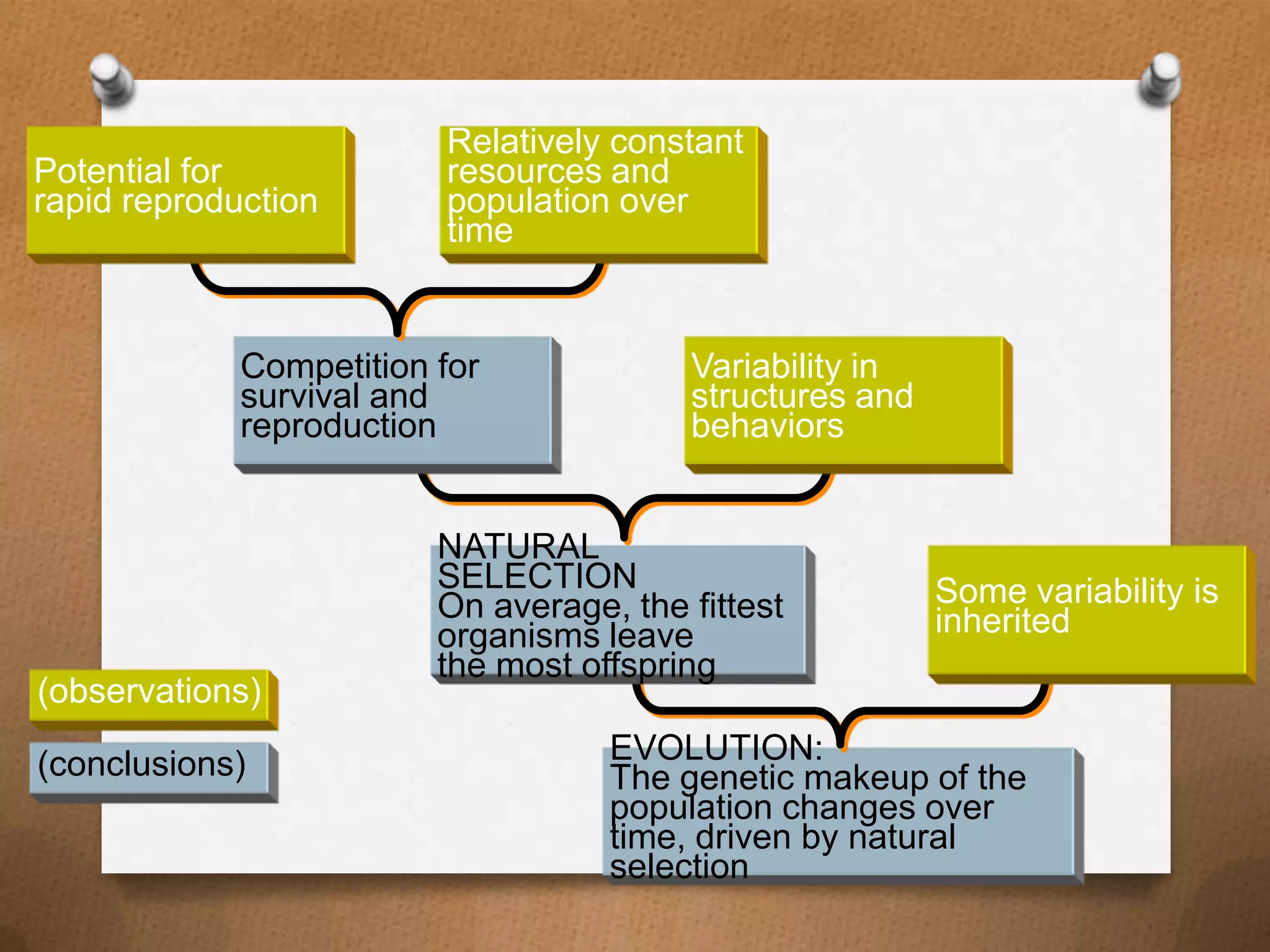
Potential for
rapid reproduction

Relatively constant
resources and
population over
time

Competition for
survival and
reproduction

(observations)
(conclusions)

Variability in
structures and
behaviors

NATURAL
SELECTION
On average, the fittest
organisms leave
the most offspring

Some variability is
inherited

EVOLUTION:
The genetic makeup of the
population changes over
time, driven by natural
selection
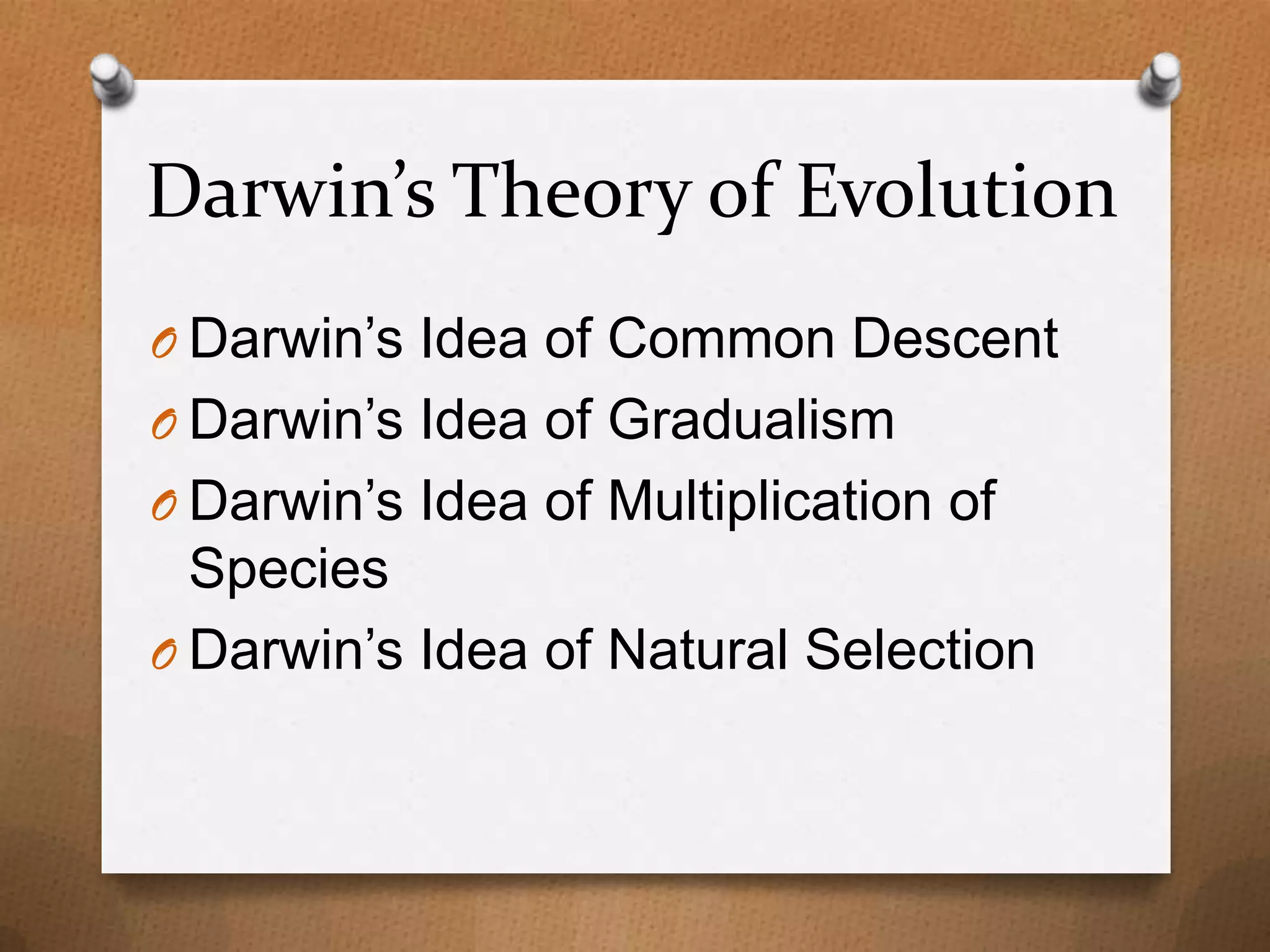
Darwin’s Theory of Evolution
O Darwin’s Idea of Common Descent
O Darwin’s Idea of Gradualism
O Darwin’s Idea of Multiplication of

Species
O Darwin’s Idea of Natural Selection
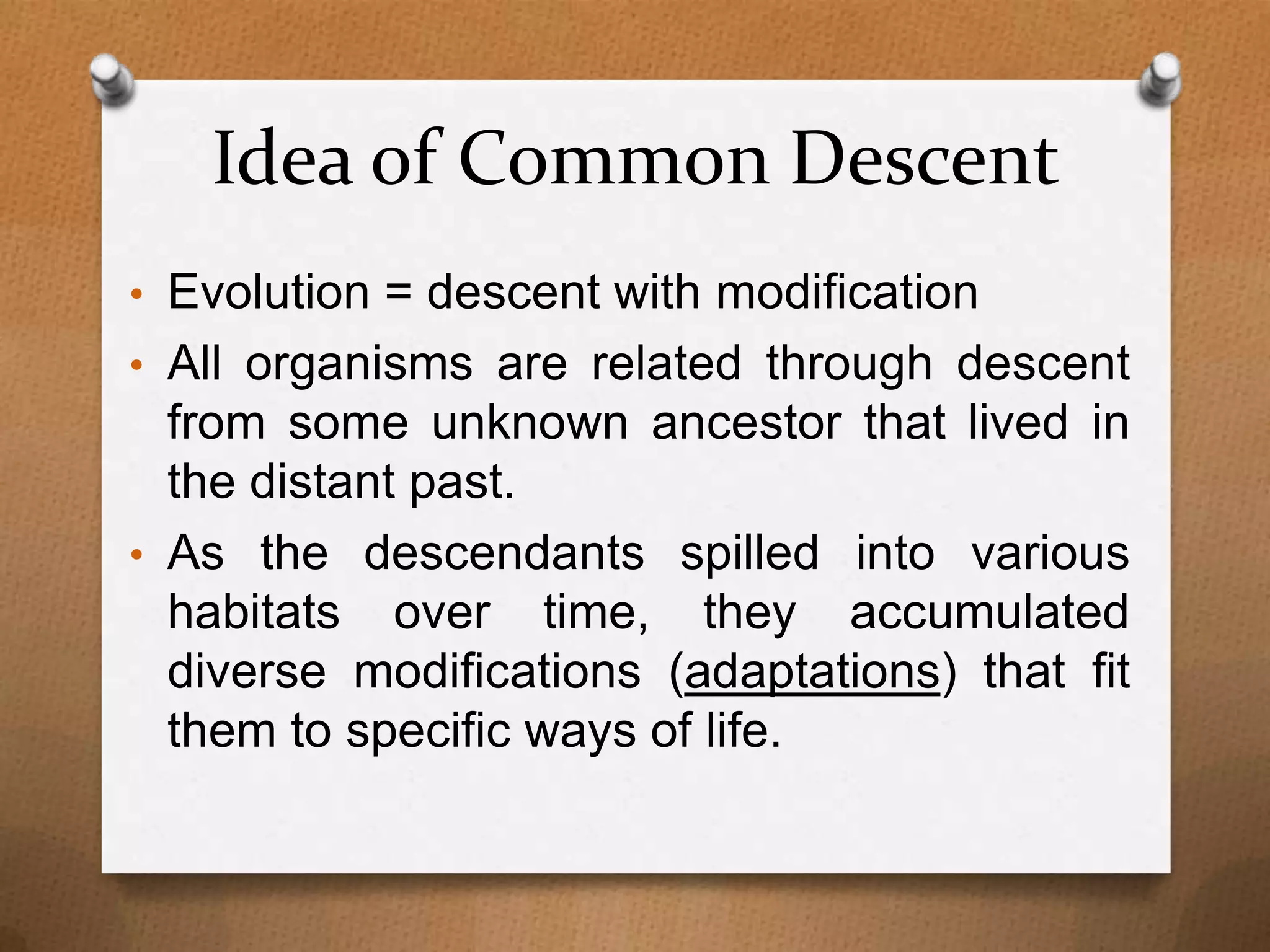
Idea of Common Descent
• Evolution = descent with modification
• All organisms are related through descent

from some unknown ancestor that lived in
the distant past.
• As the descendants spilled into various
habitats over time, they accumulated
diverse modifications (adaptations) that fit
them to specific ways of life.
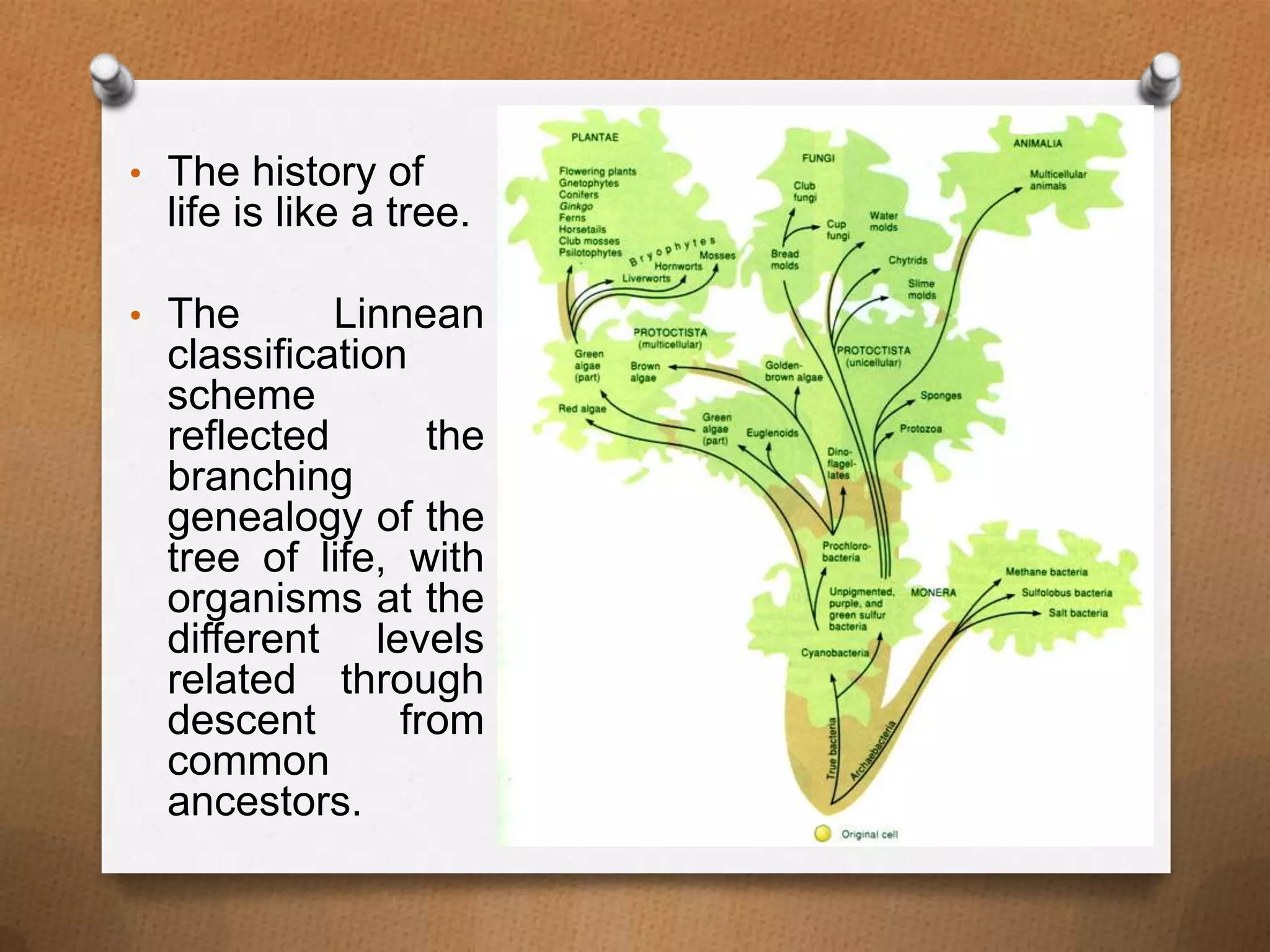
• The history of

life is like a tree.
• The

Linnean
classification
scheme
reflected
the
branching
genealogy of the
tree of life, with
organisms at the
different levels
related through
descent
from
common
ancestors.
Idea of Gradualism
• The origin of new species and adaptation

are closely related processes.
• A

new species would arise from an
ancestral form by the gradual accumulation
of adaptations to a different environment.
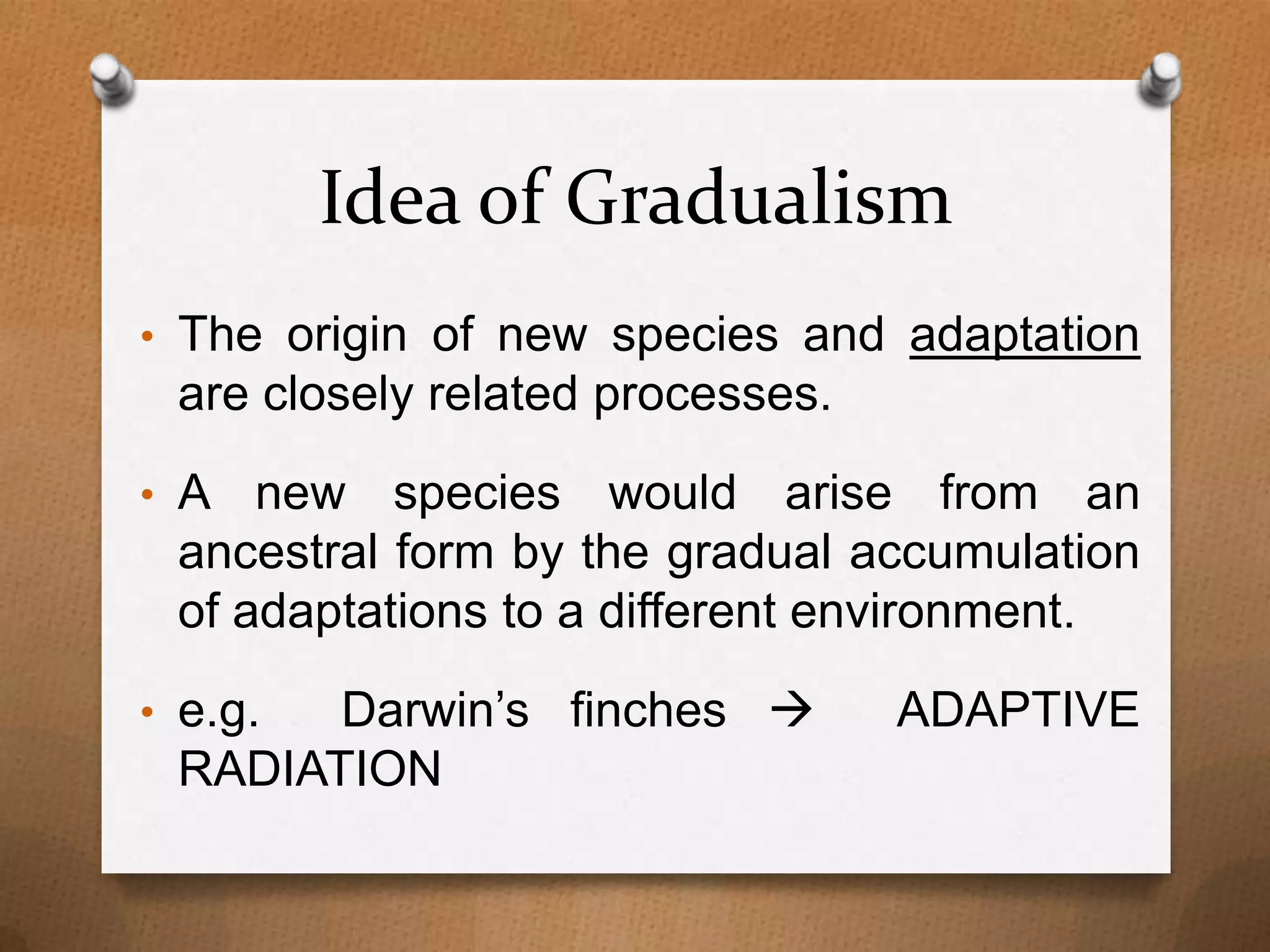
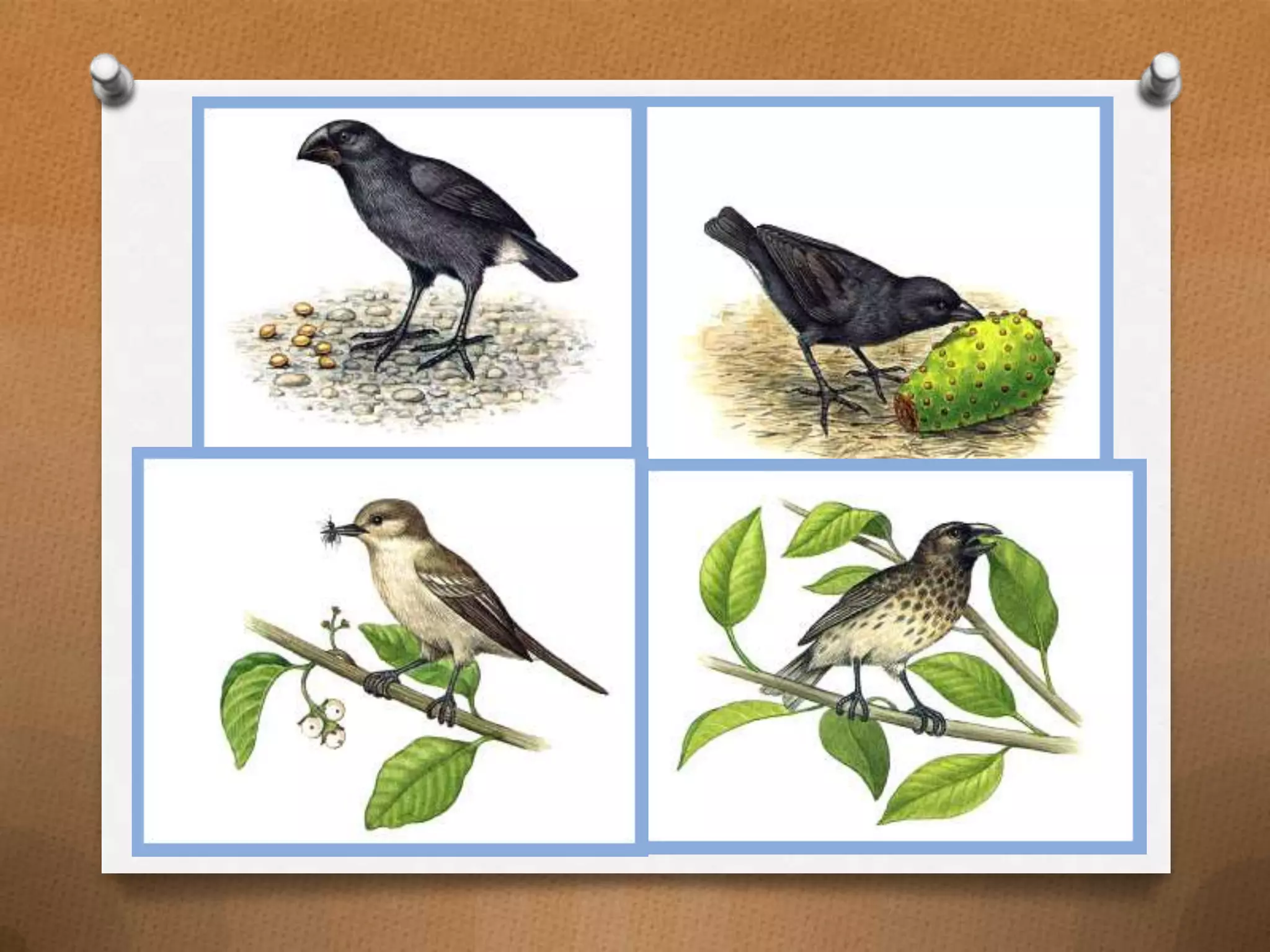
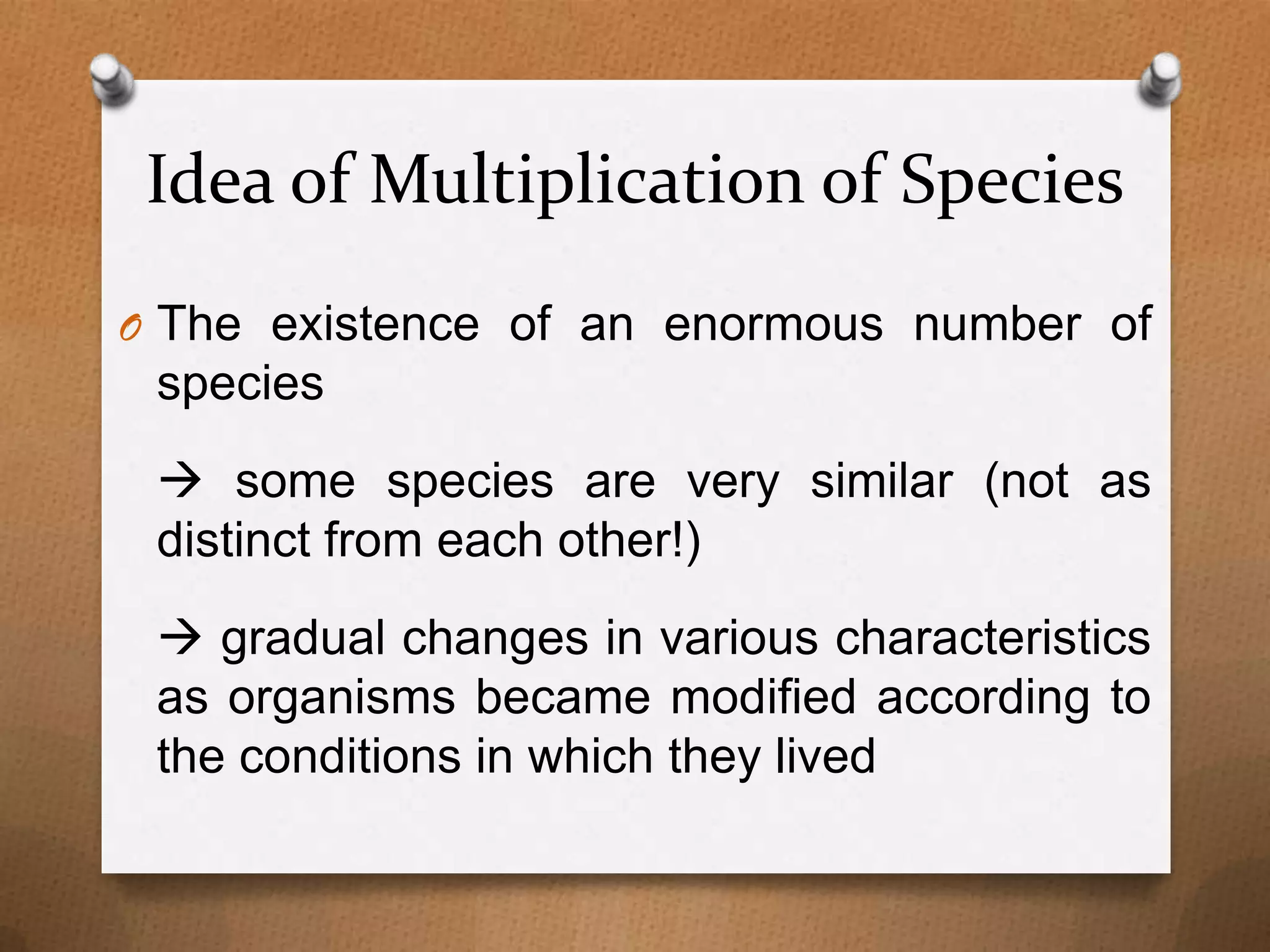
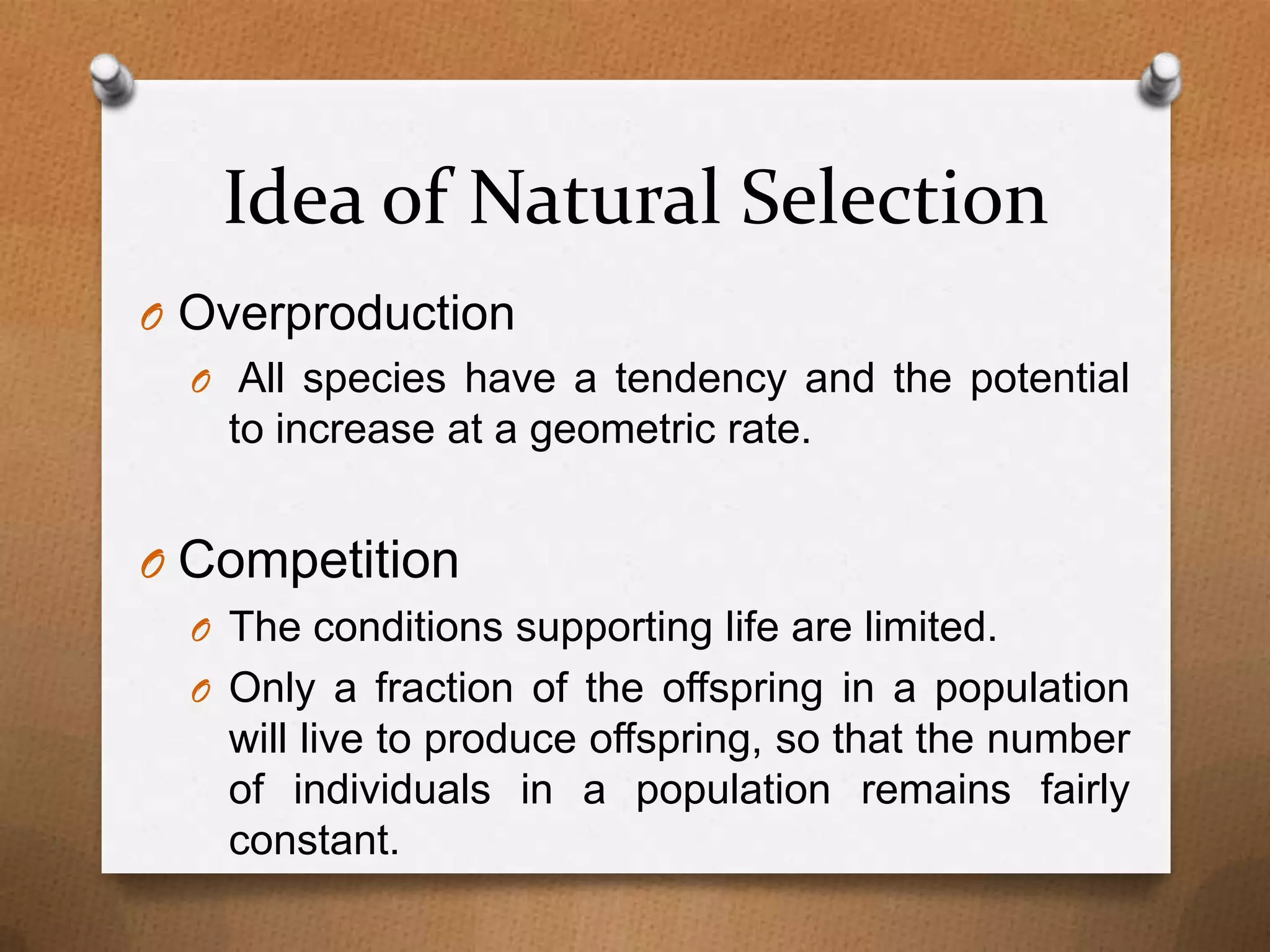
Darwin’s finches 
RADIATION

• e.g.

ADAPTIVE
Idea of Multiplication of Species
O The existence of an enormous number of

species
 some species are very similar (not as
distinct from each other!)
 gradual changes in various characteristics
as organisms became modified according to
the conditions in which they lived
Idea of Natural Selection
O Overproduction
O All species have a tendency and the potential
to increase at a geometric rate.

O Competition
O The conditions supporting life are limited.
O Only a fraction of the offspring in a population

will live to produce offspring, so that the number
of individuals in a population remains fairly
constant.
O Variation
O Individuals in a population vary greatly in their
characteristics.
O Adaptation
O Some variations enable individuals to produce
more offspring than other individuals.
O Natural Selection
O Individuals having favorable traits will produce
more offspring, and those with unfavorable
traits will produce fewer offspring.
• Speciation
O Given time, natural selection leads

to the accumulation of changes that
differentiate groups from one
another, such that a new species
may arise
Darwin’s Postulates on Natural
Selection
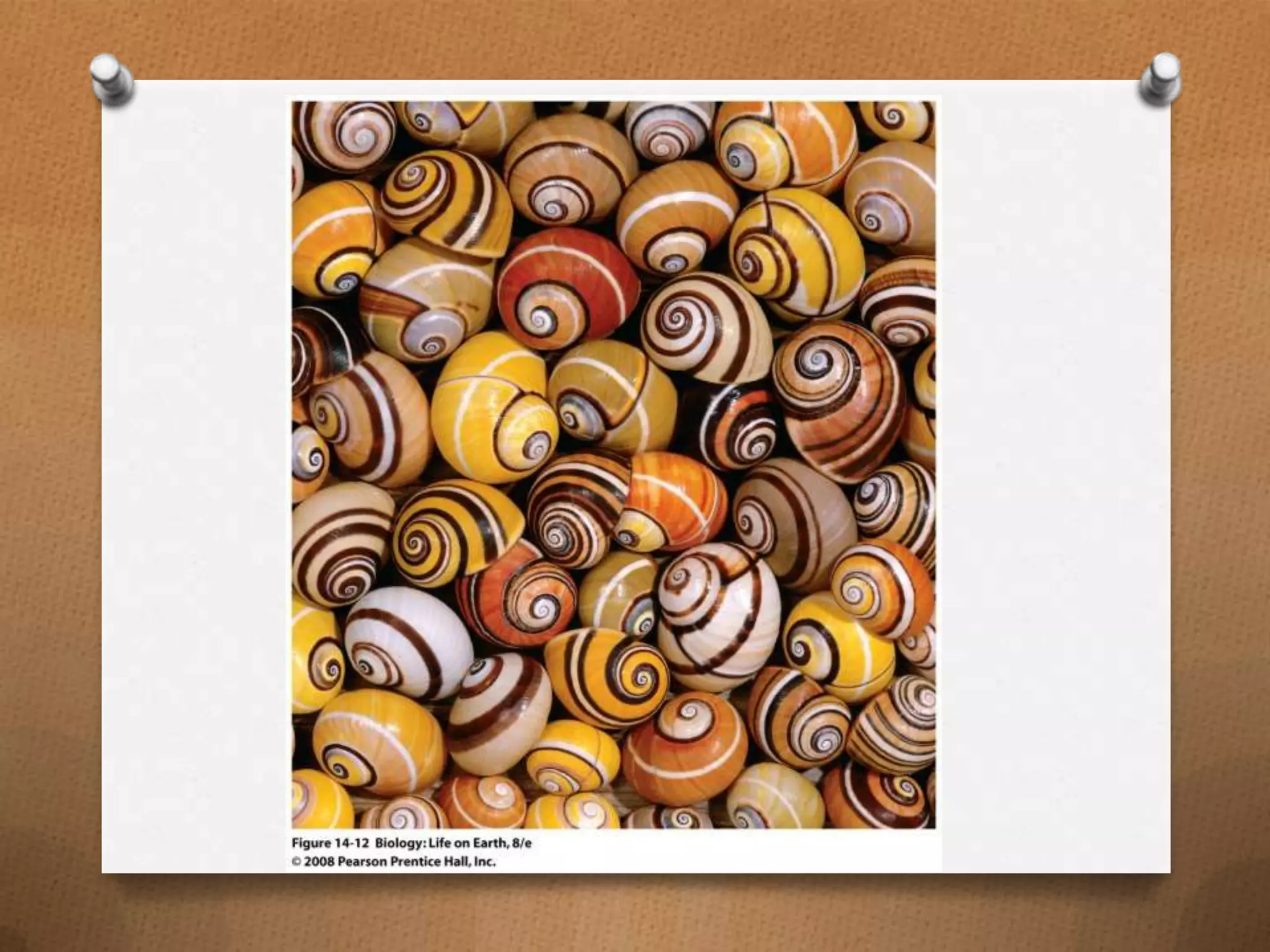
O Postulate 1
O Individual members of a population differ from
one another in many respects
O Variations arise purely by chance resulting from

random mutations in DNA
O Differences are obvious in many physical
characteristics and extend to molecular level
O POSTULATE 2
O At least some of the differences among

members of a population are due to
characteristics that may be passed from
parent to offspring
O However, the mechanism of inheritance

was not understood at this point in time
(Mendel was working at about the same
time…and was ignored until someone saw
that
Mendel
and
Darwin/Wallace
supported each other.)
O POSTULATE 3
O In each generation, some individuals in a
population survive and reproduce successfully
but others do not
O Darwin observed that many more

individuals are born than survive
O Some individuals have more offspring

than others
O POSTULATE 4
O Individuals with advantageous traits survive
longest and leave the most offspring, a process
known as natural selection
O Natural selection acts on individuals within

a population; however, it is the population
that changes over time
Patterns of Evolution
O Divergent evolution – from one species to

several different forms; adaptive radiation
O Convergent evolution – results in increased

resemblance between unrelated species
O Coevolution – occurs when two or more

species evolve in response to each other
Evidences of Evolution
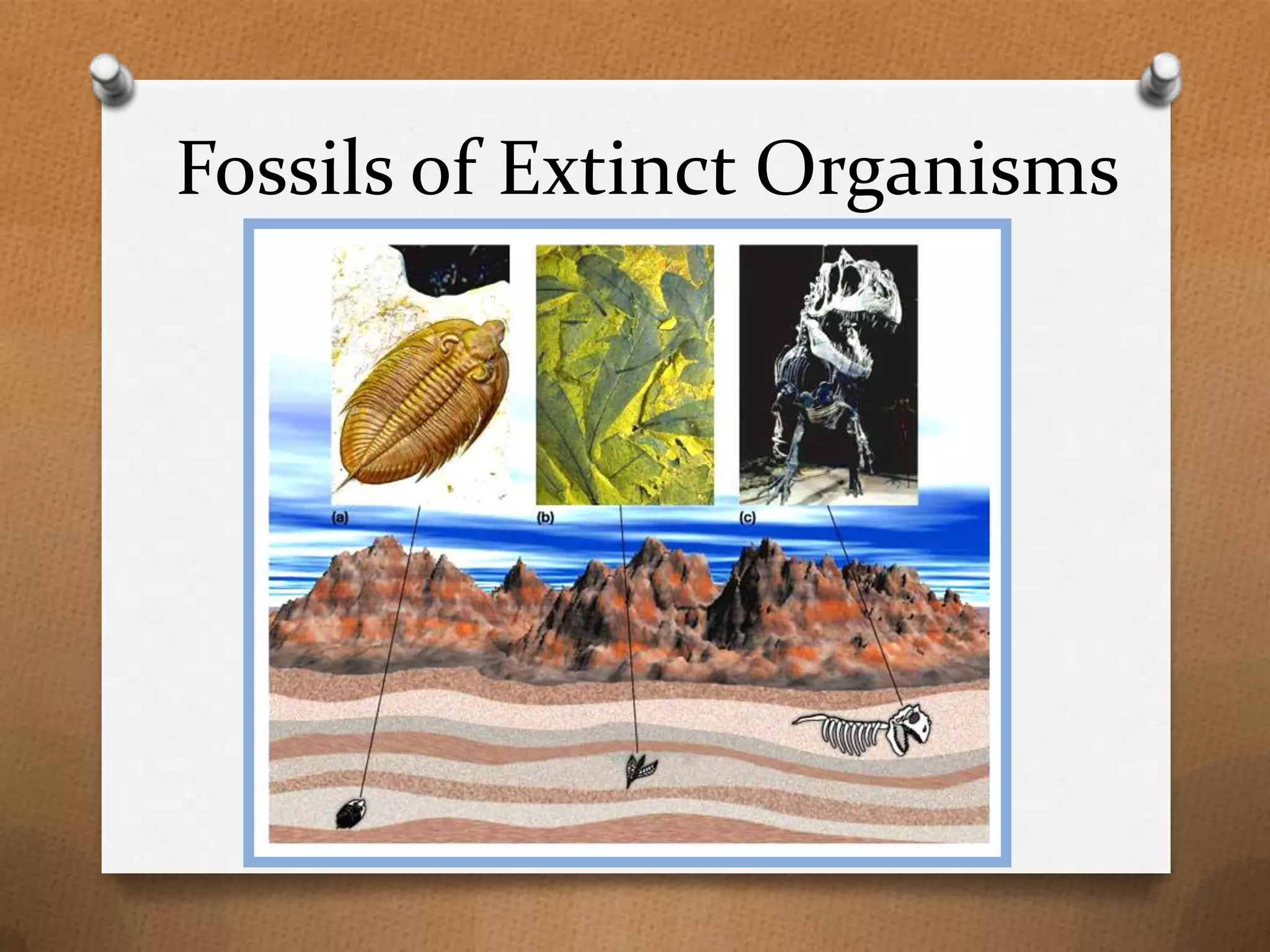
O Fossils
O Comparative Anatomy
O Comparative Embryology
O Comparative Biochemistry
Fossils
O Transitional forms are evidence of

evolutionary change

O Fossils of ancient species tend to be

simpler in form than modern species

O Several series of fossils have been

found that exhibit the evolution of
body structures over time
Interpretation of fossil data
controversial
O Dating of fossils

O Do fossils really show

transitional forms?
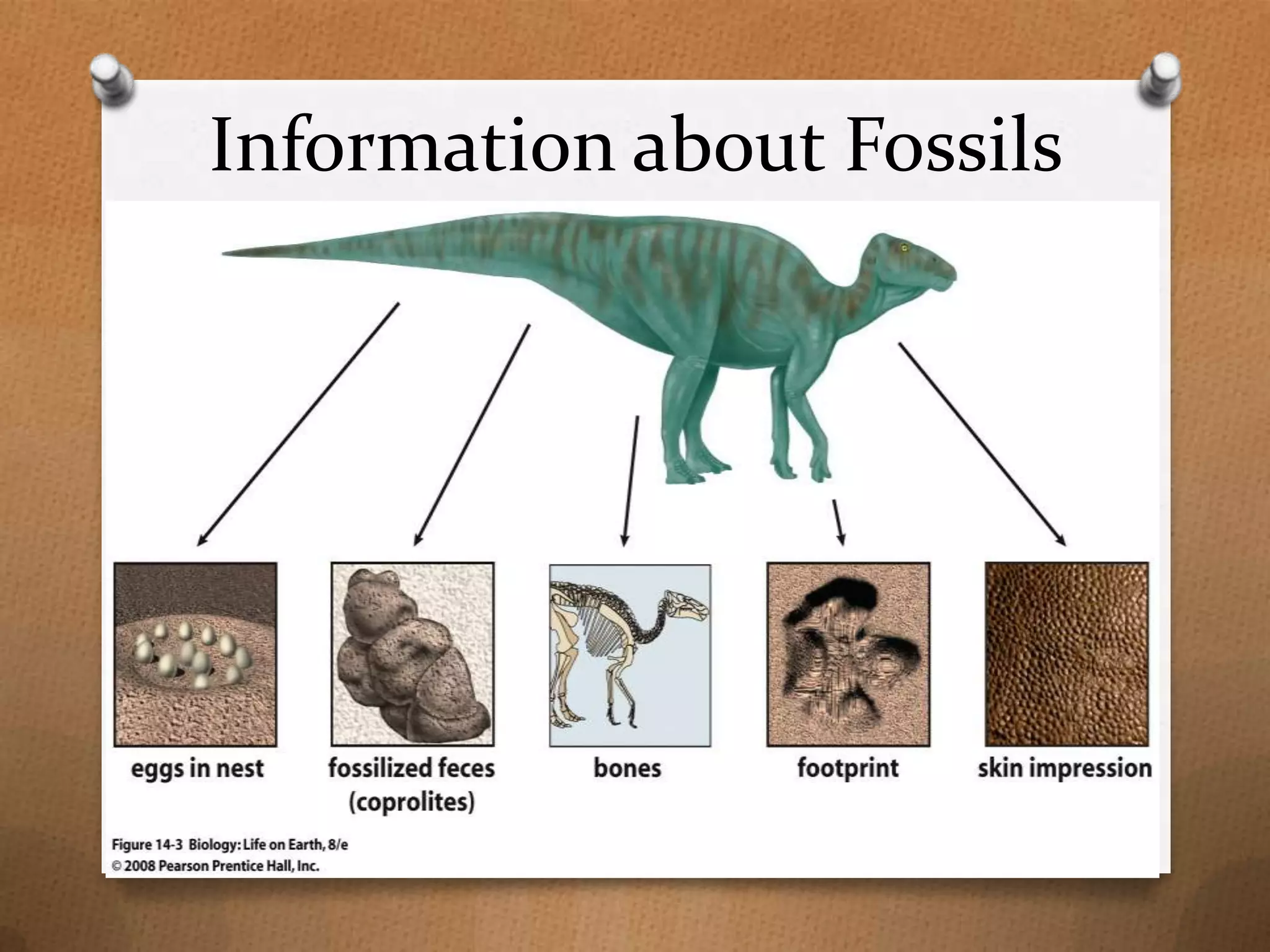
Information about Fossils
Fossils of Extinct Organisms
Comparative Anatomy
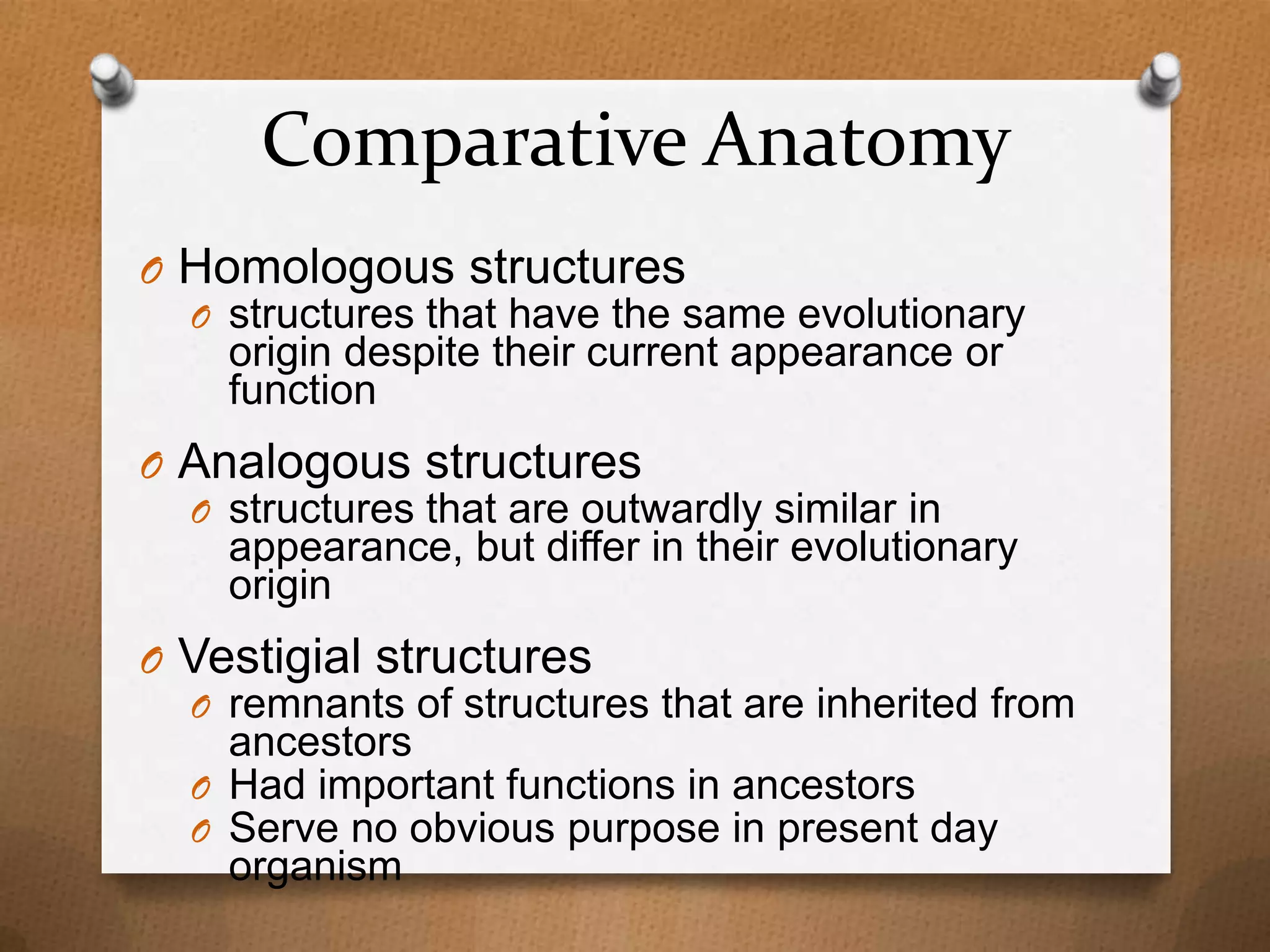
O Homologous structures
O structures that have the same evolutionary
origin despite their current appearance or
function
O Analogous structures
O structures that are outwardly similar in
appearance, but differ in their evolutionary
origin
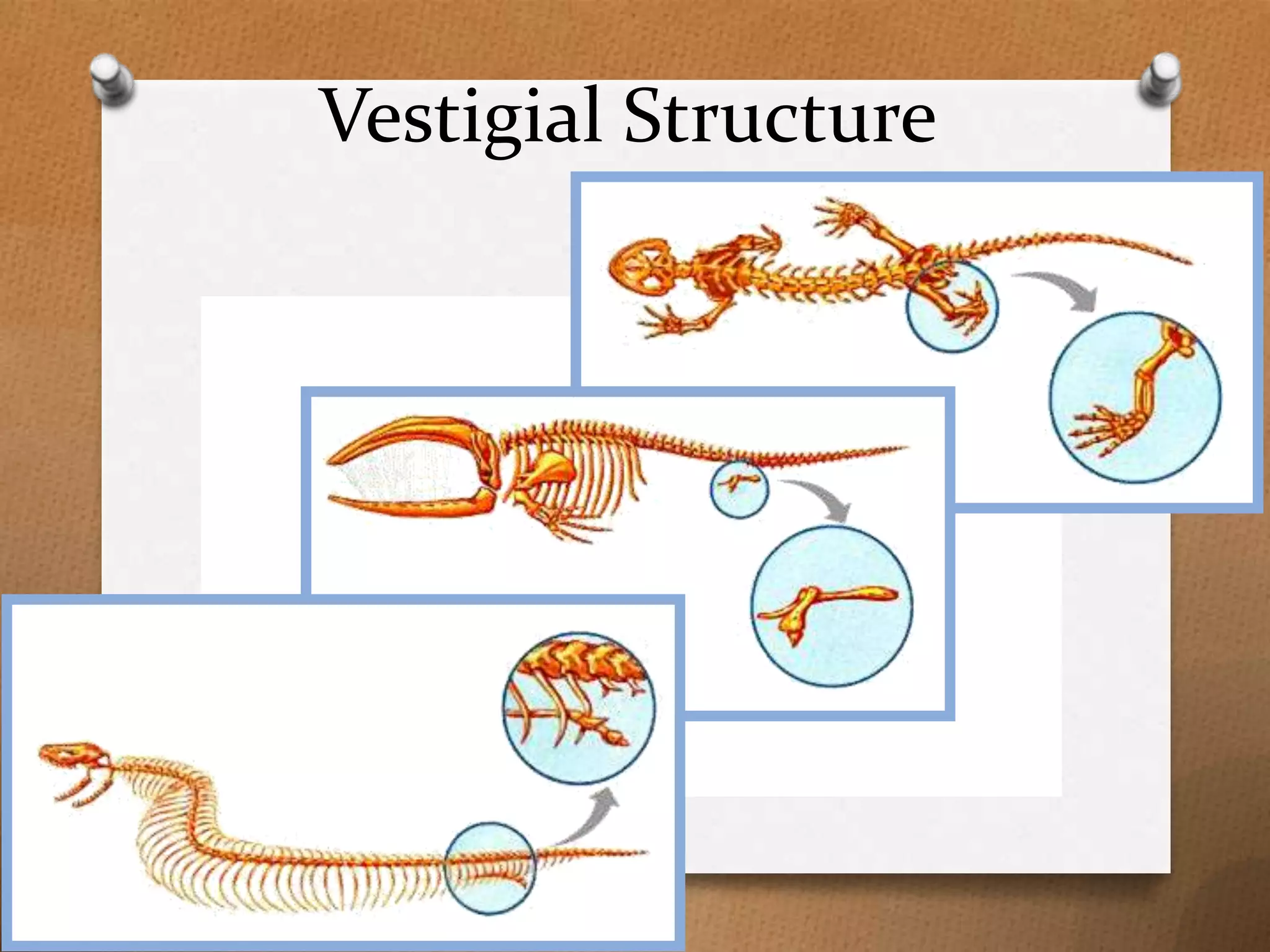
O Vestigial structures
O remnants of structures that are inherited from
ancestors
O Had important functions in ancestors
O Serve no obvious purpose in present day
organism
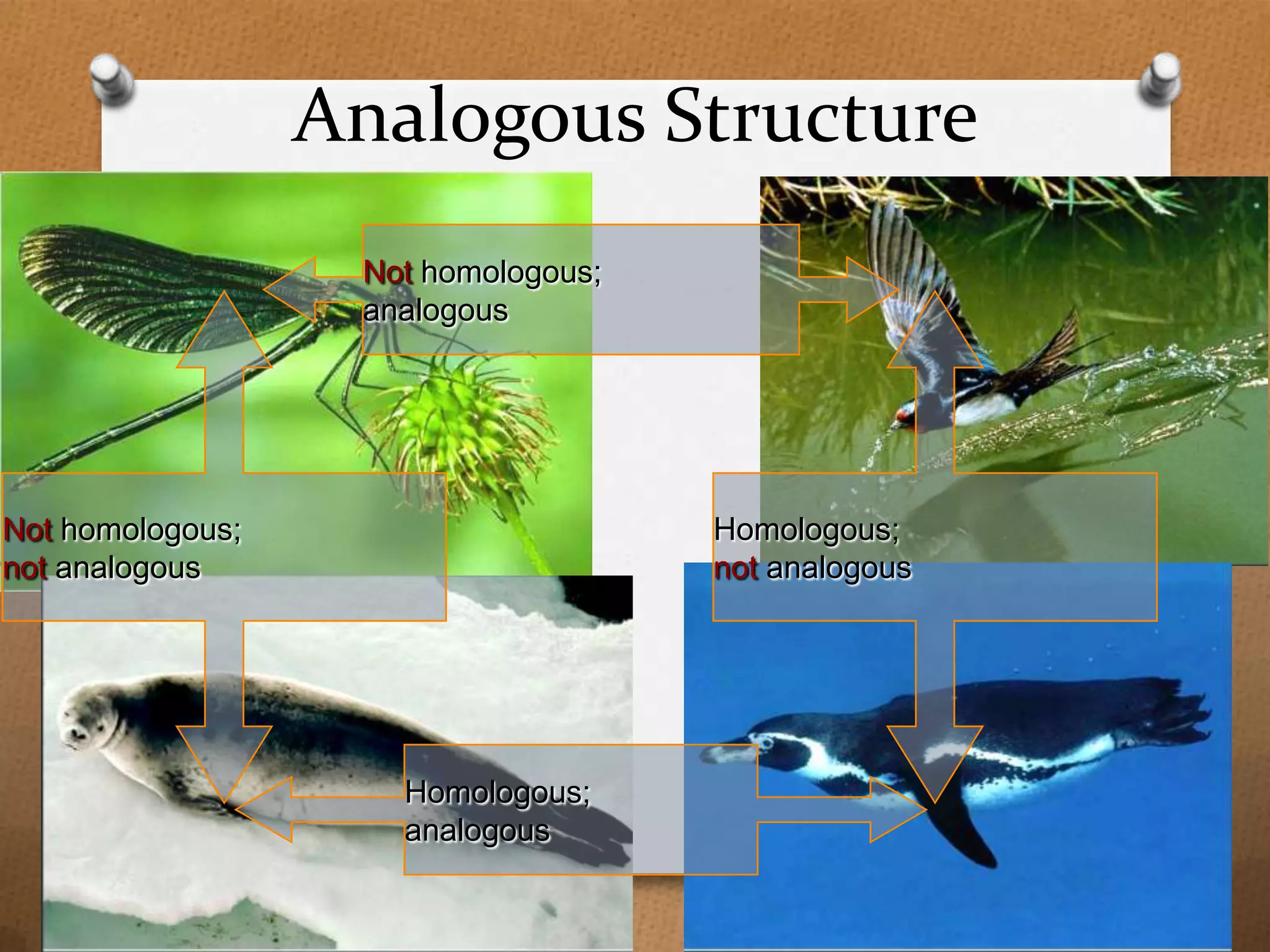
Analogous Structure
Not homologous;
analogous

Not homologous;
not analogous

Homologous;
not analogous

Homologous;
analogous
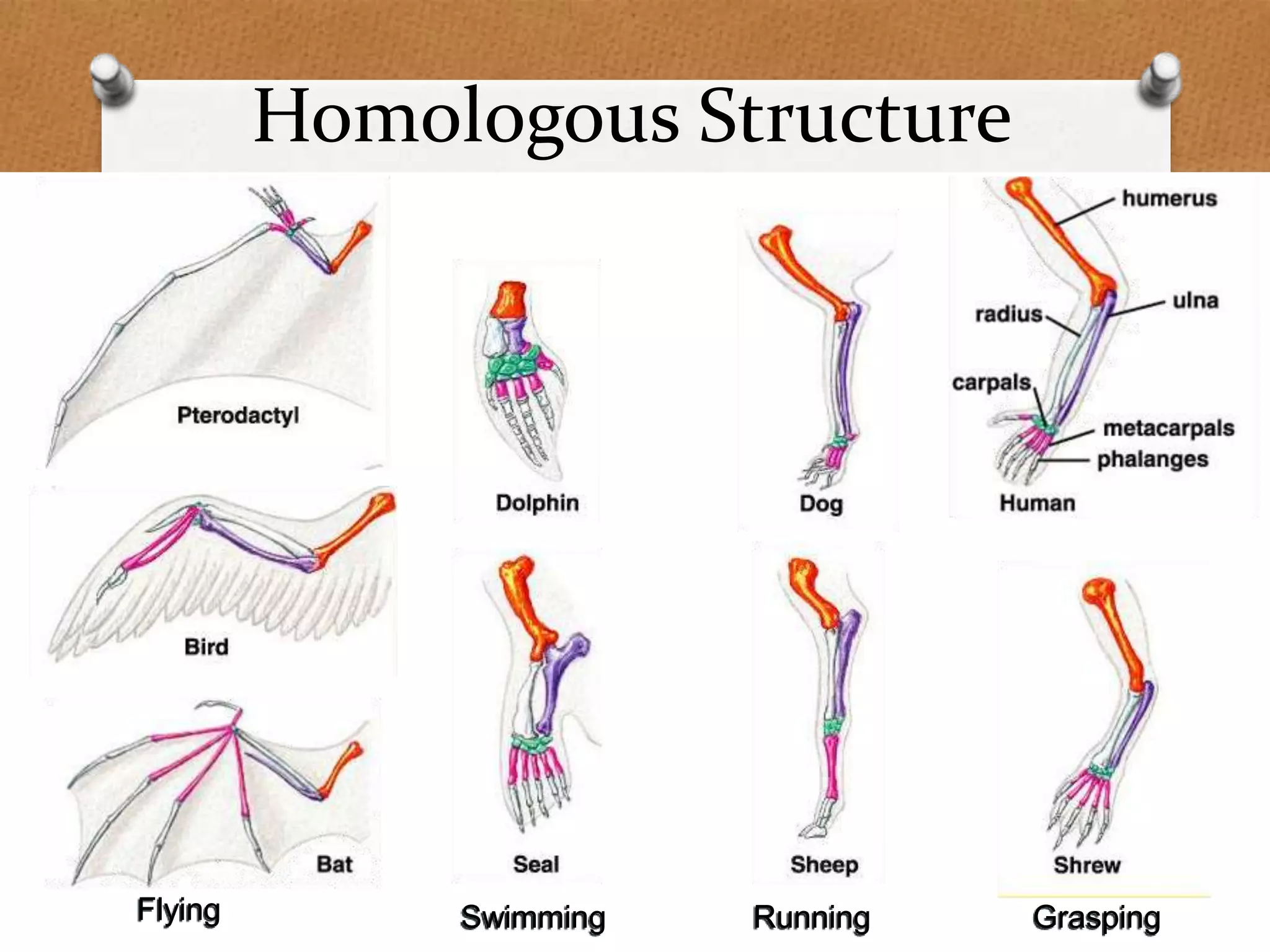
Homologous Structure

Flying

Swimming

Running

Grasping
Vestigial Structure
Comparative Emryology
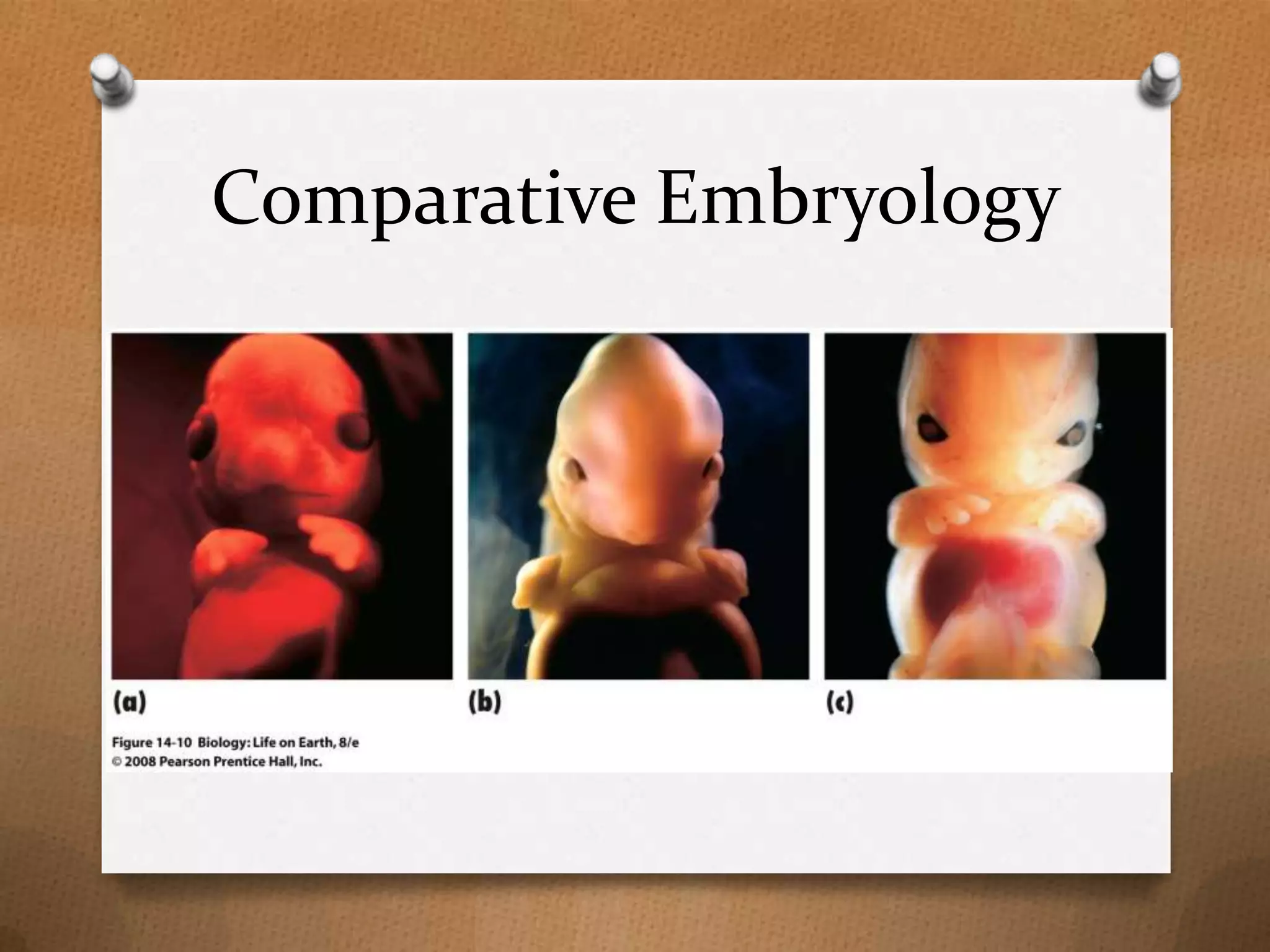
O Early vertebrate embryos

similar
O Tail and gill arches
Comparative Embryology
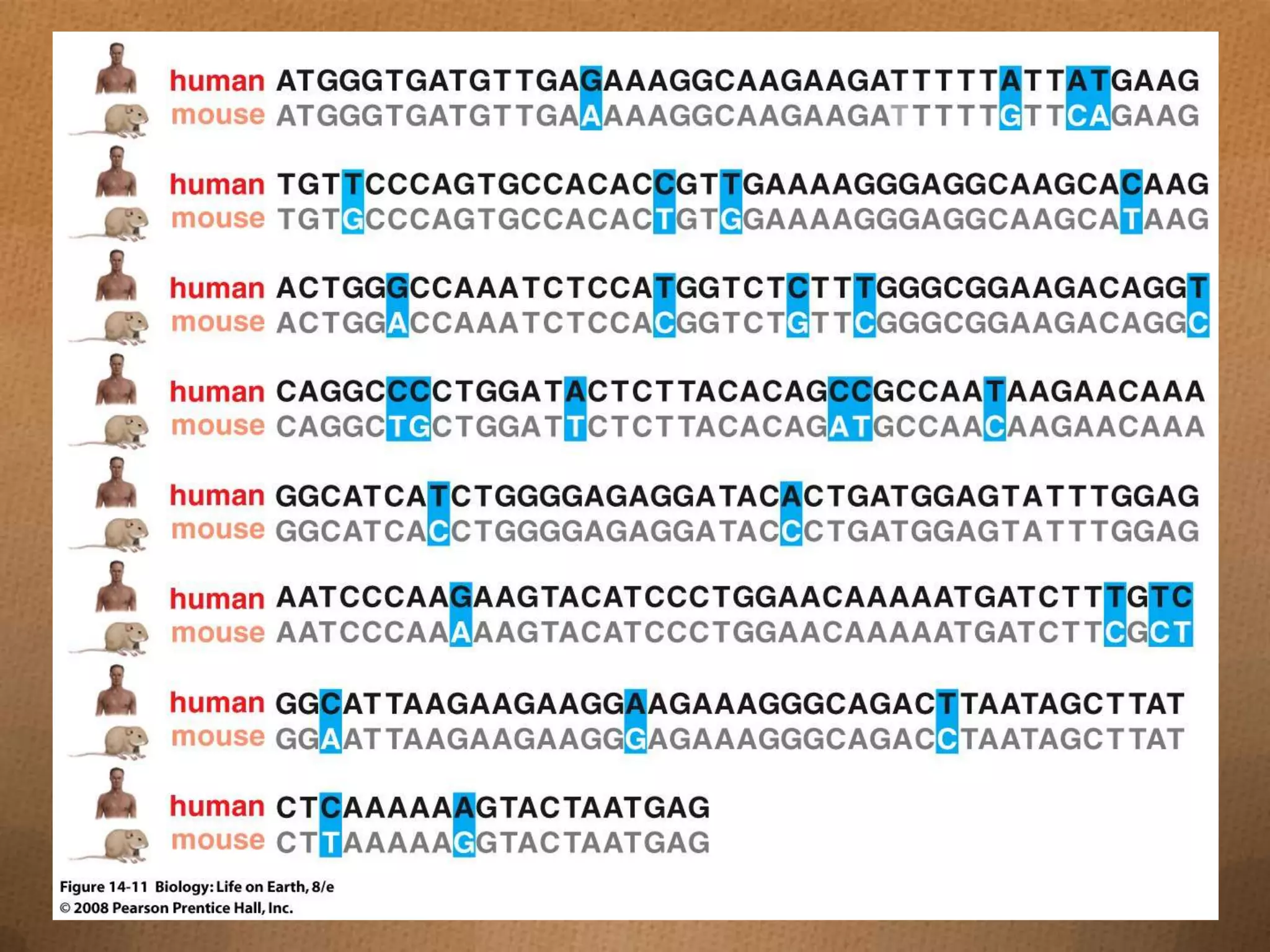
Comparative Biochemistry
O All have DNA, RNA, ribosomes, ATP,

etc.
O DNA similarities
Introduction to darwinian evolution

Introduction to darwinian evolution

  • 1.
    Introduction to Darwinian Evolution MoisesVon Rosauro R. De Gracia BSE - III
  • 2.
    What is Evolution? OEvolution is the accumulation of genetic changes within populations over time. O The term evolution does not refer to changes that occur in an individual within its lifetime. Instead, it refers to the changes in the characteristics of population over the course of generation.
  • 3.
    Ideas About Evolution B.C. Plato’s inspired“ideal form” O 427-347 divinely O 384-322 B.C. Aristotle’s “Ladder of Nature” O Aristotle visualized organisms as being imperfect “moving toward a more perfect state”
  • 4.
    O 1700s Creationism OEach species was created individually by God O Earth was the center of the universe O Man stood atop creation O Leonardo Da Vinci (1452 – 1519) O The first to interpret the unusual finding of animals in the rocks high on mountain.
  • 5.
    O 1707-1788 GeorgeLeClerc (Comte of Buffon) O creation provided a relatively small number of founding species that evolved through natural processes O Idea was not accepted O Did not provide a mechanism for evolution O Earth was not old enough to allow time for the process of evolution
  • 6.
    O Jean Baptistéde Lamarck (1744- 1829) O He was the first to propose that organisms undergo change over time as a result of some natural phenomenon rather than divine intervention. O 1769-1832 G. Cuvier O Theory of catastrophism (creationist w/extinction)
  • 7.
    O 1726-1797 JamesHutton O developed uniformitarianism – gradual change O 1797-1875 Charles Lyell’s O “Old Earth Hypothesis” supported Hutton, change gave time for gradual
  • 8.
    O 1809-1882 CharlesDarwin O Developed the theory of evolution O Species evolved through natural selection; O Adaptation to their ever-changing environment O 1823-1913 Alfred Wallace O supported Darwin's theory (worked separately, came up with same conclusion, came in “2nd”)
  • 9.
    Potential for rapid reproduction Relativelyconstant resources and population over time Competition for survival and reproduction (observations) (conclusions) Variability in structures and behaviors NATURAL SELECTION On average, the fittest organisms leave the most offspring Some variability is inherited EVOLUTION: The genetic makeup of the population changes over time, driven by natural selection
  • 10.
    Darwin’s Theory ofEvolution O Darwin’s Idea of Common Descent O Darwin’s Idea of Gradualism O Darwin’s Idea of Multiplication of Species O Darwin’s Idea of Natural Selection
  • 11.
    Idea of CommonDescent • Evolution = descent with modification • All organisms are related through descent from some unknown ancestor that lived in the distant past. • As the descendants spilled into various habitats over time, they accumulated diverse modifications (adaptations) that fit them to specific ways of life.
  • 12.
    • The historyof life is like a tree. • The Linnean classification scheme reflected the branching genealogy of the tree of life, with organisms at the different levels related through descent from common ancestors.
  • 13.
    Idea of Gradualism •The origin of new species and adaptation are closely related processes. • A new species would arise from an ancestral form by the gradual accumulation of adaptations to a different environment. Darwin’s finches  RADIATION • e.g. ADAPTIVE
  • 15.
    Idea of Multiplicationof Species O The existence of an enormous number of species  some species are very similar (not as distinct from each other!)  gradual changes in various characteristics as organisms became modified according to the conditions in which they lived
  • 16.
    Idea of NaturalSelection O Overproduction O All species have a tendency and the potential to increase at a geometric rate. O Competition O The conditions supporting life are limited. O Only a fraction of the offspring in a population will live to produce offspring, so that the number of individuals in a population remains fairly constant.
  • 17.
    O Variation O Individualsin a population vary greatly in their characteristics. O Adaptation O Some variations enable individuals to produce more offspring than other individuals. O Natural Selection O Individuals having favorable traits will produce more offspring, and those with unfavorable traits will produce fewer offspring.
  • 18.
    • Speciation O Giventime, natural selection leads to the accumulation of changes that differentiate groups from one another, such that a new species may arise
  • 19.
    Darwin’s Postulates onNatural Selection O Postulate 1 O Individual members of a population differ from one another in many respects O Variations arise purely by chance resulting from random mutations in DNA O Differences are obvious in many physical characteristics and extend to molecular level
  • 21.
    O POSTULATE 2 OAt least some of the differences among members of a population are due to characteristics that may be passed from parent to offspring O However, the mechanism of inheritance was not understood at this point in time (Mendel was working at about the same time…and was ignored until someone saw that Mendel and Darwin/Wallace supported each other.)
  • 22.
    O POSTULATE 3 OIn each generation, some individuals in a population survive and reproduce successfully but others do not O Darwin observed that many more individuals are born than survive O Some individuals have more offspring than others
  • 23.
    O POSTULATE 4 OIndividuals with advantageous traits survive longest and leave the most offspring, a process known as natural selection O Natural selection acts on individuals within a population; however, it is the population that changes over time
  • 24.
    Patterns of Evolution ODivergent evolution – from one species to several different forms; adaptive radiation O Convergent evolution – results in increased resemblance between unrelated species O Coevolution – occurs when two or more species evolve in response to each other
  • 25.
    Evidences of Evolution OFossils O Comparative Anatomy O Comparative Embryology O Comparative Biochemistry
  • 26.
    Fossils O Transitional formsare evidence of evolutionary change O Fossils of ancient species tend to be simpler in form than modern species O Several series of fossils have been found that exhibit the evolution of body structures over time
  • 27.
    Interpretation of fossildata controversial O Dating of fossils O Do fossils really show transitional forms?
  • 28.
  • 29.
  • 30.
    Comparative Anatomy O Homologousstructures O structures that have the same evolutionary origin despite their current appearance or function O Analogous structures O structures that are outwardly similar in appearance, but differ in their evolutionary origin O Vestigial structures O remnants of structures that are inherited from ancestors O Had important functions in ancestors O Serve no obvious purpose in present day organism
  • 31.
    Analogous Structure Not homologous; analogous Nothomologous; not analogous Homologous; not analogous Homologous; analogous
  • 32.
  • 33.
  • 34.
    Comparative Emryology O Earlyvertebrate embryos similar O Tail and gill arches
  • 35.
  • 36.
    Comparative Biochemistry O Allhave DNA, RNA, ribosomes, ATP, etc. O DNA similarities