Introduction to Solutions
Pt. 1
By Shawn P. Shields, Ph.D.
This work is licensed by Shawn P. Shields-Maxwell under a Creative Commons
Attribution-NonCommercial-ShareAlike 4.0 International License.
Solutions
Generally, a solution is a stable homogeneous mixture
of two or more substances.
Recall: “Homogeneous” means uniform throughout the
mixture.
Other features of solutions:
Solute particles cannot be differentiated by the eyes,
nor do they scatter light.
The mixture cannot be separated by filtration.
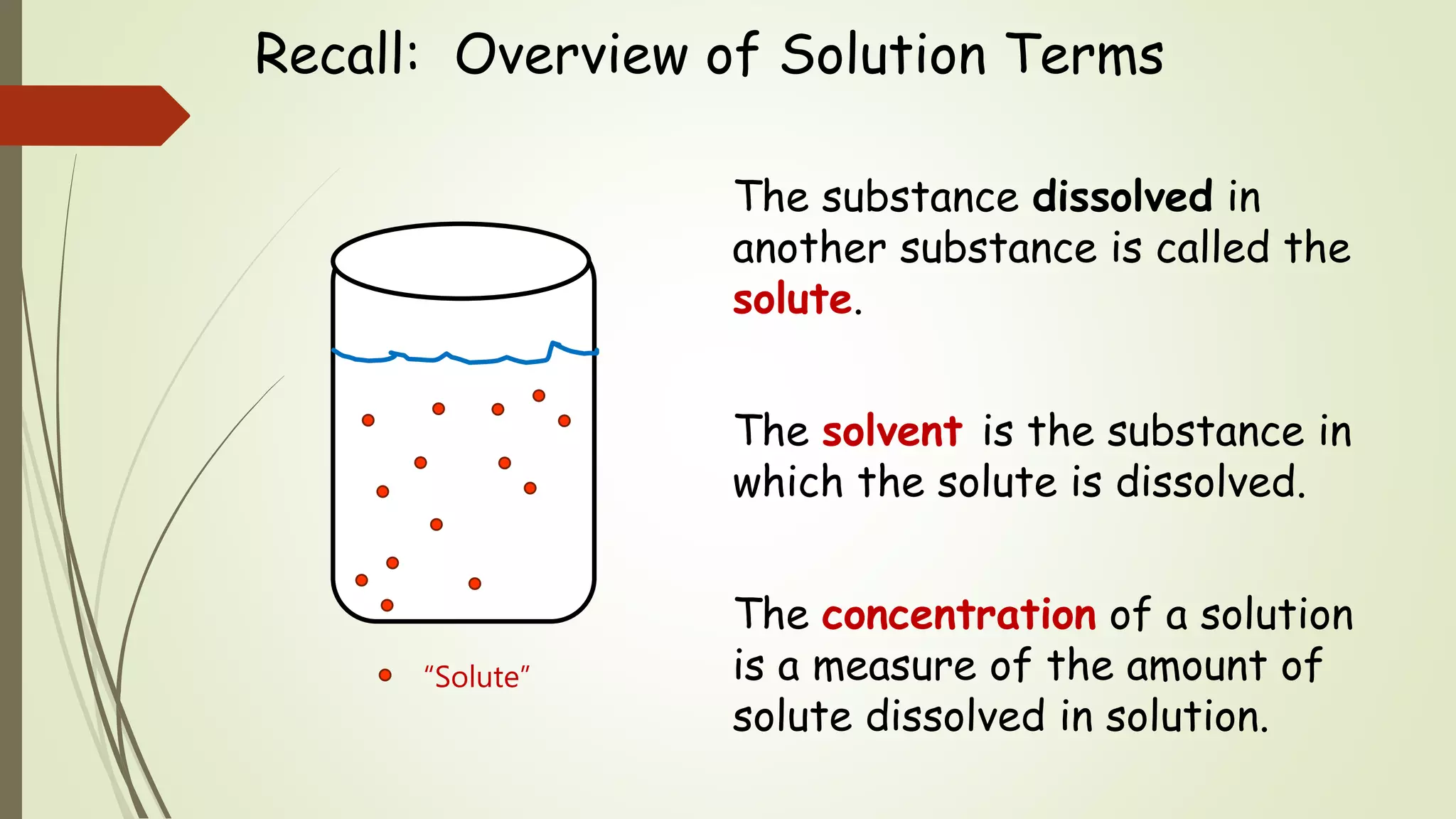
Recall: Overview of Solution Terms
The substance dissolved in
another substance is called the
solute.
The solvent is the substance in
which the solute is dissolved.
The concentration of a solution
is a measure of the amount of
solute dissolved in solution.
“Solute”
Solutions
Solutions can be mixtures of solids, liquids, and
gases.
One common “solution” is a solute, such as NaCl,
dissolved in water.
A “solid solution” is a homogeneous mixture of two
solids (often metals forming alloys).
Two (or more) liquids can also form a solution, as
well as a gas dissolved in a liquid.
Aqueous Solutions
In the picture, sugar is
added to water and
stirred.
Once the sugar dissolves,
a solution of sucrose in
water is formed.
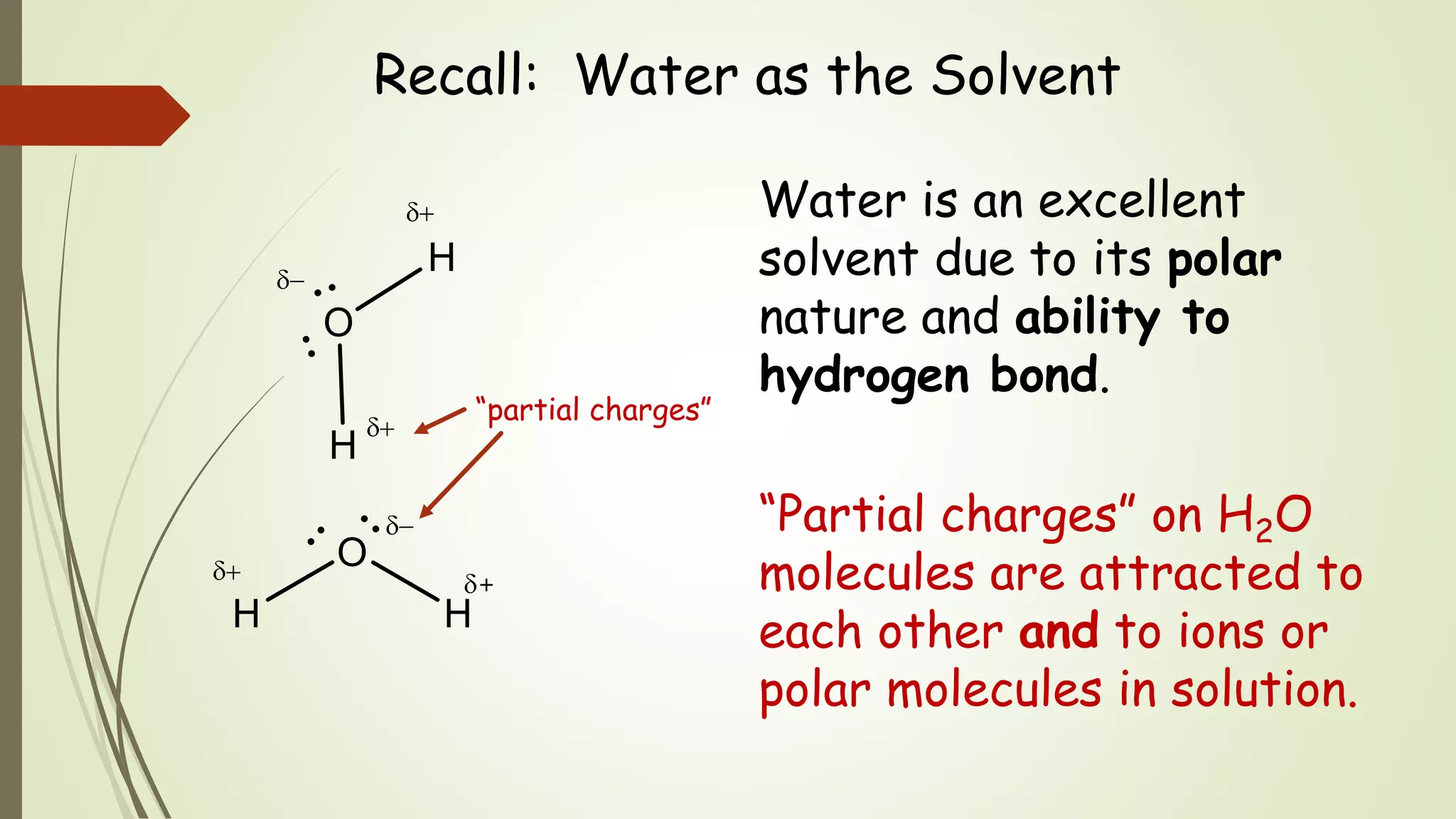
Recall: Water as the Solvent
Water is an excellent
solvent due to its polar
nature and ability to
hydrogen bond.
“Partial charges” on H2O
molecules are attracted to
each other and to ions or
polar molecules in solution.
“partial charges”



+


Solution Formation
The formation of a solution is a physical process
(as opposed to chemical).
Solutions form based on two factors:
The tendency toward mixing (increased entropy)
The “match” between the intermolecular forces
for the solute and the solvent.
IM Forces and Solution Formation
Let’s look at two cases:
Case 1: The solvent and solute have very
different strengths and types of intermolecular
forces (e.g., oil has (mainly) dispersion forces
and water can hydrogen bond ).
No mixing occurs.
Even if the mixture is shaken, the two
components separate from each other.
Solution Formation
Case 2: The solvent and solute have very similar
strengths and types of intermolecular forces
(e.g., NaCl and water).
Mixing occurs spontaneously.
NaCl and water interact through ion-dipole attractions.
A Few More Terms..
Saturated solutions- The solvent has dissolved
the maximum amount of solute that it can hold.
Unsaturated solutions- The solvent has not
dissolved the maximum amount of solute.
Supersaturated solutions- An unstable solution
(often) prepared at higher temperatures then
cooled. The solvent dissolved more than the
maximum amount of solute.
Next Up…
Factors Affecting Solution Formation

Chem 2 - Introduction to Solutions I

  • 1.
    Introduction to Solutions Pt.1 By Shawn P. Shields, Ph.D. This work is licensed by Shawn P. Shields-Maxwell under a Creative Commons Attribution-NonCommercial-ShareAlike 4.0 International License.
  • 2.
    Solutions Generally, a solutionis a stable homogeneous mixture of two or more substances. Recall: “Homogeneous” means uniform throughout the mixture. Other features of solutions: Solute particles cannot be differentiated by the eyes, nor do they scatter light. The mixture cannot be separated by filtration.
  • 3.
    Recall: Overview ofSolution Terms The substance dissolved in another substance is called the solute. The solvent is the substance in which the solute is dissolved. The concentration of a solution is a measure of the amount of solute dissolved in solution. “Solute”
  • 4.
    Solutions Solutions can bemixtures of solids, liquids, and gases. One common “solution” is a solute, such as NaCl, dissolved in water. A “solid solution” is a homogeneous mixture of two solids (often metals forming alloys). Two (or more) liquids can also form a solution, as well as a gas dissolved in a liquid.
  • 5.
    Aqueous Solutions In thepicture, sugar is added to water and stirred. Once the sugar dissolves, a solution of sucrose in water is formed.
  • 6.
    Recall: Water asthe Solvent Water is an excellent solvent due to its polar nature and ability to hydrogen bond. “Partial charges” on H2O molecules are attracted to each other and to ions or polar molecules in solution. “partial charges”    +  
  • 7.
    Solution Formation The formationof a solution is a physical process (as opposed to chemical). Solutions form based on two factors: The tendency toward mixing (increased entropy) The “match” between the intermolecular forces for the solute and the solvent.
  • 8.
    IM Forces andSolution Formation Let’s look at two cases: Case 1: The solvent and solute have very different strengths and types of intermolecular forces (e.g., oil has (mainly) dispersion forces and water can hydrogen bond ). No mixing occurs. Even if the mixture is shaken, the two components separate from each other.
  • 9.
    Solution Formation Case 2:The solvent and solute have very similar strengths and types of intermolecular forces (e.g., NaCl and water). Mixing occurs spontaneously. NaCl and water interact through ion-dipole attractions.
  • 10.
    A Few MoreTerms.. Saturated solutions- The solvent has dissolved the maximum amount of solute that it can hold. Unsaturated solutions- The solvent has not dissolved the maximum amount of solute. Supersaturated solutions- An unstable solution (often) prepared at higher temperatures then cooled. The solvent dissolved more than the maximum amount of solute.
  • 11.
    Next Up… Factors AffectingSolution Formation