BY-
SOLUTE AND SOLVENT
• THE SUBSTANCE WHICH IS DISSOLVED IN A LIQUID IS CALLED
“SOLUTE”.
• THE LIQUID IN WHICH SOLUTE IS DISSOLVED IS KNOWN AS
“SOLVENT”.
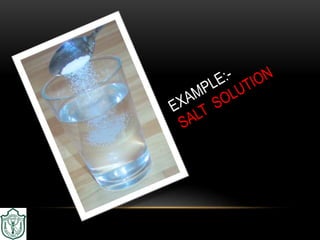
• EXAMPLE:- SALT SOLUTION IS MADE BY DISSOLVING SALT IN WATER,
SO IN SALT SOLUTION ‘SALT’ IS THE SOLUTE, AND ‘WATER’ IS
SOLVENT.
SOLUTION
 A solution is a homogeneous mixture of two
or more substances.
 Examples: salt solution, sugar solution,
vinegar, metal alloys(such as brass)and air.
 Only soluble substances form true solution.
PROPERTIES OF SOLUTION
• A solution is a homogeneous mixture.
• The size of a solute particle in a solution extremely small. It is less
than 1 nm in diameter (1 nanometer=10-9metre).
• The particles of a solution cannot be seen even with a microscope.
• The particles of a solution pass through the filter paper. So, a
solution cannot separated by a filtration.
• The solutions are very stable. The particles of solute present in a
solution do not separate out on keeping.
• A true solution does not scatter light.
TYPES OF SOLUTION
• Solution of solid to solid. Metal alloys are the solution in solids.
• Solution of solid in liquid. This the most common type solutions.
• Solution of liquid to liquid. Vinegar is a solution of acetic acid in
water.
• Solution of gas in a liquid. Soda water is a solution of co2 in water.
• Solution of gas in a gas. Air is a solution of gases.
SUSPENSION
• A Suspension is a heterogeneous mixture in which
the small particles of a solid are spread throughout
the liquid without dissolving in it.
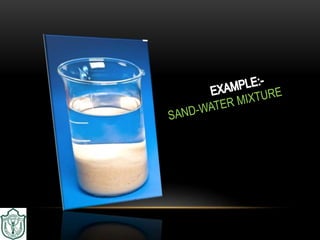
• Examples: chalk-water, muddy water, milk of
magnesia, sand particles suspended in water, flour
in water.
• Those substances which are insoluble in water forms
suspension.
PROPERTIES OF SUSPENSION
• A suspension is a heterogeneous mixture.
• The size of a solute particle in a suspension are quite large.
• The particles of a suspension can be seen easily.
• The particles of a suspension do not pass through the filter paper. So, a
suspension can separated by filtration.
• The suspension is unstable. The particles of solute present in a
suspension settle down after some time.
• A suspension scatters a beam of light passing through it.
COLLOIDS
• A colloid is a kind of solution in which the solute
particles is intermediate between those a true
solution and those in suspension.
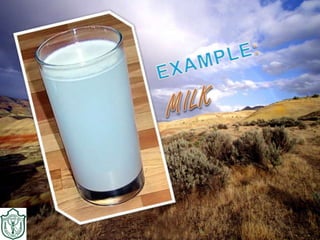
• Examples: soap solution, starch solution, milk
ink, blood, jelly and solutions of synthetic
detergents.
• Colloids are also know as Colloidal solution.
PROPERTIES OF COLLOIDS
• A colloid is a heterogeneous mixture.
• The size of particles of a colloid is too small to be
individually seen by naked eyes.
• Collides are big enough to scatter a beam of light
passing through it and make its path visible.
• They do not settle down when left undisturbed , that
is, a colloid is quite stable.
PPT on types of solution

PPT on types of solution

  • 2.
  • 3.
    SOLUTE AND SOLVENT •THE SUBSTANCE WHICH IS DISSOLVED IN A LIQUID IS CALLED “SOLUTE”. • THE LIQUID IN WHICH SOLUTE IS DISSOLVED IS KNOWN AS “SOLVENT”. • EXAMPLE:- SALT SOLUTION IS MADE BY DISSOLVING SALT IN WATER, SO IN SALT SOLUTION ‘SALT’ IS THE SOLUTE, AND ‘WATER’ IS SOLVENT.
  • 4.
    SOLUTION  A solutionis a homogeneous mixture of two or more substances.  Examples: salt solution, sugar solution, vinegar, metal alloys(such as brass)and air.  Only soluble substances form true solution.
  • 5.
    PROPERTIES OF SOLUTION •A solution is a homogeneous mixture. • The size of a solute particle in a solution extremely small. It is less than 1 nm in diameter (1 nanometer=10-9metre). • The particles of a solution cannot be seen even with a microscope. • The particles of a solution pass through the filter paper. So, a solution cannot separated by a filtration. • The solutions are very stable. The particles of solute present in a solution do not separate out on keeping. • A true solution does not scatter light.
  • 7.
    TYPES OF SOLUTION •Solution of solid to solid. Metal alloys are the solution in solids. • Solution of solid in liquid. This the most common type solutions. • Solution of liquid to liquid. Vinegar is a solution of acetic acid in water. • Solution of gas in a liquid. Soda water is a solution of co2 in water. • Solution of gas in a gas. Air is a solution of gases.
  • 8.
    SUSPENSION • A Suspensionis a heterogeneous mixture in which the small particles of a solid are spread throughout the liquid without dissolving in it. • Examples: chalk-water, muddy water, milk of magnesia, sand particles suspended in water, flour in water. • Those substances which are insoluble in water forms suspension.
  • 9.
    PROPERTIES OF SUSPENSION •A suspension is a heterogeneous mixture. • The size of a solute particle in a suspension are quite large. • The particles of a suspension can be seen easily. • The particles of a suspension do not pass through the filter paper. So, a suspension can separated by filtration. • The suspension is unstable. The particles of solute present in a suspension settle down after some time. • A suspension scatters a beam of light passing through it.
  • 11.
    COLLOIDS • A colloidis a kind of solution in which the solute particles is intermediate between those a true solution and those in suspension. • Examples: soap solution, starch solution, milk ink, blood, jelly and solutions of synthetic detergents. • Colloids are also know as Colloidal solution.
  • 12.
    PROPERTIES OF COLLOIDS •A colloid is a heterogeneous mixture. • The size of particles of a colloid is too small to be individually seen by naked eyes. • Collides are big enough to scatter a beam of light passing through it and make its path visible. • They do not settle down when left undisturbed , that is, a colloid is quite stable.