Chapter 5 - Cells
Cells
Cells are small
(mostly)


Exceptions: Bird eggs,
neurons, some algae,
and bacteria cells
Why are Cells Small?
Cells are small because a high surface area-to-
volume ratio is essential.


Volume determines the amount of chemical
activity in the cell per unit time.


Surface area determines the amount of
substances that can pass the cell boundary per
unit time.
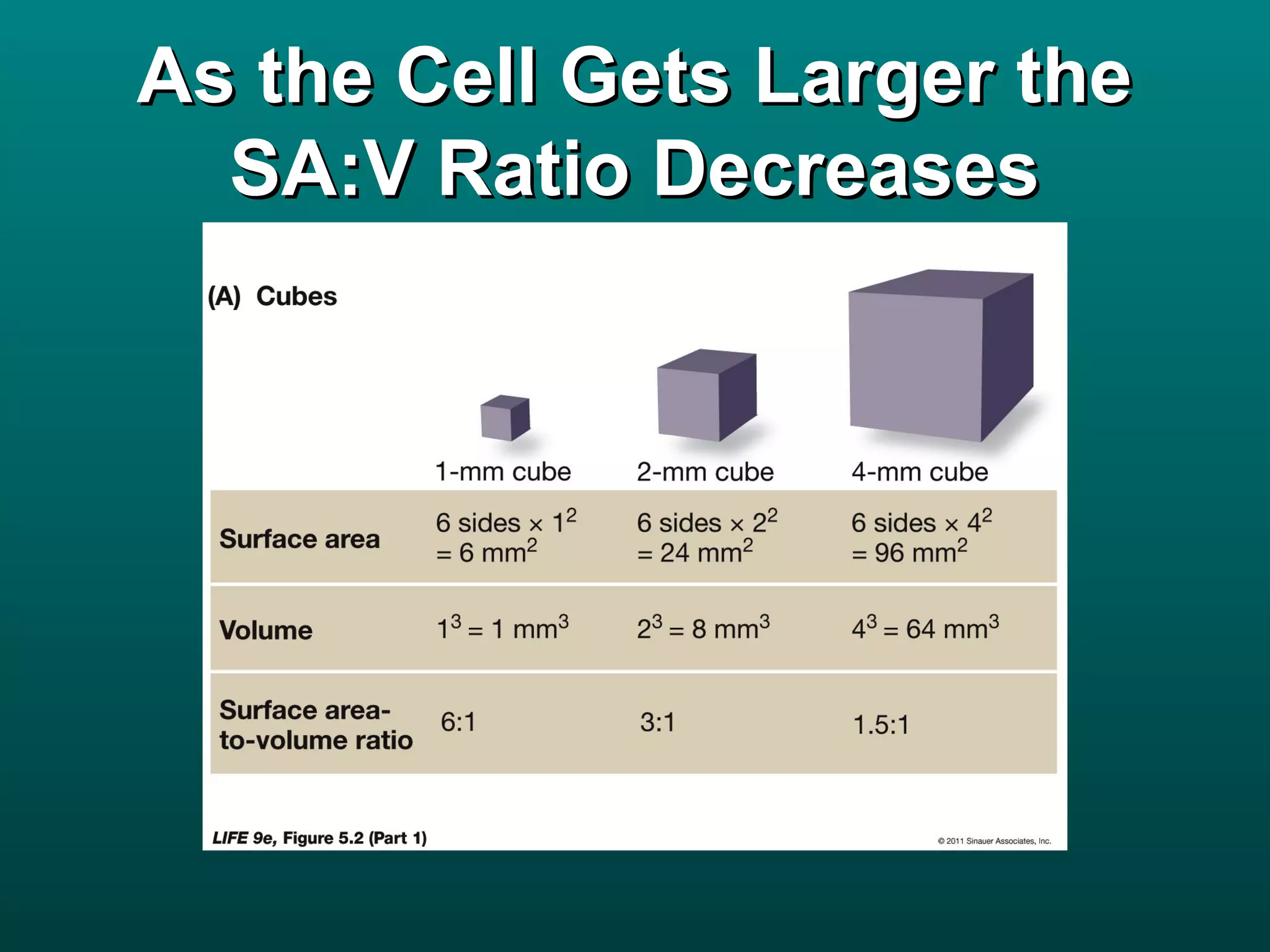
As the Cell Gets Larger the
  SA:V Ratio Decreases
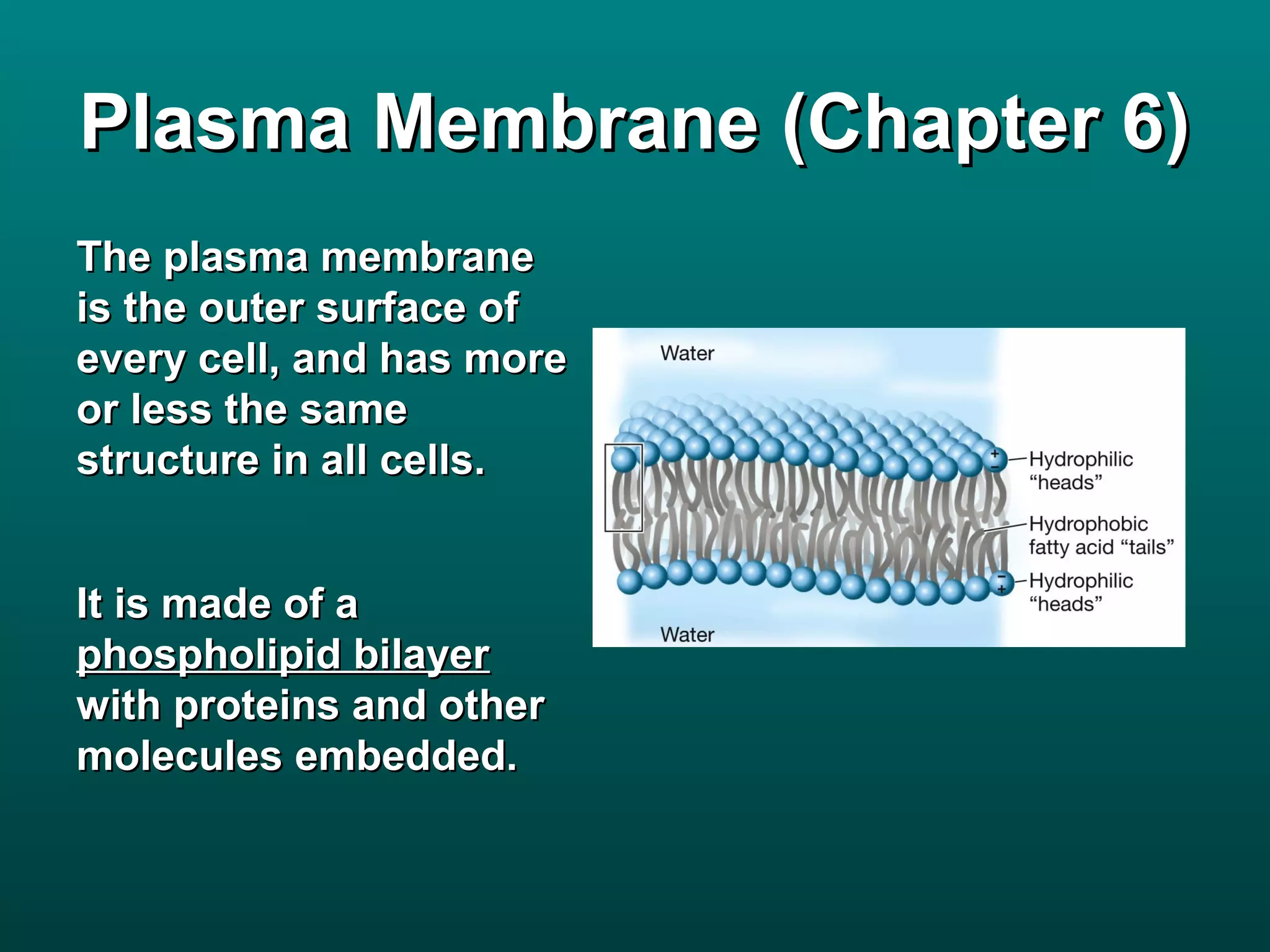
Plasma Membrane (Chapter 6)
The plasma membrane
is the outer surface of
every cell, and has more
or less the same
structure in all cells.


It is made of a
phospholipid bilayer
with proteins and other
molecules embedded.
Two Types of Cells
Prokaryotic and Eukaryotic


Bacteria and Archaea are prokaryotes.


Eukarya are eukayotes.
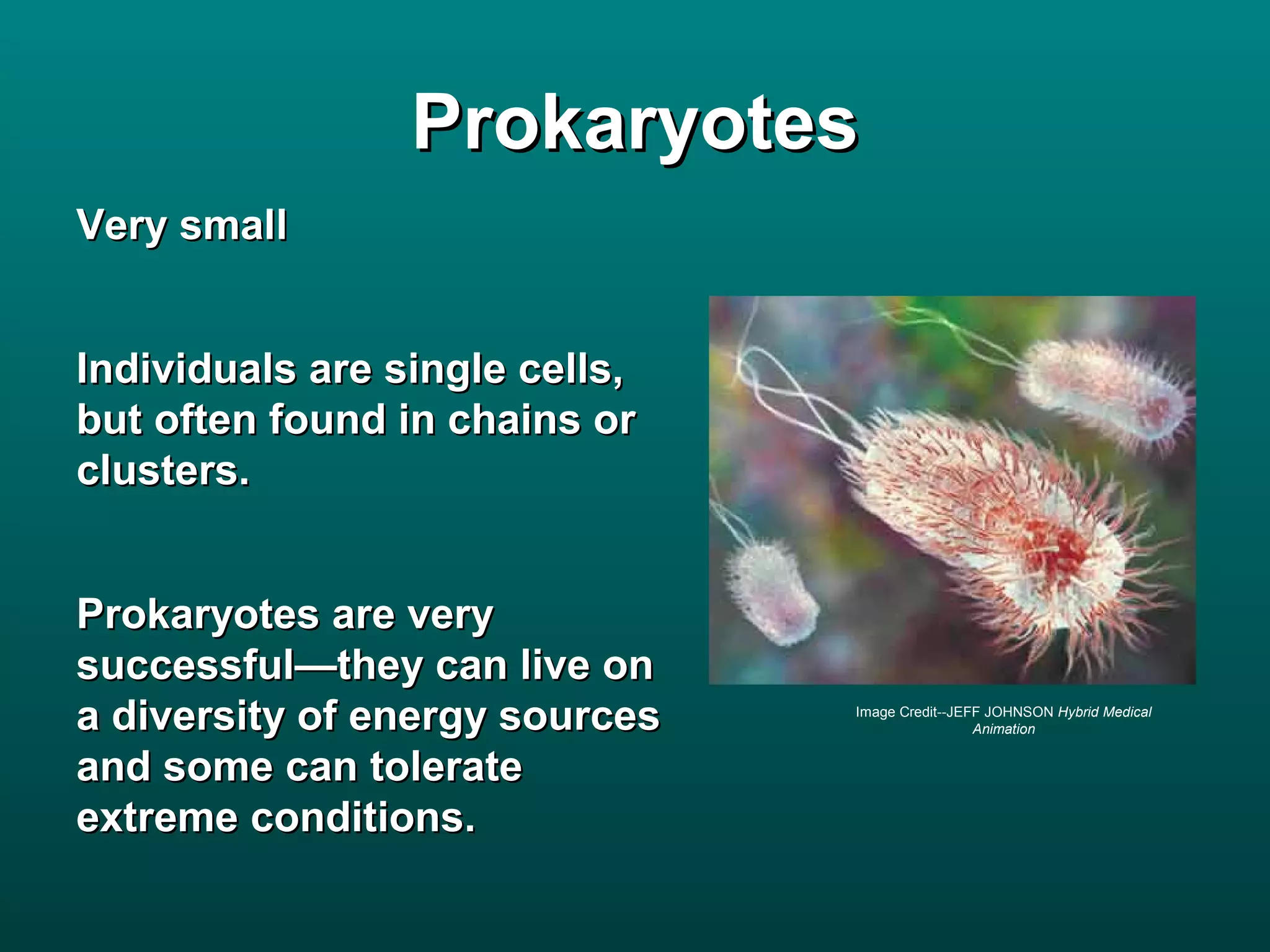
Prokaryotes
Very small


Individuals are single cells,
but often found in chains or
clusters.


Prokaryotes are very
successful—they can live on
a diversity of energy sources   Image Credit--JEFF JOHNSON Hybrid Medical
                                                 Animation


and some can tolerate
extreme conditions.
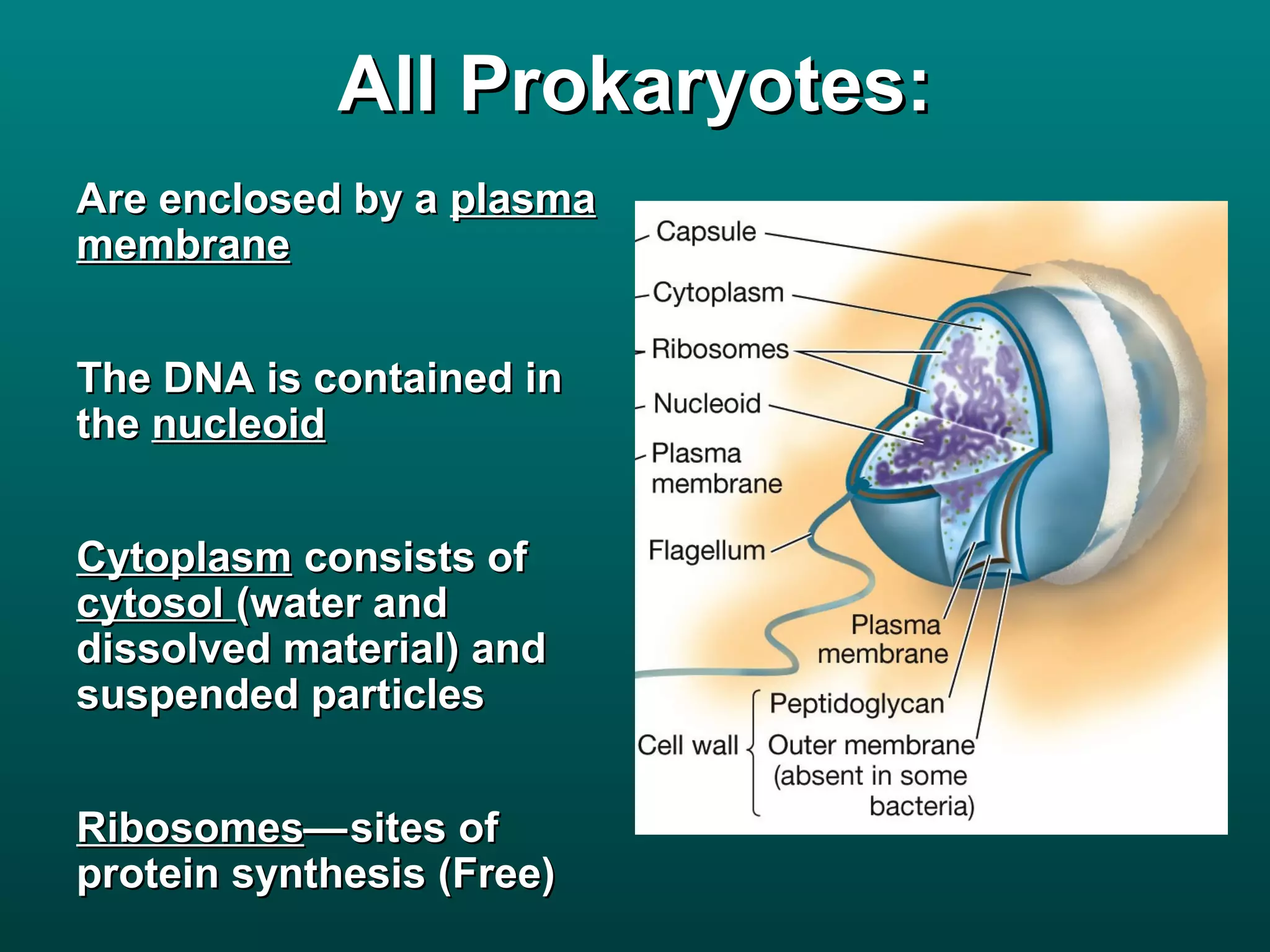
All Prokaryotes:
Are enclosed by a plasma
membrane


The DNA is contained in
the nucleoid


Cytoplasm consists of
cytosol (water and
dissolved material) and
suspended particles


Ribosomes— sites of
protein synthesis (Free)
Specialized Prokaryotic
            Structures
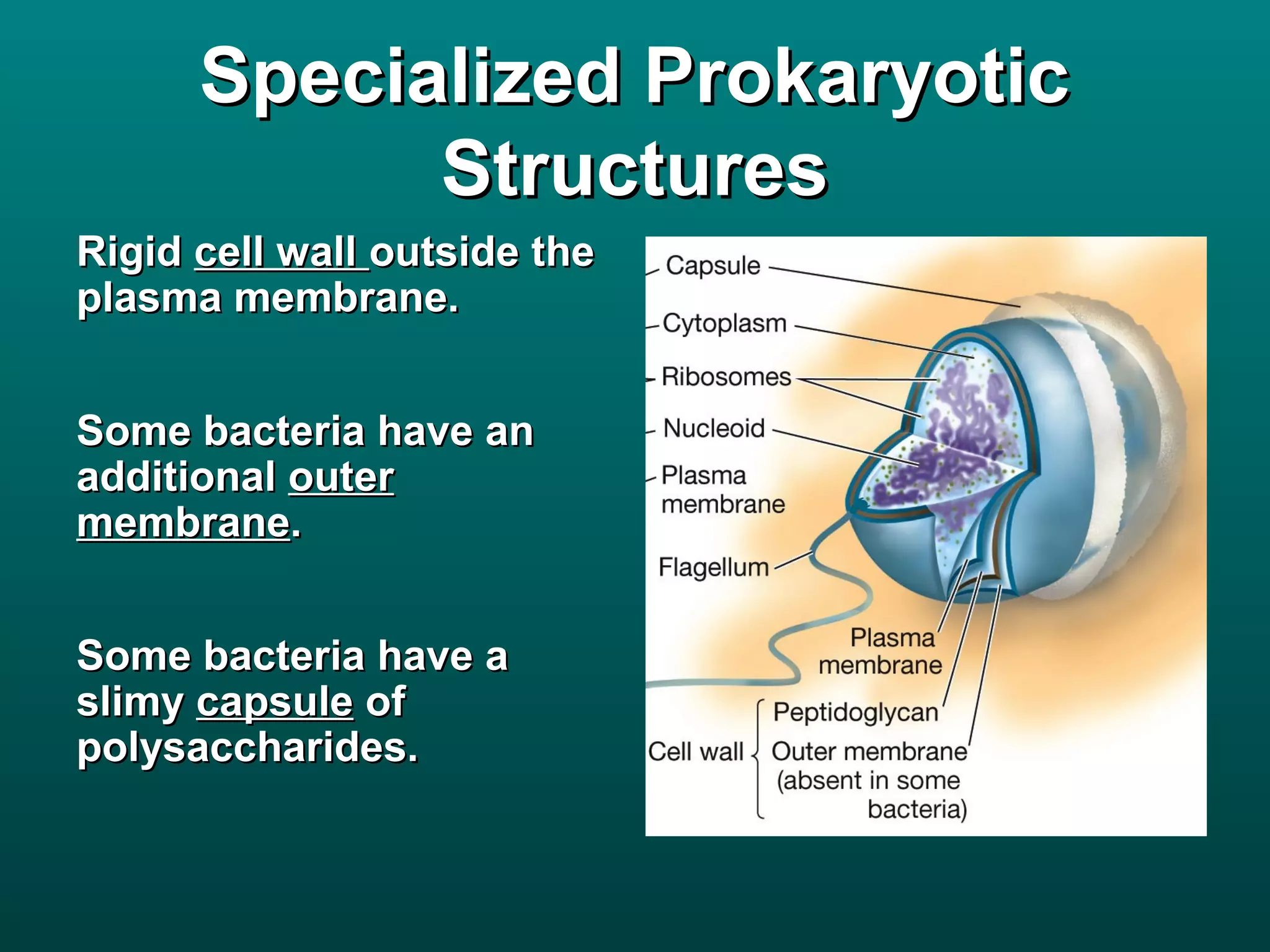
Rigid cell wall outside the
plasma membrane.


Some bacteria have an
additional outer
membrane.


Some bacteria have a
slimy capsule of
polysaccharides.
Specialized Prokaryotic
           Structures
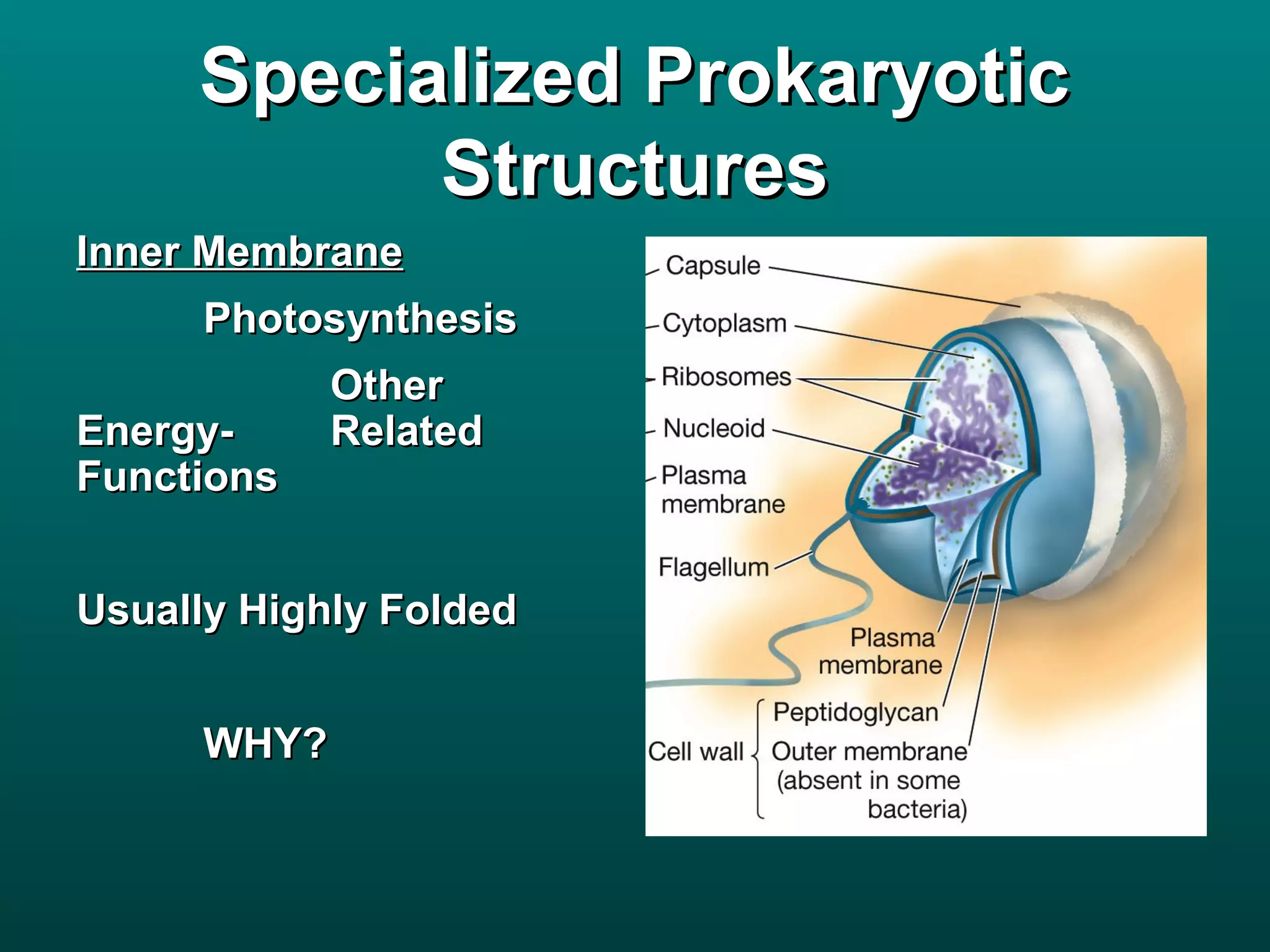
Inner Membrane
      Photosynthesis
             Other
Energy-      Related
Functions


Usually Highly Folded


      WHY?
Specialized Prokaryotic
             Structures
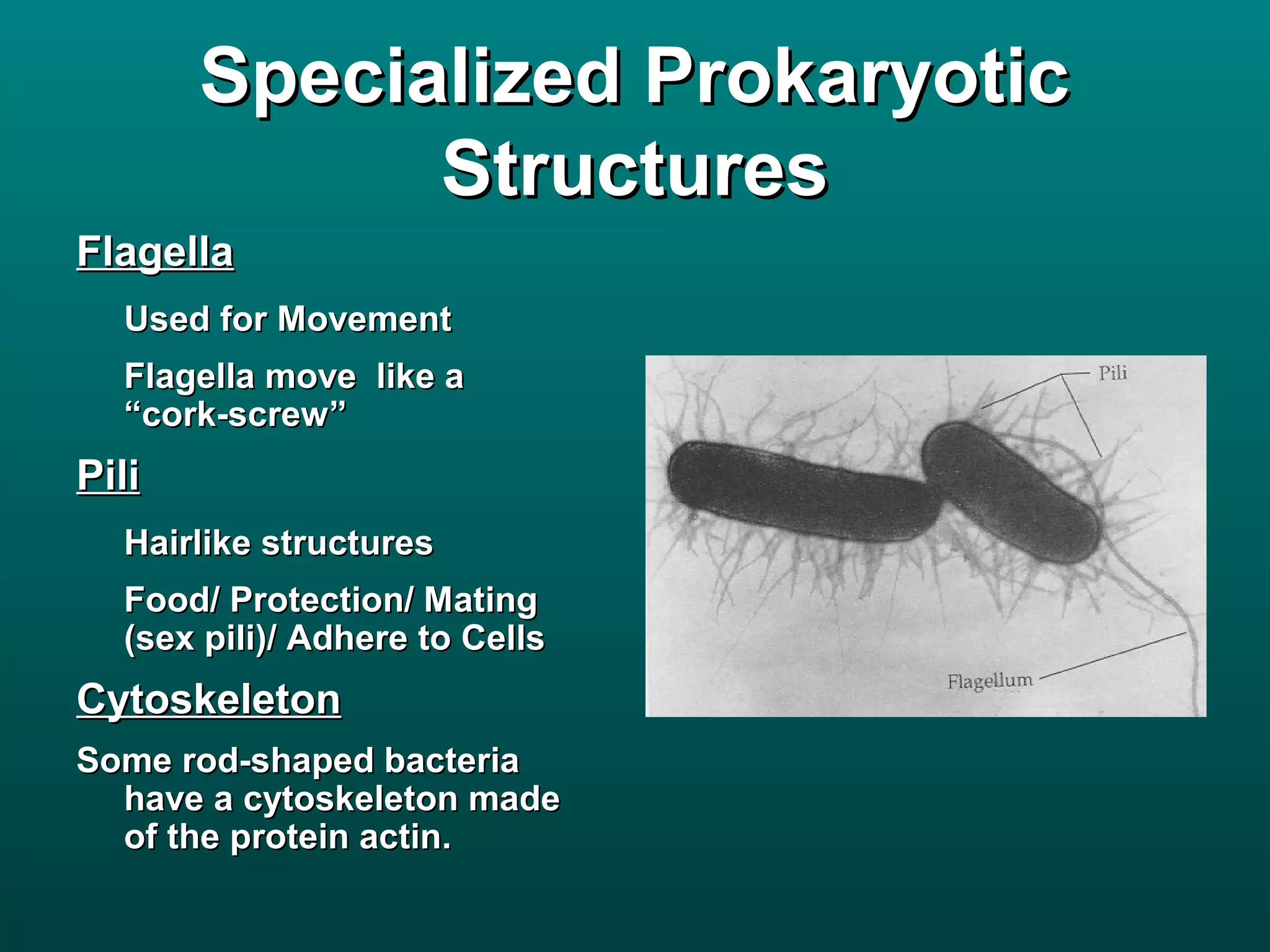
Flagella
  Used for Movement
  Flagella move like a
  “cork-screw”
Pili
  Hairlike structures
  Food/ Protection/ Mating
  (sex pili)/ Adhere to Cells
Cytoskeleton
Some rod-shaped bacteria
  have a cytoskeleton made
  of the protein actin.
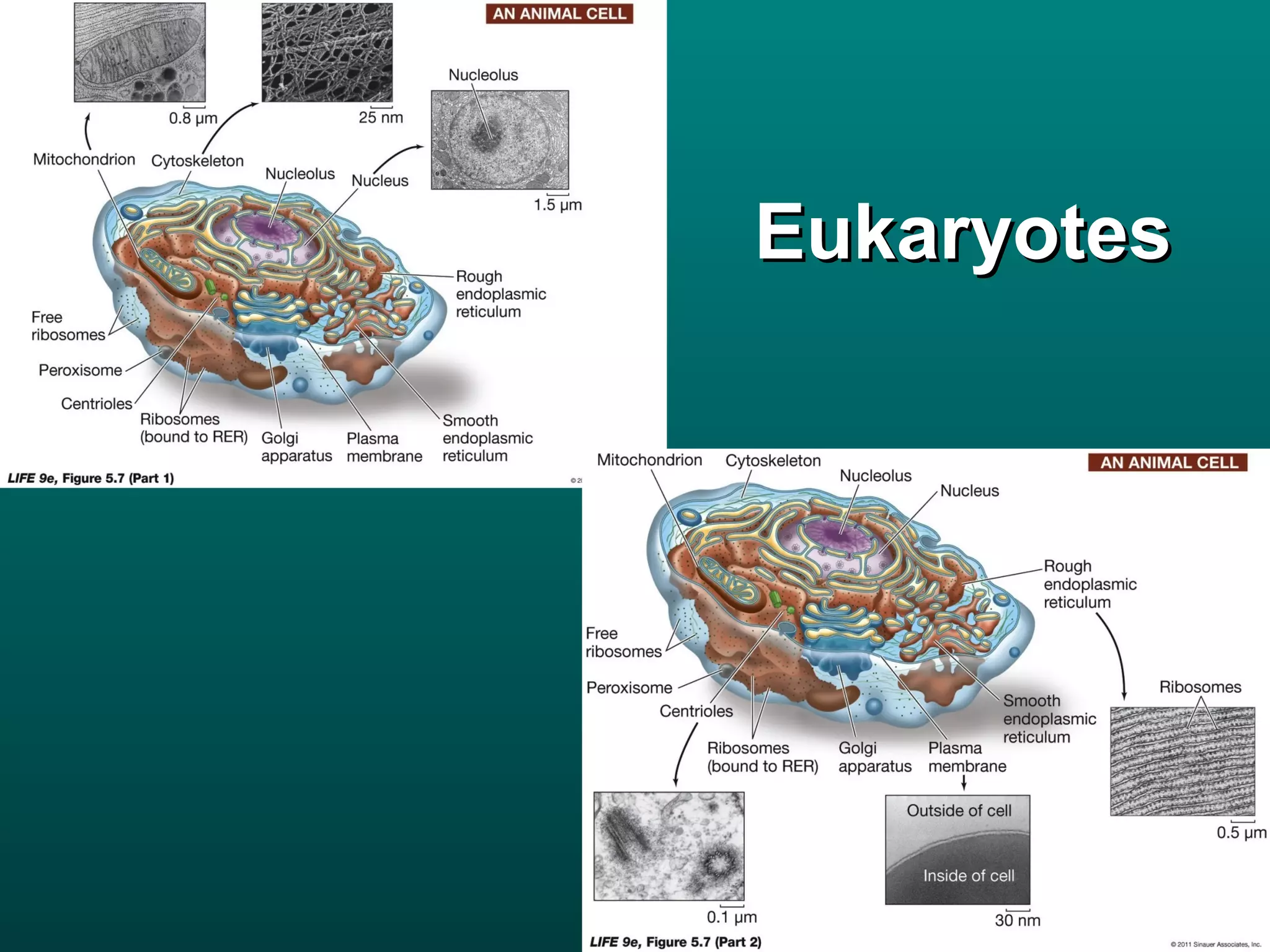
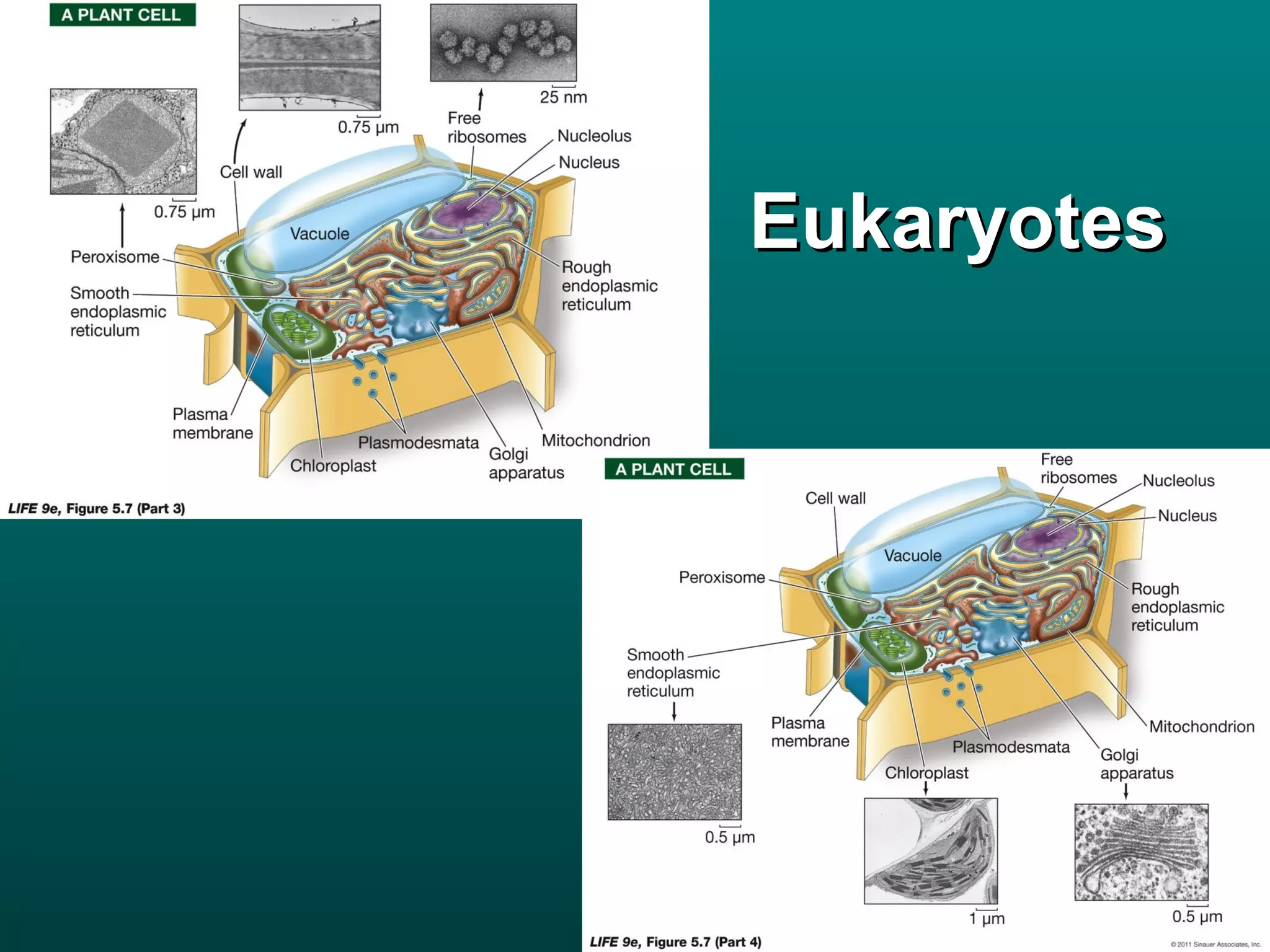
Eukaryotes
Eukaryotic cells are up to ten times larger than
prokaryotes.


Eukaryotic cells have membrane-enclosed
compartments called organelles.


Each organelle has a specific role in cell functioning.


Compartmentalization allowed eukaryotic cells to
specialize and form the tissues and organs of
multicellular organisms.
Eukaryotes
Eukaryotes
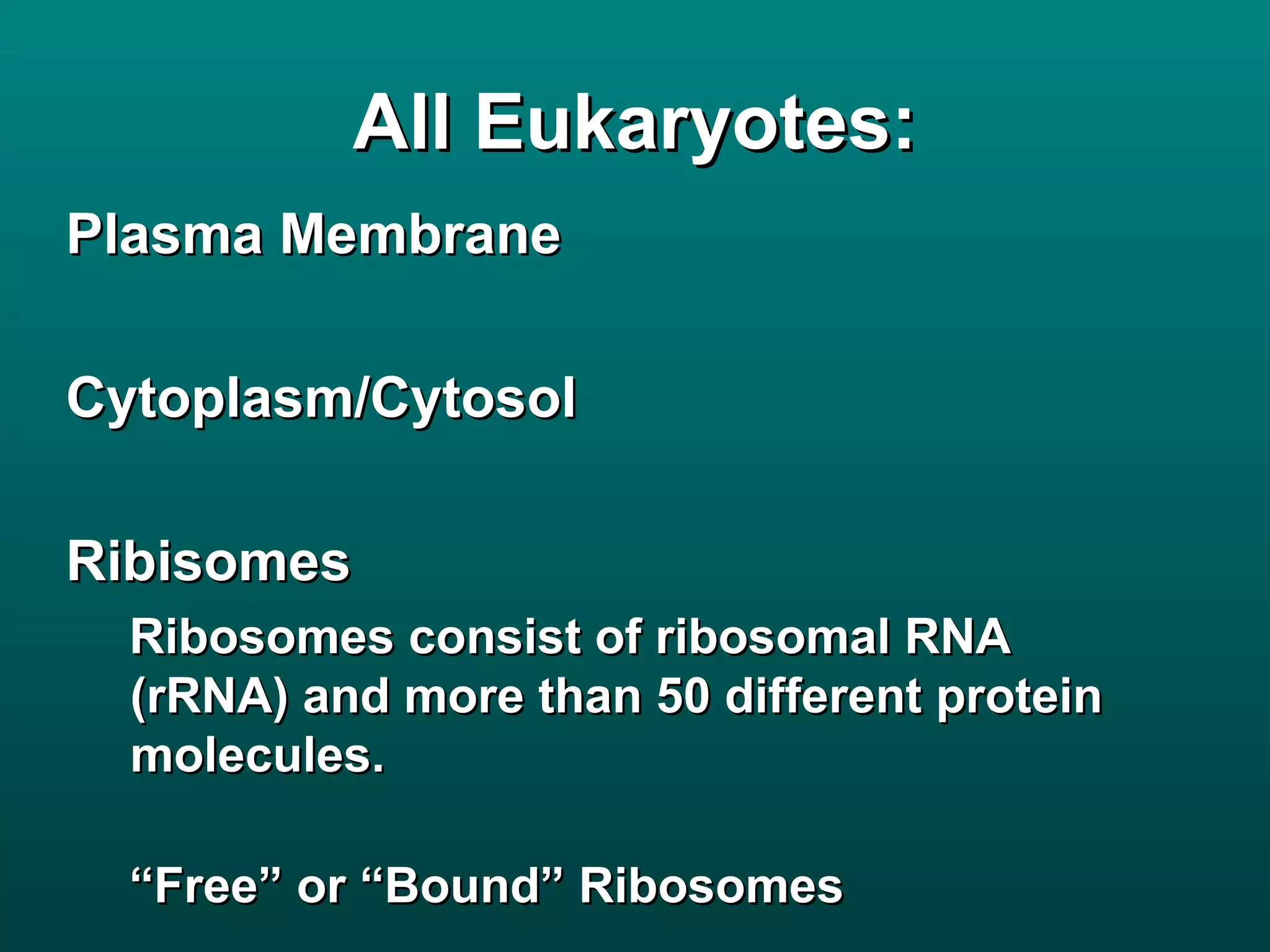
All Eukaryotes:
Plasma Membrane

Cytoplasm/Cytosol

Ribisomes
  Ribosomes consist of ribosomal RNA
  (rRNA) and more than 50 different protein
  molecules.

  “Free” or “Bound” Ribosomes
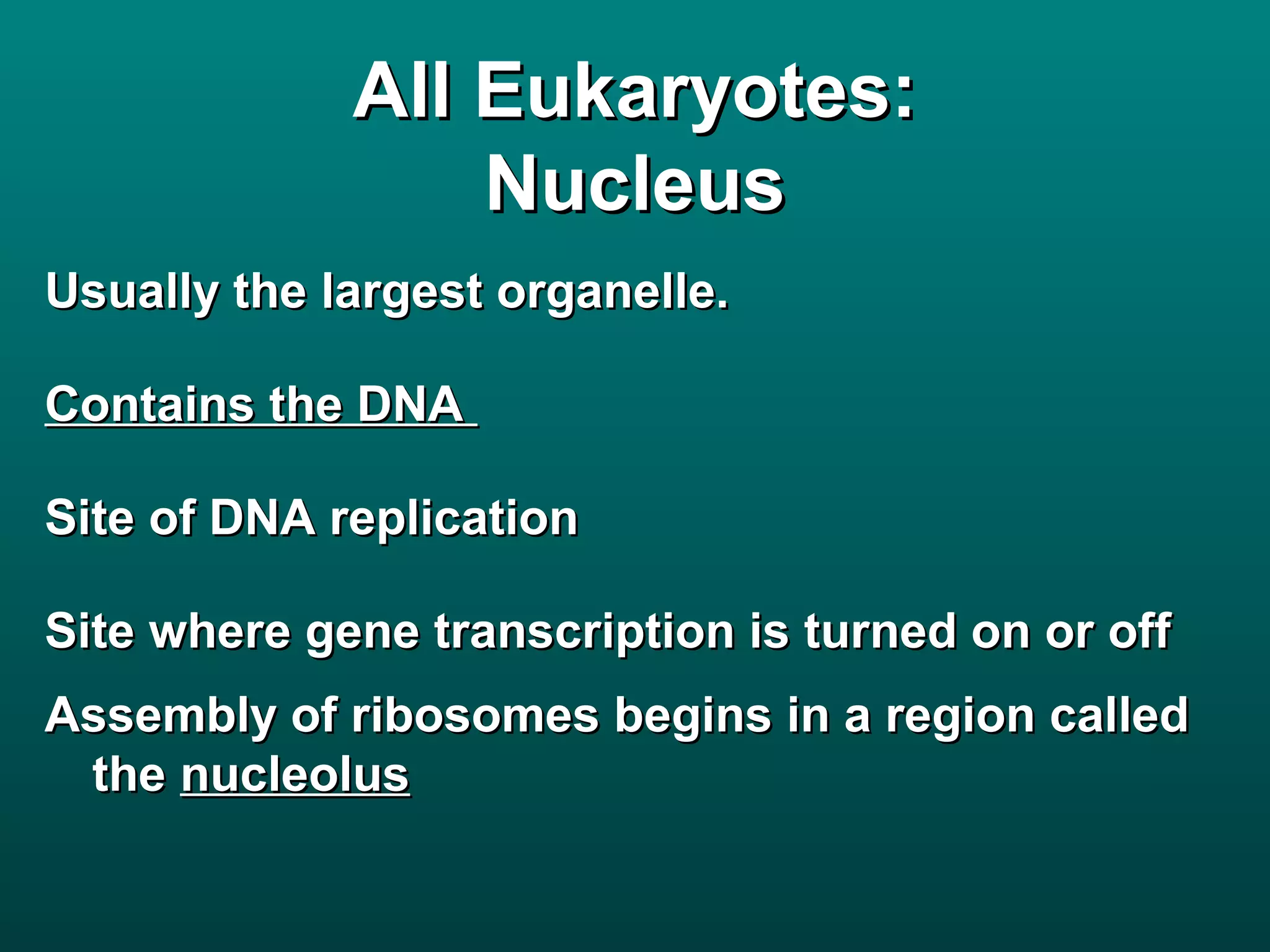
All Eukaryotes:
                 Nucleus
Usually the largest organelle.

Contains the DNA

Site of DNA replication

Site where gene transcription is turned on or off
Assembly of ribosomes begins in a region called
 the nucleolus
Nucleus
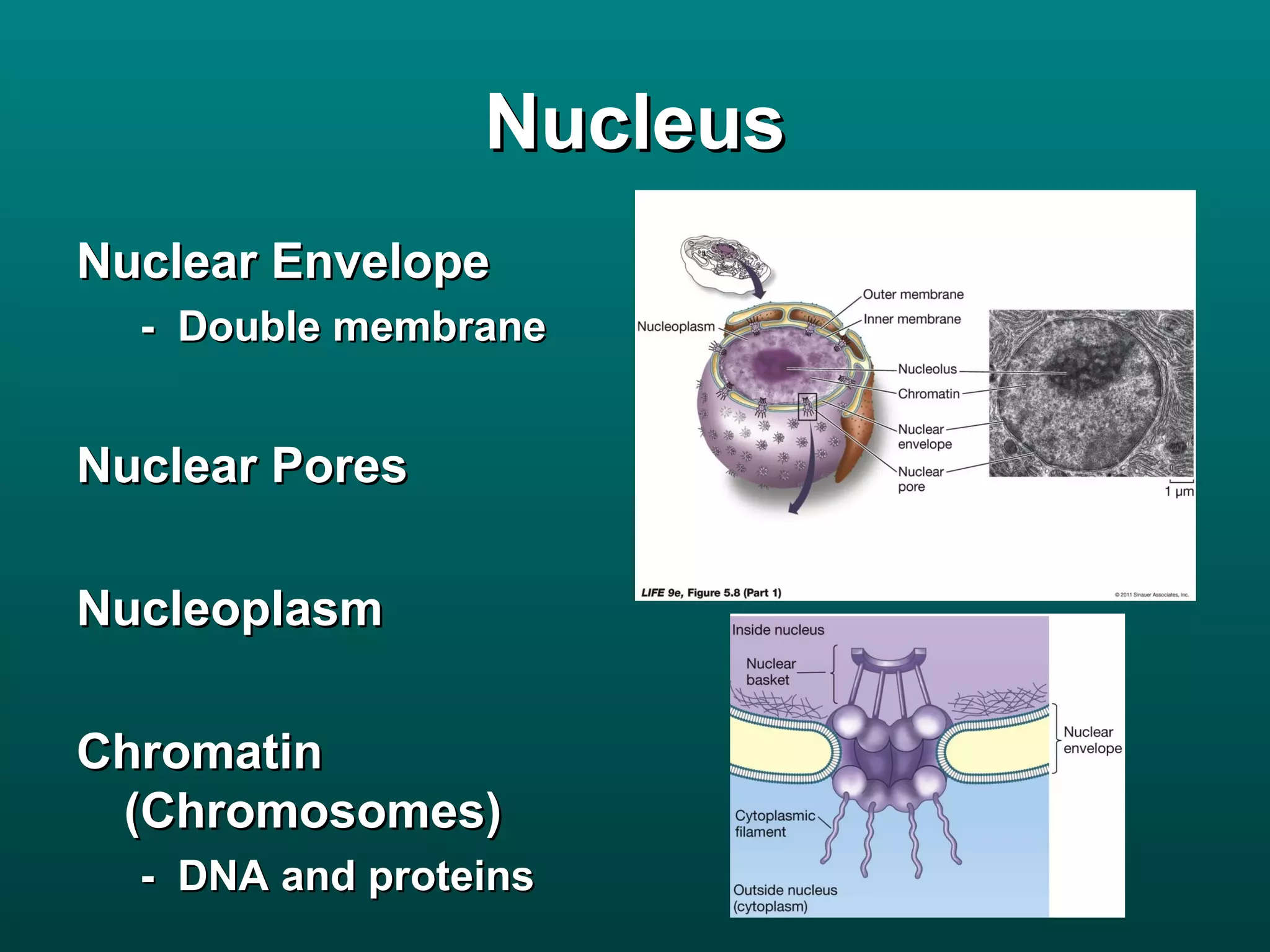
Nuclear Envelope
  - Double membrane


Nuclear Pores

Nucleoplasm

Chromatin
 (Chromosomes)
  - DNA and proteins
All Eukaryotes:
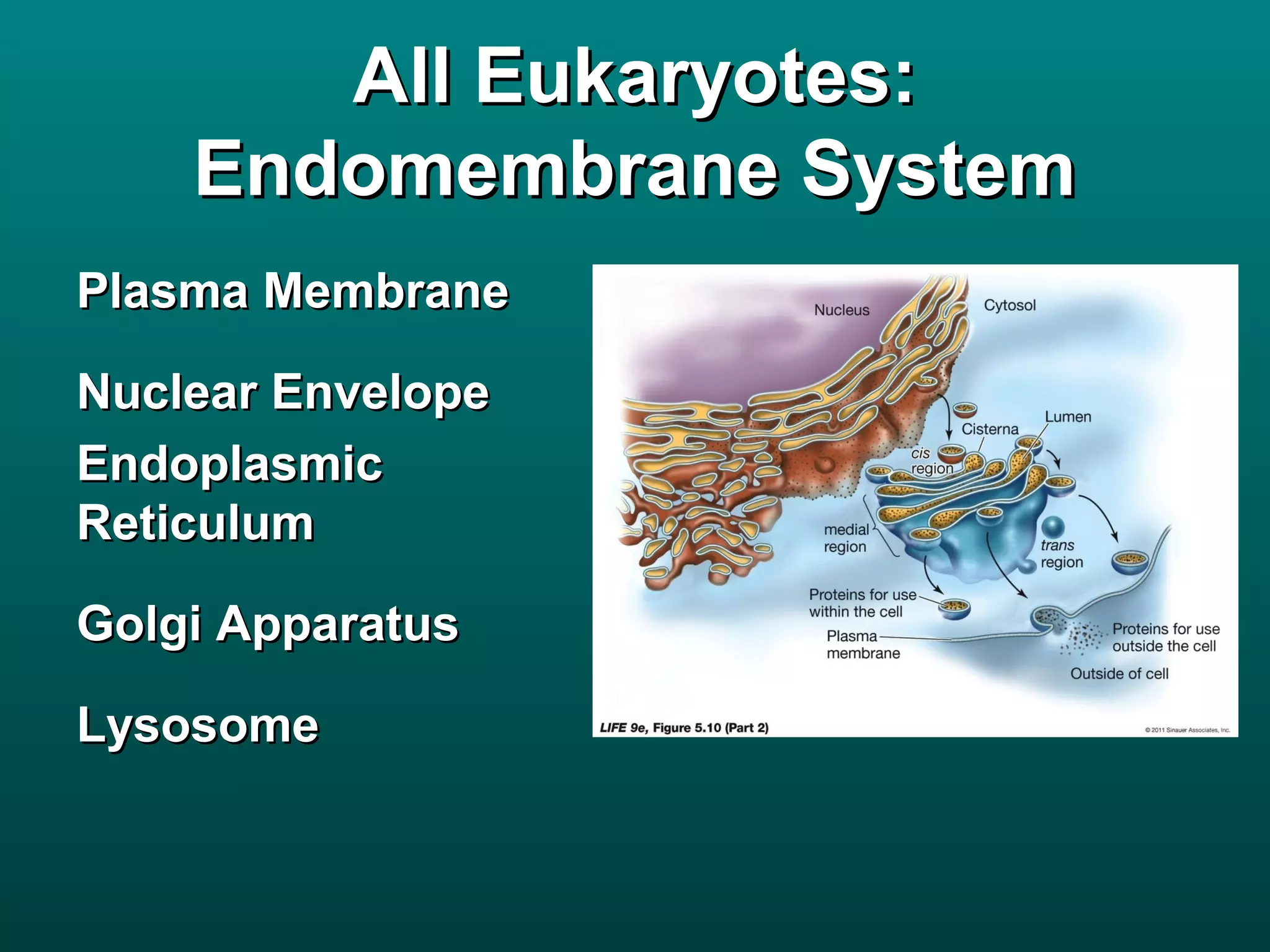
    Endomembrane System
Plasma Membrane

Nuclear Envelope
Endoplasmic
Reticulum

Golgi Apparatus

Lysosome
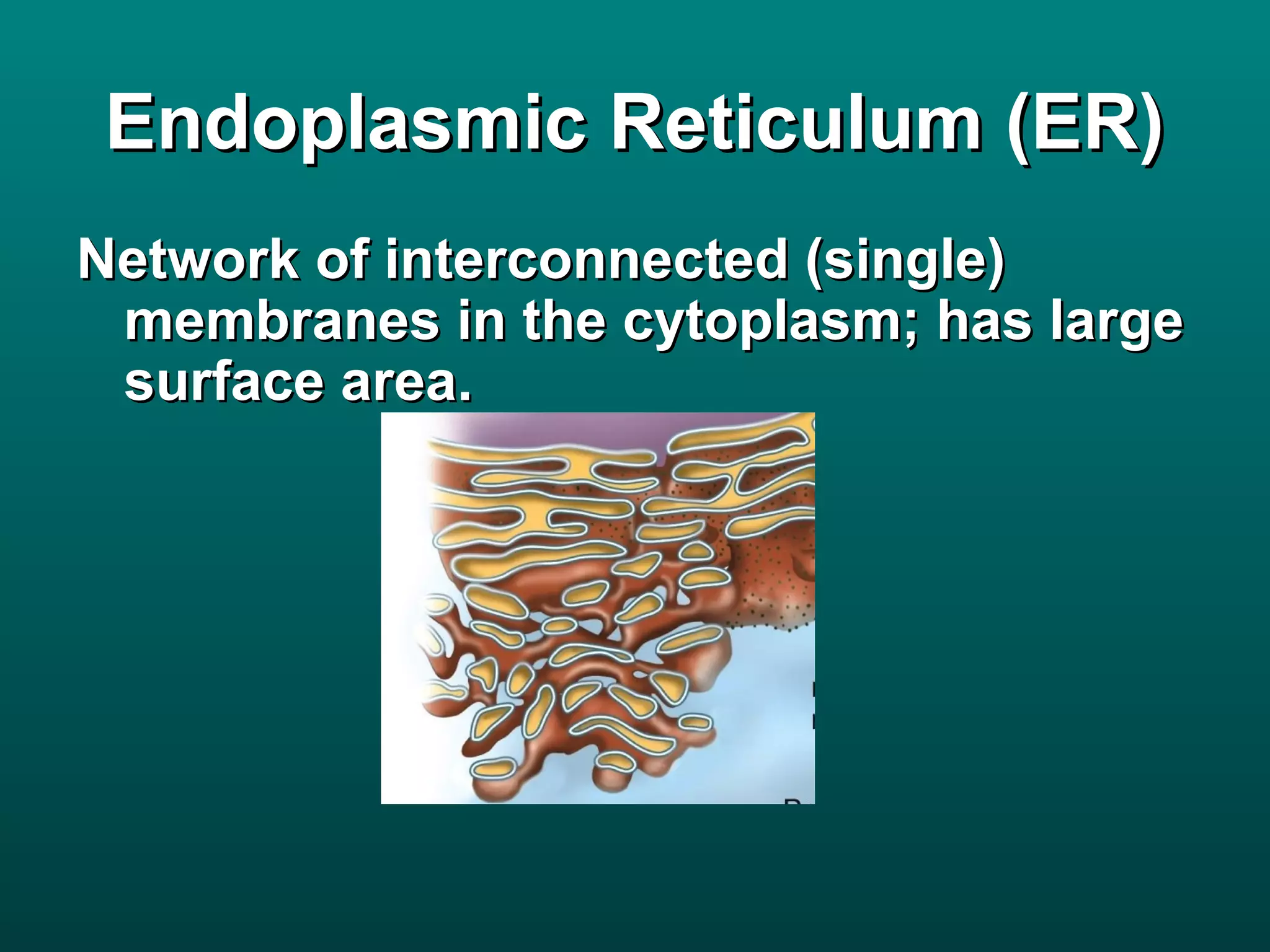
Endoplasmic Reticulum (ER)
Network of interconnected (single)
 membranes in the cytoplasm; has large
 surface area.
Rough ER (RER)
Ribosomes are attached.


Single Membrane


Newly made proteins enter the RER
 lumen where they are modified and
 folded.
Smooth ER (SER)

More tubular, no ribosomes
Chemically modifies small molecules
 such as drugs and pesticides

Hydrolysis of glycogen in animal cells

Synthesis of lipids and steroids
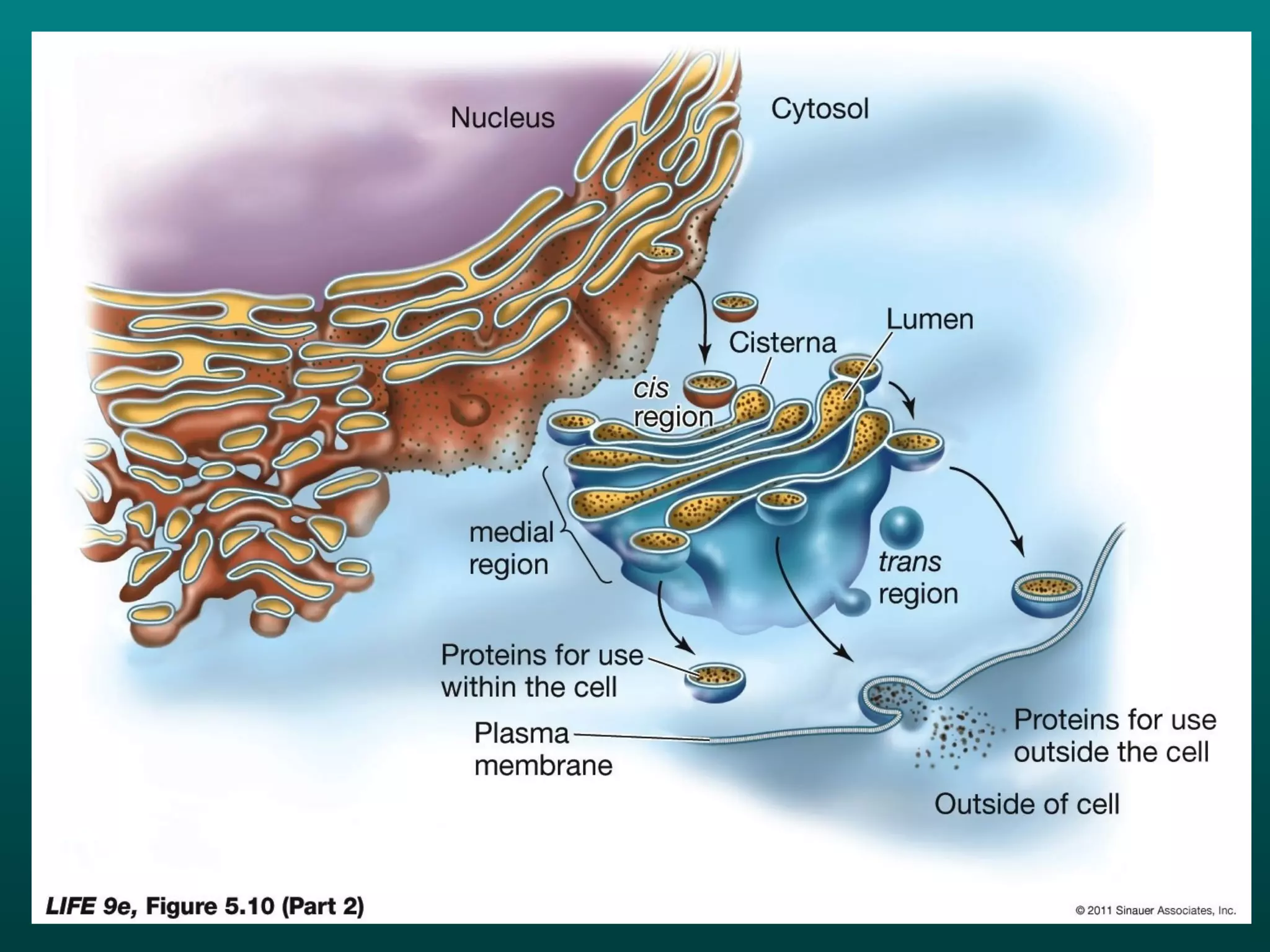
Golgi Apparatus
Composed of flattened sacs (cisternae)
 and small membrane-enclosed
 vesicles.
Receives proteins from the RER—can
 further modify them
Concentrates, packages, sorts proteins
In plant cells, polysaccharides for cell
  walls are synthesized here
How do Proteins get from one
   Organelle to Another?
Vesicles

Localization Sequences
Short (~20 a.a.) polypeptides linked to
the C or N terminous of a protein

Allow a protein to cross a specific type of
membrane
Lysosomes
Primary lysosomes originate from the
Golgi apparatus.
They contain digestive enzymes—
macromolecules are hydrolyzed into
monomers.
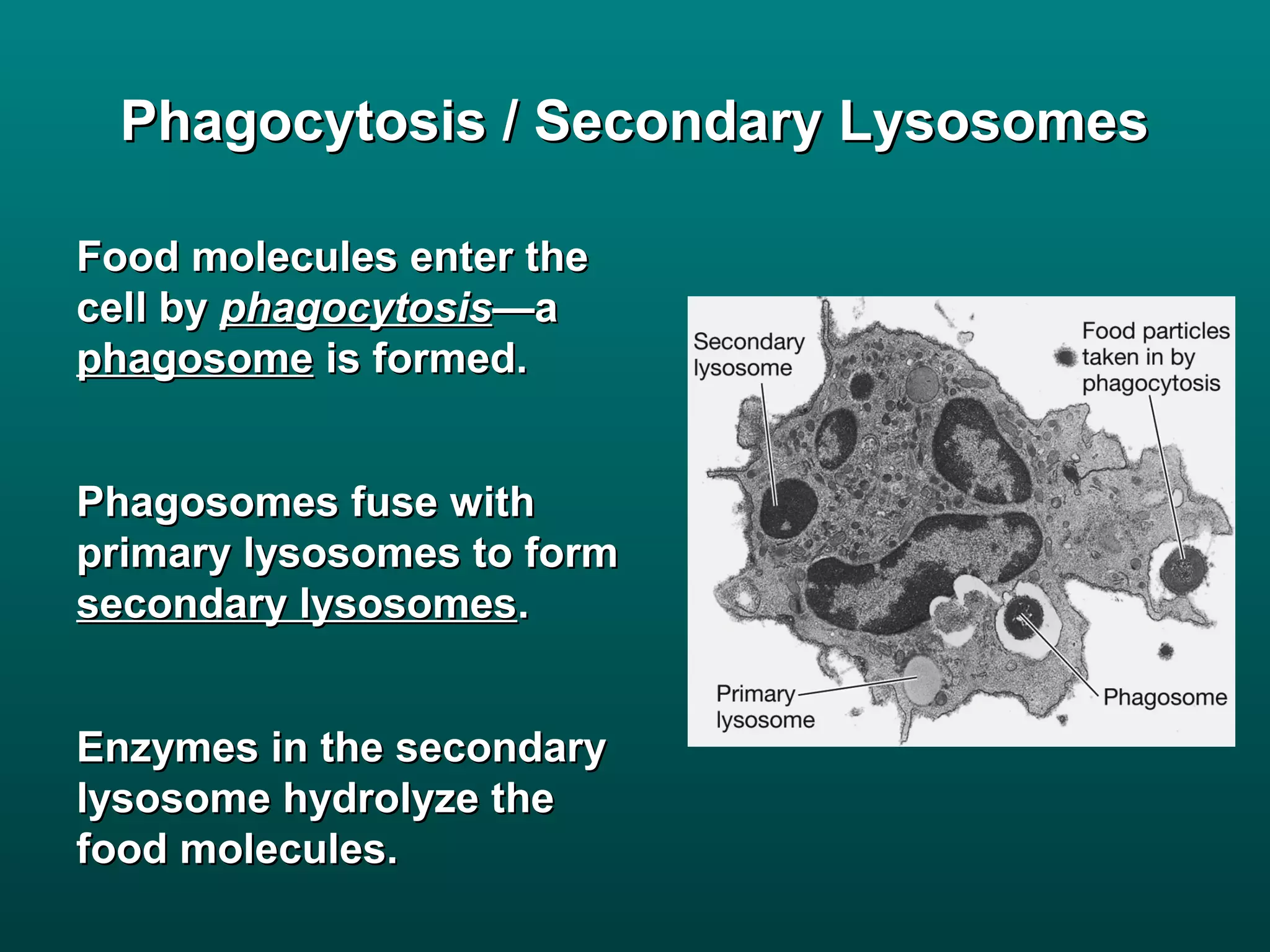
Phagocytosis / Secondary Lysosomes

Food molecules enter the
cell by phagocytosis—a
phagosome is formed.


Phagosomes fuse with
primary lysosomes to form
secondary lysosomes.


Enzymes in the secondary
lysosome hydrolyze the
food molecules.
All Eukaryotes:
             Mitochondria
Cellular Respiration
Convert potential energy of fuel molecules to
into a form the cell can use

Fuel Molecules + ADP + O2  Energy (ATP) + CO2


Most O2 in eukaryotic organisms is used up by
mitochondria
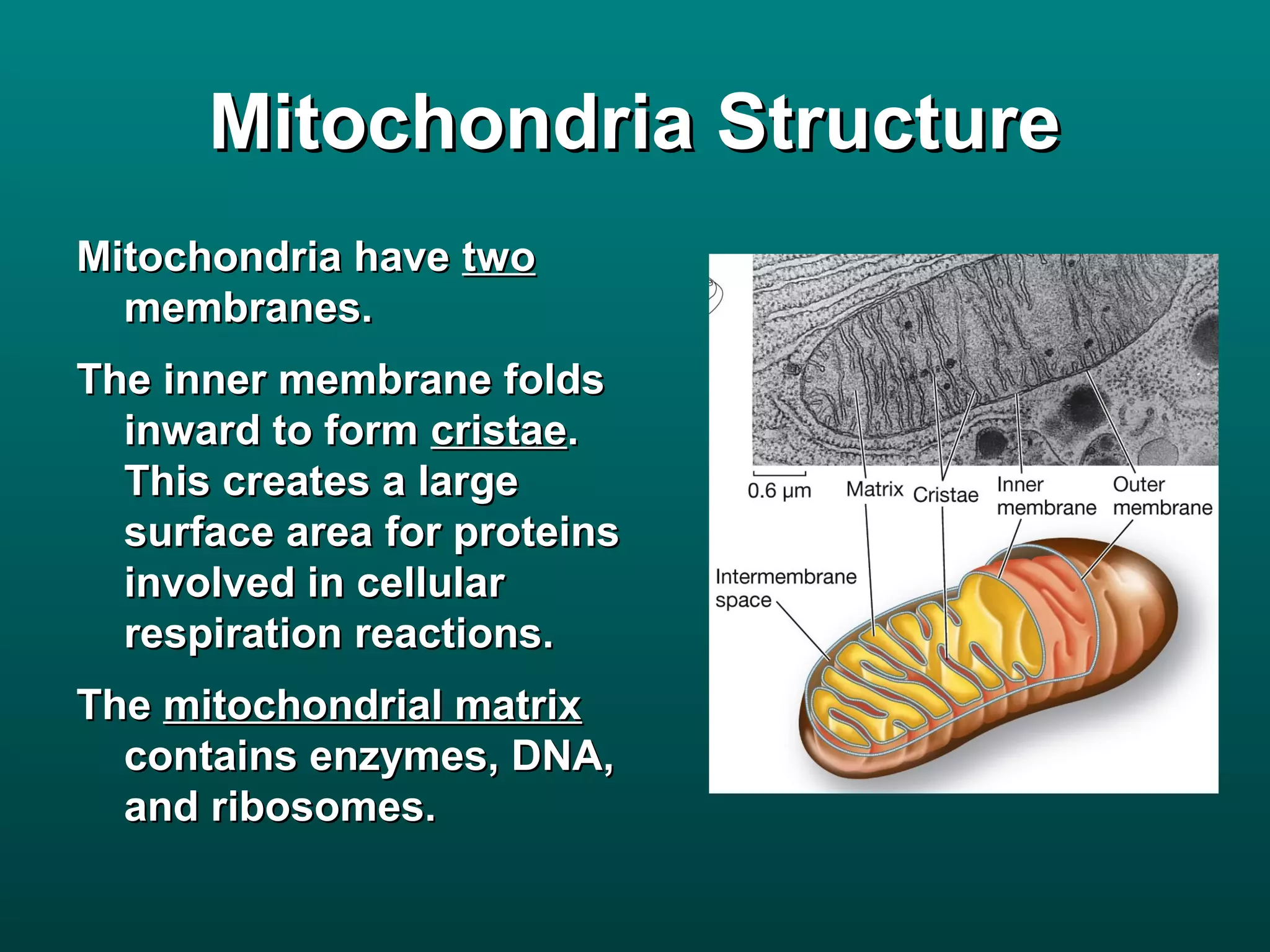
Mitochondria Structure
Mitochondria have two
  membranes.
The inner membrane folds
  inward to form cristae.
  This creates a large
  surface area for proteins
  involved in cellular
  respiration reactions.
The mitochondrial matrix
  contains enzymes, DNA,
  and ribosomes.
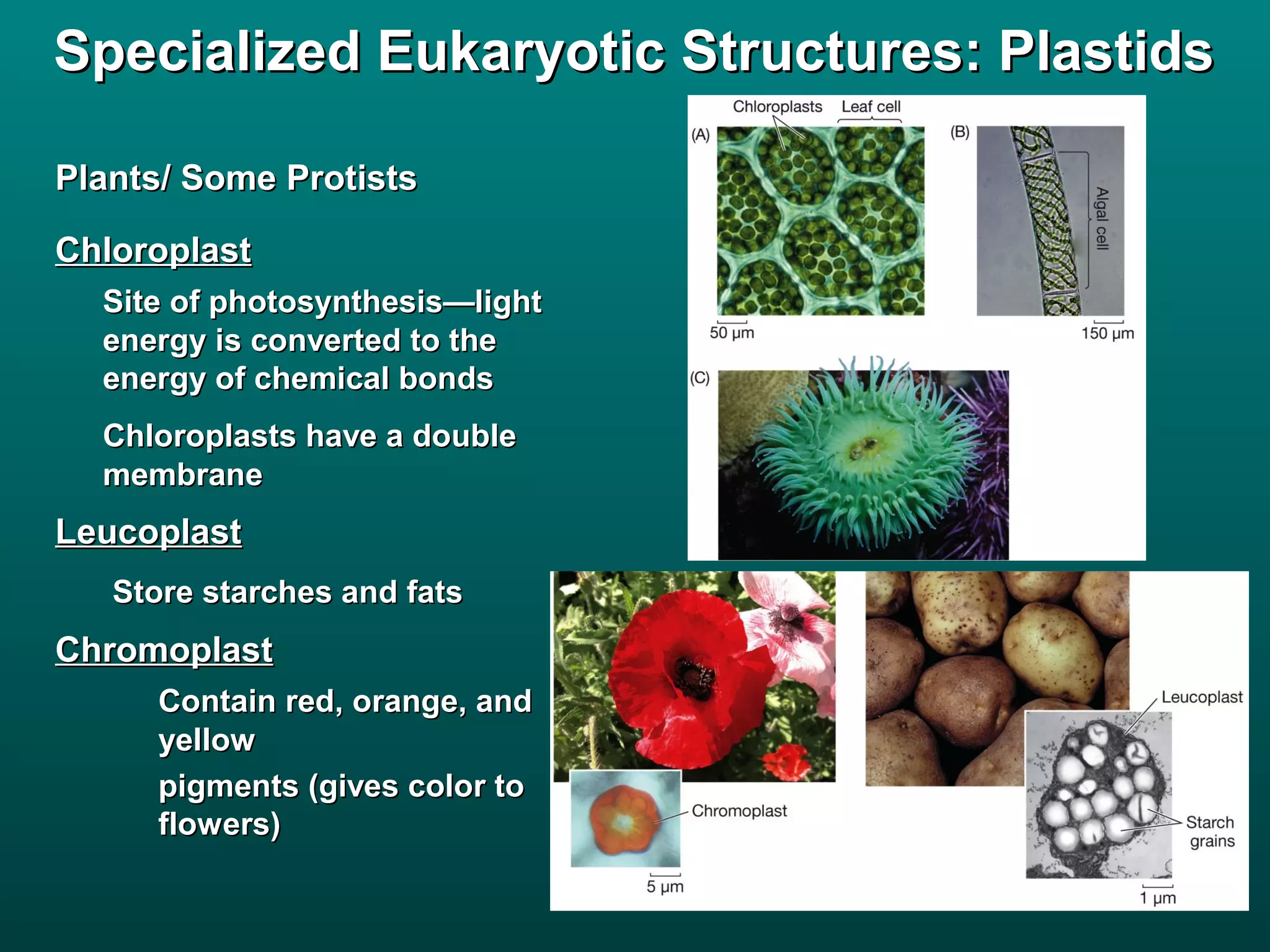
Specialized Eukaryotic Structures: Plastids

Plants/ Some Protists

Chloroplast
  Site of photosynthesis—light
  energy is converted to the
  energy of chemical bonds
  Chloroplasts have a double
  membrane
Leucoplast
   Store starches and fats
Chromoplast
     Contain red, orange, and
     yellow
     pigments (gives color to
     flowers)
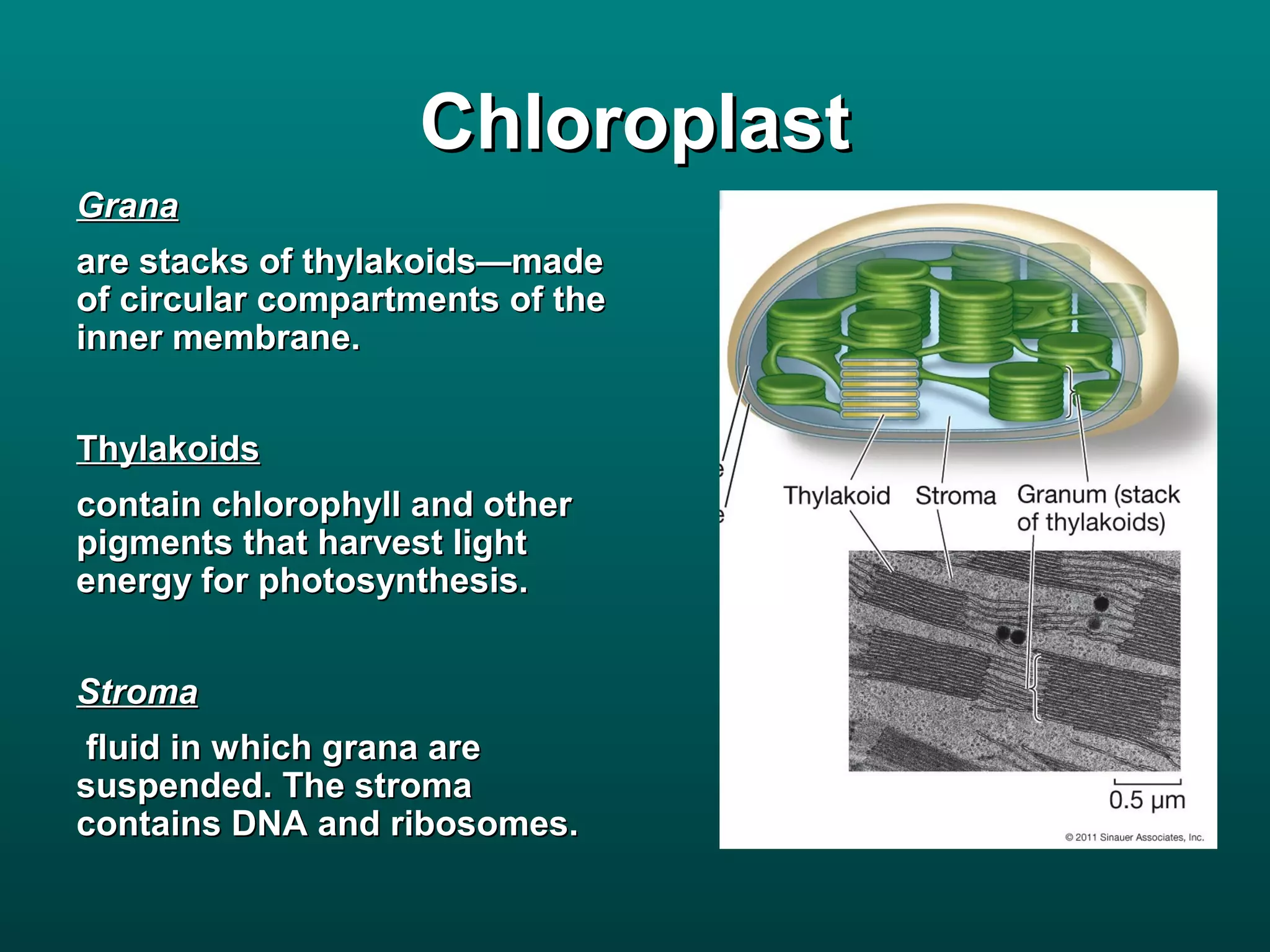
Chloroplast
Grana
are stacks of thylakoids—made
of circular compartments of the
inner membrane.


Thylakoids
contain chlorophyll and other
pigments that harvest light
energy for photosynthesis.


Stroma
fluid in which grana are
suspended. The stroma
contains DNA and ribosomes.
Specialized Eukaryotic Structures only
       found in Plants / Protists
Peroxisomes
Collect and break down toxic byproducts
of metabolism such as H2O2, using
specialized enzymes
Glyoxysomes
Only in plants—lipids are converted to
carbohydrates for growth
Specialized Eukaryotic Structures only
        found in Plants / Protists
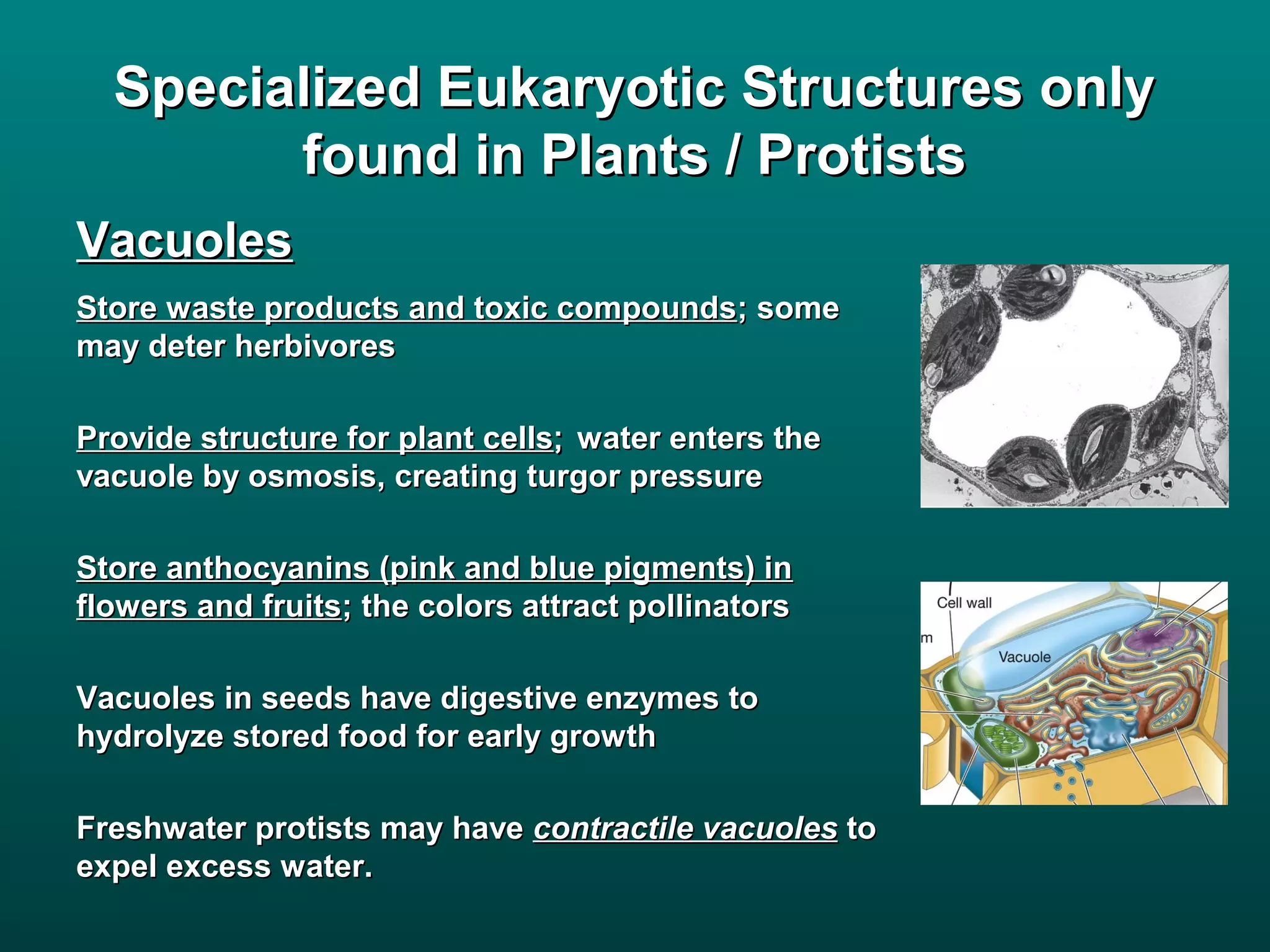
Vacuoles
Store waste products and toxic compounds; some
may deter herbivores

Provide structure for plant cells; water enters the
vacuole by osmosis, creating turgor pressure

Store anthocyanins (pink and blue pigments) in
flowers and fruits; the colors attract pollinators

Vacuoles in seeds have digestive enzymes to
hydrolyze stored food for early growth

Freshwater protists may have contractile vacuoles to
expel excess water.
Specialized Eukaryotic
  Structures: Cytoskeleton

Supports and maintains cell shape

Holds organelles in position

Moves organelles

Involved in cytoplasmic streaming
Interacts with extracellular structures to
hold cell in place
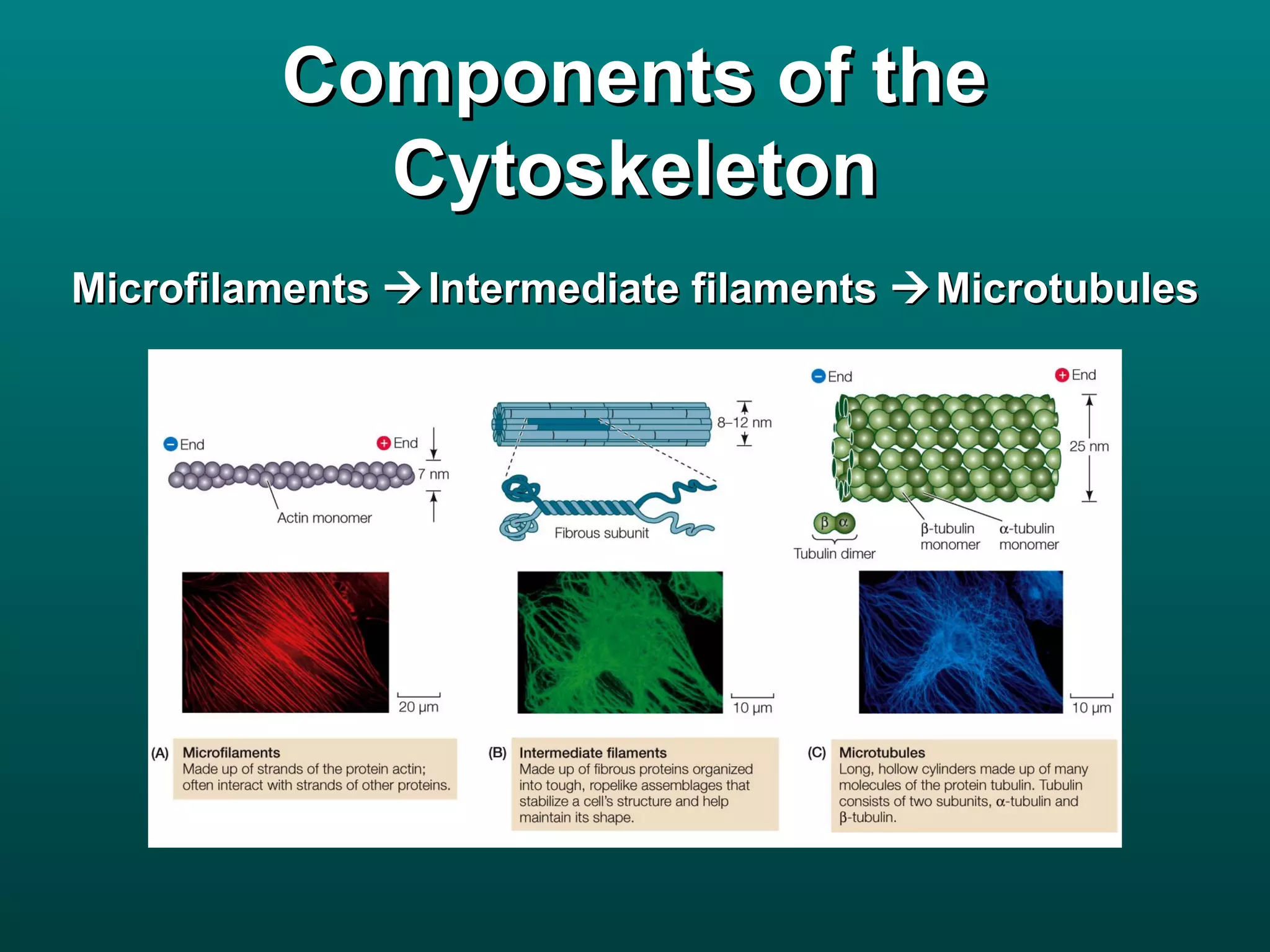
Components of the
            Cytoskeleton
Microfilaments  Intermediate filaments  Microtubules
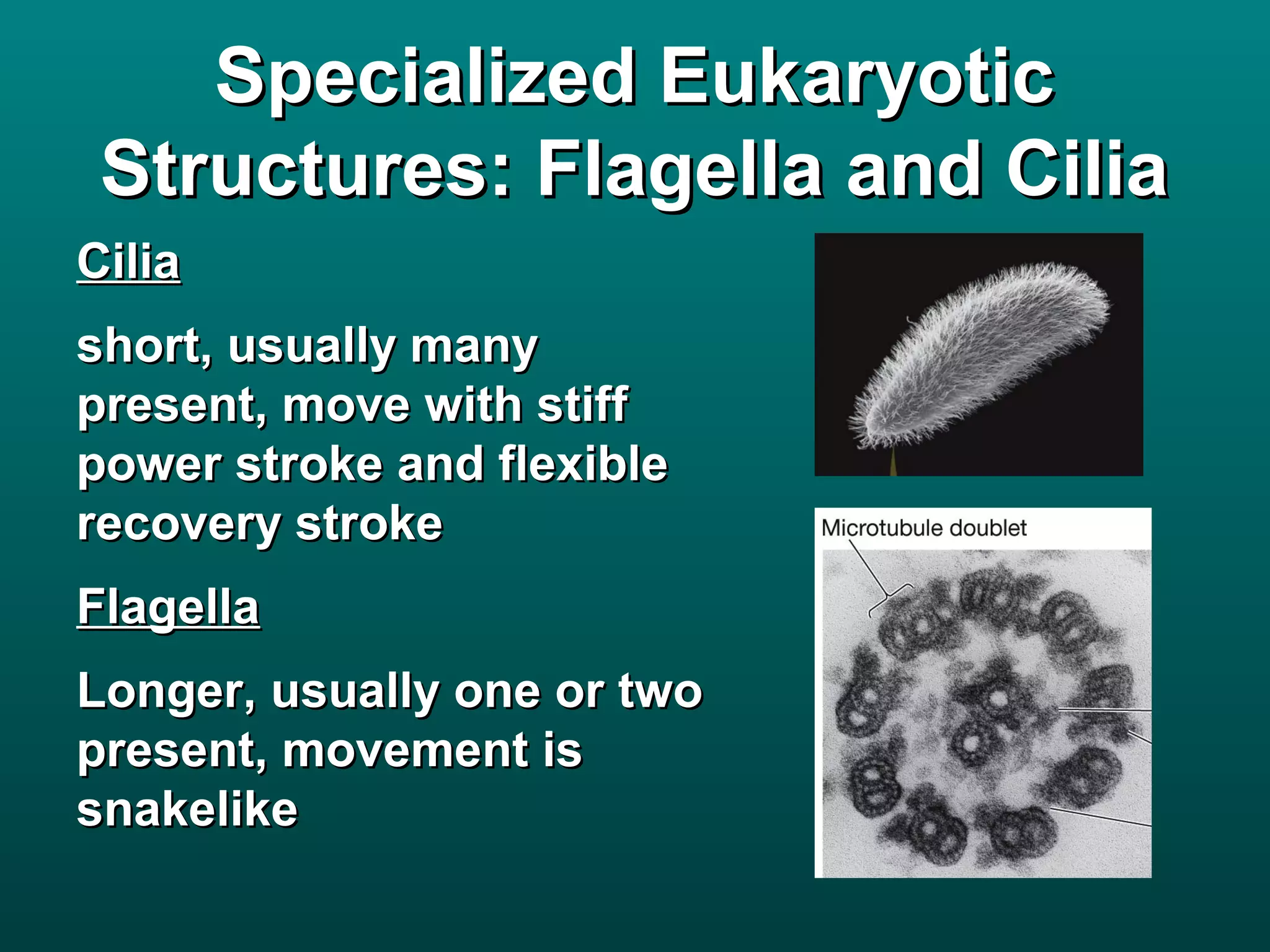
Specialized Eukaryotic
 Structures: Flagella and Cilia
Cilia
short, usually many
present, move with stiff
power stroke and flexible
recovery stroke
Flagella
Longer, usually one or two
present, movement is
snakelike
Extracellular Structures
Outside the Plasma Membrane

 Cell Walls (Plants/Protists)

 Extracellular Matrix (Animals)
Plant Cell Walls
Cellulose fibers are embedded in other
complex polysaccharides and proteins.


Adjacent plant cells are connected by
plasma membrane-lined channels called
plasmodesmata.
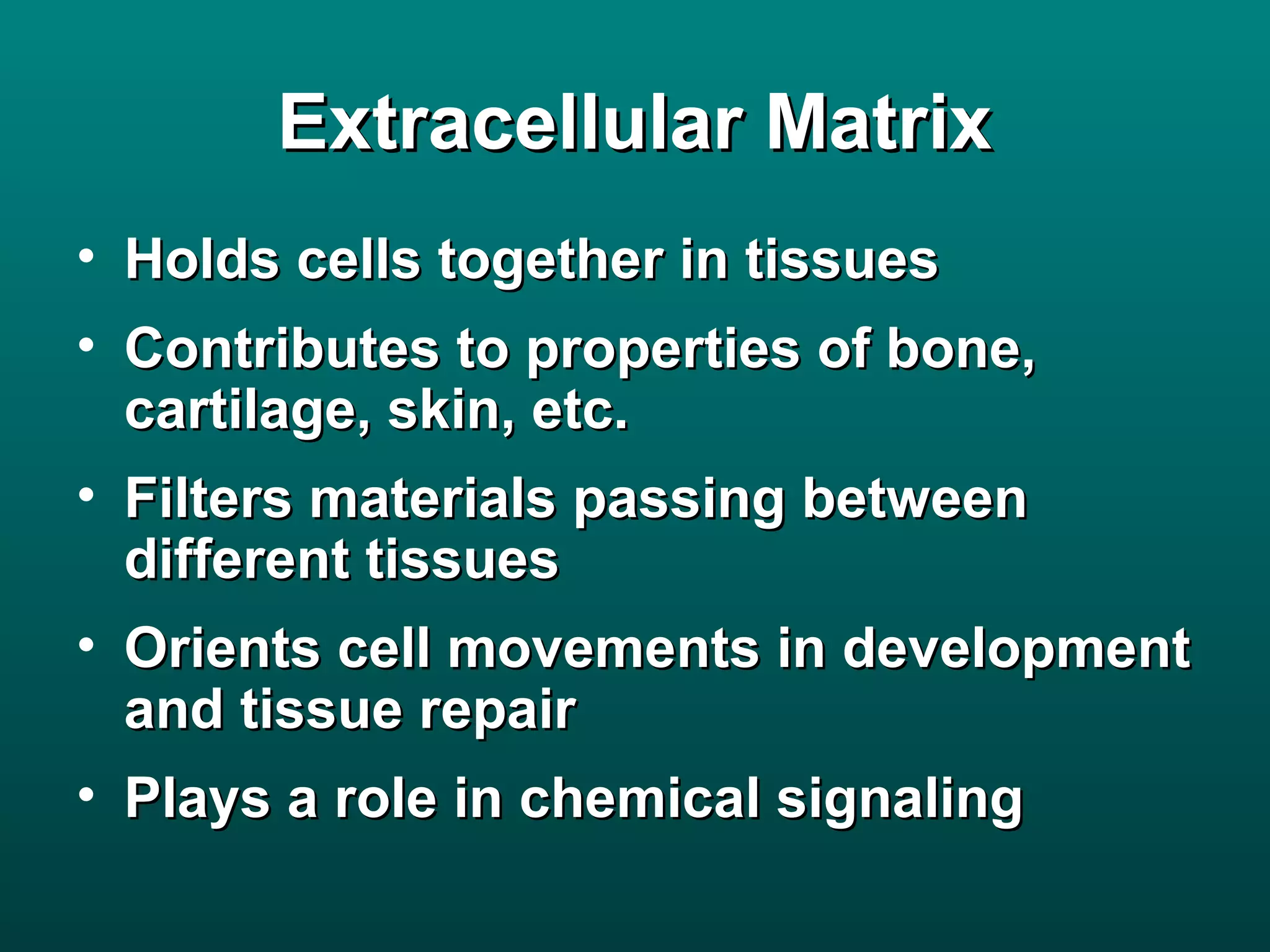
Extracellular Matrix
Composed of fibrous proteins such as
collagen, gel- like glycoproteins, and other
proteins.
Extracellular Matrix
• Holds cells together in tissues
• Contributes to properties of bone,
  cartilage, skin, etc.
• Filters materials passing between
  different tissues
• Orients cell movements in development
  and tissue repair
• Plays a role in chemical signaling

Chapter 5

  • 1.
  • 2.
    Cells Cells are small (mostly) Exceptions:Bird eggs, neurons, some algae, and bacteria cells
  • 3.
    Why are CellsSmall? Cells are small because a high surface area-to- volume ratio is essential. Volume determines the amount of chemical activity in the cell per unit time. Surface area determines the amount of substances that can pass the cell boundary per unit time.
  • 4.
    As the CellGets Larger the SA:V Ratio Decreases
  • 5.
    Plasma Membrane (Chapter6) The plasma membrane is the outer surface of every cell, and has more or less the same structure in all cells. It is made of a phospholipid bilayer with proteins and other molecules embedded.
  • 6.
    Two Types ofCells Prokaryotic and Eukaryotic Bacteria and Archaea are prokaryotes. Eukarya are eukayotes.
  • 7.
    Prokaryotes Very small Individuals aresingle cells, but often found in chains or clusters. Prokaryotes are very successful—they can live on a diversity of energy sources Image Credit--JEFF JOHNSON Hybrid Medical Animation and some can tolerate extreme conditions.
  • 8.
    All Prokaryotes: Are enclosedby a plasma membrane The DNA is contained in the nucleoid Cytoplasm consists of cytosol (water and dissolved material) and suspended particles Ribosomes— sites of protein synthesis (Free)
  • 9.
    Specialized Prokaryotic Structures Rigid cell wall outside the plasma membrane. Some bacteria have an additional outer membrane. Some bacteria have a slimy capsule of polysaccharides.
  • 10.
    Specialized Prokaryotic Structures Inner Membrane Photosynthesis Other Energy- Related Functions Usually Highly Folded WHY?
  • 11.
    Specialized Prokaryotic Structures Flagella Used for Movement Flagella move like a “cork-screw” Pili Hairlike structures Food/ Protection/ Mating (sex pili)/ Adhere to Cells Cytoskeleton Some rod-shaped bacteria have a cytoskeleton made of the protein actin.
  • 12.
    Eukaryotes Eukaryotic cells areup to ten times larger than prokaryotes. Eukaryotic cells have membrane-enclosed compartments called organelles. Each organelle has a specific role in cell functioning. Compartmentalization allowed eukaryotic cells to specialize and form the tissues and organs of multicellular organisms.
  • 13.
  • 14.
  • 15.
    All Eukaryotes: Plasma Membrane Cytoplasm/Cytosol Ribisomes Ribosomes consist of ribosomal RNA (rRNA) and more than 50 different protein molecules. “Free” or “Bound” Ribosomes
  • 16.
    All Eukaryotes: Nucleus Usually the largest organelle. Contains the DNA Site of DNA replication Site where gene transcription is turned on or off Assembly of ribosomes begins in a region called the nucleolus
  • 17.
    Nucleus Nuclear Envelope - Double membrane Nuclear Pores Nucleoplasm Chromatin (Chromosomes) - DNA and proteins
  • 18.
    All Eukaryotes: Endomembrane System Plasma Membrane Nuclear Envelope Endoplasmic Reticulum Golgi Apparatus Lysosome
  • 19.
    Endoplasmic Reticulum (ER) Networkof interconnected (single) membranes in the cytoplasm; has large surface area.
  • 20.
    Rough ER (RER) Ribosomesare attached. Single Membrane Newly made proteins enter the RER lumen where they are modified and folded.
  • 21.
    Smooth ER (SER) Moretubular, no ribosomes Chemically modifies small molecules such as drugs and pesticides Hydrolysis of glycogen in animal cells Synthesis of lipids and steroids
  • 22.
    Golgi Apparatus Composed offlattened sacs (cisternae) and small membrane-enclosed vesicles. Receives proteins from the RER—can further modify them Concentrates, packages, sorts proteins In plant cells, polysaccharides for cell walls are synthesized here
  • 24.
    How do Proteinsget from one Organelle to Another? Vesicles Localization Sequences Short (~20 a.a.) polypeptides linked to the C or N terminous of a protein Allow a protein to cross a specific type of membrane
  • 25.
    Lysosomes Primary lysosomes originatefrom the Golgi apparatus. They contain digestive enzymes— macromolecules are hydrolyzed into monomers.
  • 26.
    Phagocytosis / SecondaryLysosomes Food molecules enter the cell by phagocytosis—a phagosome is formed. Phagosomes fuse with primary lysosomes to form secondary lysosomes. Enzymes in the secondary lysosome hydrolyze the food molecules.
  • 27.
    All Eukaryotes: Mitochondria Cellular Respiration Convert potential energy of fuel molecules to into a form the cell can use Fuel Molecules + ADP + O2  Energy (ATP) + CO2 Most O2 in eukaryotic organisms is used up by mitochondria
  • 28.
    Mitochondria Structure Mitochondria havetwo membranes. The inner membrane folds inward to form cristae. This creates a large surface area for proteins involved in cellular respiration reactions. The mitochondrial matrix contains enzymes, DNA, and ribosomes.
  • 29.
    Specialized Eukaryotic Structures:Plastids Plants/ Some Protists Chloroplast Site of photosynthesis—light energy is converted to the energy of chemical bonds Chloroplasts have a double membrane Leucoplast Store starches and fats Chromoplast Contain red, orange, and yellow pigments (gives color to flowers)
  • 30.
    Chloroplast Grana are stacks ofthylakoids—made of circular compartments of the inner membrane. Thylakoids contain chlorophyll and other pigments that harvest light energy for photosynthesis. Stroma fluid in which grana are suspended. The stroma contains DNA and ribosomes.
  • 31.
    Specialized Eukaryotic Structuresonly found in Plants / Protists Peroxisomes Collect and break down toxic byproducts of metabolism such as H2O2, using specialized enzymes Glyoxysomes Only in plants—lipids are converted to carbohydrates for growth
  • 32.
    Specialized Eukaryotic Structuresonly found in Plants / Protists Vacuoles Store waste products and toxic compounds; some may deter herbivores Provide structure for plant cells; water enters the vacuole by osmosis, creating turgor pressure Store anthocyanins (pink and blue pigments) in flowers and fruits; the colors attract pollinators Vacuoles in seeds have digestive enzymes to hydrolyze stored food for early growth Freshwater protists may have contractile vacuoles to expel excess water.
  • 33.
    Specialized Eukaryotic Structures: Cytoskeleton Supports and maintains cell shape Holds organelles in position Moves organelles Involved in cytoplasmic streaming Interacts with extracellular structures to hold cell in place
  • 34.
    Components of the Cytoskeleton Microfilaments  Intermediate filaments  Microtubules
  • 35.
    Specialized Eukaryotic Structures:Flagella and Cilia Cilia short, usually many present, move with stiff power stroke and flexible recovery stroke Flagella Longer, usually one or two present, movement is snakelike
  • 36.
    Extracellular Structures Outside thePlasma Membrane Cell Walls (Plants/Protists) Extracellular Matrix (Animals)
  • 37.
    Plant Cell Walls Cellulosefibers are embedded in other complex polysaccharides and proteins. Adjacent plant cells are connected by plasma membrane-lined channels called plasmodesmata.
  • 38.
    Extracellular Matrix Composed offibrous proteins such as collagen, gel- like glycoproteins, and other proteins.
  • 39.
    Extracellular Matrix • Holdscells together in tissues • Contributes to properties of bone, cartilage, skin, etc. • Filters materials passing between different tissues • Orients cell movements in development and tissue repair • Plays a role in chemical signaling