Fundamentals of Biology 1
      BSC1010C
       Dr. Rick Dexter
Introduction

•   Syllabus
•   Blackboard
•   Study and Test Taking Techniques
•   Lab Safety
•   Safety Procedures
•   Begin Chapter 1
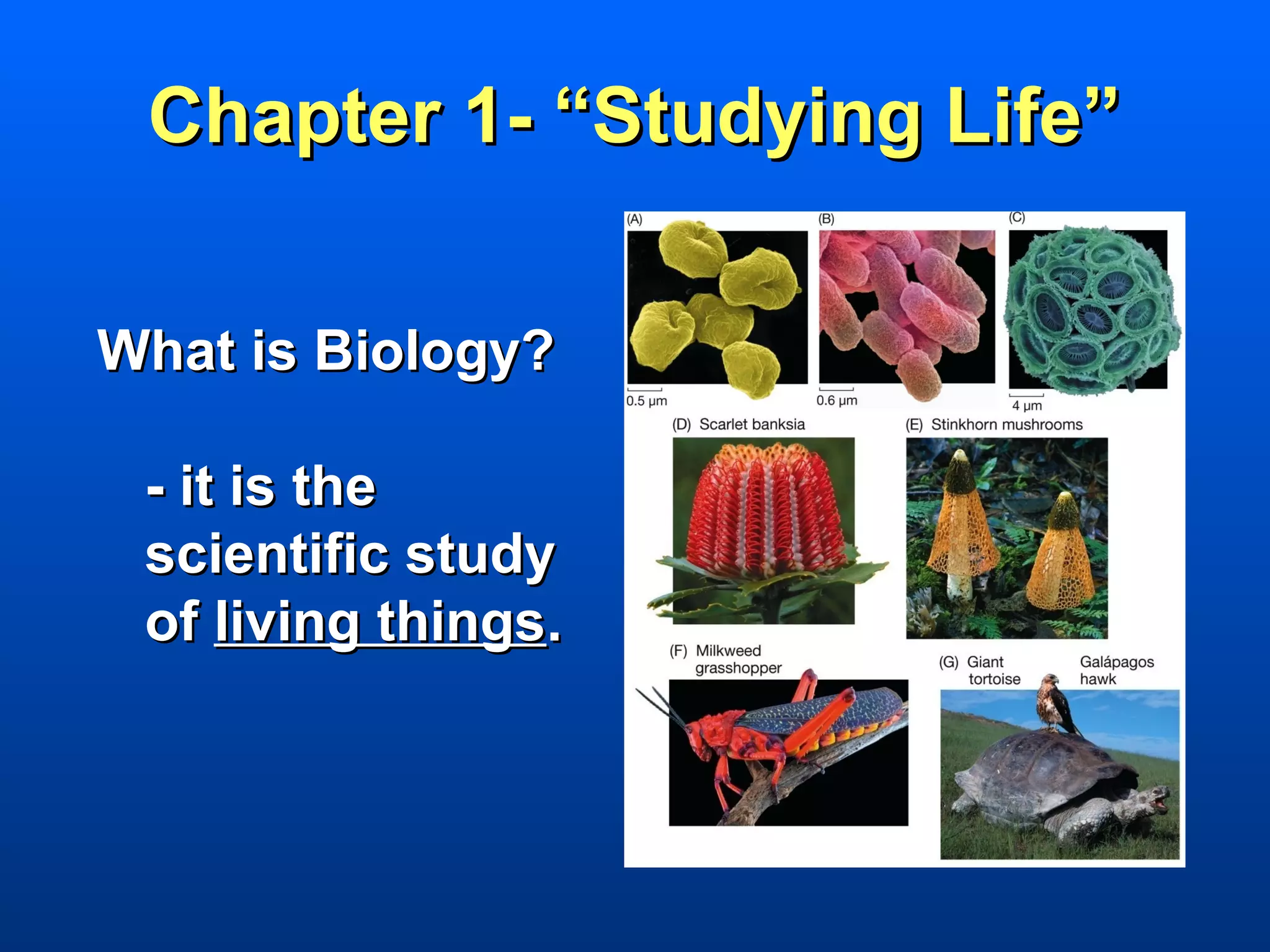
Chapter 1- “Studying Life”

What is Biology?

 - it is the
 scientific study
 of living things.
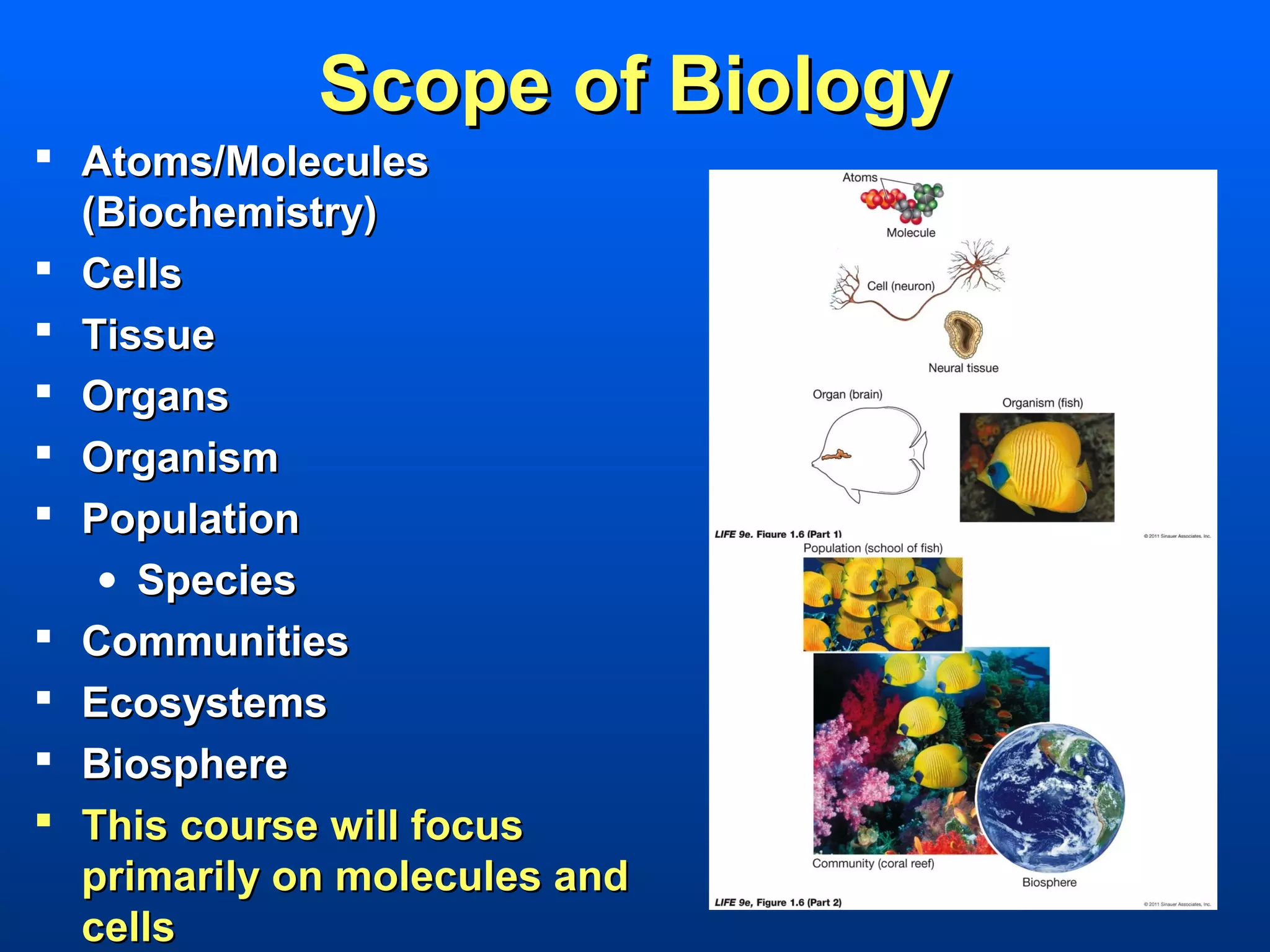
Scope of Biology
 Atoms/Molecules
  (Biochemistry)
 Cells
 Tissue
 Organs
 Organism
 Population
   • Species
 Communities
 Ecosystems
 Biosphere
 This course will focus
  primarily on molecules and
  cells
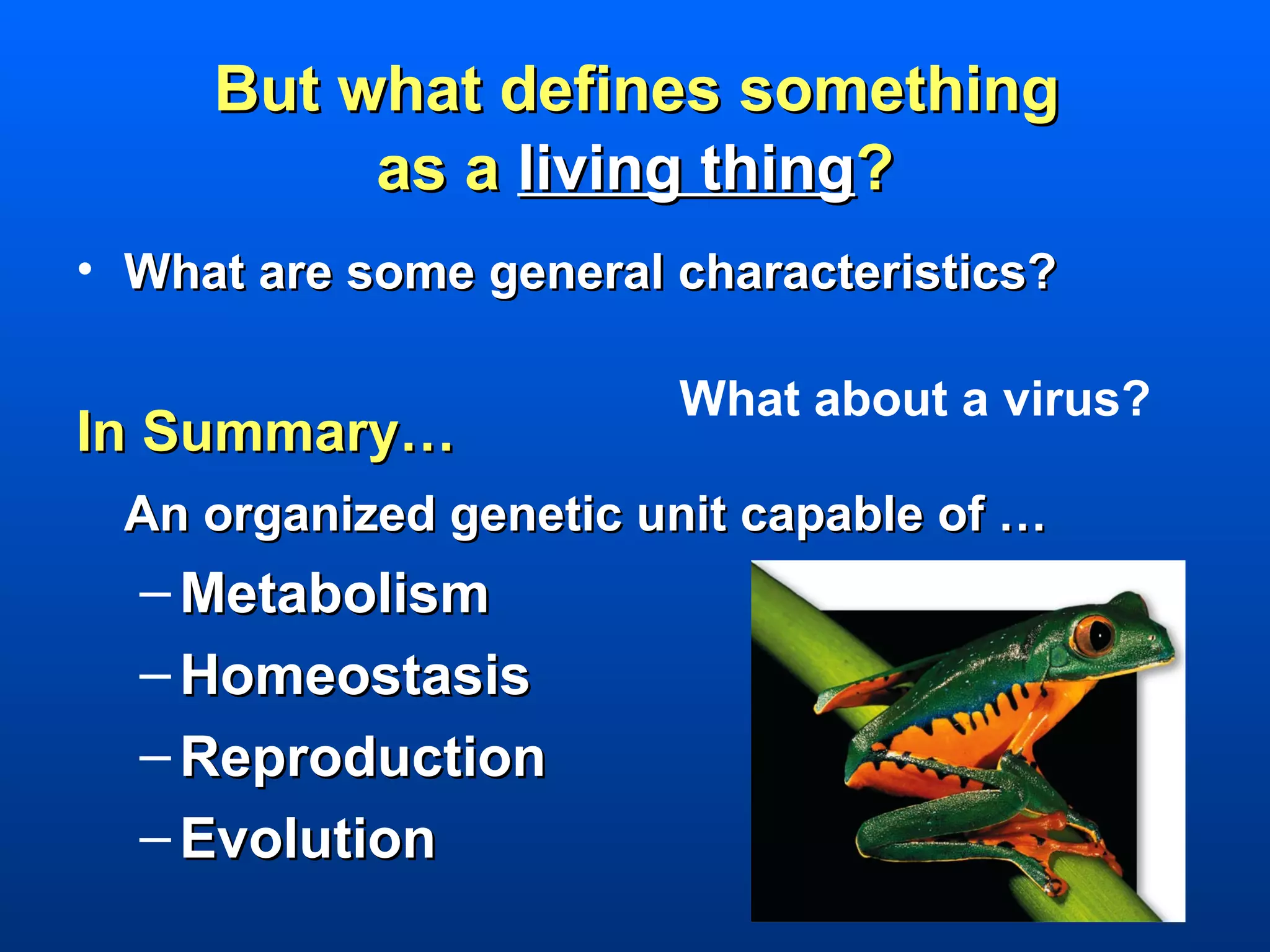
But what defines something
          as a living thing?
• What are some general characteristics?

                        What about a virus?
In Summary…
 An organized genetic unit capable of …
  – Metabolism
  – Homeostasis
  – Reproduction
  – Evolution
Discovery of the Microscope
The study of cells was made
 possible by the invention of
 microscopes.


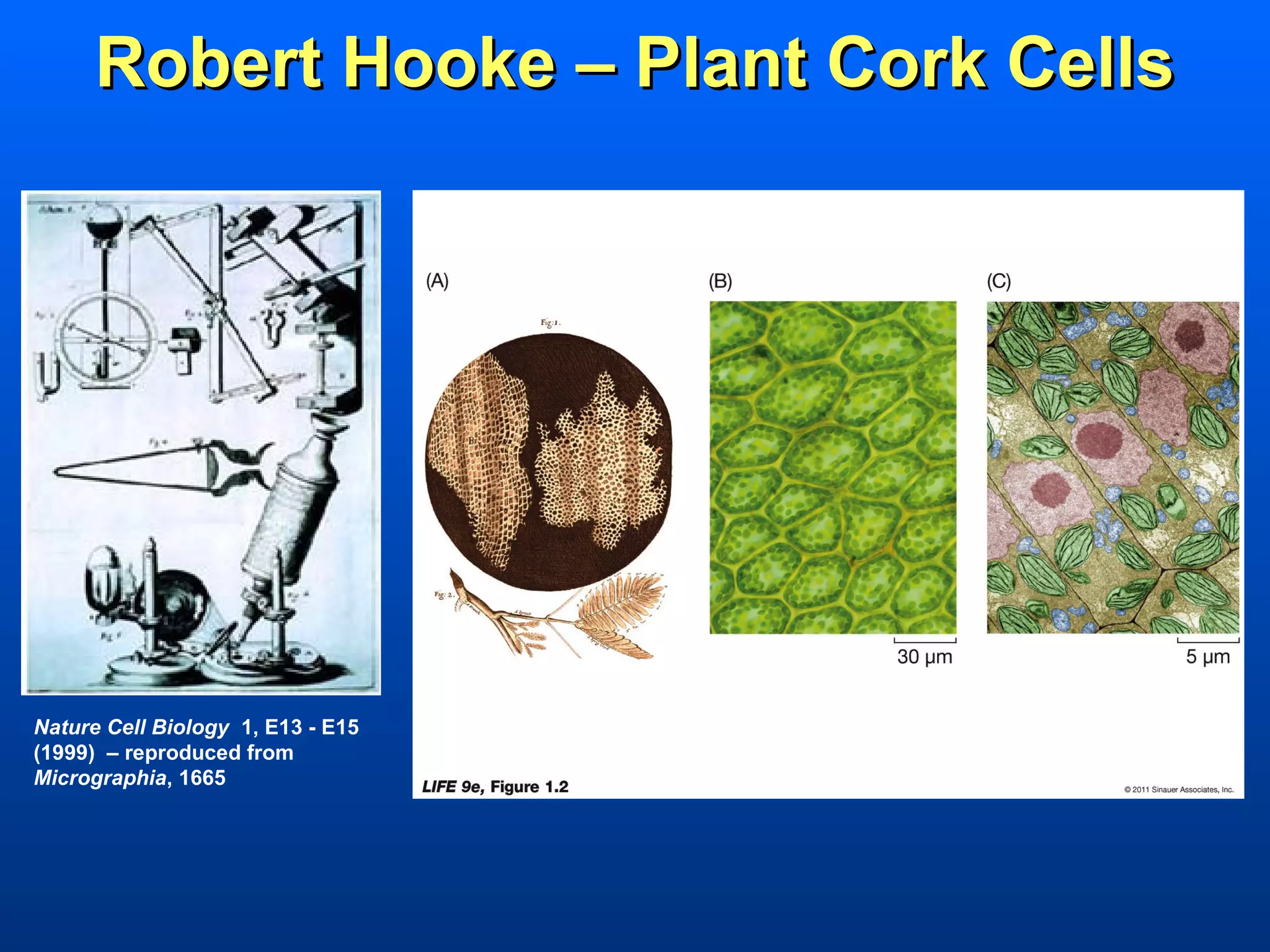
Robert Hooke in the 1600s described
 repeating units of plant material as
 cells.
Robert Hooke – Plant Cork Cells


Nature Cell Biology 1, E13 - E15
(1999) – reproduced from
Micrographia, 1665
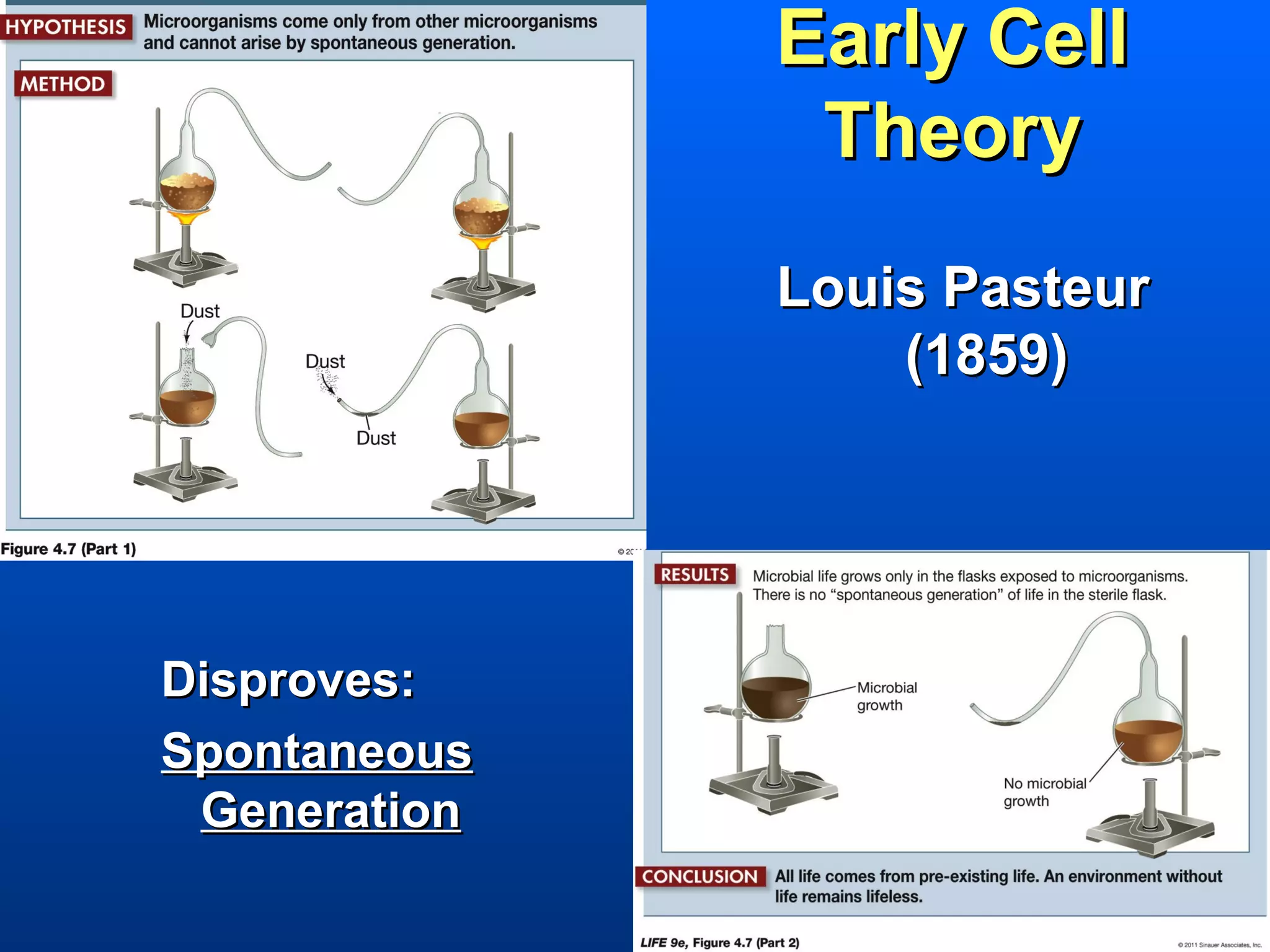
Early Cell
               Theory
              Louis Pasteur
                  (1859)


Disproves:
Spontaneous
 Generation
Modern Cell Theory
• All cells come from preexisting cells.
• All cells are similar in chemical
  composition.
• Most of the chemical reactions of life
  occur within cells.
• Complete sets of genetic information
  are replicated and passed on during
  cell division.
Evolution
Change in the genetic makeup of
 biological populations through time.


Charles Darwin (1859) proposed that all
 living organisms are descended from a
 common ancestor by the mechanism of
 natural selection.
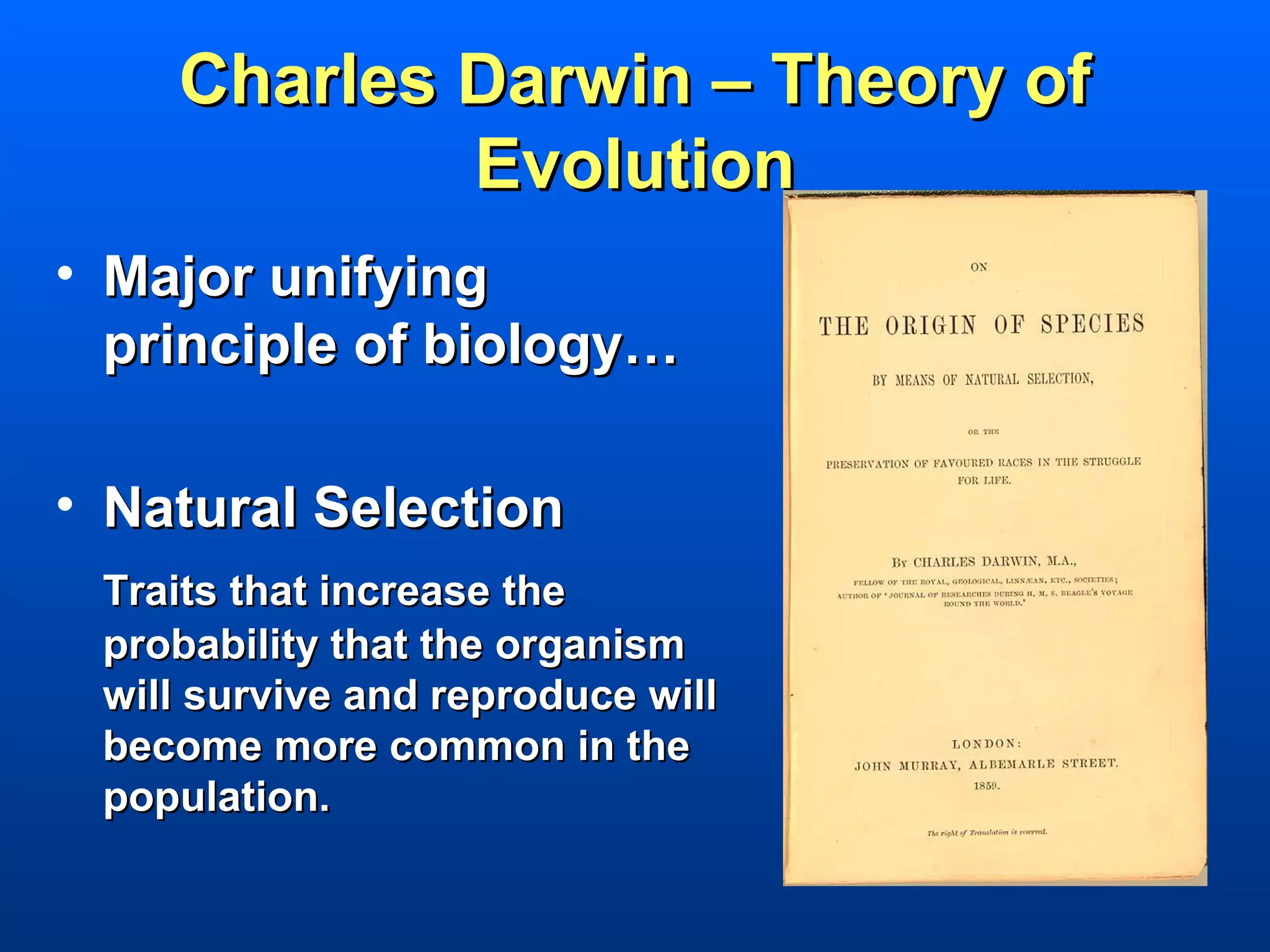
Charles Darwin – Theory of
            Evolution
• Major unifying
  principle of biology…

• Natural Selection
 Traits that increase the
 probability that the organism
 will survive and reproduce will
 become more common in the
 population.
So how does Natural
      Selection Work?
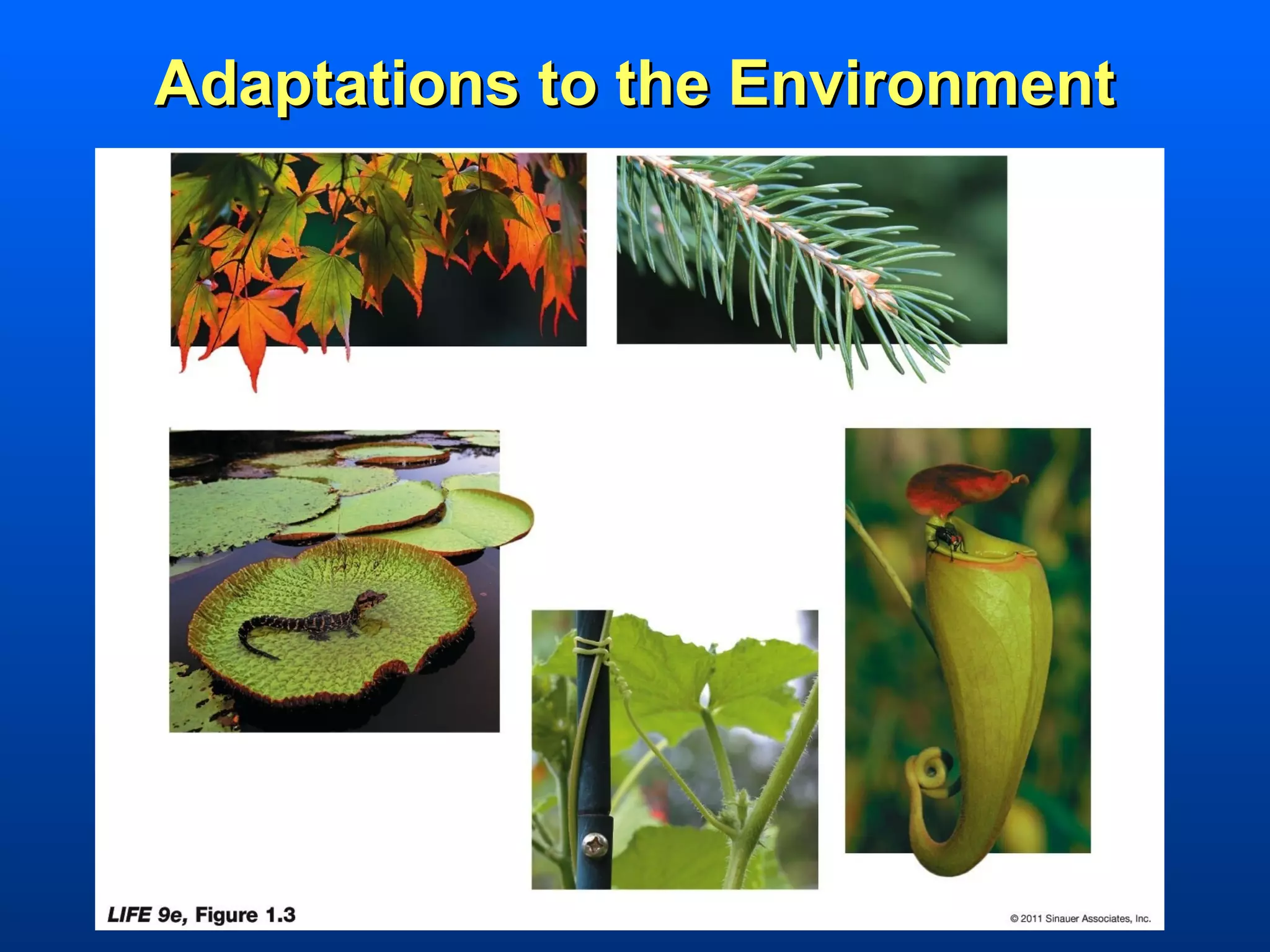
Within a Species, Variation in traits
due to Genetic Mutation gives rise
to individuals with higher
“Fitness”. Natural Selection is a
force that favors these individuals
within a population leading to an
Adaptation in the species.
Adaptations to the Environment
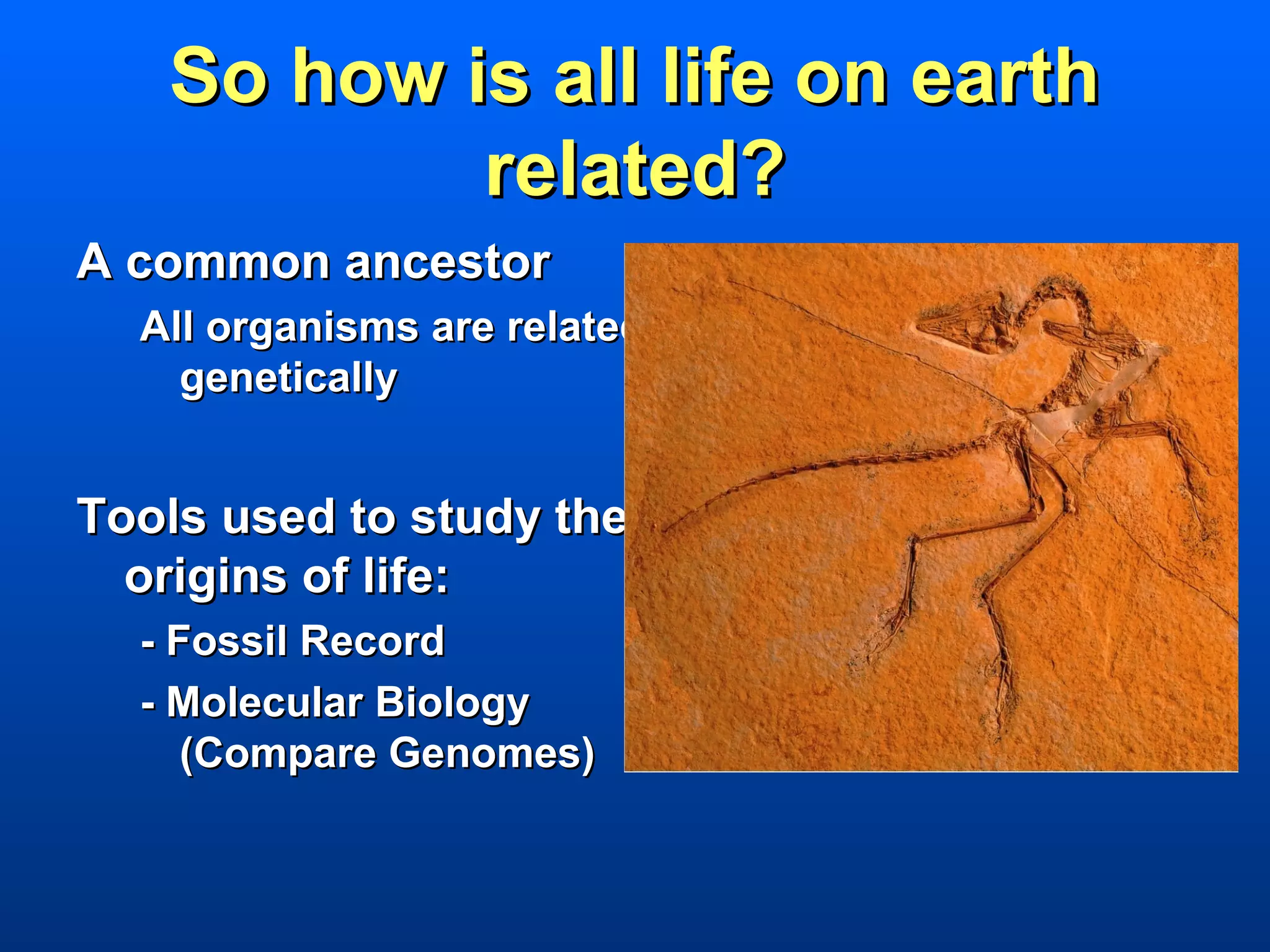
So how is all life on earth
           related?
A common ancestor
  All organisms are related
    genetically


Tools used to study the
  origins of life:
  - Fossil Record
  - Molecular Biology
     (Compare Genomes)
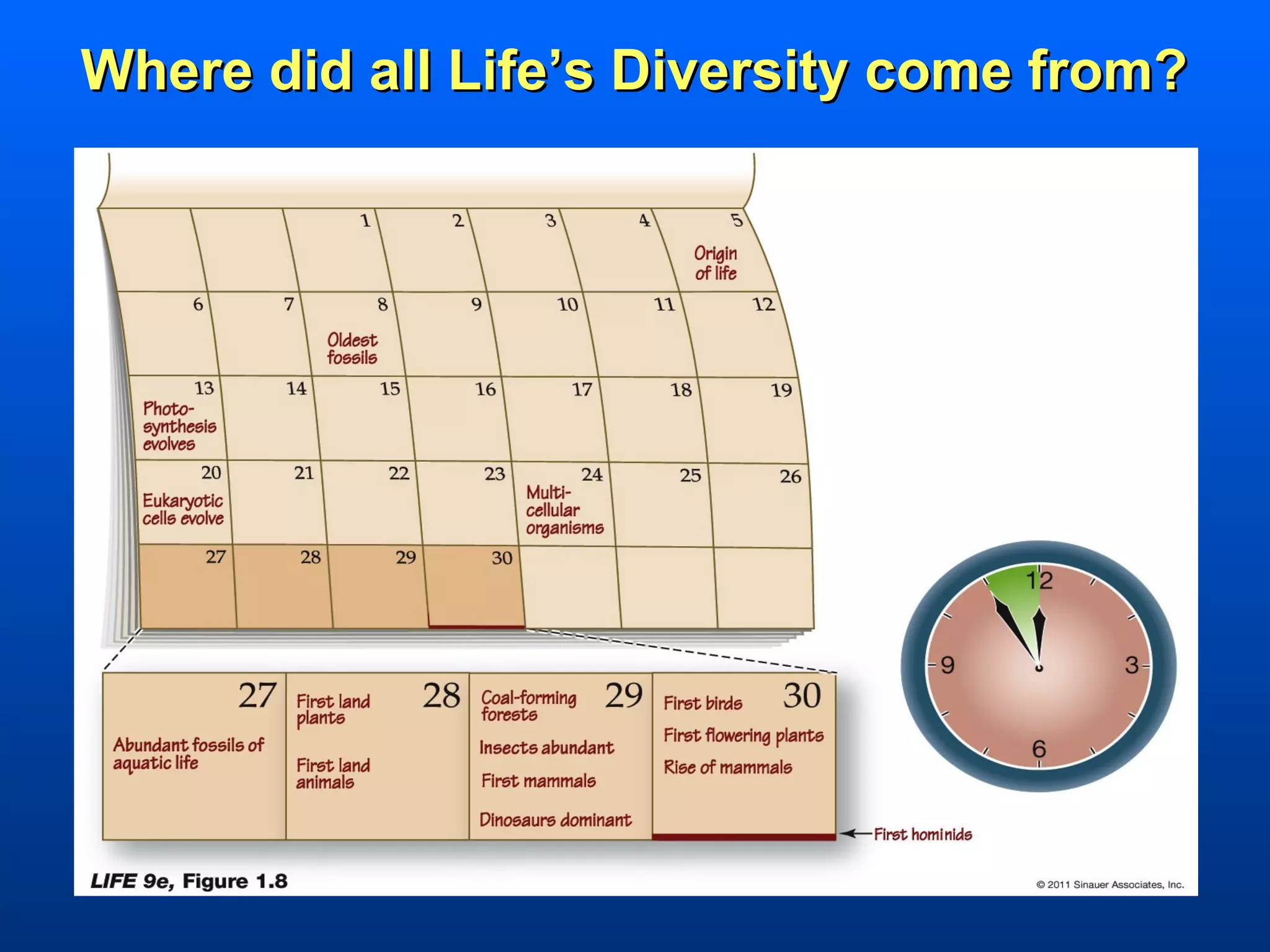
Where did all Life’s Diversity come from?
5 BYA - the Earth is Formed…
No Life on Earth, so how did it get there?

Two Theories:
1)ET Theory
2)Chemical Evolution (Currently
  Accepted Theory)
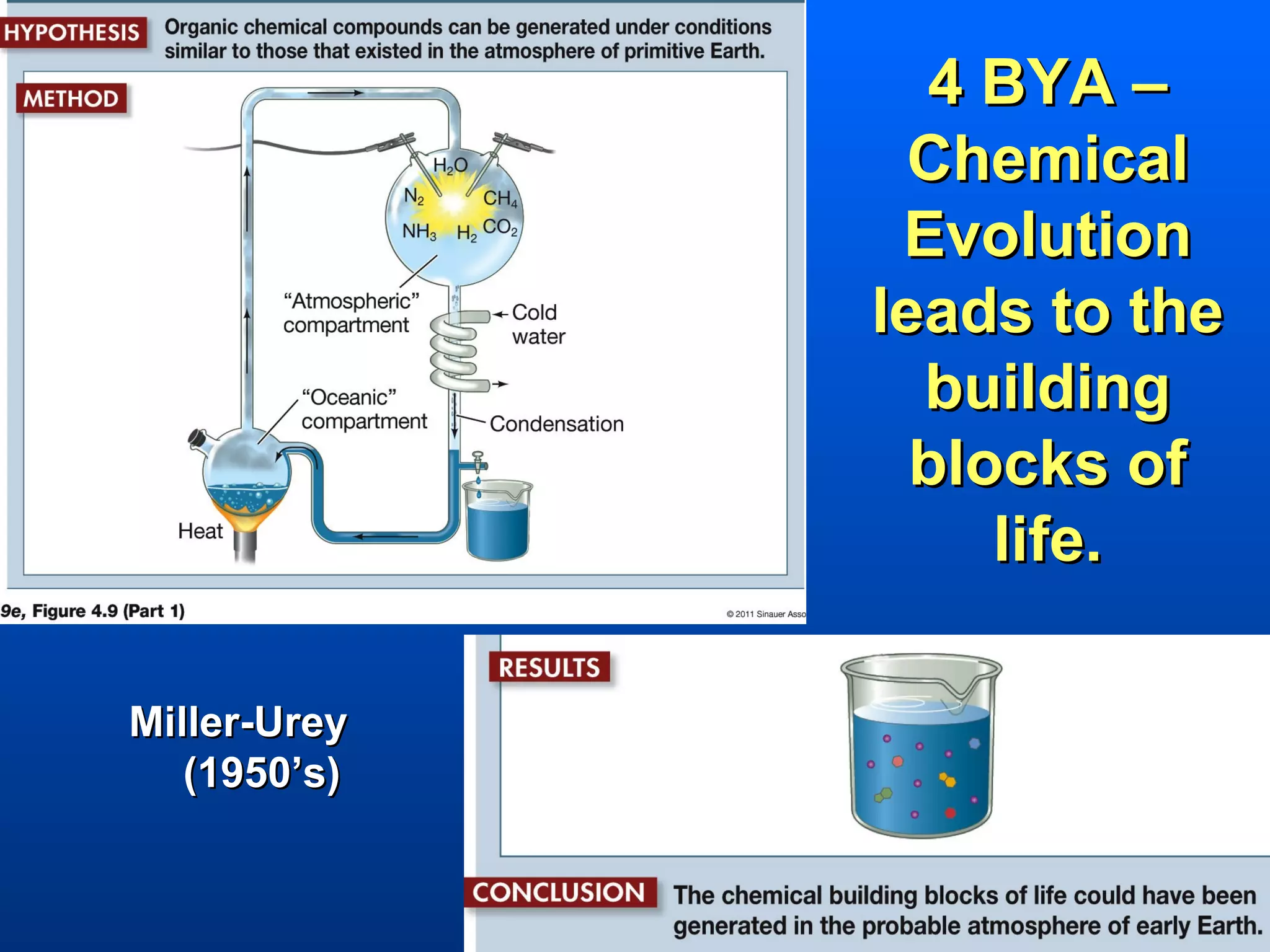
4 BYA –
               Chemical
               Evolution
              leads to the
                building
                blocks of
                   life.

Miller-Urey
   (1950’s)
3.8 BYA – Vesicles Form
Biological molecules were then enclosed in
membranes, forming cells.

Increases the chance of interacting.

Resulted in the first single-celled organisms
called Prokaryotes
         - Only found in the oceans
         - Heterotrophs
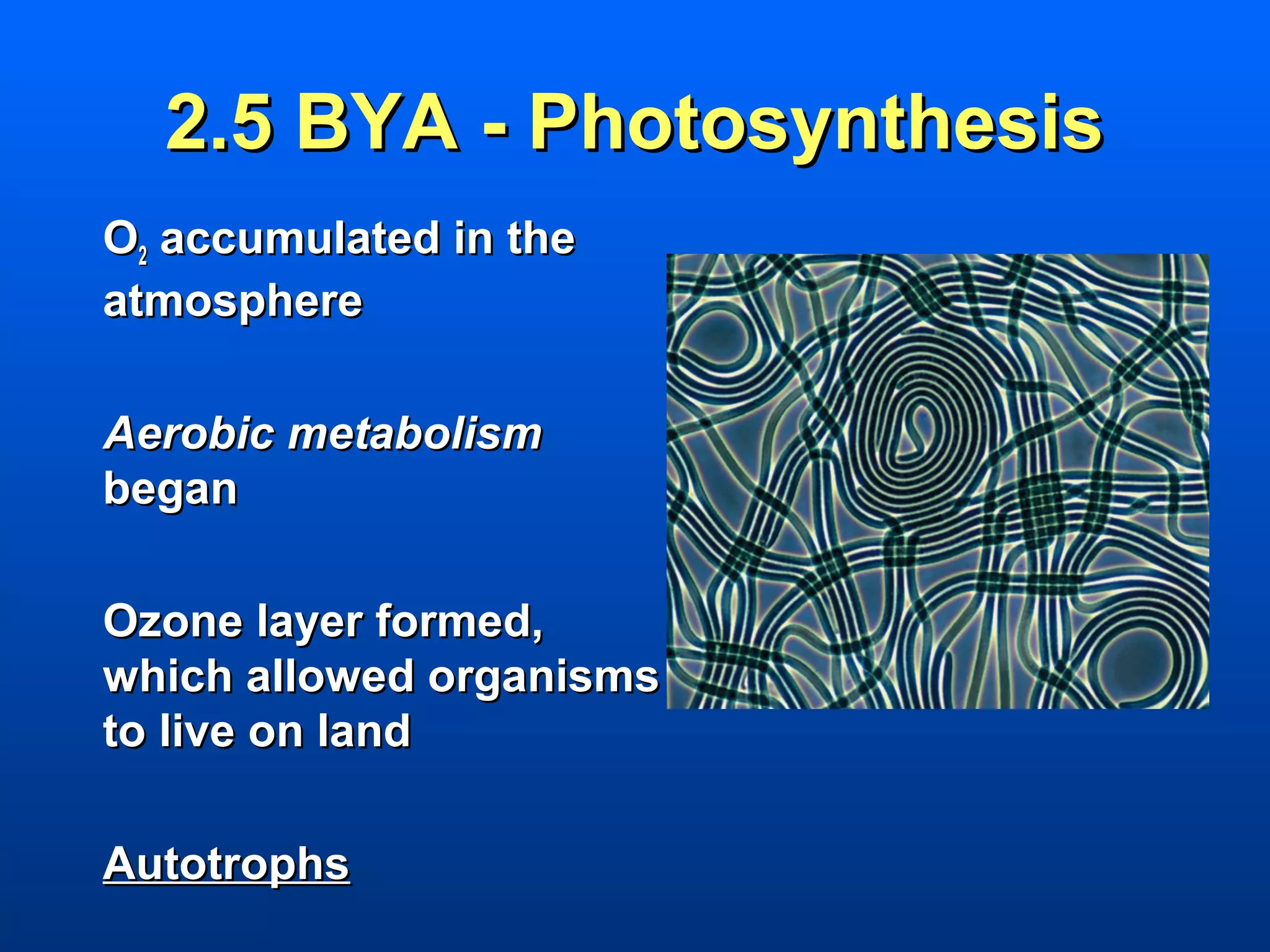
2.5 BYA - Photosynthesis
O2 accumulated in the
atmosphere

Aerobic metabolism
began

Ozone layer formed,
which allowed organisms
to live on land

Autotrophs
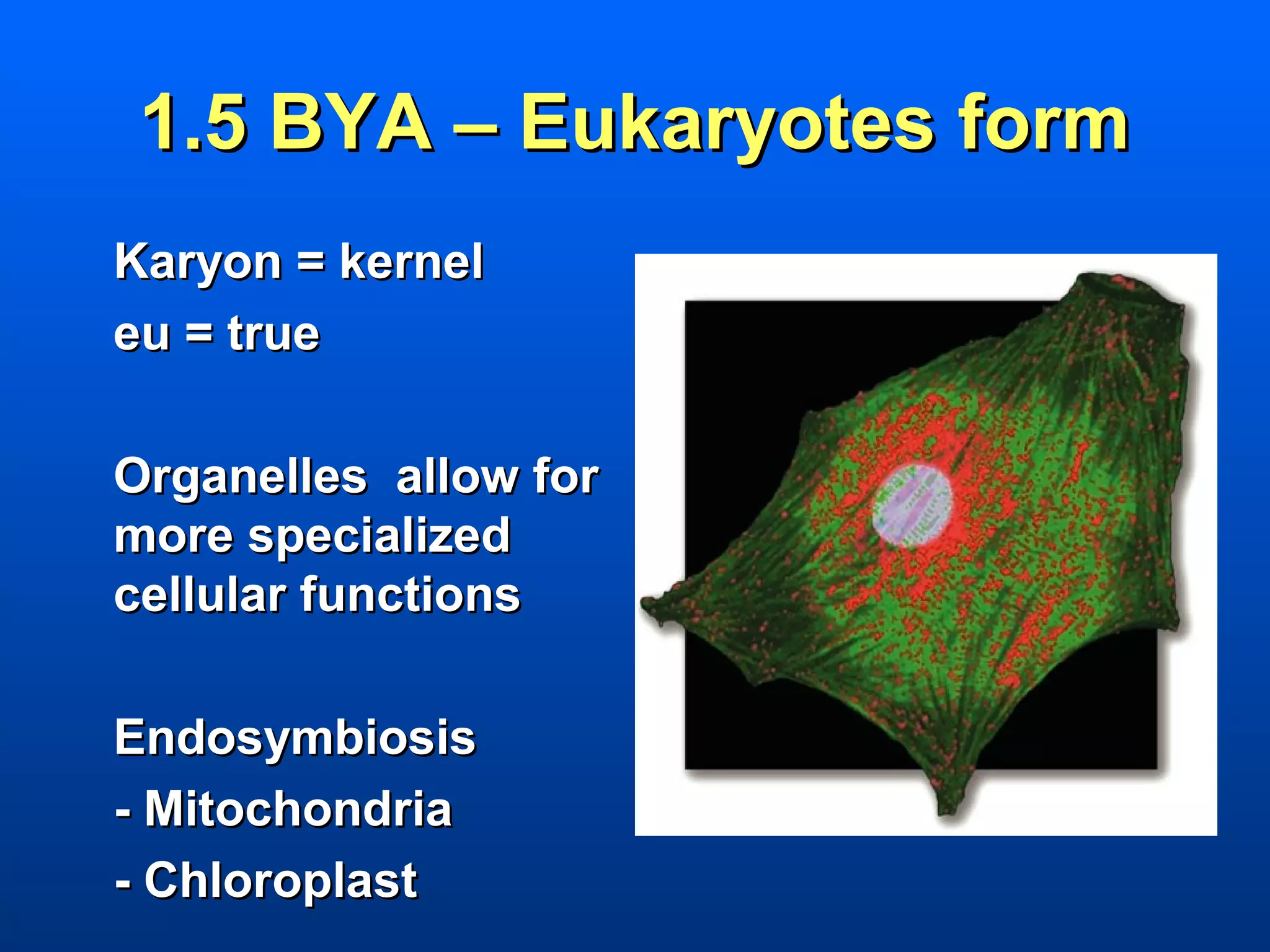
1.5 BYA – Eukaryotes form
Karyon = kernel
eu = true

Organelles allow for
more specialized
cellular functions

Endosymbiosis
- Mitochondria
- Chloroplast
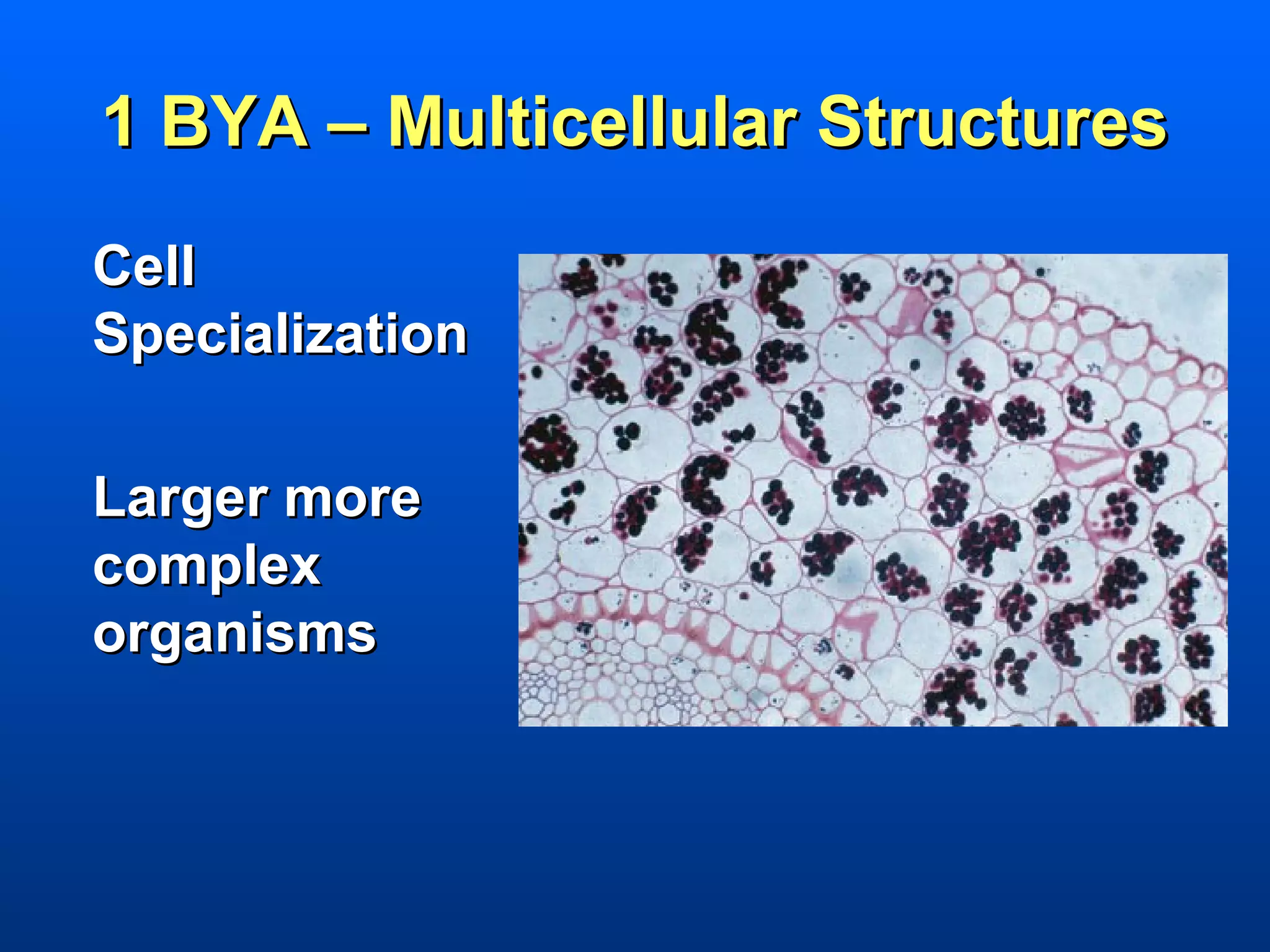
1 BYA – Multicellular Structures
Cell
Specialization

Larger more
complex
organisms
Diversity - Tree of Life
Evolution results in speciation

Each species has a distinct scientific
 name, a binomial:
    • Genus name
    • Species name

 Example: Homo sapiens
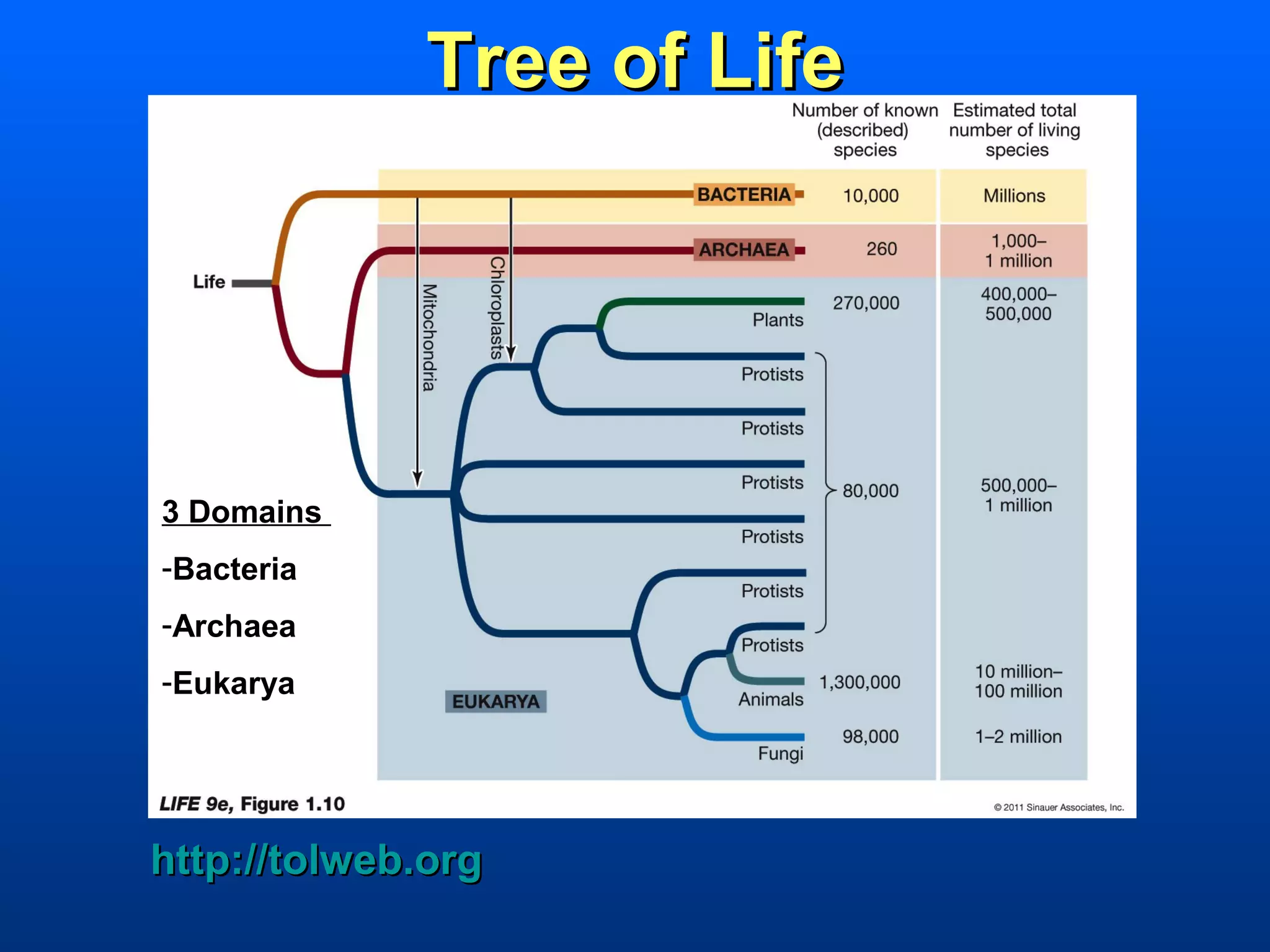
Tree of Life


3 Domains
-Bacteria
-Archaea
-Eukarya


http://tolweb.org
How Do Biologists Investigate Life?

Biologists use many methods to
  expand our understanding of life.
• Observation: improved by new
  technologies
• Experimentation
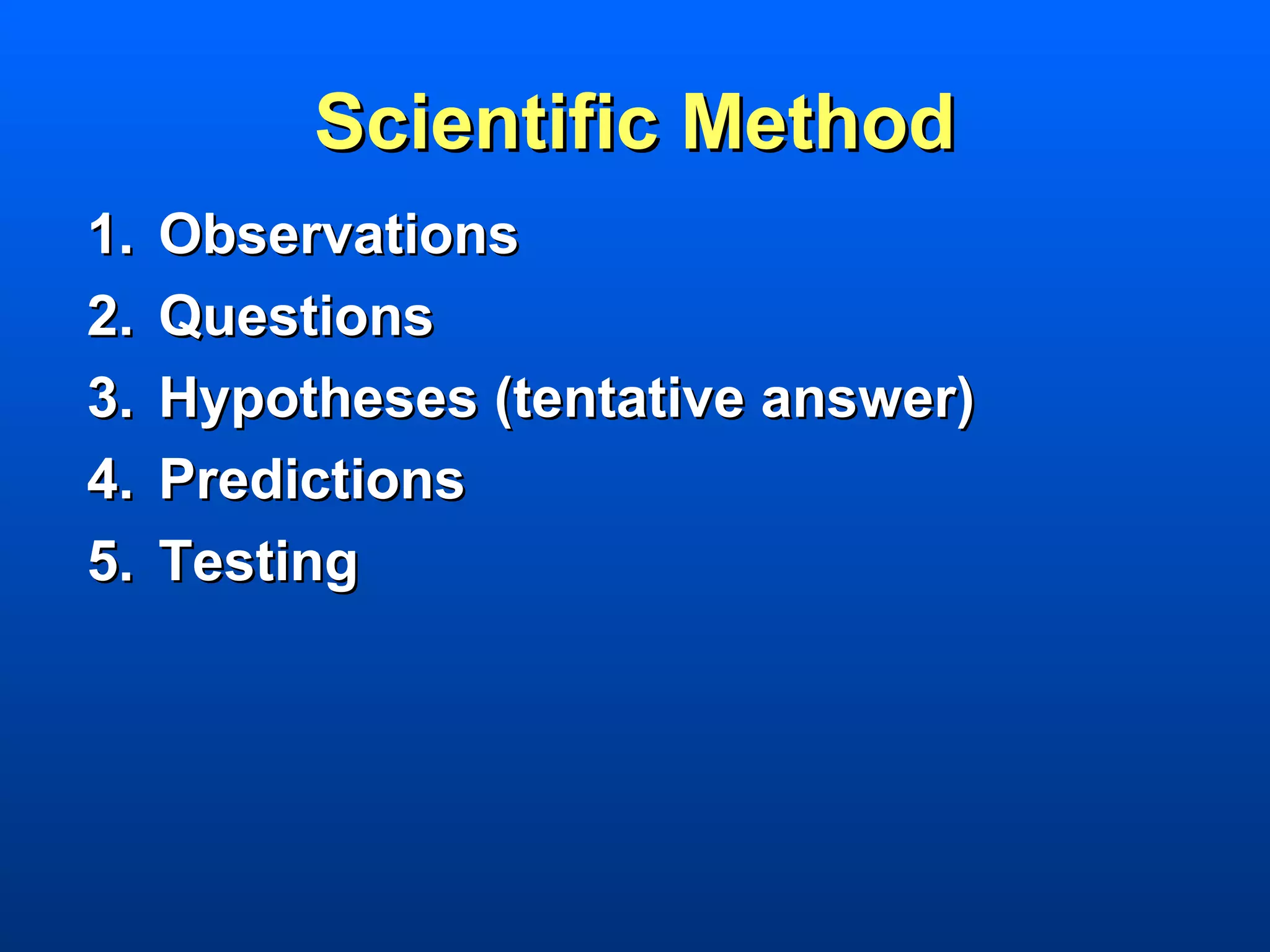
Scientific Method
1.   Observations
2.   Questions
3.   Hypotheses (tentative answer)
4.   Predictions
5.   Testing
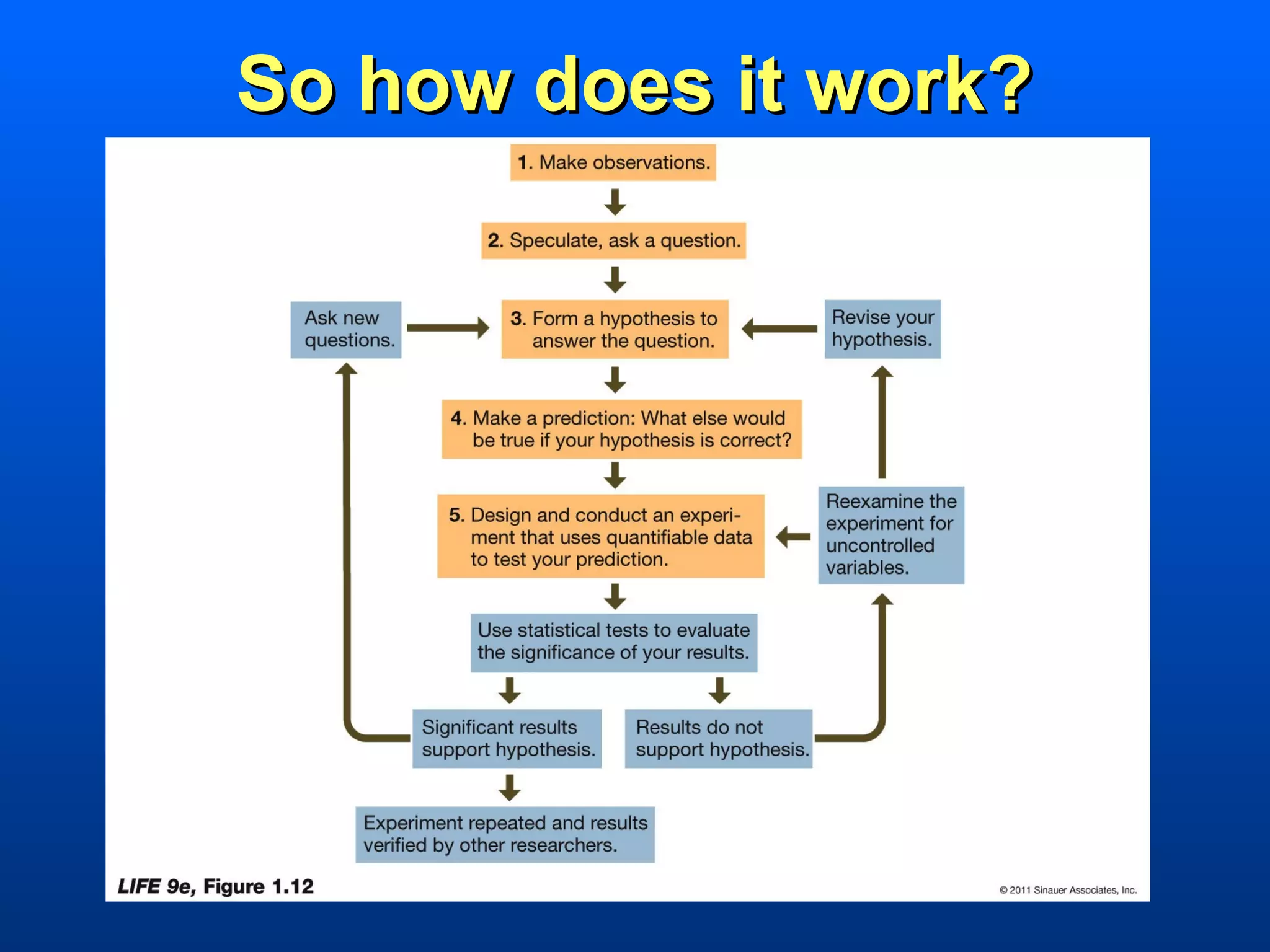
So how does it work?
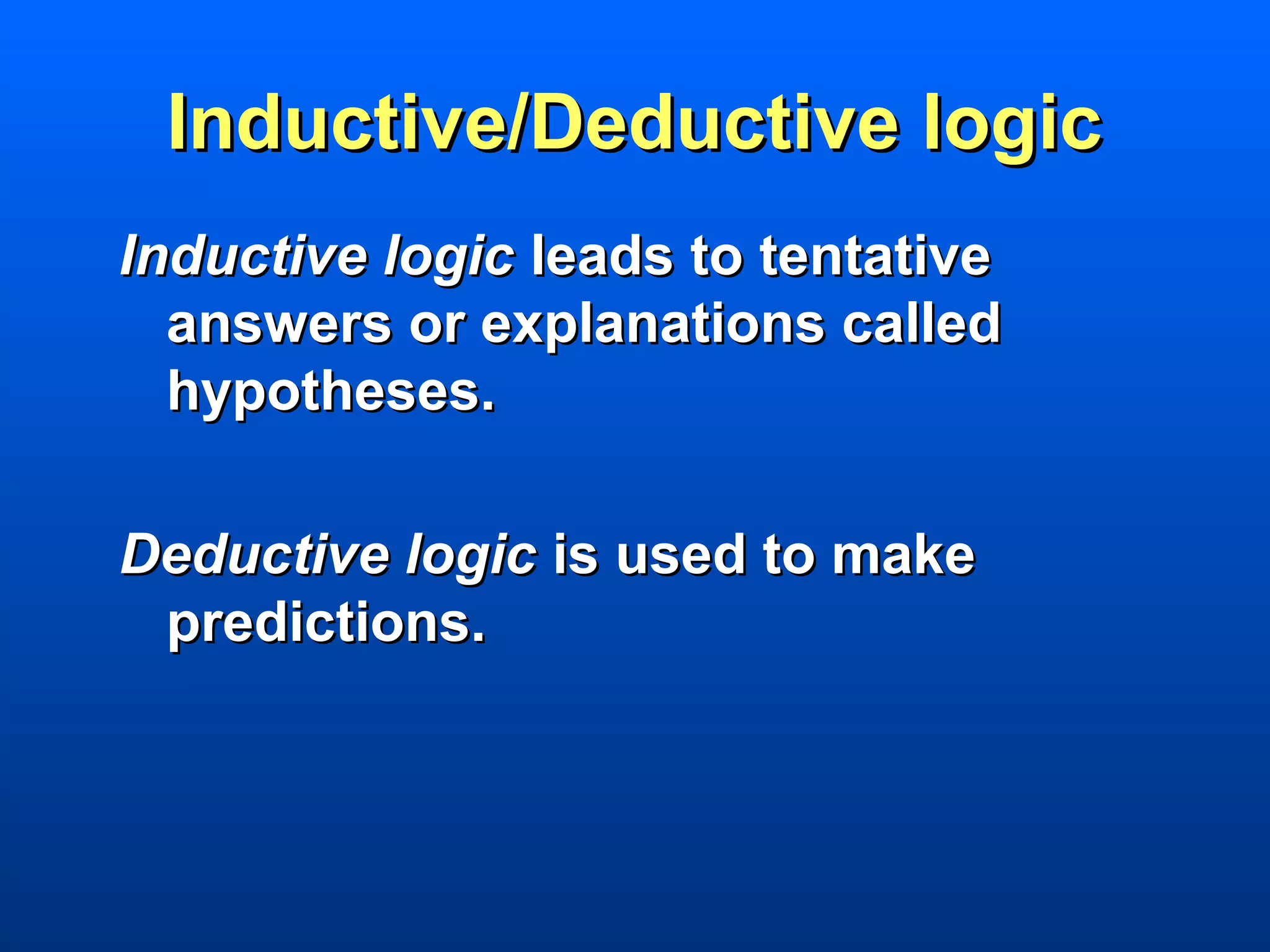
Inductive/Deductive logic
Inductive logic leads to tentative
  answers or explanations called
  hypotheses.

Deductive logic is used to make
 predictions.
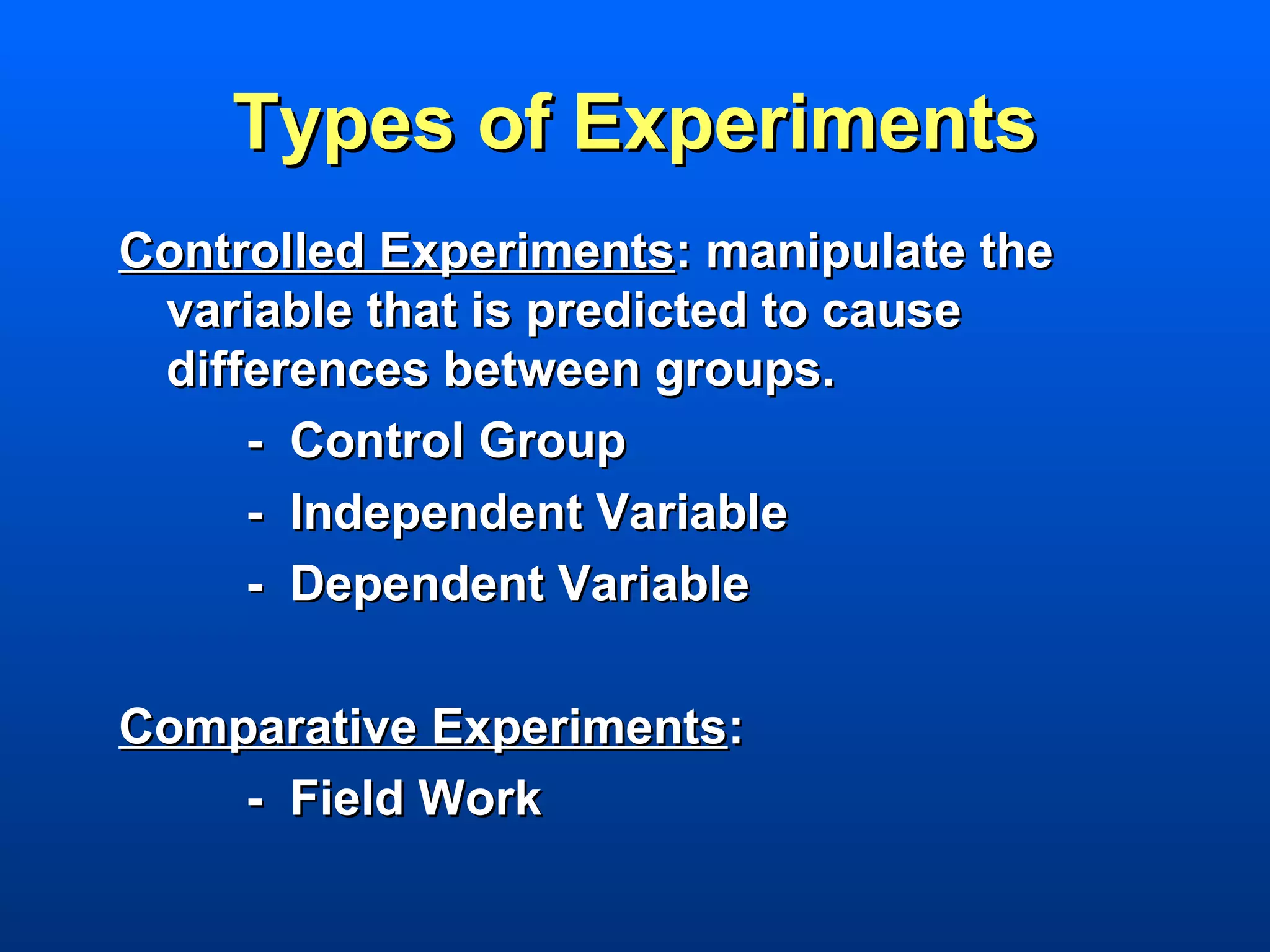
Types of Experiments
Controlled Experiments: manipulate the
 variable that is predicted to cause
 differences between groups.
     - Control Group
     - Independent Variable
     - Dependent Variable

Comparative Experiments:
    - Field Work
Class Activity

Chapter 1

  • 1.
    Fundamentals of Biology1 BSC1010C Dr. Rick Dexter
  • 2.
    Introduction • Syllabus • Blackboard • Study and Test Taking Techniques • Lab Safety • Safety Procedures • Begin Chapter 1
  • 3.
    Chapter 1- “StudyingLife” What is Biology? - it is the scientific study of living things.
  • 4.
    Scope of Biology Atoms/Molecules (Biochemistry)  Cells  Tissue  Organs  Organism  Population • Species  Communities  Ecosystems  Biosphere  This course will focus primarily on molecules and cells
  • 5.
    But what definessomething as a living thing? • What are some general characteristics? What about a virus? In Summary… An organized genetic unit capable of … – Metabolism – Homeostasis – Reproduction – Evolution
  • 6.
    Discovery of theMicroscope The study of cells was made possible by the invention of microscopes. Robert Hooke in the 1600s described repeating units of plant material as cells.
  • 7.
    Robert Hooke –Plant Cork Cells Nature Cell Biology 1, E13 - E15 (1999) – reproduced from Micrographia, 1665
  • 8.
    Early Cell Theory Louis Pasteur (1859) Disproves: Spontaneous Generation
  • 9.
    Modern Cell Theory •All cells come from preexisting cells. • All cells are similar in chemical composition. • Most of the chemical reactions of life occur within cells. • Complete sets of genetic information are replicated and passed on during cell division.
  • 10.
    Evolution Change in thegenetic makeup of biological populations through time. Charles Darwin (1859) proposed that all living organisms are descended from a common ancestor by the mechanism of natural selection.
  • 11.
    Charles Darwin –Theory of Evolution • Major unifying principle of biology… • Natural Selection Traits that increase the probability that the organism will survive and reproduce will become more common in the population.
  • 12.
    So how doesNatural Selection Work? Within a Species, Variation in traits due to Genetic Mutation gives rise to individuals with higher “Fitness”. Natural Selection is a force that favors these individuals within a population leading to an Adaptation in the species.
  • 13.
    Adaptations to theEnvironment
  • 14.
    So how isall life on earth related? A common ancestor All organisms are related genetically Tools used to study the origins of life: - Fossil Record - Molecular Biology (Compare Genomes)
  • 15.
    Where did allLife’s Diversity come from?
  • 16.
    5 BYA -the Earth is Formed… No Life on Earth, so how did it get there? Two Theories: 1)ET Theory 2)Chemical Evolution (Currently Accepted Theory)
  • 17.
    4 BYA – Chemical Evolution leads to the building blocks of life. Miller-Urey (1950’s)
  • 18.
    3.8 BYA –Vesicles Form Biological molecules were then enclosed in membranes, forming cells. Increases the chance of interacting. Resulted in the first single-celled organisms called Prokaryotes - Only found in the oceans - Heterotrophs
  • 19.
    2.5 BYA -Photosynthesis O2 accumulated in the atmosphere Aerobic metabolism began Ozone layer formed, which allowed organisms to live on land Autotrophs
  • 20.
    1.5 BYA –Eukaryotes form Karyon = kernel eu = true Organelles allow for more specialized cellular functions Endosymbiosis - Mitochondria - Chloroplast
  • 21.
    1 BYA –Multicellular Structures Cell Specialization Larger more complex organisms
  • 22.
    Diversity - Treeof Life Evolution results in speciation Each species has a distinct scientific name, a binomial: • Genus name • Species name Example: Homo sapiens
  • 23.
    Tree of Life 3Domains -Bacteria -Archaea -Eukarya http://tolweb.org
  • 24.
    How Do BiologistsInvestigate Life? Biologists use many methods to expand our understanding of life. • Observation: improved by new technologies • Experimentation
  • 25.
    Scientific Method 1. Observations 2. Questions 3. Hypotheses (tentative answer) 4. Predictions 5. Testing
  • 26.
    So how doesit work?
  • 27.
    Inductive/Deductive logic Inductive logicleads to tentative answers or explanations called hypotheses. Deductive logic is used to make predictions.
  • 28.
    Types of Experiments ControlledExperiments: manipulate the variable that is predicted to cause differences between groups. - Control Group - Independent Variable - Dependent Variable Comparative Experiments: - Field Work
  • 29.