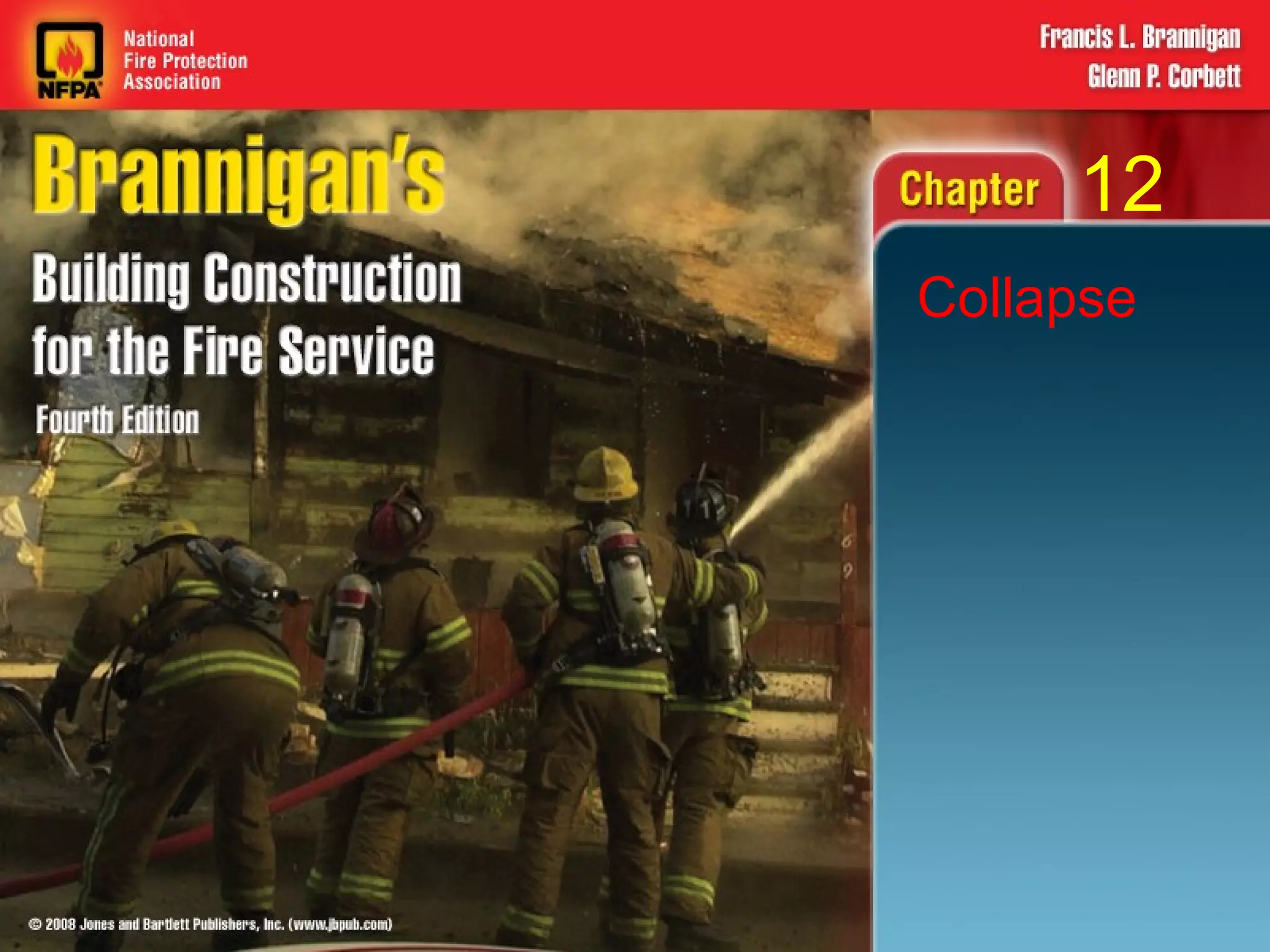
12  Collapse
Objectives Identify the various types of collapse Apply risk analysis to fire-ground safety Identify the specific basic competencies all fire fighters should have to perform at a structural collapse Explain the essential elements of the collapse of the World Trade Center twin towers on September 11, 2001 12
Collapse: The Greatest Threat on the Fire Ground  (1 of 2) How fire fighters die Heart attacks (the greatest killer today) Smoke inhalation Falls Building collapse 12
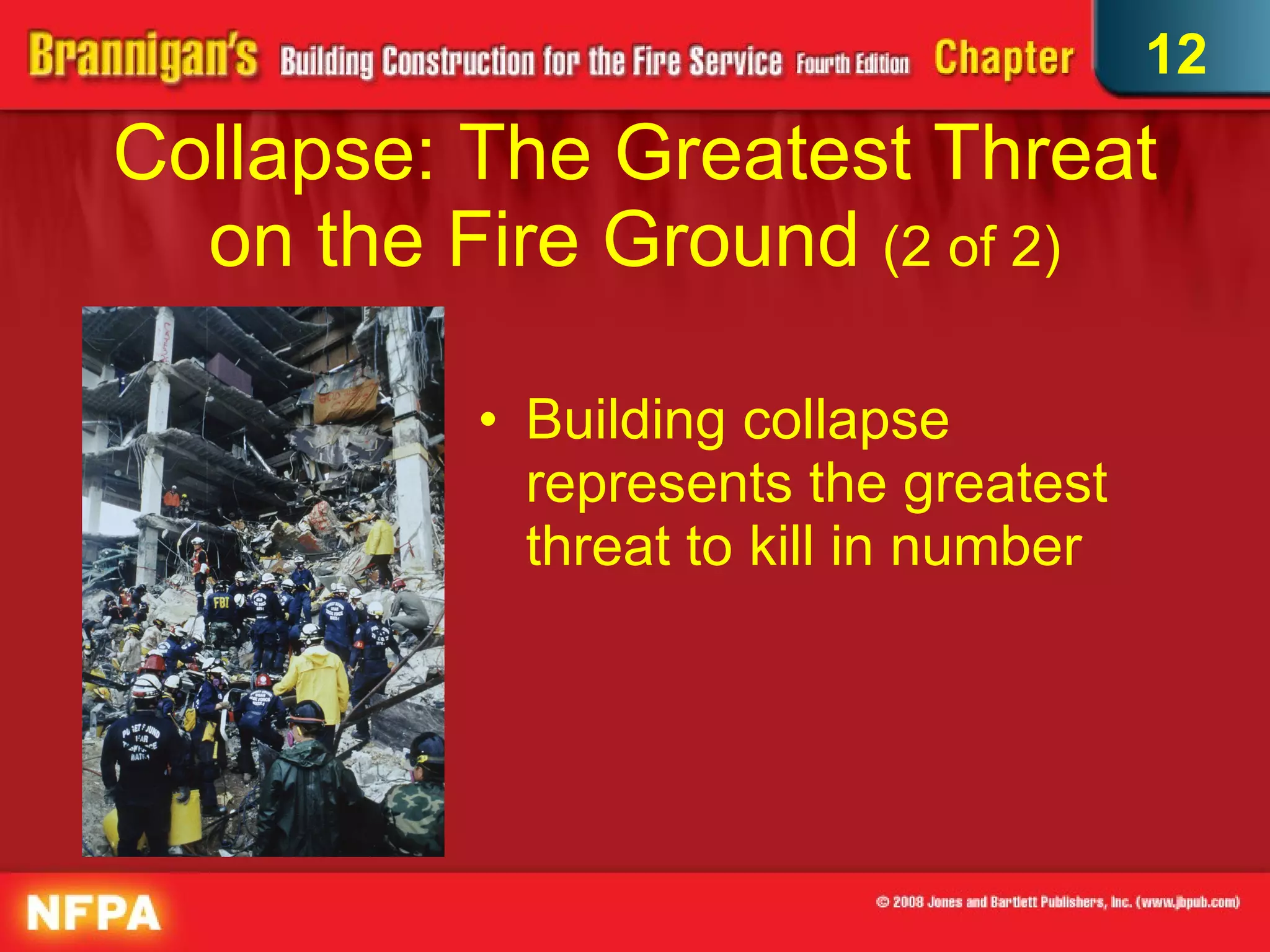
Collapse: The Greatest Threat on the Fire Ground  (2 of 2) Building collapse represents the greatest threat to kill in number 12
Anticipating Collapse Responsibility of the incident commander, the operations chief, and the safety officer Responsibility of each fire fighter  12
Risk Analysis  (1 of 2)   After fire fatalities Questions are asked  Were fatalities caused by antiquated macho attitude?  Taxpayers saddled with unnecessary expenses  12
Risk Analysis  (2 of 2)   Professional fire services Analyze the relationship between risk incurred and benefits obtained  Are well informed about construction features of buildings that have been available for study for many years 12
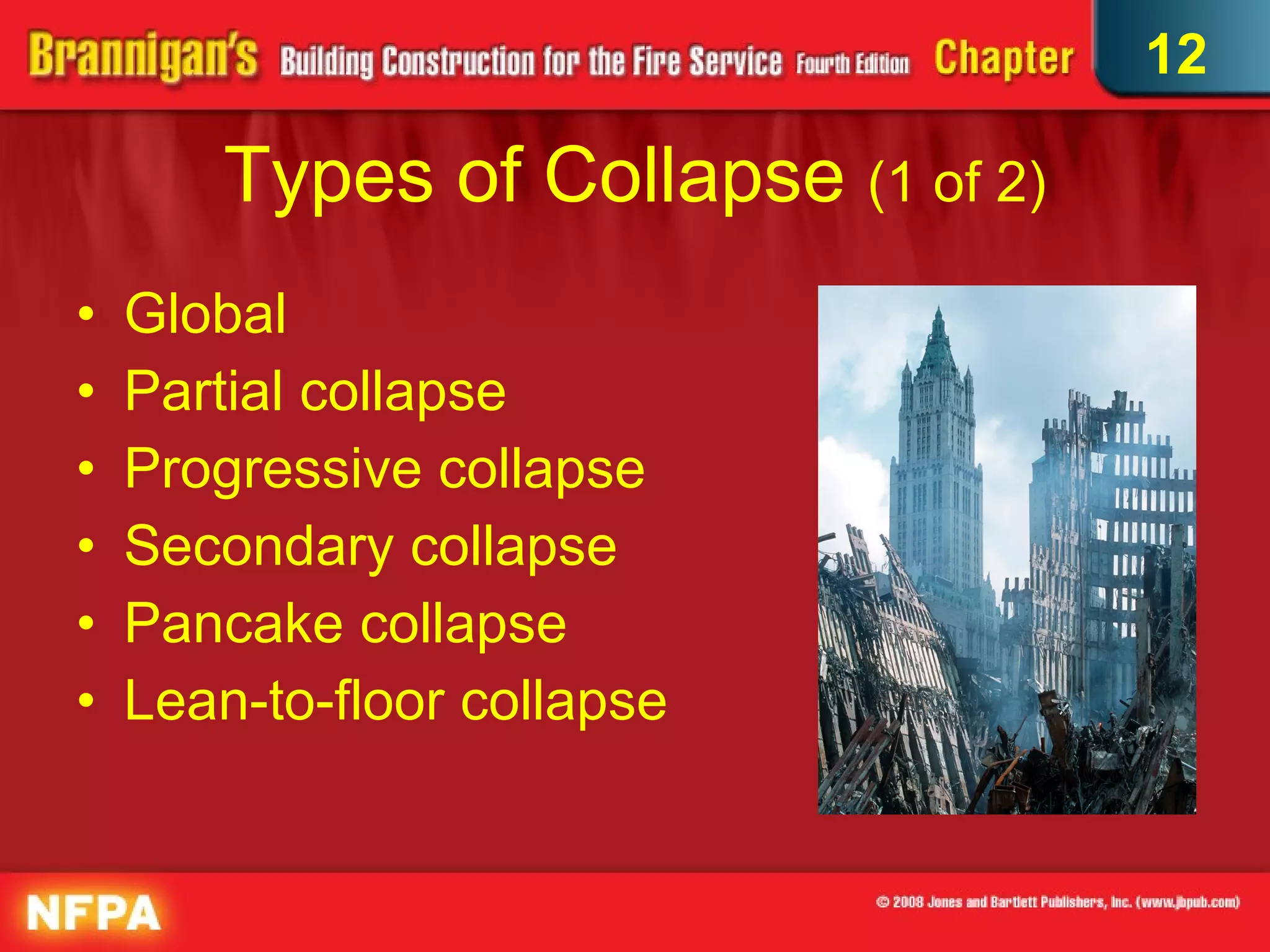
Types of Collapse  (1 of 2) Global  Partial collapse Progressive collapse Secondary collapse Pancake collapse Lean-to-floor collapse 12
Types of Collapse  (2 of 2) V-shaped floor collapse Cantilever floor collapse Frame floor collapse  Inward outward collapse 90-degree wall collapse Lean over collapse Curtain fall wall collapse 12
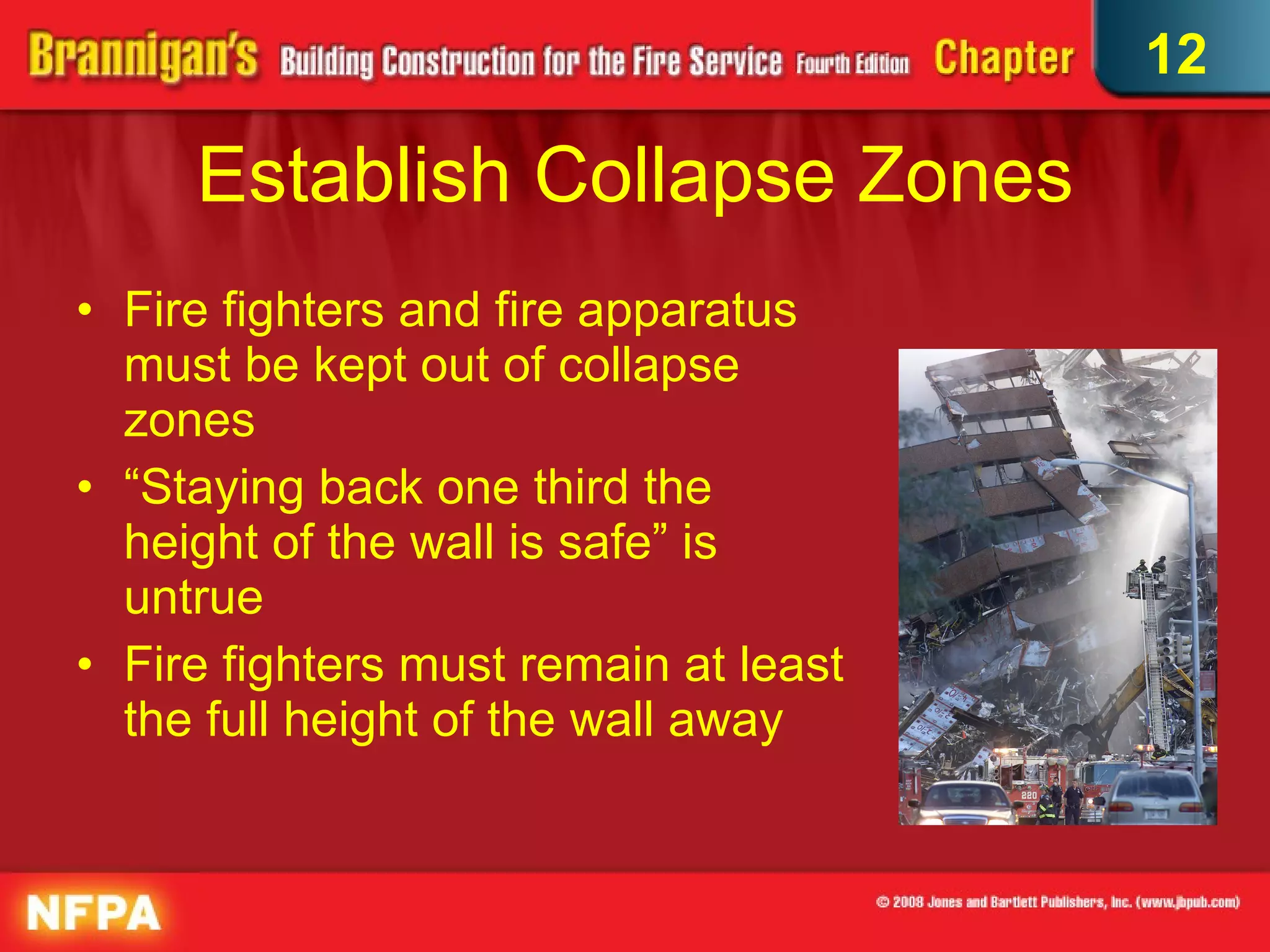
Establish Collapse Zones Fire fighters and fire apparatus must be kept out of collapse zones “ Staying back one third the height of the wall is safe” is untrue Fire fighters must remain at least the full height of the wall away 12
Minimum Collapse Competencies for Fire Fighters Identified by National Fire Protection Association (NFPA) 1670: Standard on Operations and Training for Technical Search and Rescue Incidents Higher competency levels require higher training  12
Our Worst Collapse Tragedy History of the World Trade Center  Two of the tallest and largest buildings ever built Each tower was 110 stories high and each floor was 40,000 square feet Each side of the building measured 210 feet in length 12
Major Structural Components  of the Towers Exterior walls  A series of columns in the center core  Lightweight steel floor trusses forming a composite floor  Hat truss 12
Mechanism of Collapse Studied by the National Institute of Standards and Technology (NIST) Used visual evidence of the exterior damage and computer modeling  12
The North Tower (Tower 1) Structural damage from the planes Jet fuel and dislodged fireproofing Open paths for fire spread  Weakened core columns Sagging of the “south floors” Bowed south perimeter columns 12
The South Tower (Tower 2) Damage to the center core columns Jet fuel and dislodged fireproofing Sustained fires had an ample air supply Weakened core columns Sagging of the “east floors” Bowed east perimeter columns 12
Questions How many trusses were destroyed in the initial impact? How many failed in the subsequent fires? How much fireproofing was knocked off by the plane impact? 12
Questions for the Future Should lightweight trusses be used in high-rises?  Should spray-on fireproofing come under more scrutiny?  What role should fire services have in construction and regulation? 12
In the End Be proactive role in securing your safety and the safety of others Get involved in the construction of a new building Get involved in the code development and adoption process 12
Summary All fire fighters have the responsibility to know the conditions for collapse in different types of buildings Fire fighters and fire apparatus should be kept out of collapse zones 12

Ch12 ppt

  • 1.
  • 2.
    Objectives Identify thevarious types of collapse Apply risk analysis to fire-ground safety Identify the specific basic competencies all fire fighters should have to perform at a structural collapse Explain the essential elements of the collapse of the World Trade Center twin towers on September 11, 2001 12
  • 3.
    Collapse: The GreatestThreat on the Fire Ground (1 of 2) How fire fighters die Heart attacks (the greatest killer today) Smoke inhalation Falls Building collapse 12
  • 4.
    Collapse: The GreatestThreat on the Fire Ground (2 of 2) Building collapse represents the greatest threat to kill in number 12
  • 5.
    Anticipating Collapse Responsibilityof the incident commander, the operations chief, and the safety officer Responsibility of each fire fighter 12
  • 6.
    Risk Analysis (1 of 2) After fire fatalities Questions are asked Were fatalities caused by antiquated macho attitude? Taxpayers saddled with unnecessary expenses 12
  • 7.
    Risk Analysis (2 of 2) Professional fire services Analyze the relationship between risk incurred and benefits obtained Are well informed about construction features of buildings that have been available for study for many years 12
  • 8.
    Types of Collapse (1 of 2) Global Partial collapse Progressive collapse Secondary collapse Pancake collapse Lean-to-floor collapse 12
  • 9.
    Types of Collapse (2 of 2) V-shaped floor collapse Cantilever floor collapse Frame floor collapse Inward outward collapse 90-degree wall collapse Lean over collapse Curtain fall wall collapse 12
  • 10.
    Establish Collapse ZonesFire fighters and fire apparatus must be kept out of collapse zones “ Staying back one third the height of the wall is safe” is untrue Fire fighters must remain at least the full height of the wall away 12
  • 11.
    Minimum Collapse Competenciesfor Fire Fighters Identified by National Fire Protection Association (NFPA) 1670: Standard on Operations and Training for Technical Search and Rescue Incidents Higher competency levels require higher training 12
  • 12.
    Our Worst CollapseTragedy History of the World Trade Center Two of the tallest and largest buildings ever built Each tower was 110 stories high and each floor was 40,000 square feet Each side of the building measured 210 feet in length 12
  • 13.
    Major Structural Components of the Towers Exterior walls A series of columns in the center core Lightweight steel floor trusses forming a composite floor Hat truss 12
  • 14.
    Mechanism of CollapseStudied by the National Institute of Standards and Technology (NIST) Used visual evidence of the exterior damage and computer modeling 12
  • 15.
    The North Tower(Tower 1) Structural damage from the planes Jet fuel and dislodged fireproofing Open paths for fire spread Weakened core columns Sagging of the “south floors” Bowed south perimeter columns 12
  • 16.
    The South Tower(Tower 2) Damage to the center core columns Jet fuel and dislodged fireproofing Sustained fires had an ample air supply Weakened core columns Sagging of the “east floors” Bowed east perimeter columns 12
  • 17.
    Questions How manytrusses were destroyed in the initial impact? How many failed in the subsequent fires? How much fireproofing was knocked off by the plane impact? 12
  • 18.
    Questions for theFuture Should lightweight trusses be used in high-rises? Should spray-on fireproofing come under more scrutiny? What role should fire services have in construction and regulation? 12
  • 19.
    In the EndBe proactive role in securing your safety and the safety of others Get involved in the construction of a new building Get involved in the code development and adoption process 12
  • 20.
    Summary All firefighters have the responsibility to know the conditions for collapse in different types of buildings Fire fighters and fire apparatus should be kept out of collapse zones 12

Editor's Notes

  • #5 Courtesy of FEMA
  • #9 © Photos.com
  • #11 © Beth Keiser/AP Photos