FIRE AND SMOKE
RESISTANT ASSEMBLIES
BARRIERS, ASSEMBLIES AND PARTITIONS
 Three basic types of rated assemblies:
 Fire barriers
 Fire partitions
 Horizontal assemblies
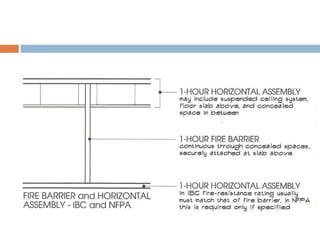
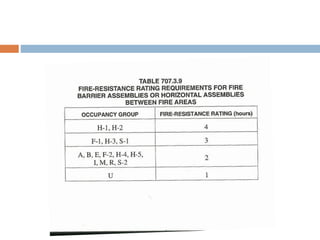
 Fire barriers are walls that a fire resistant rating
and in most cases must be continuous and extend
vertically from the bottom to the top of the
floor/ceiling assembly
 Additional fire blocking is required at the intersection
with other rated elements
 Openings are limited
 Opening assemblies need to be rated
 Floor/ceiling assemblies are horizontal assemblies
 Limited openings
 Openings and penetrations must be rated as well
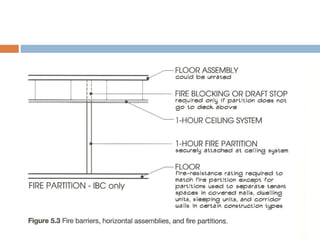
 Fire partitions are similar to fire barriers but less
restrictive
 Separate exit access corridors, tenant spaces in malls,
dwellings and /or sleeping units
 Allowed to stop at the rated ceiling system
 Not required to be a full enclosure
 Rating of at least one hour
 Ratings depends on purpose, occupancy
classification and if space has sprinklers
 Openings required to be protected but not limited
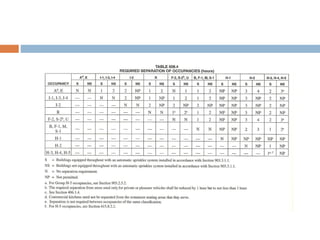
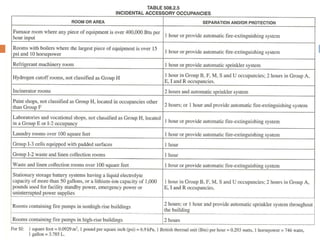
 Fire enclosures separates occupancy types
 Not required between similar hazardous
occupancies
 Multiple tenants of different occupancies in the
same building
 Single user with multiple occupancies or uses within
the same structure
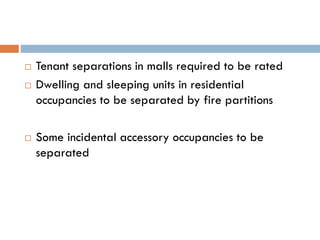
 Tenant separations in malls required to be rated
 Dwelling and sleeping units in residential
occupancies to be separated by fire partitions
 Some incidental accessory occupancies to be
separated
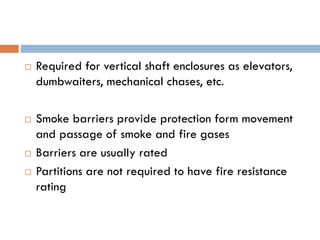
 Required for vertical shaft enclosures as elevators,
dumbwaiters, mechanical chases, etc.
 Smoke barriers provide protection form movement
and passage of smoke and fire gases
 Barriers are usually rated
 Partitions are not required to have fire resistance
rating
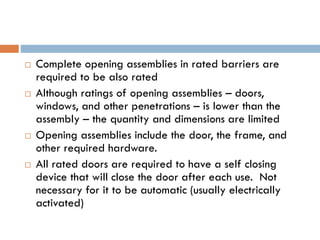
 Complete opening assemblies in rated barriers are
required to be also rated
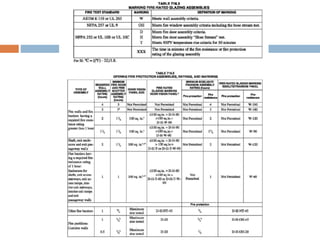
 Although ratings of opening assemblies – doors,
windows, and other penetrations – is lower than the
assembly – the quantity and dimensions are limited
 Opening assemblies include the door, the frame, and
other required hardware.
 All rated doors are required to have a self closing
device that will close the door after each use. Not
necessary for it to be automatic (usually electrically
activated)
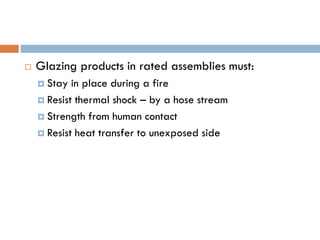
 Glazing products in rated assemblies must:
 Stay in place during a fire
 Resist thermal shock – by a hose stream
 Strength from human contact
 Resist heat transfer to unexposed side
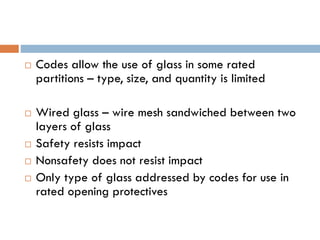
 Codes allow the use of glass in some rated
partitions – type, size, and quantity is limited
 Wired glass – wire mesh sandwiched between two
layers of glass
 Safety resists impact
 Nonsafety does not resist impact
 Only type of glass addressed by codes for use in
rated opening protectives
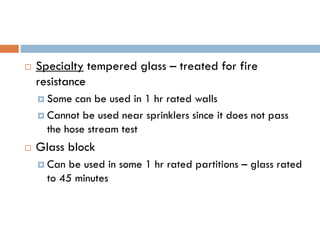
 Specialty tempered glass – treated for fire
resistance
 Some can be used in 1 hr rated walls
 Cannot be used near sprinklers since it does not pass
the hose stream test
 Glass block
 Can be used in some 1 hr rated partitions – glass rated
to 45 minutes
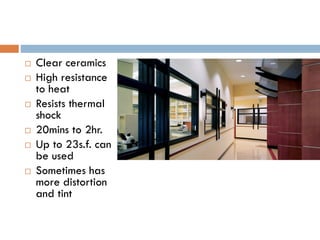
 Clear ceramics
 High resistance
to heat
 Resists thermal
shock
 20mins to 2hr.
 Up to 23s.f. can
be used
 Sometimes has
more distortion
and tint
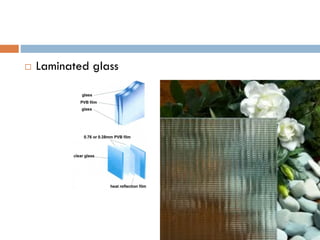
 Laminated glass
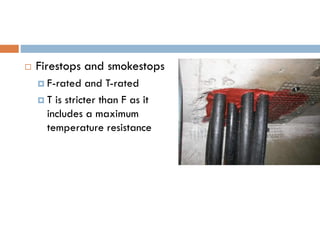
 Firestops and smokestops
 F-rated and T-rated
 T is stricter than F as it
includes a maximum
temperature resistance
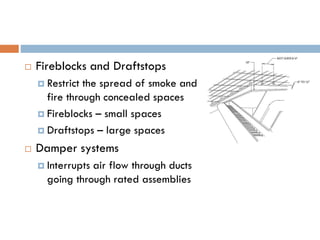
 Fireblocks and Draftstops
 Restrict the spread of smoke and
fire through concealed spaces
 Fireblocks – small spaces
 Draftstops – large spaces
 Damper systems
 Interrupts air flow through ducts
going through rated assemblies
QUESTIONS
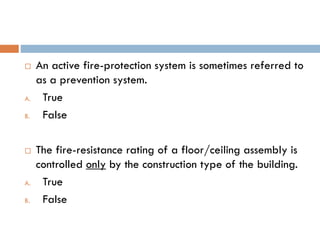
 An active fire-protection system is sometimes referred to
as a prevention system.
A. True
B. False
 The fire-resistance rating of a floor/ceiling assembly is
controlled only by the construction type of the building.
A. True
B. False
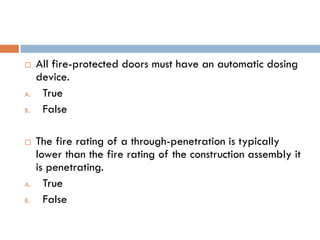
 All fire-protected doors must have an automatic dosing
device.
A. True
B. False
 The fire rating of a through-penetration is typically
lower than the fire rating of the construction assembly it
is penetrating.
A. True
B. False
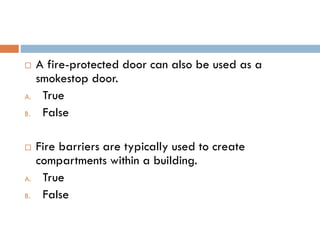
 A fire-protected door can also be used as a
smokestop door.
A. True
B. False
 Fire barriers are typically used to create
compartments within a building.
A. True
B. False
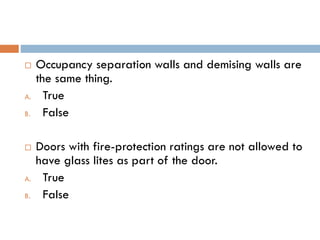
 Occupancy separation walls and demising walls are
the same thing.
A. True
B. False
 Doors with fire-protection ratings are not allowed to
have glass lites as part of the door.
A. True
B. False
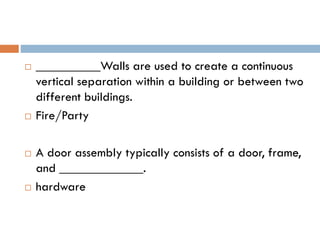
 __________Walls are used to create a continuous
vertical separation within a building or between two
different buildings.
 Fire/Party
 A door assembly typically consists of a door, frame,
and _____________.
 hardware
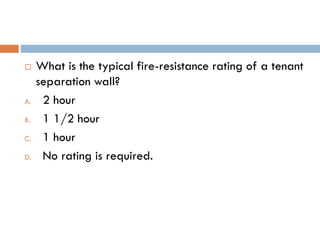
 What is the typical fire-resistance rating of a tenant
separation wall?
A. 2 hour
B. 1 1/2 hour
C. 1 hour
D. No rating is required.
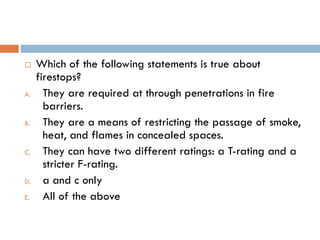
 Which of the following statements is true about
firestops?
A. They are required at through penetrations in fire
barriers.
B. They are a means of restricting the passage of smoke,
heat, and flames in concealed spaces.
C. They can have two different ratings: a T-rating and a
stricter F-rating.
D. a and c only
E. All of the above
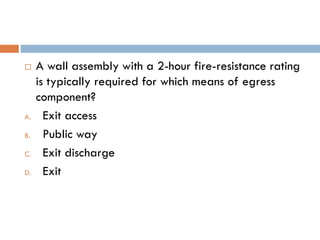
 A wall assembly with a 2-hour fire-resistance rating
is typically required for which means of egress
component?
A. Exit access
B. Public way
C. Exit discharge
D. Exit
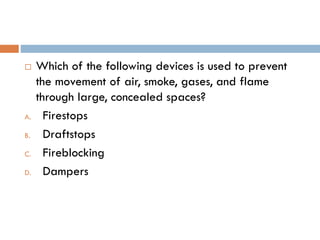
 Which of the following devices is used to prevent
the movement of air, smoke, gases, and flame
through large, concealed spaces?
A. Firestops
B. Draftstops
C. Fireblocking
D. Dampers
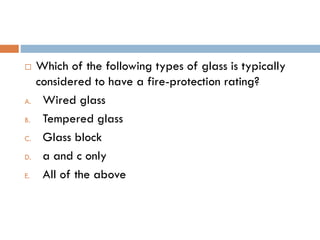
 Which of the following types of glass is typically
considered to have a fire-protection rating?
A. Wired glass
B. Tempered glass
C. Glass block
D. a and c only
E. All of the above
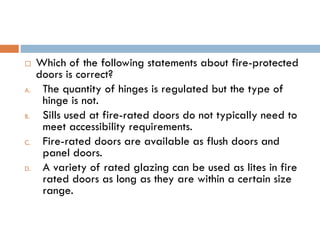
 Which of the following statements about fire-protected
doors is correct?
A. The quantity of hinges is regulated but the type of
hinge is not.
B. Sills used at fire-rated doors do not typically need to
meet accessibility requirements.
C. Fire-rated doors are available as flush doors and
panel doors.
D. A variety of rated glazing can be used as lites in fire
rated doors as long as they are within a certain size
range.
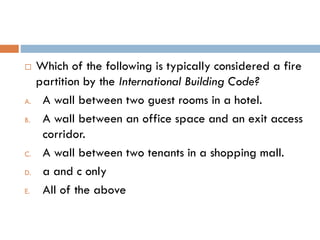
 Which of the following is typically considered a fire
partition by the International Building Code?
A. A wall between two guest rooms in a hotel.
B. A wall between an office space and an exit access
corridor.
C. A wall between two tenants in a shopping mall.
D. a and c only
E. All of the above
 Which of the following can be used to help control
smoke during a fire?
A. Smoke barriers
B. Pressurized exits
C. Sprinklers
D. a and b
E. A and c
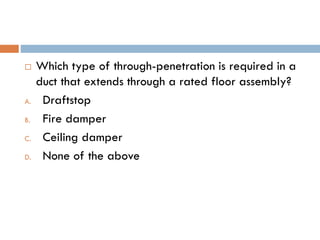
 Which type of through-penetration is required in a
duct that extends through a rated floor assembly?
A. Draftstop
B. Fire damper
C. Ceiling damper
D. None of the above
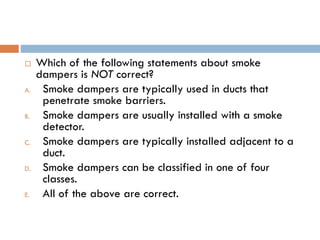
 Which of the following statements about smoke
dampers is NOT correct?
A. Smoke dampers are typically used in ducts that
penetrate smoke barriers.
B. Smoke dampers are usually installed with a smoke
detector.
C. Smoke dampers are typically installed adjacent to a
duct.
D. Smoke dampers can be classified in one of four
classes.
E. All of the above are correct.
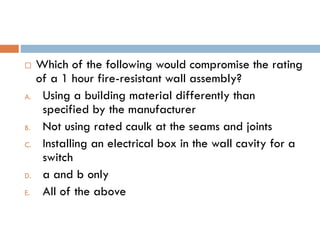
 Which of the following would compromise the rating
of a 1 hour fire-resistant wall assembly?
A. Using a building material differently than
specified by the manufacturer
B. Not using rated caulk at the seams and joints
C. Installing an electrical box in the wall cavity for a
switch
D. a and b only
E. All of the above

fire resistant assemblies

  • 1.
    FIRE AND SMOKE RESISTANTASSEMBLIES BARRIERS, ASSEMBLIES AND PARTITIONS
  • 2.
     Three basictypes of rated assemblies:  Fire barriers  Fire partitions  Horizontal assemblies
  • 3.
     Fire barriersare walls that a fire resistant rating and in most cases must be continuous and extend vertically from the bottom to the top of the floor/ceiling assembly  Additional fire blocking is required at the intersection with other rated elements  Openings are limited  Opening assemblies need to be rated
  • 4.
     Floor/ceiling assembliesare horizontal assemblies  Limited openings  Openings and penetrations must be rated as well
  • 6.
     Fire partitionsare similar to fire barriers but less restrictive  Separate exit access corridors, tenant spaces in malls, dwellings and /or sleeping units  Allowed to stop at the rated ceiling system  Not required to be a full enclosure  Rating of at least one hour
  • 7.
     Ratings dependson purpose, occupancy classification and if space has sprinklers  Openings required to be protected but not limited
  • 9.
     Fire enclosuresseparates occupancy types  Not required between similar hazardous occupancies
  • 10.
     Multiple tenantsof different occupancies in the same building  Single user with multiple occupancies or uses within the same structure
  • 14.
     Tenant separationsin malls required to be rated  Dwelling and sleeping units in residential occupancies to be separated by fire partitions  Some incidental accessory occupancies to be separated
  • 15.
     Required forvertical shaft enclosures as elevators, dumbwaiters, mechanical chases, etc.  Smoke barriers provide protection form movement and passage of smoke and fire gases  Barriers are usually rated  Partitions are not required to have fire resistance rating
  • 16.
     Complete openingassemblies in rated barriers are required to be also rated  Although ratings of opening assemblies – doors, windows, and other penetrations – is lower than the assembly – the quantity and dimensions are limited  Opening assemblies include the door, the frame, and other required hardware.  All rated doors are required to have a self closing device that will close the door after each use. Not necessary for it to be automatic (usually electrically activated)
  • 18.
     Glazing productsin rated assemblies must:  Stay in place during a fire  Resist thermal shock – by a hose stream  Strength from human contact  Resist heat transfer to unexposed side
  • 19.
     Codes allowthe use of glass in some rated partitions – type, size, and quantity is limited  Wired glass – wire mesh sandwiched between two layers of glass  Safety resists impact  Nonsafety does not resist impact  Only type of glass addressed by codes for use in rated opening protectives
  • 20.
     Specialty temperedglass – treated for fire resistance  Some can be used in 1 hr rated walls  Cannot be used near sprinklers since it does not pass the hose stream test  Glass block  Can be used in some 1 hr rated partitions – glass rated to 45 minutes
  • 21.
     Clear ceramics High resistance to heat  Resists thermal shock  20mins to 2hr.  Up to 23s.f. can be used  Sometimes has more distortion and tint
  • 22.
  • 23.
     Firestops andsmokestops  F-rated and T-rated  T is stricter than F as it includes a maximum temperature resistance
  • 24.
     Fireblocks andDraftstops  Restrict the spread of smoke and fire through concealed spaces  Fireblocks – small spaces  Draftstops – large spaces  Damper systems  Interrupts air flow through ducts going through rated assemblies
  • 25.
  • 26.
     An activefire-protection system is sometimes referred to as a prevention system. A. True B. False  The fire-resistance rating of a floor/ceiling assembly is controlled only by the construction type of the building. A. True B. False
  • 27.
     All fire-protecteddoors must have an automatic dosing device. A. True B. False  The fire rating of a through-penetration is typically lower than the fire rating of the construction assembly it is penetrating. A. True B. False
  • 28.
     A fire-protecteddoor can also be used as a smokestop door. A. True B. False  Fire barriers are typically used to create compartments within a building. A. True B. False
  • 29.
     Occupancy separationwalls and demising walls are the same thing. A. True B. False  Doors with fire-protection ratings are not allowed to have glass lites as part of the door. A. True B. False
  • 30.
     __________Walls areused to create a continuous vertical separation within a building or between two different buildings.  Fire/Party  A door assembly typically consists of a door, frame, and _____________.  hardware
  • 31.
     What isthe typical fire-resistance rating of a tenant separation wall? A. 2 hour B. 1 1/2 hour C. 1 hour D. No rating is required.
  • 32.
     Which ofthe following statements is true about firestops? A. They are required at through penetrations in fire barriers. B. They are a means of restricting the passage of smoke, heat, and flames in concealed spaces. C. They can have two different ratings: a T-rating and a stricter F-rating. D. a and c only E. All of the above
  • 33.
     A wallassembly with a 2-hour fire-resistance rating is typically required for which means of egress component? A. Exit access B. Public way C. Exit discharge D. Exit
  • 34.
     Which ofthe following devices is used to prevent the movement of air, smoke, gases, and flame through large, concealed spaces? A. Firestops B. Draftstops C. Fireblocking D. Dampers
  • 35.
     Which ofthe following types of glass is typically considered to have a fire-protection rating? A. Wired glass B. Tempered glass C. Glass block D. a and c only E. All of the above
  • 36.
     Which ofthe following statements about fire-protected doors is correct? A. The quantity of hinges is regulated but the type of hinge is not. B. Sills used at fire-rated doors do not typically need to meet accessibility requirements. C. Fire-rated doors are available as flush doors and panel doors. D. A variety of rated glazing can be used as lites in fire rated doors as long as they are within a certain size range.
  • 37.
     Which ofthe following is typically considered a fire partition by the International Building Code? A. A wall between two guest rooms in a hotel. B. A wall between an office space and an exit access corridor. C. A wall between two tenants in a shopping mall. D. a and c only E. All of the above
  • 38.
     Which ofthe following can be used to help control smoke during a fire? A. Smoke barriers B. Pressurized exits C. Sprinklers D. a and b E. A and c
  • 39.
     Which typeof through-penetration is required in a duct that extends through a rated floor assembly? A. Draftstop B. Fire damper C. Ceiling damper D. None of the above
  • 40.
     Which ofthe following statements about smoke dampers is NOT correct? A. Smoke dampers are typically used in ducts that penetrate smoke barriers. B. Smoke dampers are usually installed with a smoke detector. C. Smoke dampers are typically installed adjacent to a duct. D. Smoke dampers can be classified in one of four classes. E. All of the above are correct.
  • 41.
     Which ofthe following would compromise the rating of a 1 hour fire-resistant wall assembly? A. Using a building material differently than specified by the manufacturer B. Not using rated caulk at the seams and joints C. Installing an electrical box in the wall cavity for a switch D. a and b only E. All of the above