RECORDS MANAGEMENT
Judith Read and Mary Lea Ginn
Chapter 9
Numeric Records Management
Copyright 2011 South-Western, Cengage Learning
Numeric Records Management
• A system for arranging records based on
numbers
• Good for organizations that need to keep
records confidential
• Makes expanding files easy
2
Consecutive Numbering
• Numbered records are arranged in
ascending number order
• Numbers follow one after another without
interruption
• An index must be referenced to locate a
numbered record
3
Components and Supplies
• Numbered guides and folders for the
numeric file
• Alphabetic guides and folders for the
general alphabetic file
• Software for an accession log
• Software for an alphabetic index
4
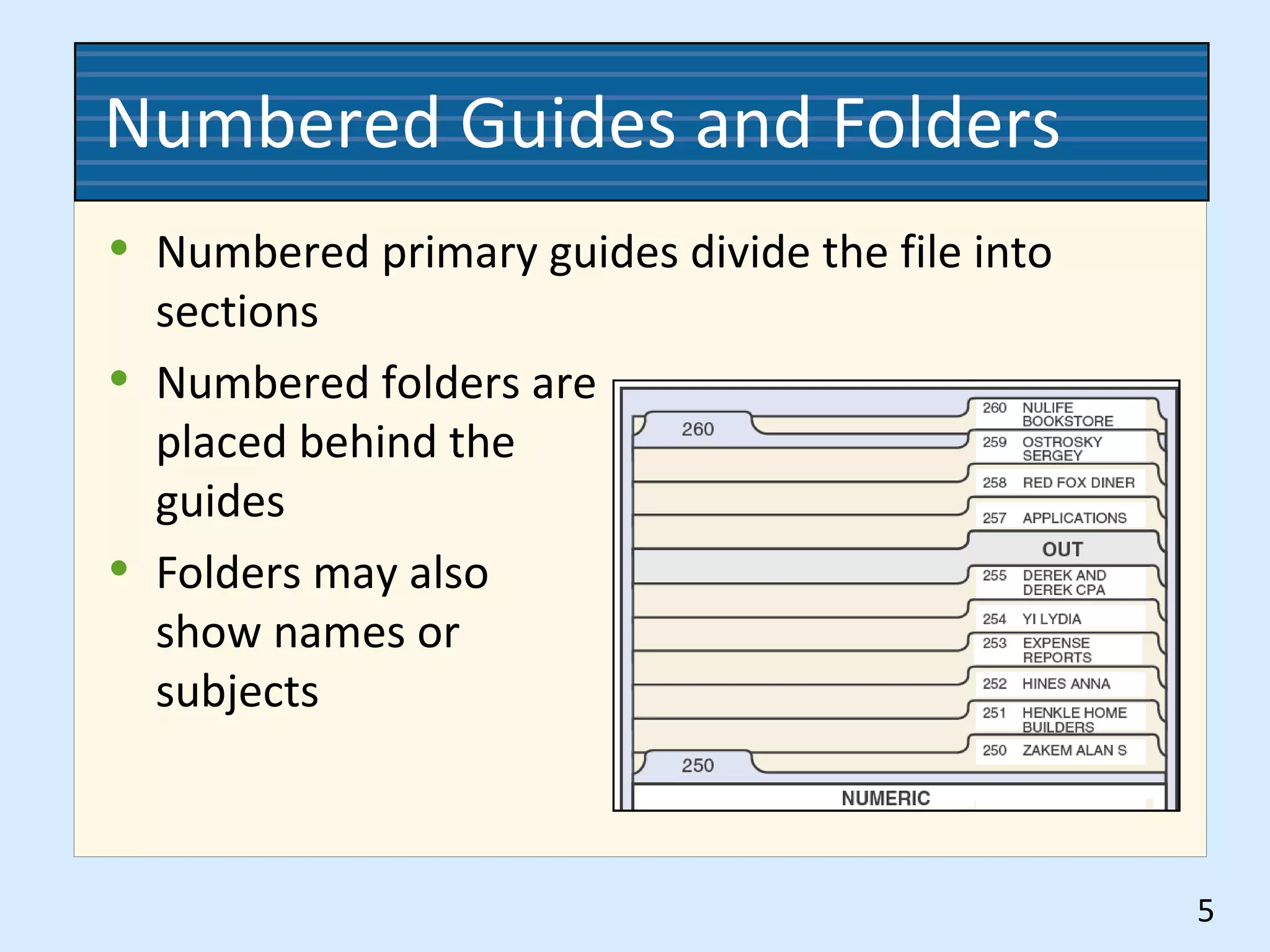
Numbered Guides and Folders
• Numbered primary guides divide the file into
sections
• Numbered folders are
placed behind the
guides
• Folders may also
show names or
subjects
5
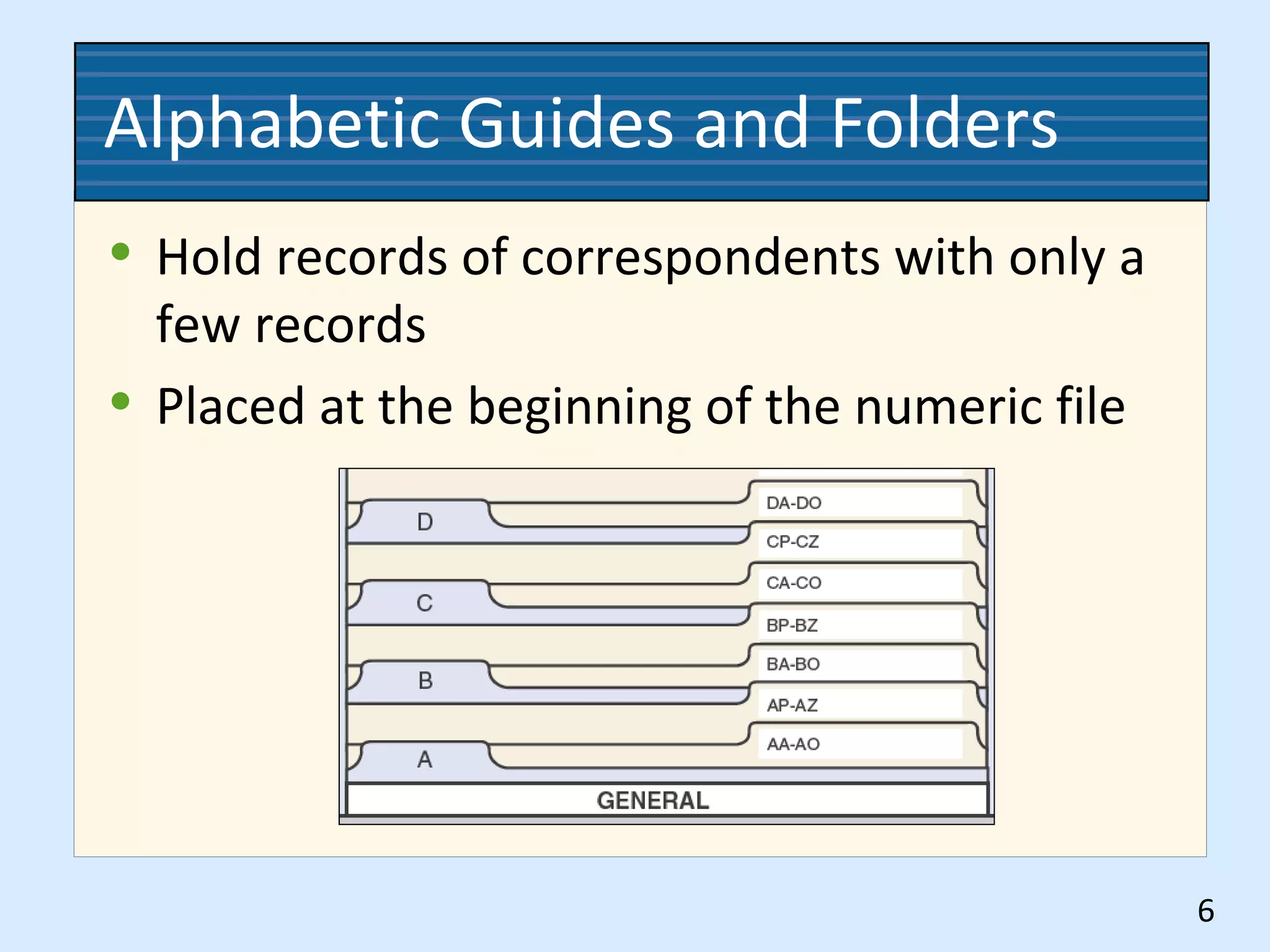
Alphabetic Guides and Folders
• Hold records of correspondents with only a
few records
• Placed at the beginning of the numeric file
6
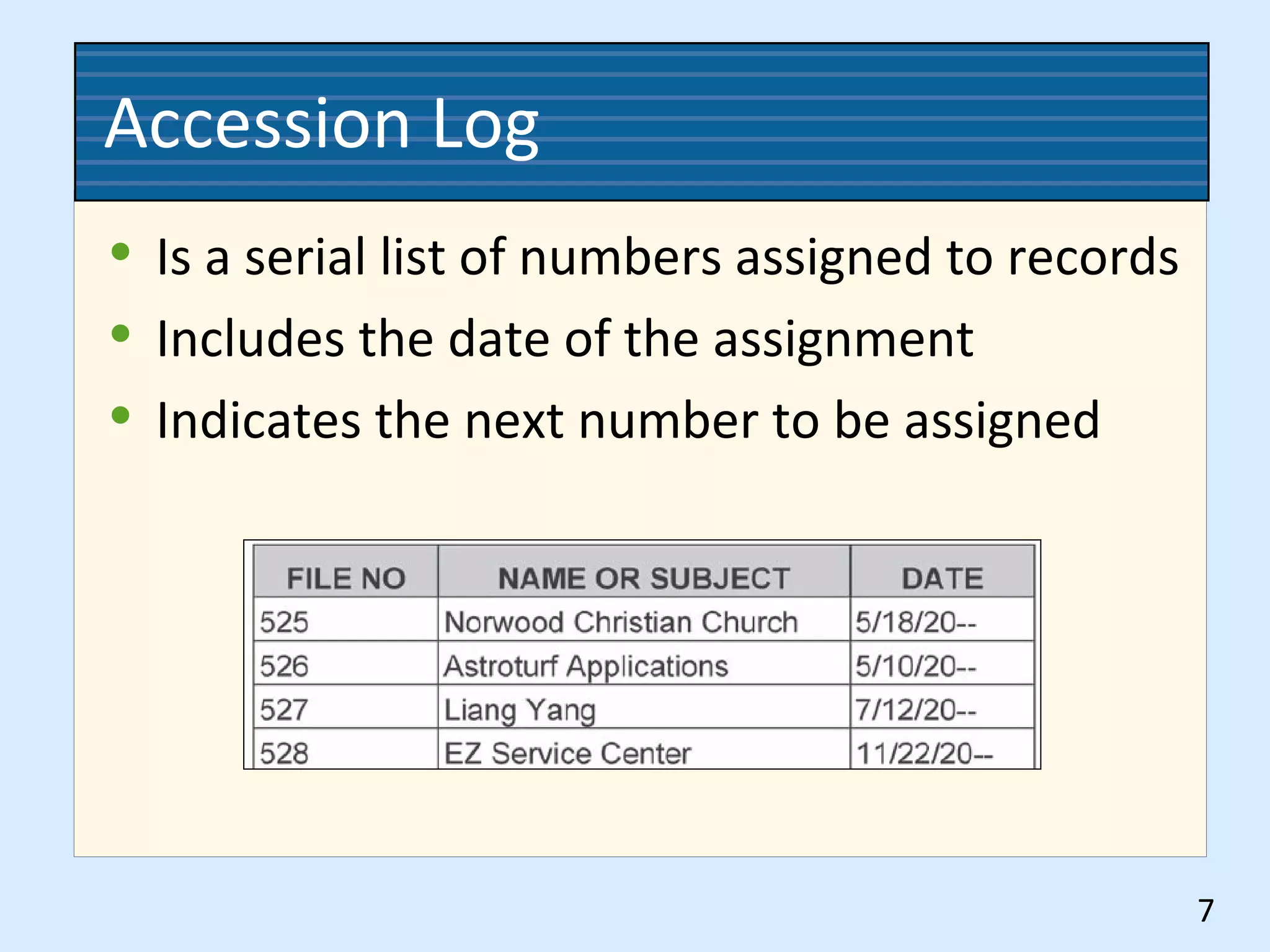
Accession Log
• Is a serial list of numbers assigned to records
• Includes the date of the assignment
• Indicates the next number to be assigned
7
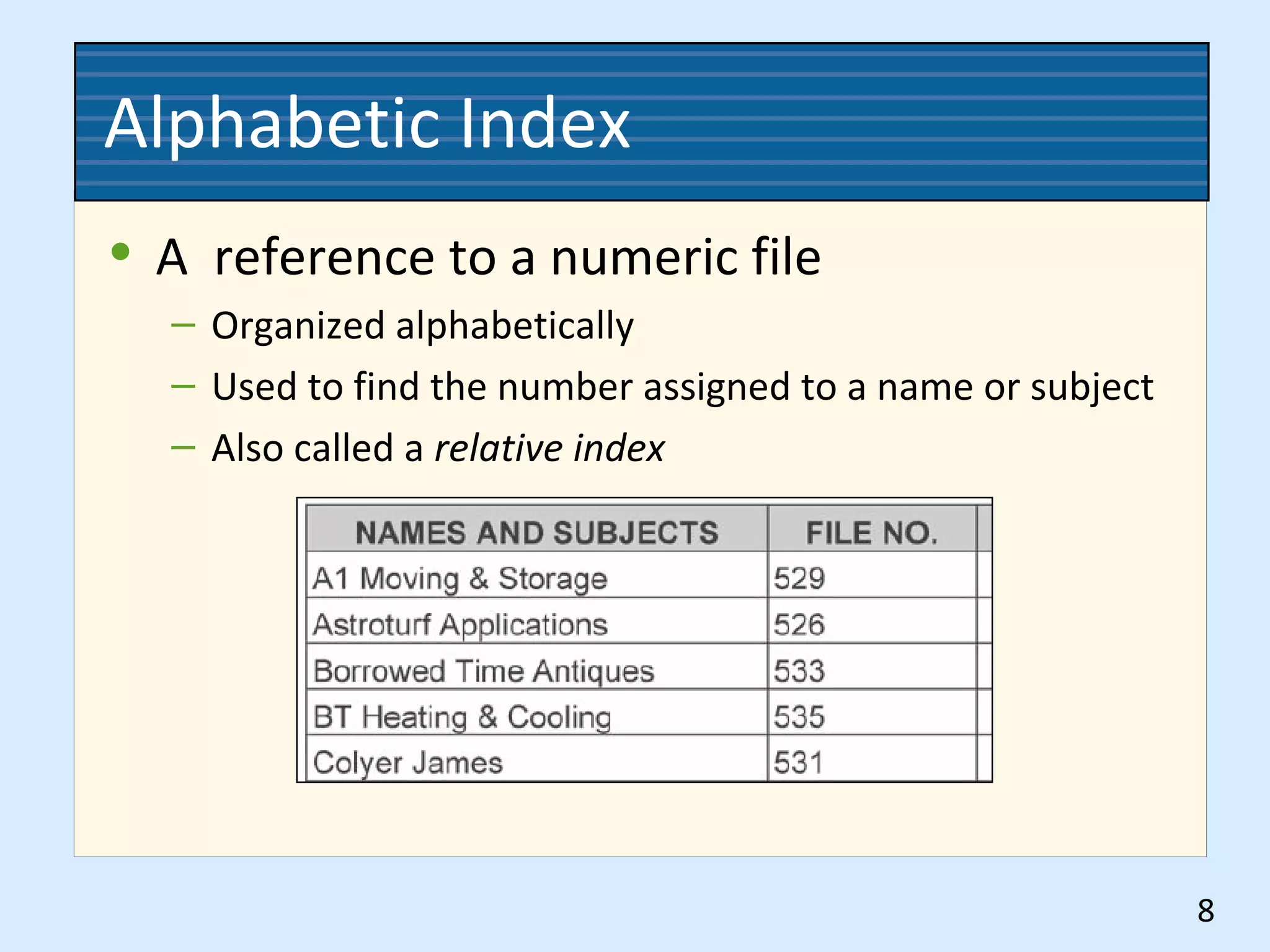
Alphabetic Index
• A reference to a numeric file
– Organized alphabetically
– Used to find the number assigned to a name or subject
– Also called a relative index
8
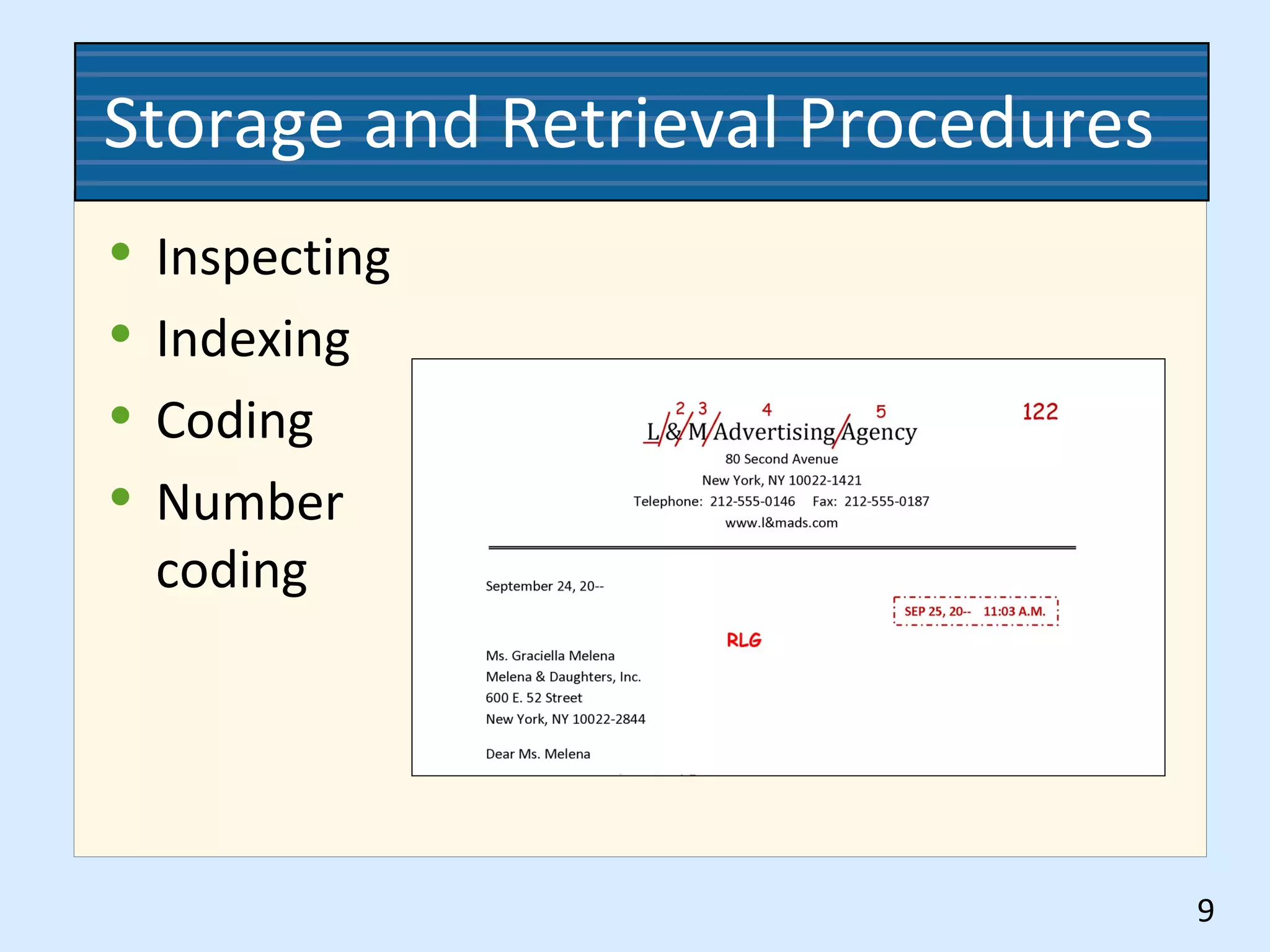
Storage and Retrieval Procedures
• Inspecting
• Indexing
• Coding
• Number
coding
9
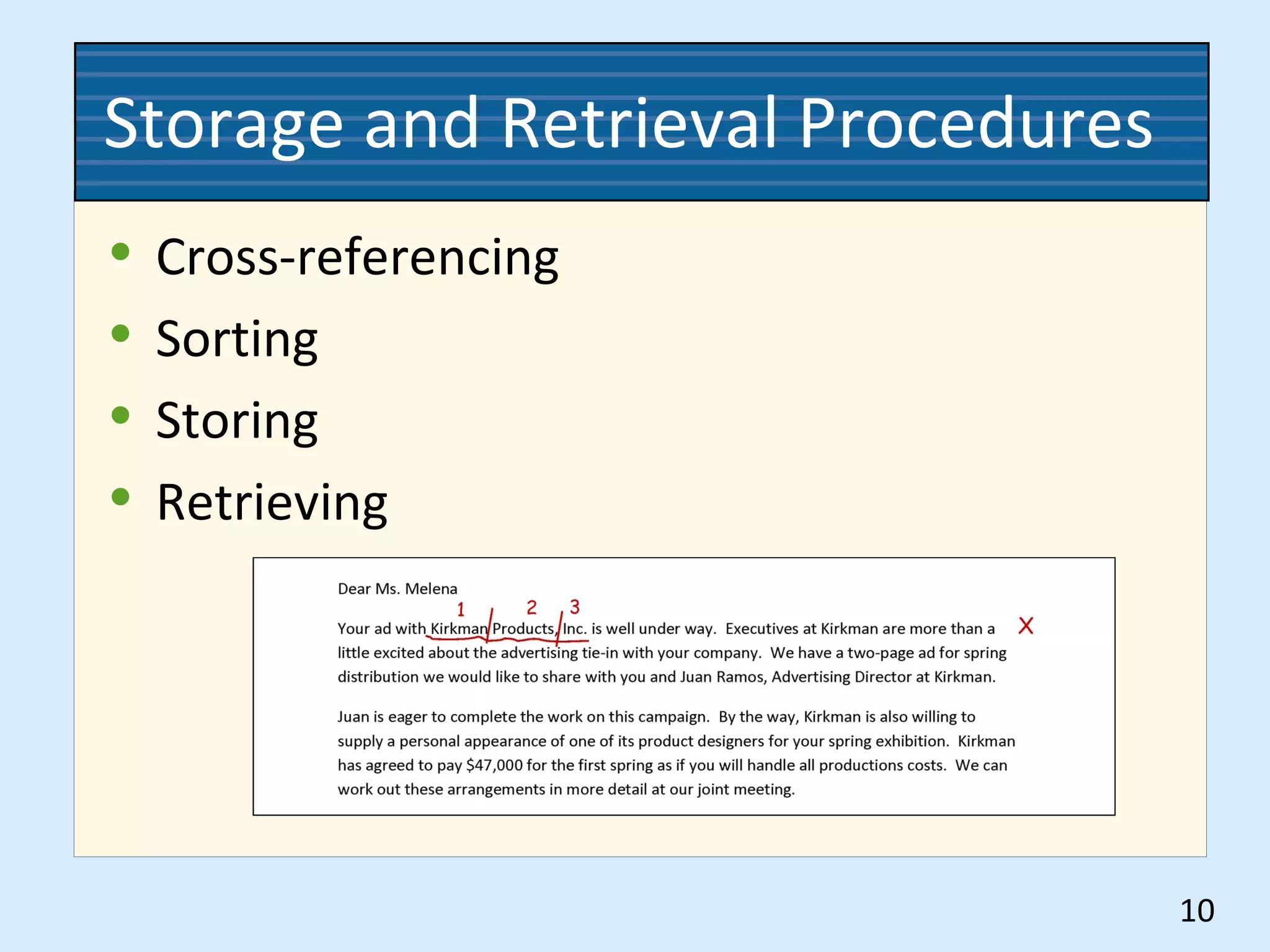
Storage and Retrieval Procedures
• Cross-referencing
• Sorting
• Storing
• Retrieving
10
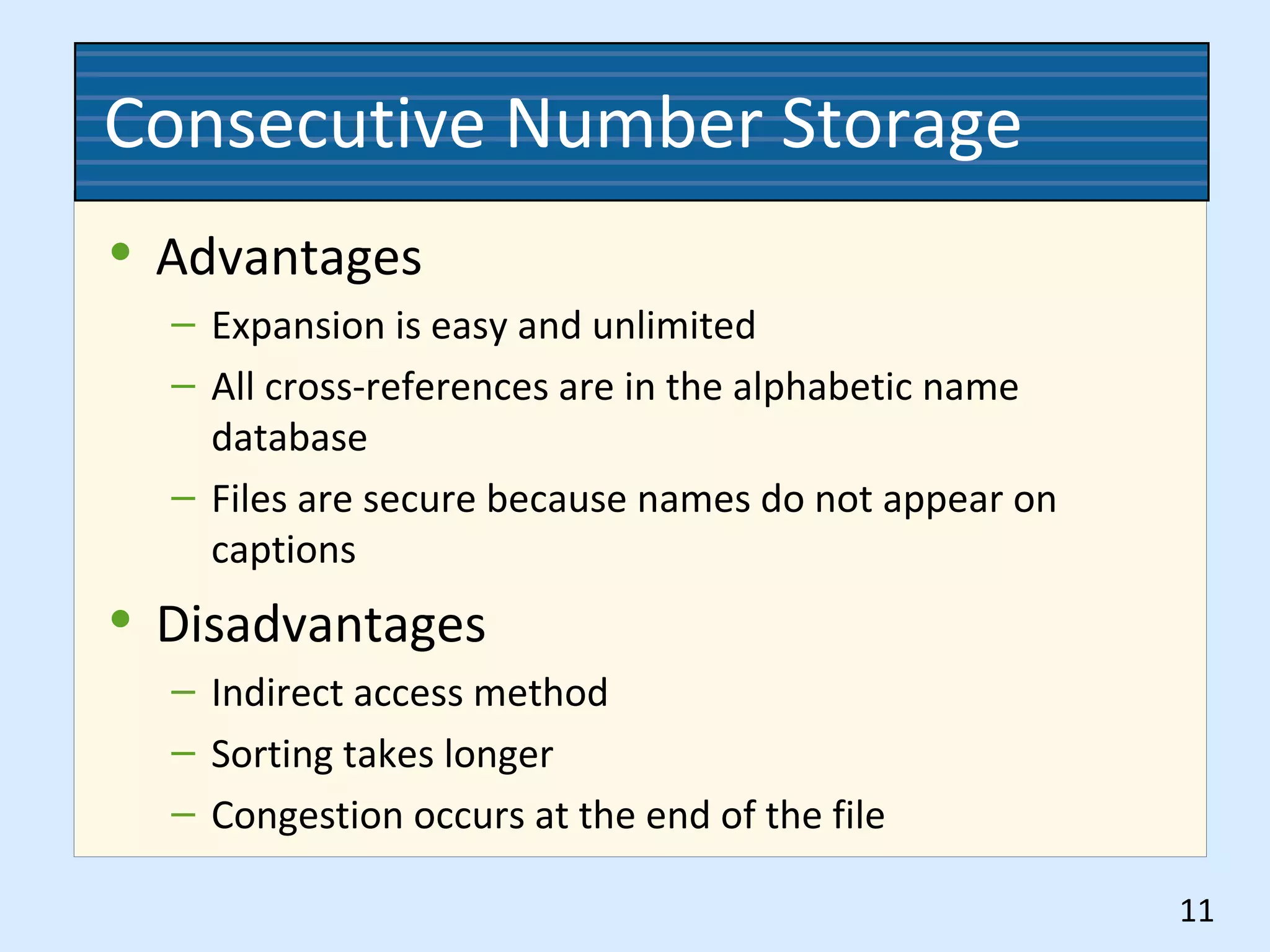
Consecutive Number Storage
• Advantages
– Expansion is easy and unlimited
– All cross-references are in the alphabetic name
database
– Files are secure because names do not appear on
captions
• Disadvantages
– Indirect access method
– Sorting takes longer
– Congestion occurs at the end of the file
11
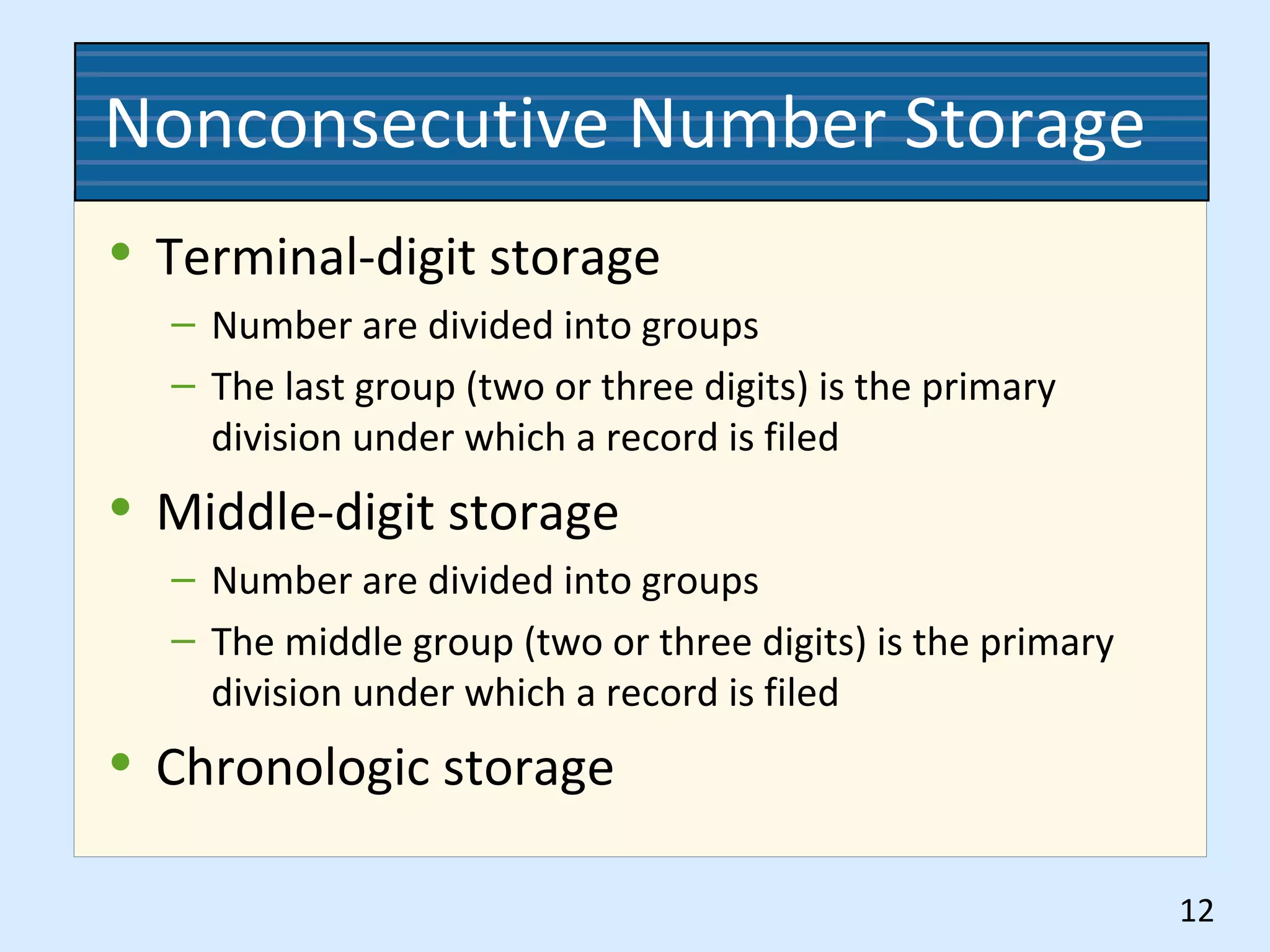
Nonconsecutive Number Storage
• Terminal-digit storage
– Number are divided into groups
– The last group (two or three digits) is the primary
division under which a record is filed
• Middle-digit storage
– Number are divided into groups
– The middle group (two or three digits) is the primary
division under which a record is filed
• Chronologic storage
12
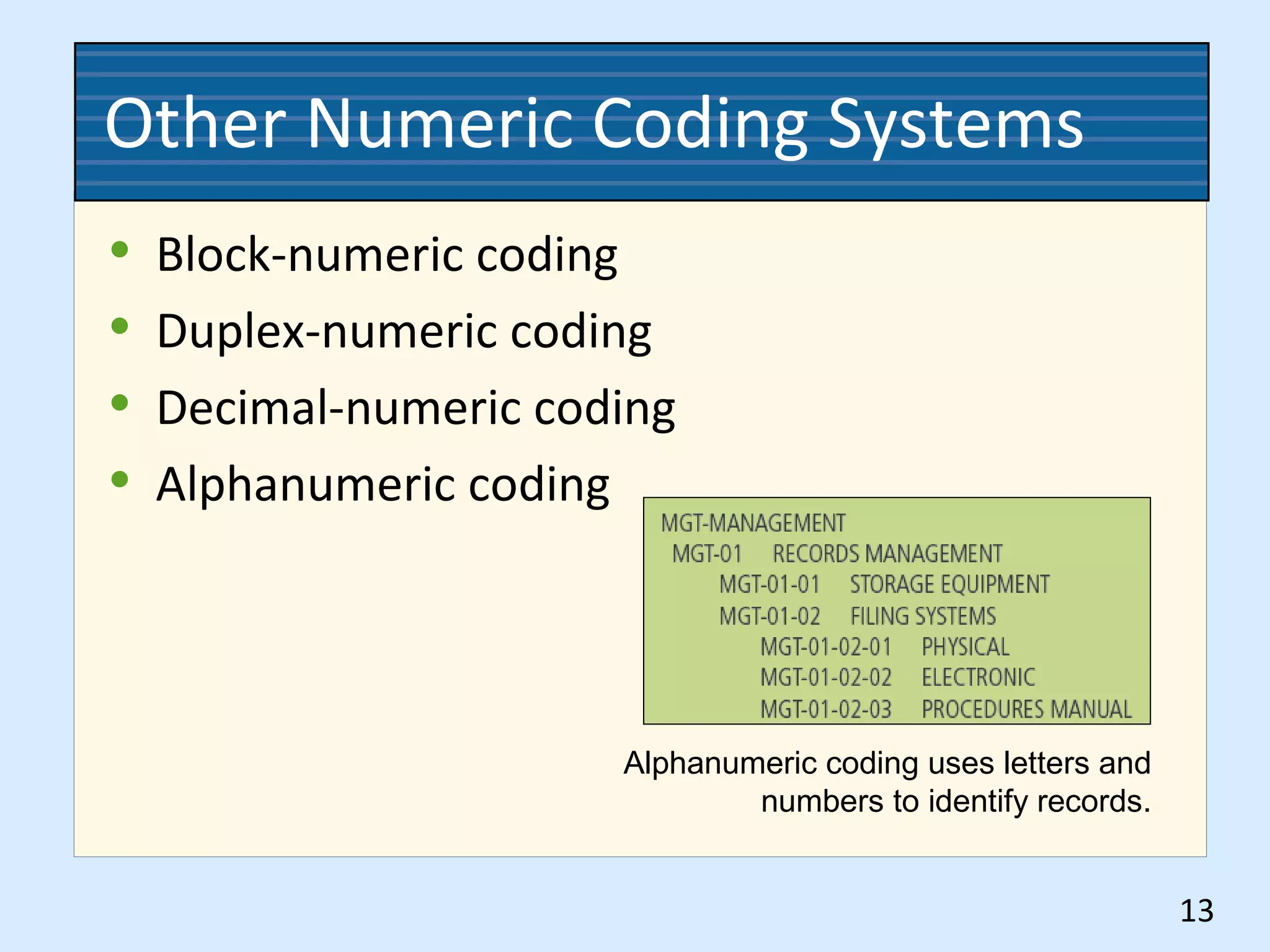
Other Numeric Coding Systems
• Block-numeric coding
• Duplex-numeric coding
• Decimal-numeric coding
• Alphanumeric coding
13
Alphanumeric coding uses letters and
numbers to identify records.
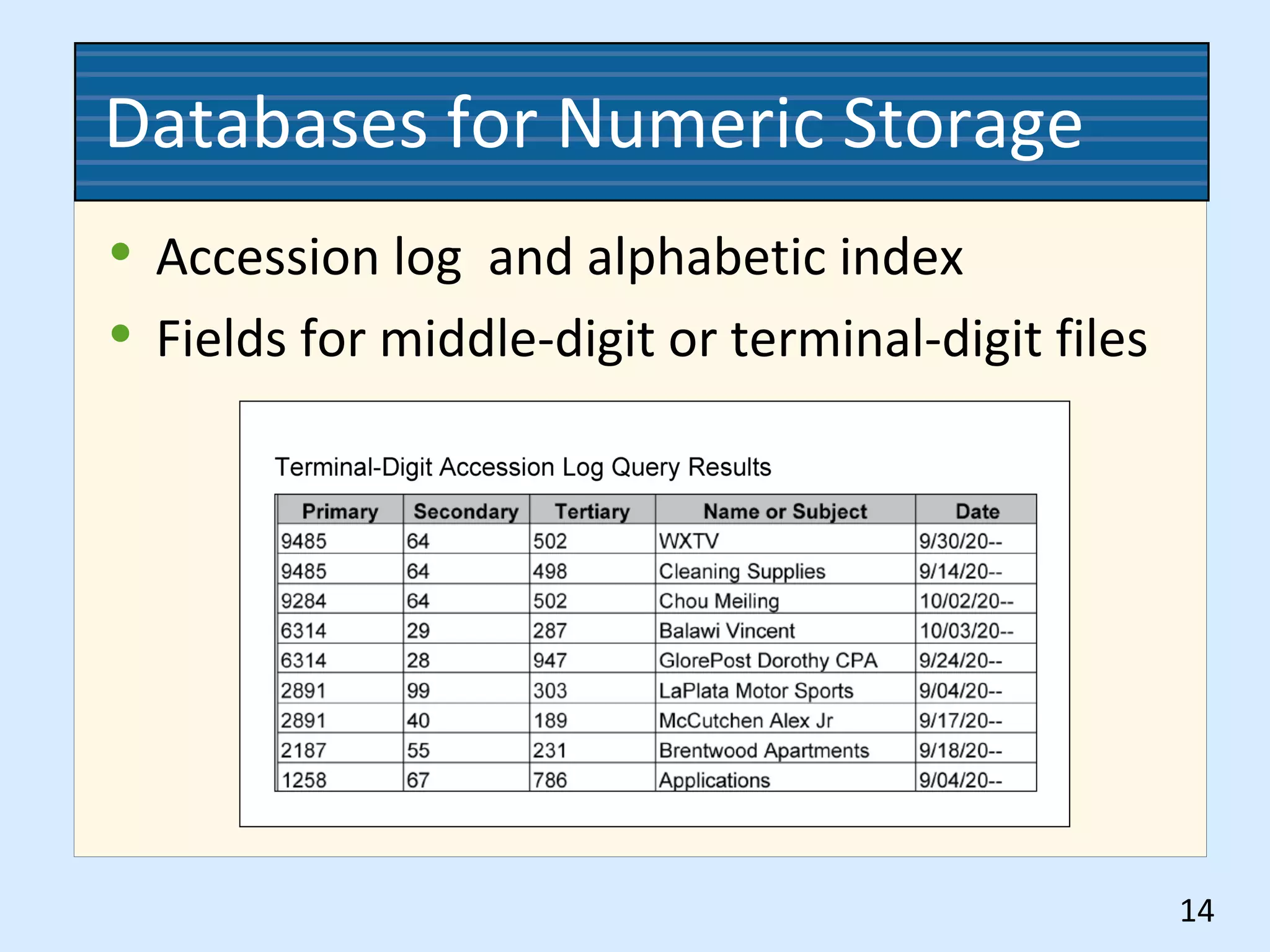
Databases for Numeric Storage
• Accession log and alphabetic index
• Fields for middle-digit or terminal-digit files
14

Ch09 records management

  • 1.
    RECORDS MANAGEMENT Judith Readand Mary Lea Ginn Chapter 9 Numeric Records Management Copyright 2011 South-Western, Cengage Learning
  • 2.
    Numeric Records Management •A system for arranging records based on numbers • Good for organizations that need to keep records confidential • Makes expanding files easy 2
  • 3.
    Consecutive Numbering • Numberedrecords are arranged in ascending number order • Numbers follow one after another without interruption • An index must be referenced to locate a numbered record 3
  • 4.
    Components and Supplies •Numbered guides and folders for the numeric file • Alphabetic guides and folders for the general alphabetic file • Software for an accession log • Software for an alphabetic index 4
  • 5.
    Numbered Guides andFolders • Numbered primary guides divide the file into sections • Numbered folders are placed behind the guides • Folders may also show names or subjects 5
  • 6.
    Alphabetic Guides andFolders • Hold records of correspondents with only a few records • Placed at the beginning of the numeric file 6
  • 7.
    Accession Log • Isa serial list of numbers assigned to records • Includes the date of the assignment • Indicates the next number to be assigned 7
  • 8.
    Alphabetic Index • Areference to a numeric file – Organized alphabetically – Used to find the number assigned to a name or subject – Also called a relative index 8
  • 9.
    Storage and RetrievalProcedures • Inspecting • Indexing • Coding • Number coding 9
  • 10.
    Storage and RetrievalProcedures • Cross-referencing • Sorting • Storing • Retrieving 10
  • 11.
    Consecutive Number Storage •Advantages – Expansion is easy and unlimited – All cross-references are in the alphabetic name database – Files are secure because names do not appear on captions • Disadvantages – Indirect access method – Sorting takes longer – Congestion occurs at the end of the file 11
  • 12.
    Nonconsecutive Number Storage •Terminal-digit storage – Number are divided into groups – The last group (two or three digits) is the primary division under which a record is filed • Middle-digit storage – Number are divided into groups – The middle group (two or three digits) is the primary division under which a record is filed • Chronologic storage 12
  • 13.
    Other Numeric CodingSystems • Block-numeric coding • Duplex-numeric coding • Decimal-numeric coding • Alphanumeric coding 13 Alphanumeric coding uses letters and numbers to identify records.
  • 14.
    Databases for NumericStorage • Accession log and alphabetic index • Fields for middle-digit or terminal-digit files 14