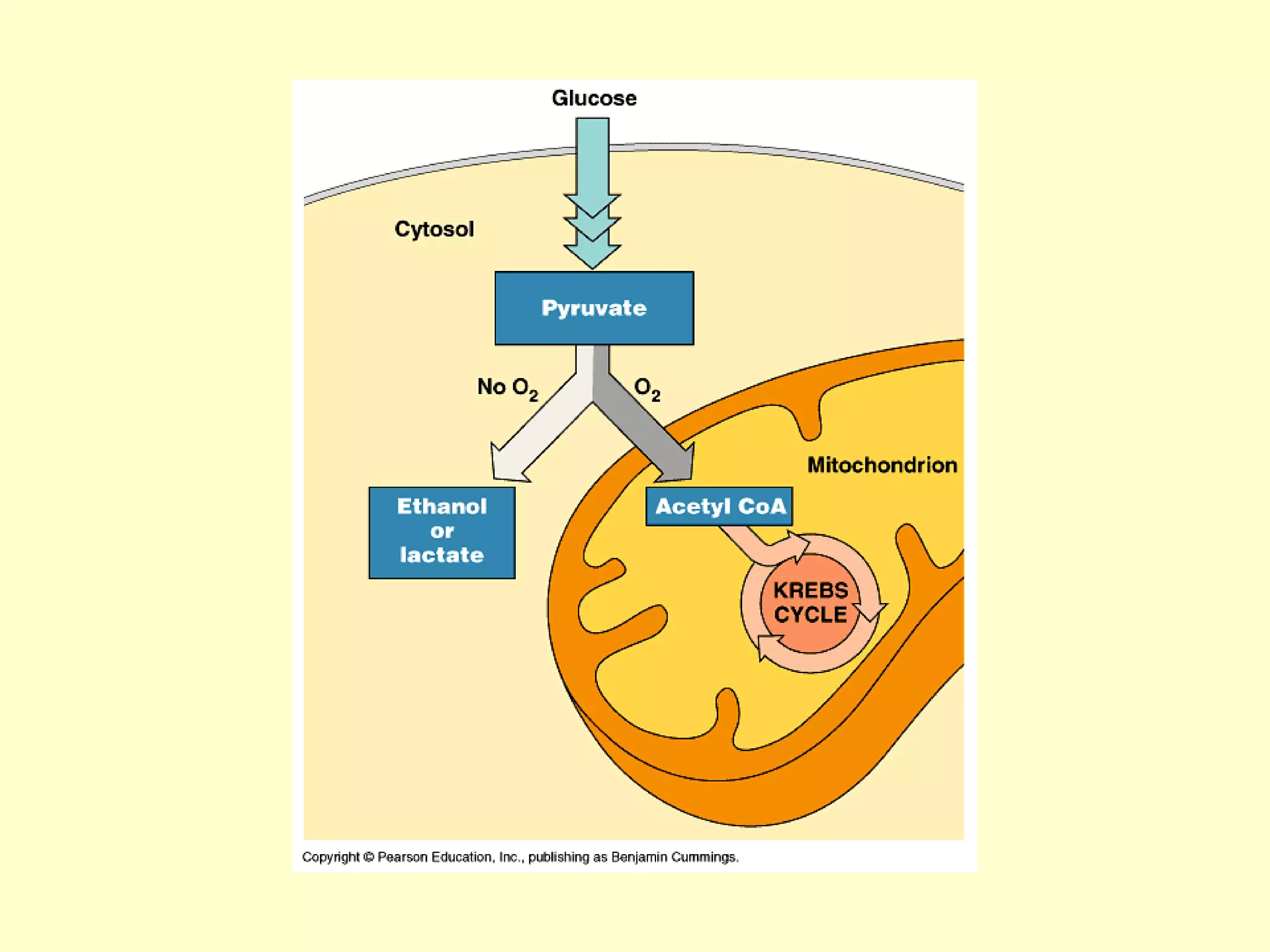
Cellular Respiration
How cells use food and oxygen
to make energy in the form of
     ATP and do work.
Types of Cellular Respiration
• Aerobic Cellular Respiration- Cells make
  ATP using Oxygen in mitochondria

• Anaerobic Cellular Respiration- Cells
  make ATP without using Oxygen in the
  cytoplasm of the cell. Also referred to as
  fermentation.
Big Picture

Both are catabolic reactions that produce
energy in the form of ATP.
Aerobic cellular respiration is the
chemical (metabolic) reaction that uses
O2 and produces CO2 so it is the reason
 why we need to breathe.
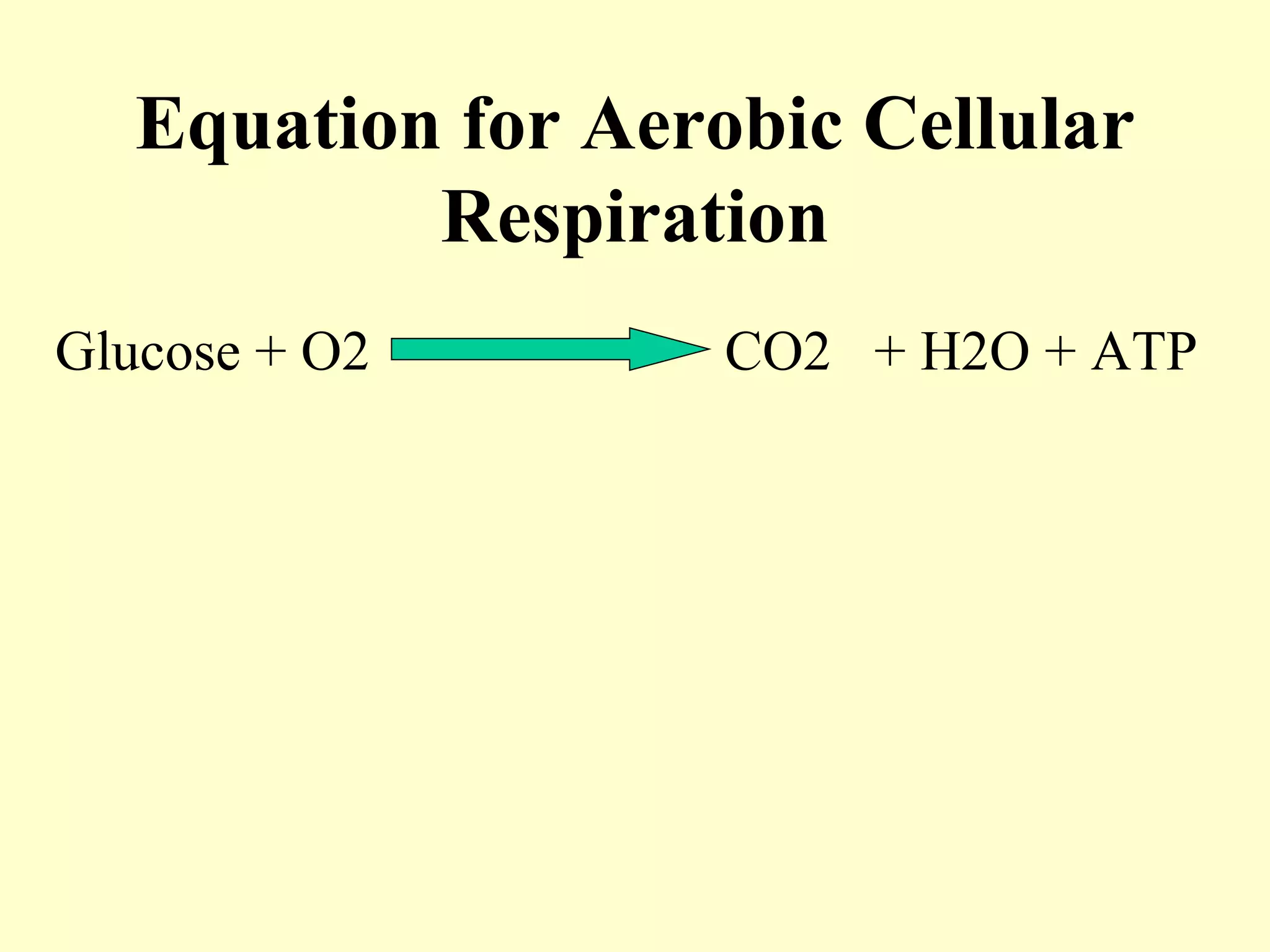
Equation for Aerobic Cellular
           Respiration
Glucose + O2        CO2 + H2O + ATP
3 main chemical reactions in
   aerobic cellular respiration

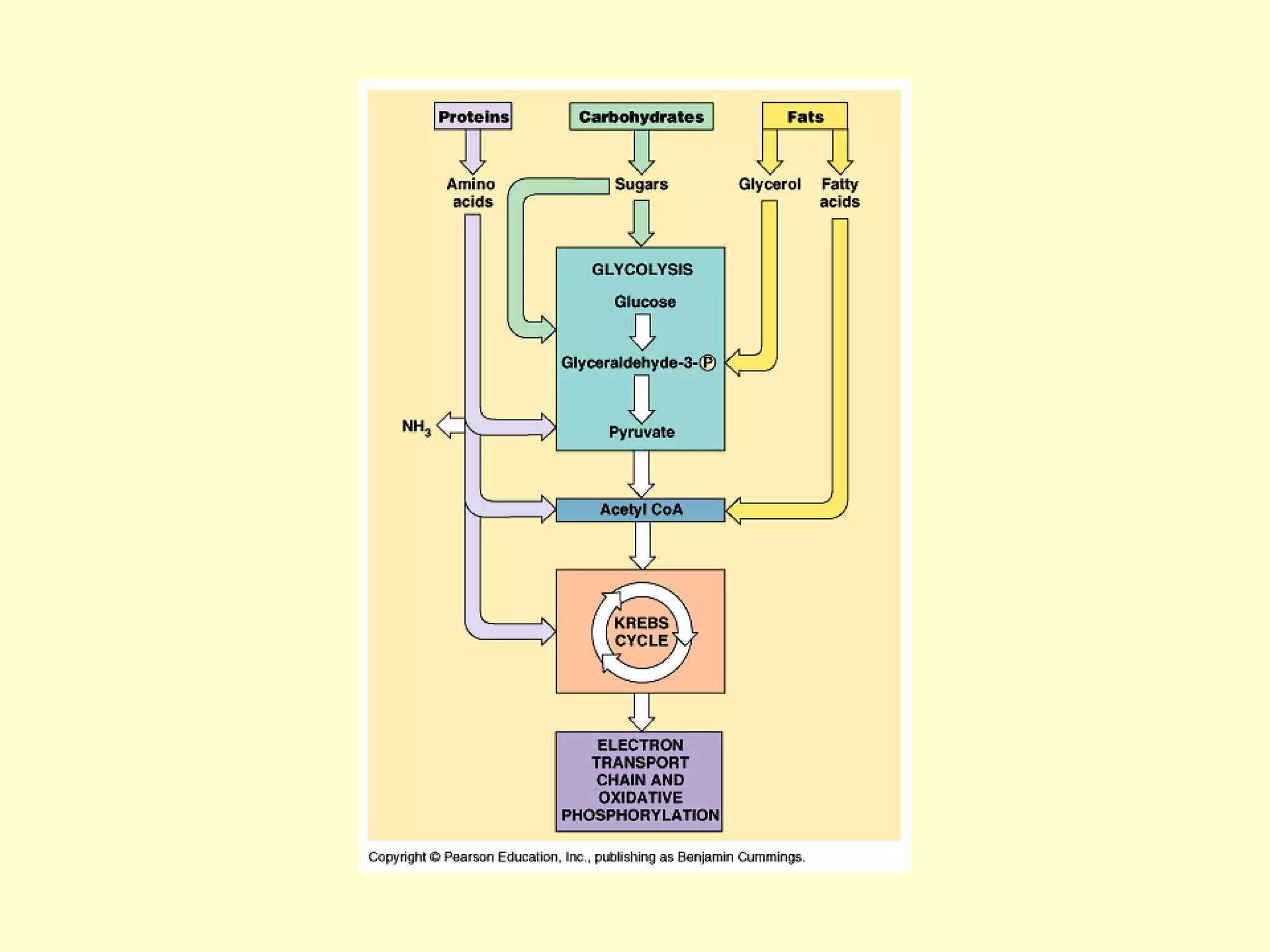
Glycolysis

Krebs Cycle

Electron Transport System
1. Glycolysis
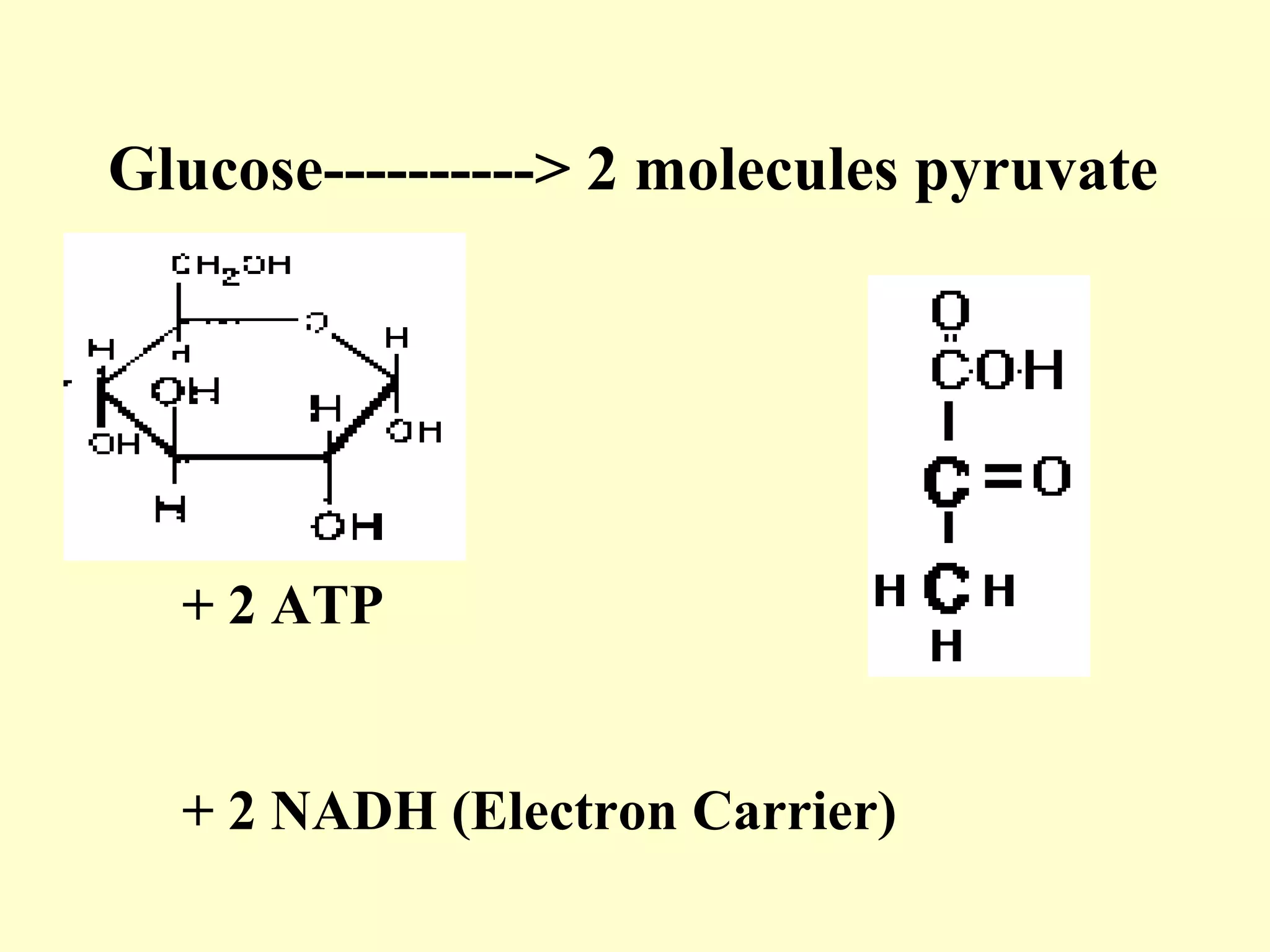
•   Catabolic reaction that breaks glucose into
    2 molecules of pyruvic acid or pyruvate.

•   Occurs in the cytoplasm of the cell

•   Does not use O2 (it is part of cellular
    respiration but it is also the first step in the
    fermentation process as well)
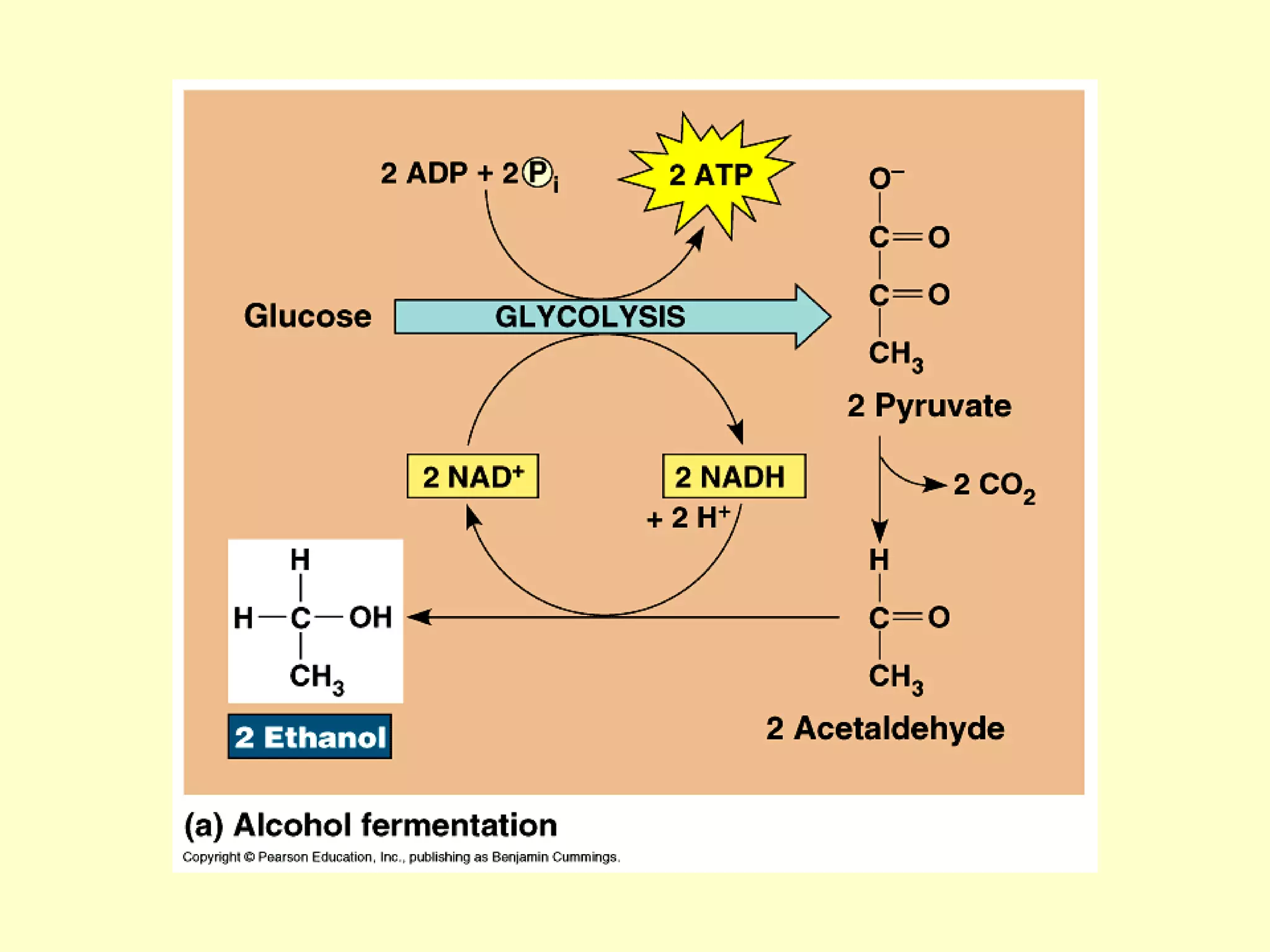
Glucose----------> 2 molecules pyruvate


  + 2 ATP


  + 2 NADH (Electron Carrier)
Glycolysis produces a little bit of energy in
the form of ATP and NADH.
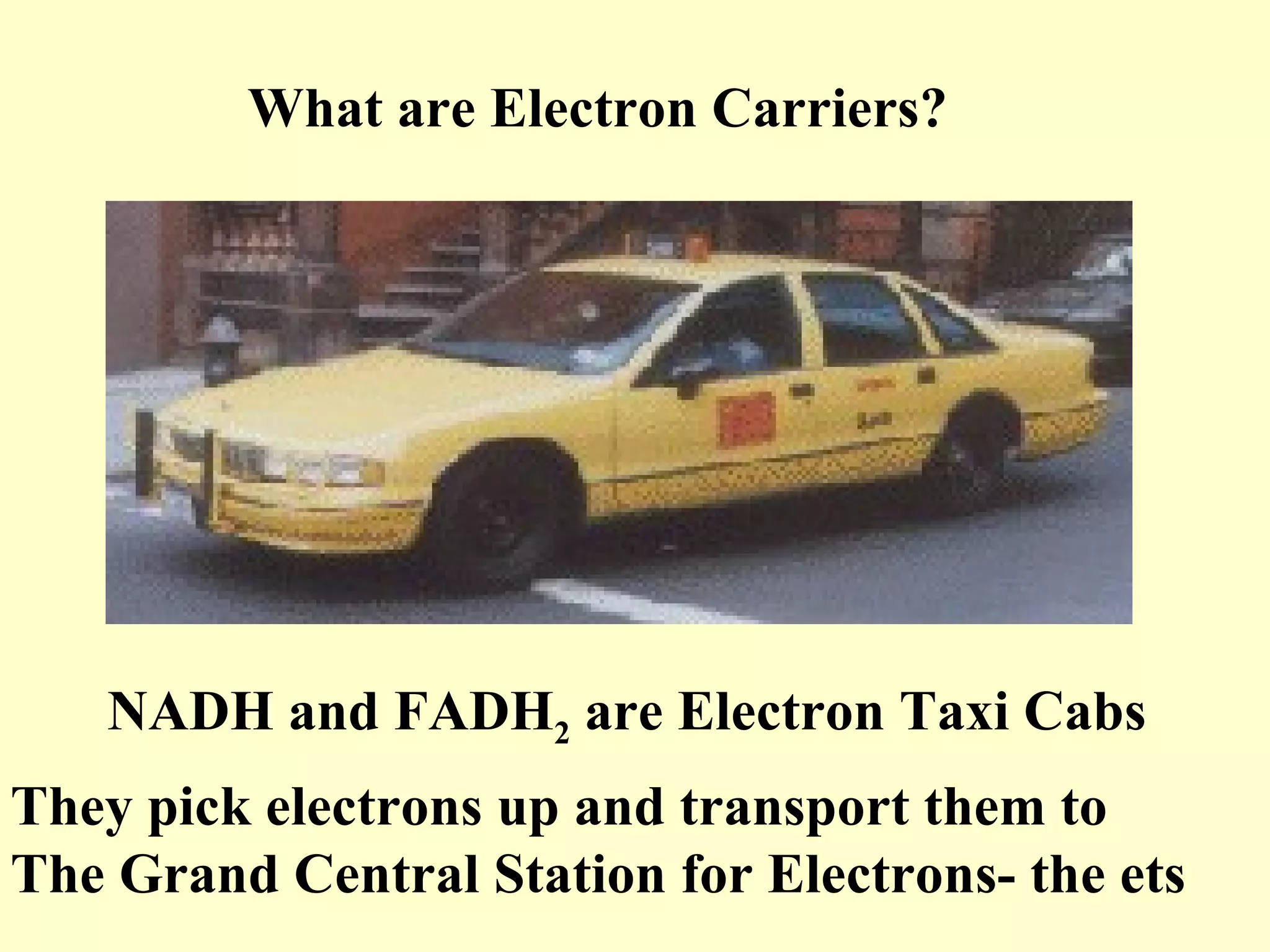
What are Electron Carriers?


   NADH and FADH2 are Electron Taxi Cabs
They pick electrons up and transport them to
The Grand Central Station for Electrons- the ets
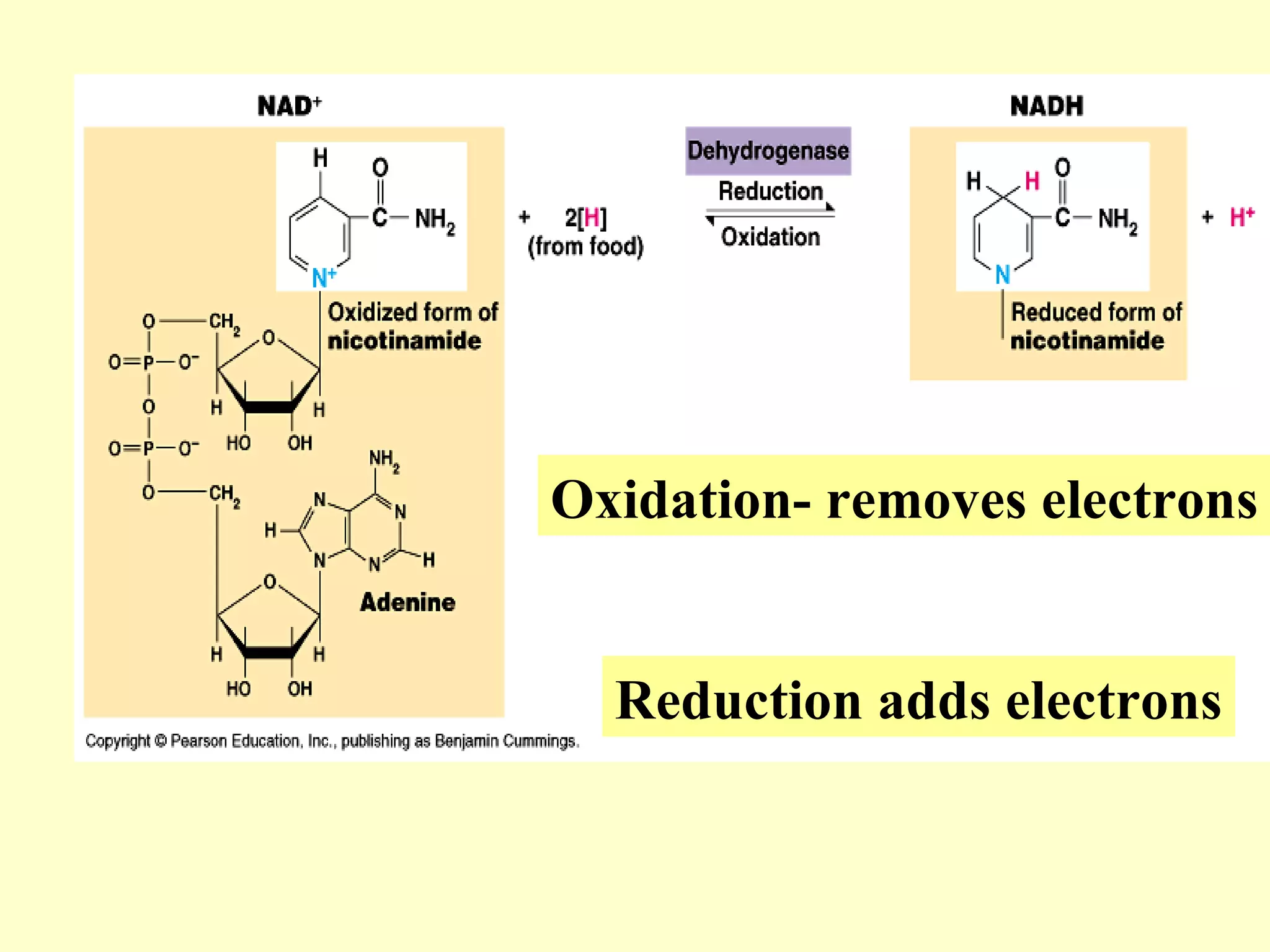
Oxidation- removes electrons


  Reduction adds electrons
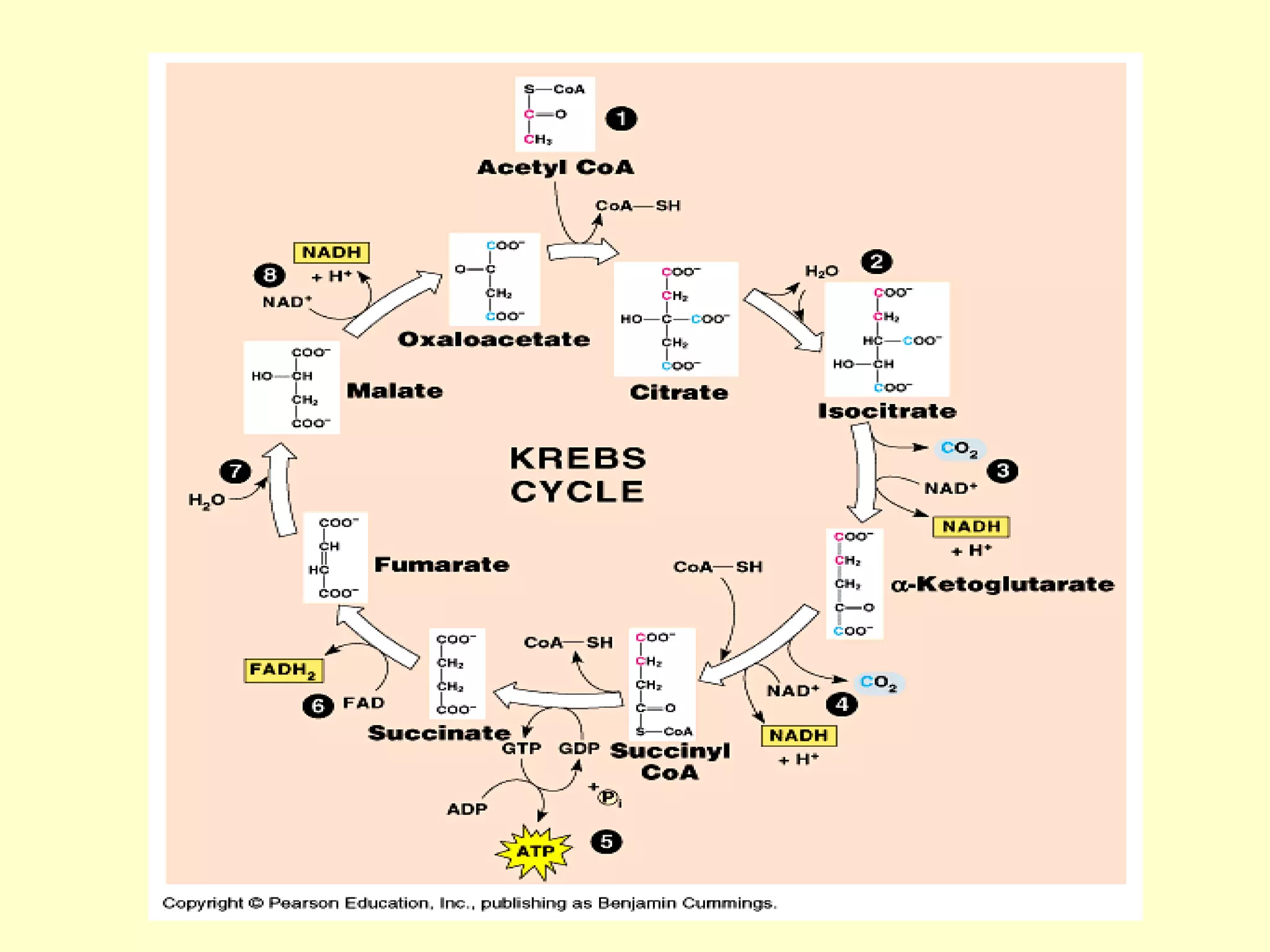
2. Krebs Cycle
• Complex sequence of reactions that occur
  in the mitochondrial matrix.

• Reactions complete the breakdown of the
  original glucose molecule by acting on pyruvic
  acid
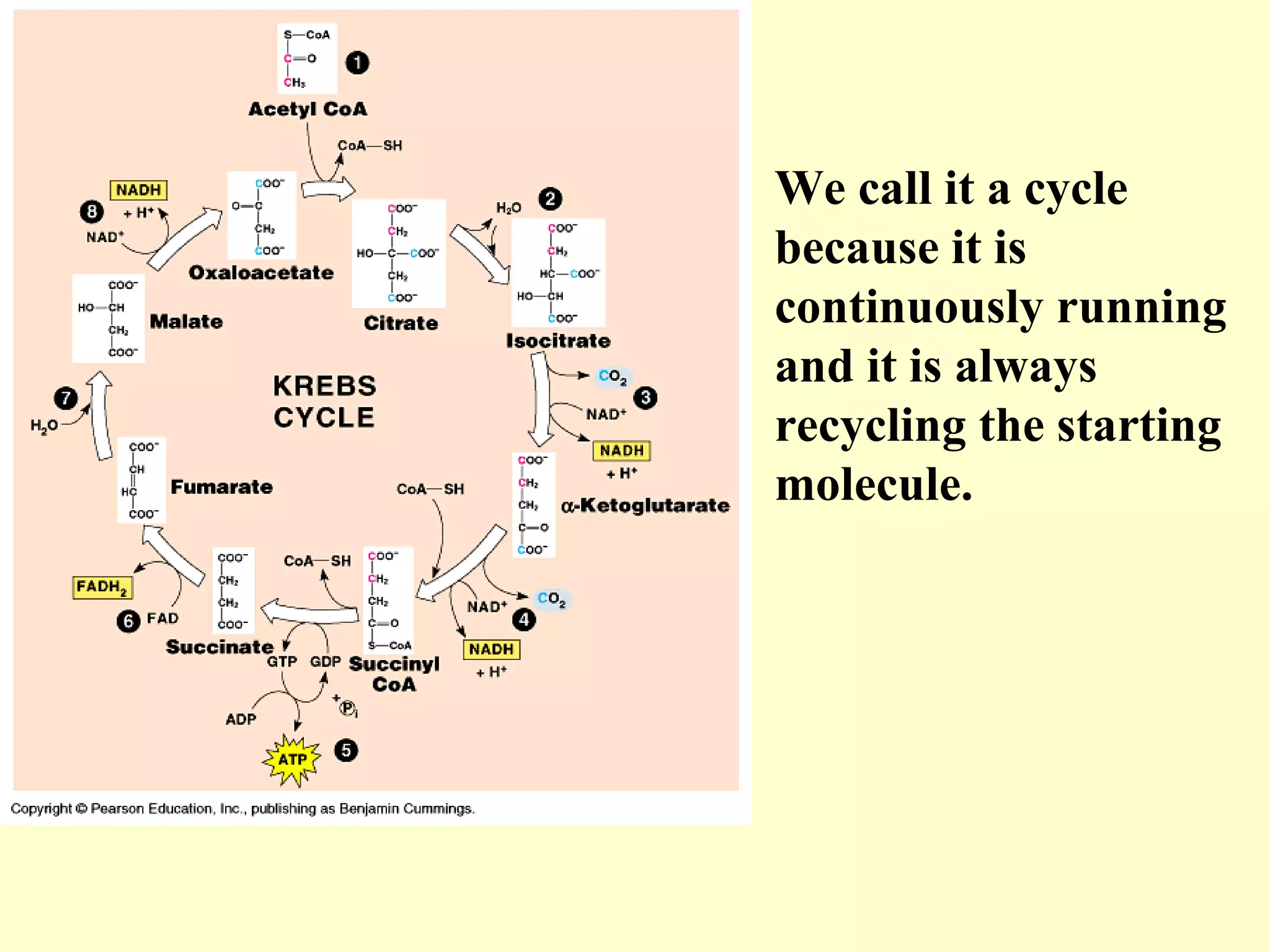
We call it a cycle
because it is
continuously running
and it is always
recycling the starting
molecule.
Major Impact of the Krebs Cycle

•Completes the break down of glucose
•Makes a lot of electron carriers (NADH,
FADH2)
•Produces the majority of CO2 that must be
eliminated from the system
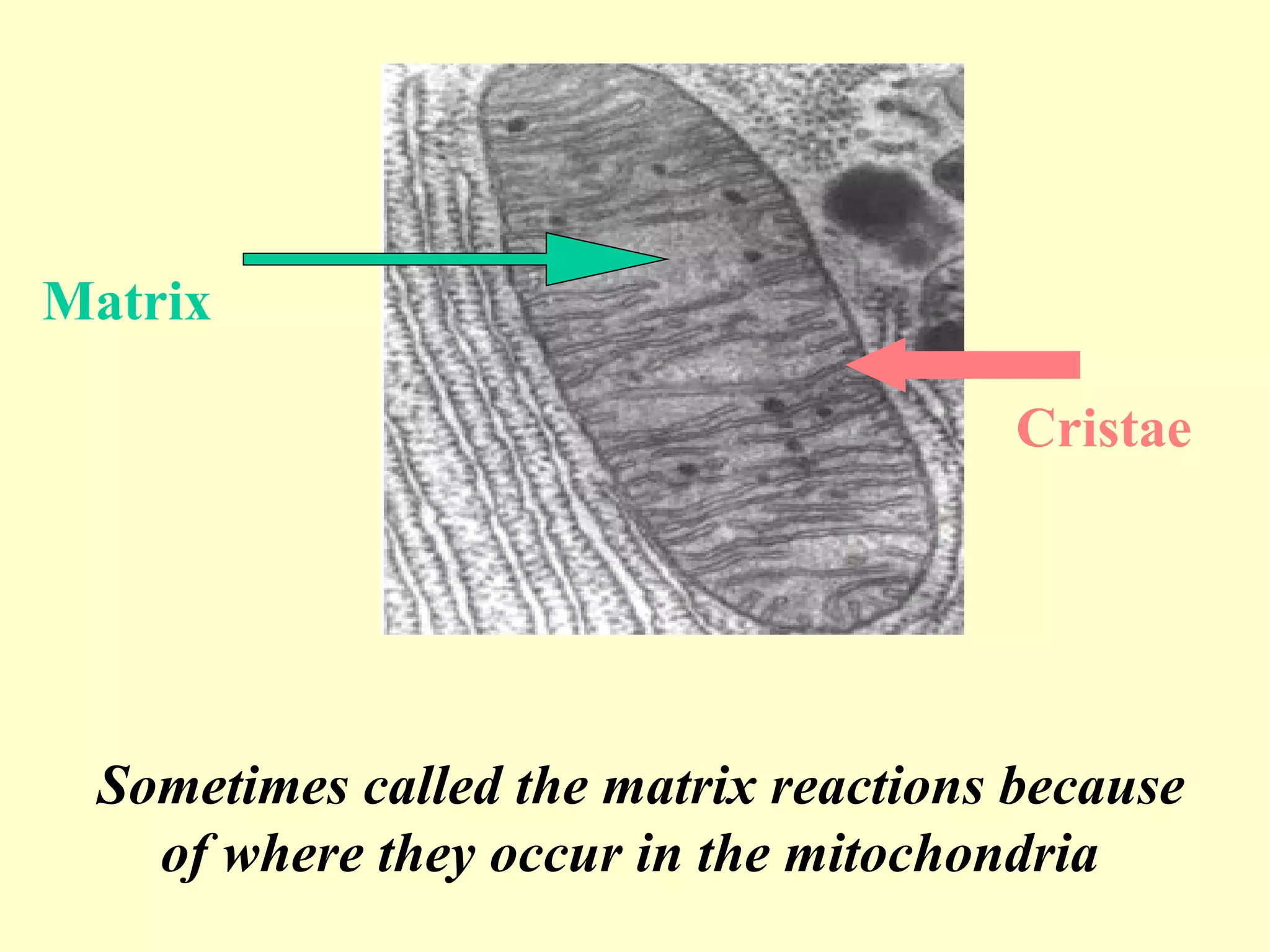
Matrix

                                       Cristae


 Sometimes called the matrix reactions because
   of where they occur in the mitochondria
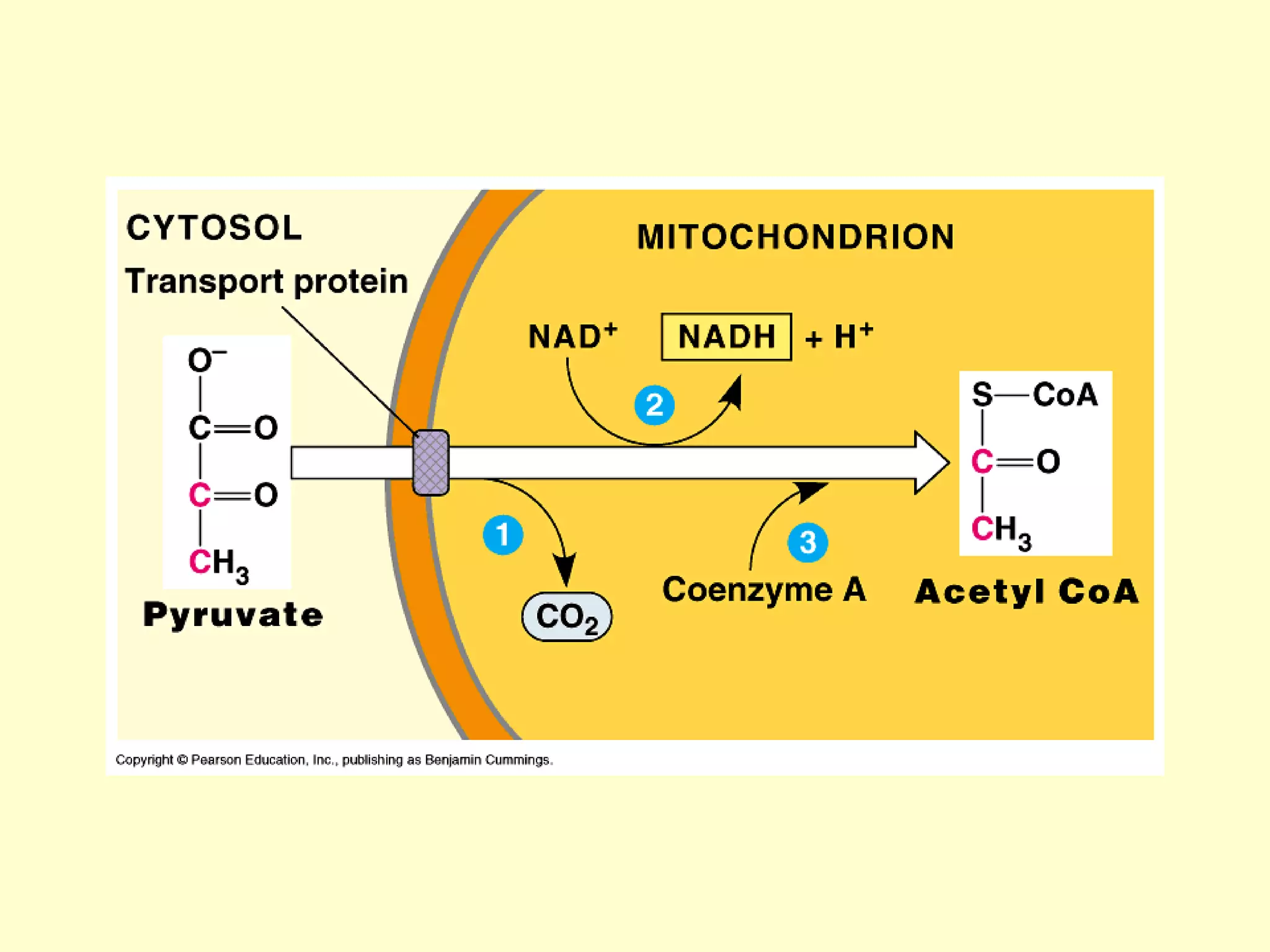
How?
Pyruvic acid enters the mitochondria from
the cell cytoplasm and then is converted into
another molecule called Acetyl Co-A.
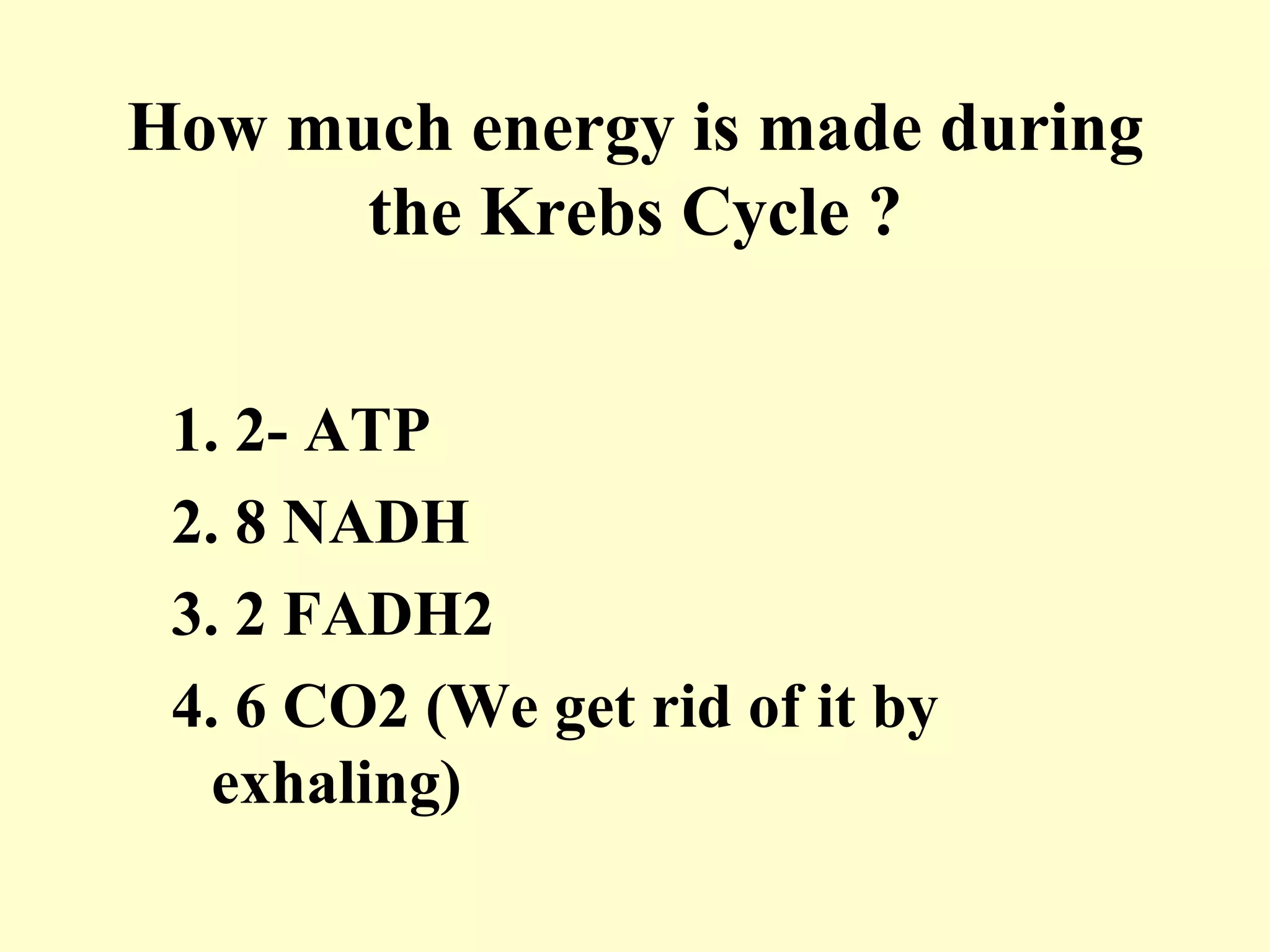
How much energy is made during
      the Krebs Cycle ?


 1. 2- ATP
 2. 8 NADH
 3. 2 FADH2
 4. 6 CO2 (We get rid of it by
   exhaling)
3. Electron Transport System


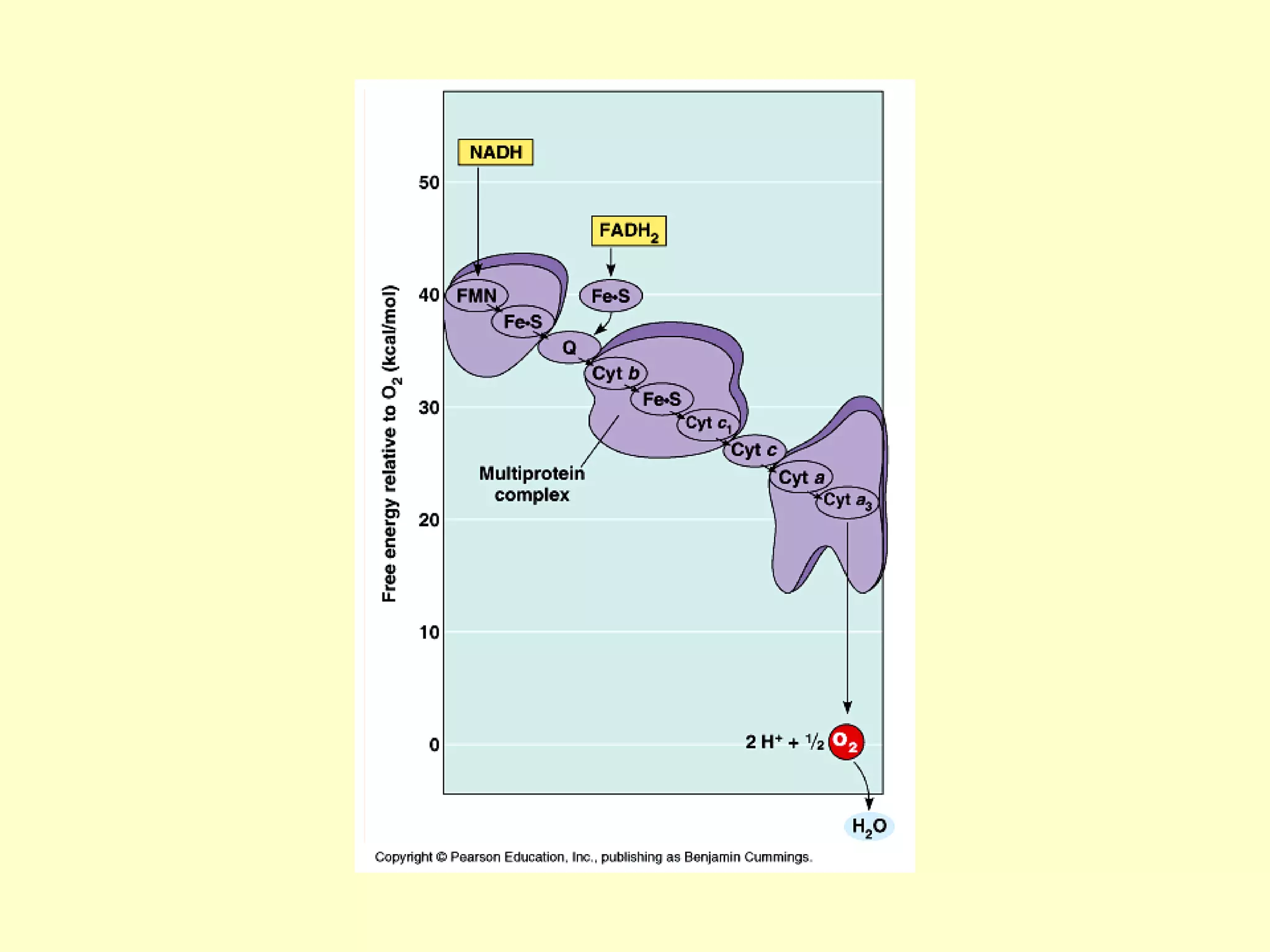
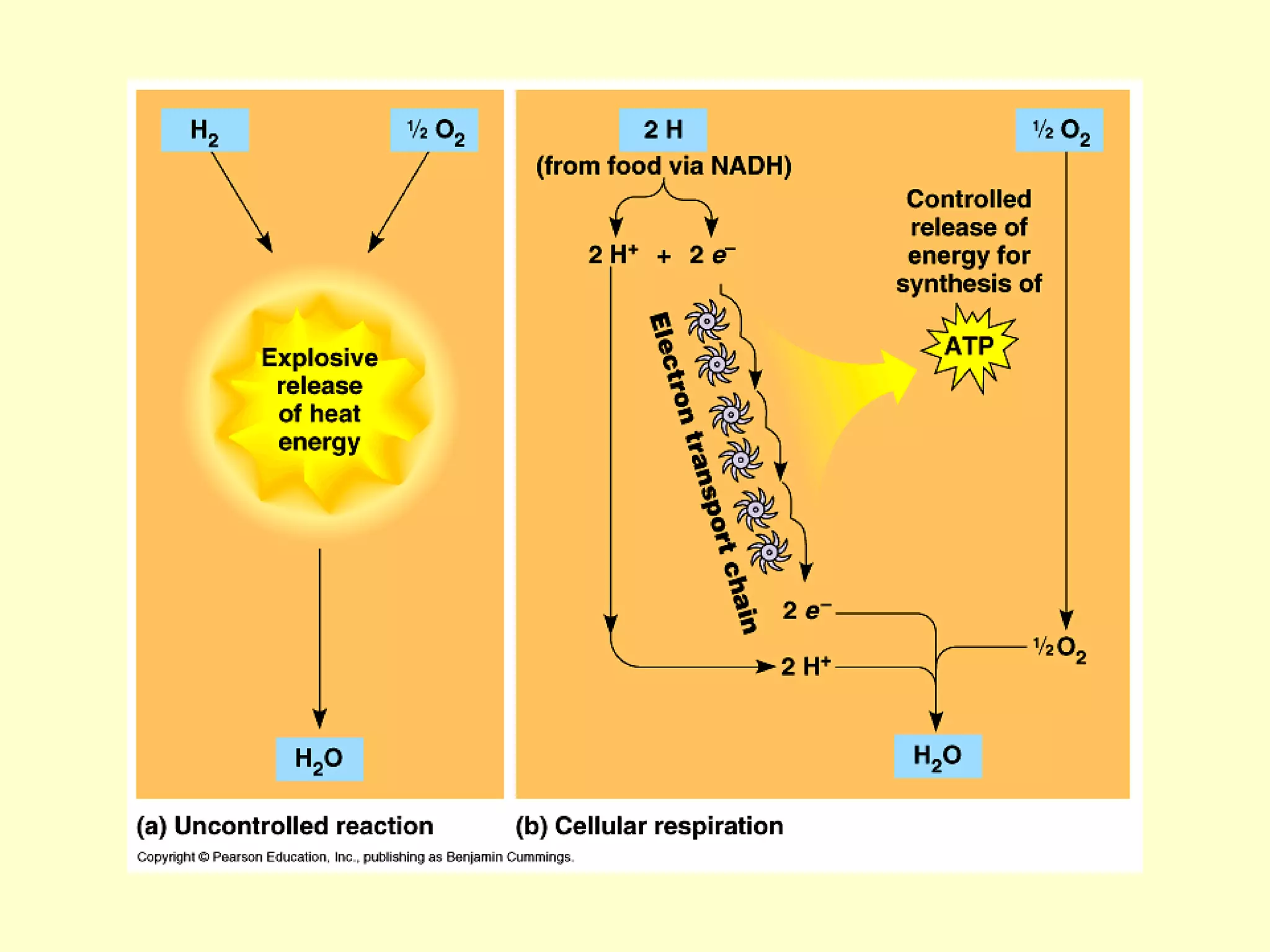
 The electron transport system is a series
 of molecules embedded in the cristae of
 the mitochondria that accept and
 transfer electrons. (Oxidation-Reduction)
The ETS uses the shuttling of electrons
donated by NADH and FADH2 to make a lot
of ATP.
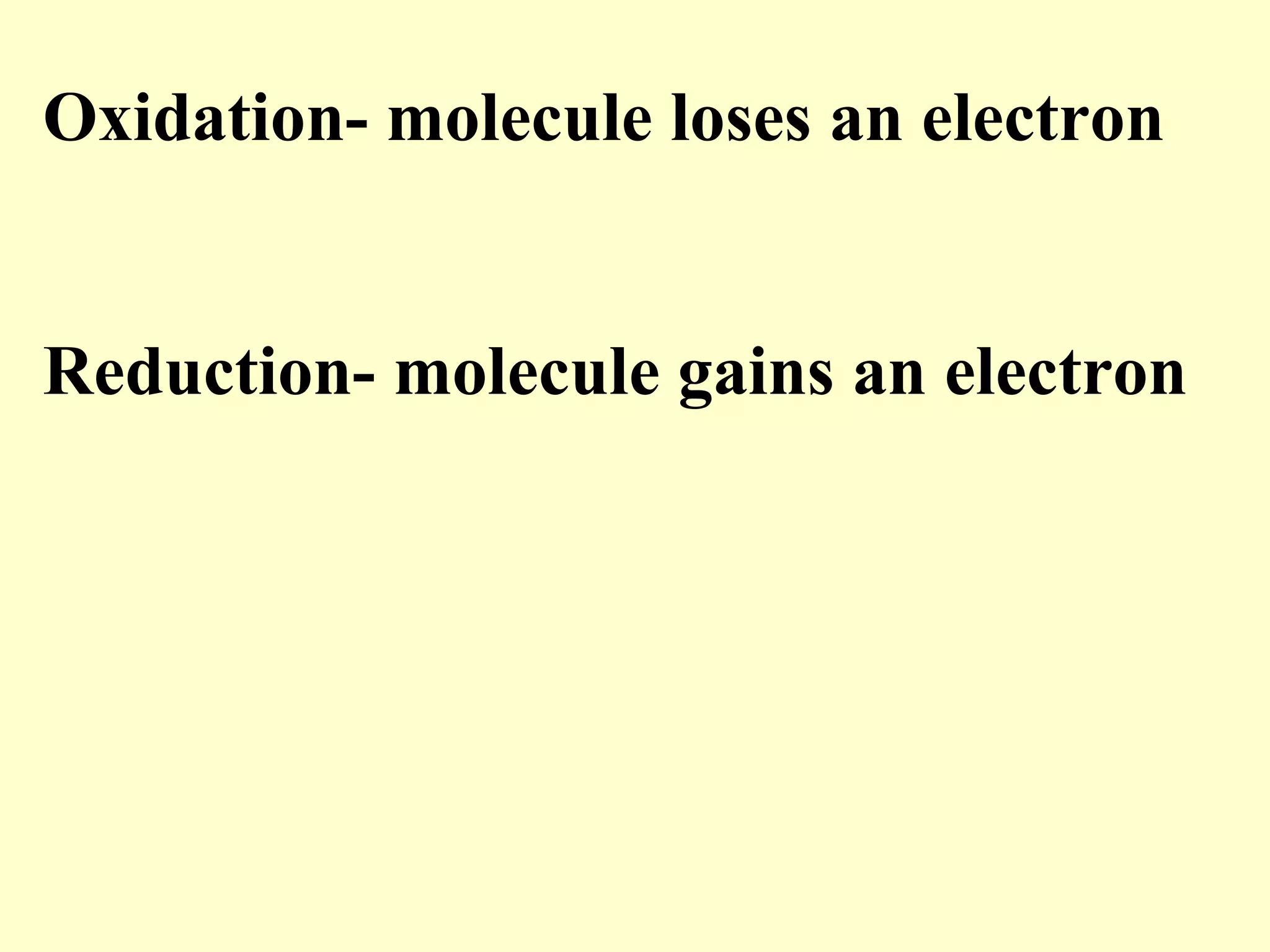
Oxidation- molecule loses an electron


Reduction- molecule gains an electron
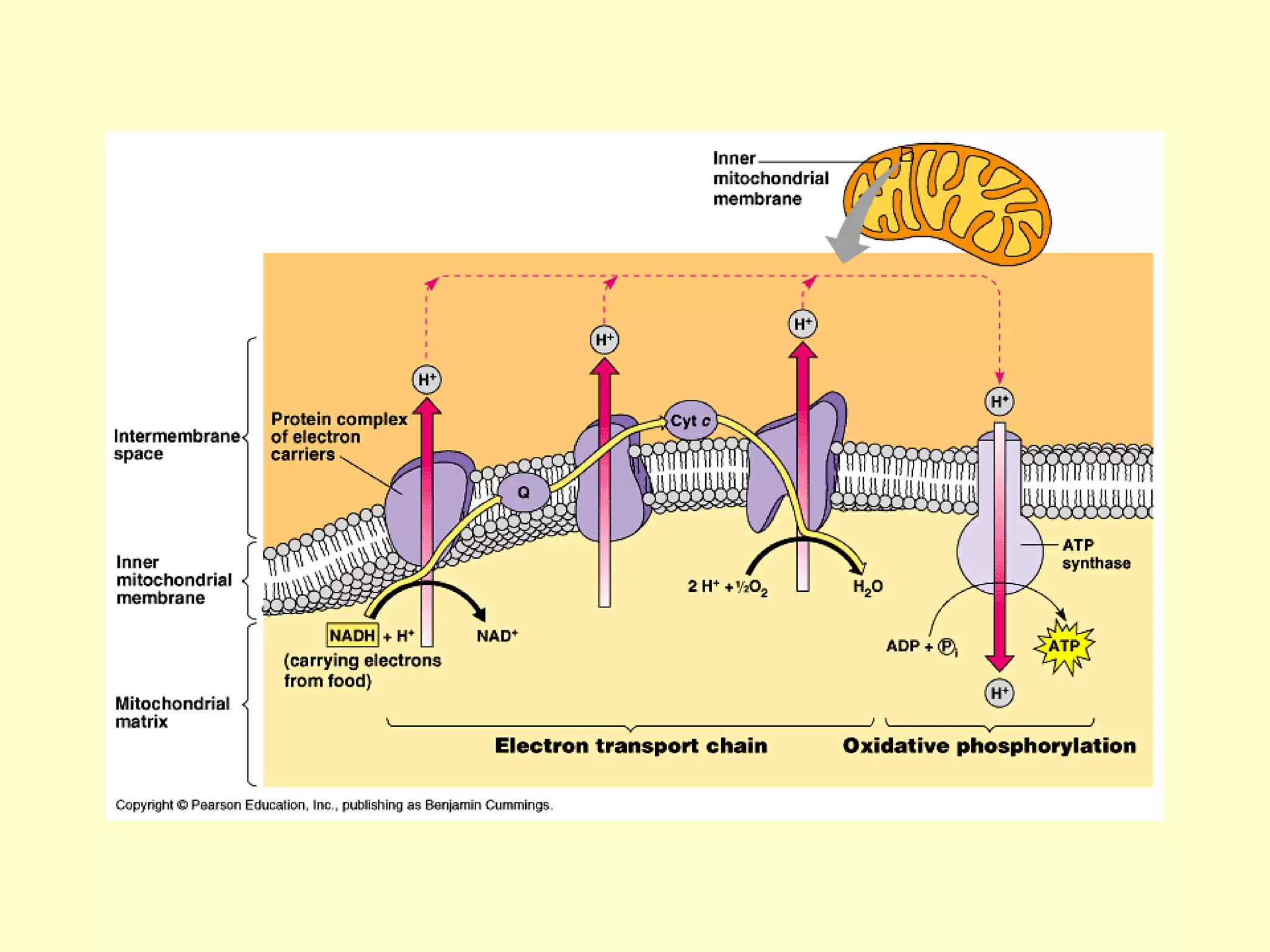
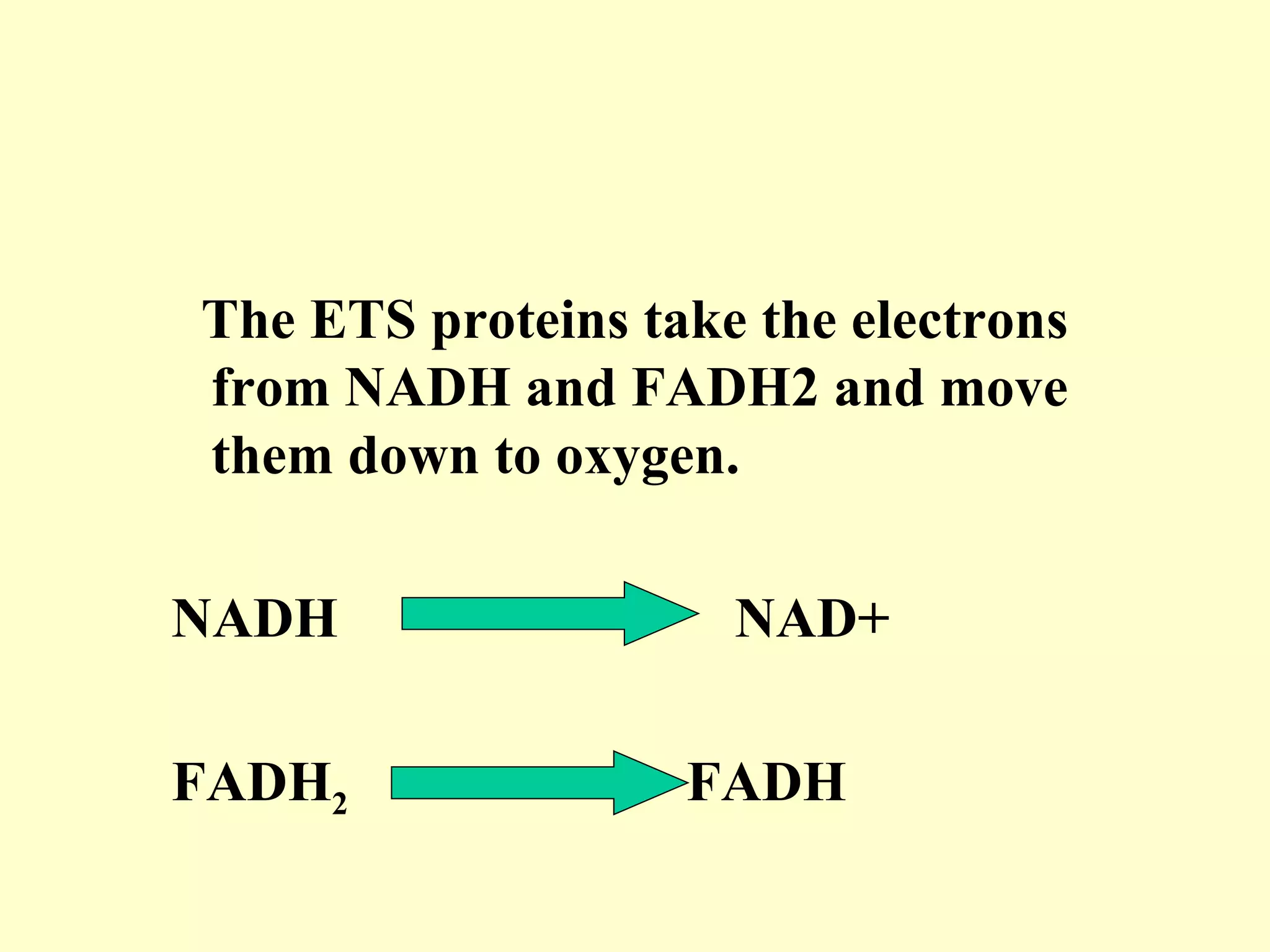
The ETS proteins take the electrons
from NADH and FADH2 and move
them down to oxygen.

NADH                 NAD+

FADH2              FADH
At each transfer (oxidation-reduction)
some energy is lost.

This creates energy that is used to take Pi
(inorganic PO4) and add it to ADP to
make ATP in a process called oxidative
phosphorylation.
Phosphorylation

  Adding phosphate to another molecule


       Oxidative Phosphorylation

Adding phosphate to another molecule in the
electron transport system in the presence of
Oxygen
Substrate level phosphorylation

  Any other phosphorylation in the cell
Chemiosmosis

 Oxidative phosphorylation of ADP to make ATP
 occurs through Chemiosmosis.
As electrons are being transferred through the ets
the energy is used to pump Hydrogen ions across
one side of the membrane.

This builds up a higher concentration on one side
than the other. Like a Hydrogen ion dam.
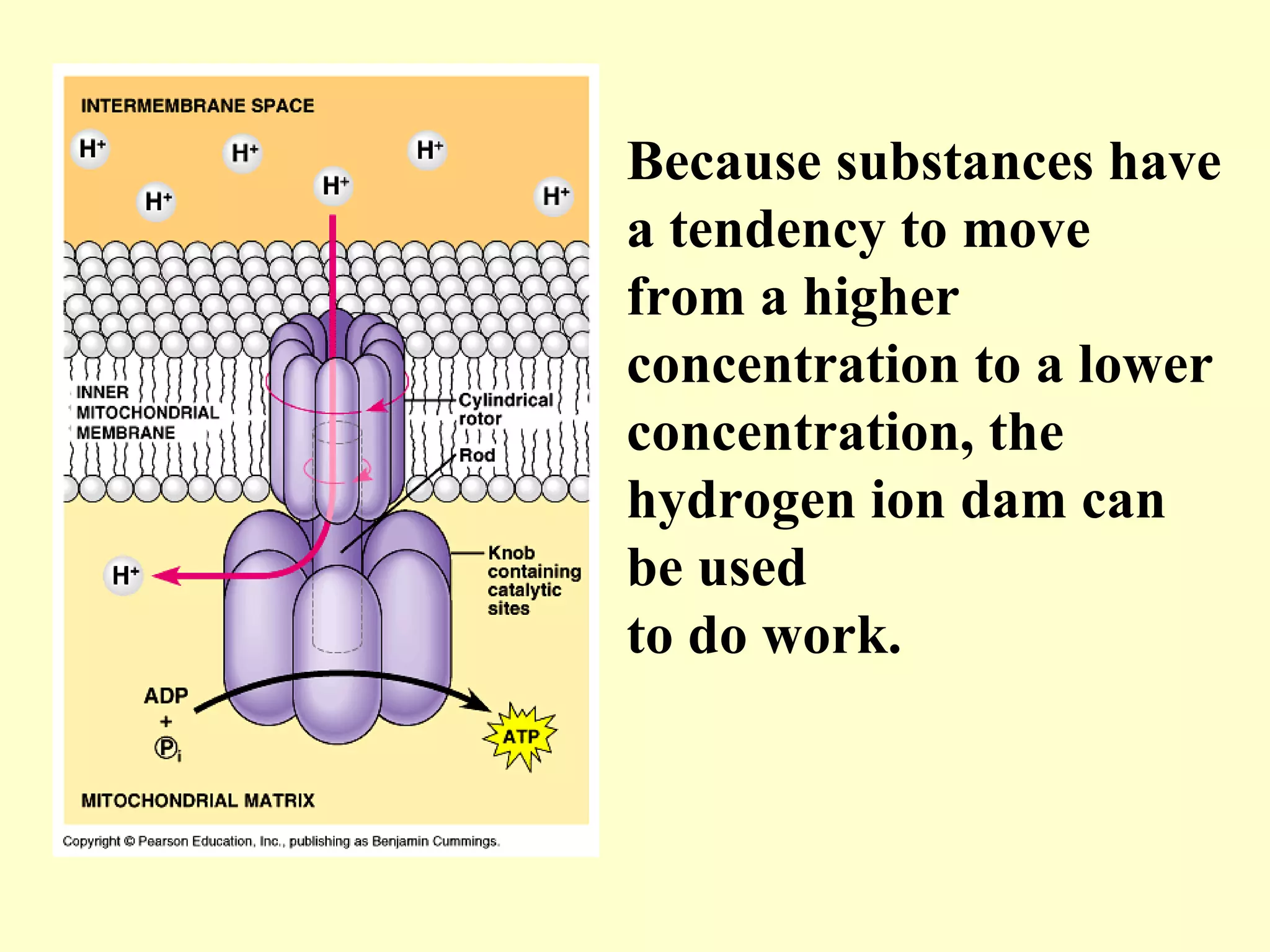
Because substances have
a tendency to move
from a higher
concentration to a lower
concentration, the
hydrogen ion dam can
be used
to do work.
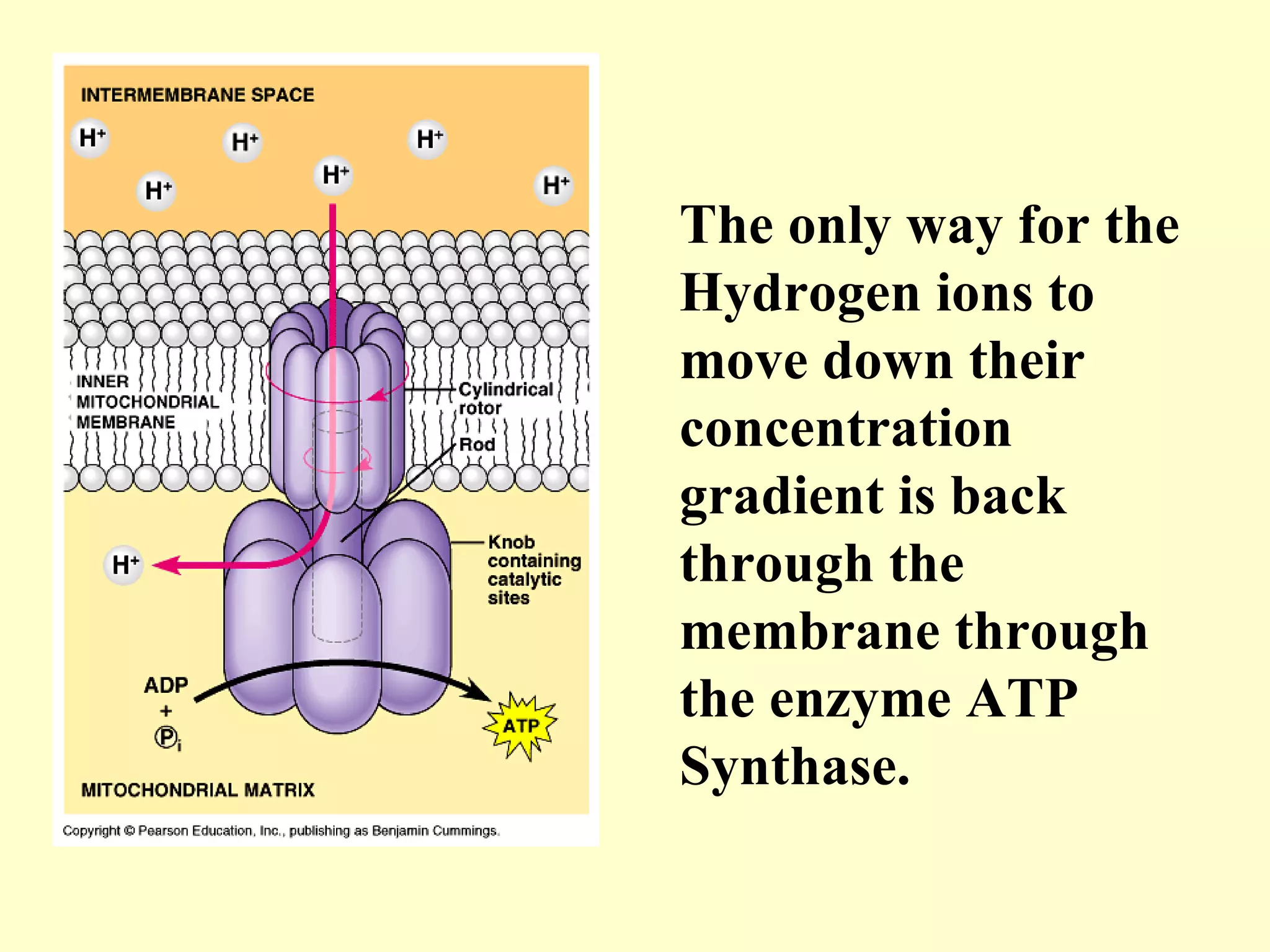
The only way for the
Hydrogen ions to
move down their
concentration
gradient is back
through the
membrane through
the enzyme ATP
Synthase.
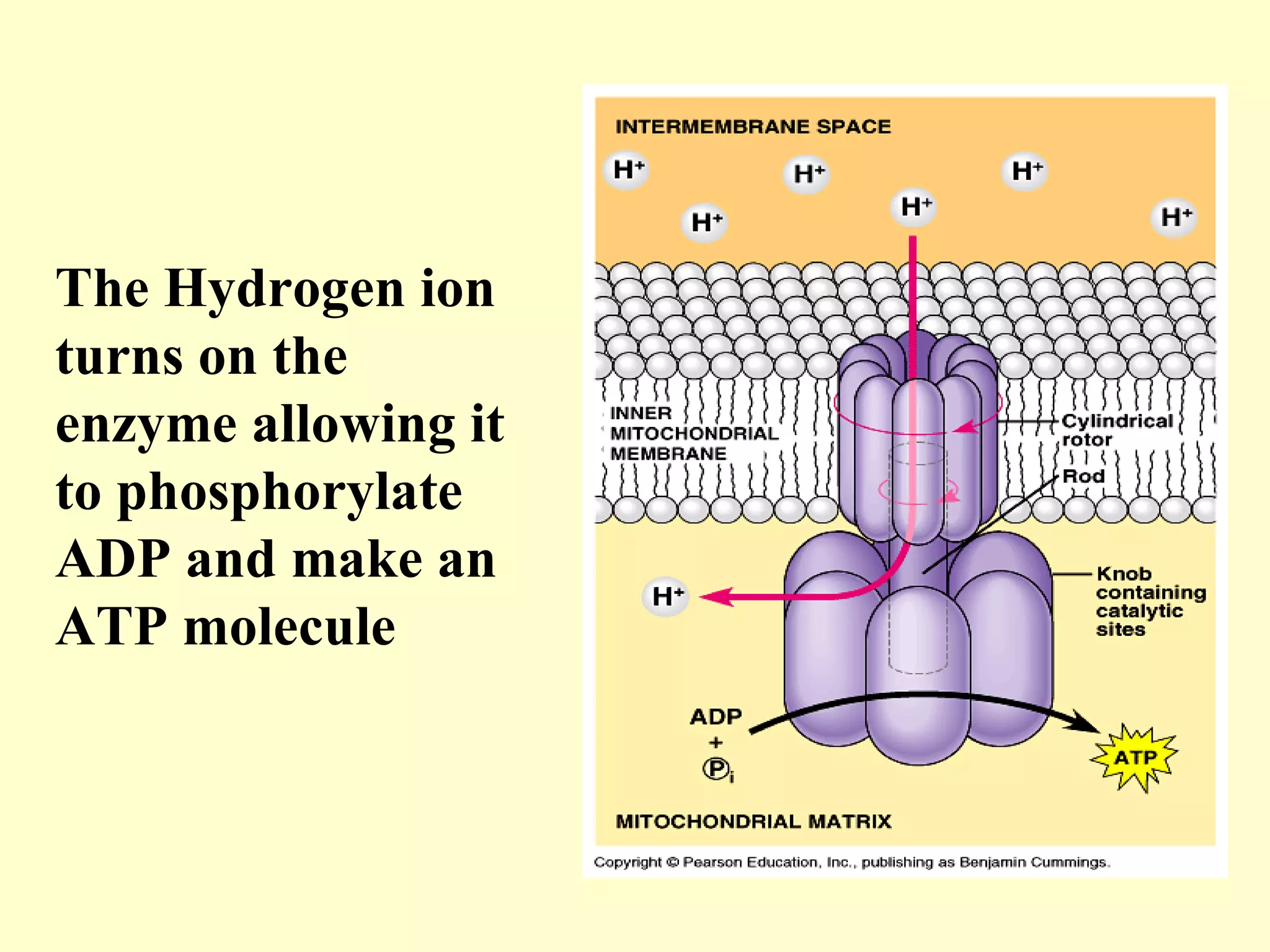
The Hydrogen ion
turns on the
enzyme allowing it
to phosphorylate
ADP and make an
ATP molecule
The electron transport system uses all of the
 electron carriers to produce about 34
 molecules of ATP.

This system uses oxygen as its final electron
 acceptor.
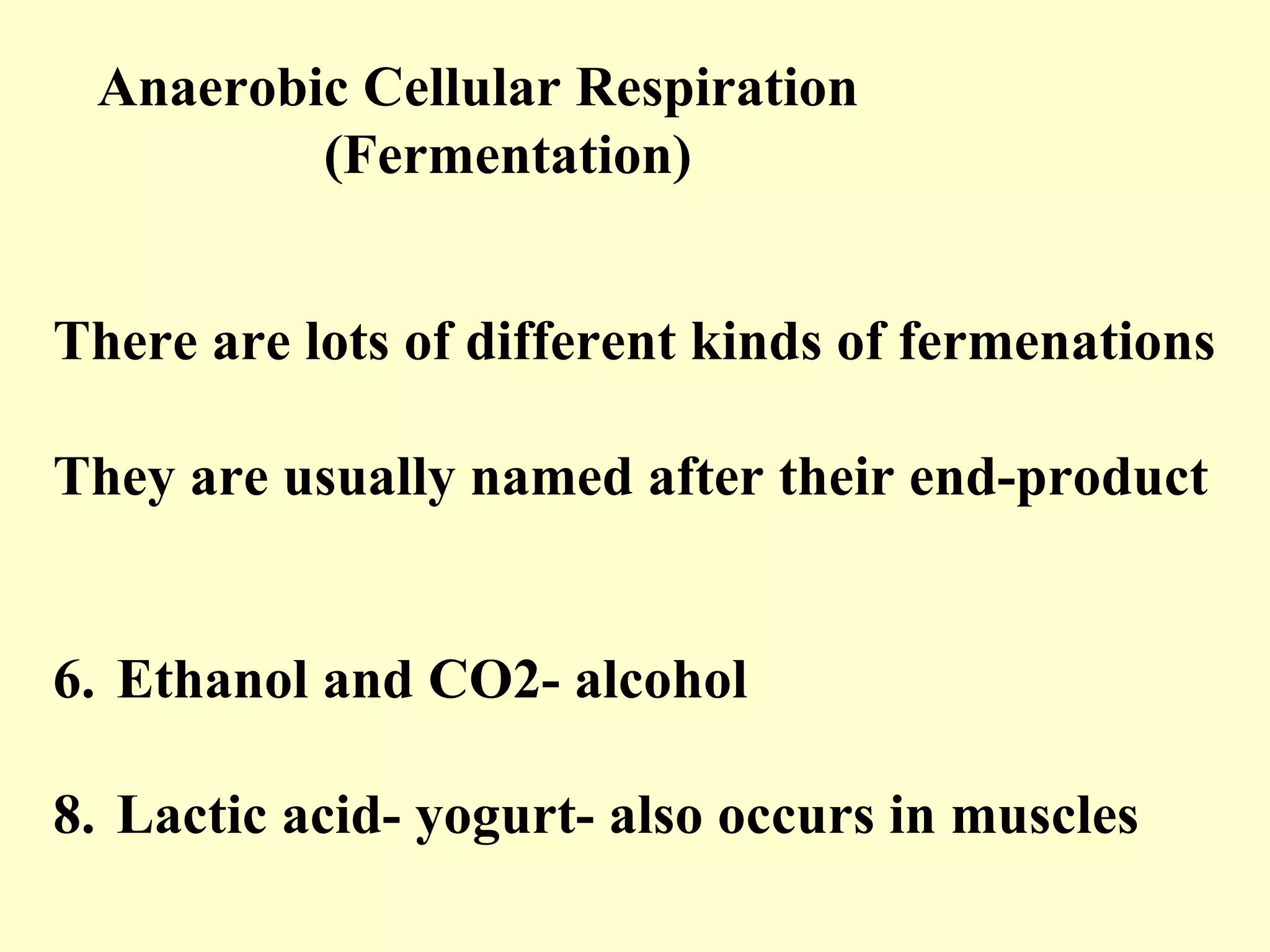
Anaerobic Cellular Respiration
         (Fermentation)


There are lots of different kinds of fermenations

They are usually named after their end-product


6. Ethanol and CO2- alcohol

8. Lactic acid- yogurt- also occurs in muscles
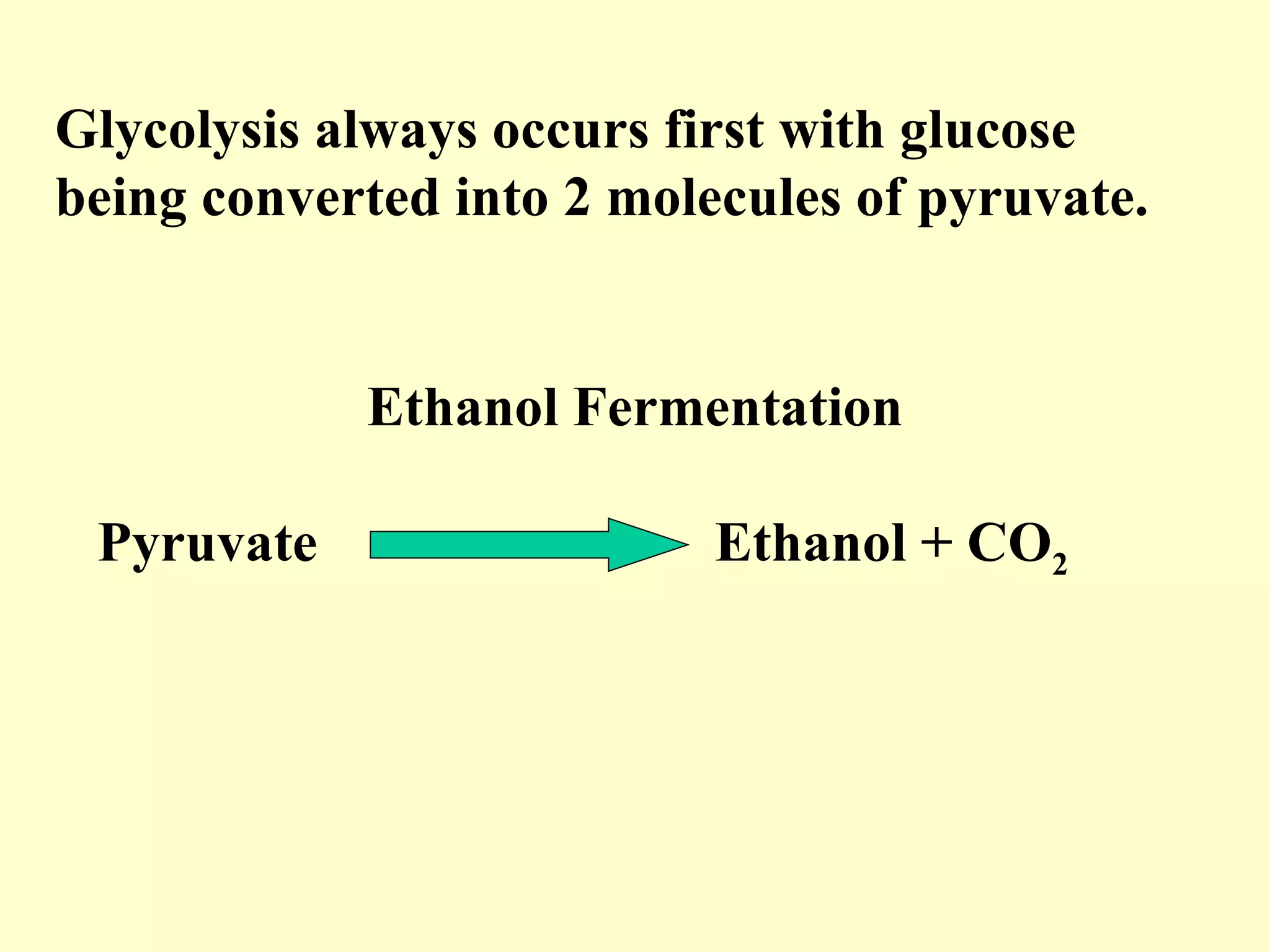
Glycolysis always occurs first with glucose
being converted into 2 molecules of pyruvate.


            Ethanol Fermentation

 Pyruvate                  Ethanol + CO2
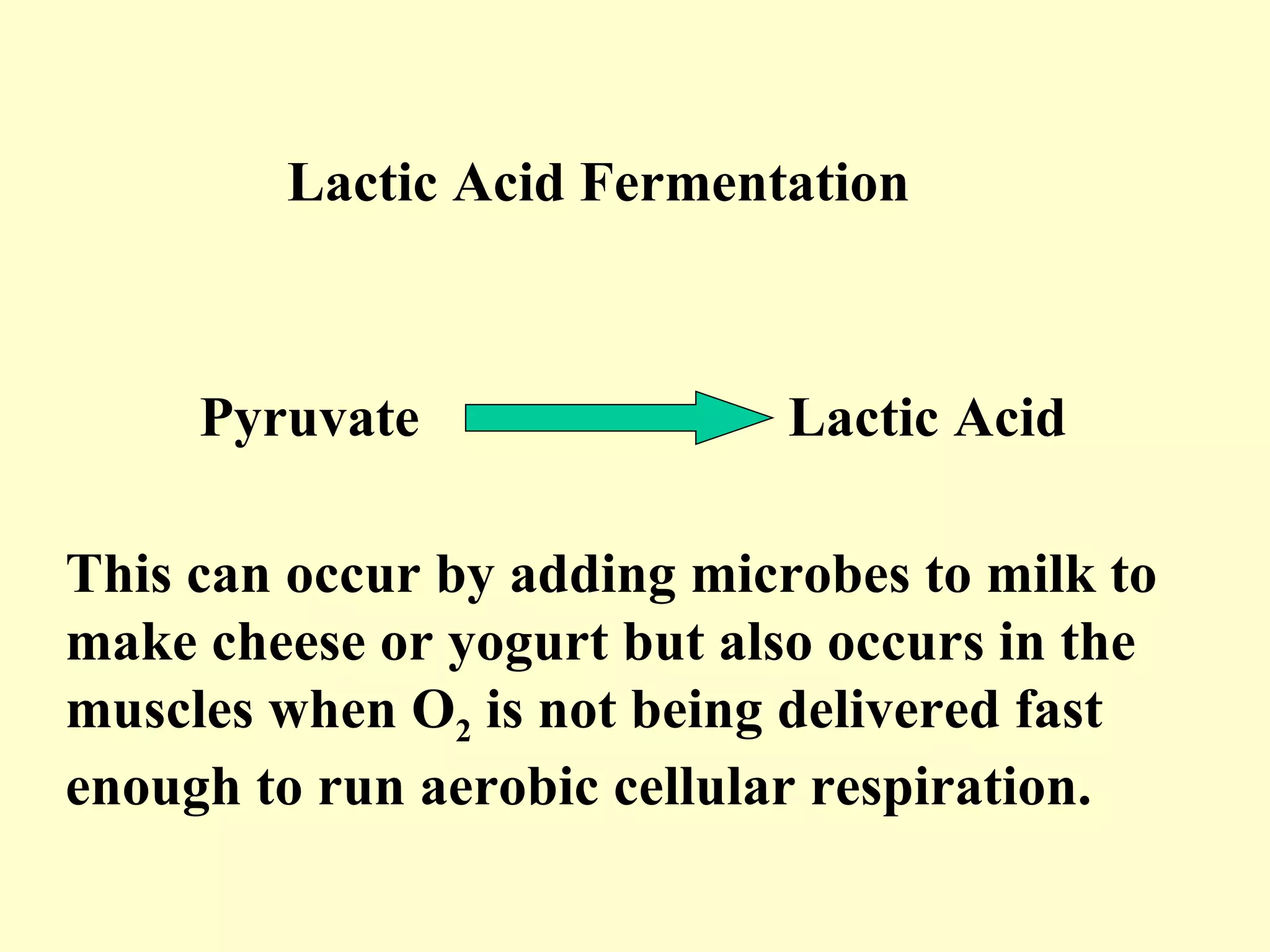
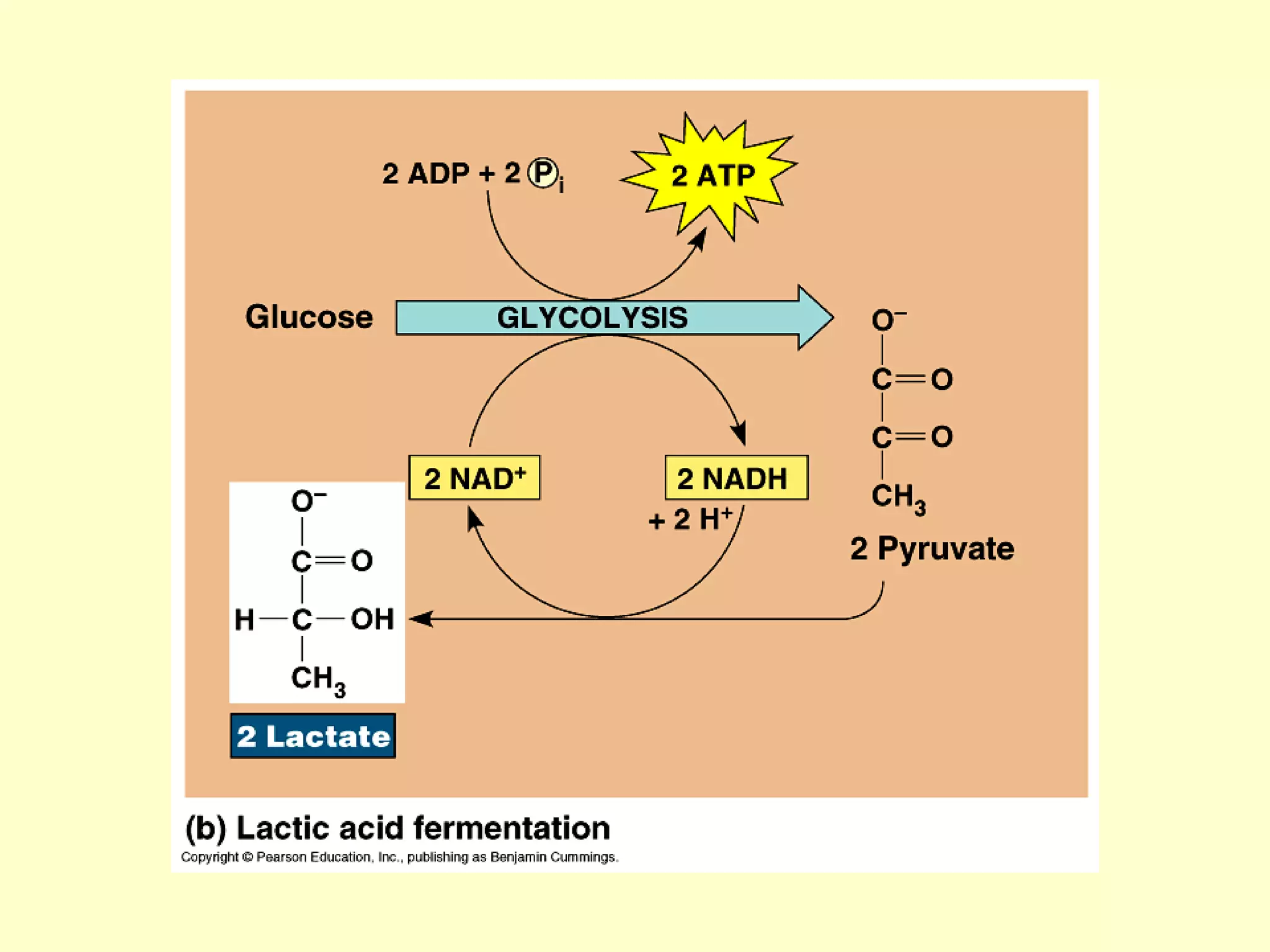
Lactic Acid Fermentation


     Pyruvate                Lactic Acid

This can occur by adding microbes to milk to
make cheese or yogurt but also occurs in the
muscles when O2 is not being delivered fast
enough to run aerobic cellular respiration.
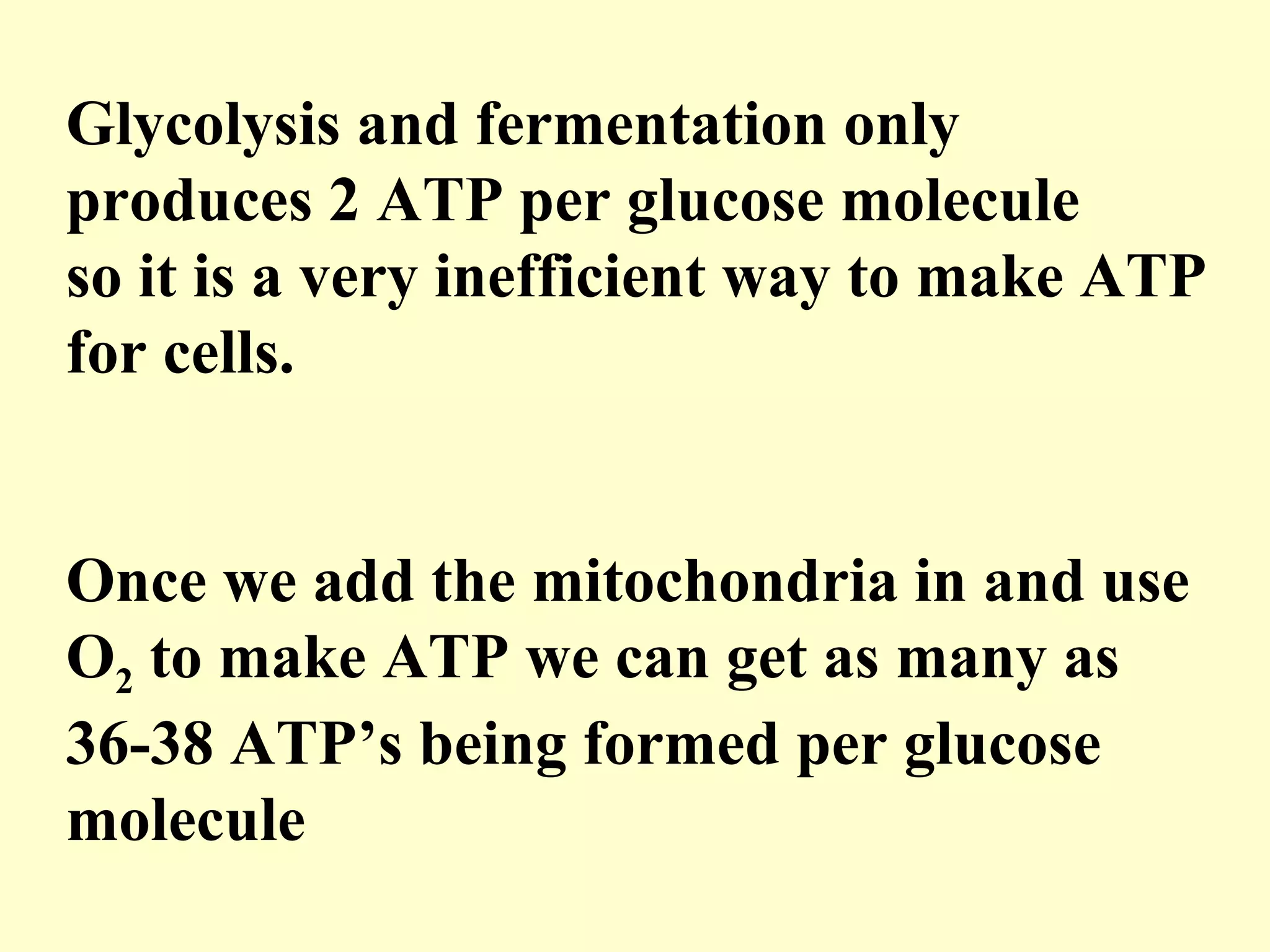
Glycolysis and fermentation only
produces 2 ATP per glucose molecule
so it is a very inefficient way to make ATP
for cells.


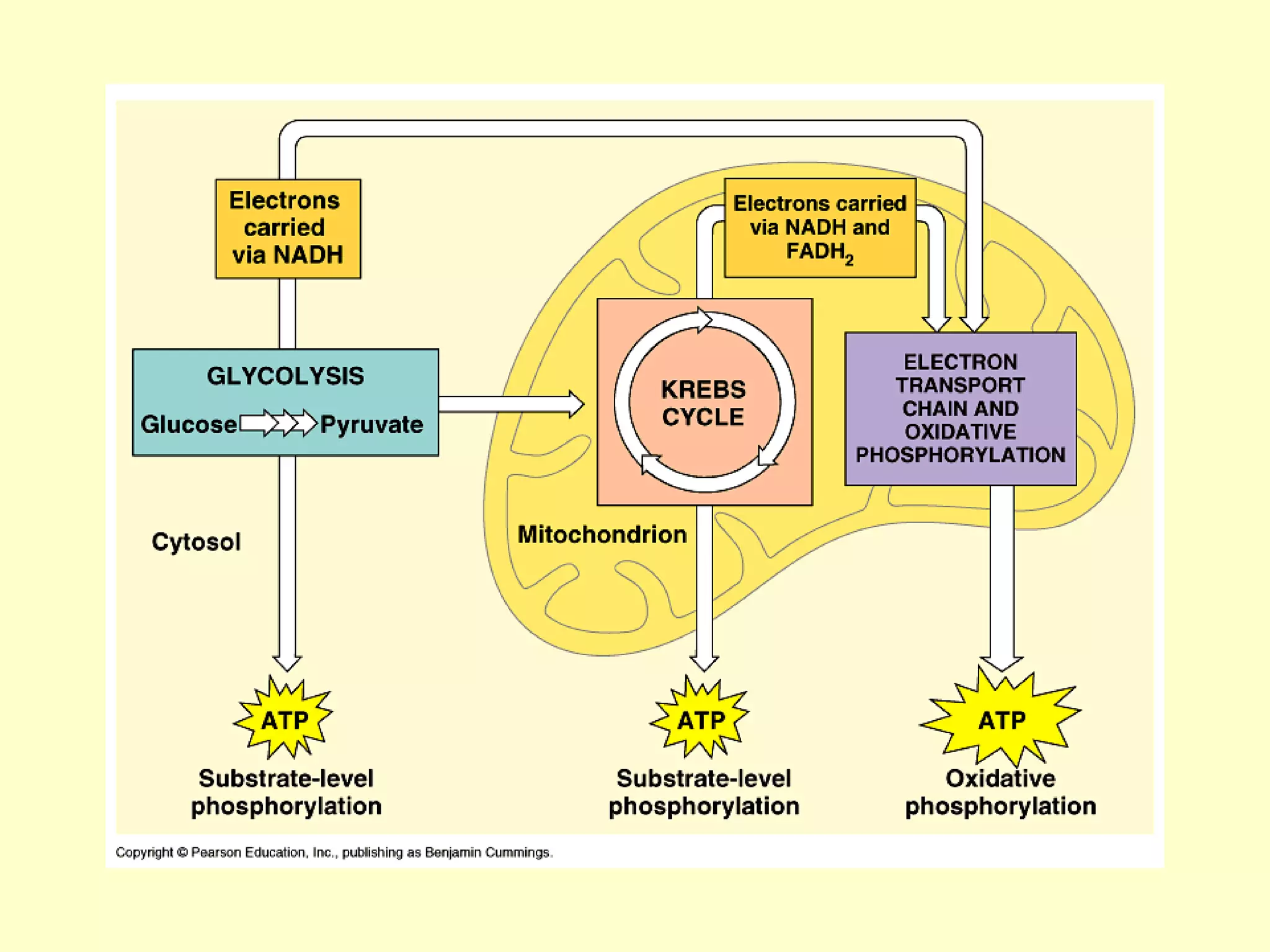
Once we add the mitochondria in and use
O2 to make ATP we can get as many as
36-38 ATP’s being formed per glucose
molecule
Cellular respiration

Cellular respiration

  • 1.
  • 2.
    How cells usefood and oxygen to make energy in the form of ATP and do work.
  • 3.
    Types of CellularRespiration • Aerobic Cellular Respiration- Cells make ATP using Oxygen in mitochondria • Anaerobic Cellular Respiration- Cells make ATP without using Oxygen in the cytoplasm of the cell. Also referred to as fermentation.
  • 4.
    Big Picture Both arecatabolic reactions that produce energy in the form of ATP.
  • 5.
    Aerobic cellular respirationis the chemical (metabolic) reaction that uses O2 and produces CO2 so it is the reason why we need to breathe.
  • 6.
    Equation for AerobicCellular Respiration Glucose + O2 CO2 + H2O + ATP
  • 7.
    3 main chemicalreactions in aerobic cellular respiration Glycolysis Krebs Cycle Electron Transport System
  • 8.
    1. Glycolysis • Catabolic reaction that breaks glucose into 2 molecules of pyruvic acid or pyruvate. • Occurs in the cytoplasm of the cell • Does not use O2 (it is part of cellular respiration but it is also the first step in the fermentation process as well)
  • 9.
    Glucose----------> 2 moleculespyruvate + 2 ATP + 2 NADH (Electron Carrier)
  • 10.
    Glycolysis produces alittle bit of energy in the form of ATP and NADH.
  • 11.
    What are ElectronCarriers? NADH and FADH2 are Electron Taxi Cabs They pick electrons up and transport them to The Grand Central Station for Electrons- the ets
  • 12.
    Oxidation- removes electrons Reduction adds electrons
  • 13.
    2. Krebs Cycle •Complex sequence of reactions that occur in the mitochondrial matrix. • Reactions complete the breakdown of the original glucose molecule by acting on pyruvic acid
  • 14.
    We call ita cycle because it is continuously running and it is always recycling the starting molecule.
  • 15.
    Major Impact ofthe Krebs Cycle •Completes the break down of glucose •Makes a lot of electron carriers (NADH, FADH2) •Produces the majority of CO2 that must be eliminated from the system
  • 16.
    Matrix Cristae Sometimes called the matrix reactions because of where they occur in the mitochondria
  • 17.
    How? Pyruvic acid entersthe mitochondria from the cell cytoplasm and then is converted into another molecule called Acetyl Co-A.
  • 19.
    How much energyis made during the Krebs Cycle ? 1. 2- ATP 2. 8 NADH 3. 2 FADH2 4. 6 CO2 (We get rid of it by exhaling)
  • 21.
    3. Electron TransportSystem The electron transport system is a series of molecules embedded in the cristae of the mitochondria that accept and transfer electrons. (Oxidation-Reduction)
  • 22.
    The ETS usesthe shuttling of electrons donated by NADH and FADH2 to make a lot of ATP.
  • 23.
    Oxidation- molecule losesan electron Reduction- molecule gains an electron
  • 26.
    The ETS proteinstake the electrons from NADH and FADH2 and move them down to oxygen. NADH NAD+ FADH2 FADH
  • 27.
    At each transfer(oxidation-reduction) some energy is lost. This creates energy that is used to take Pi (inorganic PO4) and add it to ADP to make ATP in a process called oxidative phosphorylation.
  • 29.
    Phosphorylation Addingphosphate to another molecule Oxidative Phosphorylation Adding phosphate to another molecule in the electron transport system in the presence of Oxygen
  • 30.
    Substrate level phosphorylation Any other phosphorylation in the cell
  • 31.
    Chemiosmosis Oxidative phosphorylationof ADP to make ATP occurs through Chemiosmosis. As electrons are being transferred through the ets the energy is used to pump Hydrogen ions across one side of the membrane. This builds up a higher concentration on one side than the other. Like a Hydrogen ion dam.
  • 32.
    Because substances have atendency to move from a higher concentration to a lower concentration, the hydrogen ion dam can be used to do work.
  • 33.
    The only wayfor the Hydrogen ions to move down their concentration gradient is back through the membrane through the enzyme ATP Synthase.
  • 34.
    The Hydrogen ion turnson the enzyme allowing it to phosphorylate ADP and make an ATP molecule
  • 35.
    The electron transportsystem uses all of the electron carriers to produce about 34 molecules of ATP. This system uses oxygen as its final electron acceptor.
  • 37.
    Anaerobic Cellular Respiration (Fermentation) There are lots of different kinds of fermenations They are usually named after their end-product 6. Ethanol and CO2- alcohol 8. Lactic acid- yogurt- also occurs in muscles
  • 38.
    Glycolysis always occursfirst with glucose being converted into 2 molecules of pyruvate. Ethanol Fermentation Pyruvate Ethanol + CO2
  • 40.
    Lactic Acid Fermentation Pyruvate Lactic Acid This can occur by adding microbes to milk to make cheese or yogurt but also occurs in the muscles when O2 is not being delivered fast enough to run aerobic cellular respiration.
  • 42.
    Glycolysis and fermentationonly produces 2 ATP per glucose molecule so it is a very inefficient way to make ATP for cells. Once we add the mitochondria in and use O2 to make ATP we can get as many as 36-38 ATP’s being formed per glucose molecule