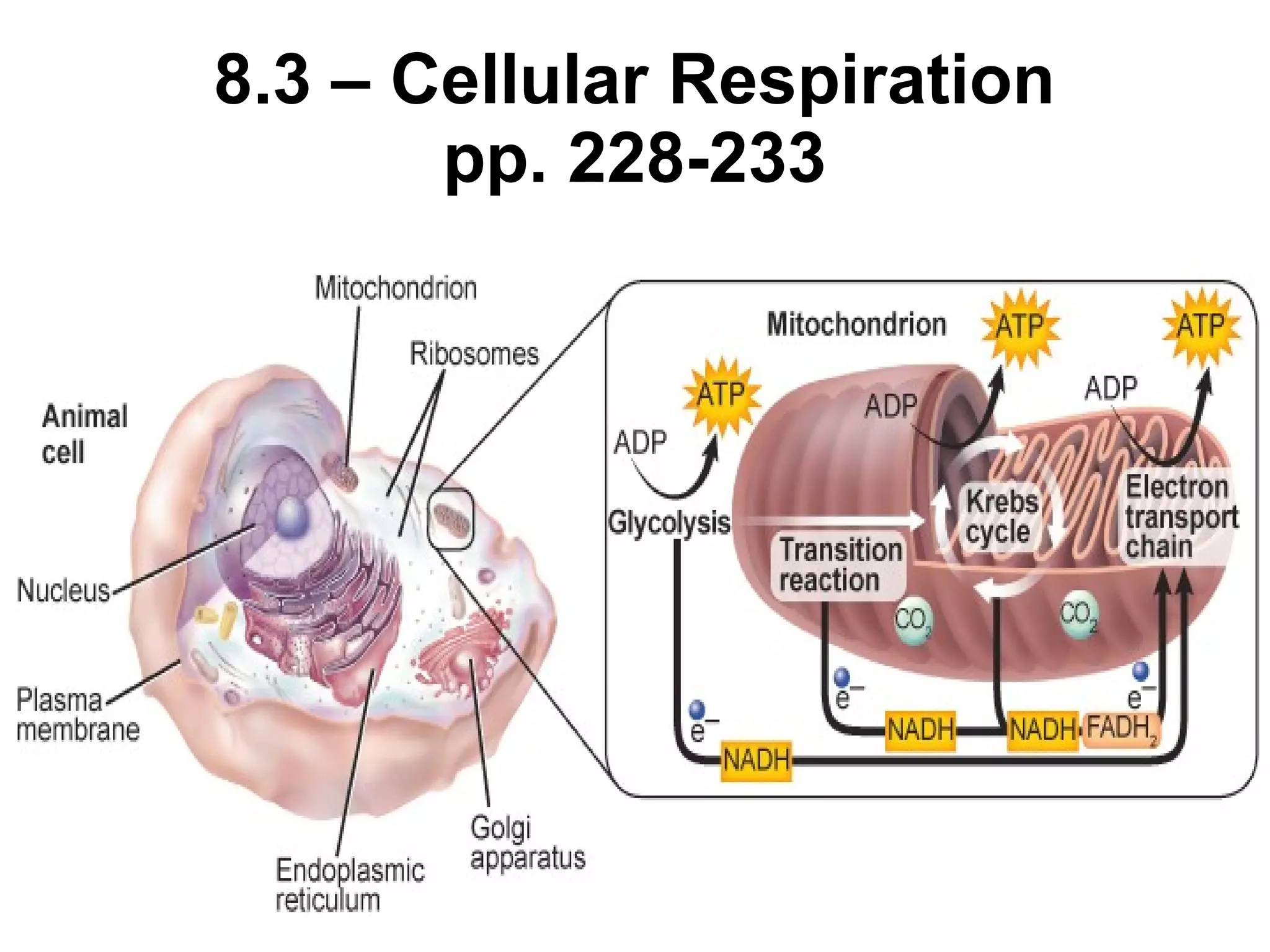
8.3 – Cellular Respiration pp. 228-233
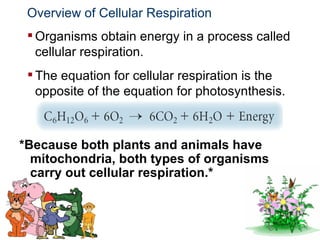
Overview of Cellular Respiration Organisms obtain energy in a process called cellular respiration. The equation for cellular respiration is the opposite of the equation for photosynthesis. *Because both plants and animals have mitochondria, both types of organisms carry out cellular respiration.*
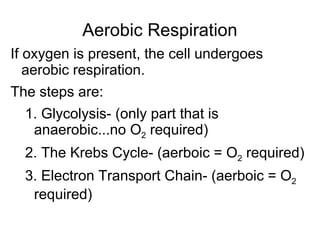
Aerobic Respiration If oxygen is present, the cell undergoes aerobic respiration. The steps are: 1. Glycolysis- (only part that is anaerobic...no O 2  required) 2. The Krebs Cycle- (aerboic = O 2  required) 3. Electron Transport Chain- (aerboic = O 2  required)
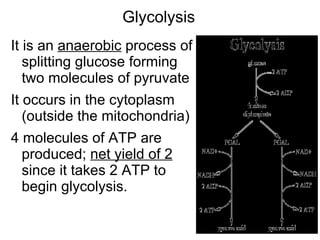
Glycolysis It is an  anaerobic  process of splitting glucose forming two molecules of pyruvate  It occurs in the cytoplasm (outside the mitochondria) 4 molecules of ATP are produced;  net yield of 2  since it takes 2 ATP to begin glycolysis.
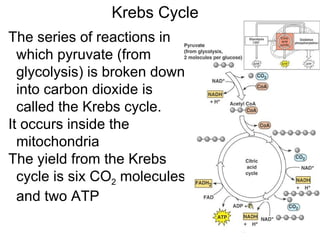
Krebs Cycle The series of reactions in which pyruvate (from glycolysis) is broken down into carbon dioxide is called the Krebs cycle. It occurs inside the mitochondria The yield from the Krebs cycle is six CO 2  molecules and two ATP
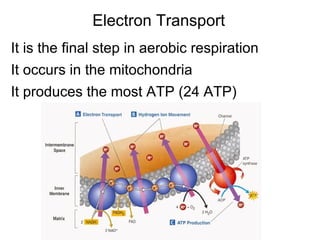
Electron Transport It is the final step in aerobic respiration It occurs in the mitochondria It produces the most ATP (24 ATP)
Overall In eukaryotes , 1 molecule of glucose yields 36 ATP In prokaryotes ,1 molecule of glucose yields 38 ATP.  This saves 2 ATP since prokaryotes have no mitochondria. Electron transport occurs in the cell membrane.
Anaerobic Respiration If there is no oxygen available, the cell undergoes anaerobic respiration. Also known as fermentation. It occurs in the cytoplasm It produces small amounts of ATP The steps are: 1. Glycolysis 2. Fermentation
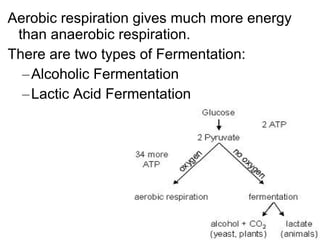
Aerobic respiration gives much more energy than anaerobic respiration. There are two types of Fermentation: Alcoholic Fermentation Lactic Acid Fermentation
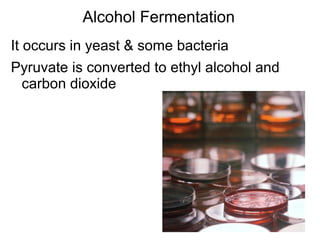
Alcohol Fermentation It occurs in yeast & some bacteria Pyruvate is converted to ethyl alcohol and carbon dioxide
Lactic Acid Fermentation It occurs in skeletal muscles  Pyruvate is converted to lactic acid when the body cannot supply enough oxygen Why muscles become sore and fatigued It is produced by microorganisms to make cheese, yogurt, and sour cream
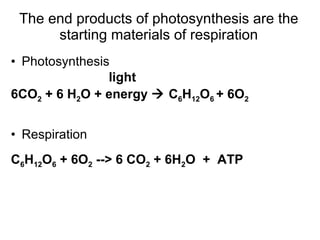
The end products of photosynthesis are the starting materials of respiration Photosynthesis   light 6CO 2  + 6 H 2 O + energy    C 6 H 12 O 6  + 6O 2 Respiration C 6 H 12 O 6  + 6O 2  --> 6 CO 2  + 6H 2 O  +   ATP
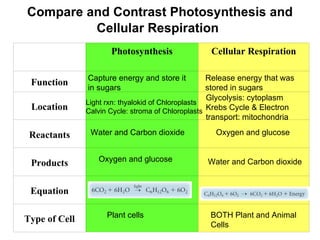
Compare and Contrast Photosynthesis and Cellular Respiration   Capture energy and store it in sugars Release energy that was stored in sugars Light rxn: thyalokid of Chloroplasts Calvin Cycle: stroma of Chloroplasts Glycolysis: cytoplasm Krebs Cycle & Electron transport: mitochondria Water and Carbon dioxide Oxygen and glucose Oxygen and glucose Water and Carbon dioxide Plant cells BOTH Plant and Animal Cells Photosynthesis Cellular Respiration Function Location Reactants Products Equation Type of Cell
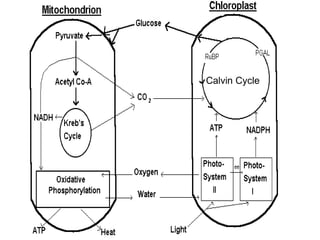
Calvin Cycle

Chapter 8 3

  • 1.
    8.3 – CellularRespiration pp. 228-233
  • 2.
    Overview of CellularRespiration Organisms obtain energy in a process called cellular respiration. The equation for cellular respiration is the opposite of the equation for photosynthesis. *Because both plants and animals have mitochondria, both types of organisms carry out cellular respiration.*
  • 3.
    Aerobic Respiration Ifoxygen is present, the cell undergoes aerobic respiration. The steps are: 1. Glycolysis- (only part that is anaerobic...no O 2 required) 2. The Krebs Cycle- (aerboic = O 2 required) 3. Electron Transport Chain- (aerboic = O 2 required)
  • 4.
    Glycolysis It isan anaerobic process of splitting glucose forming two molecules of pyruvate It occurs in the cytoplasm (outside the mitochondria) 4 molecules of ATP are produced; net yield of 2 since it takes 2 ATP to begin glycolysis.
  • 5.
    Krebs Cycle Theseries of reactions in which pyruvate (from glycolysis) is broken down into carbon dioxide is called the Krebs cycle. It occurs inside the mitochondria The yield from the Krebs cycle is six CO 2 molecules and two ATP
  • 6.
    Electron Transport Itis the final step in aerobic respiration It occurs in the mitochondria It produces the most ATP (24 ATP)
  • 7.
    Overall In eukaryotes, 1 molecule of glucose yields 36 ATP In prokaryotes ,1 molecule of glucose yields 38 ATP. This saves 2 ATP since prokaryotes have no mitochondria. Electron transport occurs in the cell membrane.
  • 8.
    Anaerobic Respiration Ifthere is no oxygen available, the cell undergoes anaerobic respiration. Also known as fermentation. It occurs in the cytoplasm It produces small amounts of ATP The steps are: 1. Glycolysis 2. Fermentation
  • 9.
    Aerobic respiration givesmuch more energy than anaerobic respiration. There are two types of Fermentation: Alcoholic Fermentation Lactic Acid Fermentation
  • 10.
    Alcohol Fermentation Itoccurs in yeast & some bacteria Pyruvate is converted to ethyl alcohol and carbon dioxide
  • 11.
    Lactic Acid FermentationIt occurs in skeletal muscles Pyruvate is converted to lactic acid when the body cannot supply enough oxygen Why muscles become sore and fatigued It is produced by microorganisms to make cheese, yogurt, and sour cream
  • 12.
    The end productsof photosynthesis are the starting materials of respiration Photosynthesis light 6CO 2 + 6 H 2 O + energy  C 6 H 12 O 6 + 6O 2 Respiration C 6 H 12 O 6 + 6O 2 --> 6 CO 2 + 6H 2 O + ATP
  • 13.
    Compare and ContrastPhotosynthesis and Cellular Respiration Capture energy and store it in sugars Release energy that was stored in sugars Light rxn: thyalokid of Chloroplasts Calvin Cycle: stroma of Chloroplasts Glycolysis: cytoplasm Krebs Cycle & Electron transport: mitochondria Water and Carbon dioxide Oxygen and glucose Oxygen and glucose Water and Carbon dioxide Plant cells BOTH Plant and Animal Cells Photosynthesis Cellular Respiration Function Location Reactants Products Equation Type of Cell
  • 14.