Cellular Respiration
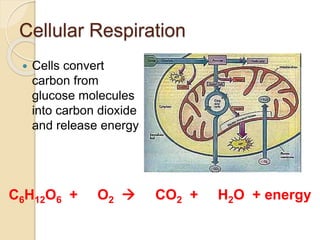
 Cells convert
carbon from
glucose molecules
into carbon dioxide
and release energy
C6H12O6 + 6 O2  6 CO2 + 6 H2O + energy
Cellular Respiration
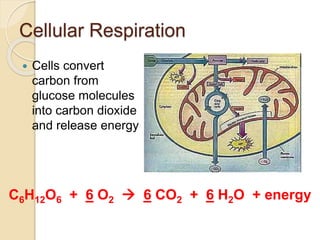
 Cells convert
carbon from
glucose molecules
into carbon dioxide
and release energy
C6H12O6 + 6 O2  6 CO2 + 6 H2O + energy
Cellular Respiration
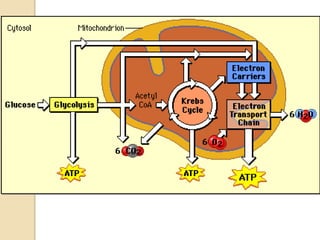
 Energy released used to make ATP, main
energy source for cell processes
 Primary fuel for respiration is glucose
Glycolysis
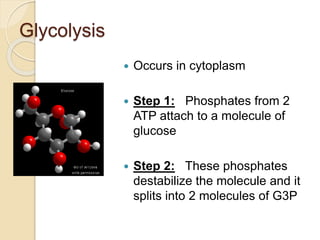
 Occurs in cytoplasm
 Step 1: Phosphates from 2
ATP attach to a molecule of
glucose
 Step 2: These phosphates
destabilize the molecule and it
splits into 2 molecules of G3P
Glycolysis
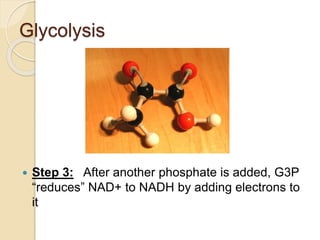
 Step 3: After another phosphate is added, G3P
“reduces” NAD+ to NADH by adding electrons to
it
Glycolysis
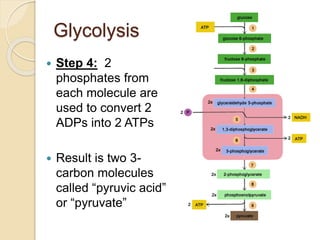
 Step 4: 2
phosphates from
each molecule are
used to convert 2
ADPs into 2 ATPs
 Result is two 3-
carbon molecules
called “pyruvic acid”
or “pyruvate”
Terminology
 Reactions that require oxygen to take
place = aerobic
 Reactions that do not require oxygen
= anaerobic
Aerobic Respiration
Bridge Reaction
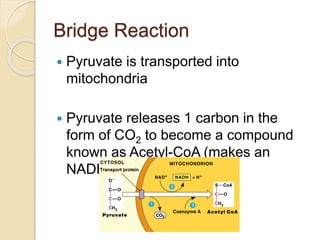
 Pyruvate is transported into
mitochondria
 Pyruvate releases 1 carbon in the
form of CO2 to become a compound
known as Acetyl-CoA (makes an
NADH)
Krebs Cycle
 Step 1: Acetyl-CoA (two
carbons) is then added to
oxaloacetic acid to create a
6-carbon molecule (called
citric acid)
Krebs Cycle
 Step 2: 2 CO2 molecules
released and 2 NADH
molecules created in
succession
 This results in a 4-carbon
molecule
 4-carbon is recycled into
oxaloacetic acid, creating
ATP, NADH, and FADH2
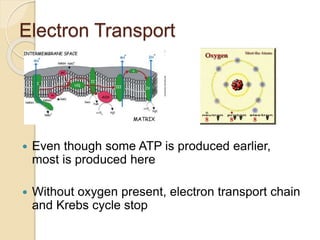
Electron Transport
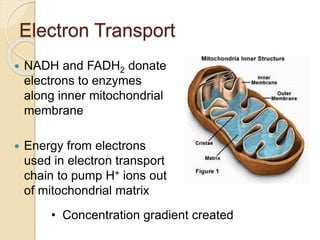
 NADH and FADH2 donate
electrons to enzymes
along inner mitochondrial
membrane
 Energy from electrons
used in electron transport
chain to pump H+ ions out
of mitochondrial matrix
• Concentration gradient created
Chemiosmosis
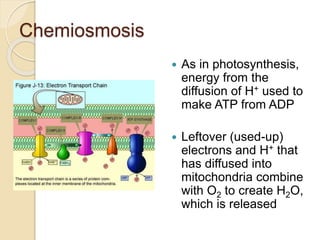
 As in photosynthesis,
energy from the
diffusion of H+ used to
make ATP from ADP
 Leftover (used-up)
electrons and H+ that
has diffused into
mitochondria combine
with O2 to create H2O,
which is released
Electron Transport
 Even though some ATP is produced earlier,
most is produced here
 Without oxygen present, electron transport chain
and Krebs cycle stop
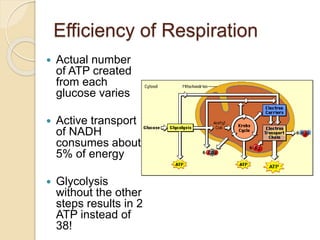
Efficiency of Respiration
 Actual number
of ATP created
from each
glucose varies
 Active transport
of NADH
consumes about
5% of energy
 Glycolysis
without the other
steps results in 2
ATP instead of
38!
Anaerobic Respiration
Fermentation
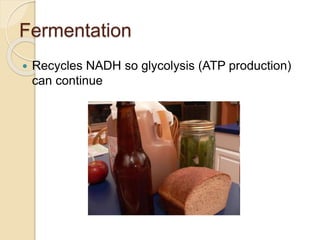
 Recycles NADH so glycolysis (ATP production)
can continue
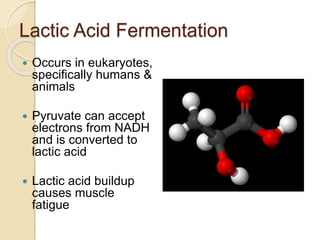
Lactic Acid Fermentation
 Occurs in eukaryotes,
specifically humans &
animals
 Pyruvate can accept
electrons from NADH
and is converted to
lactic acid
 Lactic acid buildup
causes muscle
fatigue
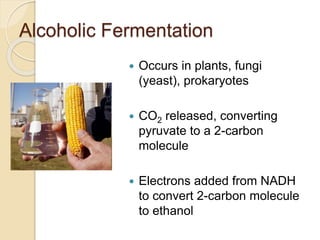
Alcoholic Fermentation
 Occurs in plants, fungi
(yeast), prokaryotes
 CO2 released, converting
pyruvate to a 2-carbon
molecule
 Electrons added from NADH
to convert 2-carbon molecule
to ethanol
Alcoholic Fermentation
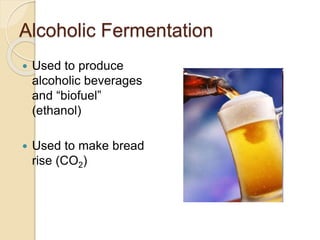
 Used to produce
alcoholic beverages
and “biofuel”
(ethanol)
 Used to make bread
rise (CO2)
A REVIEW
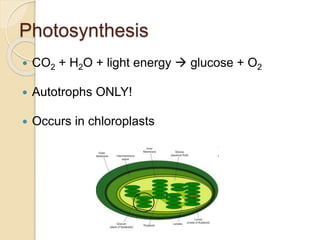
Photosynthesis
 CO2 + H2O + light energy  glucose + O2
 Autotrophs ONLY!
 Occurs in chloroplasts
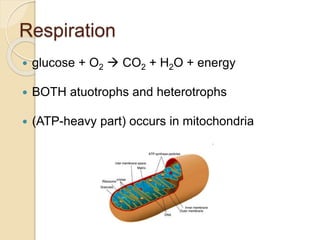
Respiration
 glucose + O2  CO2 + H2O + energy
 BOTH atuotrophs and heterotrophs
 (ATP-heavy part) occurs in mitochondria

Cellular Respiration

  • 1.
    Cellular Respiration  Cellsconvert carbon from glucose molecules into carbon dioxide and release energy C6H12O6 + 6 O2  6 CO2 + 6 H2O + energy
  • 2.
    Cellular Respiration  Cellsconvert carbon from glucose molecules into carbon dioxide and release energy C6H12O6 + 6 O2  6 CO2 + 6 H2O + energy
  • 3.
    Cellular Respiration  Energyreleased used to make ATP, main energy source for cell processes  Primary fuel for respiration is glucose
  • 4.
    Glycolysis  Occurs incytoplasm  Step 1: Phosphates from 2 ATP attach to a molecule of glucose  Step 2: These phosphates destabilize the molecule and it splits into 2 molecules of G3P
  • 5.
    Glycolysis  Step 3:After another phosphate is added, G3P “reduces” NAD+ to NADH by adding electrons to it
  • 6.
    Glycolysis  Step 4:2 phosphates from each molecule are used to convert 2 ADPs into 2 ATPs  Result is two 3- carbon molecules called “pyruvic acid” or “pyruvate”
  • 7.
    Terminology  Reactions thatrequire oxygen to take place = aerobic  Reactions that do not require oxygen = anaerobic
  • 8.
  • 9.
    Bridge Reaction  Pyruvateis transported into mitochondria  Pyruvate releases 1 carbon in the form of CO2 to become a compound known as Acetyl-CoA (makes an NADH)
  • 10.
    Krebs Cycle  Step1: Acetyl-CoA (two carbons) is then added to oxaloacetic acid to create a 6-carbon molecule (called citric acid)
  • 11.
    Krebs Cycle  Step2: 2 CO2 molecules released and 2 NADH molecules created in succession  This results in a 4-carbon molecule  4-carbon is recycled into oxaloacetic acid, creating ATP, NADH, and FADH2
  • 12.
    Electron Transport  NADHand FADH2 donate electrons to enzymes along inner mitochondrial membrane  Energy from electrons used in electron transport chain to pump H+ ions out of mitochondrial matrix • Concentration gradient created
  • 13.
    Chemiosmosis  As inphotosynthesis, energy from the diffusion of H+ used to make ATP from ADP  Leftover (used-up) electrons and H+ that has diffused into mitochondria combine with O2 to create H2O, which is released
  • 14.
    Electron Transport  Eventhough some ATP is produced earlier, most is produced here  Without oxygen present, electron transport chain and Krebs cycle stop
  • 15.
    Efficiency of Respiration Actual number of ATP created from each glucose varies  Active transport of NADH consumes about 5% of energy  Glycolysis without the other steps results in 2 ATP instead of 38!
  • 17.
  • 18.
    Fermentation  Recycles NADHso glycolysis (ATP production) can continue
  • 19.
    Lactic Acid Fermentation Occurs in eukaryotes, specifically humans & animals  Pyruvate can accept electrons from NADH and is converted to lactic acid  Lactic acid buildup causes muscle fatigue
  • 20.
    Alcoholic Fermentation  Occursin plants, fungi (yeast), prokaryotes  CO2 released, converting pyruvate to a 2-carbon molecule  Electrons added from NADH to convert 2-carbon molecule to ethanol
  • 21.
    Alcoholic Fermentation  Usedto produce alcoholic beverages and “biofuel” (ethanol)  Used to make bread rise (CO2)
  • 22.
  • 23.
    Photosynthesis  CO2 +H2O + light energy  glucose + O2  Autotrophs ONLY!  Occurs in chloroplasts
  • 24.
    Respiration  glucose +O2  CO2 + H2O + energy  BOTH atuotrophs and heterotrophs  (ATP-heavy part) occurs in mitochondria