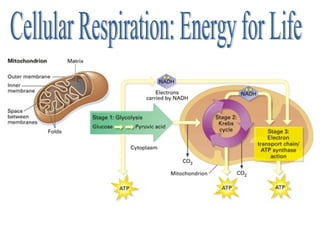
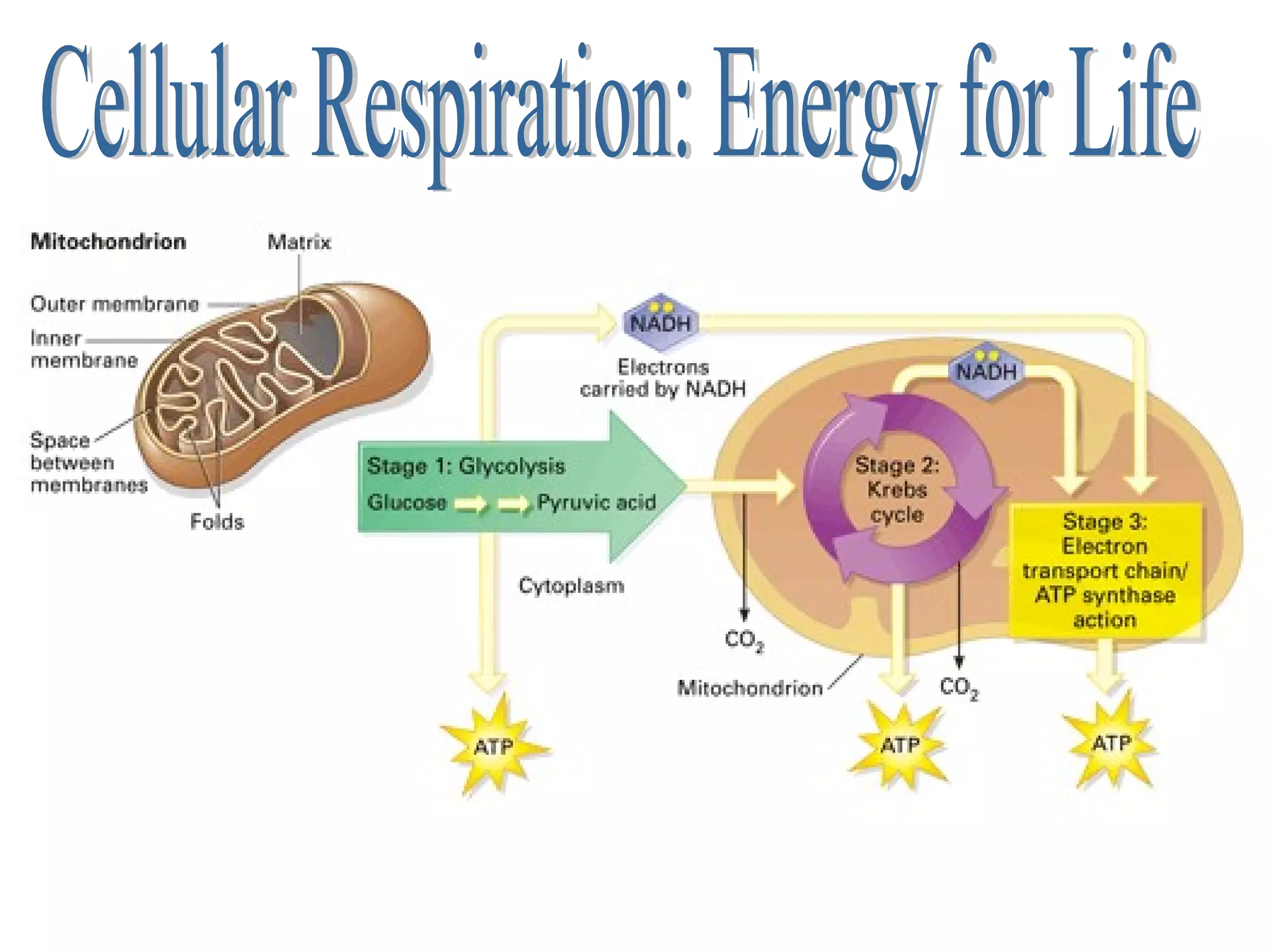
Cellular Respiration: Energy for Life
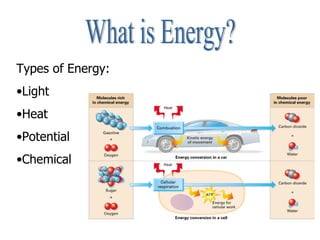
What is Energy? Types of Energy: Light  Heat Potential Chemical
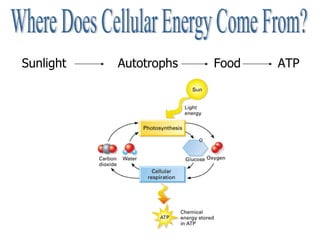
Where Does Cellular Energy Come From? Sunlight  Autotrophs Food ATP
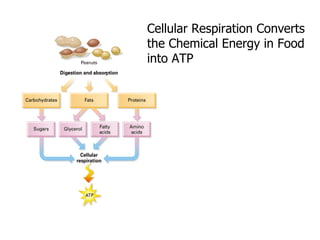
Cellular Respiration Converts the Chemical Energy in Food into ATP                                                                                                      
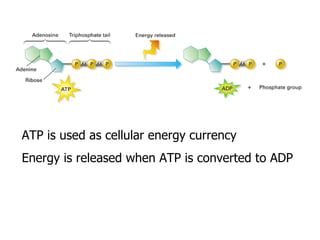
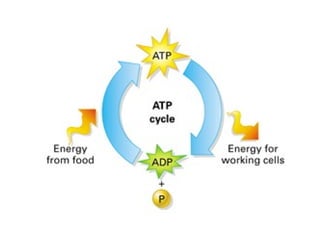
ATP is used as cellular energy currency Energy is released when ATP is converted to ADP                                                                                                                                                                                                                                                                 
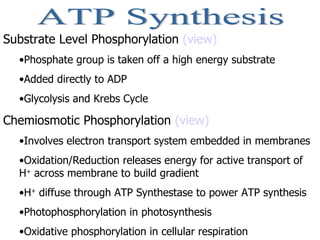
ATP Synthesis Substrate Level Phosphorylation  (view) Phosphate group is taken off a high energy substrate Added directly to ADP Glycolysis and Krebs Cycle Chemiosmotic Phosphorylation  (view) Involves electron transport system embedded in membranes Oxidation/Reduction releases energy for active transport of H +  across membrane to build gradient H +  diffuse through ATP Synthestase to power ATP synthesis Photophosphorylation in photosynthesis Oxidative phosphorylation in cellular respiration
                                                                                                                                                                            
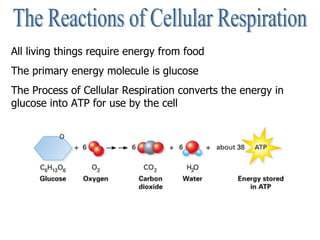
The Reactions of Cellular Respiration All living things require energy from food The primary energy molecule is glucose The Process of Cellular Respiration converts the energy in glucose into ATP for use by the cell                                                                                                                                                                                                                                                                        
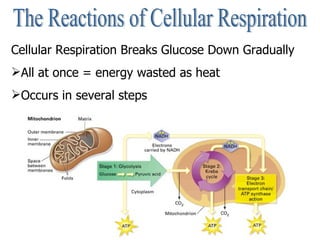
The Reactions of Cellular Respiration Cellular Respiration Breaks Glucose Down Gradually All at once = energy wasted as heat Occurs in several steps
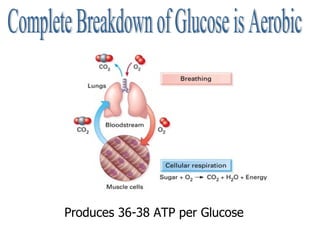
Complete Breakdown of Glucose is Aerobic Produces 36-38 ATP per Glucose                                                                                                                                                                                                                                                                
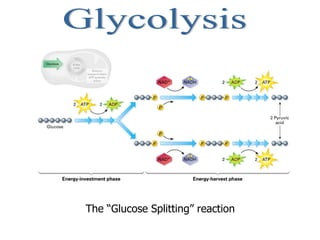
Glycolysis The “Glucose Splitting” reaction                                                                                                                                                                             
Glycolysis Occurs in the cytoplasm (many enzymes involved) End Product is Pyruvate Glucose is oxidized to pyruvate ATP and NADH are generated.  2 Major Phases Energy investment: 2 ATP Energy payoff: 4 ATP and 2NADH See animated glycolysis
The Krebs Cycle Intermediate Reactions                                                                                                                                                                             
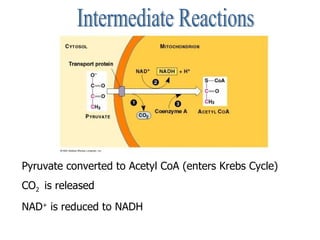
Intermediate Reactions Pyruvate converted to Acetyl CoA (enters Krebs Cycle) CO 2  is released NAD +  is reduced to NADH
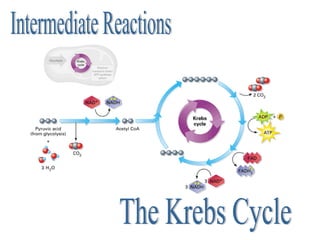
The Krebs Cycle Occurs in the matrix of the mitochondrion Acetyl CoA combines with Oxaloacetate to produce Citrate. The Krebs Cycle is also called the Citric Acid Cycle. A series of oxidation and reduction reactions generate 1 ATP, 3 NADH, and 1 FADH 2  per pyruvate CO 2  is released as a by-product Oxaloacetate is regenerated to begin the cycle again See animated Krebs Cycle
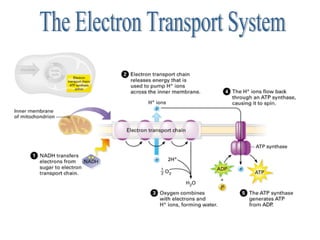
The Electron Transport System                                                                                                                                                                             
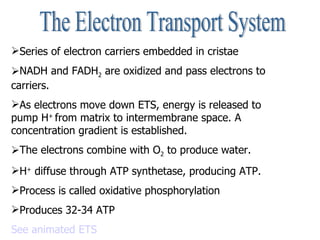
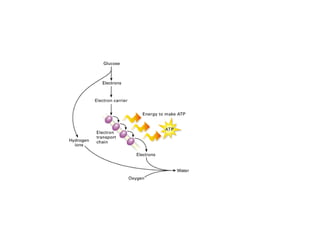
The Electron Transport System Series of electron carriers embedded in cristae NADH and FADH 2  are oxidized and pass electrons to carriers.  As electrons move down ETS, energy is released to pump H +  from matrix to intermembrane space. A concentration gradient is established. The electrons combine with O 2  to produce water. H +  diffuse through ATP synthetase, producing ATP.  Process is called oxidative phosphorylation Produces 32-34 ATP See animated ETS
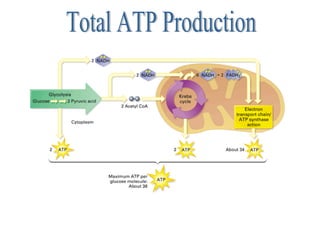
Total ATP Production                                                                                                                                                                             
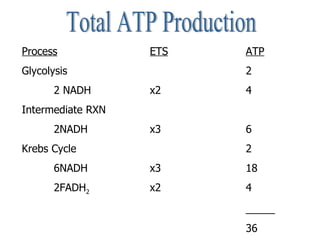
Total ATP Production Process ETS ATP Glycolysis 2 2 NADH x2 4 Intermediate RXN 2NADH x3 6 Krebs Cycle 2 6NADH x3 18 2FADH 2 x2 4 _____ 36
 

Cellular Respiration

  • 1.
  • 2.
    What is Energy?Types of Energy: Light Heat Potential Chemical
  • 3.
    Where Does CellularEnergy Come From? Sunlight Autotrophs Food ATP
  • 4.
    Cellular Respiration Convertsthe Chemical Energy in Food into ATP                                                                                                      
  • 5.
    ATP is usedas cellular energy currency Energy is released when ATP is converted to ADP                                                                                                                                                                                                                                                                 
  • 6.
    ATP Synthesis SubstrateLevel Phosphorylation (view) Phosphate group is taken off a high energy substrate Added directly to ADP Glycolysis and Krebs Cycle Chemiosmotic Phosphorylation (view) Involves electron transport system embedded in membranes Oxidation/Reduction releases energy for active transport of H + across membrane to build gradient H + diffuse through ATP Synthestase to power ATP synthesis Photophosphorylation in photosynthesis Oxidative phosphorylation in cellular respiration
  • 7.
  • 8.
    The Reactions ofCellular Respiration All living things require energy from food The primary energy molecule is glucose The Process of Cellular Respiration converts the energy in glucose into ATP for use by the cell                                                                                                                                                                                                                                                                        
  • 9.
    The Reactions ofCellular Respiration Cellular Respiration Breaks Glucose Down Gradually All at once = energy wasted as heat Occurs in several steps
  • 10.
    Complete Breakdown ofGlucose is Aerobic Produces 36-38 ATP per Glucose                                                                                                                                                                                                                                                                
  • 11.
    Glycolysis The “GlucoseSplitting” reaction                                                                                                                                                                             
  • 12.
    Glycolysis Occurs inthe cytoplasm (many enzymes involved) End Product is Pyruvate Glucose is oxidized to pyruvate ATP and NADH are generated. 2 Major Phases Energy investment: 2 ATP Energy payoff: 4 ATP and 2NADH See animated glycolysis
  • 13.
    The Krebs CycleIntermediate Reactions                                                                                                                                                                             
  • 14.
    Intermediate Reactions Pyruvateconverted to Acetyl CoA (enters Krebs Cycle) CO 2 is released NAD + is reduced to NADH
  • 15.
    The Krebs CycleOccurs in the matrix of the mitochondrion Acetyl CoA combines with Oxaloacetate to produce Citrate. The Krebs Cycle is also called the Citric Acid Cycle. A series of oxidation and reduction reactions generate 1 ATP, 3 NADH, and 1 FADH 2 per pyruvate CO 2 is released as a by-product Oxaloacetate is regenerated to begin the cycle again See animated Krebs Cycle
  • 16.
    The Electron TransportSystem                                                                                                                                                                             
  • 17.
    The Electron TransportSystem Series of electron carriers embedded in cristae NADH and FADH 2 are oxidized and pass electrons to carriers. As electrons move down ETS, energy is released to pump H + from matrix to intermembrane space. A concentration gradient is established. The electrons combine with O 2 to produce water. H + diffuse through ATP synthetase, producing ATP. Process is called oxidative phosphorylation Produces 32-34 ATP See animated ETS
  • 18.
    Total ATP Production                                                                                                                                                                            
  • 19.
    Total ATP ProductionProcess ETS ATP Glycolysis 2 2 NADH x2 4 Intermediate RXN 2NADH x3 6 Krebs Cycle 2 6NADH x3 18 2FADH 2 x2 4 _____ 36
  • 20.