Getting energy to make ATP
Cellular Respiration
The process by which mitochondria break
down food molecules to produce ATP is called
cellular respiration.
There are 3 stages of cellular respiration.
1. Glycolysis (anaerobic)
2. The citric acid cycle
3. The electron transport chain. (aerobic)
Glycolysis
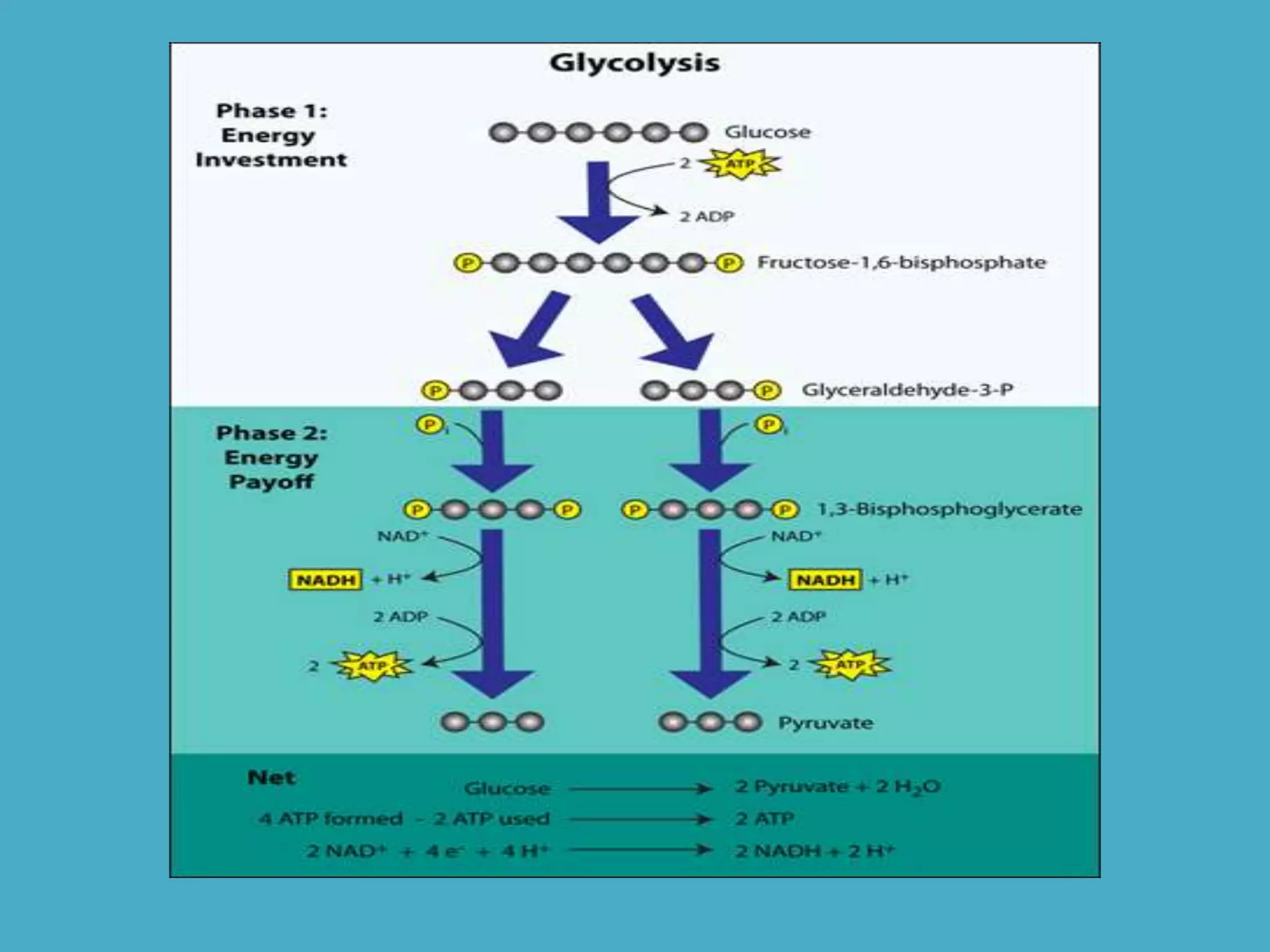
Energy used and made in glycolysis
Takes 2 ATP to start glycolysis
Only 4 ATP are produced
4-2= 2 ATP gained (not very effective)
Glycolysis uses an electron carrier called NAD+.
NAD+ forms NADH which it accepts 2 electrons.
Glycolysis
Glycolysis is a series of chemical reactions in the
cytoplasm of a cell that breaks down glucose
into 2 molecules of pyruvic acid.
Glucose 2 pyruvic acid
Glucose is a 6 carbon molecule.
Pyruvic acid is a 3 carbon molecule.
Glycolysis
• Before citric acid cycle and electron transport
chain stages begin, pyruvic acid undergoes a
series of reactions in which it gives off a
molecule of CO2 and bines with a molecule
called coenzyme A to form acetyl-CoA.
The citric acid cycle
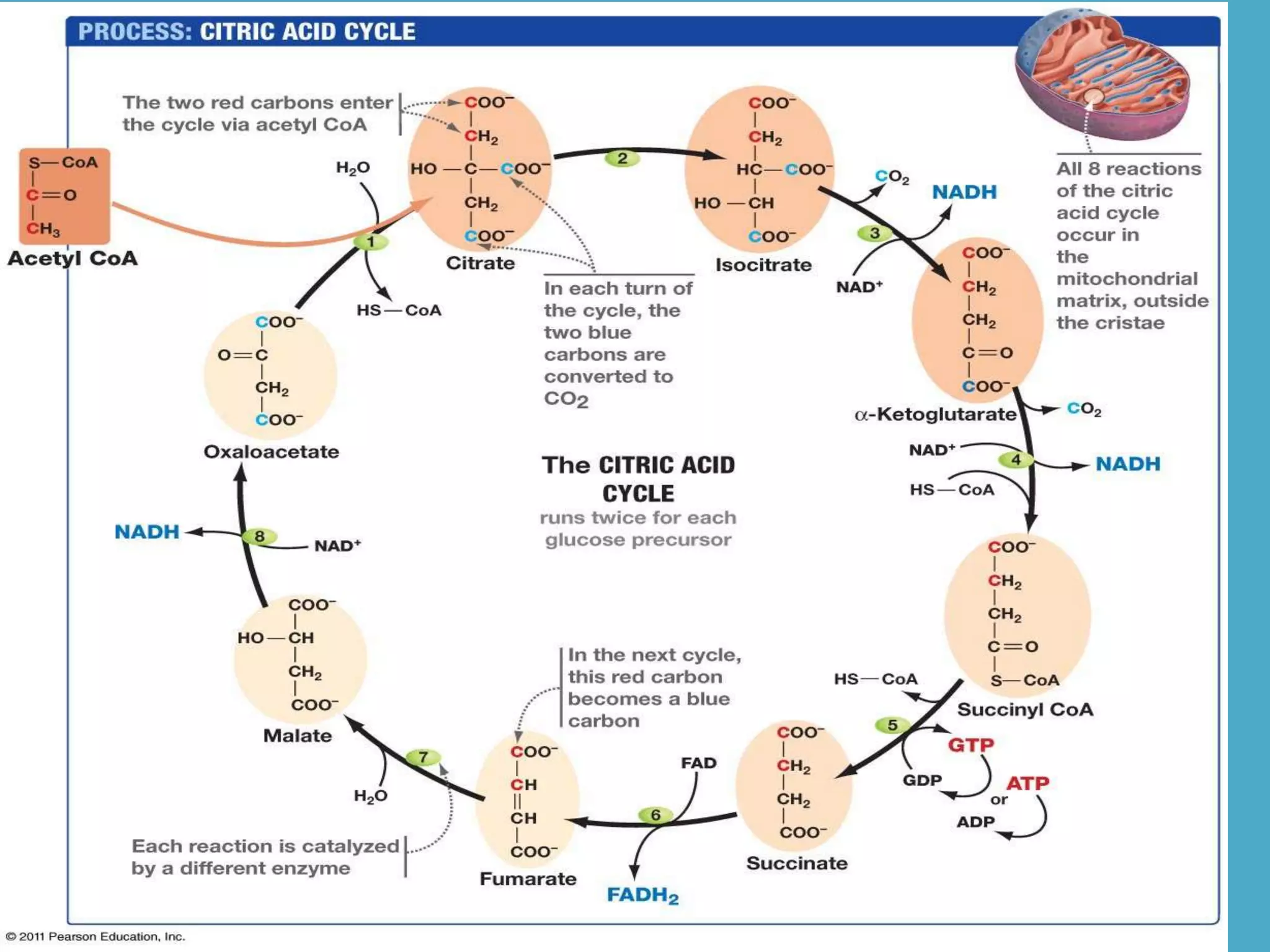
• Occurs in the mitochondria
Citric acid cycle also called Krebs cycle
For every turn of the cycle, 1 ATP molecule of
ATP and 2 molecules of carbon dioxide are
produced.
NAD+ and FAD+ (electron carriers) form NADH
and FADH2 (carry electrons to electron transport
chain)
Electron Transport chain
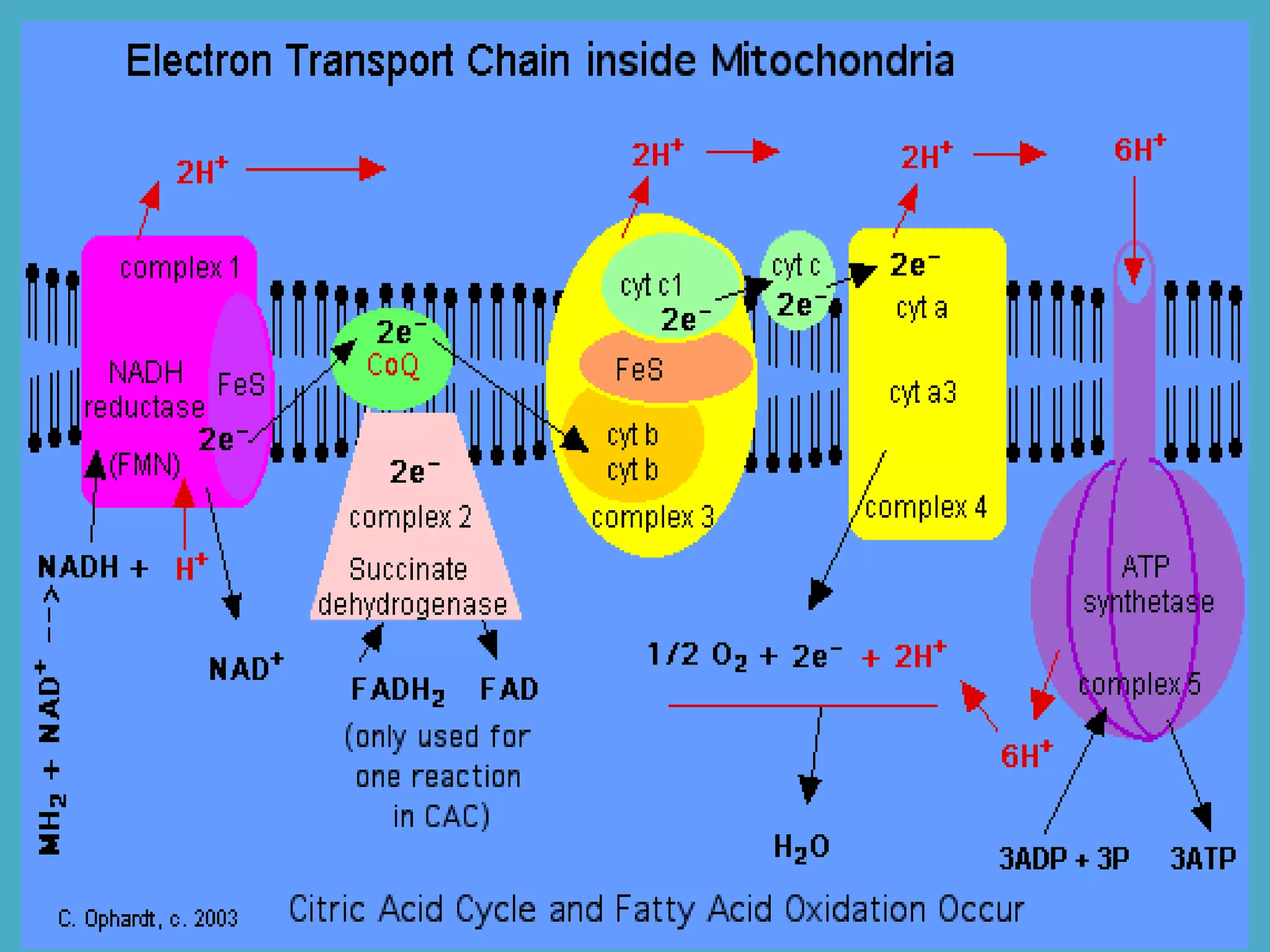
• Occurs in the inner membrane of the
mitochondrion.
• Energized electrons are carried by NADH and
FADH2 to the top of the chain.
• The electrons are passed from protein to
protein within the membrane, slowly releasing
their energy in steps. Some of that energy is
used directly to form ATP.
Electron Transport Chain
• The final electron acceptor at the bottom of
the chain is oxygen, which reacts with four
hydrogen ions (4H+) and four electrons to
form two molecules of (H2O). This is why
oxygen is so important to our bodies.
• Without oxygen, the proteins in the electron
transport chain cannot pass along the
electrons.
Electron Transport Chain
• If a protein cannot pass along an electron to
oxygen, it cannot accept another electron.
Very quickly, the entire chain becomes
blocked and ATP production stops.
• Overall, the electron transport chain add 32
ATP molecules.
• Aerobic process of ATP is very effective.
Other ways to make ATP
Fermentation
Fermentation occurs after glycolysis.
Is a process of making ATP when there is no
oxygen present. (Anaerobic process)
Ex. Happens during heavy exercise, when your
cells are without oxygen for a short period of
time.
Fermentation
• There are two major types of fermentation

1. Lactic acid fermentation
2. Alcoholic fermentation
Lactic acid fermentation
• Lactic acid fermentation is one of the
processes that supplies energy when oxygen is
scarce.
• Two molecules of pyruvic acid produced in
glycolysis use NADH to form two molecules of
lactic acid. This releases NAD+ to be used in
glycolysis, allowing 2 ATP molecules to be
formed for each glucose molecule.
Lactic acid fermentation
• The soreness feeling you get after you
workout is due to the build up of lactic acid in
the muscles cells.
• The lactic acid is transferred from muscle cells,
where it is produced during strenuous
exercise, to the liver that converts it back to
pyruvic acid.
Alcoholic fermentation
• Is used by yeast cells and some bacteria to
produce CO2 and ethyl alcohol.
Ex. When making bread, yeast cell produce CO2
that forms bubbles in the dough.

Cellular respiration

  • 1.
    Getting energy tomake ATP Cellular Respiration The process by which mitochondria break down food molecules to produce ATP is called cellular respiration. There are 3 stages of cellular respiration. 1. Glycolysis (anaerobic) 2. The citric acid cycle 3. The electron transport chain. (aerobic)
  • 2.
    Glycolysis Energy used andmade in glycolysis Takes 2 ATP to start glycolysis Only 4 ATP are produced 4-2= 2 ATP gained (not very effective) Glycolysis uses an electron carrier called NAD+. NAD+ forms NADH which it accepts 2 electrons.
  • 3.
    Glycolysis Glycolysis is aseries of chemical reactions in the cytoplasm of a cell that breaks down glucose into 2 molecules of pyruvic acid. Glucose 2 pyruvic acid Glucose is a 6 carbon molecule. Pyruvic acid is a 3 carbon molecule.
  • 4.
    Glycolysis • Before citricacid cycle and electron transport chain stages begin, pyruvic acid undergoes a series of reactions in which it gives off a molecule of CO2 and bines with a molecule called coenzyme A to form acetyl-CoA.
  • 6.
    The citric acidcycle • Occurs in the mitochondria Citric acid cycle also called Krebs cycle For every turn of the cycle, 1 ATP molecule of ATP and 2 molecules of carbon dioxide are produced. NAD+ and FAD+ (electron carriers) form NADH and FADH2 (carry electrons to electron transport chain)
  • 8.
    Electron Transport chain •Occurs in the inner membrane of the mitochondrion. • Energized electrons are carried by NADH and FADH2 to the top of the chain. • The electrons are passed from protein to protein within the membrane, slowly releasing their energy in steps. Some of that energy is used directly to form ATP.
  • 9.
    Electron Transport Chain •The final electron acceptor at the bottom of the chain is oxygen, which reacts with four hydrogen ions (4H+) and four electrons to form two molecules of (H2O). This is why oxygen is so important to our bodies. • Without oxygen, the proteins in the electron transport chain cannot pass along the electrons.
  • 10.
    Electron Transport Chain •If a protein cannot pass along an electron to oxygen, it cannot accept another electron. Very quickly, the entire chain becomes blocked and ATP production stops. • Overall, the electron transport chain add 32 ATP molecules. • Aerobic process of ATP is very effective.
  • 12.
    Other ways tomake ATP Fermentation Fermentation occurs after glycolysis. Is a process of making ATP when there is no oxygen present. (Anaerobic process) Ex. Happens during heavy exercise, when your cells are without oxygen for a short period of time.
  • 13.
    Fermentation • There aretwo major types of fermentation 1. Lactic acid fermentation 2. Alcoholic fermentation
  • 14.
    Lactic acid fermentation •Lactic acid fermentation is one of the processes that supplies energy when oxygen is scarce. • Two molecules of pyruvic acid produced in glycolysis use NADH to form two molecules of lactic acid. This releases NAD+ to be used in glycolysis, allowing 2 ATP molecules to be formed for each glucose molecule.
  • 15.
    Lactic acid fermentation •The soreness feeling you get after you workout is due to the build up of lactic acid in the muscles cells. • The lactic acid is transferred from muscle cells, where it is produced during strenuous exercise, to the liver that converts it back to pyruvic acid.
  • 16.
    Alcoholic fermentation • Isused by yeast cells and some bacteria to produce CO2 and ethyl alcohol. Ex. When making bread, yeast cell produce CO2 that forms bubbles in the dough.