Relevance of DNA isolation
                                                                 • Isolation of DNA is often the first step before further
                                                                   analysis
                                                                 • DNA profiling (forensics)
                                                                 • cloning
  DNA isolation                                                  • disease diagnosis
                                                                 • DNA sequencing
                                                                 • genetically modified organisms (GMO) - agriculture,
                                                                   pharmaceutical
                                                                 • Environmental testing, bioterrorism


  Structure of the cell                                            Extraction of genomic DNA
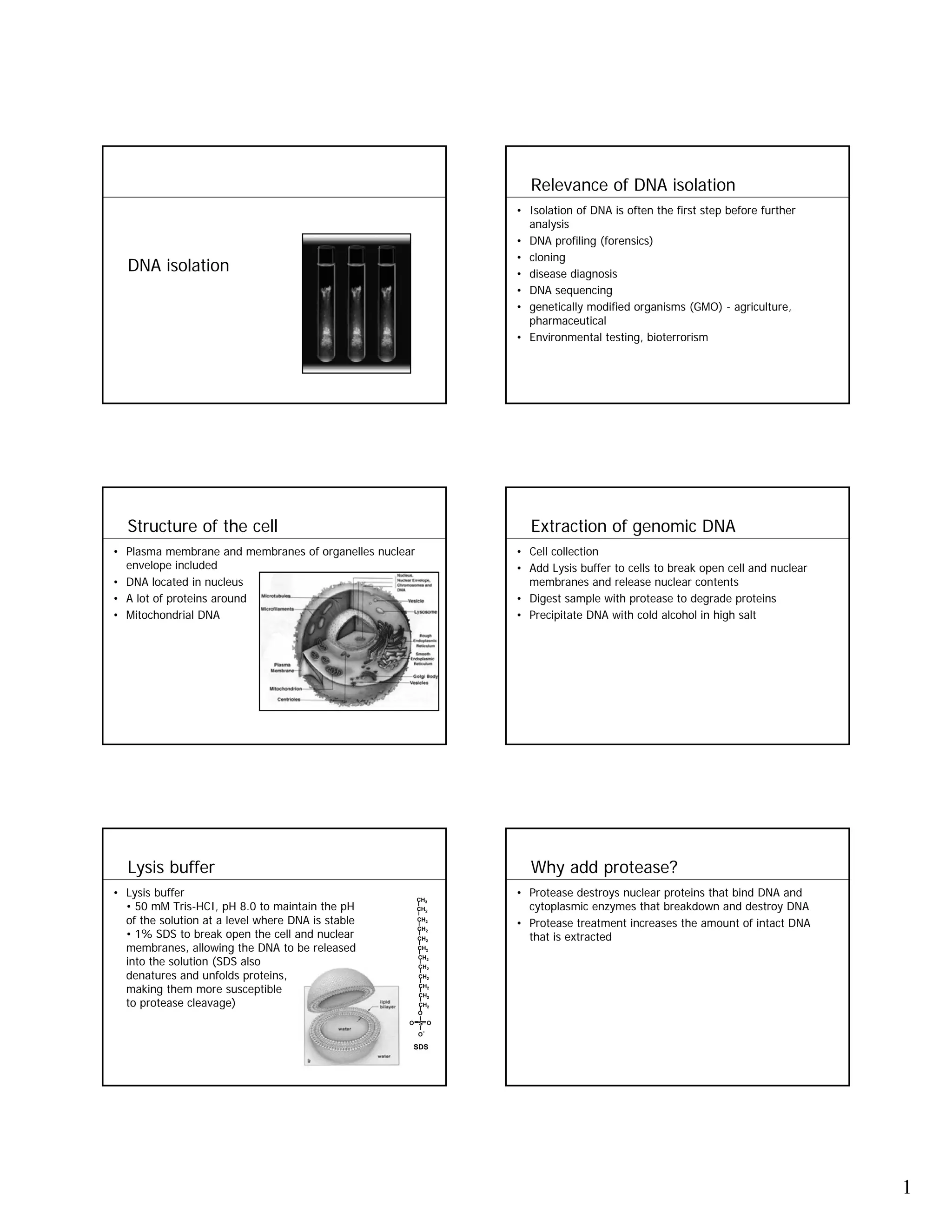
• Plasma membrane and membranes of organelles nuclear            • Cell collection
  envelope included                                              • Add Lysis buffer to cells to break open cell and nuclear
• DNA located in nucleus                                           membranes and release nuclear contents
• A lot of proteins around                                       • Digest sample with protease to degrade proteins
• Mitochondrial DNA                                              • Precipitate DNA with cold alcohol in high salt


  Lysis buffer                                                     Why add protease?
• Lysis buffer                                          CH3
                                                                 • Protease destroys nuclear proteins that bind DNA and
  • 50 mM Tris-HCI, pH 8.0 to maintain the pH           CH2        cytoplasmic enzymes that breakdown and destroy DNA
  of the solution at a level where DNA is stable        CH2
                                                                 • Protease treatment increases the amount of intact DNA
  • 1% SDS to break open the cell and nuclear
                                                        CH2
                                                        CH2        that is extracted
  membranes, allowing the DNA to be released            CH2

  into the solution (SDS also
                                                        CH2
                                                        CH2
  denatures and unfolds proteins,                       CH2

  making them more susceptible                          CH2
                                                        CH2
  to protease cleavage)                                 CH2
                                                        O
                                                   O         O
                                                        S
                                                        O-

                                                    SDS


                                                                                                                              1
Adding salt                                                                    Precipitation of DNA
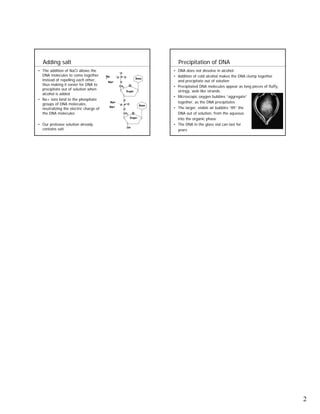
• The addition of NaCI allows the                                              • DNA does not dissolve in alcohol.
                                                    O
  DNA molecules to come together        Na         O P O                       • Addition of cold alcohol makes the DNA clump together
  instead of repelling each other,      +
                                            Na+     O
                                                                      Base
                                                                                 and precipitate out of solution
  thus making it easier for DNA to                  CH2       O                • Precipitated DNA molecules appear as long pieces of fluffy,
  precipitate out of solution when                          Sugar                stringy, web-like strands.
  alcohol is added
                                                                               • Microscopic oxygen bubbles “aggregate”
• Na+ ions bind to the phosphate                      O
  groups of DNA molecules,
                                             Na+                                 together, as the DNA precipitates
                                                    O P O               Base
  neutralizing the electric charge of
                                            Na+
                                                        O                      • The larger, visible air bubbles “lift” the
  the DNA molecules                                     CH2       O              DNA out of solution, from the aqueous
                                                              Sugar
                                                                                 into the organic phase
• Our protease solution already                                                • The DNA in the glass vial can last for
  contains salt                                             OH
                                                                                 years


                                                                                                                                               2

Dna isolation

  • 1.
    Relevance of DNAisolation • Isolation of DNA is often the first step before further analysis • DNA profiling (forensics) • cloning DNA isolation • disease diagnosis • DNA sequencing • genetically modified organisms (GMO) - agriculture, pharmaceutical • Environmental testing, bioterrorism Structure of the cell Extraction of genomic DNA • Plasma membrane and membranes of organelles nuclear • Cell collection envelope included • Add Lysis buffer to cells to break open cell and nuclear • DNA located in nucleus membranes and release nuclear contents • A lot of proteins around • Digest sample with protease to degrade proteins • Mitochondrial DNA • Precipitate DNA with cold alcohol in high salt Lysis buffer Why add protease? • Lysis buffer CH3 • Protease destroys nuclear proteins that bind DNA and • 50 mM Tris-HCI, pH 8.0 to maintain the pH CH2 cytoplasmic enzymes that breakdown and destroy DNA of the solution at a level where DNA is stable CH2 • Protease treatment increases the amount of intact DNA • 1% SDS to break open the cell and nuclear CH2 CH2 that is extracted membranes, allowing the DNA to be released CH2 into the solution (SDS also CH2 CH2 denatures and unfolds proteins, CH2 making them more susceptible CH2 CH2 to protease cleavage) CH2 O O O S O- SDS 1
  • 2.
    Adding salt Precipitation of DNA • The addition of NaCI allows the • DNA does not dissolve in alcohol. O DNA molecules to come together Na O P O • Addition of cold alcohol makes the DNA clump together instead of repelling each other, + Na+ O Base and precipitate out of solution thus making it easier for DNA to CH2 O • Precipitated DNA molecules appear as long pieces of fluffy, precipitate out of solution when Sugar stringy, web-like strands. alcohol is added • Microscopic oxygen bubbles “aggregate” • Na+ ions bind to the phosphate O groups of DNA molecules, Na+ together, as the DNA precipitates O P O Base neutralizing the electric charge of Na+ O • The larger, visible air bubbles “lift” the the DNA molecules CH2 O DNA out of solution, from the aqueous Sugar into the organic phase • Our protease solution already • The DNA in the glass vial can last for contains salt OH years 2