Energy & Environment
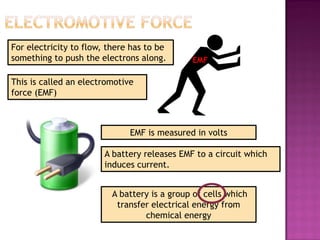
For electricity to flow, there has to be
something to push the electrons along.        EMF

This is called an electromotive
force (EMF)


                              EMF is measured in volts

                        A battery releases EMF to a circuit which
                        induces current.


                          A battery is a group of cells which
                           transfer electrical energy from
                                  chemical energy
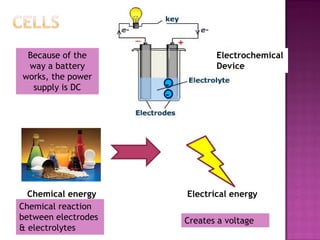
Because of the                 Electrochemical
 way a battery                  Device
works, the power
  supply is DC       -
                     -


  Chemical energy        Electrical energy
Chemical reaction
between electrodes       Creates a voltage
& electrolytes
Number of electrons = Number of protons

29-18=11                                      29-36=-7             -ve charge as
               Cu   11+
                          +ve charge as                            electrons been
                                                         Cu   7-
                          electrons                                gained.
                          been lost.


 29x Protons

18x Electrons                 29x Protons

                              36x Electrons
Other cells are
Example of a Wet                                made this way
     Cell                                       using different
                                                electrodes and
                                                 electrolytes


                                                Electrochemical
                                                Device

                         +
                     -         Sulphuric acid         Hydrogen &
          Zinc                                        Sulphate Ions
                               Copper


    Negative ions            Positive ions
    (lots of electrons)      (missing electrons)
Zn              Zn
Normally zinc contains many impurities
e.g. copper & iron                                                 Zn
                                                             Zn
These react with the zinc like the carbon                                     Fe
                                                                        Zn
electrode                                                    Cu

This takes ions away from the current                        Zn
                                                                             Zn
and electrical power is lost.
                                                              Fe             Zn
This is minimised by coating the
electrode in mercury or use pure zinc                        Zn
without impurities
                                                                             Zn
                                                              Cu


           Zn              Zn    Zn              Zn

                 Zn                    Zn
           Zn                    Zn
                            Fe              Zn
                      Zn          Zn
           Cu
                           Zn    Zn              Zn   Zinc
           Zn

            Fe             Zn     Zn             Zn

           Zn                    Zn
            Cu             Zn         Zn         Zn
Cu
                                               H
                                                            Cu
Hydrogen ions are produced in the                      Cu
chemical reaction between the electrodes                    Cu

and electrolyte                                        Cu
                                                            Cu

                                                       Cu
Because of its charge it is attracted to the                Cu
                                                                 H
copper electrode                                       Cu
                                                            Cu
                                                   H
                                                                 H

                                                       Cu   Cu
Hydrogen is a bad conductor of electricity.                      H

This increases the resistance of the copper
electrode.
H
                                                  H


                                              H

                                                      H
     This can eventually stop
      the flow of electrons                       H


This is called polarization

This can be reduced by using a depolarizer which converts the
H back into H2O. Or the rods can be cleaned with a brush.
Electrolyte is a paste      Positive electrode
 rather than liquid.

Unlike a wet cell the
                            Negative electrode
battery can work in
    any position
                            Electrolyte   Ammonium
 Suitable for small
 portable devices                         chloride


                         Manganese
                         oxide
Do you think a potato
    can act like a
      battery?


                           How could we
                        increase the voltage
                           of this circuit?
Disposable batteries
 Used once and thrown away


Used in:


Portable device               Devices away          Devices only
with low current              from a power              used
                              source                 sometimes

Primary cells cannot be recharged as the chemical reactions are
not easily reversible
Rechargeable batteries

Must be charged before use
Recharged by applying electric current, which reverses the
chemical reactions that occur during its use


The oldest form of rechargeable
battery is the lead-acid battery
It is a wet cell so must be kept
upright and ventilated

Heavy & Big
Low cost
                                   Used as car
High current
                                   batteries
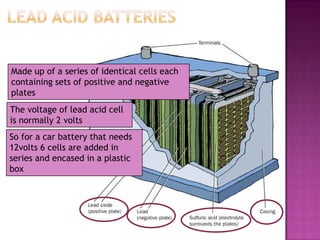
Made up of a series of identical cells each
containing sets of positive and negative
plates
The voltage of lead acid cell
is normally 2 volts
So for a car battery that needs
12volts 6 cells are added in
series and encased in a plastic
box
Should never run flat. Charge when 25% of charge left
Should regularly be charged even if not is use. The internal
resistance will cause it to discharge
A battery can go completely flat without ever having been put
into service

A battery should never be stored
directly on the ground or on concrete.
A wooden pallet is best as it does not
conduct or allow damp paths but does
allow good air circulation
Fully Charged                       +   -
1. The colors of the positive & negative plates become dark
   brown & grey respectively
2. The electrolyte has a relative density of 1.25 to 1.30
3. Plates form of bubbles
4. The EMF or a cell is 2.0 volts

Uncharged
 1.                                     -
                                      + plates become
      The colors of the positive & negative
    white due to formation of lead sulphate.
 2. The electrolyte becomes dilute & its relative density lies
    below 1.18.
 3. The e.m.f. of the cell becomes 1.8 volts.
The plates of flooded batteries must always be fully submerged
in electrolyte.
Fill battery with distilled or de-ionized water to cover the plates
if low. Never add electrolyte.
The frequency of watering depends on usage, charge method and
operating temperature
A new battery should be checked every few weeks to determine
the watering need


Fill water level to designated level after
charging. Overfilling when the battery is
empty can cause acid spillage.
Charge in a well-ventilated area. Hydrogen gas generated during
charging is explosive.

Do not charge at temperatures above 49°C (120°F).


Over charging is bad for the battery


Although batteries can be recharged, deterioration
occurs after each cycle
Now the hydrometer floats
  Once squeezed this results in a                         in the acid. The density of
  vacuum in the glass tube.                               the acid can then be read
                                                          on the floating hydrometer

Acid is then pushed
into the glass tube
due to atmospheric
pressure.


 When the battery is fully charged the cell should have a relative density of
 1.25 to 1.30.
 A reading of less than 1.18 means that recharging is necessary
Batteries can be very dangerous if not used correctly e.g.

Recharging a primary battery

Short circuiting a battery

When a battery is recharged at an
excessive rate

Overcharging

Disposing of a battery in fire
EMF


1.   What is EMF?
2.   What type of energy is stored in a battery?
     What type of energy is this transferred to?
3.   What is the difference between a wet and
     dry cell?
4.   What can you do to a secondary battery
     that you cannot do to a primary battery?
5.   Should you top up the water of a lead acid
     battery before or after charging?

Cells & batteries

  • 1.
  • 2.
    For electricity toflow, there has to be something to push the electrons along. EMF This is called an electromotive force (EMF) EMF is measured in volts A battery releases EMF to a circuit which induces current. A battery is a group of cells which transfer electrical energy from chemical energy
  • 3.
    Because of the Electrochemical way a battery Device works, the power supply is DC - - Chemical energy Electrical energy Chemical reaction between electrodes Creates a voltage & electrolytes
  • 4.
    Number of electrons= Number of protons 29-18=11 29-36=-7 -ve charge as Cu 11+ +ve charge as electrons been Cu 7- electrons gained. been lost. 29x Protons 18x Electrons 29x Protons 36x Electrons
  • 5.
    Other cells are Exampleof a Wet made this way Cell using different electrodes and electrolytes Electrochemical Device + - Sulphuric acid Hydrogen & Zinc Sulphate Ions Copper Negative ions Positive ions (lots of electrons) (missing electrons)
  • 6.
    Zn Zn Normally zinc contains many impurities e.g. copper & iron Zn Zn These react with the zinc like the carbon Fe Zn electrode Cu This takes ions away from the current Zn Zn and electrical power is lost. Fe Zn This is minimised by coating the electrode in mercury or use pure zinc Zn without impurities Zn Cu Zn Zn Zn Zn Zn Zn Zn Zn Fe Zn Zn Zn Cu Zn Zn Zn Zinc Zn Fe Zn Zn Zn Zn Zn Cu Zn Zn Zn
  • 7.
    Cu H Cu Hydrogen ions are produced in the Cu chemical reaction between the electrodes Cu and electrolyte Cu Cu Cu Because of its charge it is attracted to the Cu H copper electrode Cu Cu H H Cu Cu Hydrogen is a bad conductor of electricity. H This increases the resistance of the copper electrode.
  • 8.
    H H H H This can eventually stop the flow of electrons H This is called polarization This can be reduced by using a depolarizer which converts the H back into H2O. Or the rods can be cleaned with a brush.
  • 9.
    Electrolyte is apaste Positive electrode rather than liquid. Unlike a wet cell the Negative electrode battery can work in any position Electrolyte Ammonium Suitable for small portable devices chloride Manganese oxide
  • 10.
    Do you thinka potato can act like a battery? How could we increase the voltage of this circuit?
  • 11.
    Disposable batteries Usedonce and thrown away Used in: Portable device Devices away Devices only with low current from a power used source sometimes Primary cells cannot be recharged as the chemical reactions are not easily reversible
  • 12.
    Rechargeable batteries Must becharged before use Recharged by applying electric current, which reverses the chemical reactions that occur during its use The oldest form of rechargeable battery is the lead-acid battery It is a wet cell so must be kept upright and ventilated Heavy & Big Low cost Used as car High current batteries
  • 13.
    Made up ofa series of identical cells each containing sets of positive and negative plates The voltage of lead acid cell is normally 2 volts So for a car battery that needs 12volts 6 cells are added in series and encased in a plastic box
  • 14.
    Should never runflat. Charge when 25% of charge left Should regularly be charged even if not is use. The internal resistance will cause it to discharge A battery can go completely flat without ever having been put into service A battery should never be stored directly on the ground or on concrete. A wooden pallet is best as it does not conduct or allow damp paths but does allow good air circulation
  • 15.
    Fully Charged + - 1. The colors of the positive & negative plates become dark brown & grey respectively 2. The electrolyte has a relative density of 1.25 to 1.30 3. Plates form of bubbles 4. The EMF or a cell is 2.0 volts Uncharged 1. - + plates become The colors of the positive & negative white due to formation of lead sulphate. 2. The electrolyte becomes dilute & its relative density lies below 1.18. 3. The e.m.f. of the cell becomes 1.8 volts.
  • 16.
    The plates offlooded batteries must always be fully submerged in electrolyte. Fill battery with distilled or de-ionized water to cover the plates if low. Never add electrolyte. The frequency of watering depends on usage, charge method and operating temperature A new battery should be checked every few weeks to determine the watering need Fill water level to designated level after charging. Overfilling when the battery is empty can cause acid spillage.
  • 17.
    Charge in awell-ventilated area. Hydrogen gas generated during charging is explosive. Do not charge at temperatures above 49°C (120°F). Over charging is bad for the battery Although batteries can be recharged, deterioration occurs after each cycle
  • 18.
    Now the hydrometerfloats Once squeezed this results in a in the acid. The density of vacuum in the glass tube. the acid can then be read on the floating hydrometer Acid is then pushed into the glass tube due to atmospheric pressure. When the battery is fully charged the cell should have a relative density of 1.25 to 1.30. A reading of less than 1.18 means that recharging is necessary
  • 19.
    Batteries can bevery dangerous if not used correctly e.g. Recharging a primary battery Short circuiting a battery When a battery is recharged at an excessive rate Overcharging Disposing of a battery in fire
  • 20.
    EMF 1. What is EMF? 2. What type of energy is stored in a battery? What type of energy is this transferred to? 3. What is the difference between a wet and dry cell? 4. What can you do to a secondary battery that you cannot do to a primary battery? 5. Should you top up the water of a lead acid battery before or after charging?