F.Y. B.Tech
Aditya Bulbule
DRY CELL
INTRODUCTION
WHAT IS DRY CELL ?
 A voltaic cell in which the electrolyte is in the form of a moist paste or
gel that cannot spill.
 The basic mechanism of a dry cell is to convert chemical energy into
electrical energy.
 It is a type of battery, commonly used for portable electrical devices.
 It was developed in 1886 by the German scientist Carl Gassner, after
development of wet zinc-carbon batteries by Georges Leclanché in
1866.
HISTORY….
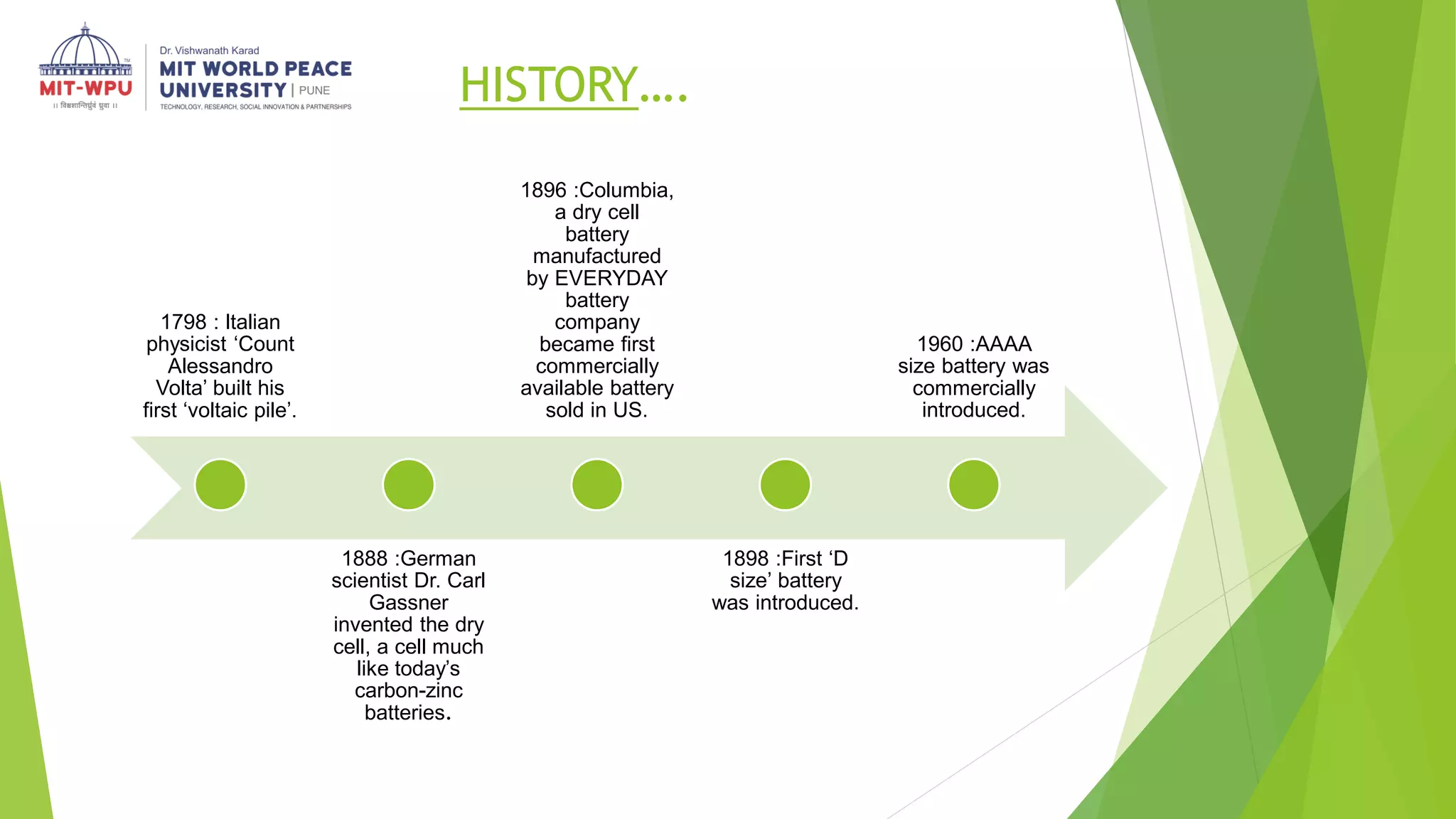
1798 : Italian
physicist ‘Count
Alessandro
Volta’ built his
first ‘voltaic pile’.
1888 :German
scientist Dr. Carl
Gassner
invented the dry
cell, a cell much
like today’s
carbon-zinc
batteries.
1896 :Columbia,
a dry cell
battery
manufactured
by EVERYDAY
battery
company
became first
commercially
available battery
sold in US.
1898 :First ‘D
size’ battery
was introduced.
1960 :AAAA
size battery was
commercially
introduced.
 THE FIGURE BELOW SHOWS A GENERAL DRY CELL
CONSTRUCTION:
 A dry cell consists of a zinc container whose base acts as
the negative electrode.
 The carbon rod placed at the center with a brass cap acts
as the positive electrode.
 This is surrounded by a mixture of manganese
dioxide and charcoal.
 The electrolyte uses is a moist paste of ammonium
chloride. The outer body (excluding the base) of the zinc
container is insulated with cardboard.
WORKING:
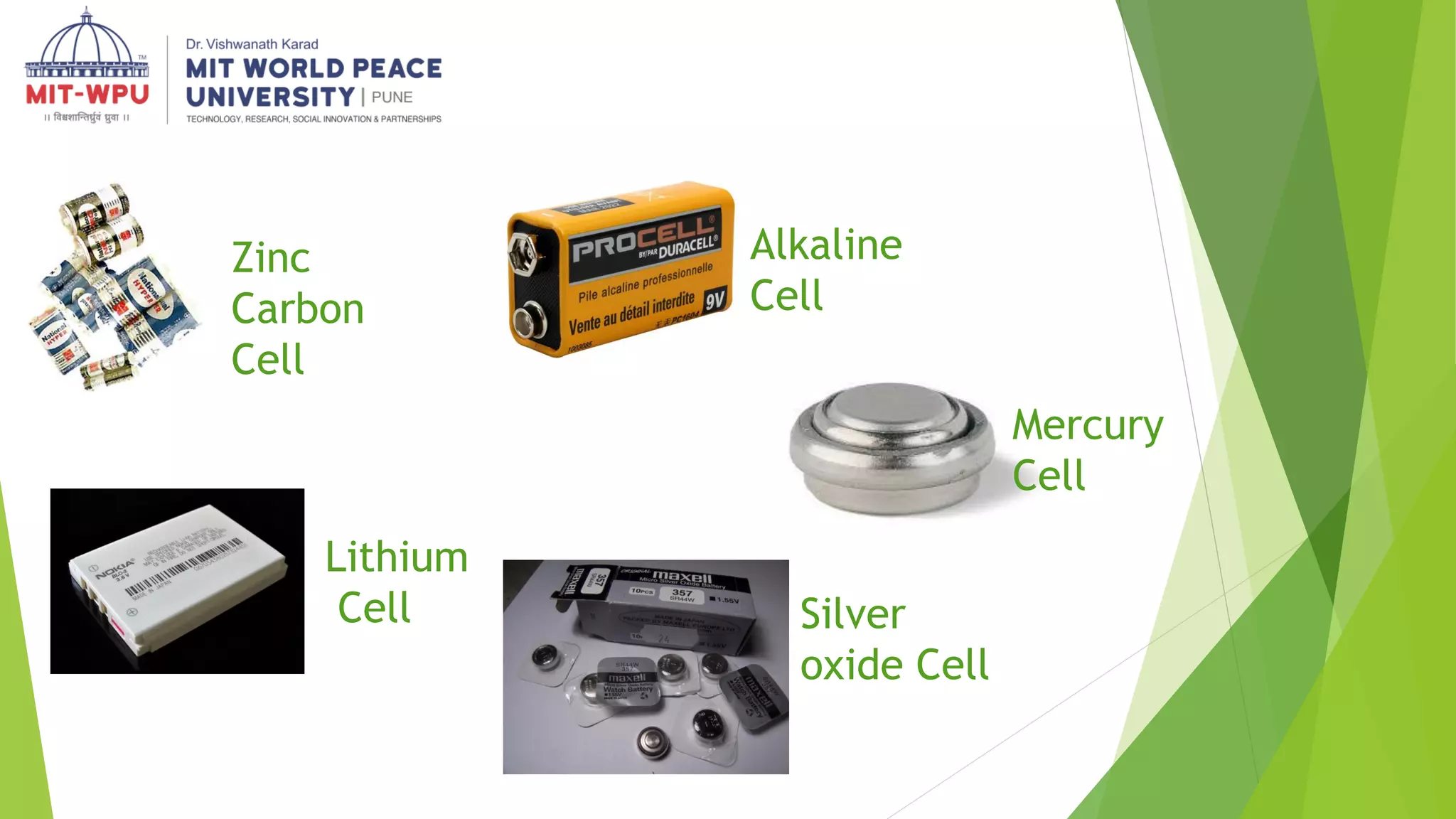
TYPES OF DRY CELL:
DRY CELL
Zinc-carbon
cell.
Alkaline
cell.
Lithium
cell.
Mercury
cell.
Silver oxide
cell.
Alkaline
Cell
Silver
oxide Cell
Zinc
Carbon
Cell
Lithium
Cell
Mercury
Cell
Zinc Carbon Cell
A zinc–carbon battery is a dry cell primary battery that delivers about 1.5 volts of
direct current from the electrochemical reaction between zinc and manganese
dioxide. A carbon rod collects the current from the manganese dioxide electrode. A
dry cell is usually made of a zinc which serves as the anode with a negative
potential, while the carbon rod is the positive cathode. It use an aqueous paste
of ammonium chloride as electrolyte, mixed with some zinc chloride solution.
Alkaline Cell
Alkaline batteries are a type of primary battery dependent upon the reaction between zinc metal
and manganese dioxide .Compared with zinc-carbon batteries, alkaline batteries have a higher e
longer shelf-life, with the same voltage . The alkaline battery gets its name because it has an
alkaline electrolyte of potassium hydroxide, instead of the acidic ammonium chloride or zinc
chloride electrolyte of the zinc-carbon batteries.
Lithium Cell
Lithium batteries are primary batteries that have lithium as an anode. These types of
batteries are also referred to as lithium-metal batteries . They stand apart from other
batteries in their high charge density (long life) and high cost per unit. Depending on
the design and chemical compounds used, lithium cells can produce voltages
from 1.5 V to about 3.7 V which are rechargeable batteries.
Mercury Cell
A mercury battery (also called mercuric oxide battery) is a non-
rechargeable electrochemical battery, a primary cell. Mercury batteries use a
reaction between mercuric oxide and zinc electrodes in an alkaline electrolyte.
The voltage during discharge remains practically constant at 1.35 volts.
Silver Oxide Cell
A silver-oxide battery is a primary cell . It uses silver(I) oxide as the
positive electrode (cathode), zinc as the negative electrode (anode), plus
an alkaline electrolyte, usually sodium hydroxide (NaOH) or potassium
hydroxide (KOH).It is available either in small sizes as button cells, where the amount
of silver used is minimal and not a significant contributor to the product cost .
APPLICATIONS:
Zinc carbon cell- They made flashlights and other portable devices possible,
because the battery can function in any orientation. They are still useful in low drain
or intermittent use devices such as remote controls, flashlights, clocks.
Alkaline batteries are used in many household items such as MP3 players, CD
players, digital cameras, pagers, toys, lights, and radios.
Lithium batteries- These are widely used in portable consumer electronic
devices, and in electric vehicles ranging from full sized vehicles to radio controlled
toys.
Mercury batteries- These were used in the shape of button cells for watches,
hearing aids, cameras and calculators, and in larger forms for other applications.
Silver oxide cell- These cells are mostly found in applications for the military for
example in Mark 37 torpedoes or on Alfa-class submarines. In recent years they have
become important as reserve batteries for manned and unmanned spacecraft. Long
used in specialized applications, it is now being developed for more mainstream
markets, for example, batteries in laptops and hearing aids.
DRAWBACKS:
Dry cell batteries carry an inherent risk due to the chemicals inside of them. If they are
exposed to too much heat (such as being placed too close to or actually in a fire) dry
cell batteries can rupture and explode. The contents of the battery are dangerous to
people, and the chemicals are highly acidic to the skin. However, if the battery doesn't
explode but rather its case is punctured it can leak. This can cause damage inside of
electronics, but if the leak comes into contact with skin it can also cause chemical
burns.
Mistreatment during charging or discharging of an lithium ion battery can cause
outgassing of some of their contents, which can cause explosions or fire.
Due to the content of toxic mercury and environmental concerns about its disposal, the
sale of mercury batteries is now banned in many countries.
REFERENCES:
 https://www.collinsdictionary.com/dictionary
/english/dry-cell
 www.energizer.com/about-batteries/battery-
history
 https://scienceaid.net/images/8/8e/cell4.pn
g
Thank You!!!

DRY CELL

  • 1.
  • 2.
  • 3.
    INTRODUCTION WHAT IS DRYCELL ?  A voltaic cell in which the electrolyte is in the form of a moist paste or gel that cannot spill.  The basic mechanism of a dry cell is to convert chemical energy into electrical energy.  It is a type of battery, commonly used for portable electrical devices.  It was developed in 1886 by the German scientist Carl Gassner, after development of wet zinc-carbon batteries by Georges Leclanché in 1866.
  • 4.
    HISTORY…. 1798 : Italian physicist‘Count Alessandro Volta’ built his first ‘voltaic pile’. 1888 :German scientist Dr. Carl Gassner invented the dry cell, a cell much like today’s carbon-zinc batteries. 1896 :Columbia, a dry cell battery manufactured by EVERYDAY battery company became first commercially available battery sold in US. 1898 :First ‘D size’ battery was introduced. 1960 :AAAA size battery was commercially introduced.
  • 5.
     THE FIGUREBELOW SHOWS A GENERAL DRY CELL
  • 6.
    CONSTRUCTION:  A drycell consists of a zinc container whose base acts as the negative electrode.  The carbon rod placed at the center with a brass cap acts as the positive electrode.  This is surrounded by a mixture of manganese dioxide and charcoal.  The electrolyte uses is a moist paste of ammonium chloride. The outer body (excluding the base) of the zinc container is insulated with cardboard.
  • 7.
  • 8.
    TYPES OF DRYCELL: DRY CELL Zinc-carbon cell. Alkaline cell. Lithium cell. Mercury cell. Silver oxide cell.
  • 9.
  • 10.
    Zinc Carbon Cell Azinc–carbon battery is a dry cell primary battery that delivers about 1.5 volts of direct current from the electrochemical reaction between zinc and manganese dioxide. A carbon rod collects the current from the manganese dioxide electrode. A dry cell is usually made of a zinc which serves as the anode with a negative potential, while the carbon rod is the positive cathode. It use an aqueous paste of ammonium chloride as electrolyte, mixed with some zinc chloride solution. Alkaline Cell Alkaline batteries are a type of primary battery dependent upon the reaction between zinc metal and manganese dioxide .Compared with zinc-carbon batteries, alkaline batteries have a higher e longer shelf-life, with the same voltage . The alkaline battery gets its name because it has an alkaline electrolyte of potassium hydroxide, instead of the acidic ammonium chloride or zinc chloride electrolyte of the zinc-carbon batteries.
  • 11.
    Lithium Cell Lithium batteriesare primary batteries that have lithium as an anode. These types of batteries are also referred to as lithium-metal batteries . They stand apart from other batteries in their high charge density (long life) and high cost per unit. Depending on the design and chemical compounds used, lithium cells can produce voltages from 1.5 V to about 3.7 V which are rechargeable batteries. Mercury Cell A mercury battery (also called mercuric oxide battery) is a non- rechargeable electrochemical battery, a primary cell. Mercury batteries use a reaction between mercuric oxide and zinc electrodes in an alkaline electrolyte. The voltage during discharge remains practically constant at 1.35 volts.
  • 12.
    Silver Oxide Cell Asilver-oxide battery is a primary cell . It uses silver(I) oxide as the positive electrode (cathode), zinc as the negative electrode (anode), plus an alkaline electrolyte, usually sodium hydroxide (NaOH) or potassium hydroxide (KOH).It is available either in small sizes as button cells, where the amount of silver used is minimal and not a significant contributor to the product cost .
  • 13.
    APPLICATIONS: Zinc carbon cell-They made flashlights and other portable devices possible, because the battery can function in any orientation. They are still useful in low drain or intermittent use devices such as remote controls, flashlights, clocks. Alkaline batteries are used in many household items such as MP3 players, CD players, digital cameras, pagers, toys, lights, and radios. Lithium batteries- These are widely used in portable consumer electronic devices, and in electric vehicles ranging from full sized vehicles to radio controlled toys. Mercury batteries- These were used in the shape of button cells for watches, hearing aids, cameras and calculators, and in larger forms for other applications. Silver oxide cell- These cells are mostly found in applications for the military for example in Mark 37 torpedoes or on Alfa-class submarines. In recent years they have become important as reserve batteries for manned and unmanned spacecraft. Long used in specialized applications, it is now being developed for more mainstream markets, for example, batteries in laptops and hearing aids.
  • 14.
    DRAWBACKS: Dry cell batteriescarry an inherent risk due to the chemicals inside of them. If they are exposed to too much heat (such as being placed too close to or actually in a fire) dry cell batteries can rupture and explode. The contents of the battery are dangerous to people, and the chemicals are highly acidic to the skin. However, if the battery doesn't explode but rather its case is punctured it can leak. This can cause damage inside of electronics, but if the leak comes into contact with skin it can also cause chemical burns. Mistreatment during charging or discharging of an lithium ion battery can cause outgassing of some of their contents, which can cause explosions or fire. Due to the content of toxic mercury and environmental concerns about its disposal, the sale of mercury batteries is now banned in many countries.
  • 15.
  • 16.