E X T E N D E D
CELL STRUCTURE AND
ORGANISATION
ORGANISMS ARE MADE OF CELLS
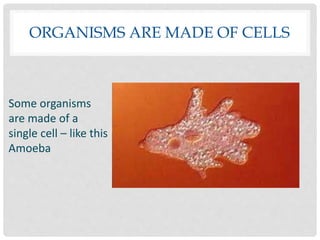
Some organisms
are made of a
single cell – like this
Amoeba
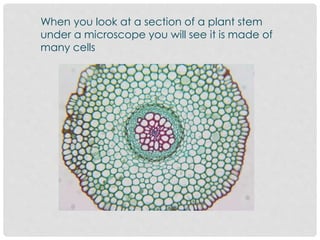
When you look at a section of a plant stem
under a microscope you will see it is made of
many cells
Plant and Animal cells are
similar in many ways
but also have some
differences
Let’s begin with a
generalised animal cell...
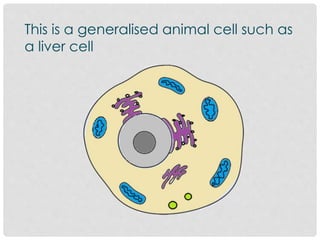
This is a generalised animal cell such as
a liver cell
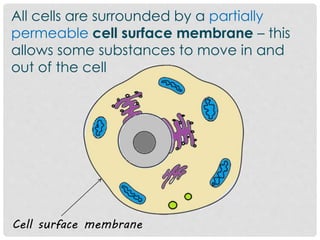
All cells are surrounded by a partially
permeable cell surface membrane – this
allows some substances to move in and
out of the cell
Cell surface membrane
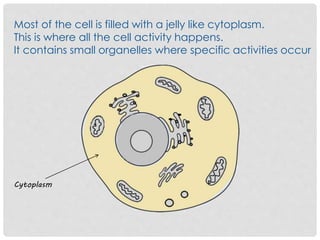
Most of the cell is filled with a jelly like cytoplasm.
This is where all the cell activity happens.
It contains small organelles where specific activities occur
Cytoplasm
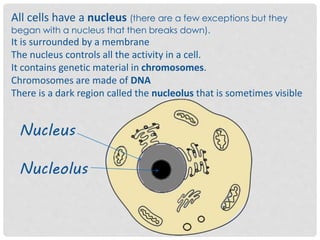
All cells have a nucleus (there are a few exceptions but they
began with a nucleus that then breaks down).
It is surrounded by a membrane
The nucleus controls all the activity in a cell.
It contains genetic material in chromosomes.
Chromosomes are made of DNA
There is a dark region called the nucleolus that is sometimes visible
Nucleus
Nucleolus
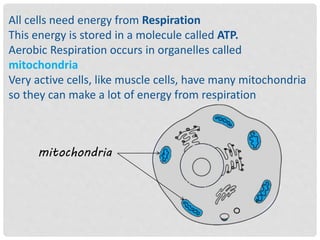
All cells need energy from Respiration
This energy is stored in a molecule called ATP.
Aerobic Respiration occurs in organelles called
mitochondria
Very active cells, like muscle cells, have many mitochondria
so they can make a lot of energy from respiration
mitochondria
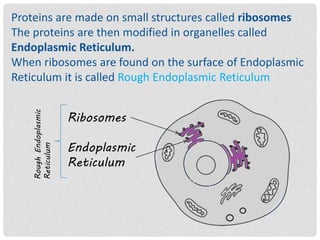
Proteins are made on small structures called ribosomes
The proteins are then modified in organelles called
Endoplasmic Reticulum.
When ribosomes are found on the surface of Endoplasmic
Reticulum it is called Rough Endoplasmic Reticulum
Ribosomes
Endoplasmic
Reticulum
RoughEndoplasmic
Reticulum
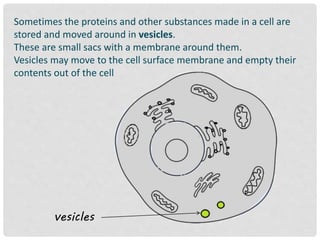
Sometimes the proteins and other substances made in a cell are
stored and moved around in vesicles.
These are small sacs with a membrane around them.
Vesicles may move to the cell surface membrane and empty their
contents out of the cell
vesicles
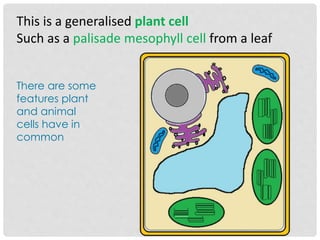
This is a generalised plant cell
Such as a palisade mesophyll cell from a leaf
There are some
features plant
and animal
cells have in
common
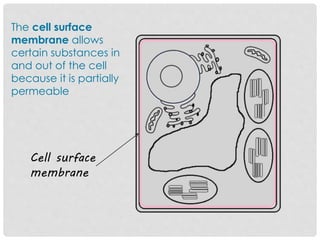
The cell surface
membrane allows
certain substances in
and out of the cell
because it is partially
permeable
Cell surface
membrane
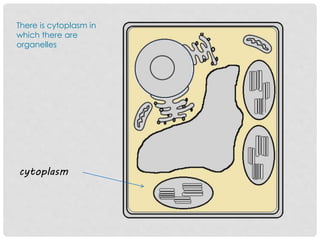
There is cytoplasm in
which there are
organelles
cytoplasm
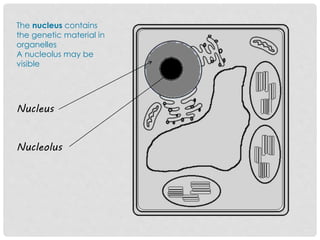
The nucleus contains
the genetic material in
organelles
A nucleolus may be
visible
Nucleus
Nucleolus
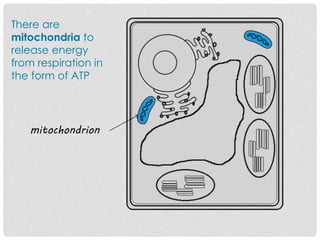
There are
mitochondria to
release energy
from respiration in
the form of ATP
mitochondrion
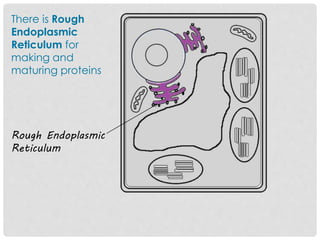
There is Rough
Endoplasmic
Reticulum for
making and
maturing proteins
Rough Endoplasmic
Reticulum
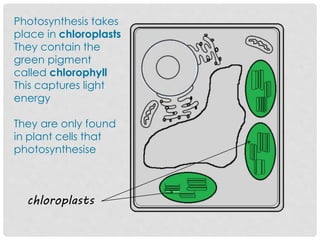
Photosynthesis takes
place in chloroplasts
They contain the
green pigment
called chlorophyll
This captures light
energy
They are only found
in plant cells that
photosynthesise
chloroplasts
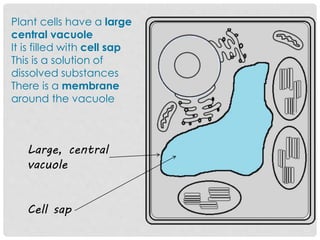
Plant cells have a large
central vacuole
It is filled with cell sap
This is a solution of
dissolved substances
There is a membrane
around the vacuole
Large, central
vacuole
Cell sap
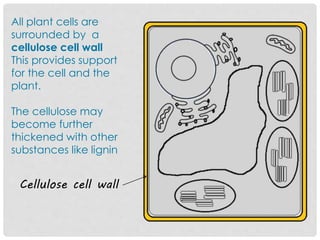
All plant cells are
surrounded by a
cellulose cell wall
This provides support
for the cell and the
plant.
The cellulose may
become further
thickened with other
substances like lignin
Cellulose cell wall
Learn all the parts of these cells
and know their functions
Complete the table in your notes
to show the similarities and
differences between plant and
animal cells
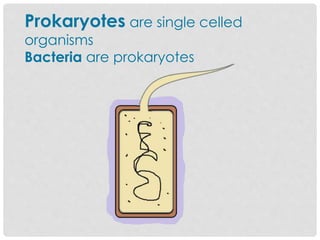
Prokaryotes are single celled
organisms
Bacteria are prokaryotes
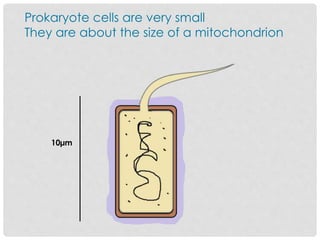
Prokaryote cells are very small
They are about the size of a mitochondrion
10µm
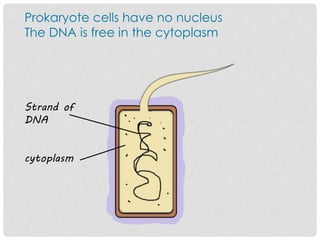
Prokaryote cells have no nucleus
The DNA is free in the cytoplasm
Strand of
DNA
cytoplasm
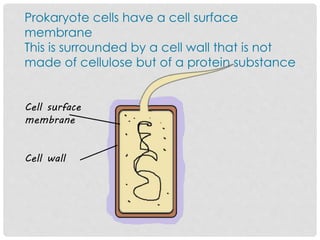
Prokaryote cells have a cell surface
membrane
This is surrounded by a cell wall that is not
made of cellulose but of a protein substance
Cell surface
membrane
Cell wall
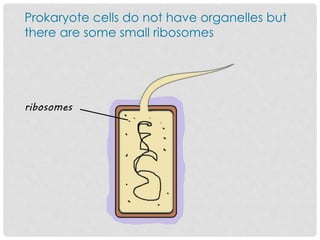
Prokaryote cells do not have organelles but
there are some small ribosomes
ribosomes
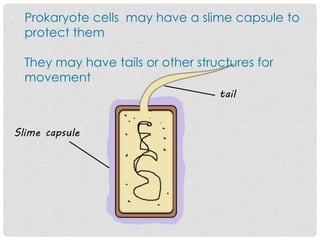
Prokaryote cells may have a slime capsule to
protect them
They may have tails or other structures for
movement
tail
Slime capsule

Cell structureIGCSE

  • 1.
    E X TE N D E D CELL STRUCTURE AND ORGANISATION
  • 2.
    ORGANISMS ARE MADEOF CELLS Some organisms are made of a single cell – like this Amoeba
  • 3.
    When you lookat a section of a plant stem under a microscope you will see it is made of many cells
  • 4.
    Plant and Animalcells are similar in many ways but also have some differences Let’s begin with a generalised animal cell...
  • 5.
    This is ageneralised animal cell such as a liver cell
  • 6.
    All cells aresurrounded by a partially permeable cell surface membrane – this allows some substances to move in and out of the cell Cell surface membrane
  • 7.
    Most of thecell is filled with a jelly like cytoplasm. This is where all the cell activity happens. It contains small organelles where specific activities occur Cytoplasm
  • 8.
    All cells havea nucleus (there are a few exceptions but they began with a nucleus that then breaks down). It is surrounded by a membrane The nucleus controls all the activity in a cell. It contains genetic material in chromosomes. Chromosomes are made of DNA There is a dark region called the nucleolus that is sometimes visible Nucleus Nucleolus
  • 9.
    All cells needenergy from Respiration This energy is stored in a molecule called ATP. Aerobic Respiration occurs in organelles called mitochondria Very active cells, like muscle cells, have many mitochondria so they can make a lot of energy from respiration mitochondria
  • 10.
    Proteins are madeon small structures called ribosomes The proteins are then modified in organelles called Endoplasmic Reticulum. When ribosomes are found on the surface of Endoplasmic Reticulum it is called Rough Endoplasmic Reticulum Ribosomes Endoplasmic Reticulum RoughEndoplasmic Reticulum
  • 11.
    Sometimes the proteinsand other substances made in a cell are stored and moved around in vesicles. These are small sacs with a membrane around them. Vesicles may move to the cell surface membrane and empty their contents out of the cell vesicles
  • 12.
    This is ageneralised plant cell Such as a palisade mesophyll cell from a leaf There are some features plant and animal cells have in common
  • 13.
    The cell surface membraneallows certain substances in and out of the cell because it is partially permeable Cell surface membrane
  • 14.
    There is cytoplasmin which there are organelles cytoplasm
  • 15.
    The nucleus contains thegenetic material in organelles A nucleolus may be visible Nucleus Nucleolus
  • 16.
    There are mitochondria to releaseenergy from respiration in the form of ATP mitochondrion
  • 17.
    There is Rough Endoplasmic Reticulumfor making and maturing proteins Rough Endoplasmic Reticulum
  • 18.
    Photosynthesis takes place inchloroplasts They contain the green pigment called chlorophyll This captures light energy They are only found in plant cells that photosynthesise chloroplasts
  • 19.
    Plant cells havea large central vacuole It is filled with cell sap This is a solution of dissolved substances There is a membrane around the vacuole Large, central vacuole Cell sap
  • 20.
    All plant cellsare surrounded by a cellulose cell wall This provides support for the cell and the plant. The cellulose may become further thickened with other substances like lignin Cellulose cell wall
  • 21.
    Learn all theparts of these cells and know their functions Complete the table in your notes to show the similarities and differences between plant and animal cells
  • 22.
    Prokaryotes are singlecelled organisms Bacteria are prokaryotes
  • 23.
    Prokaryote cells arevery small They are about the size of a mitochondrion 10µm
  • 24.
    Prokaryote cells haveno nucleus The DNA is free in the cytoplasm Strand of DNA cytoplasm
  • 25.
    Prokaryote cells havea cell surface membrane This is surrounded by a cell wall that is not made of cellulose but of a protein substance Cell surface membrane Cell wall
  • 26.
    Prokaryote cells donot have organelles but there are some small ribosomes ribosomes
  • 27.
    Prokaryote cells mayhave a slime capsule to protect them They may have tails or other structures for movement tail Slime capsule