Photosynthesis
Topic 1- Biology Revision- IGCSE edexcel
Plant nutrition
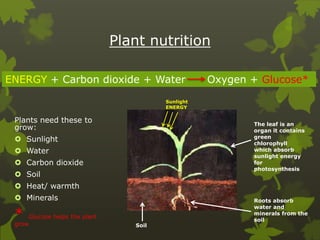
Plants need these to
grow:
 Sunlight
 Water
 Carbon dioxide
 Soil
 Heat/ warmth
 Minerals
* Glucose helps the plant
grow
Sunlight
ENERGY
The leaf is an
organ it contains
green
chlorophyll
which absorb
sunlight energy
for
photosynthesis
Soil
Roots absorb
water and
minerals from the
soil
ENERGY + Carbon dioxide + Water Oxygen + Glucose*
Minerals
 Minerals are found dissolved in
the soil
Minerals needed are:
 Potassium- flowers and fruit
 Magnesium- to make
chlorophyll
 Nitrogen- to make amino acids
and proteins
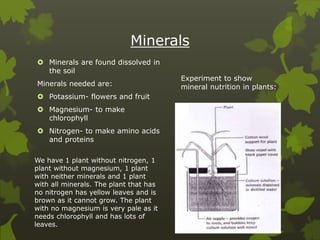
Experiment to show
mineral nutrition in plants:
We have 1 plant without nitrogen, 1
plant without magnesium, 1 plant
with neither minerals and 1 plant
with all minerals. The plant that has
no nitrogen has yellow leaves and is
brown as it cannot grow. The plant
with no magnesium is very pale as it
needs chlorophyll and has lots of
leaves.
Photosynthesis
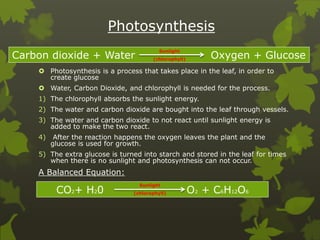
 Photosynthesis is a process that takes place in the leaf, in order to
create glucose
 Water, Carbon Dioxide, and chlorophyll is needed for the process.
1) The chlorophyll absorbs the sunlight energy.
2) The water and carbon dioxide are bought into the leaf through vessels.
3) The water and carbon dioxide to not react until sunlight energy is
added to make the two react.
4) After the reaction happens the oxygen leaves the plant and the
glucose is used for growth.
5) The extra glucose is turned into starch and stored in the leaf for times
when there is no sunlight and photosynthesis can not occur.
A Balanced Equation:
Carbon dioxide + Water Oxygen + Glucose
Sunlight
(chlorophyll)
CO2+ H20 O2 + C6H12O6
Sunlight
(chlorophyll)
Glucose and Starch
Uses Of Glucose:
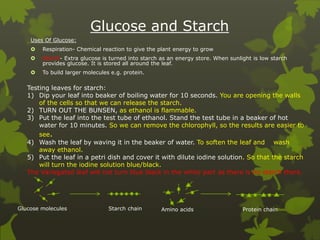
 Respiration- Chemical reaction to give the plant energy to grow
 Starch- Extra glucose is turned into starch as an energy store. When sunlight is low starch
provides glucose. It is stored all around the leaf.
 To build larger molecules e.g. protein.
Glucose molecules Starch chain Amino acids Protein chain
Testing leaves for starch:
1) Dip your leaf into beaker of boiling water for 10 seconds. You are opening the walls
of the cells so that we can release the starch.
2) TURN OUT THE BUNSEN, as ethanol is flammable.
3) Put the leaf into the test tube of ethanol. Stand the test tube in a beaker of hot
water for 10 minutes. So we can remove the chlorophyll, so the results are easier to
see.
4) Wash the leaf by waving it in the beaker of water. To soften the leaf and wash
away ethanol.
5) Put the leaf in a petri dish and cover it with dilute iodine solution. So that the starch
will turn the iodine solution blue/black.
The Variegated leaf will not turn blue black in the white part as there is no starch there.
Light And Photosynthesis
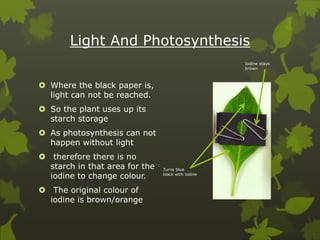
 Where the black paper is,
light can not be reached.
 So the plant uses up its
starch storage
 As photosynthesis can not
happen without light
 therefore there is no
starch in that area for the
iodine to change colour.
 The original colour of
iodine is brown/orange
Turns blue
black with iodine
Iodine stays
brown
Leaf Adaptions
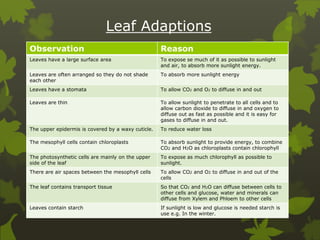
Observation Reason
Leaves have a large surface area To expose se much of it as possible to sunlight
and air, to absorb more sunlight energy.
Leaves are often arranged so they do not shade
each other
To absorb more sunlight energy
Leaves have a stomata To allow CO2 and O2 to diffuse in and out
Leaves are thin To allow sunlight to penetrate to all cells and to
allow carbon dioxide to diffuse in and oxygen to
diffuse out as fast as possible and it is easy for
gases to diffuse in and out.
The upper epidermis is covered by a waxy cuticle. To reduce water loss
The mesophyll cells contain chloroplasts To absorb sunlight to provide energy, to combine
CO2 and H2O as chloroplasts contain chlorophyll
The photosynthetic cells are mainly on the upper
side of the leaf
To expose as much chlorophyll as possible to
sunlight.
There are air spaces between the mesophyll cells To allow CO2 and O2 to diffuse in and out of the
cells
The leaf contains transport tissue So that CO2 and H2O can diffuse between cells to
other cells and glucose, water and minerals can
diffuse from Xylem and Phloem to other cells
Leaves contain starch If sunlight is low and glucose is needed starch is
use e.g. In the winter.
Leaf Structure
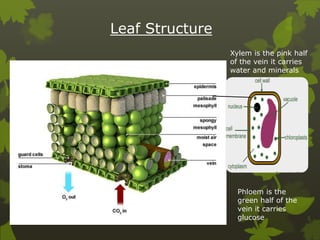
Phloem is the
green half of the
vein it carries
glucose
Xylem is the pink half
of the vein it carries
water and minerals
Key words
 Autotrophic
 Photosynthesis
 Magnesium
 Potassium
 Nitrogen
 Chlorophyll
 Sunlight
 Glucose
 Starch
 Iodine
 Cuticle
 Amino acids
 Proteins
 Chloroplast
 Variegated leaf
 Stomata
 Phloem
 Xylem
 Palisade
 Mesophyll
 Epidermis
 Spongy layer

IGCSE Photosythesis

  • 1.
    Photosynthesis Topic 1- BiologyRevision- IGCSE edexcel
  • 2.
    Plant nutrition Plants needthese to grow:  Sunlight  Water  Carbon dioxide  Soil  Heat/ warmth  Minerals * Glucose helps the plant grow Sunlight ENERGY The leaf is an organ it contains green chlorophyll which absorb sunlight energy for photosynthesis Soil Roots absorb water and minerals from the soil ENERGY + Carbon dioxide + Water Oxygen + Glucose*
  • 3.
    Minerals  Minerals arefound dissolved in the soil Minerals needed are:  Potassium- flowers and fruit  Magnesium- to make chlorophyll  Nitrogen- to make amino acids and proteins Experiment to show mineral nutrition in plants: We have 1 plant without nitrogen, 1 plant without magnesium, 1 plant with neither minerals and 1 plant with all minerals. The plant that has no nitrogen has yellow leaves and is brown as it cannot grow. The plant with no magnesium is very pale as it needs chlorophyll and has lots of leaves.
  • 4.
    Photosynthesis  Photosynthesis isa process that takes place in the leaf, in order to create glucose  Water, Carbon Dioxide, and chlorophyll is needed for the process. 1) The chlorophyll absorbs the sunlight energy. 2) The water and carbon dioxide are bought into the leaf through vessels. 3) The water and carbon dioxide to not react until sunlight energy is added to make the two react. 4) After the reaction happens the oxygen leaves the plant and the glucose is used for growth. 5) The extra glucose is turned into starch and stored in the leaf for times when there is no sunlight and photosynthesis can not occur. A Balanced Equation: Carbon dioxide + Water Oxygen + Glucose Sunlight (chlorophyll) CO2+ H20 O2 + C6H12O6 Sunlight (chlorophyll)
  • 5.
    Glucose and Starch UsesOf Glucose:  Respiration- Chemical reaction to give the plant energy to grow  Starch- Extra glucose is turned into starch as an energy store. When sunlight is low starch provides glucose. It is stored all around the leaf.  To build larger molecules e.g. protein. Glucose molecules Starch chain Amino acids Protein chain Testing leaves for starch: 1) Dip your leaf into beaker of boiling water for 10 seconds. You are opening the walls of the cells so that we can release the starch. 2) TURN OUT THE BUNSEN, as ethanol is flammable. 3) Put the leaf into the test tube of ethanol. Stand the test tube in a beaker of hot water for 10 minutes. So we can remove the chlorophyll, so the results are easier to see. 4) Wash the leaf by waving it in the beaker of water. To soften the leaf and wash away ethanol. 5) Put the leaf in a petri dish and cover it with dilute iodine solution. So that the starch will turn the iodine solution blue/black. The Variegated leaf will not turn blue black in the white part as there is no starch there.
  • 6.
    Light And Photosynthesis Where the black paper is, light can not be reached.  So the plant uses up its starch storage  As photosynthesis can not happen without light  therefore there is no starch in that area for the iodine to change colour.  The original colour of iodine is brown/orange Turns blue black with iodine Iodine stays brown
  • 7.
    Leaf Adaptions Observation Reason Leaveshave a large surface area To expose se much of it as possible to sunlight and air, to absorb more sunlight energy. Leaves are often arranged so they do not shade each other To absorb more sunlight energy Leaves have a stomata To allow CO2 and O2 to diffuse in and out Leaves are thin To allow sunlight to penetrate to all cells and to allow carbon dioxide to diffuse in and oxygen to diffuse out as fast as possible and it is easy for gases to diffuse in and out. The upper epidermis is covered by a waxy cuticle. To reduce water loss The mesophyll cells contain chloroplasts To absorb sunlight to provide energy, to combine CO2 and H2O as chloroplasts contain chlorophyll The photosynthetic cells are mainly on the upper side of the leaf To expose as much chlorophyll as possible to sunlight. There are air spaces between the mesophyll cells To allow CO2 and O2 to diffuse in and out of the cells The leaf contains transport tissue So that CO2 and H2O can diffuse between cells to other cells and glucose, water and minerals can diffuse from Xylem and Phloem to other cells Leaves contain starch If sunlight is low and glucose is needed starch is use e.g. In the winter.
  • 8.
    Leaf Structure Phloem isthe green half of the vein it carries glucose Xylem is the pink half of the vein it carries water and minerals
  • 9.
    Key words  Autotrophic Photosynthesis  Magnesium  Potassium  Nitrogen  Chlorophyll  Sunlight  Glucose  Starch  Iodine  Cuticle  Amino acids  Proteins  Chloroplast  Variegated leaf  Stomata  Phloem  Xylem  Palisade  Mesophyll  Epidermis  Spongy layer