What is a cell?
A cell is the very smallest unit of living
matter.
All living things, including plants and
animals, are made up of cells.
What is a cell?
BY REKHA CHOUDHARY T.G.T SCIENCE
What is a cell?
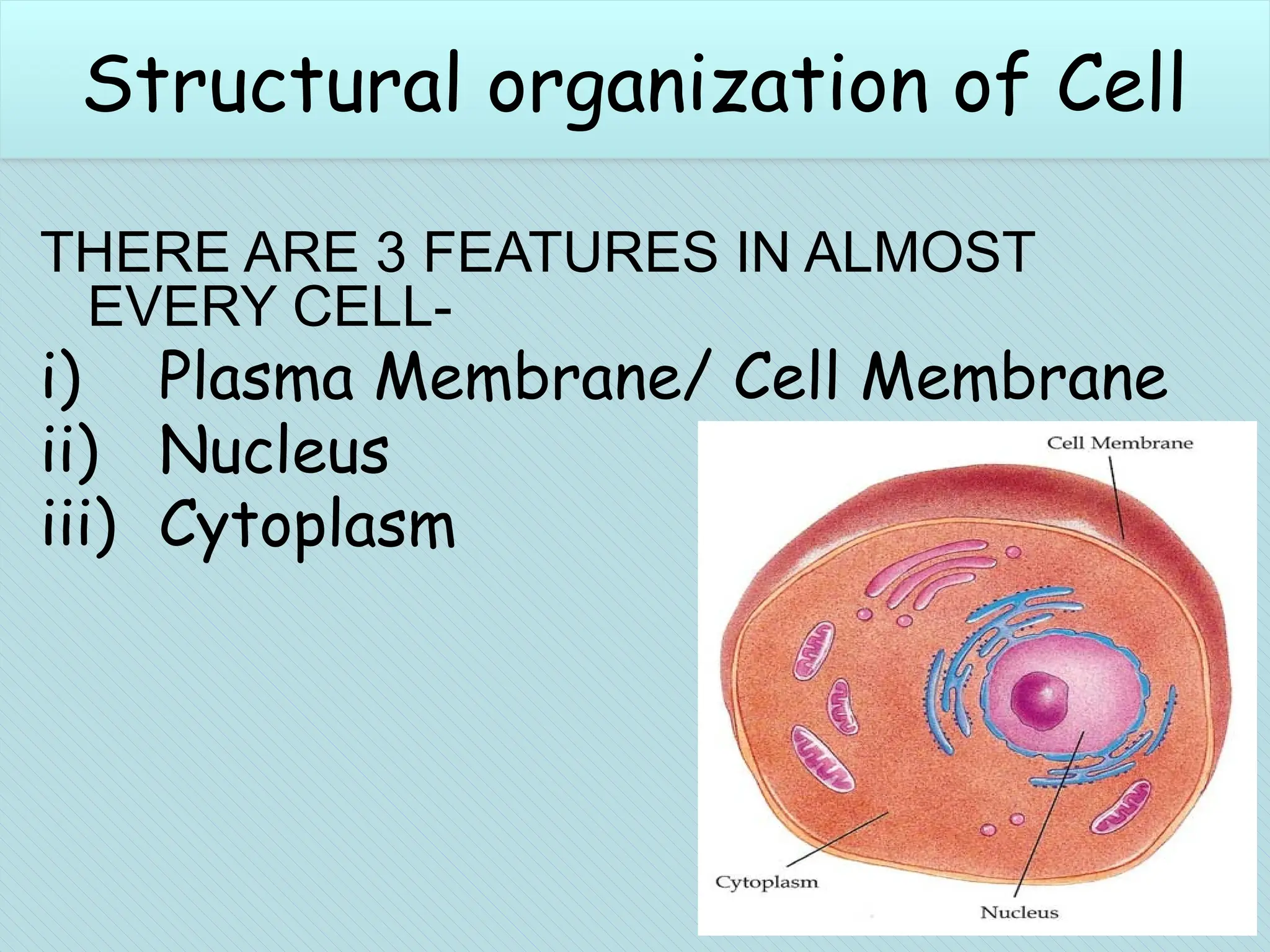
THERE ARE 3 FEATURES IN ALMOST
EVERY CELL-
i) Plasma Membrane/ Cell Membrane
ii) Nucleus
iii) Cytoplasm
Structural organization of Cell
IDENTIFY THE DIFFERENT PARTS
OF THE CELL
(A)
(B)
(C)
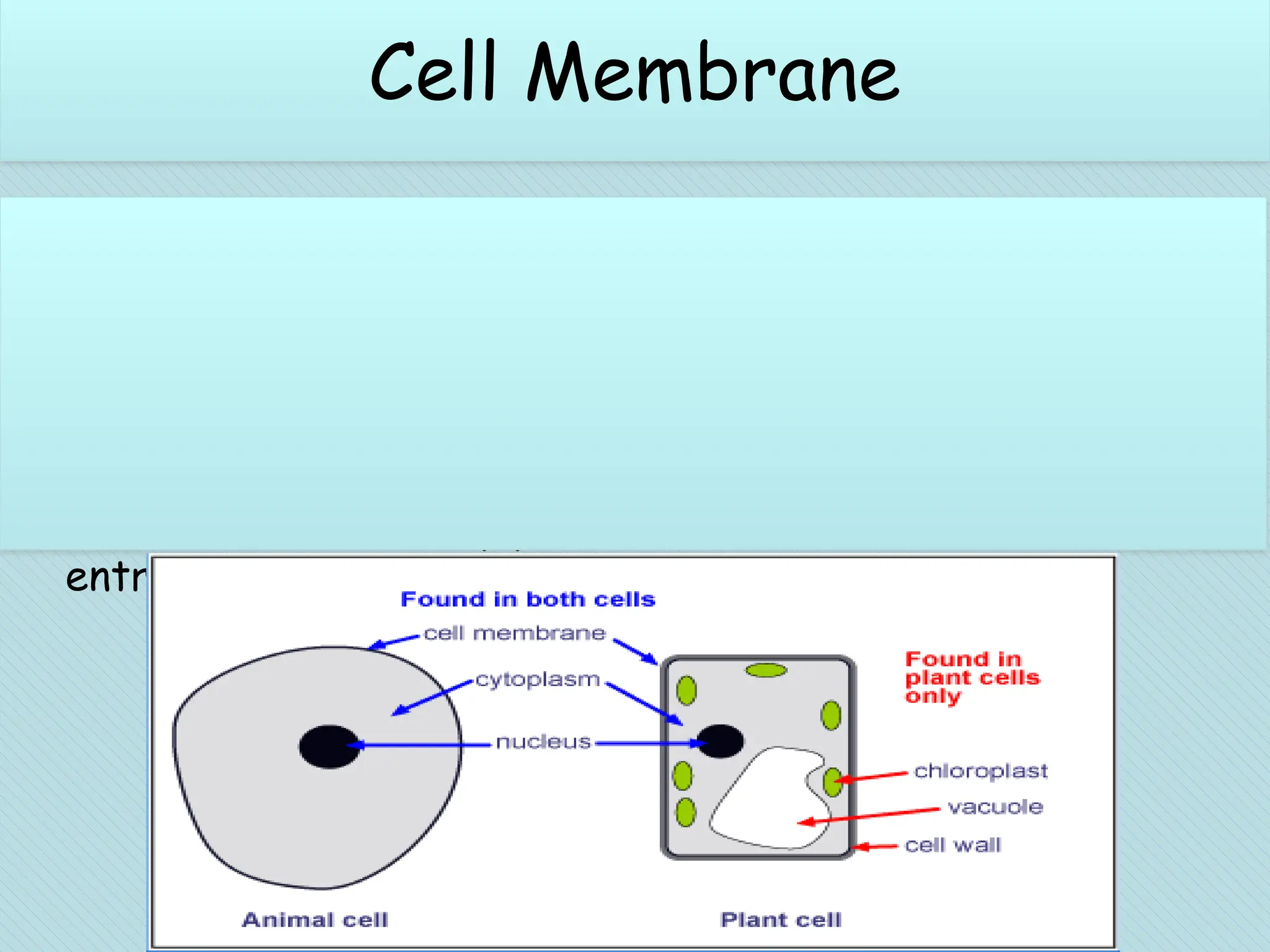
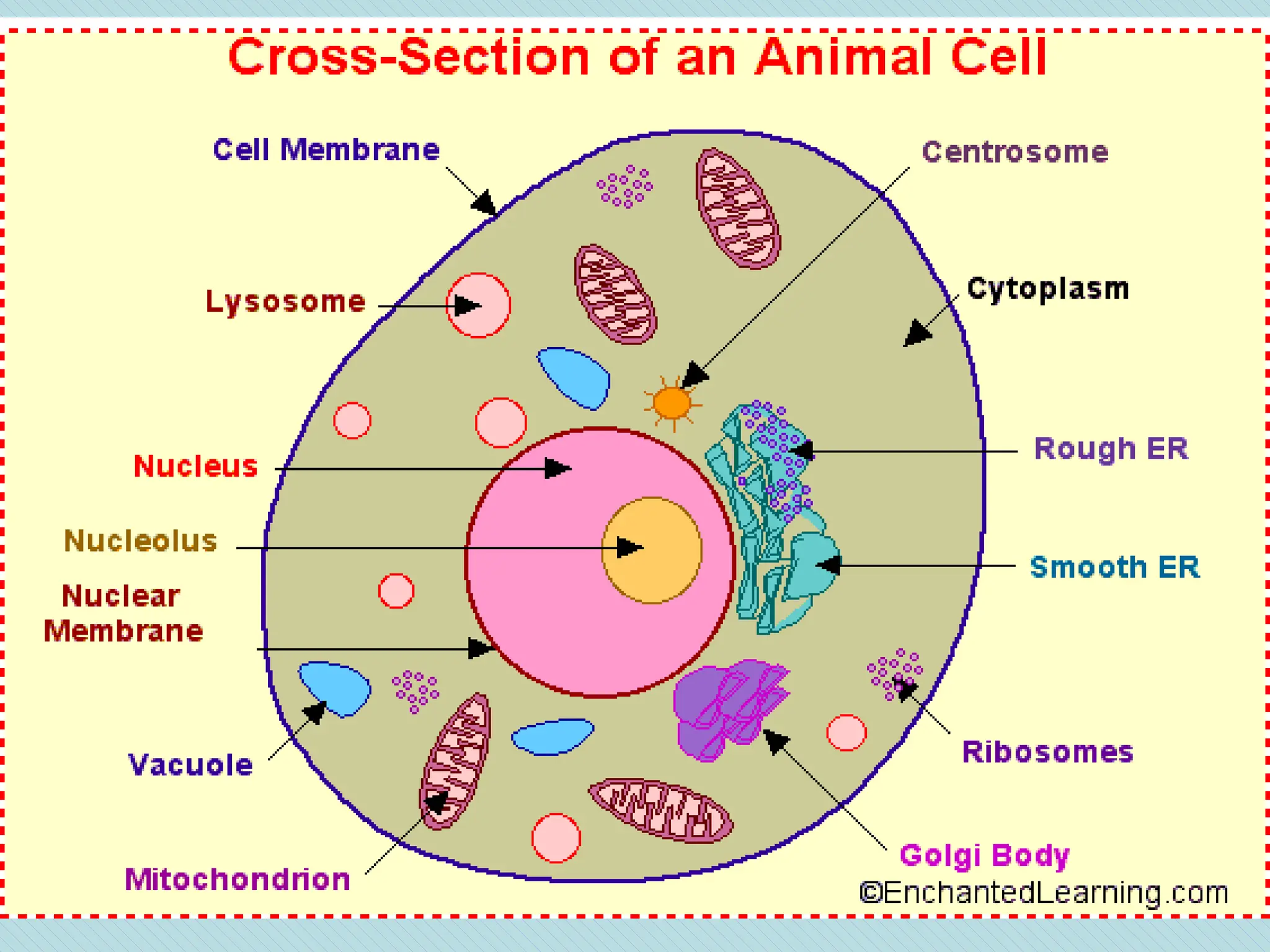
Cell membrane
Outermost covering of the cell.
Separates the content of cell from its external
environment
Also called selectively permeable membrane because allows
entry and exit of some materials only.
Cell Membrane
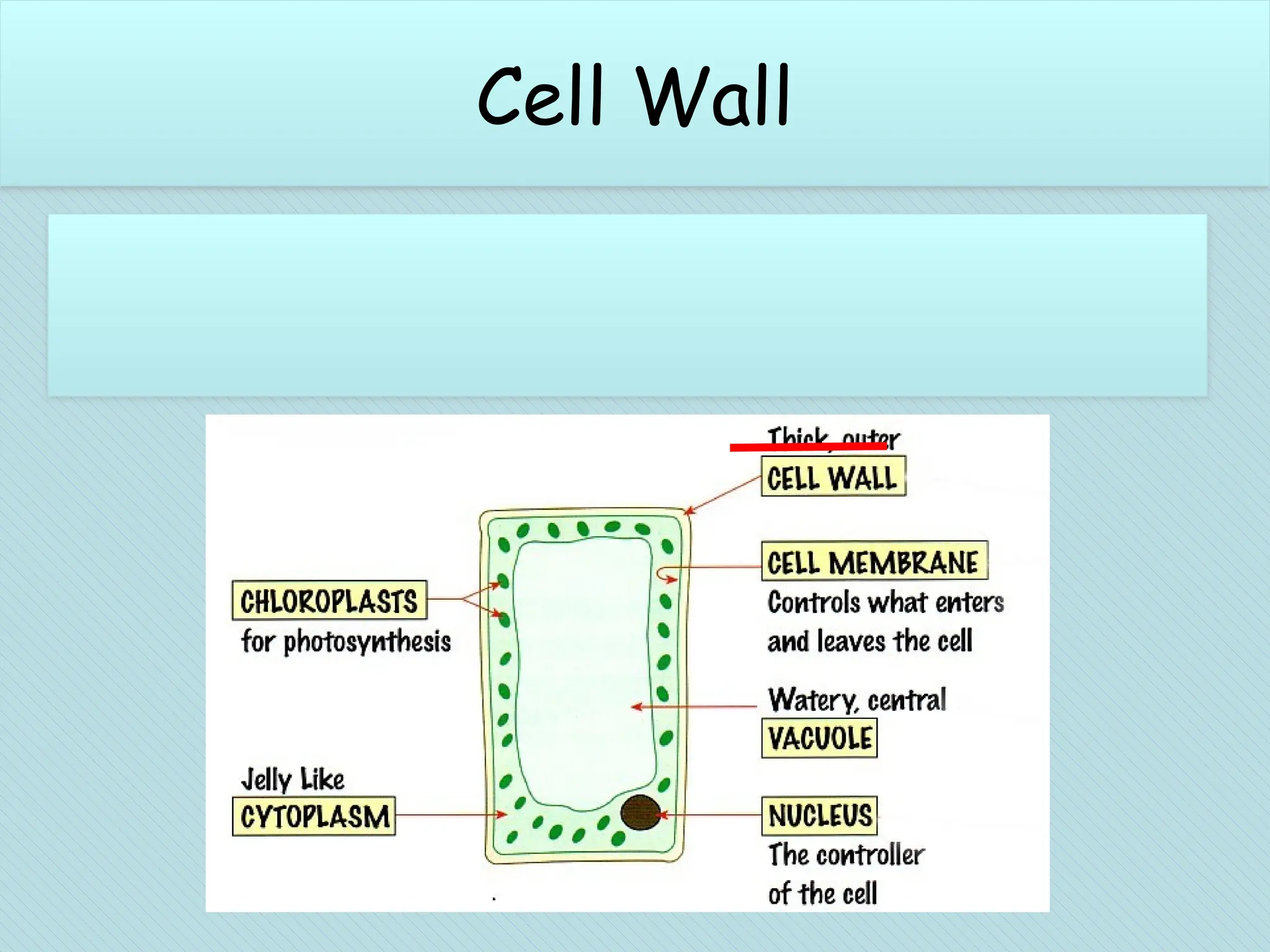
Cell wall (plant cells)
Extra rigid outer covering in plant cells
Composed of cellulose
Provide structural strength to plants.
Cell Wall
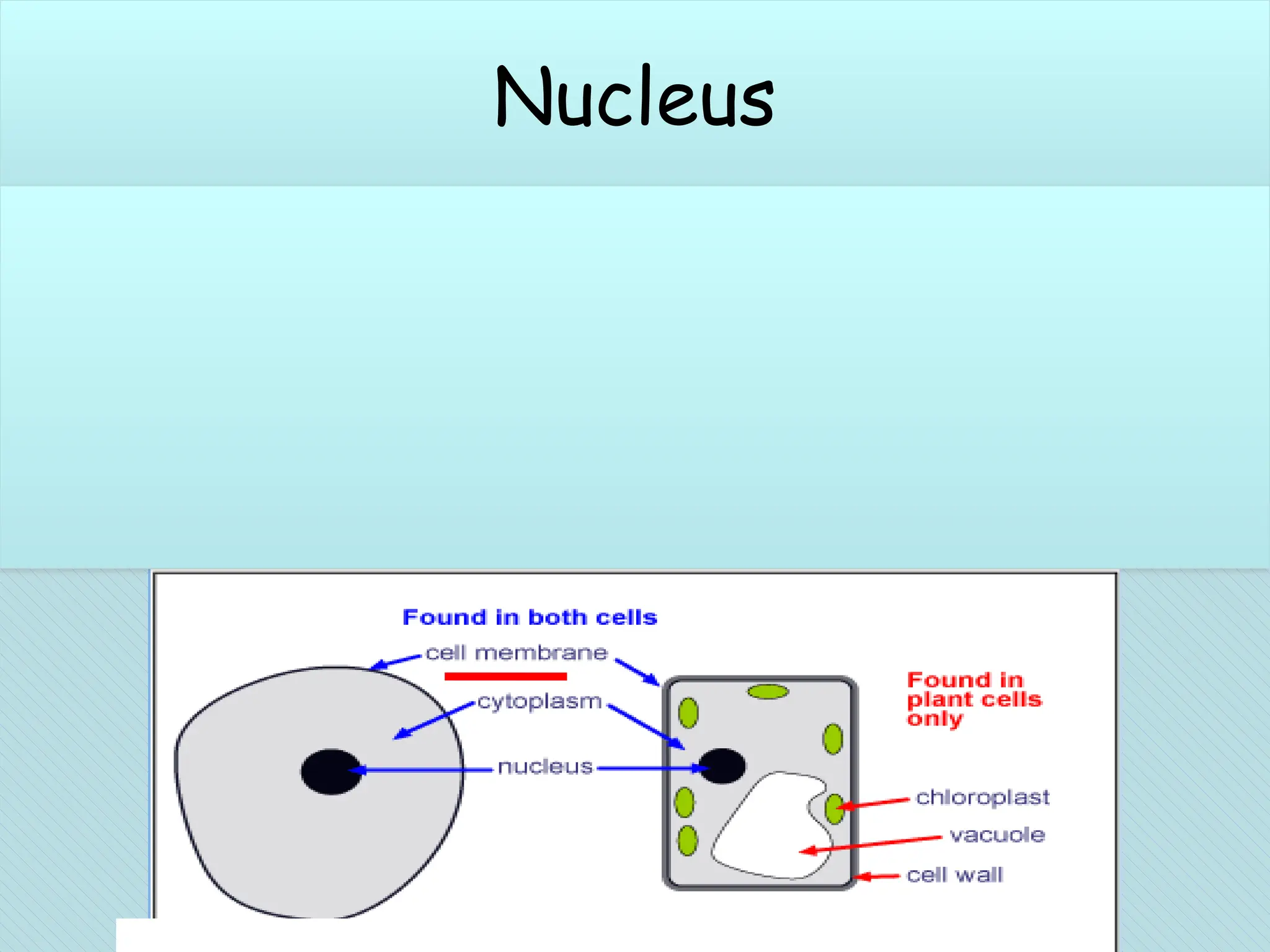
Nucleus
Having double layered covering called nuclear membrane.
Nuclear membrane has pores through which exchange of
material takes place.
Contains chromosomes having genetic information in the
form of DNA ( Deoxyribo Nucleic Acid ).
Plays central role in cellular reproduction
Control all activities of cell.
Nucleus
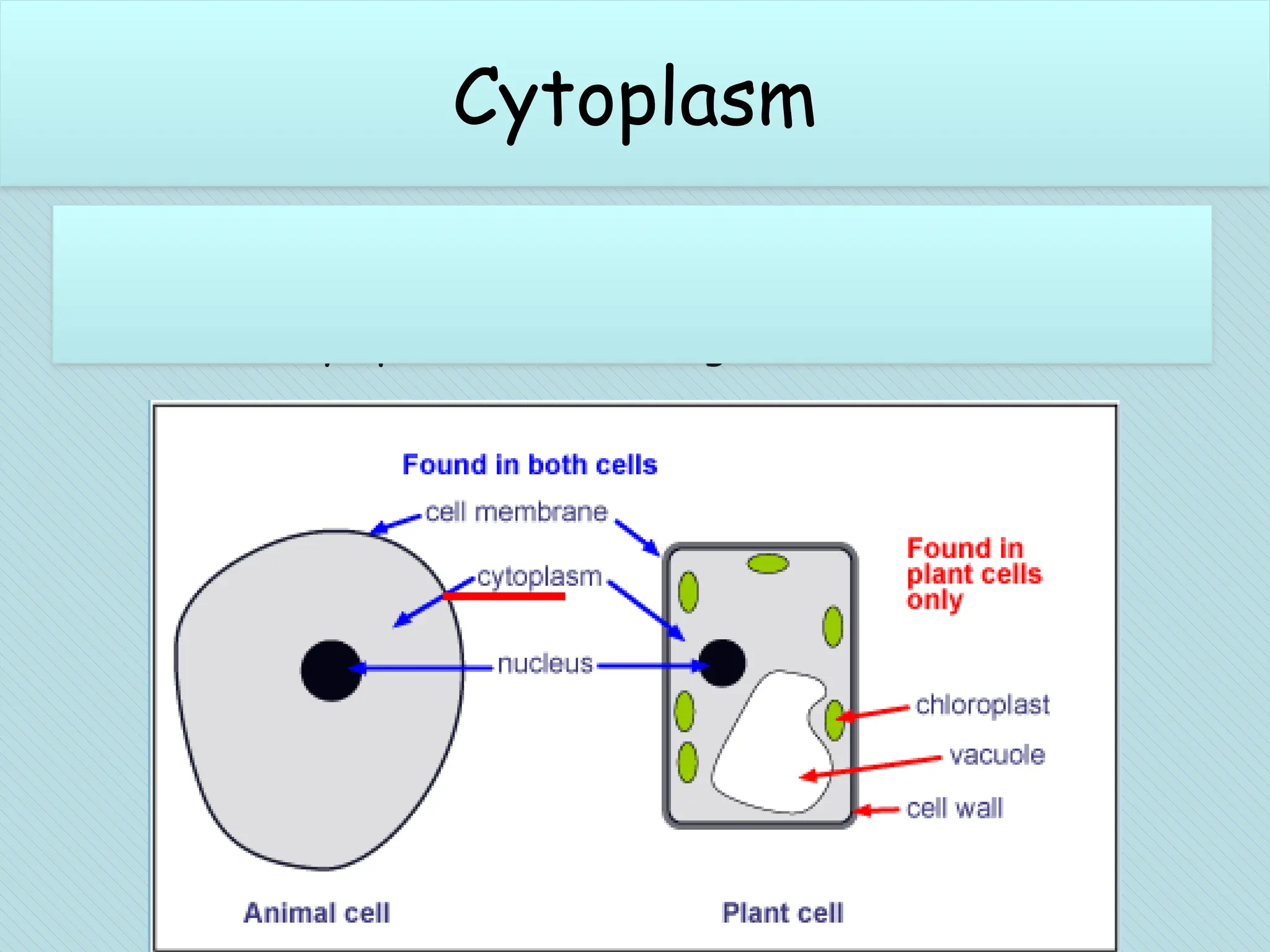
Cytoplasm
Jelly-like mixture of chemicals where most of the
work of the cell takes place
Contains many specialised cell organelles.
Cytoplasm
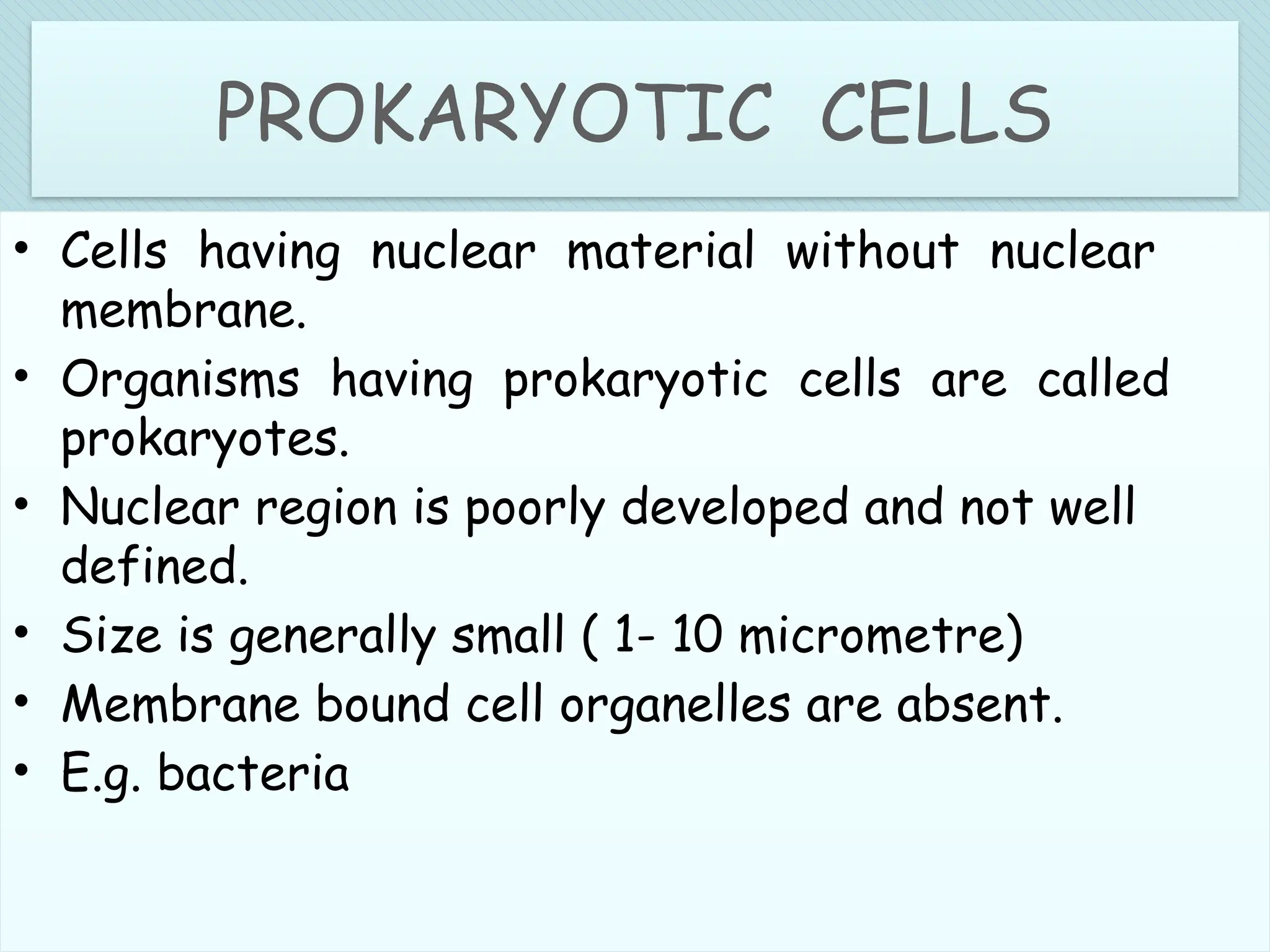
PROKARYOTIC CELLS
• Cells having nuclear material without nuclear
membrane.
• Organisms having prokaryotic cells are called
prokaryotes.
• Nuclear region is poorly developed and not well
defined.
• Size is generally small ( 1- 10 micrometre)
• Membrane bound cell organelles are absent.
• E.g. bacteria
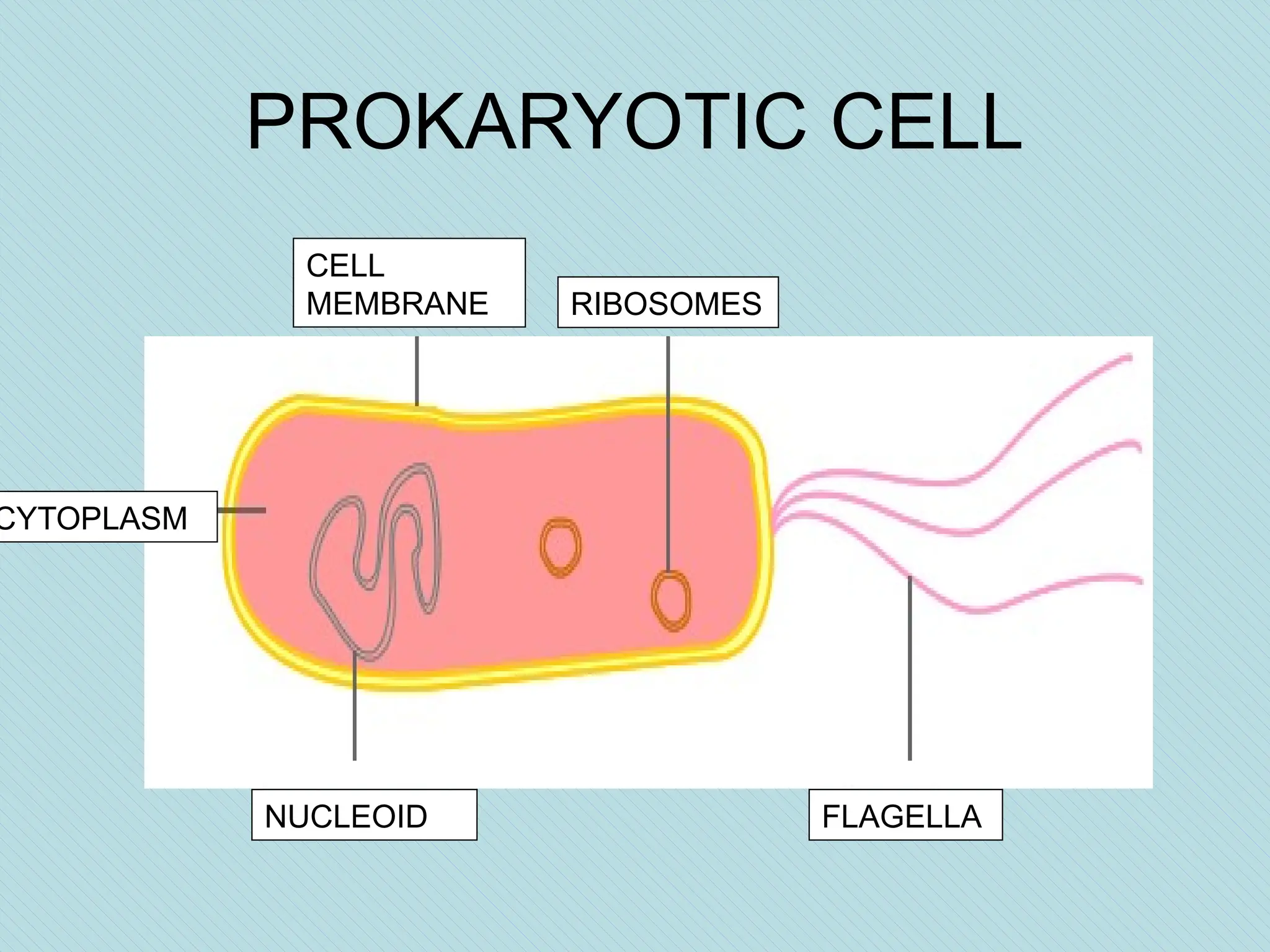
PROKARYOTIC CELL
CELL
MEMBRANE
CYTOPLASM
NUCLEOID
RIBOSOMES
FLAGELLA
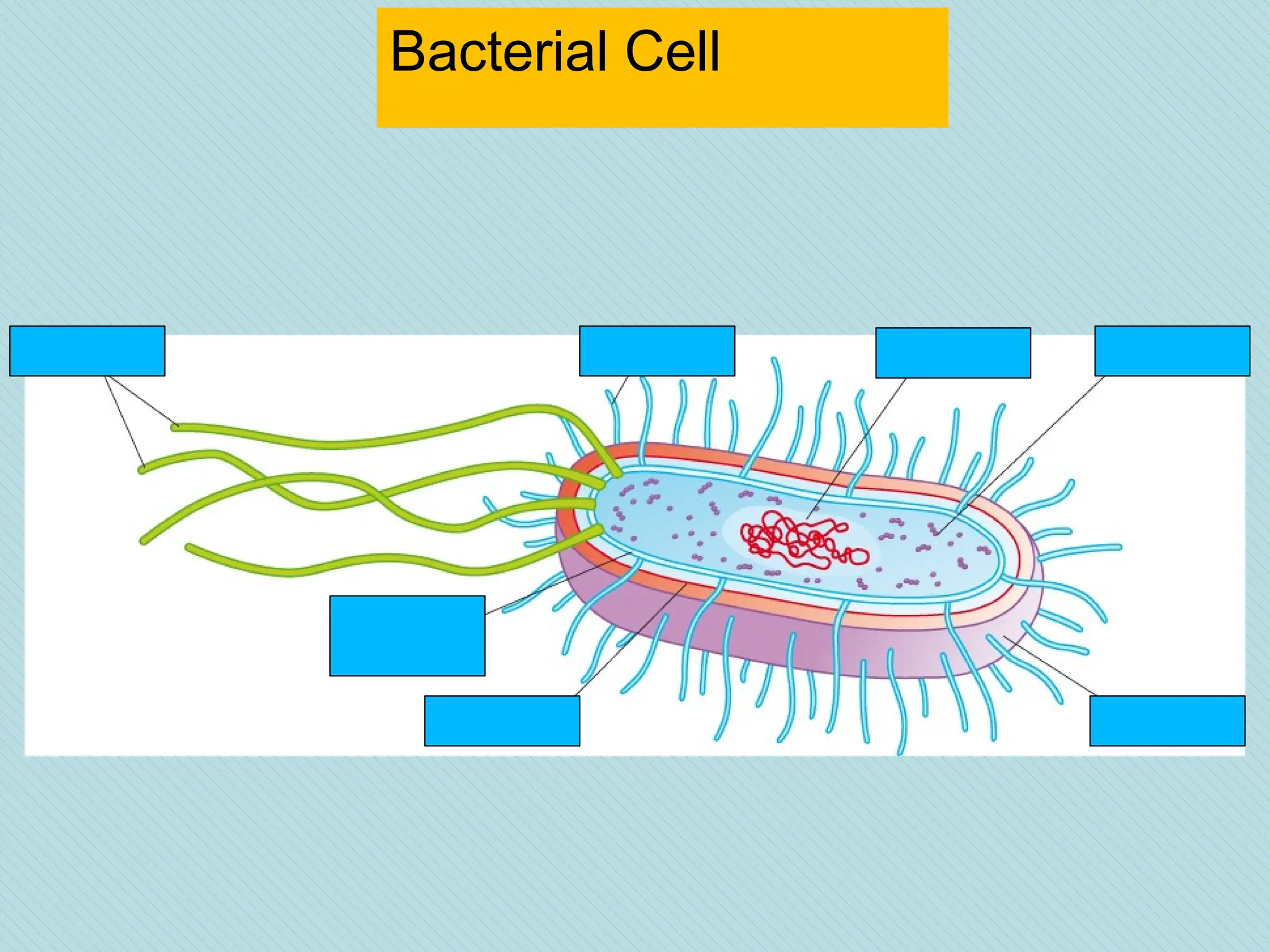
Bacterial Cell
.
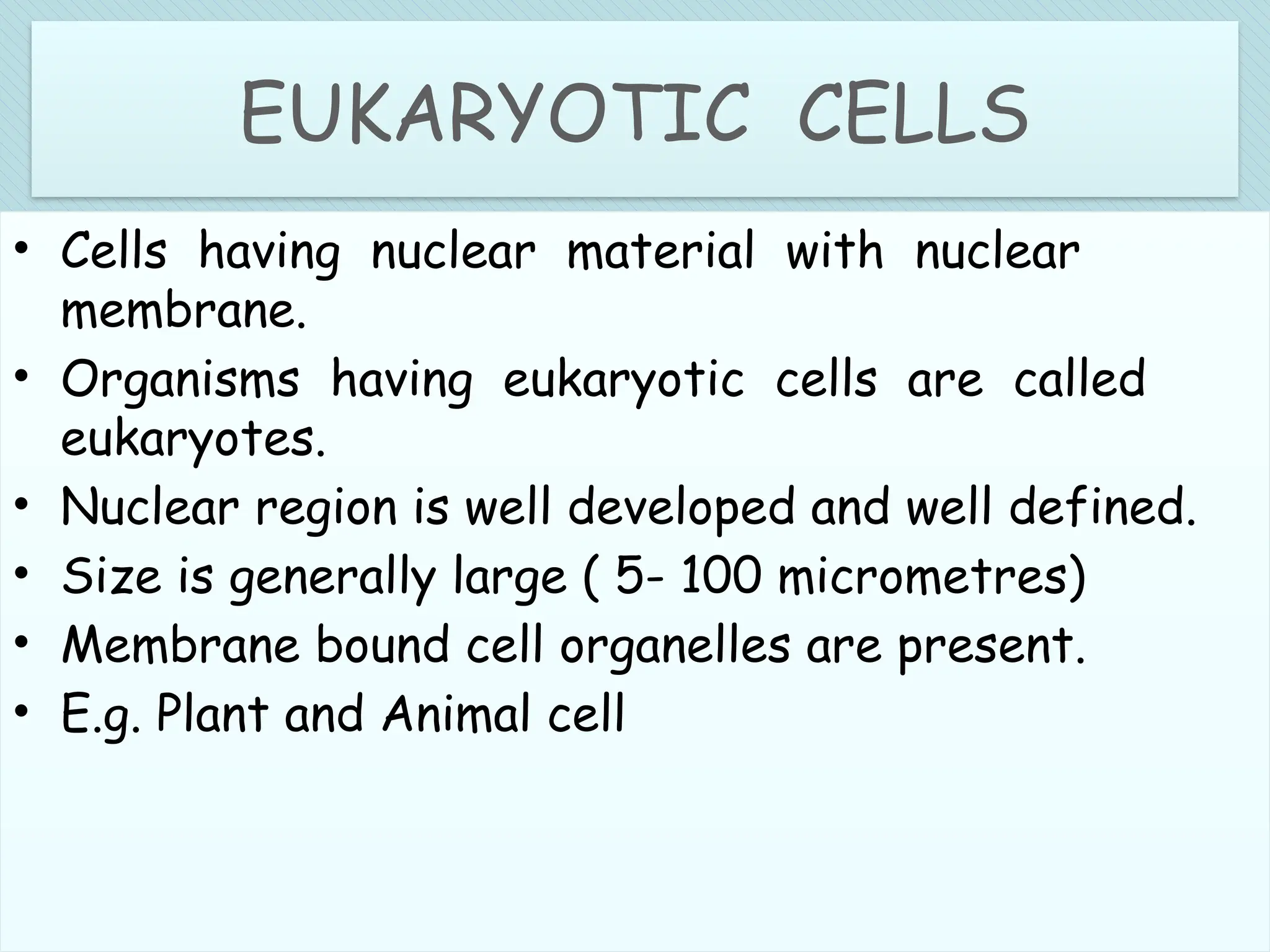
EUKARYOTIC CELLS
• Cells having nuclear material with nuclear
membrane.
• Organisms having eukaryotic cells are called
eukaryotes.
• Nuclear region is well developed and well defined.
• Size is generally large ( 5- 100 micrometres)
• Membrane bound cell organelles are present.
• E.g. Plant and Animal cell
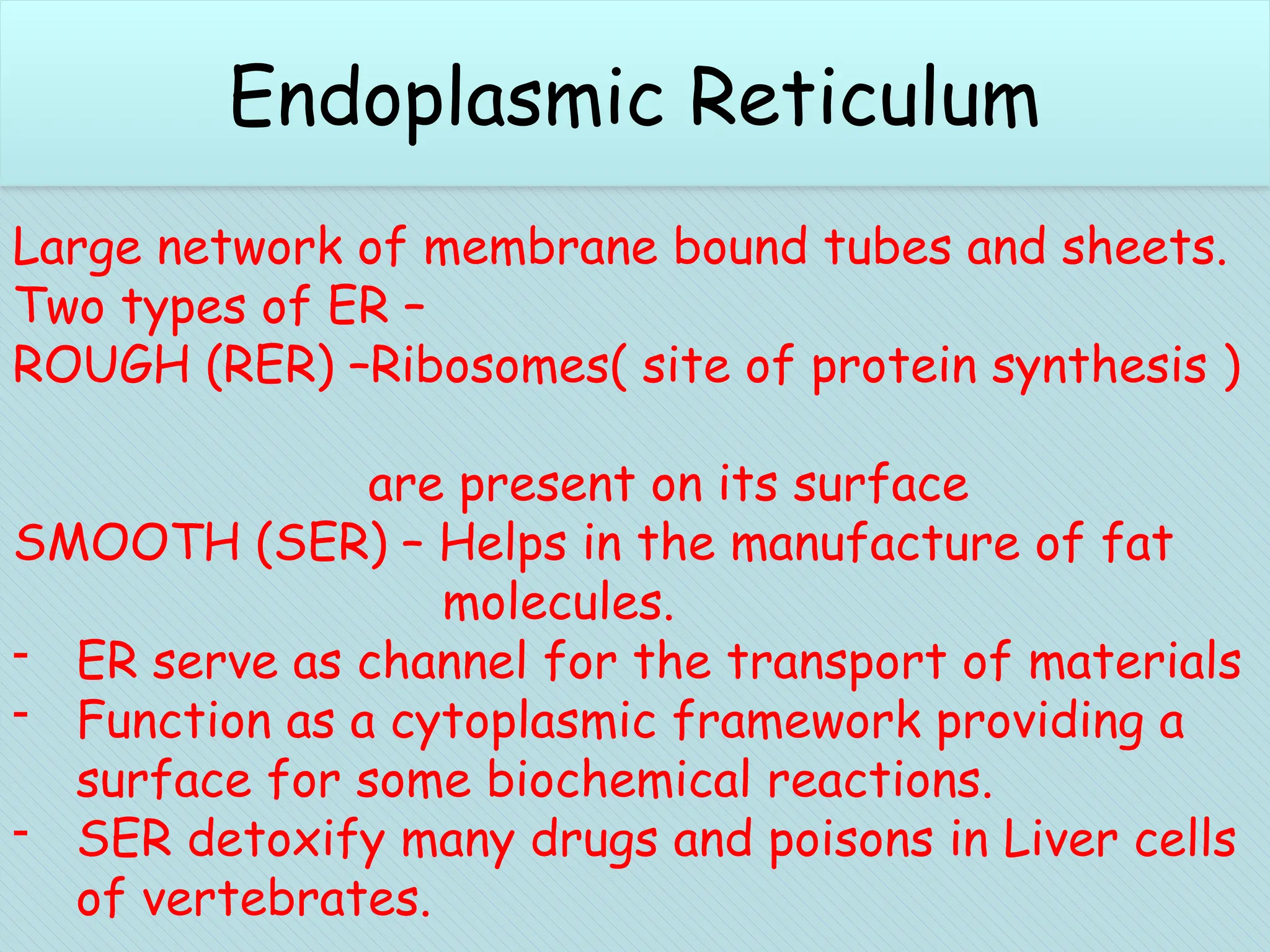
CELL ORGANELLES
• ENDOPLASMIC RETICULUM
• GOLGI APPARATUS
• LYSOSOMES
• PLASTIDS
• VACUOLES
Chloroplasts (plant cells)
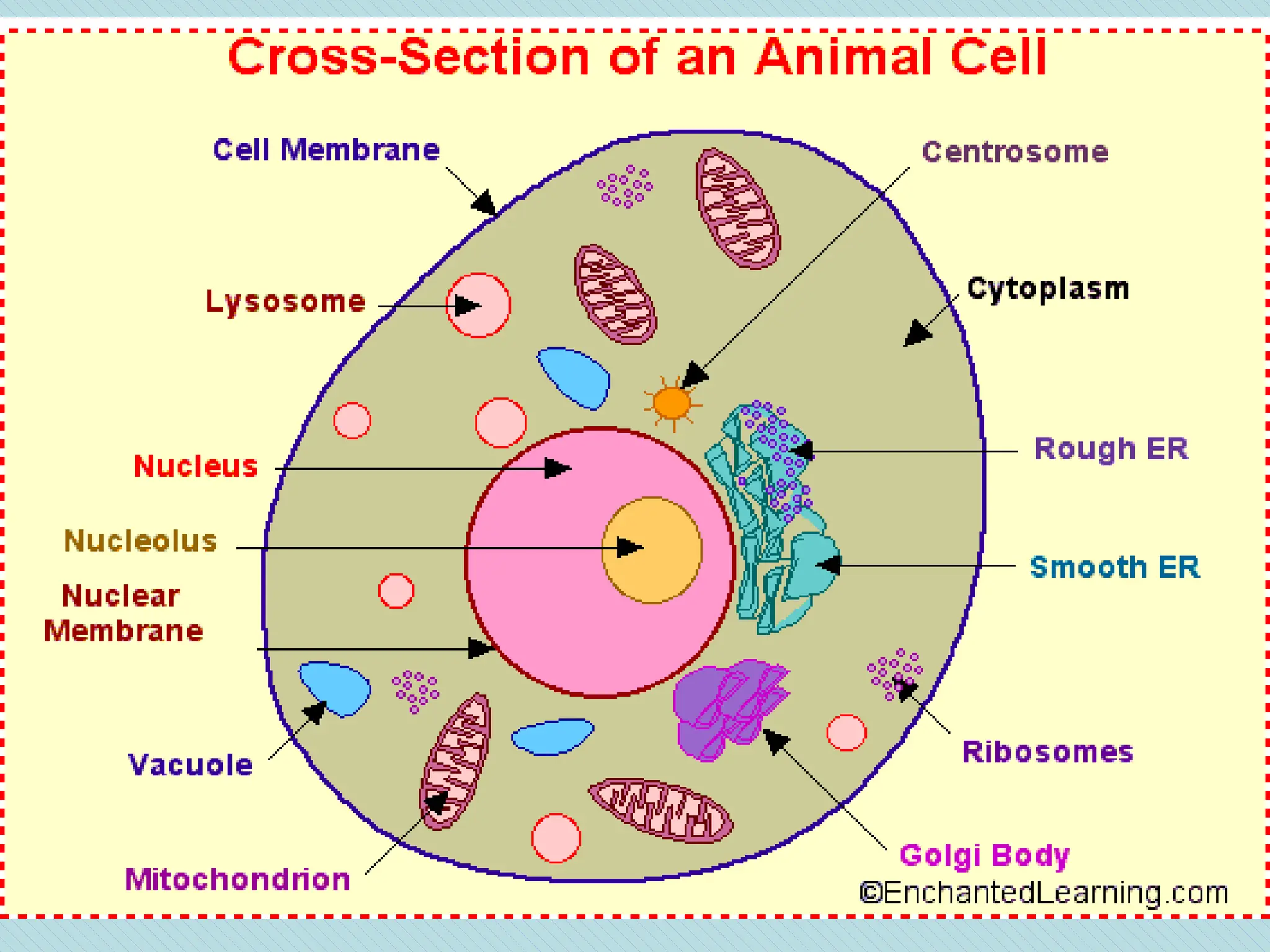
Large network of membrane bound tubes and sheets.
Two types of ER –
ROUGH (RER) –Ribosomes( site of protein synthesis )
are present on its surface
SMOOTH (SER) – Helps in the manufacture of fat
molecules.
- ER serve as channel for the transport of materials
- Function as a cytoplasmic framework providing a
surface for some biochemical reactions.
- SER detoxify many drugs and poisons in Liver cells
of vertebrates.
Endoplasmic Reticulum
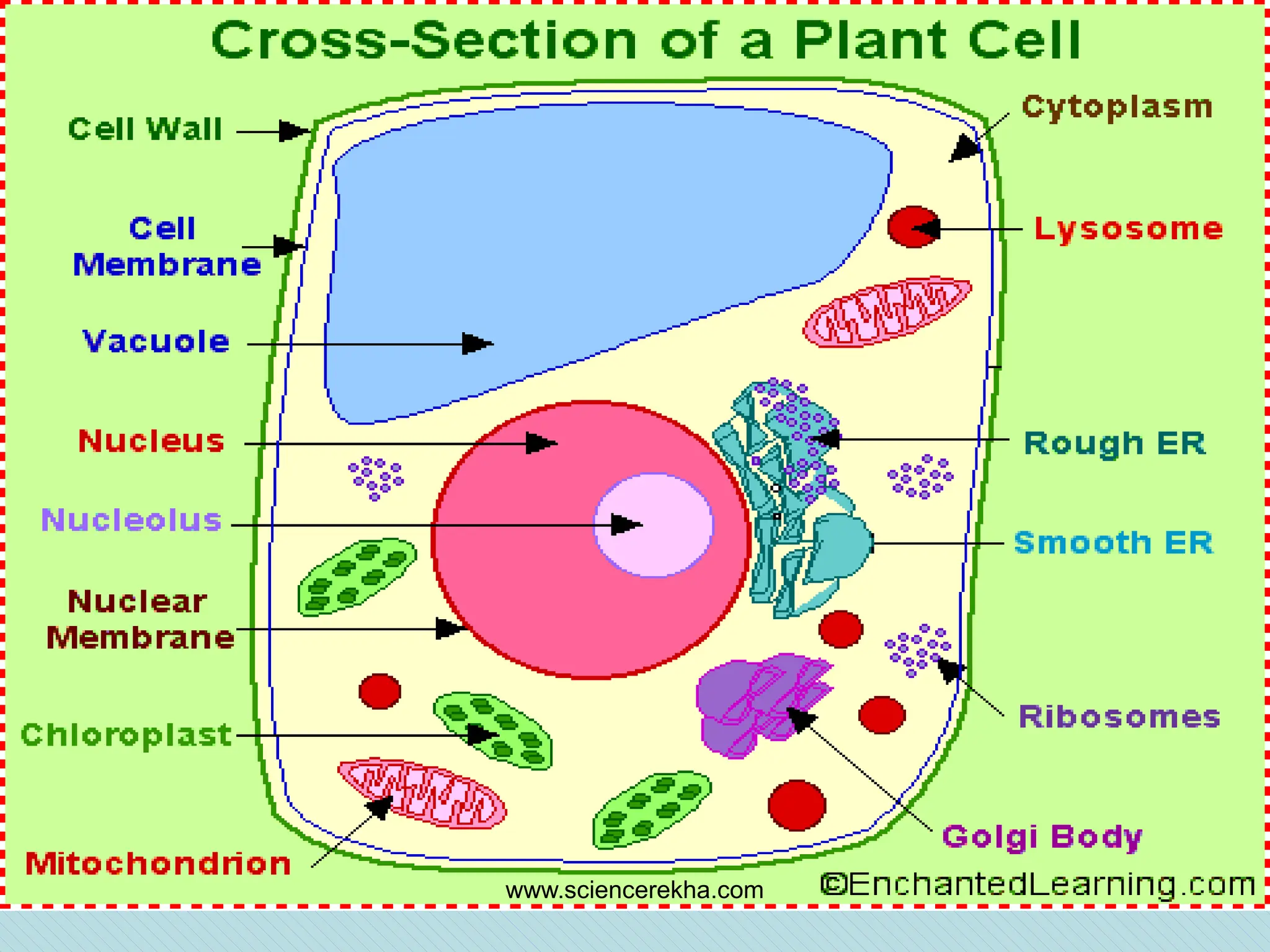
Plant Cell
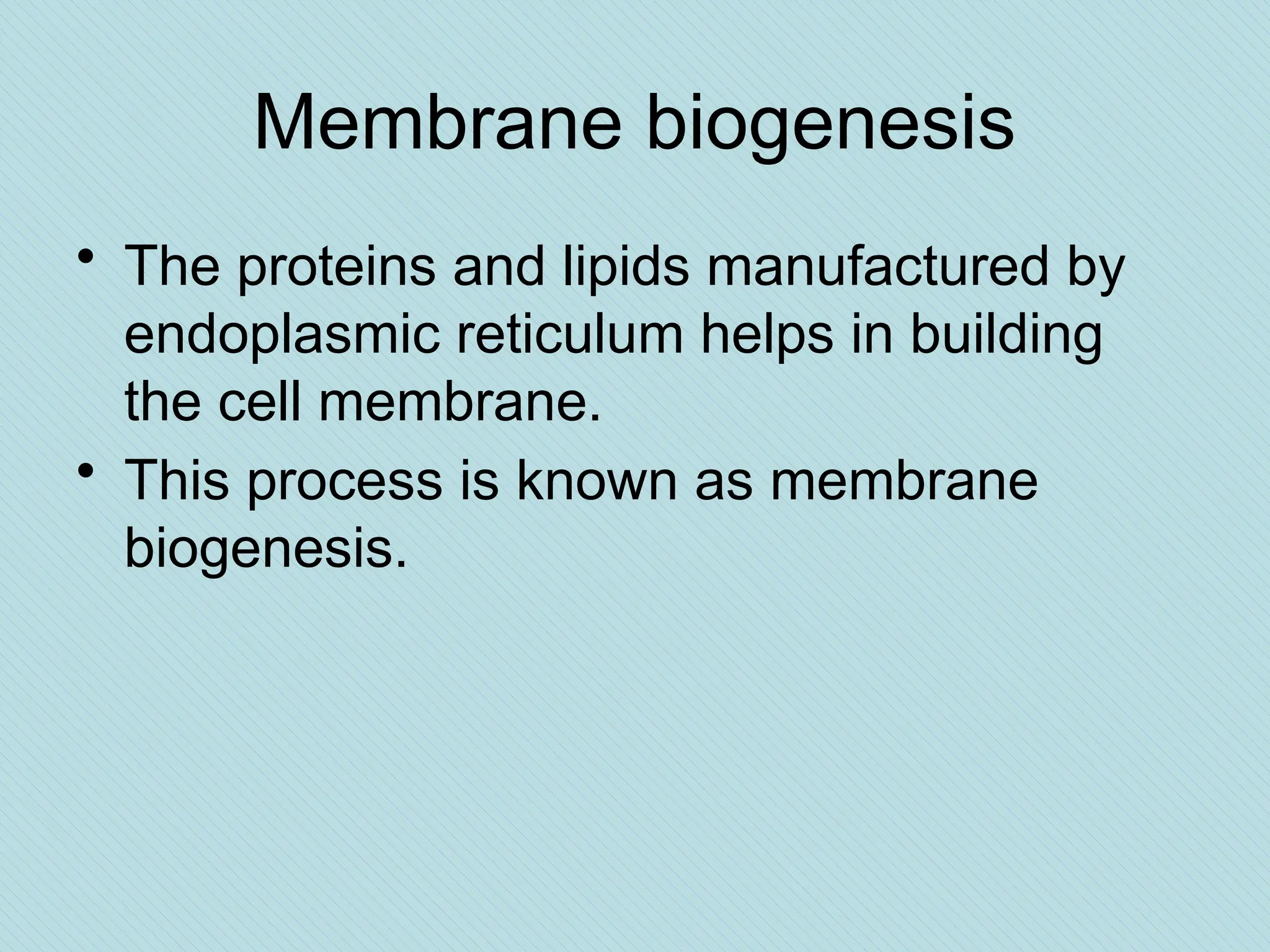
Membrane biogenesis
• The proteins and lipids manufactured by
endoplasmic reticulum helps in building
the cell membrane.
• This process is known as membrane
biogenesis.
Chloroplasts (plant cells)
- Described by Camillo Golgi
- System of membrane bound vesicles arranged
parallel to each other in stacks called cistern
- Packed and dispatched various materials
synthesized near the ER to various targets.
- Storage , modification and packaging of
products.
- Involved in the formation of lysosomes.
- Synthesize complex sugar from simple in some
cases.
Golgi Apparatus
Plant Cell
Chloroplasts (plant cells)
Kind of waste disposal system
Membrane bound sacs filled with digestive
enzymes.
Helps to keep the cell clean by digesting any
foreign material as well as worn out cell
organelles.
Contain powerful digestive enzymes capable of
breaking down all organic material
Called suicidal bags because when the cell gets
damaged , lysosomes may burst and enzymes
digest their own cell.
Lysosomes
www.sciencerekha.com
Plant Cell
www.sciencerekha.com
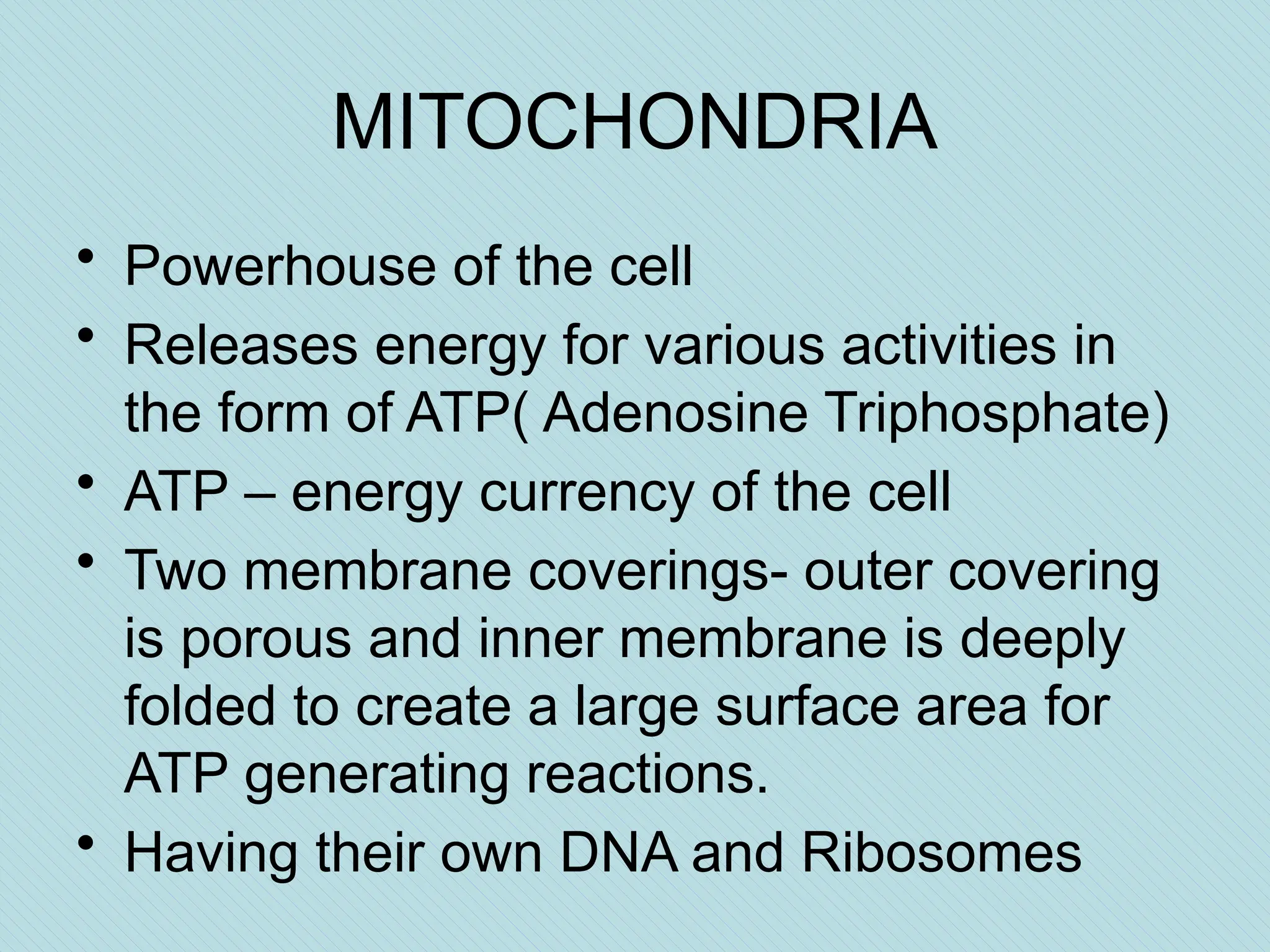
MITOCHONDRIA
• Powerhouse of the cell
• Releases energy for various activities in
the form of ATP( Adenosine Triphosphate)
• ATP – energy currency of the cell
• Two membrane coverings- outer covering
is porous and inner membrane is deeply
folded to create a large surface area for
ATP generating reactions.
• Having their own DNA and Ribosomes
Plant Cell
Chloroplasts (plant cells)
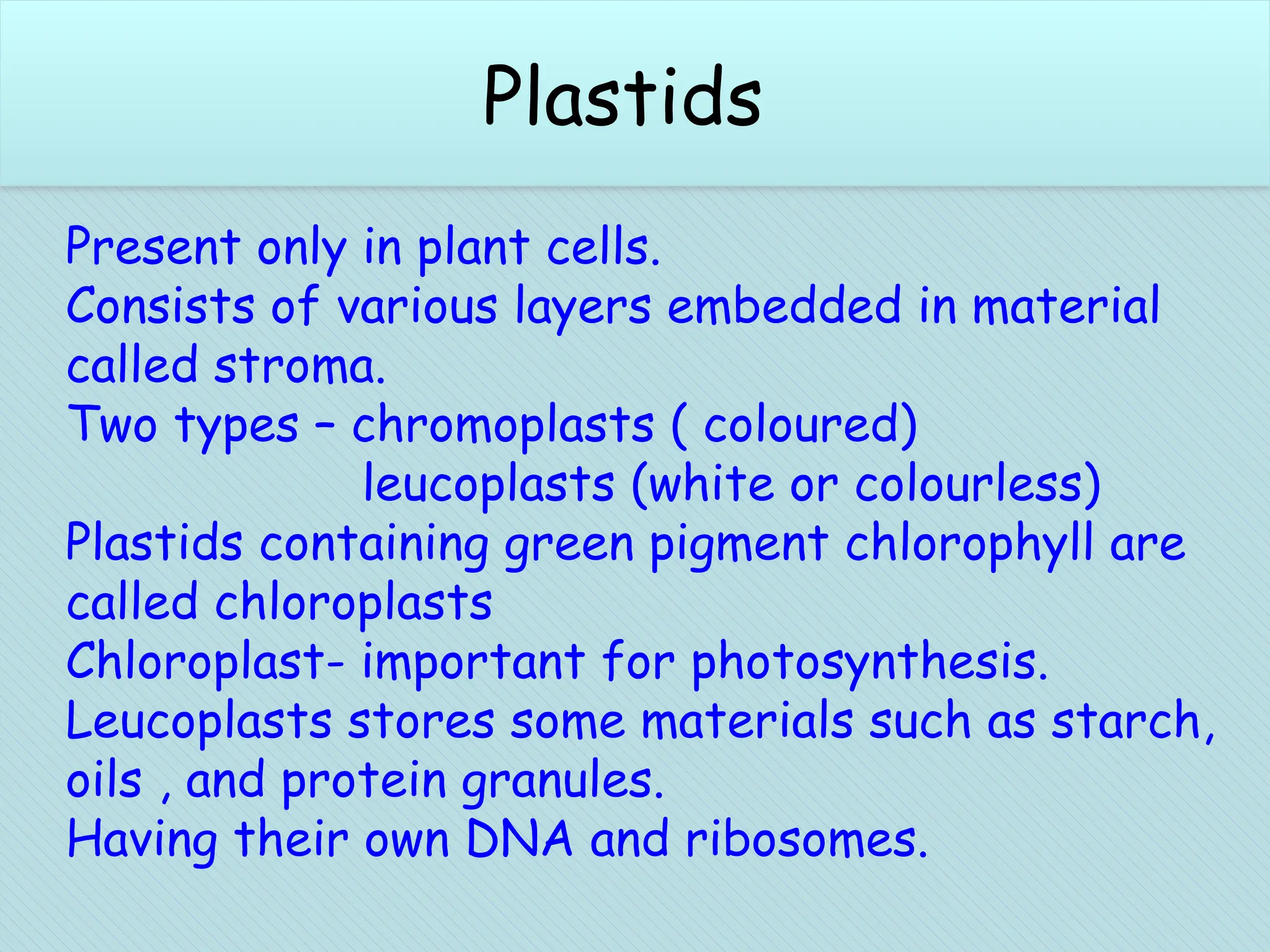
Present only in plant cells.
Consists of various layers embedded in material
called stroma.
Two types – chromoplasts ( coloured)
leucoplasts (white or colourless)
Plastids containing green pigment chlorophyll are
called chloroplasts
Chloroplast- important for photosynthesis.
Leucoplasts stores some materials such as starch,
oils , and protein granules.
Having their own DNA and ribosomes.
Plastids
Plant Cell
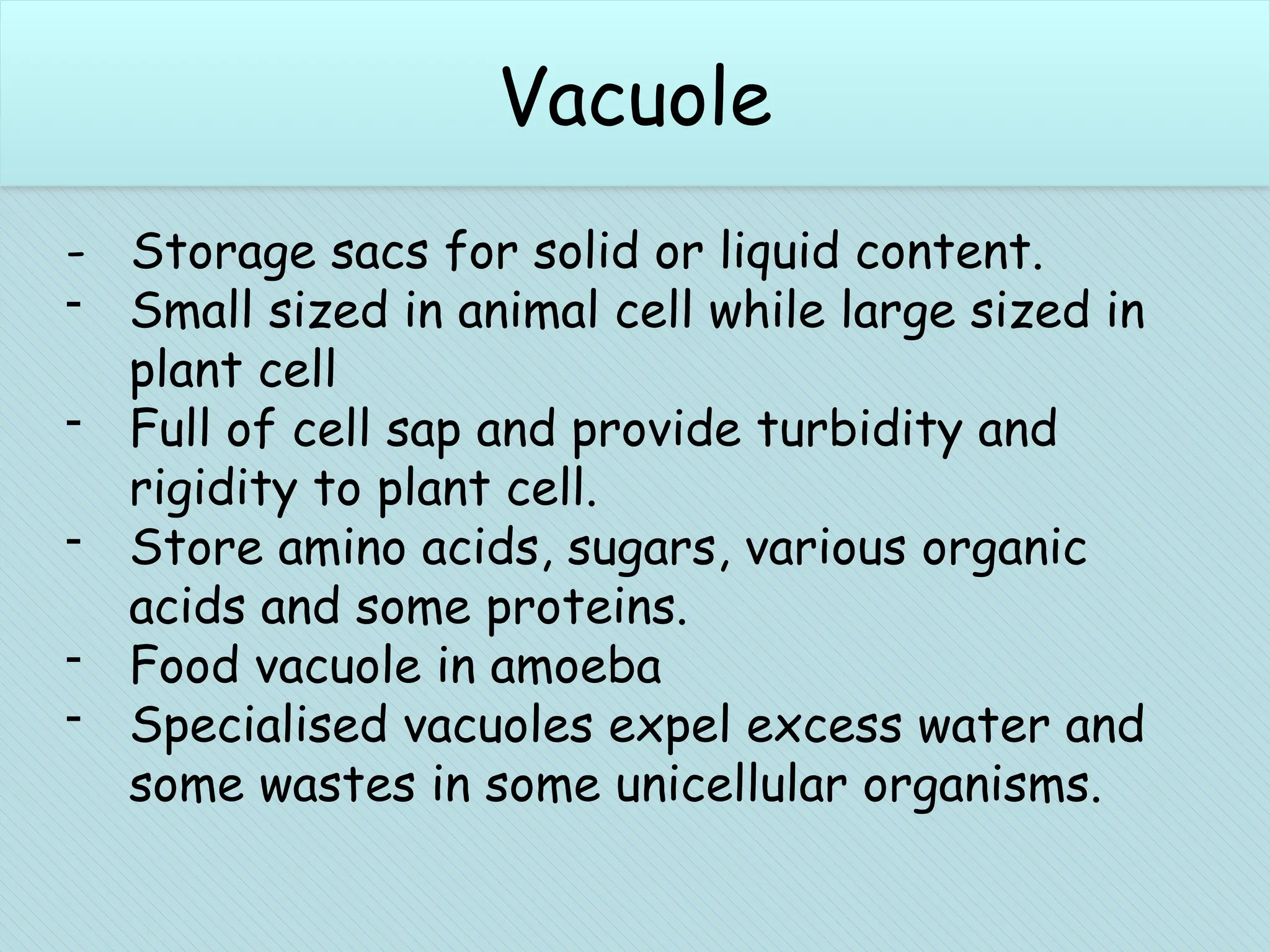
Vacuole (plant cells)
- Storage sacs for solid or liquid content.
- Small sized in animal cell while large sized in
plant cell
- Full of cell sap and provide turbidity and
rigidity to plant cell.
- Store amino acids, sugars, various organic
acids and some proteins.
- Food vacuole in amoeba
- Specialised vacuoles expel excess water and
some wastes in some unicellular organisms.
Vacuole
Plant Cell
www.sciencerekha.com
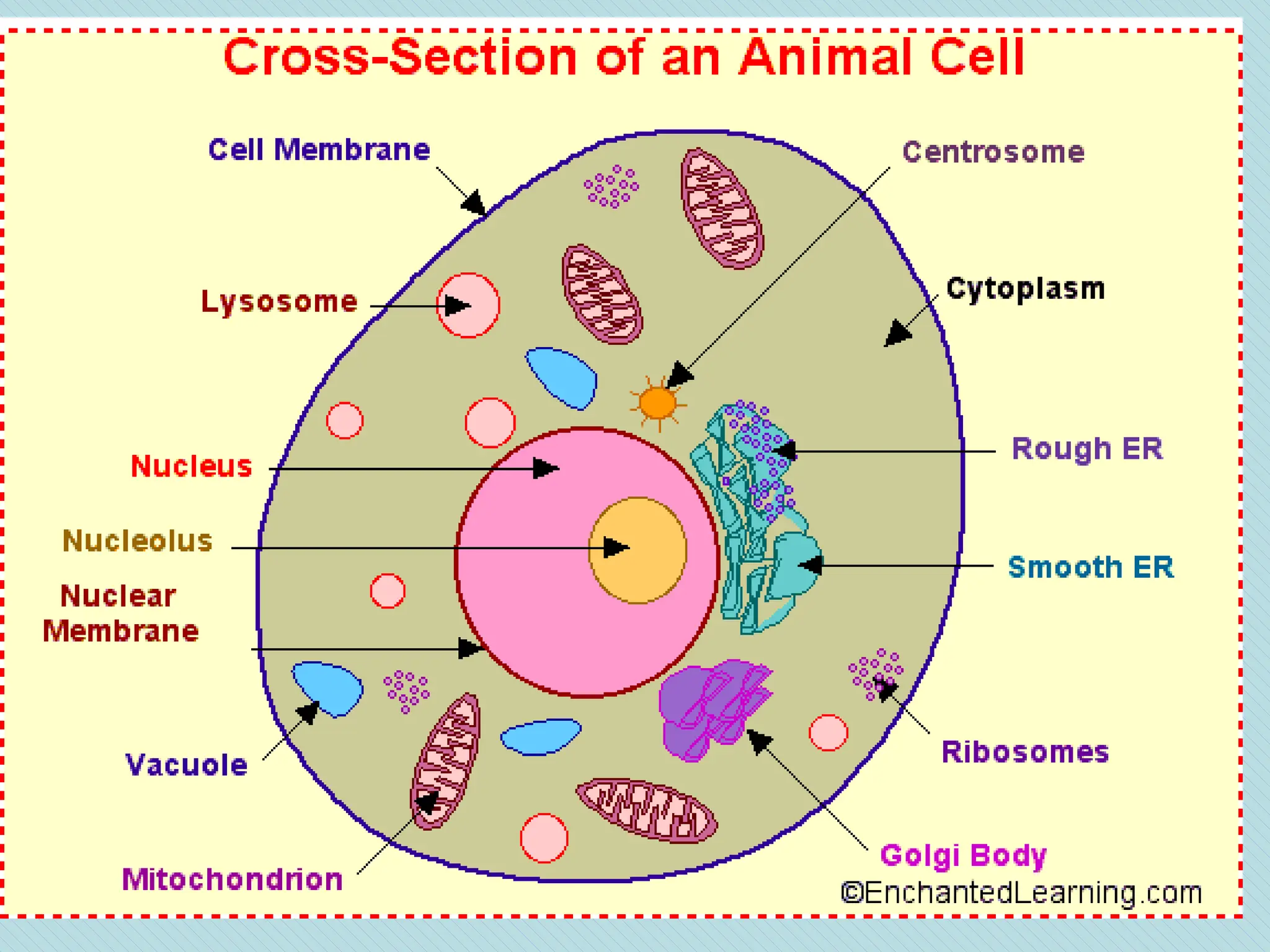
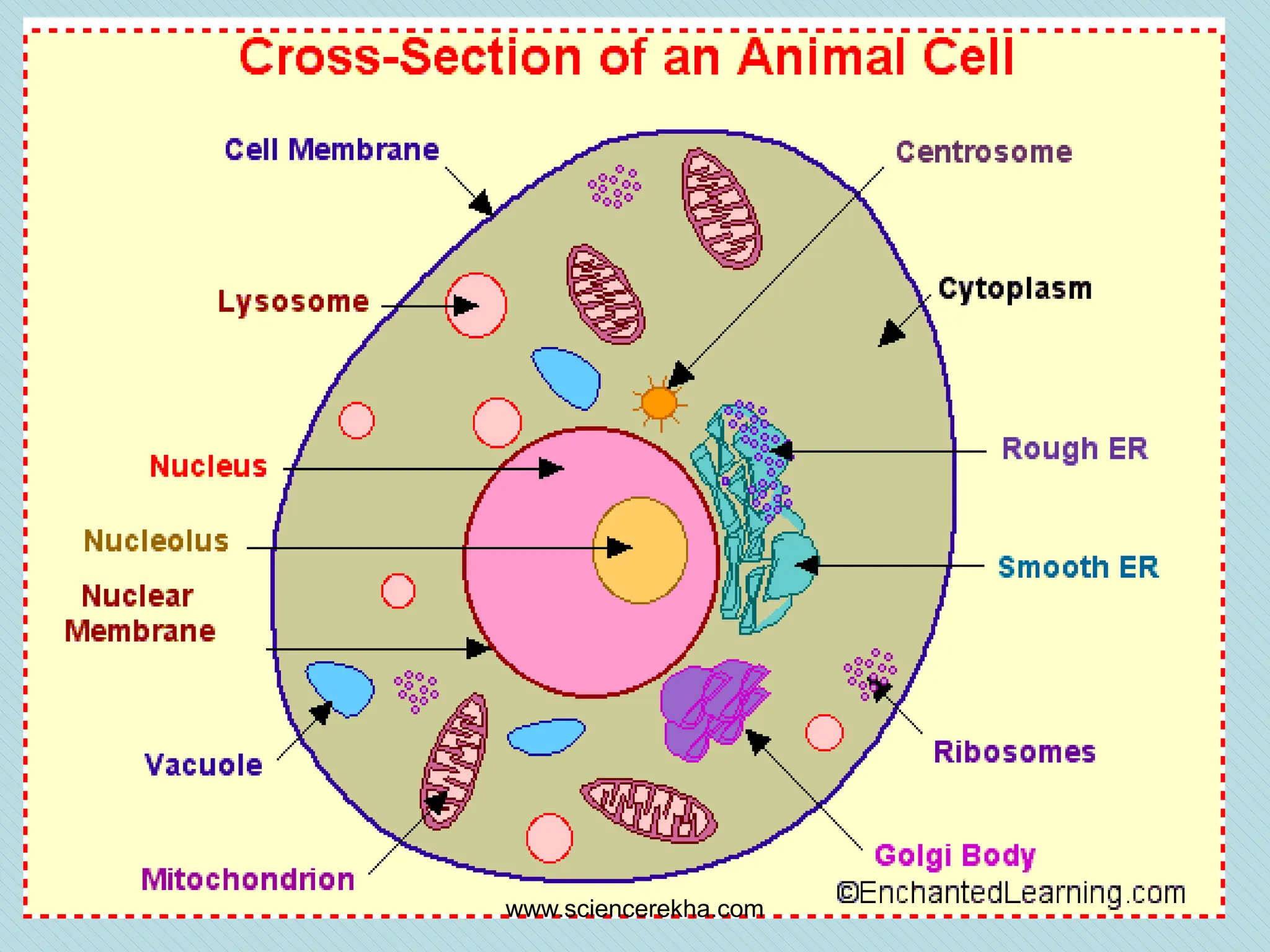
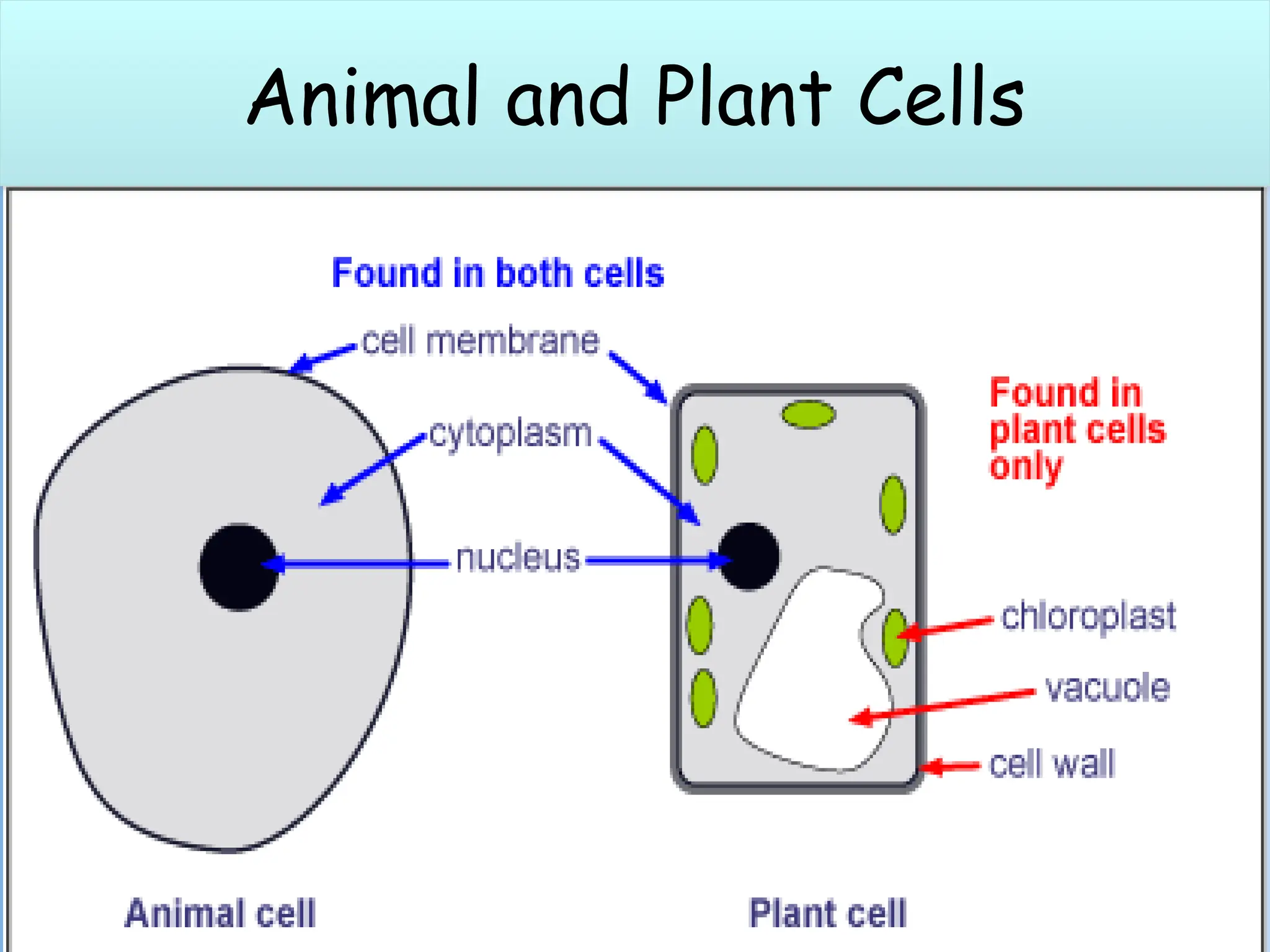
Animal and plant cells
Animal and Plant Cells
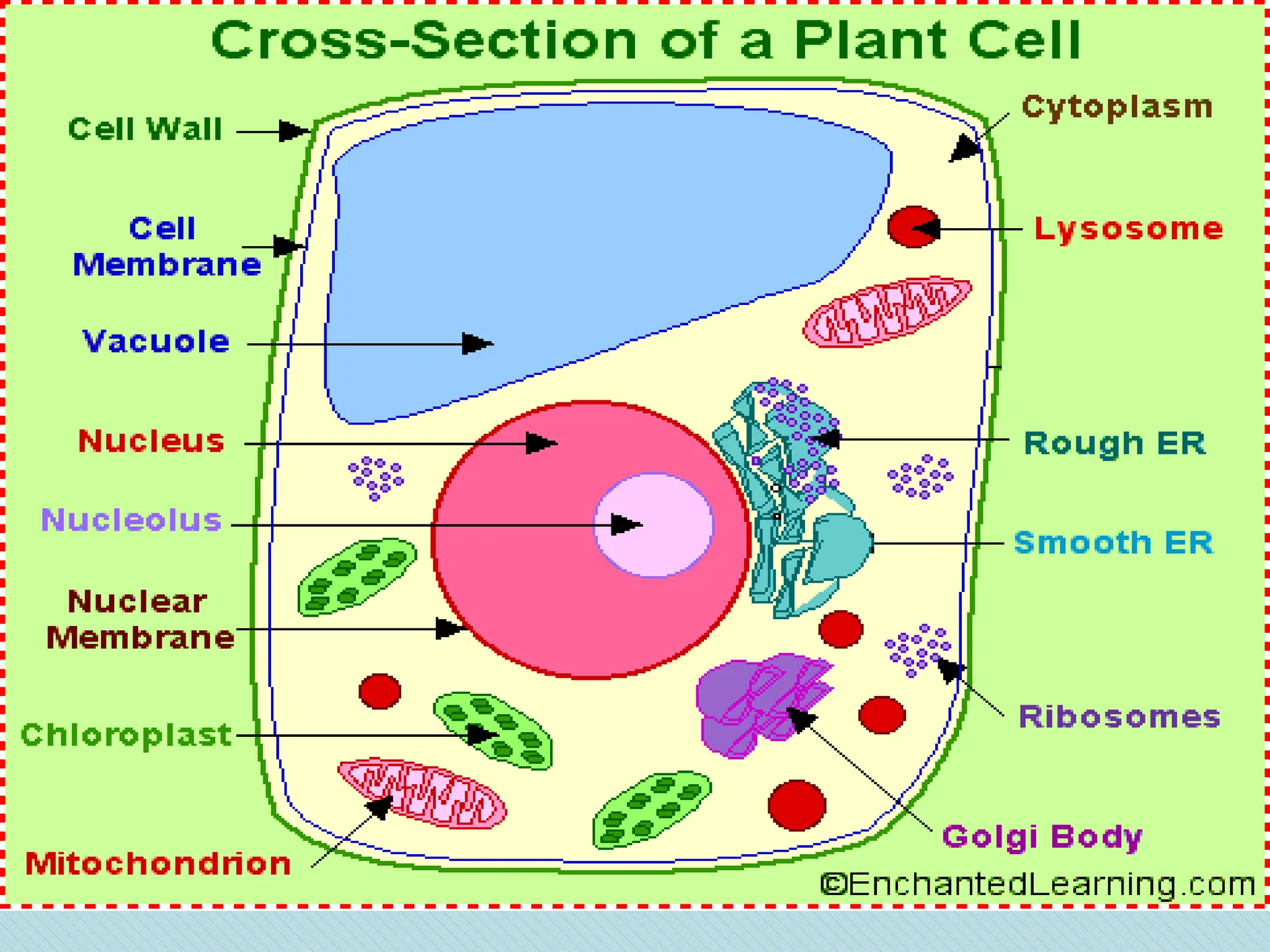
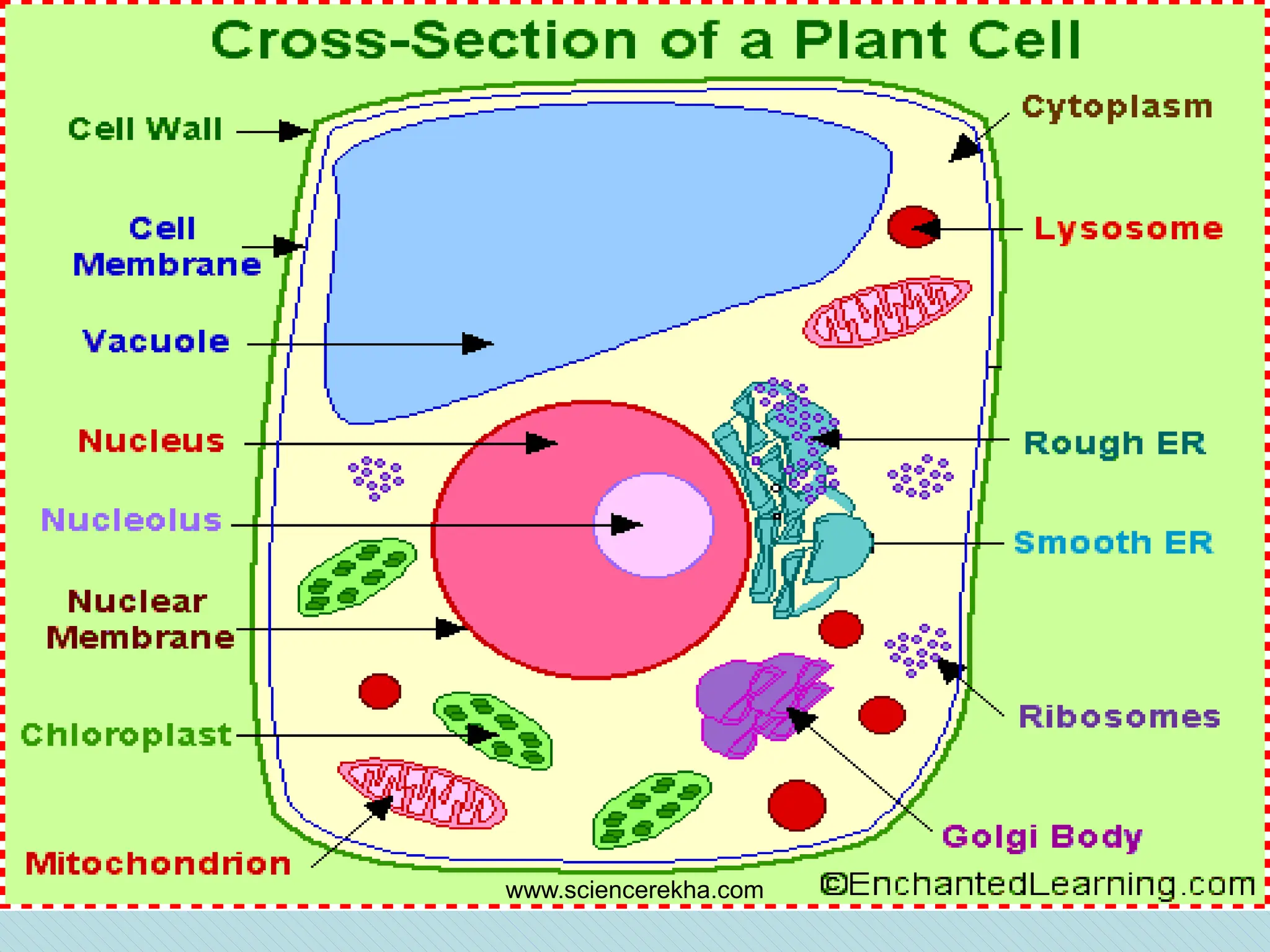
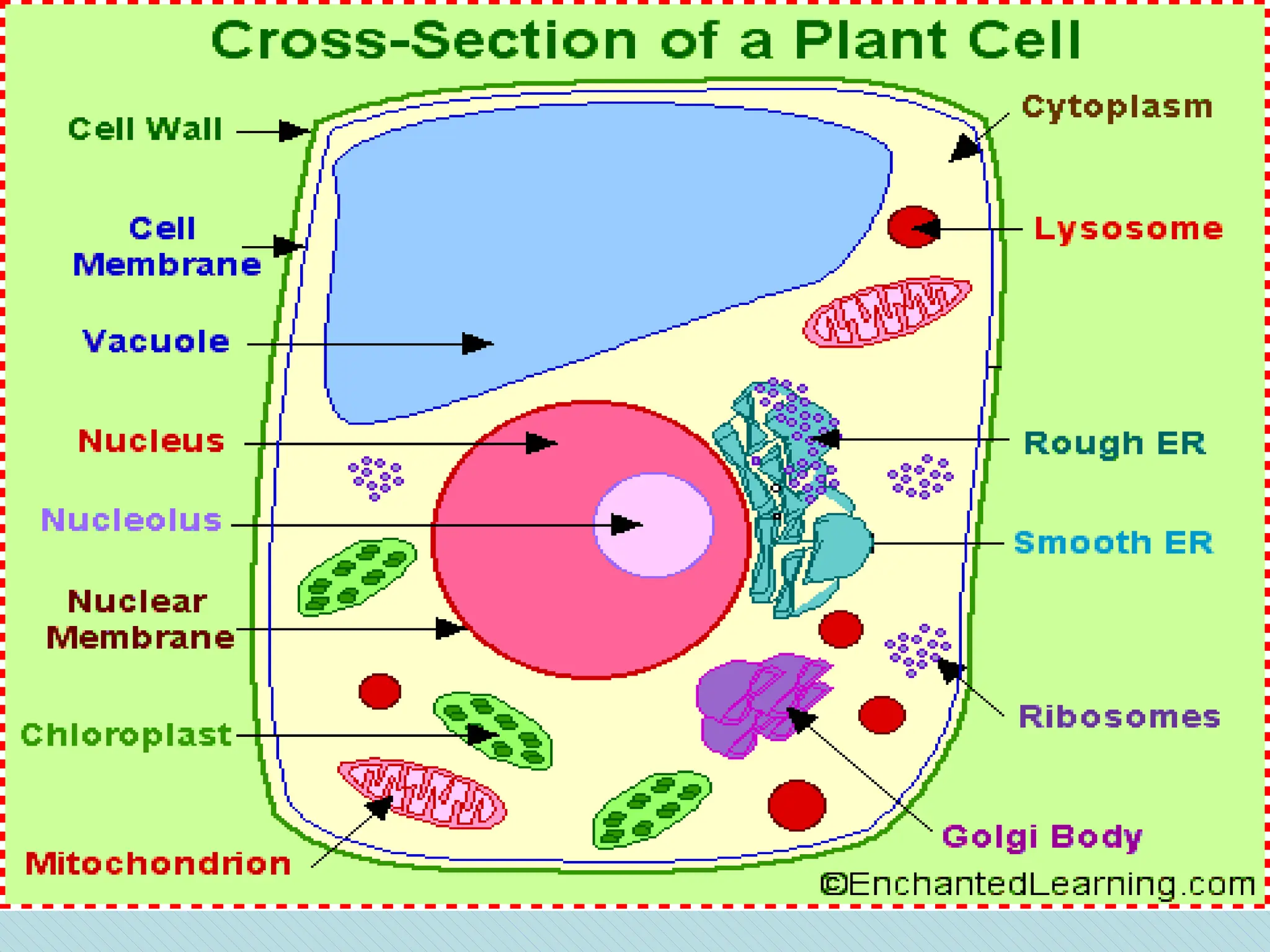
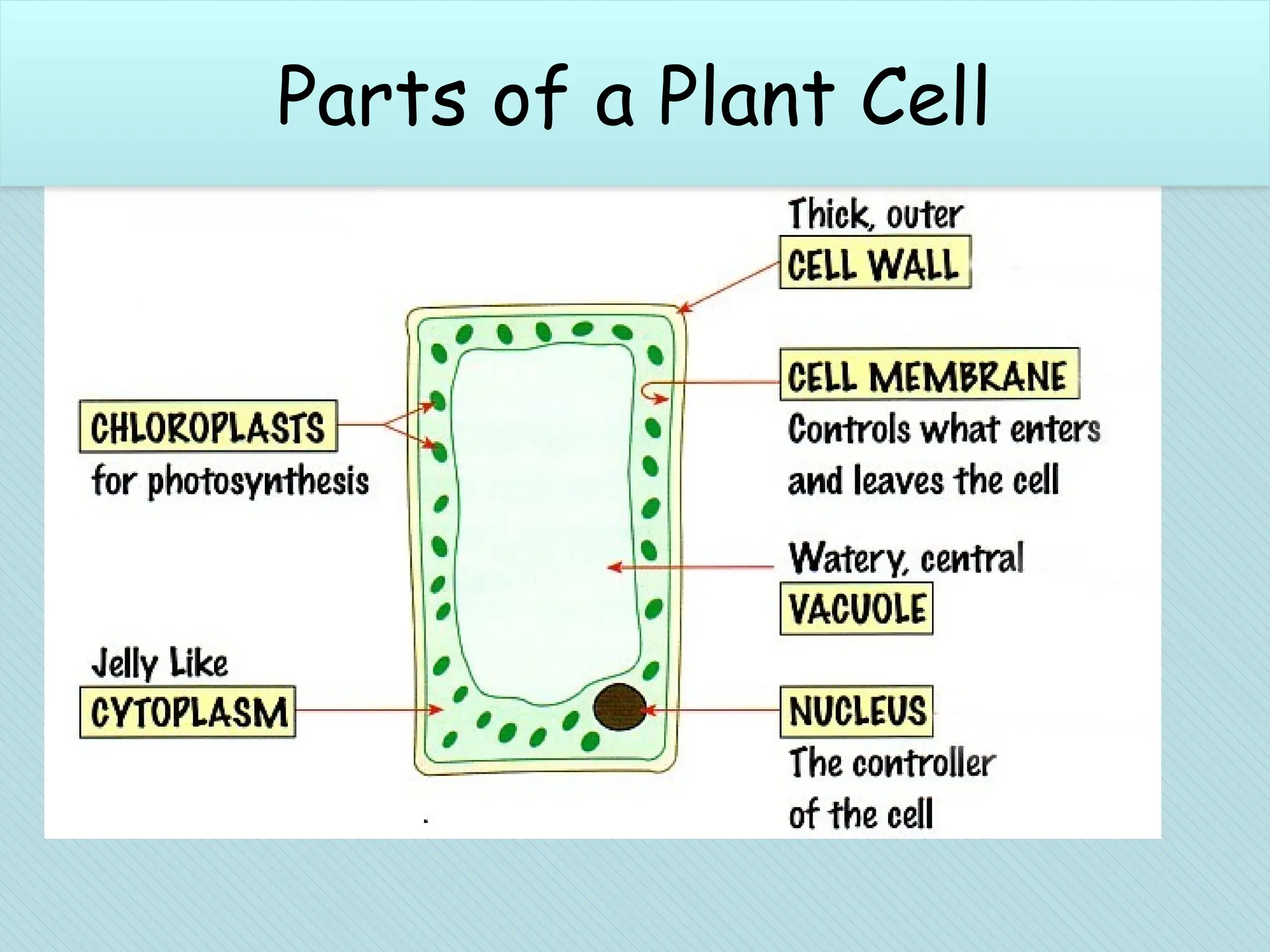
Plant cell parts
Plant cells may contain some extra parts.
Parts of a Plant Cell
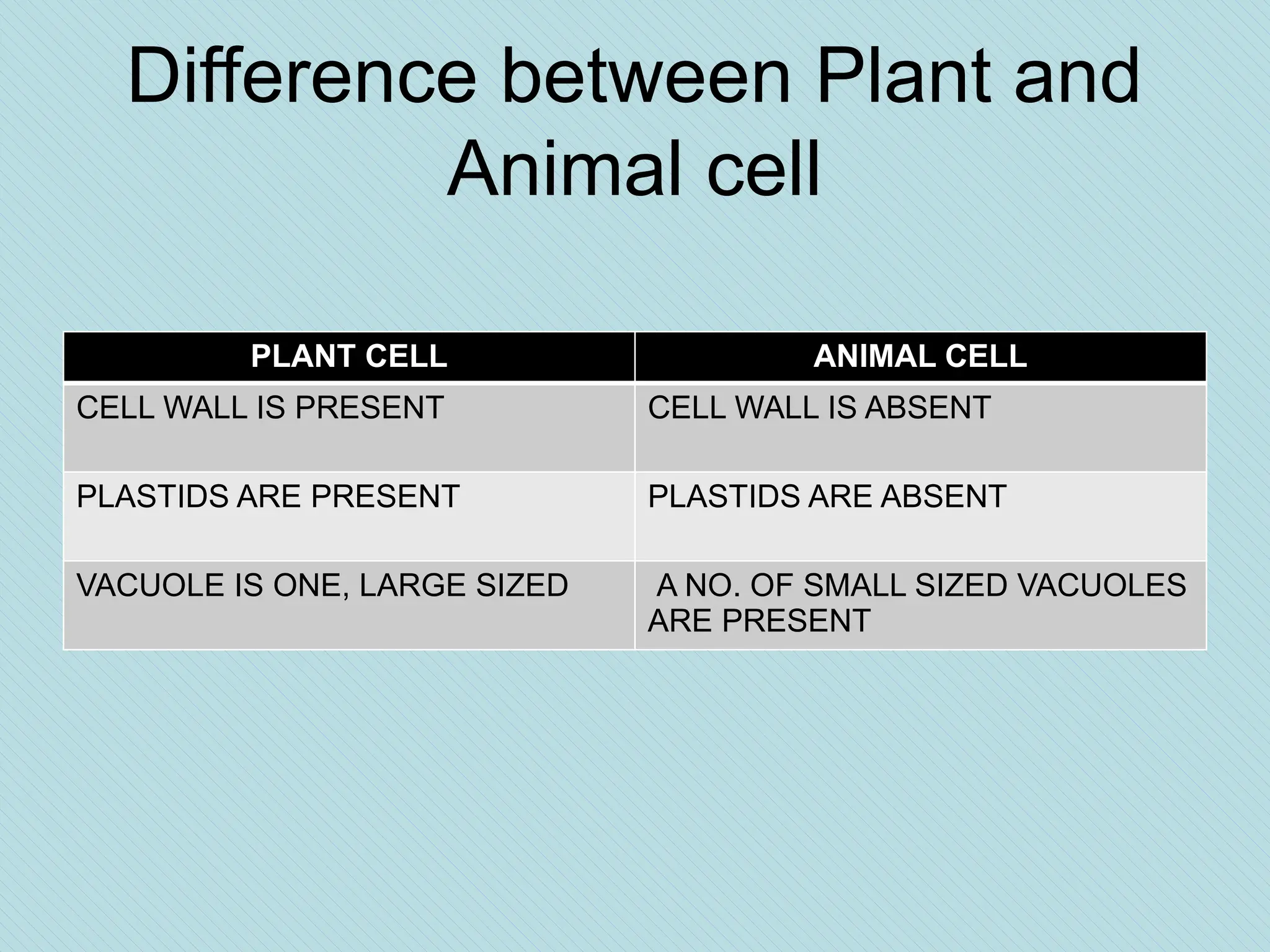
Difference between Plant and
Animal cell
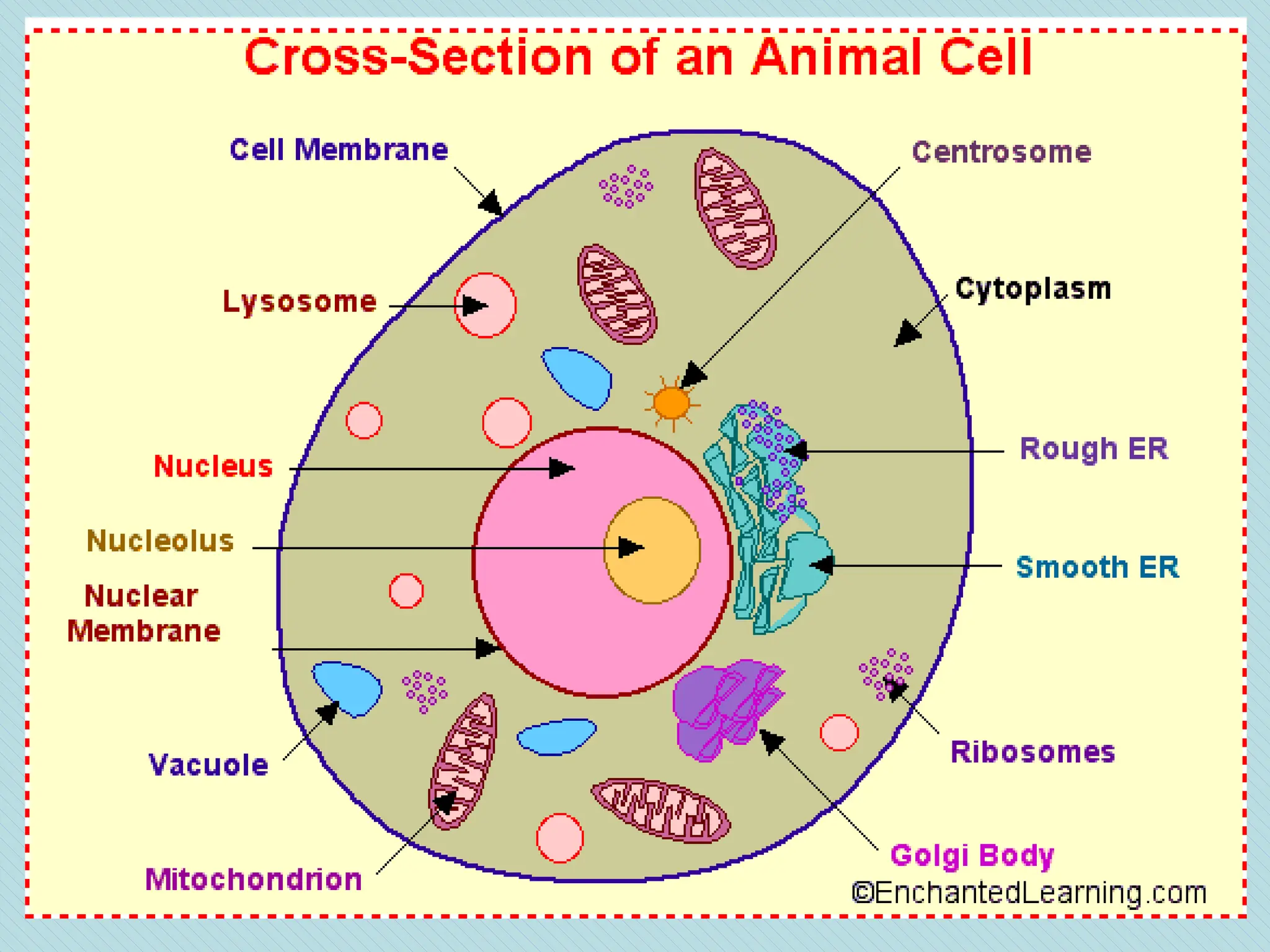
PLANT CELL ANIMAL CELL
CELL WALL IS PRESENT CELL WALL IS ABSENT
PLASTIDS ARE PRESENT PLASTIDS ARE ABSENT
VACUOLE IS ONE, LARGE SIZED A NO. OF SMALL SIZED VACUOLES
ARE PRESENT
H. Cordy-McKenna
Honywood School
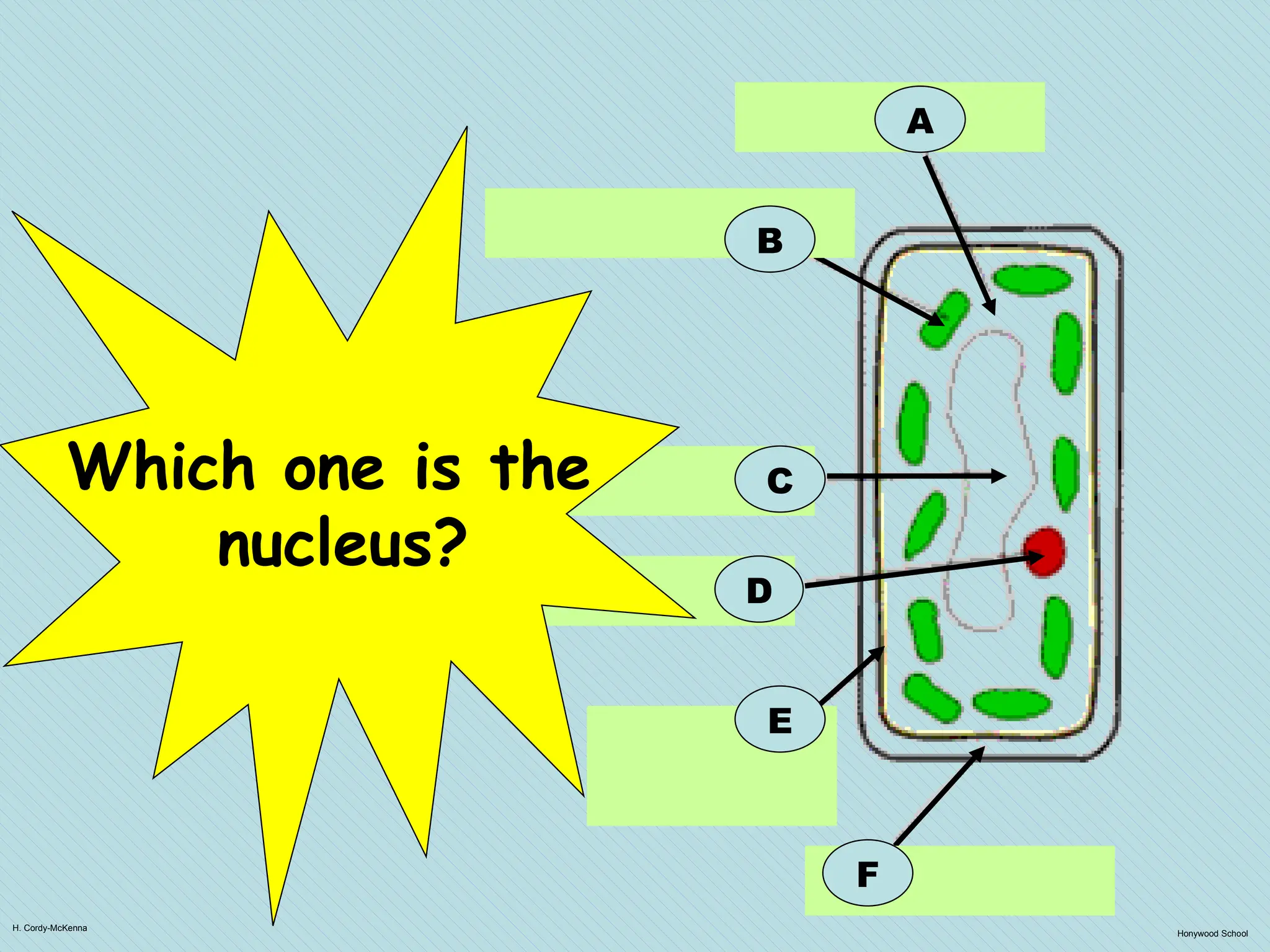
A
B
F
C
D
E
Which one is the
nucleus?
H. Cordy-McKenna
Honywood School
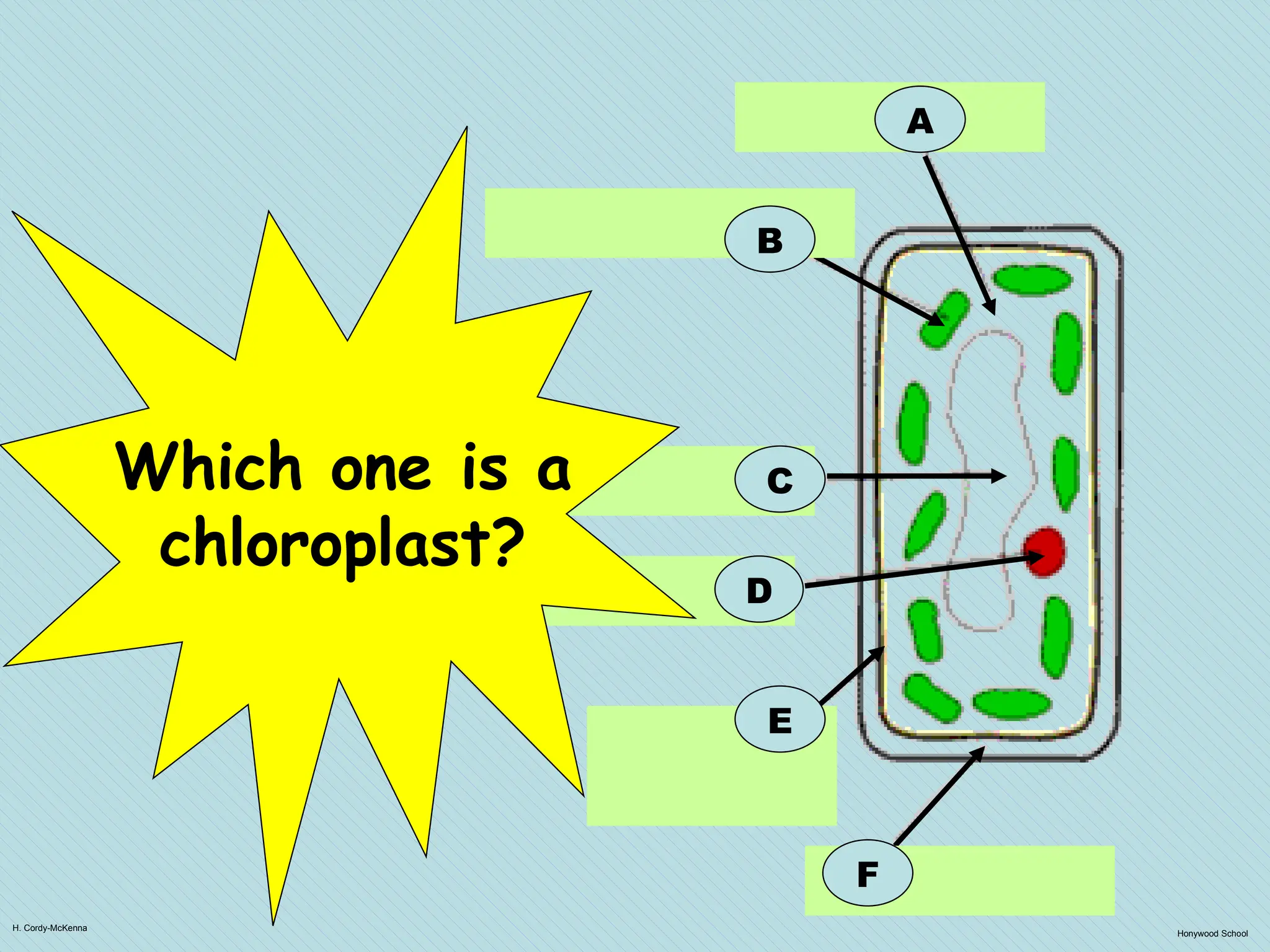
A
B
F
C
D
E
Which one is a
chloroplast?
H. Cordy-McKenna
Honywood School
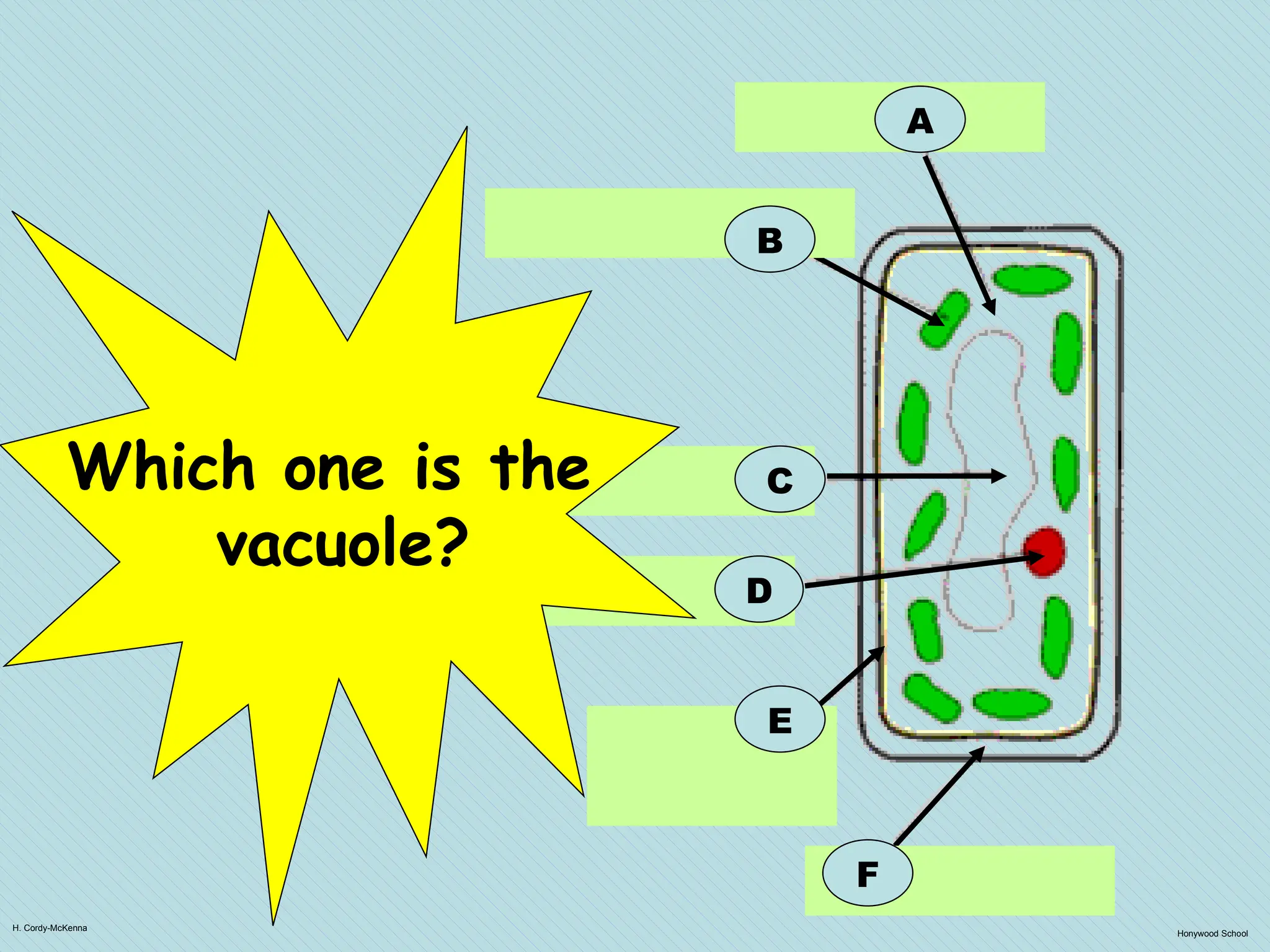
A
B
F
C
D
E
Which one is the
vacuole?
H. Cordy-McKenna
Honywood School
A
B
F
C
D
E
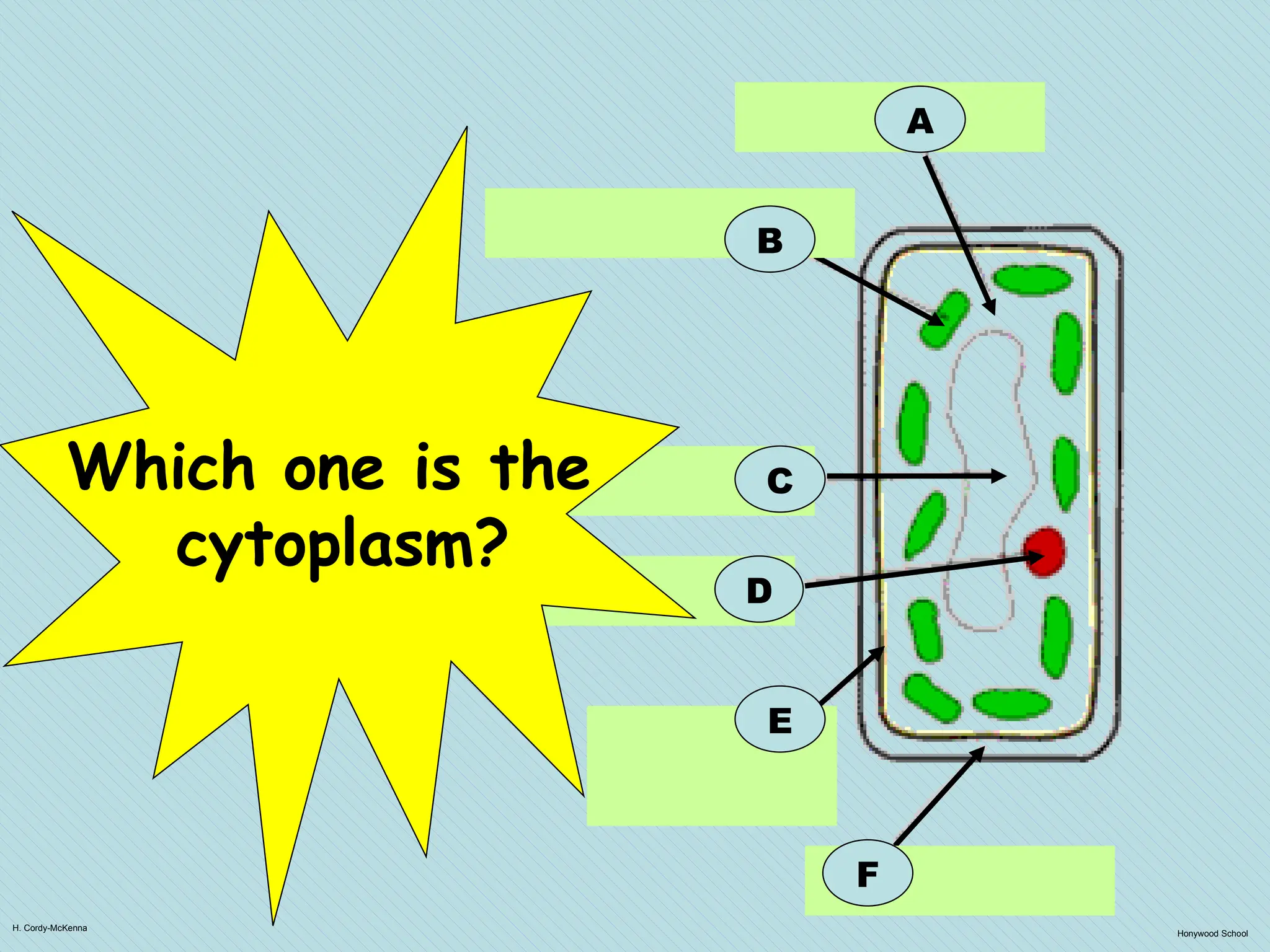
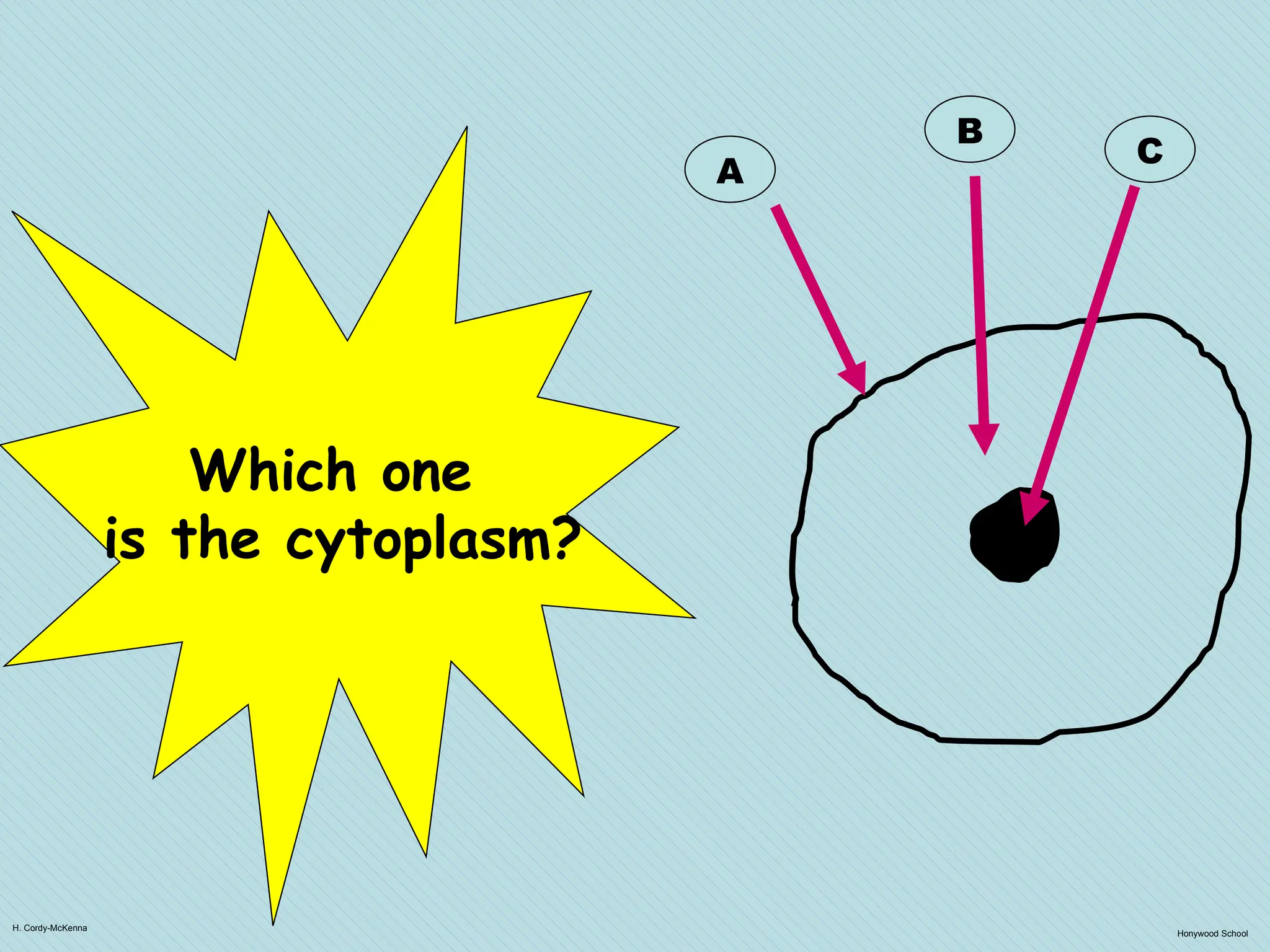
Which one is the
cytoplasm?
H. Cordy-McKenna
Honywood School
A
B
F
C
D
E
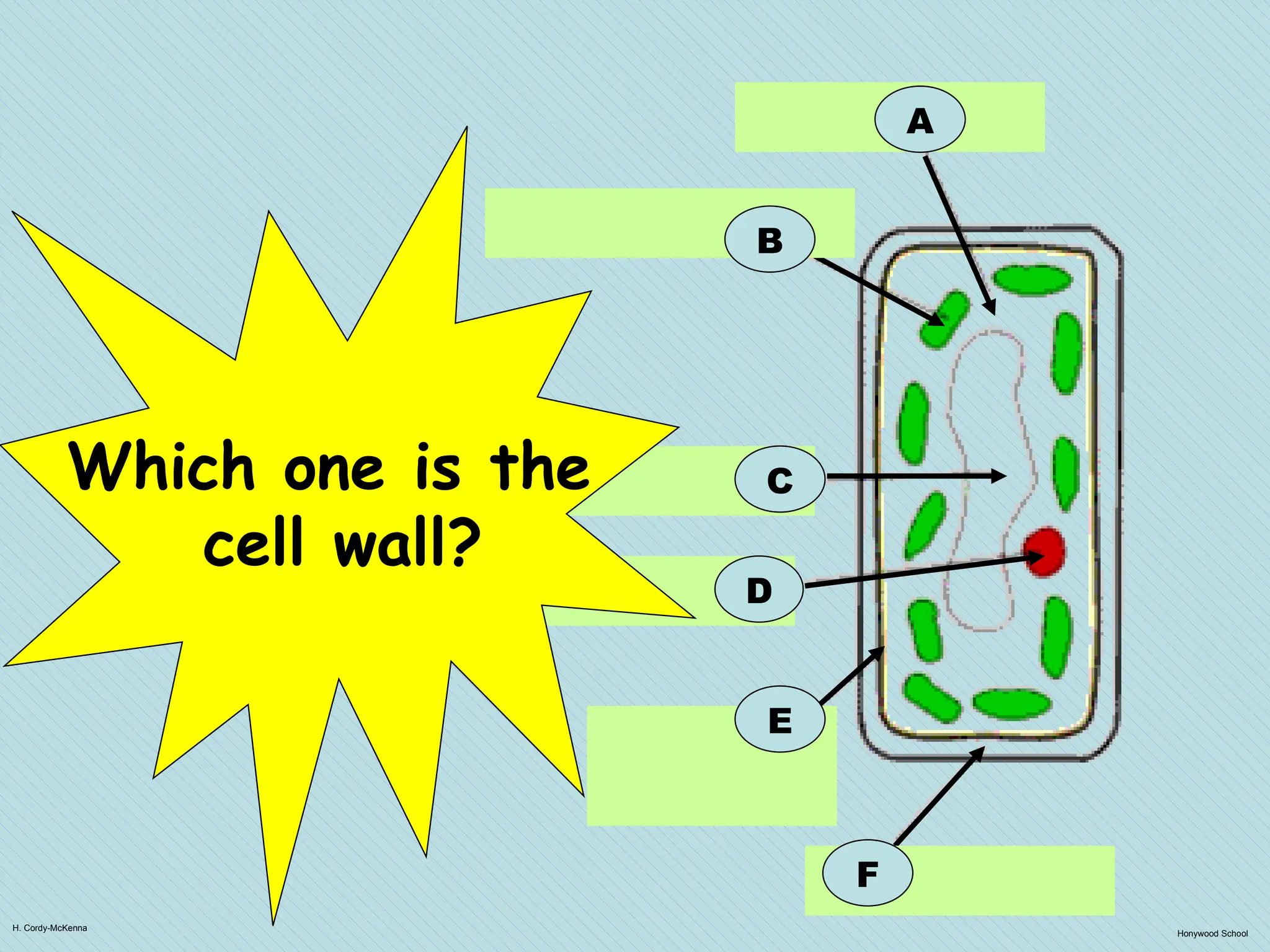
Which one is the
cell wall?
H. Cordy-McKenna
Honywood School
A
B
F
C
D
E
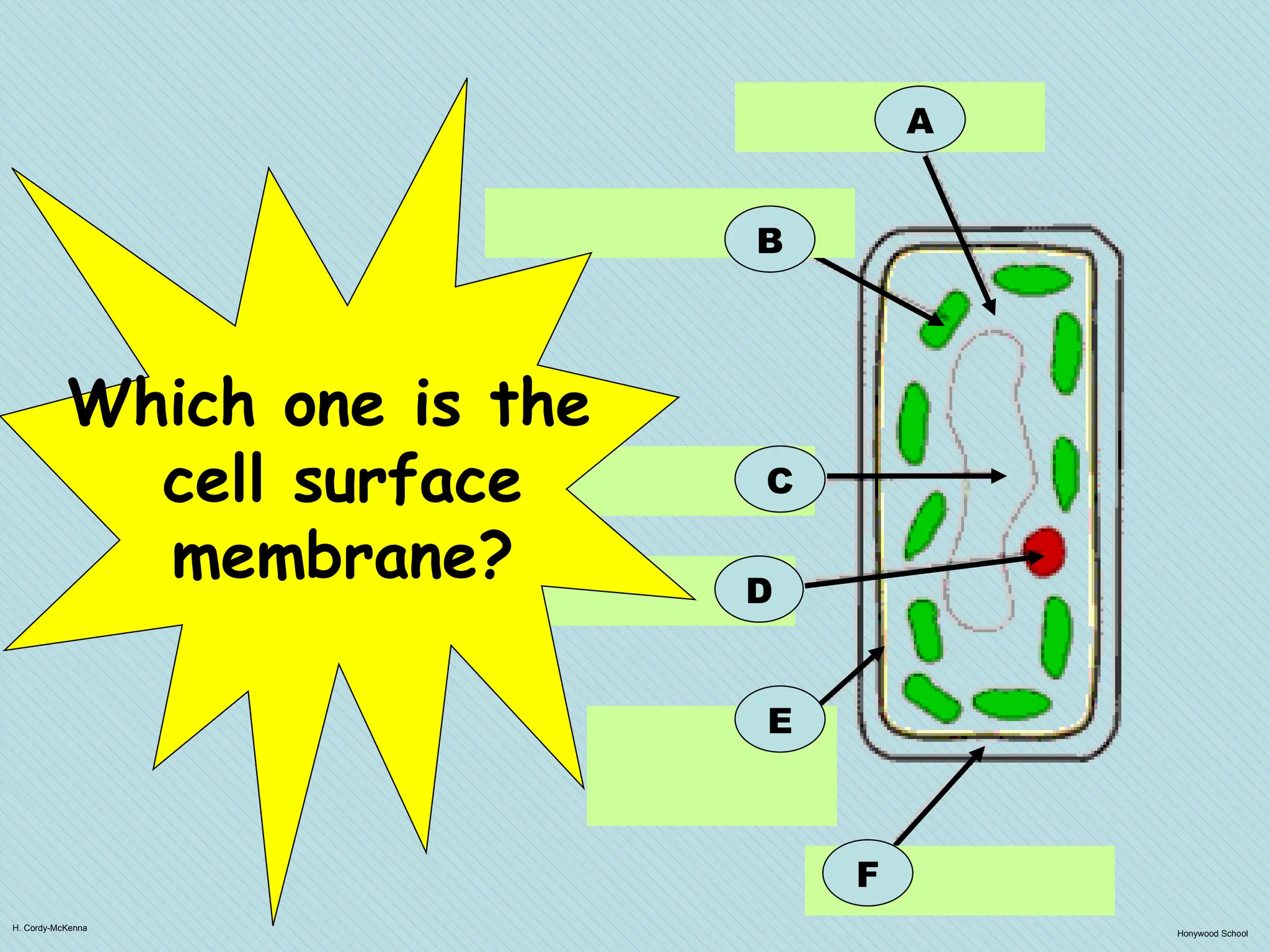
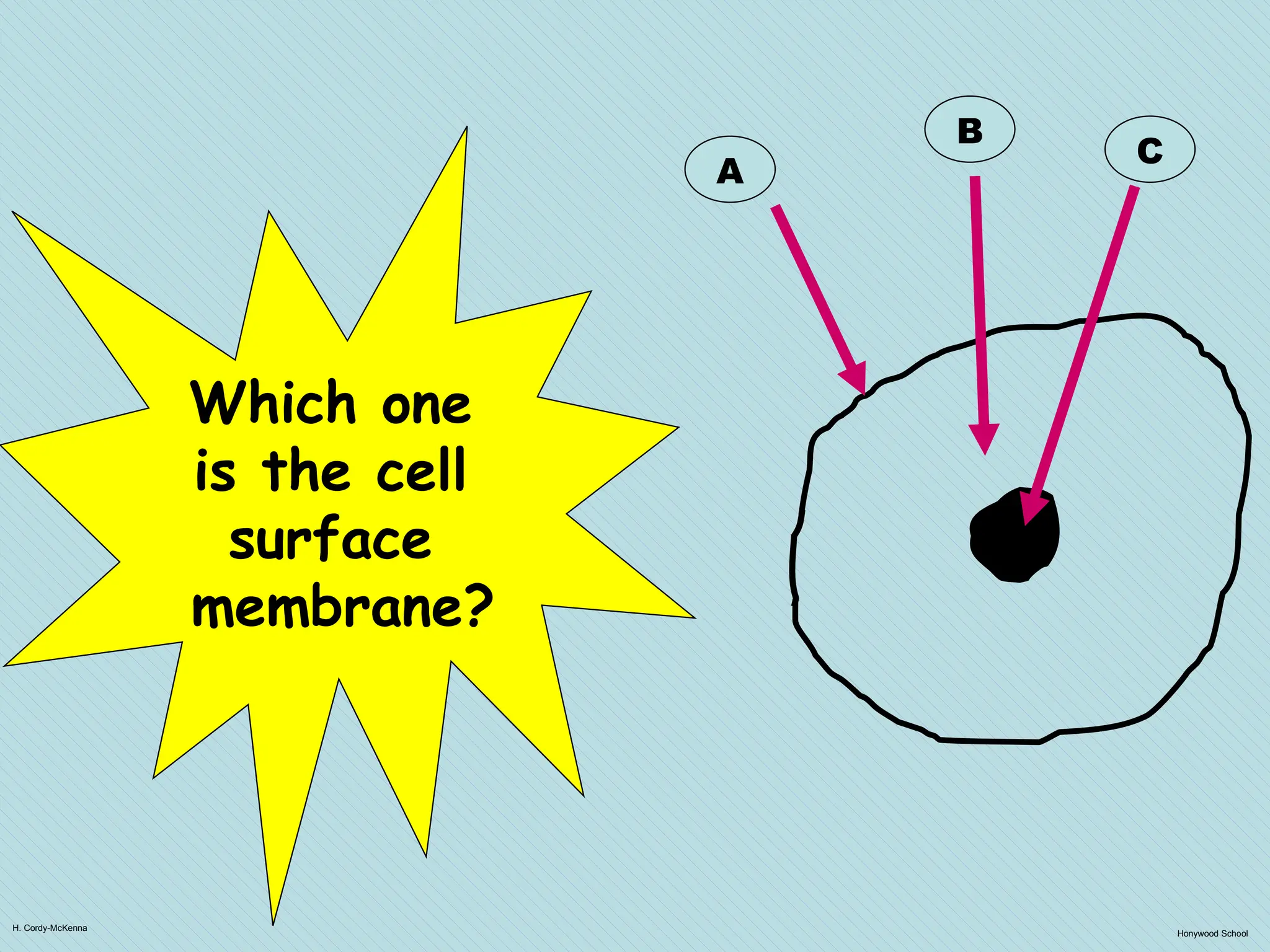
Which one is the
cell surface
membrane?
H. Cordy-McKenna
Honywood School
A
B
F
C
D
E
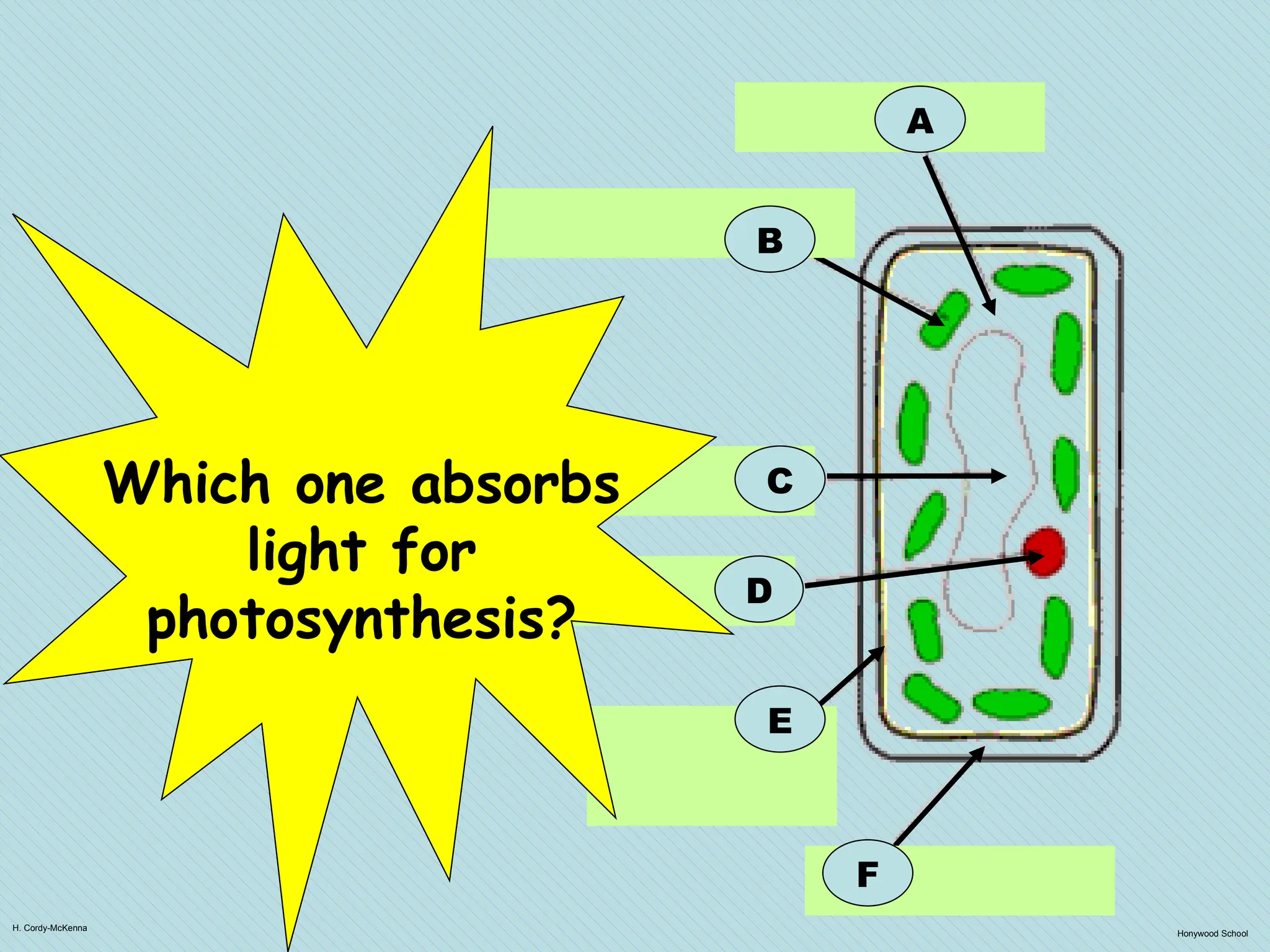
Which one absorbs
light for
photosynthesis?
H. Cordy-McKenna
Honywood School
A
B
C
Which one
is the cell
surface
membrane?
H. Cordy-McKenna
Honywood School
A
B
C
Which one
is the nucleus?
H. Cordy-McKenna
Honywood School
A
B
C
Which one
is the cytoplasm?
H. Cordy-McKenna
Honywood School
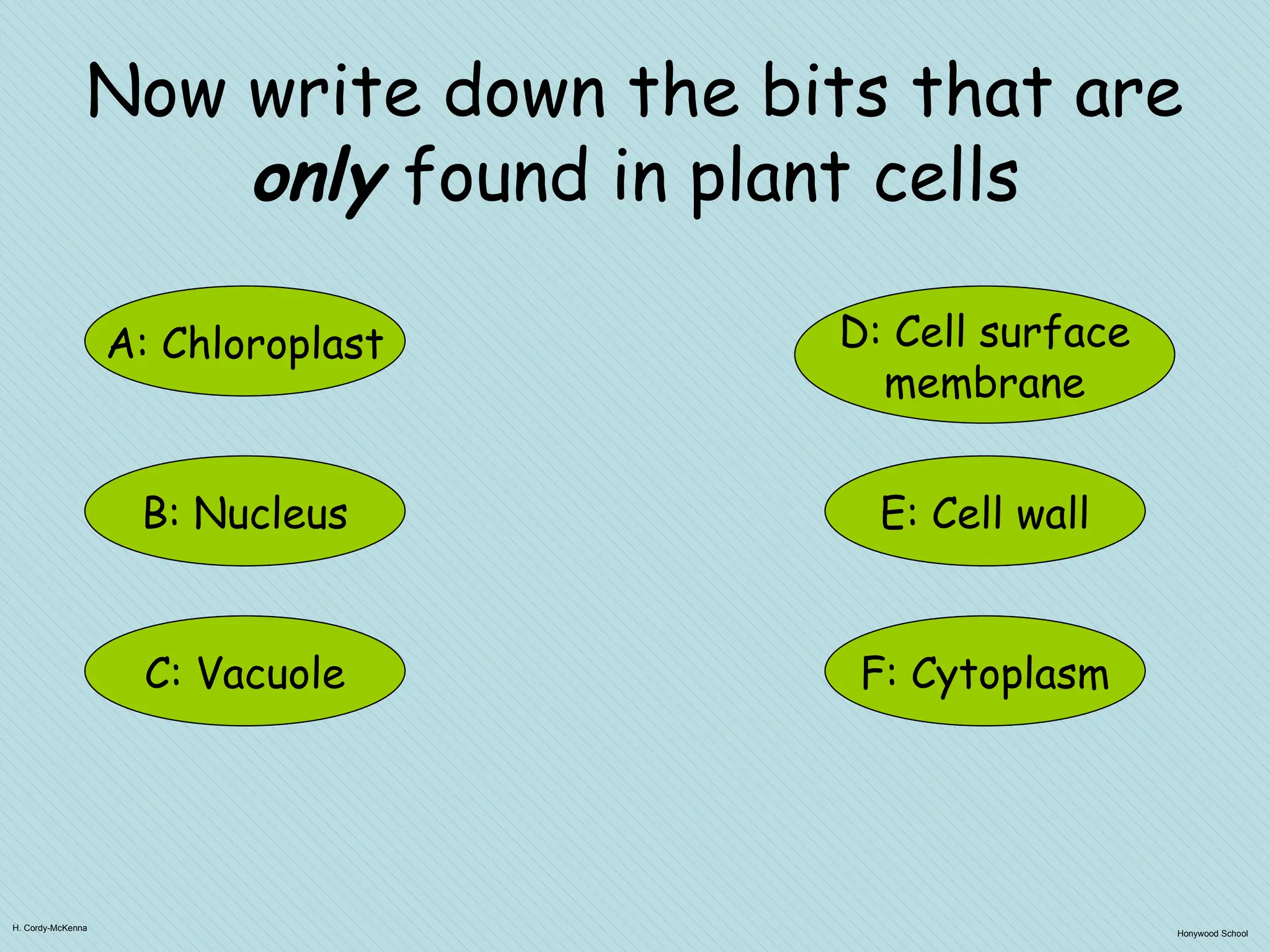
Now write down the bits that are
only found in plant cells
A: Chloroplast
F: Cytoplasm
B: Nucleus
C: Vacuole
E: Cell wall
D: Cell surface
membrane
H. Cordy-McKenna
Honywood School
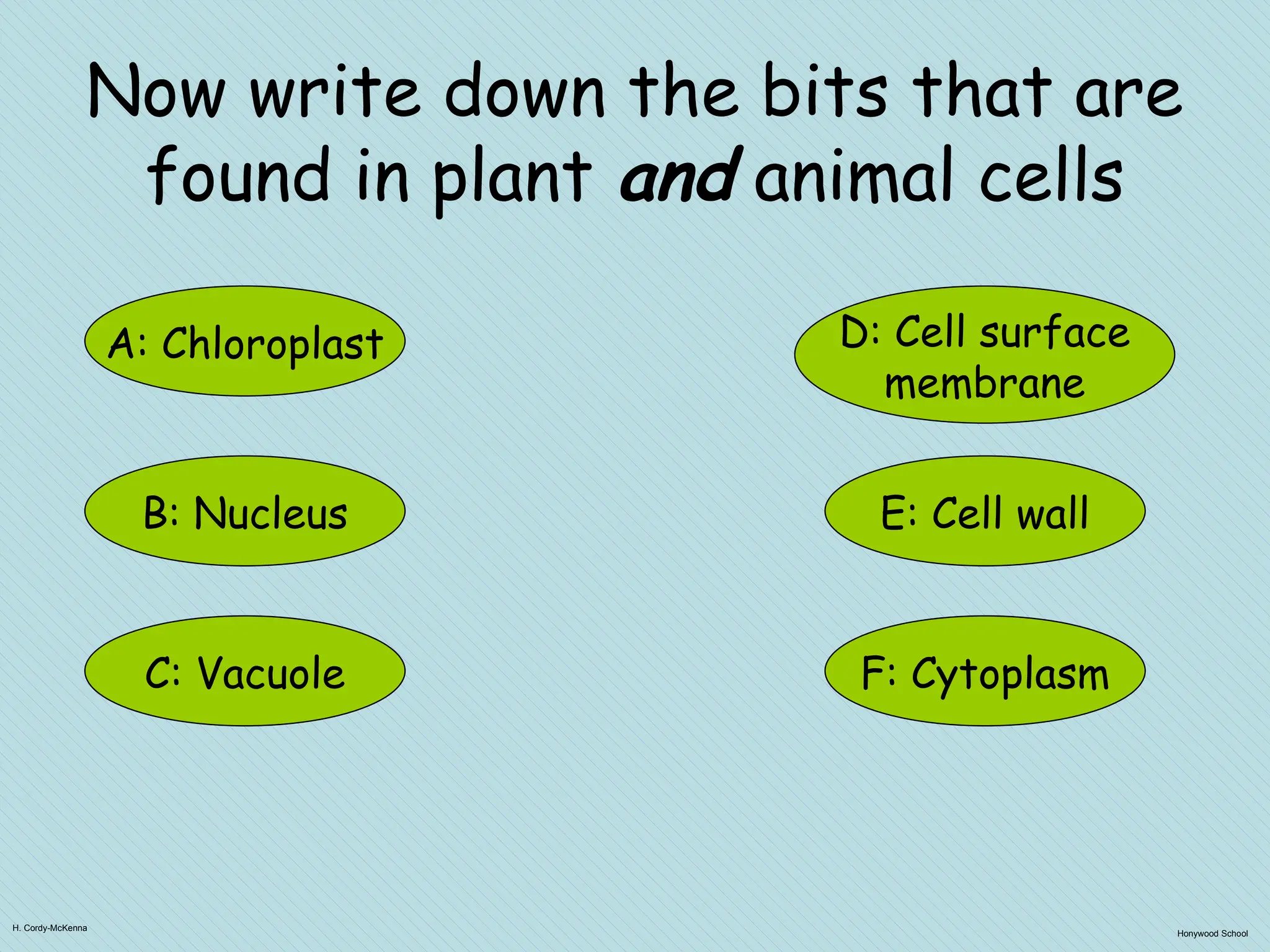
Now write down the bits that are
found in plant and animal cells
A: Chloroplast
F: Cytoplasm
B: Nucleus
C: Vacuole
E: Cell wall
D: Cell surface
membrane
Structural Organization Of Cell class9 .ppsx

  • 1.
    What is acell? A cell is the very smallest unit of living matter. All living things, including plants and animals, are made up of cells. What is a cell? BY REKHA CHOUDHARY T.G.T SCIENCE
  • 2.
    What is acell? THERE ARE 3 FEATURES IN ALMOST EVERY CELL- i) Plasma Membrane/ Cell Membrane ii) Nucleus iii) Cytoplasm Structural organization of Cell
  • 3.
    IDENTIFY THE DIFFERENTPARTS OF THE CELL (A) (B) (C)
  • 4.
    Cell membrane Outermost coveringof the cell. Separates the content of cell from its external environment Also called selectively permeable membrane because allows entry and exit of some materials only. Cell Membrane
  • 5.
    Cell wall (plantcells) Extra rigid outer covering in plant cells Composed of cellulose Provide structural strength to plants. Cell Wall
  • 6.
    Nucleus Having double layeredcovering called nuclear membrane. Nuclear membrane has pores through which exchange of material takes place. Contains chromosomes having genetic information in the form of DNA ( Deoxyribo Nucleic Acid ). Plays central role in cellular reproduction Control all activities of cell. Nucleus
  • 7.
    Cytoplasm Jelly-like mixture ofchemicals where most of the work of the cell takes place Contains many specialised cell organelles. Cytoplasm
  • 8.
    PROKARYOTIC CELLS • Cellshaving nuclear material without nuclear membrane. • Organisms having prokaryotic cells are called prokaryotes. • Nuclear region is poorly developed and not well defined. • Size is generally small ( 1- 10 micrometre) • Membrane bound cell organelles are absent. • E.g. bacteria
  • 9.
  • 10.
  • 11.
    . EUKARYOTIC CELLS • Cellshaving nuclear material with nuclear membrane. • Organisms having eukaryotic cells are called eukaryotes. • Nuclear region is well developed and well defined. • Size is generally large ( 5- 100 micrometres) • Membrane bound cell organelles are present. • E.g. Plant and Animal cell
  • 12.
    CELL ORGANELLES • ENDOPLASMICRETICULUM • GOLGI APPARATUS • LYSOSOMES • PLASTIDS • VACUOLES
  • 13.
    Chloroplasts (plant cells) Largenetwork of membrane bound tubes and sheets. Two types of ER – ROUGH (RER) –Ribosomes( site of protein synthesis ) are present on its surface SMOOTH (SER) – Helps in the manufacture of fat molecules. - ER serve as channel for the transport of materials - Function as a cytoplasmic framework providing a surface for some biochemical reactions. - SER detoxify many drugs and poisons in Liver cells of vertebrates. Endoplasmic Reticulum
  • 14.
  • 16.
    Membrane biogenesis • Theproteins and lipids manufactured by endoplasmic reticulum helps in building the cell membrane. • This process is known as membrane biogenesis.
  • 17.
    Chloroplasts (plant cells) -Described by Camillo Golgi - System of membrane bound vesicles arranged parallel to each other in stacks called cistern - Packed and dispatched various materials synthesized near the ER to various targets. - Storage , modification and packaging of products. - Involved in the formation of lysosomes. - Synthesize complex sugar from simple in some cases. Golgi Apparatus
  • 18.
  • 20.
    Chloroplasts (plant cells) Kindof waste disposal system Membrane bound sacs filled with digestive enzymes. Helps to keep the cell clean by digesting any foreign material as well as worn out cell organelles. Contain powerful digestive enzymes capable of breaking down all organic material Called suicidal bags because when the cell gets damaged , lysosomes may burst and enzymes digest their own cell. Lysosomes
  • 21.
  • 22.
  • 23.
    MITOCHONDRIA • Powerhouse ofthe cell • Releases energy for various activities in the form of ATP( Adenosine Triphosphate) • ATP – energy currency of the cell • Two membrane coverings- outer covering is porous and inner membrane is deeply folded to create a large surface area for ATP generating reactions. • Having their own DNA and Ribosomes
  • 24.
  • 26.
    Chloroplasts (plant cells) Presentonly in plant cells. Consists of various layers embedded in material called stroma. Two types – chromoplasts ( coloured) leucoplasts (white or colourless) Plastids containing green pigment chlorophyll are called chloroplasts Chloroplast- important for photosynthesis. Leucoplasts stores some materials such as starch, oils , and protein granules. Having their own DNA and ribosomes. Plastids
  • 27.
  • 28.
    Vacuole (plant cells) -Storage sacs for solid or liquid content. - Small sized in animal cell while large sized in plant cell - Full of cell sap and provide turbidity and rigidity to plant cell. - Store amino acids, sugars, various organic acids and some proteins. - Food vacuole in amoeba - Specialised vacuoles expel excess water and some wastes in some unicellular organisms. Vacuole
  • 29.
  • 31.
    Animal and plantcells Animal and Plant Cells
  • 32.
    Plant cell parts Plantcells may contain some extra parts. Parts of a Plant Cell
  • 33.
    Difference between Plantand Animal cell PLANT CELL ANIMAL CELL CELL WALL IS PRESENT CELL WALL IS ABSENT PLASTIDS ARE PRESENT PLASTIDS ARE ABSENT VACUOLE IS ONE, LARGE SIZED A NO. OF SMALL SIZED VACUOLES ARE PRESENT
  • 34.
  • 35.
  • 36.
  • 37.
  • 38.
  • 39.
    H. Cordy-McKenna Honywood School A B F C D E Whichone is the cell surface membrane?
  • 40.
    H. Cordy-McKenna Honywood School A B F C D E Whichone absorbs light for photosynthesis?
  • 41.
    H. Cordy-McKenna Honywood School A B C Whichone is the cell surface membrane?
  • 42.
  • 43.
  • 44.
    H. Cordy-McKenna Honywood School Nowwrite down the bits that are only found in plant cells A: Chloroplast F: Cytoplasm B: Nucleus C: Vacuole E: Cell wall D: Cell surface membrane
  • 45.
    H. Cordy-McKenna Honywood School Nowwrite down the bits that are found in plant and animal cells A: Chloroplast F: Cytoplasm B: Nucleus C: Vacuole E: Cell wall D: Cell surface membrane