2 Types of Cells
o   “Body cells” (somatic) vs. reproductive
    cells (gametes).
o   Examples of somatic cells: skin cell, liver
    cell, brain cell, red blood cell…
o   Human somatic cells - 46 chromosomes.
o   Examples of gametes: egg cell or sperm
    cell
o   Human gametes - 23 chromosomes.
How much DNA is in our cells?
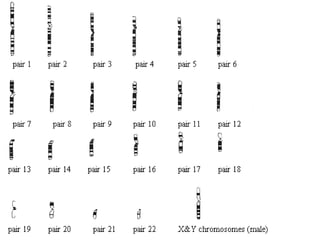
o   DNAchromosomes
o   How many chromosomes in a human
    somatic cell?
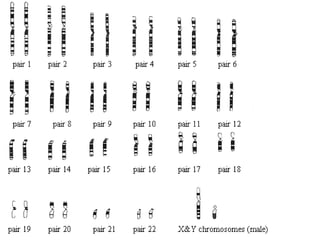
o   46 chromosomes or 23 homologous pairs
o   What is the origin of these pairs?
o   Homologous pair- chromosomes that
    carry the same genes
o   These cells are diploid.
o   The diploid number in humans is 46.
How much DNA is in our cells?


o   How many chromosomes are in a gamete
    (reproductive cell)?
o   23 chromosomes
o   Mom and dad pass on one chromosome
    from each homologous pair.
o   These cells are haploid.
o   The haploid number in humans is 23.
How are reproductive cells formed?
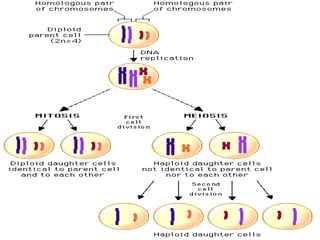
o   Meiosis is nuclear division that produces
    haploid gametes.
o   Chromosomes - no longer in pairs.
o   Each parent passes on one chromosome from
    each homologous pair in the gamete.
o   Reproductive cells contain half the number of
    chromosomes that a somatic cell contains.
o   4623
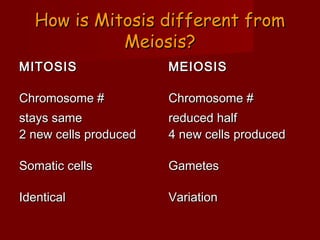
How is Mitosis different from
            Meiosis?
MITOSIS                MEIOSIS

Chromosome #           Chromosome #
stays same             reduced half
2 new cells produced   4 new cells produced

Somatic cells          Gametes

Identical              Variation
What are reproductive cells?


o   In males reproductive cells originate
    from cells called spermatogonium.

o   In females reproductive cells (egg cells)
    originate from cells called oogonium.
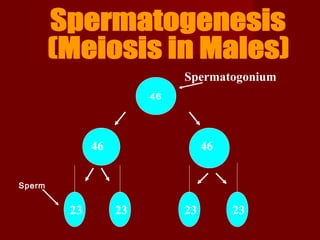
Spermatogonium
                       46


             46                  46


Sperm


        23        23        23        23
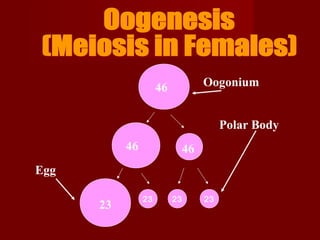
46             Oogonium


                                         Polar Body
           46                  46
Egg

                23        23        23
      23
Meiosis Errors
o Errors during meiosis cause gametes to be
  defective.
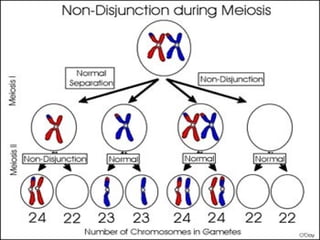
o Most common error is called
  nondisjunction.
o When nondisjunction occurs, chromosomes
  fail to separate correctly.
o Creates gametes (egg/sperm cells) with
  too many (trisomy) or too few
  chromosomes (monosomy).
Cell division

Cell division

  • 2.
    2 Types ofCells o “Body cells” (somatic) vs. reproductive cells (gametes). o Examples of somatic cells: skin cell, liver cell, brain cell, red blood cell… o Human somatic cells - 46 chromosomes. o Examples of gametes: egg cell or sperm cell o Human gametes - 23 chromosomes.
  • 3.
    How much DNAis in our cells? o DNAchromosomes o How many chromosomes in a human somatic cell? o 46 chromosomes or 23 homologous pairs o What is the origin of these pairs? o Homologous pair- chromosomes that carry the same genes o These cells are diploid. o The diploid number in humans is 46.
  • 5.
    How much DNAis in our cells? o How many chromosomes are in a gamete (reproductive cell)? o 23 chromosomes o Mom and dad pass on one chromosome from each homologous pair. o These cells are haploid. o The haploid number in humans is 23.
  • 7.
    How are reproductivecells formed? o Meiosis is nuclear division that produces haploid gametes. o Chromosomes - no longer in pairs. o Each parent passes on one chromosome from each homologous pair in the gamete. o Reproductive cells contain half the number of chromosomes that a somatic cell contains. o 4623
  • 9.
    How is Mitosisdifferent from Meiosis? MITOSIS MEIOSIS Chromosome # Chromosome # stays same reduced half 2 new cells produced 4 new cells produced Somatic cells Gametes Identical Variation
  • 10.
    What are reproductivecells? o In males reproductive cells originate from cells called spermatogonium. o In females reproductive cells (egg cells) originate from cells called oogonium.
  • 11.
    Spermatogonium 46 46 46 Sperm 23 23 23 23
  • 12.
    46 Oogonium Polar Body 46 46 Egg 23 23 23 23
  • 13.
    Meiosis Errors o Errorsduring meiosis cause gametes to be defective. o Most common error is called nondisjunction. o When nondisjunction occurs, chromosomes fail to separate correctly. o Creates gametes (egg/sperm cells) with too many (trisomy) or too few chromosomes (monosomy).