GENETICS 2:
Meiosis
ppt. by Robin D. Seamon
1
MEIOSIS
2
sexual reproduction:
• eukaryotic reproductive adaptation
• advantage: mixing of genes from two
parents to create more genetic diversity in
the offspring
• not being identical to the parent is
advantageous for a species… if an outside
stimulus is introduced that the species is
unable to withstand, there is a greater
chance that at least some members of the
species will have a variation or gene
combination that can make it
3
METHOD
meiosis-
a type of cell division where the cell divides twice
• this results in four daughter cells each with
half the number of chromosomes of the
parent cell
• produce gametes and plant spores.
WHY HALF?
4
Consider humans:
Humans have 23 PAIRS of chromosomes
(or 46 total chromosomes)
If a female cell of 46 chromosomes combined
with 46 chromosomes of a male cell, the resulting
offspring would have TOO MANY- 92
chromosomes!
Therefore, a different cell division process must
occur for the production of sex cells: meiosis.
5
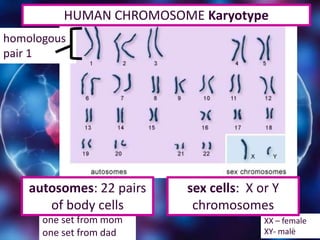
XX – female
XY- male6
HUMAN CHROMOSOME Karyotype
one set from mom
one set from dad
autosomes: 22 pairs
of body cells
sex cells: X or Y
chromosomes
homologous
pair 1
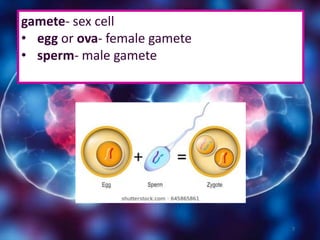
gamete- sex cell
• egg or ova- female gamete
• sperm- male gamete
7
8
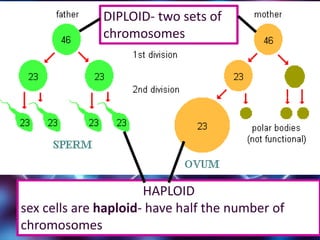
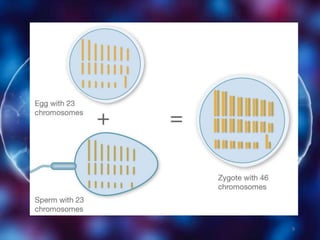
HAPLOID
sex cells are haploid- have half the number of
chromosomes
DIPLOID- two sets of
chromosomes
9
10
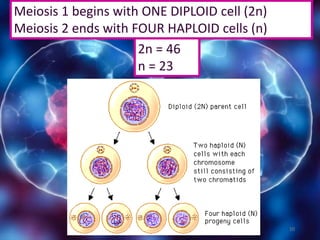
Meiosis 1 begins with ONE DIPLOID cell (2n)
Meiosis 2 ends with FOUR HAPLOID cells (n)
2n = 46
n = 23
11
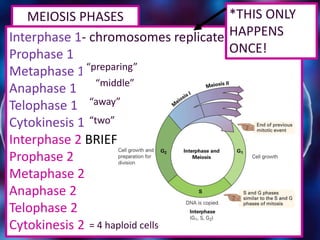
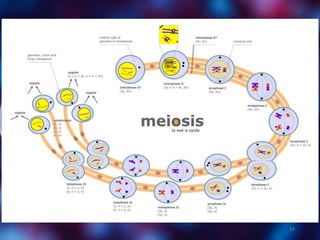
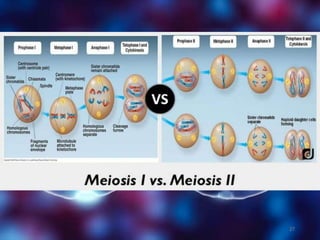
MEIOSIS PHASES
Interphase 1- chromosomes replicate
Prophase 1
Metaphase 1
Anaphase 1
Telophase 1
Cytokinesis 1
Interphase 2 BRIEF
Prophase 2
Metaphase 2
Anaphase 2
Telophase 2
Cytokinesis 2
*THIS ONLY
HAPPENS
ONCE!
“preparing”
“middle”
“away”
“two”
= 4 haploid cells
14
15
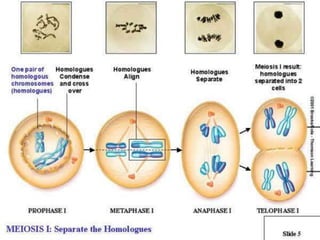
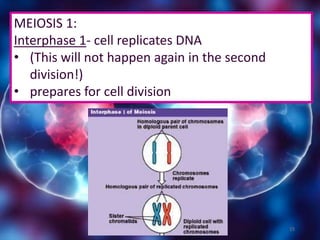
MEIOSIS 1:
Interphase 1- cell replicates DNA
• (This will not happen again in the second
division!)
• prepares for cell division
16
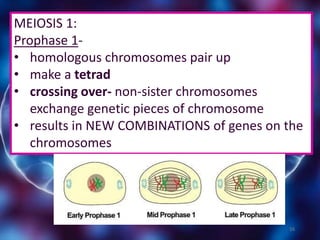
MEIOSIS 1:
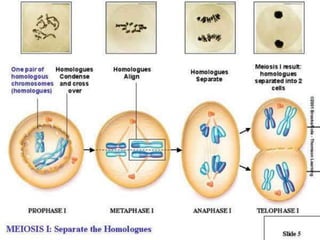
Prophase 1-
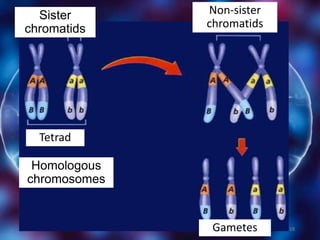
• homologous chromosomes pair up
• make a tetrad
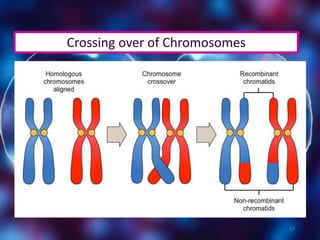
• crossing over- non-sister chromosomes
exchange genetic pieces of chromosome
• results in NEW COMBINATIONS of genes on the
chromosomes
17
Crossing over of Chromosomes
18
Sister
chromatids
Non-sister
chromatids
Tetrad
Homologous
chromosomes
Gametes
19
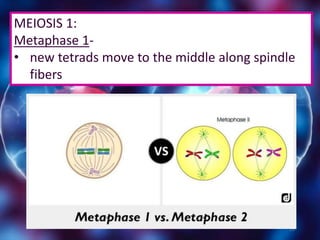
MEIOSIS 1:
Metaphase 1-
• new tetrads move to the middle along spindle
fibers
20
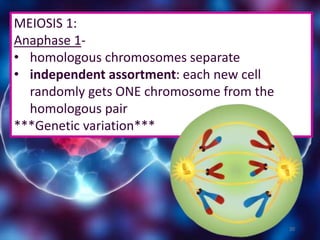
MEIOSIS 1:
Anaphase 1-
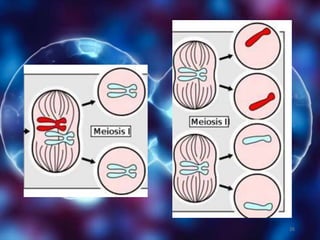
• homologous chromosomes separate
• independent assortment: each new cell
randomly gets ONE chromosome from the
homologous pair
***Genetic variation***
21
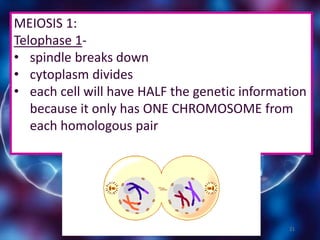
MEIOSIS 1:
Telophase 1-
• spindle breaks down
• cytoplasm divides
• each cell will have HALF the genetic information
because it only has ONE CHROMOSOME from
each homologous pair
22
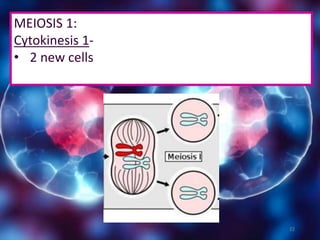
MEIOSIS 1:
Cytokinesis 1-
• 2 new cells
23
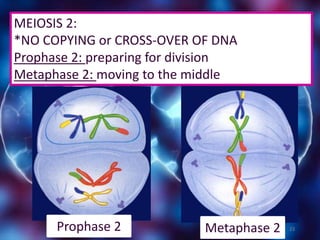
MEIOSIS 2:
*NO COPYING or CROSS-OVER OF DNA
Prophase 2: preparing for division
Metaphase 2: moving to the middle
Prophase 2 Metaphase 2
24
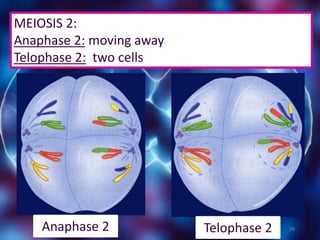
MEIOSIS 2:
Anaphase 2: moving away
Telophase 2: two cells
Anaphase 2 Telophase 2
MEIOSIS 2:
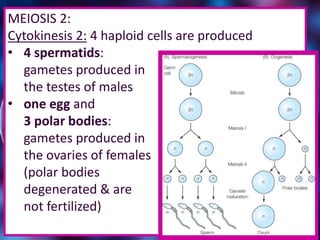
Cytokinesis 2: 4 haploid cells are produced
• 4 spermatids:
gametes produced in
the testes of males
• one egg and
3 polar bodies:
gametes produced in
the ovaries of females
(polar bodies
degenerated & are
not fertilized)
25
26
27
28

Genetics 2 Meiosis

  • 1.
    GENETICS 2: Meiosis ppt. byRobin D. Seamon 1
  • 2.
  • 3.
    sexual reproduction: • eukaryoticreproductive adaptation • advantage: mixing of genes from two parents to create more genetic diversity in the offspring • not being identical to the parent is advantageous for a species… if an outside stimulus is introduced that the species is unable to withstand, there is a greater chance that at least some members of the species will have a variation or gene combination that can make it 3
  • 4.
    METHOD meiosis- a type ofcell division where the cell divides twice • this results in four daughter cells each with half the number of chromosomes of the parent cell • produce gametes and plant spores. WHY HALF? 4
  • 5.
    Consider humans: Humans have23 PAIRS of chromosomes (or 46 total chromosomes) If a female cell of 46 chromosomes combined with 46 chromosomes of a male cell, the resulting offspring would have TOO MANY- 92 chromosomes! Therefore, a different cell division process must occur for the production of sex cells: meiosis. 5
  • 6.
    XX – female XY-male6 HUMAN CHROMOSOME Karyotype one set from mom one set from dad autosomes: 22 pairs of body cells sex cells: X or Y chromosomes homologous pair 1
  • 7.
    gamete- sex cell •egg or ova- female gamete • sperm- male gamete 7
  • 8.
    8 HAPLOID sex cells arehaploid- have half the number of chromosomes DIPLOID- two sets of chromosomes
  • 9.
  • 10.
    10 Meiosis 1 beginswith ONE DIPLOID cell (2n) Meiosis 2 ends with FOUR HAPLOID cells (n) 2n = 46 n = 23
  • 11.
    11 MEIOSIS PHASES Interphase 1-chromosomes replicate Prophase 1 Metaphase 1 Anaphase 1 Telophase 1 Cytokinesis 1 Interphase 2 BRIEF Prophase 2 Metaphase 2 Anaphase 2 Telophase 2 Cytokinesis 2 *THIS ONLY HAPPENS ONCE! “preparing” “middle” “away” “two” = 4 haploid cells
  • 14.
  • 15.
    15 MEIOSIS 1: Interphase 1-cell replicates DNA • (This will not happen again in the second division!) • prepares for cell division
  • 16.
    16 MEIOSIS 1: Prophase 1- •homologous chromosomes pair up • make a tetrad • crossing over- non-sister chromosomes exchange genetic pieces of chromosome • results in NEW COMBINATIONS of genes on the chromosomes
  • 17.
  • 18.
  • 19.
    19 MEIOSIS 1: Metaphase 1- •new tetrads move to the middle along spindle fibers
  • 20.
    20 MEIOSIS 1: Anaphase 1- •homologous chromosomes separate • independent assortment: each new cell randomly gets ONE chromosome from the homologous pair ***Genetic variation***
  • 21.
    21 MEIOSIS 1: Telophase 1- •spindle breaks down • cytoplasm divides • each cell will have HALF the genetic information because it only has ONE CHROMOSOME from each homologous pair
  • 22.
  • 23.
    23 MEIOSIS 2: *NO COPYINGor CROSS-OVER OF DNA Prophase 2: preparing for division Metaphase 2: moving to the middle Prophase 2 Metaphase 2
  • 24.
    24 MEIOSIS 2: Anaphase 2:moving away Telophase 2: two cells Anaphase 2 Telophase 2
  • 25.
    MEIOSIS 2: Cytokinesis 2:4 haploid cells are produced • 4 spermatids: gametes produced in the testes of males • one egg and 3 polar bodies: gametes produced in the ovaries of females (polar bodies degenerated & are not fertilized) 25
  • 26.
  • 27.
  • 28.