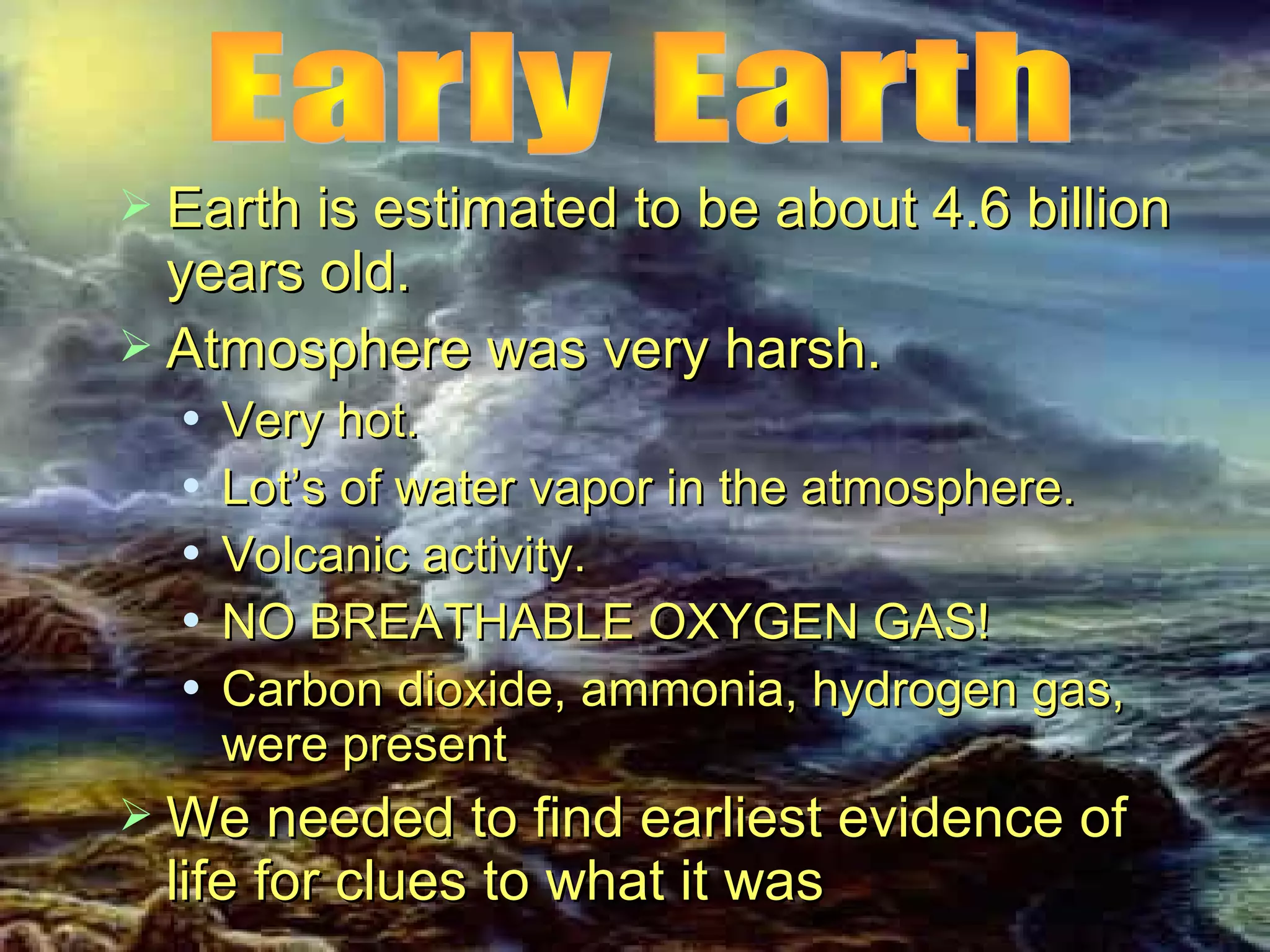
 Earth is estimated to be about 4.6 billion
  years old.
 Atmosphere was very harsh.
     Very hot.
     Lot’s of water vapor in the atmosphere.
     Volcanic activity.
     NO BREATHABLE OXYGEN GAS!
     Carbon dioxide, ammonia, hydrogen gas,
      were present
 We needed to find earliest evidence of
 life for clues to what it was
Origin of Life
 Scientists had hard time
  finding ancient evidence of
  life
 45 years ago we found out
  why.
 Most ancient life was
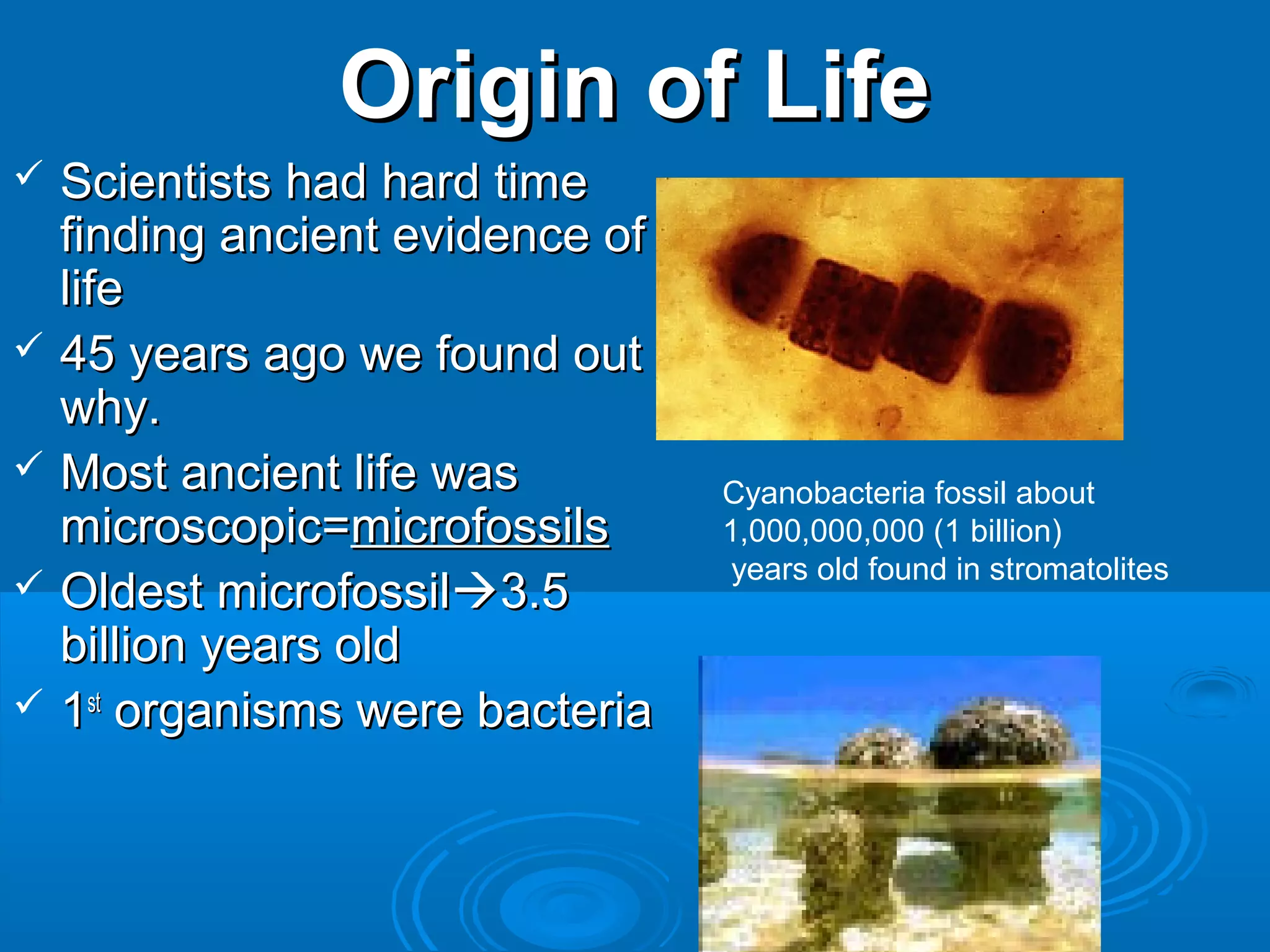
                                Cyanobacteria fossil about
  microscopic=microfossils      1,000,000,000 (1 billion)
                                 years old found in stromatolites
 Oldest microfossil3.5
  billion years old
 1st organisms were bacteria
How did life begin?
   Extraterrestrial origin
   Creation ( ID )—”divine forces”
   From non-living matter “Chemical Evolution”
   Main proposal as to how this happened
        Organic compounds (microspheres)
        Assemble to create 1st bacterial cell
        Some bacterial cells became organelles of
         others to form eukaryotic cells
        Eukaryotic cells join to form multicellular
        organisms
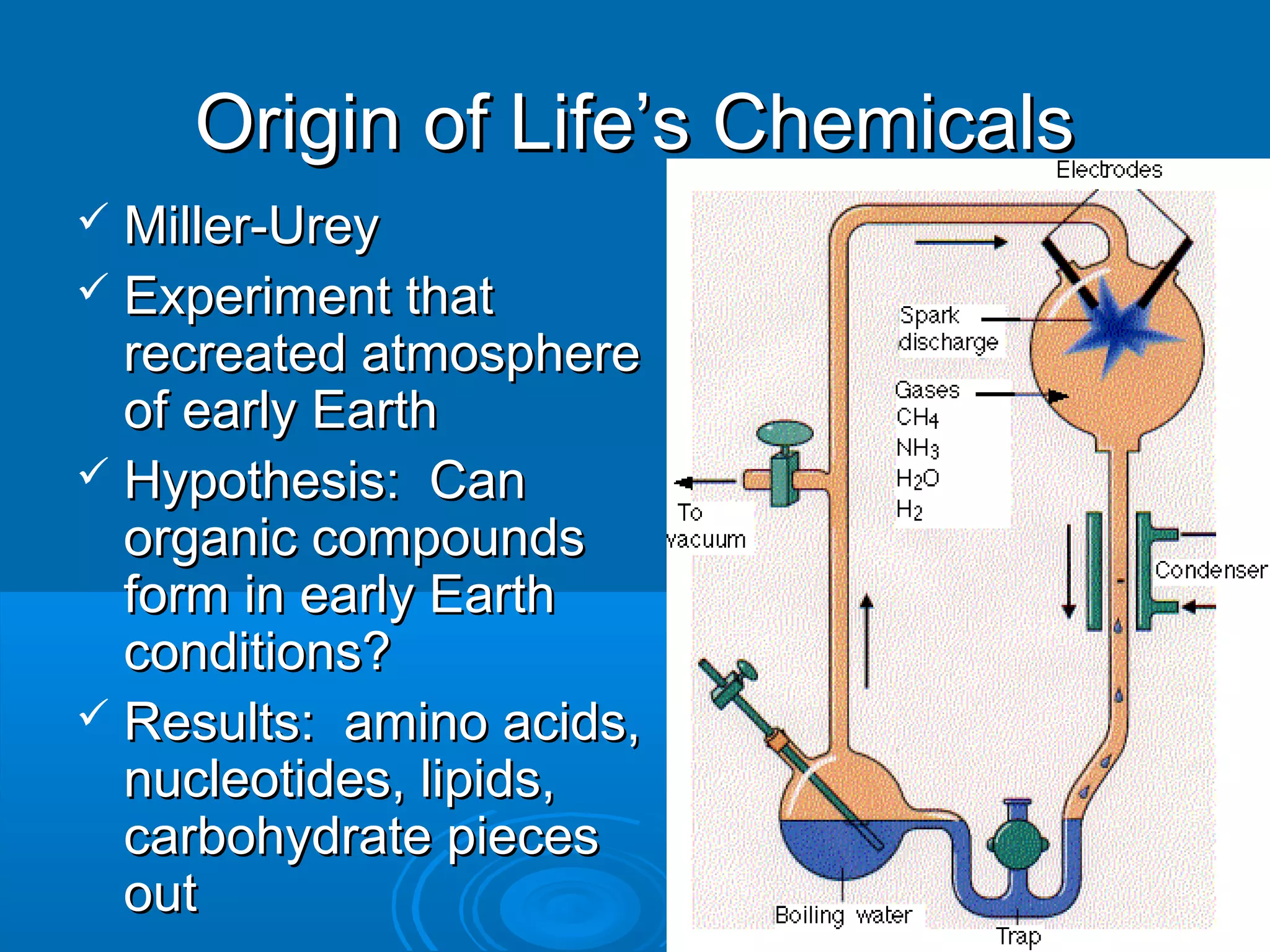
Origin of Life’s Chemicals
 Miller-Urey
 Experiment that
  recreated atmosphere
  of early Earth
 Hypothesis: Can
  organic compounds
  form in early Earth
  conditions?
 Results: amino acids,
  nucleotides, lipids,
  carbohydrate pieces
  out
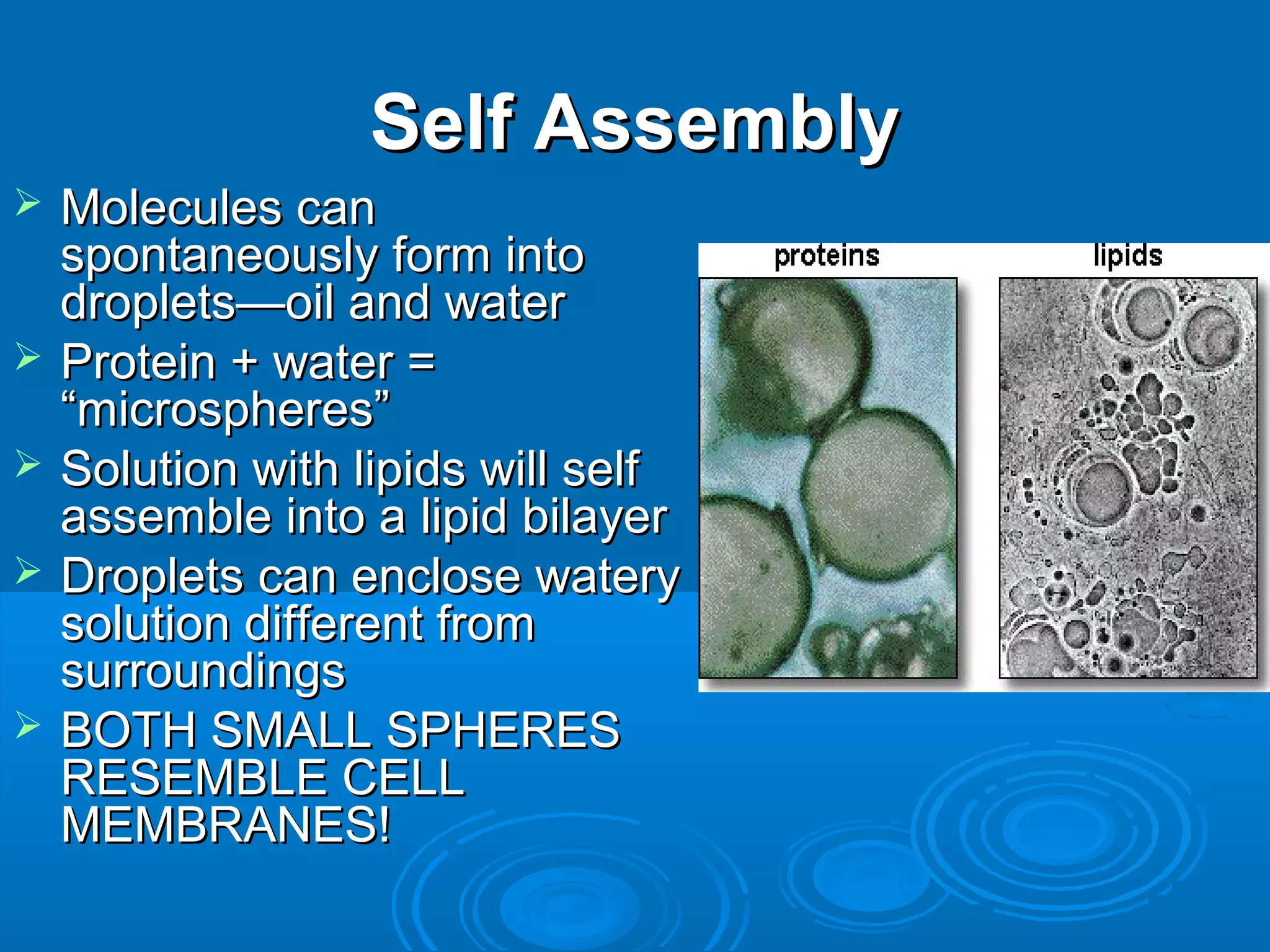
Self Assembly
   Molecules can
    spontaneously form into
    droplets—oil and water
   Protein + water =
    “microspheres”
   Solution with lipids will self
    assemble into a lipid bilayer
   Droplets can enclose watery
    solution different from
    surroundings
   BOTH SMALL SPHERES
    RESEMBLE CELL
    MEMBRANES!
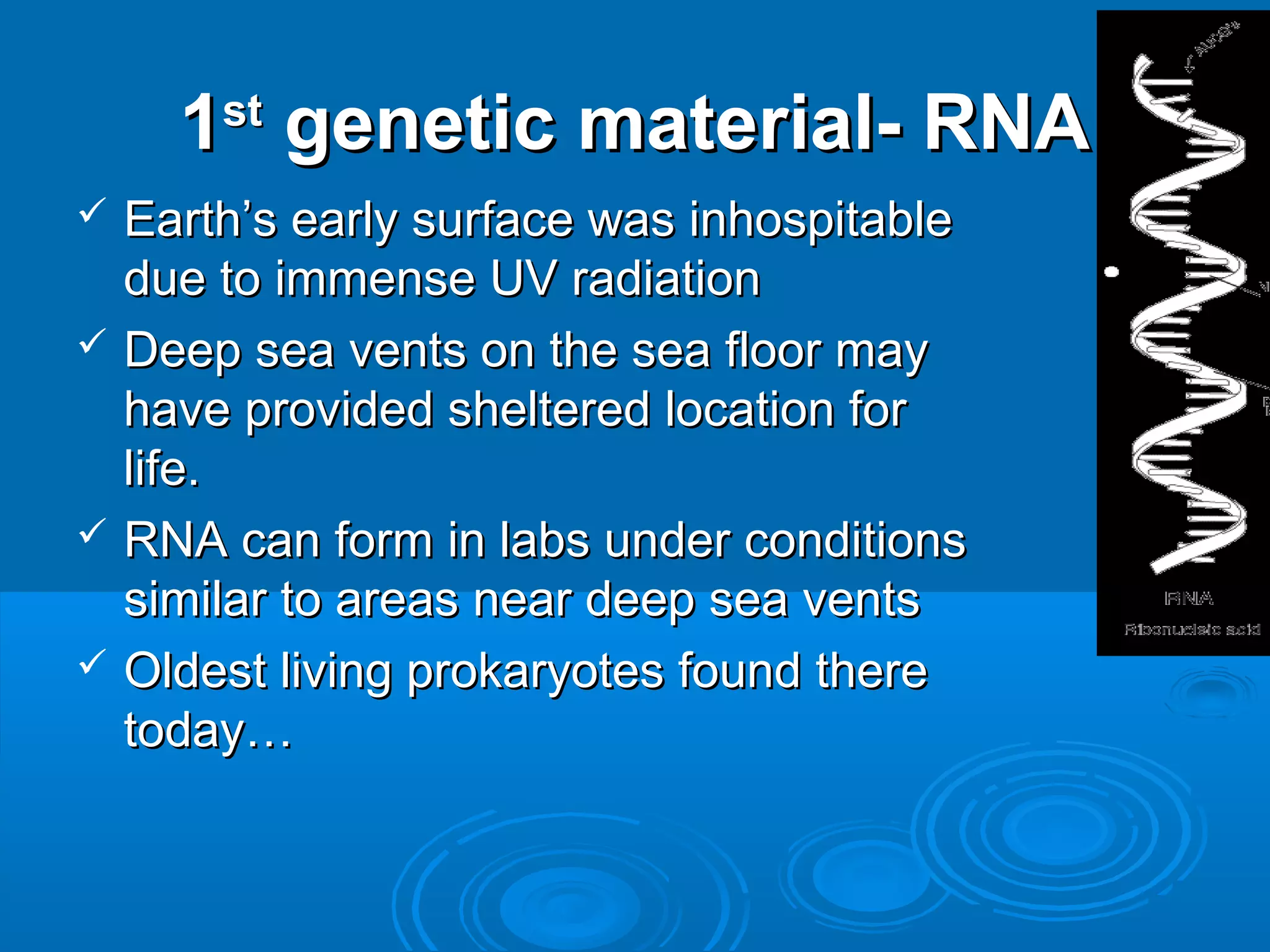
1 genetic material- RNA
      st

 Earth’s early surface was inhospitable
  due to immense UV radiation
 Deep sea vents on the sea floor may
  have provided sheltered location for
  life.
 RNA can form in labs under conditions
  similar to areas near deep sea vents
 Oldest living prokaryotes found there
  today…
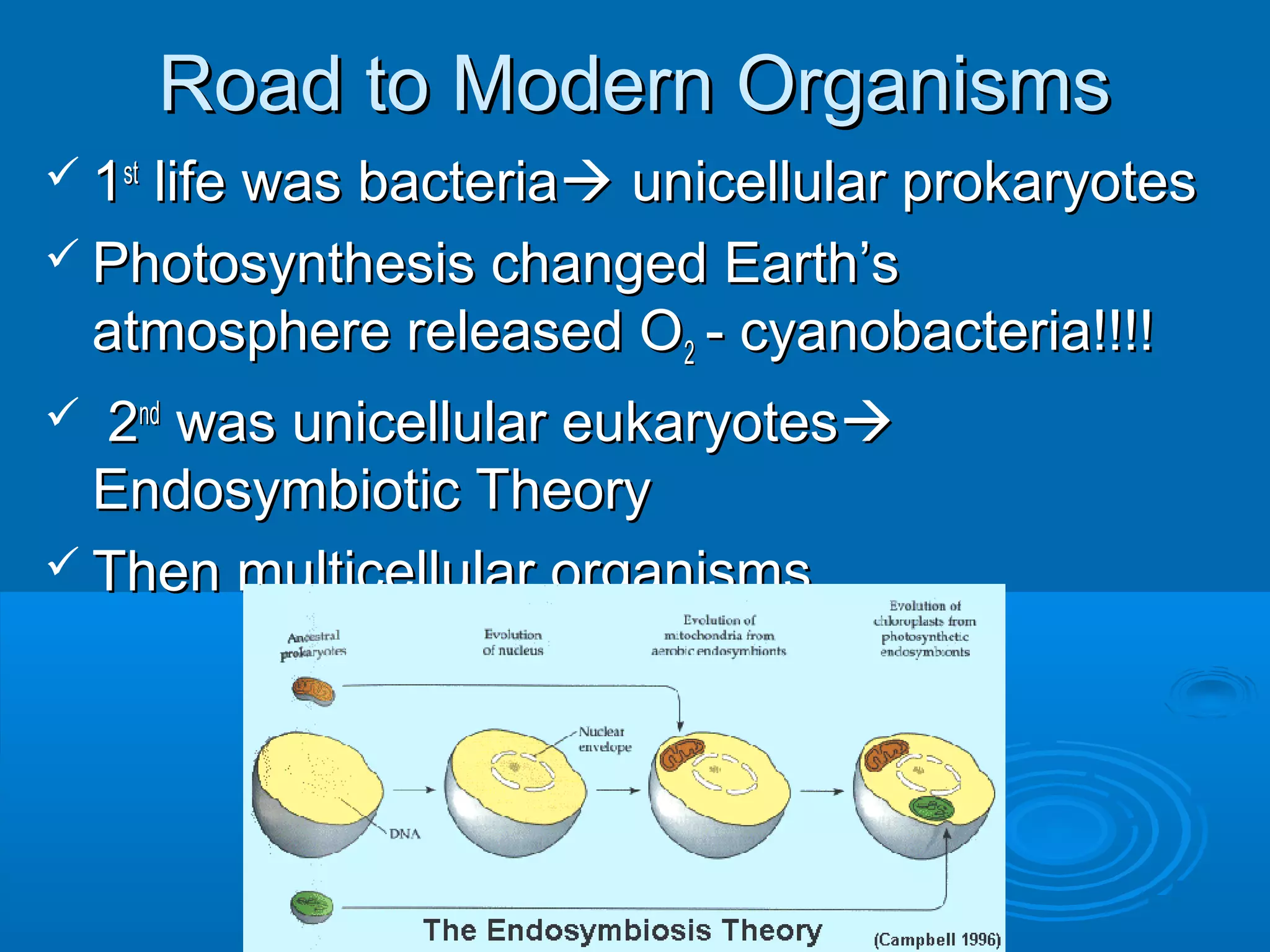
Road to Modern Organisms
 1st
    life was bacteria unicellular prokaryotes
 Photosynthesis changed Earth’s
  atmosphere released O2 - cyanobacteria!!!!
 2nd was unicellular eukaryotes
  Endosymbiotic Theory
 Then multicellular organisms
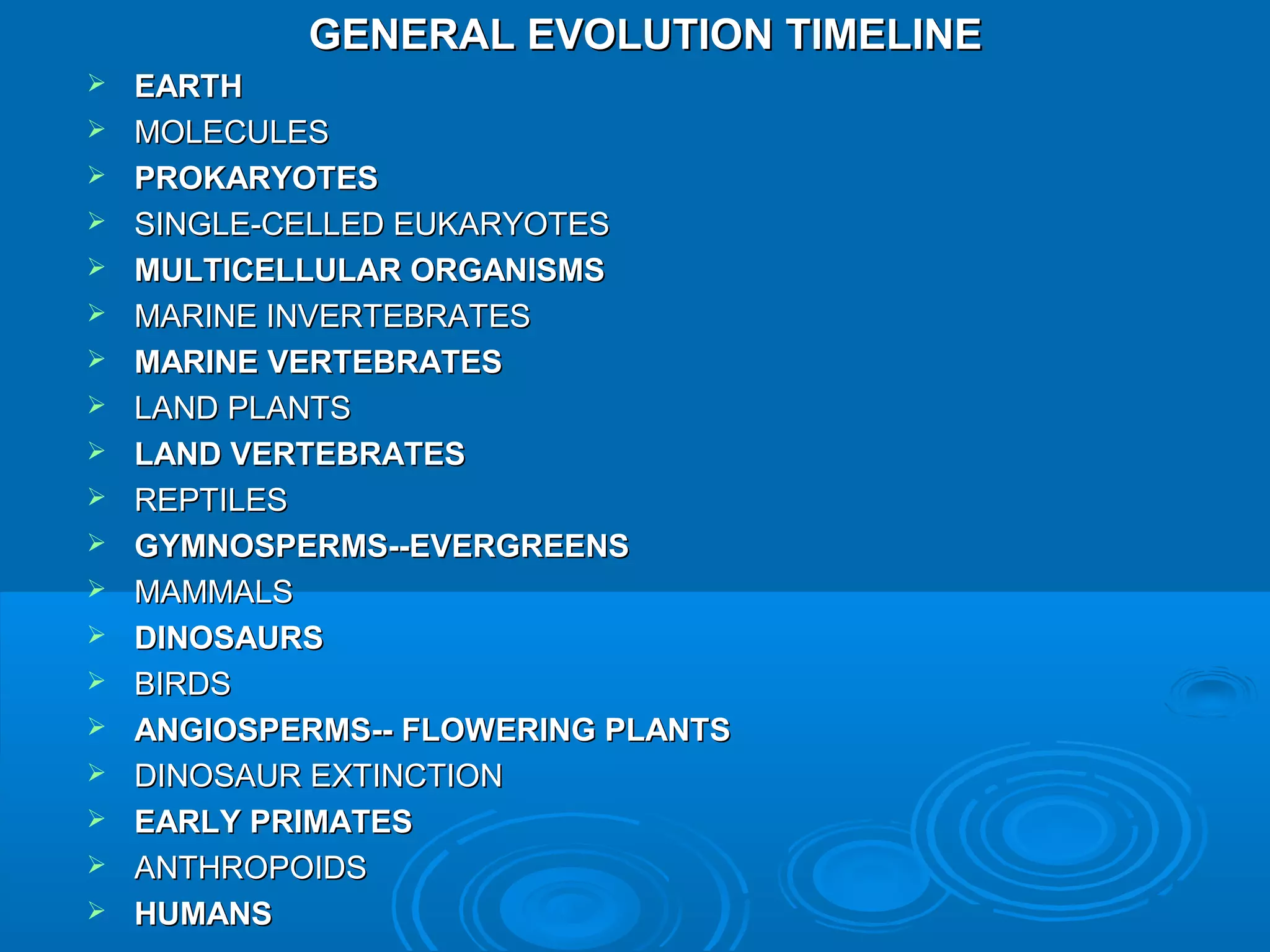
GENERAL EVOLUTION TIMELINE
   EARTH
   MOLECULES
   PROKARYOTES
   SINGLE-CELLED EUKARYOTES
   MULTICELLULAR ORGANISMS
   MARINE INVERTEBRATES
   MARINE VERTEBRATES
   LAND PLANTS
   LAND VERTEBRATES
   REPTILES
   GYMNOSPERMS--EVERGREENS
   MAMMALS
   DINOSAURS
   BIRDS
   ANGIOSPERMS-- FLOWERING PLANTS
   DINOSAUR EXTINCTION
   EARLY PRIMATES
   ANTHROPOIDS
   HUMANS
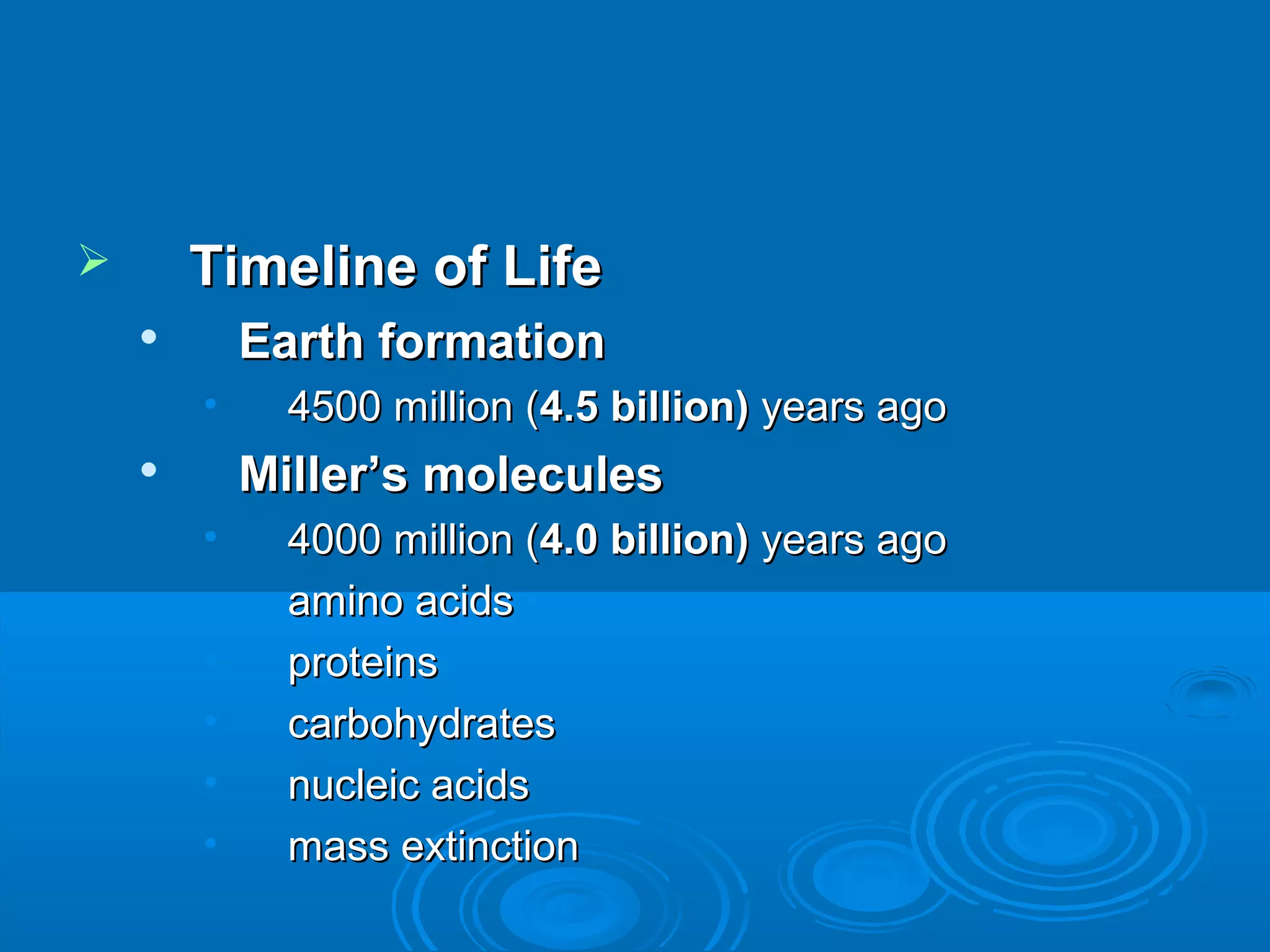
       Timeline of Life
           Earth formation
        •     4500 million (4.5 billion) years ago
           Miller’s molecules
        •     4000 million (4.0 billion) years ago
        •     amino acids
        •     proteins
        •     carbohydrates
        •     nucleic acids
        •     mass extinction
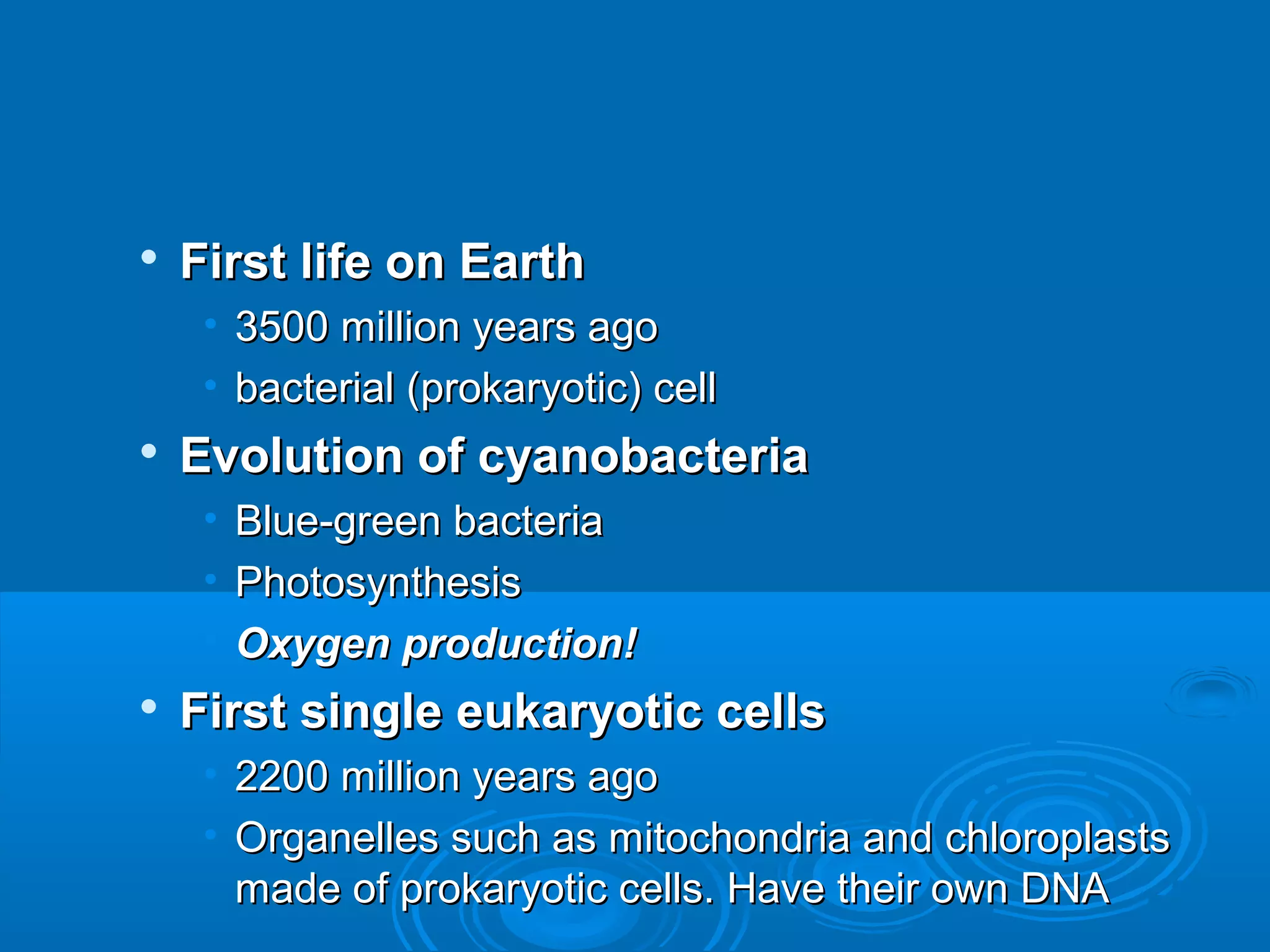
   First life on Earth
     • 3500 million years ago
     • bacterial (prokaryotic) cell
   Evolution of cyanobacteria
     •   Blue-green bacteria
     •   Photosynthesis
     •   Oxygen production!
   First single eukaryotic cells
     • 2200 million years ago
     • Organelles such as mitochondria and chloroplasts
       made of prokaryotic cells. Have their own DNA
   First multicellular organisms
     • 2000 million years ago
     • eukaryotic algae
     • OXYGEN IN ATMOSPHERE to form protective
       ozone layer
        
            O3
        
            absorbs UV light
        
            protects DNA from mutation
        
            allowed life on land
   First invertebrate marine animals
     • 500 million years ago
     • Jellyfish
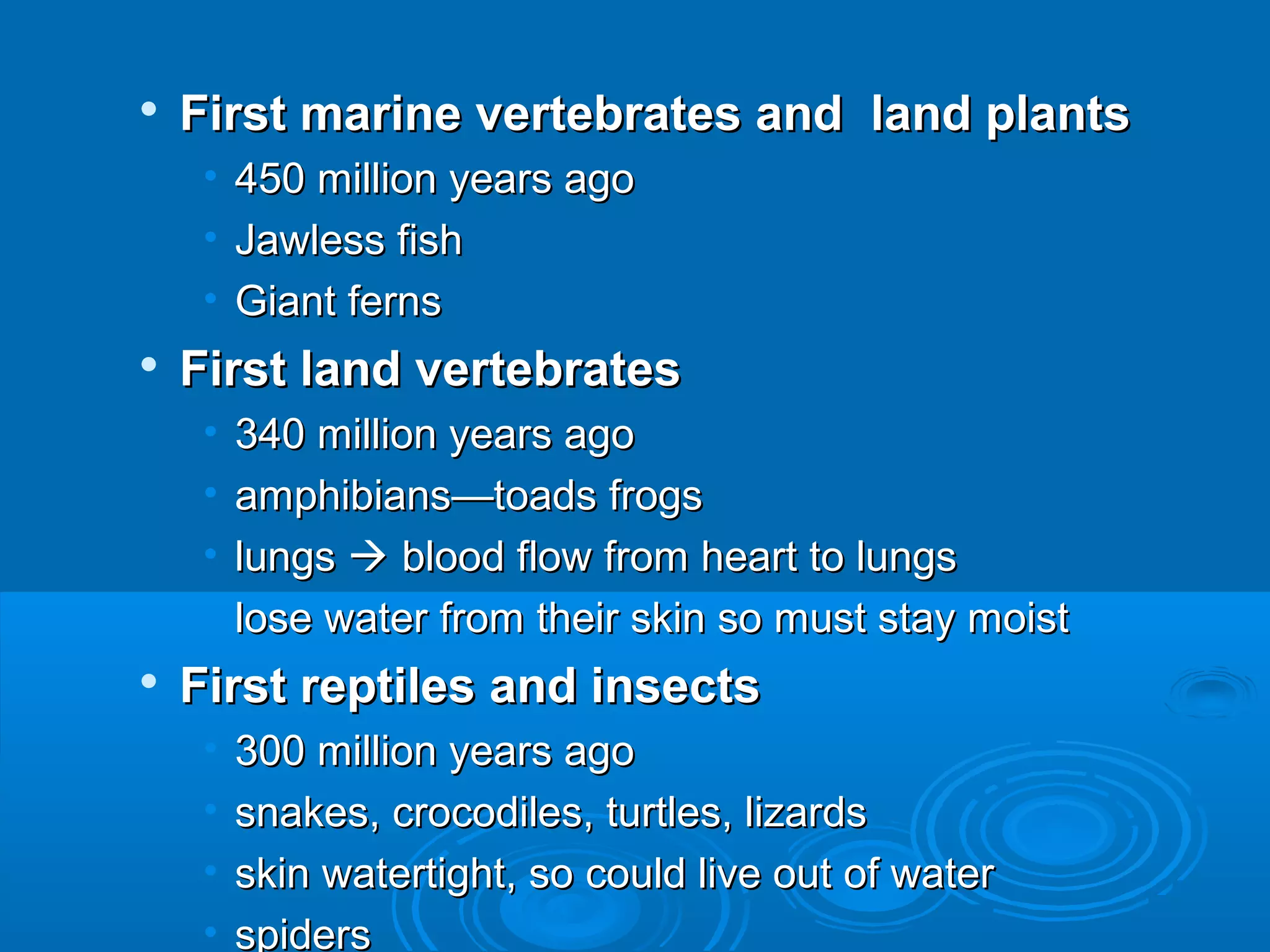
   First marine vertebrates and land plants
     • 450 million years ago
     • Jawless fish
     • Giant ferns
   First land vertebrates
     •   340 million years ago
     •   amphibians—toads frogs
     •   lungs  blood flow from heart to lungs
     •   lose water from their skin so must stay moist
   First reptiles and insects
     •   300 million years ago
     •   snakes, crocodiles, turtles, lizards
     •   skin watertight, so could live out of water
     •   spiders
   First gymnosperms
     • 290 million years ago
     • naked seeds
     • Evergreen trees
   First mammal like reptiles
     •   240 million years ago
     •   4 chambered heart
     •   milk
     •   fur
   First dinosaurs
     • 220 million years ago
     • Dinosaurs dominated in the Jurassic period
   First birds evolve
     •   180 million years ago
     •   reptiles found on land, sea and in air
     •   Archeopteryx
   Flowering plants appear
     • 120 million years ago
     • angiosperms
   Dinosaur extinction
     • 65 million years ago
   Very early primates
    • 64 million years ago
    • Order of mammals that apes, monkeys, and
      humans belong to.
   Anthropoids evolve
    •   35 million years ago
    •   Day active-primates
    •   Animals with five flexible fingers
    •   Monkeys, apes, and humans
   Lucy fossil
     • 4 million years ago
     • earliest hominid—common ancestor to humans
       and apes (gorillas, orangutans, and chimps)
     • walked upright, small skull, teeth intermediate
       between humans and apes
   Homo sapiens
     •   0.1 million years ago (100,000 years ago)
     •   Human species
     •   Direct ancestor is Homo erectus

Ma originsof life

  • 2.
     Earth isestimated to be about 4.6 billion years old.  Atmosphere was very harsh.  Very hot.  Lot’s of water vapor in the atmosphere.  Volcanic activity.  NO BREATHABLE OXYGEN GAS!  Carbon dioxide, ammonia, hydrogen gas, were present  We needed to find earliest evidence of life for clues to what it was
  • 3.
    Origin of Life Scientists had hard time finding ancient evidence of life  45 years ago we found out why.  Most ancient life was Cyanobacteria fossil about microscopic=microfossils 1,000,000,000 (1 billion) years old found in stromatolites  Oldest microfossil3.5 billion years old  1st organisms were bacteria
  • 4.
    How did lifebegin?  Extraterrestrial origin  Creation ( ID )—”divine forces”  From non-living matter “Chemical Evolution”  Main proposal as to how this happened Organic compounds (microspheres) Assemble to create 1st bacterial cell Some bacterial cells became organelles of others to form eukaryotic cells Eukaryotic cells join to form multicellular organisms
  • 5.
    Origin of Life’sChemicals  Miller-Urey  Experiment that recreated atmosphere of early Earth  Hypothesis: Can organic compounds form in early Earth conditions?  Results: amino acids, nucleotides, lipids, carbohydrate pieces out
  • 6.
    Self Assembly  Molecules can spontaneously form into droplets—oil and water  Protein + water = “microspheres”  Solution with lipids will self assemble into a lipid bilayer  Droplets can enclose watery solution different from surroundings  BOTH SMALL SPHERES RESEMBLE CELL MEMBRANES!
  • 7.
    1 genetic material-RNA st  Earth’s early surface was inhospitable due to immense UV radiation  Deep sea vents on the sea floor may have provided sheltered location for life.  RNA can form in labs under conditions similar to areas near deep sea vents  Oldest living prokaryotes found there today…
  • 8.
    Road to ModernOrganisms  1st life was bacteria unicellular prokaryotes  Photosynthesis changed Earth’s atmosphere released O2 - cyanobacteria!!!!  2nd was unicellular eukaryotes Endosymbiotic Theory  Then multicellular organisms
  • 9.
    GENERAL EVOLUTION TIMELINE  EARTH  MOLECULES  PROKARYOTES  SINGLE-CELLED EUKARYOTES  MULTICELLULAR ORGANISMS  MARINE INVERTEBRATES  MARINE VERTEBRATES  LAND PLANTS  LAND VERTEBRATES  REPTILES  GYMNOSPERMS--EVERGREENS  MAMMALS  DINOSAURS  BIRDS  ANGIOSPERMS-- FLOWERING PLANTS  DINOSAUR EXTINCTION  EARLY PRIMATES  ANTHROPOIDS  HUMANS
  • 10.
    Timeline of Life  Earth formation • 4500 million (4.5 billion) years ago  Miller’s molecules • 4000 million (4.0 billion) years ago • amino acids • proteins • carbohydrates • nucleic acids • mass extinction
  • 11.
    First life on Earth • 3500 million years ago • bacterial (prokaryotic) cell  Evolution of cyanobacteria • Blue-green bacteria • Photosynthesis • Oxygen production!  First single eukaryotic cells • 2200 million years ago • Organelles such as mitochondria and chloroplasts made of prokaryotic cells. Have their own DNA
  • 12.
    First multicellular organisms • 2000 million years ago • eukaryotic algae • OXYGEN IN ATMOSPHERE to form protective ozone layer  O3  absorbs UV light  protects DNA from mutation  allowed life on land  First invertebrate marine animals • 500 million years ago • Jellyfish
  • 13.
    First marine vertebrates and land plants • 450 million years ago • Jawless fish • Giant ferns  First land vertebrates • 340 million years ago • amphibians—toads frogs • lungs  blood flow from heart to lungs • lose water from their skin so must stay moist  First reptiles and insects • 300 million years ago • snakes, crocodiles, turtles, lizards • skin watertight, so could live out of water • spiders
  • 14.
    First gymnosperms • 290 million years ago • naked seeds • Evergreen trees  First mammal like reptiles • 240 million years ago • 4 chambered heart • milk • fur
  • 15.
    First dinosaurs • 220 million years ago • Dinosaurs dominated in the Jurassic period  First birds evolve • 180 million years ago • reptiles found on land, sea and in air • Archeopteryx  Flowering plants appear • 120 million years ago • angiosperms  Dinosaur extinction • 65 million years ago
  • 16.
    Very early primates • 64 million years ago • Order of mammals that apes, monkeys, and humans belong to.  Anthropoids evolve • 35 million years ago • Day active-primates • Animals with five flexible fingers • Monkeys, apes, and humans
  • 17.
    Lucy fossil • 4 million years ago • earliest hominid—common ancestor to humans and apes (gorillas, orangutans, and chimps) • walked upright, small skull, teeth intermediate between humans and apes  Homo sapiens • 0.1 million years ago (100,000 years ago) • Human species • Direct ancestor is Homo erectus