The Human Circulatory System
What is Circulation?
• All living things must capture materials from
their environment that enables them to carry on
life processes.
• Single celled organisms “capture” materials
from their environment through diffusion.
• In larger organisms, these “materials” not only
have to be captured, but also circulated to all
cells in the organism.
Human Circulatory Functions
• Transport oxygen gas
(hemoglobin).
• Transport carbon
dioxide gas.
• Transport food
molecules (lipids,
carbos, amino acids).
• Transport hormones.
• Maintain body
temperature.
• Works with immune
system to help fight
disease.
Blood
• In 1628, William Harvey
demonstrated that blood
travels in one direction and in
a “closed circuit.”
• Blood is pumped out of the
heart to all parts of the body to
“drop off” materials and “pick
up” waste products.
• Blood is a “liquid tissue” that
consists of different parts.
Blood Composition
Blood Clot
Blood Vessels
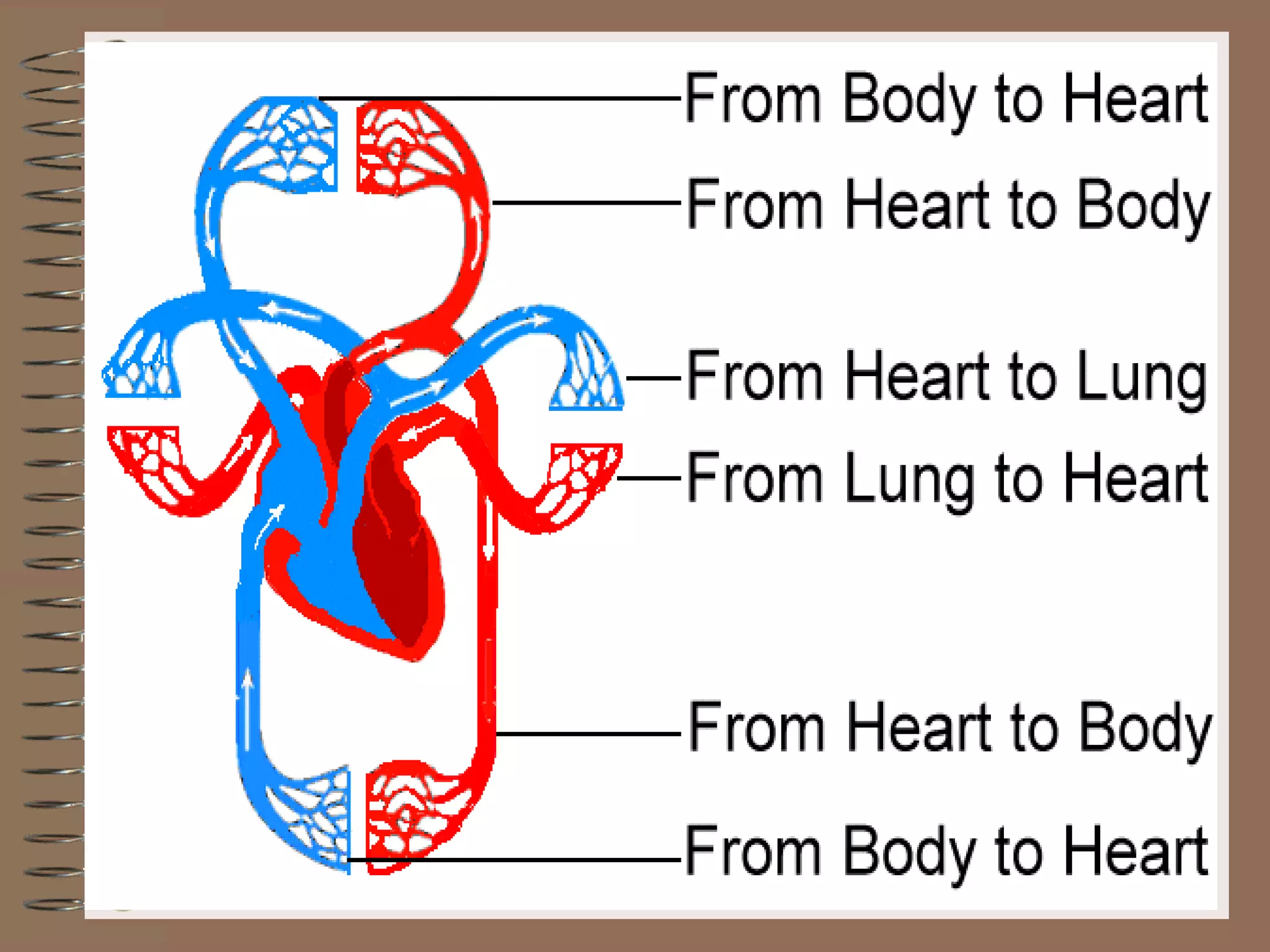
“Double Loop System”
Human Heart
Human Heart Anatomy
Vocabulary Words
• Circulation
• Hormone
• Plasma
• Erythrocyte
• Leukocyte
• Hemoglobin
• Platelets
• Arteries
• Veins
• Capillaries
• Atrium
• Ventricle
• Vena Cava
• Aorta
• Bicuspid valve
• Tricuspid valve
• Pacemaker
• Pulmonary artery
Vocabulary Words cont.
• Pulmonary veins
• Systemic circulation
• Pulmonary circulation
• Jugular vein
• Carotid artery
• Renal vein and artery
• Hepatic vein and artery
• Subclavian artery and
vein
• Plaque
• Diastolic pressure
• Systolic pressure
• CBC
• HDL cholesterol
• LDL cholesterol
• Cardiovascular disease
• Atherosclerosis
• Hypertension
Blood Pressure
• When ventricles contract,
blood is forced into the
arteries.
• Pressure.
• When ventricles relax,
pressure decreases.
• How is blood pressure
measured?
Blood Pressure
• 120/80 mmHg What does this mean?
• Numerator gives pressure in artery when heart
is squeezed (systolic).
• Denominator gives pressure in artery when
heart is relaxed (diastolic).
• With age, arteries become less elastic (less
flexible) and pressure builds up.
Blood Chemistry
• With a blood sample, many things can be
studied about the blood.
• A “CBC” or complete blood count can
count the red and white blood cells,
platelets, and amount of plasma to look for
irregularities.
Cholesterol
• Cholesterol is needed by the body for
making cells and hormones.
• Two types: HDL and LDL
• LDL “bad cholesterol” cannot be removed
from the body. Builds up on artery walls.
• HDL “good cholesterol” can be carried to
the liver and removed from the body.
• A “cardiac risk profile” measures the
amount of cholesterol in the blood.
Diseases of the Heart
• “Cardiovascular disease.” Diseases of the
heart and blood vessels.
• Leading cause of death in the U.S.
• Plaque.
• Atherosclerosis (blocked arteries).
• Results in hypertension (high blood
pressure), strokes, or heart attacks.
Heart Attack
Causes of Cardiovascular
Disease
• Genetics
• Lack of exercise.
• Diet high in saturated
fats.
• Cigarette smoking.
Angioplasty
The human circulatory system2

The human circulatory system2

  • 1.
  • 2.
    What is Circulation? •All living things must capture materials from their environment that enables them to carry on life processes. • Single celled organisms “capture” materials from their environment through diffusion. • In larger organisms, these “materials” not only have to be captured, but also circulated to all cells in the organism.
  • 3.
    Human Circulatory Functions •Transport oxygen gas (hemoglobin). • Transport carbon dioxide gas. • Transport food molecules (lipids, carbos, amino acids). • Transport hormones. • Maintain body temperature. • Works with immune system to help fight disease.
  • 4.
    Blood • In 1628,William Harvey demonstrated that blood travels in one direction and in a “closed circuit.” • Blood is pumped out of the heart to all parts of the body to “drop off” materials and “pick up” waste products. • Blood is a “liquid tissue” that consists of different parts.
  • 5.
  • 6.
  • 7.
  • 8.
  • 10.
  • 11.
  • 12.
    Vocabulary Words • Circulation •Hormone • Plasma • Erythrocyte • Leukocyte • Hemoglobin • Platelets • Arteries • Veins • Capillaries • Atrium • Ventricle • Vena Cava • Aorta • Bicuspid valve • Tricuspid valve • Pacemaker • Pulmonary artery
  • 13.
    Vocabulary Words cont. •Pulmonary veins • Systemic circulation • Pulmonary circulation • Jugular vein • Carotid artery • Renal vein and artery • Hepatic vein and artery • Subclavian artery and vein • Plaque • Diastolic pressure • Systolic pressure • CBC • HDL cholesterol • LDL cholesterol • Cardiovascular disease • Atherosclerosis • Hypertension
  • 14.
    Blood Pressure • Whenventricles contract, blood is forced into the arteries. • Pressure. • When ventricles relax, pressure decreases. • How is blood pressure measured?
  • 15.
    Blood Pressure • 120/80mmHg What does this mean? • Numerator gives pressure in artery when heart is squeezed (systolic). • Denominator gives pressure in artery when heart is relaxed (diastolic). • With age, arteries become less elastic (less flexible) and pressure builds up.
  • 16.
    Blood Chemistry • Witha blood sample, many things can be studied about the blood. • A “CBC” or complete blood count can count the red and white blood cells, platelets, and amount of plasma to look for irregularities.
  • 17.
    Cholesterol • Cholesterol isneeded by the body for making cells and hormones. • Two types: HDL and LDL • LDL “bad cholesterol” cannot be removed from the body. Builds up on artery walls. • HDL “good cholesterol” can be carried to the liver and removed from the body. • A “cardiac risk profile” measures the amount of cholesterol in the blood.
  • 18.
    Diseases of theHeart • “Cardiovascular disease.” Diseases of the heart and blood vessels. • Leading cause of death in the U.S. • Plaque. • Atherosclerosis (blocked arteries). • Results in hypertension (high blood pressure), strokes, or heart attacks.
  • 19.
  • 20.
    Causes of Cardiovascular Disease •Genetics • Lack of exercise. • Diet high in saturated fats. • Cigarette smoking.
  • 21.