Carotid Stenosis
John R. Martinelli, OD, FAAO
MD Candidate, SGUSOM 14’
Newark Beth Israel Medical Center
Department of Surgery
July 23, 2013
HPI
• 77yo F presents to ED via EMS on 7/10/13
• CC: Extreme Difficulty Breathing & Sweating
• Intubation by EMS
• Unknown Systemic Hx
ED Exam
• Vitals: 98.5, 77, 16, 237/94, 100% (Intub)
• Sedation via Versed (Midazolam)
• CXR: Bilateral Pulmonary Edema
• ECG: LVH
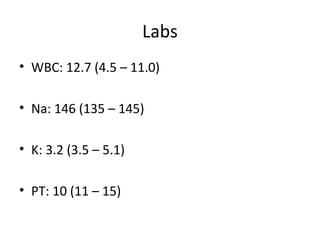
Labs
• WBC: 12.7 (4.5 – 11.0)
• Na: 146 (135 – 145)
• K: 3.2 (3.5 – 5.1)
• PT: 10 (11 – 15)
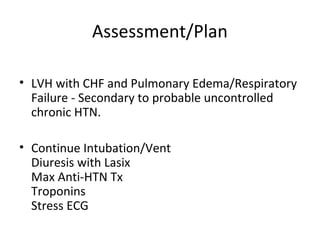
Assessment/Plan
• LVH with CHF and Pulmonary Edema/Respiratory
Failure - Secondary to probable uncontrolled
chronic HTN.
• Continue Intubation/Vent
Diuresis with Lasix
Max Anti-HTN Tx
Troponins
Stress ECG
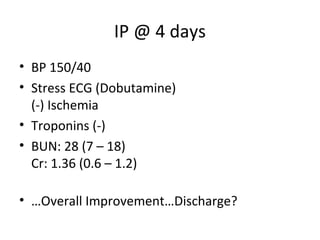
IP @ 4 days
• BP 150/40
• Stress ECG (Dobutamine)
(-) Ischemia
• Troponins (-)
• BUN: 28 (7 – 18)
Cr: 1.36 (0.6 – 1.2)
• …Overall Improvement…Discharge?
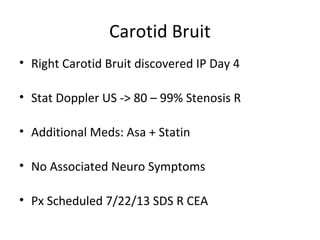
Carotid Bruit
• Right Carotid Bruit discovered IP Day 4
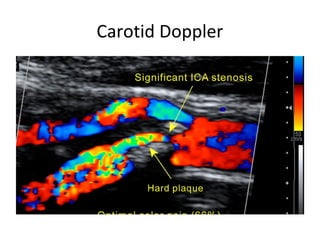
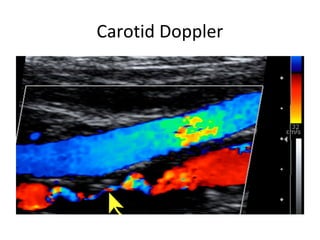
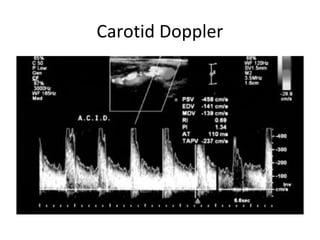
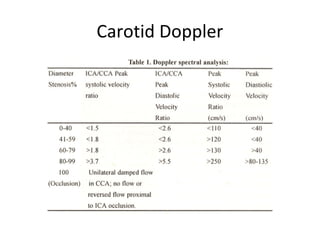
• Stat Doppler US -> 80 – 99% Stenosis R
• Additional Meds: Asa + Statin
• No Associated Neuro Symptoms
• Px Scheduled 7/22/13 SDS R CEA
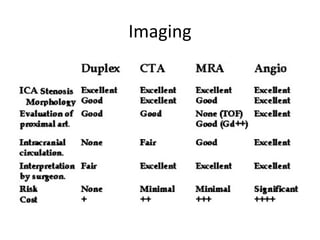
Imaging
Carotid Doppler
Carotid Doppler
Carotid Doppler
Carotid Doppler
Carotid Stenosis Risks
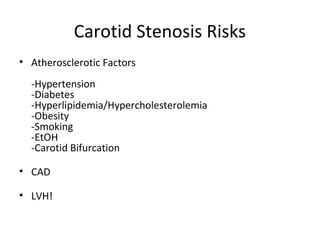
• Atherosclerotic Factors
-Hypertension
-Diabetes
-Hyperlipidemia/Hypercholesterolemia
-Obesity
-Smoking
-EtOH
-Carotid Bifurcation
• CAD
• LVH!
CAD <-> CAS
J Am Coll Cardiol. 2011;57(7):779-783.
doi:10.1016/j.jacc.2010.09.047
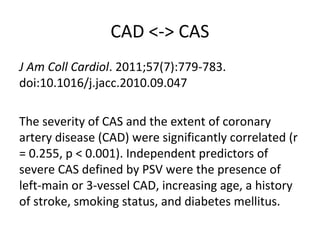
The severity of CAS and the extent of coronary
artery disease (CAD) were significantly correlated (r
= 0.255, p < 0.001). Independent predictors of
severe CAS defined by PSV were the presence of
left-main or 3-vessel CAD, increasing age, a history
of stroke, smoking status, and diabetes mellitus.
LVH -> CAS?
Heart and Vessels
May 2013, Volume 28, Issue 3, pp 277-283
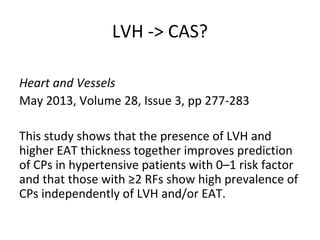
This study shows that the presence of LVH and
higher EAT thickness together improves prediction
of CPs in hypertensive patients with 0–1 risk factor
and that those with ≥2 RFs show high prevalence of
CPs independently of LVH and/or EAT.
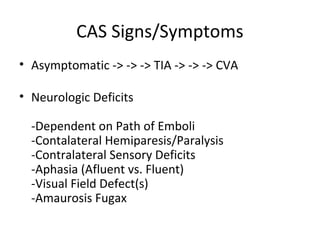
CAS Signs/Symptoms
• Asymptomatic -> -> -> TIA -> -> -> CVA
• Neurologic Deficits
-Dependent on Path of Emboli
-Contalateral Hemiparesis/Paralysis
-Contralateral Sensory Deficits
-Aphasia (Afluent vs. Fluent)
-Visual Field Defect(s)
-Amaurosis Fugax
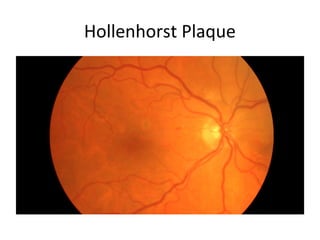
Hollenhorst Plaque
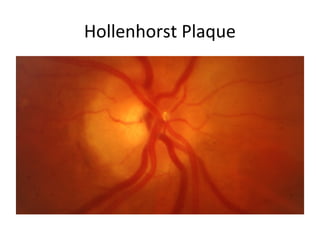
Hollenhorst Plaque
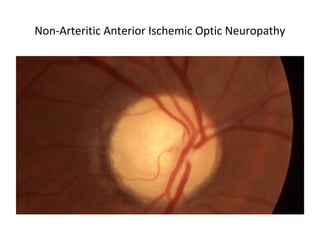
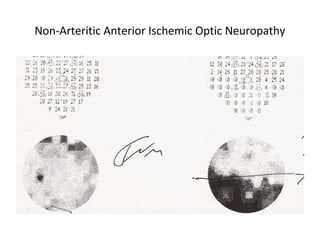
Non-Arteritic Anterior Ischemic Optic Neuropathy
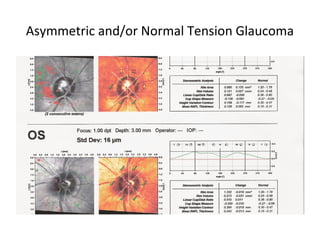
Asymmetric and/or Normal Tension Glaucoma
Carotid Endarterectomy
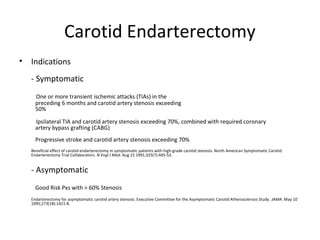
• Indications
- Symptomatic
One or more transient ischemic attacks (TIAs) in the
preceding 6 months and carotid artery stenosis exceeding
50%
Ipsilateral TIA and carotid artery stenosis exceeding 70%, combined with required coronary
artery bypass grafting (CABG)
Progressive stroke and carotid artery stenosis exceeding 70%
Beneficial effect of carotid endarterectomy in symptomatic patients with high-grade carotid stenosis. North American Symptomatic Carotid
Endarterectomy Trial Collaborators. N Engl J Med. Aug 15 1991;325(7):445-53.
- Asymptomatic
Good Risk Pxs with > 60% Stenosis
Endarterectomy for asymptomatic carotid artery stenosis. Executive Committee for the Asymptomatic Carotid Atherosclerosis Study. JAMA. May 10
1995;273(18):1421-8.
Medical Management
May 7 issue of the Annals of Internal Medicine
Tufts Medical Center, Boston, Massachusetts.
"The medical management of patients with asymptomatic
carotid stenosis has improved significantly over the past 20
years, with stroke rates having come down markedly,"
coauthor David E. Thaler, MD, PhD, commented to Medscape
Medical News. "While there may be a role for invasive
approaches such as stenting and endarterectomy in high-risk
patients, it is not clear if these interventions are superior to
medical therapy in the modern era; more work is needed to
better identify high-risk patients and to test the interventional
approaches in this group."
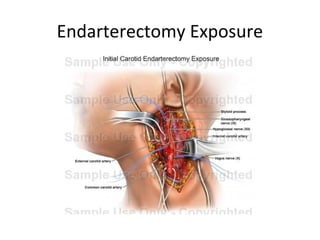
Endarterectomy Exposure
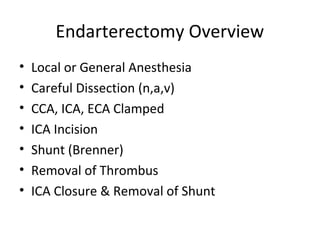
Endarterectomy Overview
• Local or General Anesthesia
• Careful Dissection (n,a,v)
• CCA, ICA, ECA Clamped
• ICA Incision
• Shunt (Brenner)
• Removal of Thrombus
• ICA Closure & Removal of Shunt
CEA 7/22/13
• Patient tolerated procedure well without
complication.
• PACU monitor Q15min x 4hrs
• IP hourly monitor
• ASA QD
• BP
Other Considerations
• CEA vs Stent?
• Bilateral Surgery?
• Contralateral Stenosis?
• Emergent CEA?

Carotid Stenosis

  • 1.
    Carotid Stenosis John R.Martinelli, OD, FAAO MD Candidate, SGUSOM 14’ Newark Beth Israel Medical Center Department of Surgery July 23, 2013
  • 2.
    HPI • 77yo Fpresents to ED via EMS on 7/10/13 • CC: Extreme Difficulty Breathing & Sweating • Intubation by EMS • Unknown Systemic Hx
  • 3.
    ED Exam • Vitals:98.5, 77, 16, 237/94, 100% (Intub) • Sedation via Versed (Midazolam) • CXR: Bilateral Pulmonary Edema • ECG: LVH
  • 4.
    Labs • WBC: 12.7(4.5 – 11.0) • Na: 146 (135 – 145) • K: 3.2 (3.5 – 5.1) • PT: 10 (11 – 15)
  • 5.
    Assessment/Plan • LVH withCHF and Pulmonary Edema/Respiratory Failure - Secondary to probable uncontrolled chronic HTN. • Continue Intubation/Vent Diuresis with Lasix Max Anti-HTN Tx Troponins Stress ECG
  • 6.
    IP @ 4days • BP 150/40 • Stress ECG (Dobutamine) (-) Ischemia • Troponins (-) • BUN: 28 (7 – 18) Cr: 1.36 (0.6 – 1.2) • …Overall Improvement…Discharge?
  • 7.
    Carotid Bruit • RightCarotid Bruit discovered IP Day 4 • Stat Doppler US -> 80 – 99% Stenosis R • Additional Meds: Asa + Statin • No Associated Neuro Symptoms • Px Scheduled 7/22/13 SDS R CEA
  • 8.
  • 9.
  • 10.
  • 11.
  • 12.
  • 13.
    Carotid Stenosis Risks •Atherosclerotic Factors -Hypertension -Diabetes -Hyperlipidemia/Hypercholesterolemia -Obesity -Smoking -EtOH -Carotid Bifurcation • CAD • LVH!
  • 14.
    CAD <-> CAS JAm Coll Cardiol. 2011;57(7):779-783. doi:10.1016/j.jacc.2010.09.047 The severity of CAS and the extent of coronary artery disease (CAD) were significantly correlated (r = 0.255, p < 0.001). Independent predictors of severe CAS defined by PSV were the presence of left-main or 3-vessel CAD, increasing age, a history of stroke, smoking status, and diabetes mellitus.
  • 15.
    LVH -> CAS? Heartand Vessels May 2013, Volume 28, Issue 3, pp 277-283 This study shows that the presence of LVH and higher EAT thickness together improves prediction of CPs in hypertensive patients with 0–1 risk factor and that those with ≥2 RFs show high prevalence of CPs independently of LVH and/or EAT.
  • 16.
    CAS Signs/Symptoms • Asymptomatic-> -> -> TIA -> -> -> CVA • Neurologic Deficits -Dependent on Path of Emboli -Contalateral Hemiparesis/Paralysis -Contralateral Sensory Deficits -Aphasia (Afluent vs. Fluent) -Visual Field Defect(s) -Amaurosis Fugax
  • 17.
  • 18.
  • 19.
  • 20.
  • 21.
    Asymmetric and/or NormalTension Glaucoma
  • 22.
    Carotid Endarterectomy • Indications -Symptomatic One or more transient ischemic attacks (TIAs) in the preceding 6 months and carotid artery stenosis exceeding 50% Ipsilateral TIA and carotid artery stenosis exceeding 70%, combined with required coronary artery bypass grafting (CABG) Progressive stroke and carotid artery stenosis exceeding 70% Beneficial effect of carotid endarterectomy in symptomatic patients with high-grade carotid stenosis. North American Symptomatic Carotid Endarterectomy Trial Collaborators. N Engl J Med. Aug 15 1991;325(7):445-53. - Asymptomatic Good Risk Pxs with > 60% Stenosis Endarterectomy for asymptomatic carotid artery stenosis. Executive Committee for the Asymptomatic Carotid Atherosclerosis Study. JAMA. May 10 1995;273(18):1421-8.
  • 23.
    Medical Management May 7issue of the Annals of Internal Medicine Tufts Medical Center, Boston, Massachusetts. "The medical management of patients with asymptomatic carotid stenosis has improved significantly over the past 20 years, with stroke rates having come down markedly," coauthor David E. Thaler, MD, PhD, commented to Medscape Medical News. "While there may be a role for invasive approaches such as stenting and endarterectomy in high-risk patients, it is not clear if these interventions are superior to medical therapy in the modern era; more work is needed to better identify high-risk patients and to test the interventional approaches in this group."
  • 24.
  • 25.
    Endarterectomy Overview • Localor General Anesthesia • Careful Dissection (n,a,v) • CCA, ICA, ECA Clamped • ICA Incision • Shunt (Brenner) • Removal of Thrombus • ICA Closure & Removal of Shunt
  • 26.
    CEA 7/22/13 • Patienttolerated procedure well without complication. • PACU monitor Q15min x 4hrs • IP hourly monitor • ASA QD • BP
  • 27.
    Other Considerations • CEAvs Stent? • Bilateral Surgery? • Contralateral Stenosis? • Emergent CEA?