Failed Back Surgery
Syndrome – Part 1
Diagnosis and Evaluation
Richard K. Osenbach, M.D.
Division of Neurosurgery
Duke University Medical Center Brought to you by
Chronic Pain – Scope of the Problem
9% – 28% of the population suffers from moderate to severe
chronic non-cancer pain
American Pain Society (2002); Chronic pain in
America: roadblocks to relief
86 million Americans suffer from chronic pain
66 million Americans partially/totally disabled
8 million disabled by LBP
65,000 cases of permanent disability diagnosed annually
100 billion dollars in annual economic losses
40 million physician visits per year
515 million lost workdays annually
Business Week (1999)
Brought to you by
Pain Types
NOCICEPTIVE PAIN
results from ongoing activation of mechanical,
thermal, or chemical nociceptors
typically opioid-responsive
eg. pain related to mechanical instability
NEUROPATHIC PAIN
spontaneous or evoked pain that occurs in the
absence of ongoing tissue damage
typically opioid-resistant***
eg. pain secondary to nerve root injury Brought to you by
Neuropathic Pain
Pain in absence of ongoing tissue damage
Pain in an area of sensory loss
Paroxysmal or spontaneous pain
Characteristics of pain: burning, pulsing, stabbing
Allodynia, hyperalgesia, or dysesthesias
Delay in onset following injury
Presence of major neurological deficit
Poor response to opioids
Brought to you by
Biopsychosocial Model of Pain
Pain Behavior
Suffering
Pain
Nociception
Brought to you by
Failed Back Surgery Syndrome
FBSS is a term applied to a heterogeneous group of
individuals who share only one characteristic - continued
back and/or extremity pain following one or more spinal
operations
15% of patients will experience persistent or recurrent
symptoms
Spectrum of abnormalities ranging from purely organic
to purely psychological, but in most cases consists of a
physiological abnormality complicated by psychological
factors
FBSS is perhaps the prototypical example of chronic
pain as a biopsychosocial disorder
Brought to you by
Failed Back Patient Profile
Pain and suffering often disproportionate to any
identifiable disease process
Depression
Physical deconditioning
Inappropriate use of physician-prescribed medications
Superstitious beliefs about bodily functions
Failure to work or perform expected physical and
cognitive activities
No active medical problems that can be remediated with
the expectation of relief of pain
Brought to you by
The “Ds” of FBSS
Disuse
Deconditioning
Drug misuse
Dependence
Depression
Disability Brought to you by
Post-operative Causes of Back Pain
Deconditioning Trauma
Muscle spasm Wrong level fused
Myofascial pain Insufficient levels fused
Spinal instability Pseudomeningocele
Diskogenic pain Graft donor site pain
Facet arthropathy Psychosocial factors
Infection
Pseudarthrosis
Loose hardware
Arachnoiditis
Brought to you by
Post-operative Causes of Leg Pain
Retained disk fragment Arachnoiditis
Recurrent HNP Synovial cyst
Far lateral disk Root sleeve meningocele
Lateral recess stenosis Loose hardware
Inadequate decompression Facet fracture
Wrong level decompressed Psychosocial factors
Nerve root injury
Retained foreign body
Epidural fibrosis Brought to you by
Goals of Chronic Pain Management
in Patients with FBSS
Functional improvement
Functional improvement!!!
Improvement in physical activities and exercise tolerance
Reduction in narcotic use
Reduction in healthcare consumption
Return to work
Pain reduction
Brought to you by
Principles of Chronic Pain Management
1. “Single most important ingredient is the existence
of health care providers who are willing to work
together as a team.”
2. Providers must take an interest in chronic disease
and not be overly focused on acute illness as is
fostered by the biomedical model
3. Commitment of the provider to the patient
Brought to you by
Principles of Chronic Pain Management
4. Patient must be motivated to change their lives and must be
willing to do the therapeutic work
5. Treatment represents the beginning of a journey to reclaim
one’s life from the pain problem; long-term support is
required to maintain success
6. Patient selection is a key to success. Attempting to treat
the untreatable results in demoralization of the treatment
team
Brought to you by
Multidisciplinary Pain Management
Collaborative efforts of a group of providers
Physicians
Nurses
Psychologists
Physical Therapists
Vocational counselors
Social workers
Support staff
Team work is essential
Extensive interactions between team members
Adequate space Brought to you by
Multidisciplinary Pain Programs
No single accepted format
Generic concept and plan common to all
programs of this type
Based on biopsychosocial model of pain
Complaint of pain generated by a combination of
events in any particular patient
Simultaneously address all issues
Present patient with a single treatment program
that encompasses all the TREATABLE issues
Brought to you by
Common Features of
Multidisciplinary Pain Management
Physical therapy and rehabilitation
Medication management
Patient education about pain and body function
Psychological treatments
Coping skills training
Vocational assessment
Therapies targeted toward improving the likelihood of
return to work
Surgical interventions for selected patients Brought to you by
Multidisciplinary Pain Clinic Personnel
Physicians
Neurosurgeon
Orthopedic surgeon
Anesthesiologist
Neurologist
Physiatrist
Internal medicine
Psychiatrist
Addictionologist
Nurses
Psychologists
Physical Therapist
Occupational Therapist
Vocational counselor
Social worker
Dietician
Recreational staff
Administrative support staff
Brought to you by
Failed Back Surgery Syndrome
Surgical Complications
Disk space infection
Iatrogenic instability
Nerve root injury
Retained disk fragment
Recurrent disk herniation
Inadequate decompression
Complications of fusion and instrumentation
Adhesive arachnoiditis
Brought to you by
Failed Back Surgery Syndrome
Physician Decision Making
Poor patient selection
Poor patient selection Brought to you by
The most common cause of failed back syndrome is
poor judgment on the part of the physician.
Surgery prescribed as a last resort, with a hope
and a prayer that it might alleviate the pain.
Brought to you by
When in doubt, it’s a good idea to take a
history and examine the patient
Brought to you by
Evaluation of the Patient with FBSS
Detailed pain history including prior treatments and
MOST IMPORTANTLY the outcome of each
Obtain appropriate imaging studies (including those
on which surgical decisions were based)
Attempt to establish the underlying cause of the
pain; however……….
Brought to you by
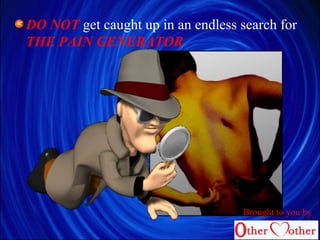
DO NOT get caught up in an endless search for
THE PAIN GENERATOR
Brought to you by
Romancing the Pain Generator
Brought to you by
Pain History
Where is it located?
Does the pain radiate?
When did it start and under what circumstances?
What is the quality of the pain?
What is the severity of the pain (VAS scores)
What factors make it worse?
What factors make it better?
Are there associated symptoms?
Brought to you by
Pain History
Effect of pain on sleep
Medications taken for pain
Health professionals consulted
Patient’s beliefs concerning the cause of pain
Expectations of outcome of treatment
Family expectations
Pain reduction required for “reasonable activities
Brought to you by
Treatment History
What therapies have been tried and what were the
outcomes?
Physical therapy
Injections
 Epidural steroids, nerve root blocks, facet blocks,
etc
Medication history
What drugs?
Dose?
How long?
Effect?
Brought to you by
Physical Examination
Rarely diagnostic
Principally serves to establish the current level of
physical impairment
Lack of physical abnormality should not be used to deny
a patient evaluation and therapy if indicated
Brought to you by
Examination of the Lumbar Spine
Inspection, palpation, and evaluation of ROM
Abnormalities of muscle tone
Local tenderness
Reduced ROM
Neurological exam
Muscle strength
Sensation
Reflexes
Nerve root tension signs
Sciatic and femoral stretch test
Brought to you by
Imaging Studies
Static plain radiographs
Spinal alignment
Flexion/extension views
Instability
Computed tomography (CT)
Bony surgical defects
Hardware placement
Fusion mass
Magnetic resonance imaging (MRI)
Soft tissue and neural structures
Radionuclide imaging
Technetium99 bone scan
Indium111 WBC scan
Brought to you by
Surgically-Correctable Pathology
Brought to you by
Surgically-Correctable Pathology
Brought to you by
Electrophysiological Studies
EMG is likely of greater utility in FBSS than
in primary low back pain and sciatica
Greatest use is for establishing the presence
of a peripheral neuropathy
May be helpful for defining a feigned
neurological deficit
Rarely using in decision-making regarding
treatment
Brought to you by
Diagnostic Blockade
Rationale is straightforward
In practice, it is much more
complicated
Specificity may be low
Single blocks (positive or negative)
have a high error rate
Placebo controls provide the most
accurate information
Multiple blocks using different
agents
BLOCKS ARE ADJUNCTS AND SHOULD NEVER BE
SUBSTITUTED FOR SOUND CLINICAL JUDGEMENT !
Brought to you by
Sensitivity and Specificity of
Diagnostic Blocks
Differences in pain processing
Technical aspects
Incorrect needle placement
Large volumes of anesthetic
Effects local anesthetics
Psychological issues
Environmental cues, expectations, anxiety, etc.
Placebo response
Brought to you by
Facet Block
Blockade of the innervation of the facet joint will relieve
pain in some patients with facet disease
Brought to you by
Facet Block
Rarely useful in patient with
FBSS
Transitional facet disease
above a fused level
Anatomy obliterated and
accurate block not possible
Blockade of pseudarthrosis may
sometimes be useful Brought to you by
Selective Nerve Root Block
Must be done accurately to provide any useful
information
One root at a time
Small volume of local anesthetic without
steroids
Confirm the presence of an adequate block
Confirm findings on repetitive blocks
Brought to you by
Therapeutic Heat
Increases muscle temperature, decrease spindle sensitivity,
increases blood flow
Pain relief, increase in tissue extensibility, reduction of muscle
spasm
Superficial heat
Greatest effect 0.5cm from skin
Deep heat
Ultrasound diathermy
 Heat up to 5cm deep to skin
 Treatment of deep soft tissues
Hydrotherapy
Buoyancy minimizes stress to joints Brought to you by
Cold Therapy
Affects muscle spindle and may modulate
neurotransmitters
Provides longer pain relief than heat
Ice and gel packs, vapocoolant sprays, cold baths
Particularly useful for trigger points,
Treatment of choice for acute injuries
Brought to you by
TENS
Electrical energy transmitted from skin surface
Rationale based on “Gate Theory” of pain
Most effective at high-frequency, low-intensity
“Acupuncture TENS” – high-intensity, low-frequency
Questionable benefit for chronic back pain
Brought to you by
Therapeutic Exercise and Massage
Essential for restoration of function
“Hurt” vs. “Harm”
Stretching exercises
Strengthening exercises
Aerobic exercises
Therapeutic massage
Brought to you by
Brought to you by
Anticonvulsant Agents (AEDS)
Similarities in pathophysiology of neuropathic pain and
epilepsy
All AEDS ultimately act on ion channels
Efficacy of AEDS most clearly established for neuropathic
conditions characterized by episodic lancinating pain
Most clinical studies have focused on DPN and PHN
Use of AEDS in patients with FBSS is nearly entirely empiric Brought to you by
Antidepressant Analgesics
Relieves all components of neuropathic pain
Clear separation of analgesic and antidepressant effects
Although other agents (eg anti-epileptics)) may be
regarded as 1st
line therapy over antidepressants, there is
no good evidence for this practice
More selective agents are either less effective or not useful
(serotonergic, noradrenergic)
Brought to you by
Guidelines for Use of
Antidepressants in Pain Management
Eliminate all other ineffective analgesics
Start low and titrate slowly to effect or toxicity
Nortriptyline or amitriptyline for initial treatment
Move to agents with more noradrenergic effects
Consider trazodone in patients with poor sleep pattern
Try more selective agents if mixed agents ineffective
Do NOT prescribe monoamine oxidase inhibitors
Tolerance to anti-muscarinic side effects usually takes
weeks to develop
Withdraw therapy gradually to avoid withdrawal syndrome
Brought to you by
Antidepressants for LBP-RCT
Author Agent No. Effect Comments
Jenkins et al., 1976 Imipramine 50mg
4 weeks
44/59 No Parallel design
Alcott et al., 1982 Imipramine 150mg
8 weeks
41/50 No Parellel design; poss
role for pain
Godkin et al., 1990 Trazadone 200mg 42 No Parellel design
Serotonergic agent
Usha et al., 1996 Fluoxetine 20mg
Elavil 25mg
Placebo
4 weeks
59 Yes Parallel design
Fluoxetine more
effective with fewer SE
Atkinson et al., 1998 Nortriptyline 100mg
Inert placebo
57/78 Yes Parallel design
Non-depressed pts
Dickens et al., 2000 Paroxetine 20mg 61/92 No Parellel design
Brought to you by
Opioid Therapy - RCT
Pain Type Study Control Results
Nociceptive Arner & Meyerson, 1988 Placebo Pos
Kjaersgaard-Anderson, 1990 Paracetamol Pos***
Neuropathic Arner & Meyerson, 1988 Placebo Neg
Dellemijn & Vanneste, 1997 Placebo/Valium Pos
Kupers, et al., 1991 Placebo Pos
Rowbotham et al., 1991 Placebo Pos
Idiopathic Arner & Meyerson, 1988 Placebo Neg
Kupers, et al., 1991 Placebo Neg
Moulin et al., 1996 Benztropine Pos***
Unspecified Arkinstall et al., 1995 Placebo Pos***
Mays et al., 1987 Placebo/Bupiv Pos
Brought to you by
Opioid Therapy – Prospective
Uncontrolled Studies
Pain Type Reference Results
Nociceptive McQuay et al., 1992 Pos
Neuropathic Fenollosa et al., 1992 Pos
McQuay et al., 1992 Mixed
Urban et al., 1986 Pos
Idiopathic McQuay et al., 1992 Neg
Mixed/Unspecified Auld et al. 1985 Pos
Gilmann & Lichtigfeld, 1981 Pos
Penn and Paice, 1987 Pos
Plummer et al., 1991 Mixed
Brought to you by
Tramadol for LBP
Brought to you by
NSAIDS for Chronic LBP
One systematic reviews of 2 studies within
framework of Cochrane Collaboration
NSAID vs. Placebo
Better short-term pain relief
NSAID vs. Acetominophen (N=4)
No difference in short-term pain relief
Better overall improvement
Brought to you by
Corticosteroids
Useful in the short term for treatment of radicular pain
Limited role in the long-term treatment of FBSS
Epidural or transforaminal steroids for selected patients
Cochrane Review (Nelemans, et al., 2002)
Most trials included patients with radicular pain
No significant difference in pain relief after 6 weeks or
6 months between ESI and placebo
Brought to you by
Topical Treatments
Aspirin preparations
Eg. aspirin in chloroform
Local anesthetics
Topical 5% lidocaine patch
EMLA
Eutectic mixture of local anesthetics
Capsaicin Brought to you by
Lidocaine Patch for LBP
Brought to you by
Cannabinoids
Strong laboratory data supporting an analgesic effect of cannabinoids
Efficacy of cannabinoids in human has been modest at best
Effectiveness hampered by unfavorable therapeutic index
Campbell (2001) – systematic review of 9 clinical trials of
cannabinoids
Cancer pain (5), Chronic non-cancer pain (2), acute pain
(2)
Analgesic effect estimated equivalent to 50-120mg
codeine
Adverse effects reported in all studies
RCT have shown modest benefits when compared with placebo
Increased incidence of psychiatric illness and cognitive dysfunction
Brought to you by
Botulinum Toxin for Chronic LBP
World Congress
Brought to you by
Multidisciplinary Treatment Outcomes
Decrease in pain self-rating by about 30%
Opioid consumption reduced by about 60%
Pain-related physician visits decrease by 60%
Physical activities increase by 300%
Gainful employment occurs in 60%
Brought to you by
Comprehensive Pain Management
Pain Reduction
0
10
20
30
40
50
60
70
80
90
100
Discharge 3 Month 1 Year
Rosomoff Comprehensive Pain Center, 1999-2005
Brought to you by
Comprehensive Pain Management
Functional Improvement
0
10
20
30
40
50
60
70
80
90
100
Discharge 3 Months 1 Year
Rosomoff Comprehensive Pain Center, 1999-2005
Brought to you by
0
10
20
30
40
50
60
70
80
90
100
Discharge 3 Months 1 Year
Comprehensive Pain Management
QOL Improvement
Rosomoff Comprehensive Pain Center, 1999-2005
Brought to you by
Comprehensive Pain Management
Employed/Work Ready
0
10
20
30
40
50
60
70
80
90
100
Discharge 3 Months 1 Year
Rosomoff Comprehensive Pain Center, 1999-2005
Brought to you by
Comprehensive Pain Management
Opioid Usage
0
10
20
30
40
50
60
70
80
90
100
Discharge 3 Months 1 Year
Rosomoff Comprehensive Pain Center, 1999-2005
Brought to you by
Comprehensive Pain Management
Patient Satisfaction
0
10
20
30
40
50
60
70
80
90
100
Discharge 3 Months 1 Year
Rosomoff Comprehensive Pain Center, 1999-2005
Brought to you by
Treatment Outcomes
Flor et. al., Pain 1992
Metanalysis of 65 studies with 3,089 patients
Average pain reduction 20% (0-60%)
Return to work 67%
Standard treatments (24%)
Dramatic reductions in health care consumption and
additional surgery
Steig et al (Pain 1986) - $280,000 savings in health care
expenses up to retirement
Okifuji et al (1998) – 280 million saving per year if
patients receiving standard medical/surgical treatments
were treated in a multidisciplinary clinic Brought to you by
So What’s The Problem?
It is difficult to obtain funding
and reimbursement for this
type of healthcare , despite the
fact that more outcome data
are available than for any other
type of chronic pain treatment
Brought to you by
“The only antidote
for mental suffering
is physical pain”
“That’s the most
ridiculous thing I’ve ever
heard.”
Brought to you by
This platform has been started by Parveen
Kumar Chadha with the vision that nobody
should suffer the way he has suffered because
of lack and improper healthcare facilities in
India. We need lots of funds manpower etc.
to make this vision a reality please contact us.
Join us as a member for a noble cause.
Brought to you by
Our views have increased the
mark of the 10,000
 Thank you viewers
 Looking forward for franchise,
collaboration, partners.
Brought to you by
-011 25464531,-011 41425180,-011
66217387
+-91 9818308353,+-91
9818569476
othermotherindia@gmail.com
. - .www other mother in
: . . - - - ?https //www facebook com/pages/Other Mother Nursing Crusade/224235031114989 ref=hl
: . . ? _ _ _http //www linkedin com/profile/view id=326103341&trk=nav responsive tab profile
: .https //twitter com/othermotherindi
: . . -https //cparveen wix com/other mother
A WORLDWIDE MISSITION
Contact
Us:-
JOIN US
Saxbee Consultants Details :-www.parveenchadha.com
Brought to you by

Diagnosis and evaluation

  • 1.
    Failed Back Surgery Syndrome– Part 1 Diagnosis and Evaluation Richard K. Osenbach, M.D. Division of Neurosurgery Duke University Medical Center Brought to you by
  • 2.
    Chronic Pain –Scope of the Problem 9% – 28% of the population suffers from moderate to severe chronic non-cancer pain American Pain Society (2002); Chronic pain in America: roadblocks to relief 86 million Americans suffer from chronic pain 66 million Americans partially/totally disabled 8 million disabled by LBP 65,000 cases of permanent disability diagnosed annually 100 billion dollars in annual economic losses 40 million physician visits per year 515 million lost workdays annually Business Week (1999) Brought to you by
  • 3.
    Pain Types NOCICEPTIVE PAIN resultsfrom ongoing activation of mechanical, thermal, or chemical nociceptors typically opioid-responsive eg. pain related to mechanical instability NEUROPATHIC PAIN spontaneous or evoked pain that occurs in the absence of ongoing tissue damage typically opioid-resistant*** eg. pain secondary to nerve root injury Brought to you by
  • 4.
    Neuropathic Pain Pain inabsence of ongoing tissue damage Pain in an area of sensory loss Paroxysmal or spontaneous pain Characteristics of pain: burning, pulsing, stabbing Allodynia, hyperalgesia, or dysesthesias Delay in onset following injury Presence of major neurological deficit Poor response to opioids Brought to you by
  • 5.
    Biopsychosocial Model ofPain Pain Behavior Suffering Pain Nociception Brought to you by
  • 6.
    Failed Back SurgerySyndrome FBSS is a term applied to a heterogeneous group of individuals who share only one characteristic - continued back and/or extremity pain following one or more spinal operations 15% of patients will experience persistent or recurrent symptoms Spectrum of abnormalities ranging from purely organic to purely psychological, but in most cases consists of a physiological abnormality complicated by psychological factors FBSS is perhaps the prototypical example of chronic pain as a biopsychosocial disorder Brought to you by
  • 7.
    Failed Back PatientProfile Pain and suffering often disproportionate to any identifiable disease process Depression Physical deconditioning Inappropriate use of physician-prescribed medications Superstitious beliefs about bodily functions Failure to work or perform expected physical and cognitive activities No active medical problems that can be remediated with the expectation of relief of pain Brought to you by
  • 8.
    The “Ds” ofFBSS Disuse Deconditioning Drug misuse Dependence Depression Disability Brought to you by
  • 9.
    Post-operative Causes ofBack Pain Deconditioning Trauma Muscle spasm Wrong level fused Myofascial pain Insufficient levels fused Spinal instability Pseudomeningocele Diskogenic pain Graft donor site pain Facet arthropathy Psychosocial factors Infection Pseudarthrosis Loose hardware Arachnoiditis Brought to you by
  • 10.
    Post-operative Causes ofLeg Pain Retained disk fragment Arachnoiditis Recurrent HNP Synovial cyst Far lateral disk Root sleeve meningocele Lateral recess stenosis Loose hardware Inadequate decompression Facet fracture Wrong level decompressed Psychosocial factors Nerve root injury Retained foreign body Epidural fibrosis Brought to you by
  • 11.
    Goals of ChronicPain Management in Patients with FBSS Functional improvement Functional improvement Functional improvement!!! Improvement in physical activities and exercise tolerance Reduction in narcotic use Reduction in healthcare consumption Return to work Pain reduction Brought to you by
  • 12.
    Principles of ChronicPain Management 1. “Single most important ingredient is the existence of health care providers who are willing to work together as a team.” 2. Providers must take an interest in chronic disease and not be overly focused on acute illness as is fostered by the biomedical model 3. Commitment of the provider to the patient Brought to you by
  • 13.
    Principles of ChronicPain Management 4. Patient must be motivated to change their lives and must be willing to do the therapeutic work 5. Treatment represents the beginning of a journey to reclaim one’s life from the pain problem; long-term support is required to maintain success 6. Patient selection is a key to success. Attempting to treat the untreatable results in demoralization of the treatment team Brought to you by
  • 14.
    Multidisciplinary Pain Management Collaborativeefforts of a group of providers Physicians Nurses Psychologists Physical Therapists Vocational counselors Social workers Support staff Team work is essential Extensive interactions between team members Adequate space Brought to you by
  • 15.
    Multidisciplinary Pain Programs Nosingle accepted format Generic concept and plan common to all programs of this type Based on biopsychosocial model of pain Complaint of pain generated by a combination of events in any particular patient Simultaneously address all issues Present patient with a single treatment program that encompasses all the TREATABLE issues Brought to you by
  • 16.
    Common Features of MultidisciplinaryPain Management Physical therapy and rehabilitation Medication management Patient education about pain and body function Psychological treatments Coping skills training Vocational assessment Therapies targeted toward improving the likelihood of return to work Surgical interventions for selected patients Brought to you by
  • 17.
    Multidisciplinary Pain ClinicPersonnel Physicians Neurosurgeon Orthopedic surgeon Anesthesiologist Neurologist Physiatrist Internal medicine Psychiatrist Addictionologist Nurses Psychologists Physical Therapist Occupational Therapist Vocational counselor Social worker Dietician Recreational staff Administrative support staff Brought to you by
  • 18.
    Failed Back SurgerySyndrome Surgical Complications Disk space infection Iatrogenic instability Nerve root injury Retained disk fragment Recurrent disk herniation Inadequate decompression Complications of fusion and instrumentation Adhesive arachnoiditis Brought to you by
  • 19.
    Failed Back SurgerySyndrome Physician Decision Making Poor patient selection Poor patient selection Poor patient selection Poor patient selection Poor patient selection Poor patient selection Poor patient selection Brought to you by
  • 20.
    The most commoncause of failed back syndrome is poor judgment on the part of the physician. Surgery prescribed as a last resort, with a hope and a prayer that it might alleviate the pain. Brought to you by
  • 21.
    When in doubt,it’s a good idea to take a history and examine the patient Brought to you by
  • 22.
    Evaluation of thePatient with FBSS Detailed pain history including prior treatments and MOST IMPORTANTLY the outcome of each Obtain appropriate imaging studies (including those on which surgical decisions were based) Attempt to establish the underlying cause of the pain; however………. Brought to you by
  • 23.
    DO NOT getcaught up in an endless search for THE PAIN GENERATOR Brought to you by
  • 24.
    Romancing the PainGenerator Brought to you by
  • 25.
    Pain History Where isit located? Does the pain radiate? When did it start and under what circumstances? What is the quality of the pain? What is the severity of the pain (VAS scores) What factors make it worse? What factors make it better? Are there associated symptoms? Brought to you by
  • 26.
    Pain History Effect ofpain on sleep Medications taken for pain Health professionals consulted Patient’s beliefs concerning the cause of pain Expectations of outcome of treatment Family expectations Pain reduction required for “reasonable activities Brought to you by
  • 27.
    Treatment History What therapieshave been tried and what were the outcomes? Physical therapy Injections  Epidural steroids, nerve root blocks, facet blocks, etc Medication history What drugs? Dose? How long? Effect? Brought to you by
  • 28.
    Physical Examination Rarely diagnostic Principallyserves to establish the current level of physical impairment Lack of physical abnormality should not be used to deny a patient evaluation and therapy if indicated Brought to you by
  • 29.
    Examination of theLumbar Spine Inspection, palpation, and evaluation of ROM Abnormalities of muscle tone Local tenderness Reduced ROM Neurological exam Muscle strength Sensation Reflexes Nerve root tension signs Sciatic and femoral stretch test Brought to you by
  • 30.
    Imaging Studies Static plainradiographs Spinal alignment Flexion/extension views Instability Computed tomography (CT) Bony surgical defects Hardware placement Fusion mass Magnetic resonance imaging (MRI) Soft tissue and neural structures Radionuclide imaging Technetium99 bone scan Indium111 WBC scan Brought to you by
  • 31.
  • 32.
  • 33.
    Electrophysiological Studies EMG islikely of greater utility in FBSS than in primary low back pain and sciatica Greatest use is for establishing the presence of a peripheral neuropathy May be helpful for defining a feigned neurological deficit Rarely using in decision-making regarding treatment Brought to you by
  • 34.
    Diagnostic Blockade Rationale isstraightforward In practice, it is much more complicated Specificity may be low Single blocks (positive or negative) have a high error rate Placebo controls provide the most accurate information Multiple blocks using different agents BLOCKS ARE ADJUNCTS AND SHOULD NEVER BE SUBSTITUTED FOR SOUND CLINICAL JUDGEMENT ! Brought to you by
  • 35.
    Sensitivity and Specificityof Diagnostic Blocks Differences in pain processing Technical aspects Incorrect needle placement Large volumes of anesthetic Effects local anesthetics Psychological issues Environmental cues, expectations, anxiety, etc. Placebo response Brought to you by
  • 36.
    Facet Block Blockade ofthe innervation of the facet joint will relieve pain in some patients with facet disease Brought to you by
  • 37.
    Facet Block Rarely usefulin patient with FBSS Transitional facet disease above a fused level Anatomy obliterated and accurate block not possible Blockade of pseudarthrosis may sometimes be useful Brought to you by
  • 38.
    Selective Nerve RootBlock Must be done accurately to provide any useful information One root at a time Small volume of local anesthetic without steroids Confirm the presence of an adequate block Confirm findings on repetitive blocks Brought to you by
  • 39.
    Therapeutic Heat Increases muscletemperature, decrease spindle sensitivity, increases blood flow Pain relief, increase in tissue extensibility, reduction of muscle spasm Superficial heat Greatest effect 0.5cm from skin Deep heat Ultrasound diathermy  Heat up to 5cm deep to skin  Treatment of deep soft tissues Hydrotherapy Buoyancy minimizes stress to joints Brought to you by
  • 40.
    Cold Therapy Affects musclespindle and may modulate neurotransmitters Provides longer pain relief than heat Ice and gel packs, vapocoolant sprays, cold baths Particularly useful for trigger points, Treatment of choice for acute injuries Brought to you by
  • 41.
    TENS Electrical energy transmittedfrom skin surface Rationale based on “Gate Theory” of pain Most effective at high-frequency, low-intensity “Acupuncture TENS” – high-intensity, low-frequency Questionable benefit for chronic back pain Brought to you by
  • 42.
    Therapeutic Exercise andMassage Essential for restoration of function “Hurt” vs. “Harm” Stretching exercises Strengthening exercises Aerobic exercises Therapeutic massage Brought to you by
  • 43.
  • 44.
    Anticonvulsant Agents (AEDS) Similaritiesin pathophysiology of neuropathic pain and epilepsy All AEDS ultimately act on ion channels Efficacy of AEDS most clearly established for neuropathic conditions characterized by episodic lancinating pain Most clinical studies have focused on DPN and PHN Use of AEDS in patients with FBSS is nearly entirely empiric Brought to you by
  • 45.
    Antidepressant Analgesics Relieves allcomponents of neuropathic pain Clear separation of analgesic and antidepressant effects Although other agents (eg anti-epileptics)) may be regarded as 1st line therapy over antidepressants, there is no good evidence for this practice More selective agents are either less effective or not useful (serotonergic, noradrenergic) Brought to you by
  • 46.
    Guidelines for Useof Antidepressants in Pain Management Eliminate all other ineffective analgesics Start low and titrate slowly to effect or toxicity Nortriptyline or amitriptyline for initial treatment Move to agents with more noradrenergic effects Consider trazodone in patients with poor sleep pattern Try more selective agents if mixed agents ineffective Do NOT prescribe monoamine oxidase inhibitors Tolerance to anti-muscarinic side effects usually takes weeks to develop Withdraw therapy gradually to avoid withdrawal syndrome Brought to you by
  • 47.
    Antidepressants for LBP-RCT AuthorAgent No. Effect Comments Jenkins et al., 1976 Imipramine 50mg 4 weeks 44/59 No Parallel design Alcott et al., 1982 Imipramine 150mg 8 weeks 41/50 No Parellel design; poss role for pain Godkin et al., 1990 Trazadone 200mg 42 No Parellel design Serotonergic agent Usha et al., 1996 Fluoxetine 20mg Elavil 25mg Placebo 4 weeks 59 Yes Parallel design Fluoxetine more effective with fewer SE Atkinson et al., 1998 Nortriptyline 100mg Inert placebo 57/78 Yes Parallel design Non-depressed pts Dickens et al., 2000 Paroxetine 20mg 61/92 No Parellel design Brought to you by
  • 48.
    Opioid Therapy -RCT Pain Type Study Control Results Nociceptive Arner & Meyerson, 1988 Placebo Pos Kjaersgaard-Anderson, 1990 Paracetamol Pos*** Neuropathic Arner & Meyerson, 1988 Placebo Neg Dellemijn & Vanneste, 1997 Placebo/Valium Pos Kupers, et al., 1991 Placebo Pos Rowbotham et al., 1991 Placebo Pos Idiopathic Arner & Meyerson, 1988 Placebo Neg Kupers, et al., 1991 Placebo Neg Moulin et al., 1996 Benztropine Pos*** Unspecified Arkinstall et al., 1995 Placebo Pos*** Mays et al., 1987 Placebo/Bupiv Pos Brought to you by
  • 49.
    Opioid Therapy –Prospective Uncontrolled Studies Pain Type Reference Results Nociceptive McQuay et al., 1992 Pos Neuropathic Fenollosa et al., 1992 Pos McQuay et al., 1992 Mixed Urban et al., 1986 Pos Idiopathic McQuay et al., 1992 Neg Mixed/Unspecified Auld et al. 1985 Pos Gilmann & Lichtigfeld, 1981 Pos Penn and Paice, 1987 Pos Plummer et al., 1991 Mixed Brought to you by
  • 50.
  • 51.
    NSAIDS for ChronicLBP One systematic reviews of 2 studies within framework of Cochrane Collaboration NSAID vs. Placebo Better short-term pain relief NSAID vs. Acetominophen (N=4) No difference in short-term pain relief Better overall improvement Brought to you by
  • 52.
    Corticosteroids Useful in theshort term for treatment of radicular pain Limited role in the long-term treatment of FBSS Epidural or transforaminal steroids for selected patients Cochrane Review (Nelemans, et al., 2002) Most trials included patients with radicular pain No significant difference in pain relief after 6 weeks or 6 months between ESI and placebo Brought to you by
  • 53.
    Topical Treatments Aspirin preparations Eg.aspirin in chloroform Local anesthetics Topical 5% lidocaine patch EMLA Eutectic mixture of local anesthetics Capsaicin Brought to you by
  • 54.
    Lidocaine Patch forLBP Brought to you by
  • 55.
    Cannabinoids Strong laboratory datasupporting an analgesic effect of cannabinoids Efficacy of cannabinoids in human has been modest at best Effectiveness hampered by unfavorable therapeutic index Campbell (2001) – systematic review of 9 clinical trials of cannabinoids Cancer pain (5), Chronic non-cancer pain (2), acute pain (2) Analgesic effect estimated equivalent to 50-120mg codeine Adverse effects reported in all studies RCT have shown modest benefits when compared with placebo Increased incidence of psychiatric illness and cognitive dysfunction Brought to you by
  • 56.
    Botulinum Toxin forChronic LBP World Congress Brought to you by
  • 57.
    Multidisciplinary Treatment Outcomes Decreasein pain self-rating by about 30% Opioid consumption reduced by about 60% Pain-related physician visits decrease by 60% Physical activities increase by 300% Gainful employment occurs in 60% Brought to you by
  • 58.
    Comprehensive Pain Management PainReduction 0 10 20 30 40 50 60 70 80 90 100 Discharge 3 Month 1 Year Rosomoff Comprehensive Pain Center, 1999-2005 Brought to you by
  • 59.
    Comprehensive Pain Management FunctionalImprovement 0 10 20 30 40 50 60 70 80 90 100 Discharge 3 Months 1 Year Rosomoff Comprehensive Pain Center, 1999-2005 Brought to you by
  • 60.
    0 10 20 30 40 50 60 70 80 90 100 Discharge 3 Months1 Year Comprehensive Pain Management QOL Improvement Rosomoff Comprehensive Pain Center, 1999-2005 Brought to you by
  • 61.
    Comprehensive Pain Management Employed/WorkReady 0 10 20 30 40 50 60 70 80 90 100 Discharge 3 Months 1 Year Rosomoff Comprehensive Pain Center, 1999-2005 Brought to you by
  • 62.
    Comprehensive Pain Management OpioidUsage 0 10 20 30 40 50 60 70 80 90 100 Discharge 3 Months 1 Year Rosomoff Comprehensive Pain Center, 1999-2005 Brought to you by
  • 63.
    Comprehensive Pain Management PatientSatisfaction 0 10 20 30 40 50 60 70 80 90 100 Discharge 3 Months 1 Year Rosomoff Comprehensive Pain Center, 1999-2005 Brought to you by
  • 64.
    Treatment Outcomes Flor et.al., Pain 1992 Metanalysis of 65 studies with 3,089 patients Average pain reduction 20% (0-60%) Return to work 67% Standard treatments (24%) Dramatic reductions in health care consumption and additional surgery Steig et al (Pain 1986) - $280,000 savings in health care expenses up to retirement Okifuji et al (1998) – 280 million saving per year if patients receiving standard medical/surgical treatments were treated in a multidisciplinary clinic Brought to you by
  • 65.
    So What’s TheProblem? It is difficult to obtain funding and reimbursement for this type of healthcare , despite the fact that more outcome data are available than for any other type of chronic pain treatment Brought to you by
  • 66.
    “The only antidote formental suffering is physical pain” “That’s the most ridiculous thing I’ve ever heard.” Brought to you by
  • 67.
    This platform hasbeen started by Parveen Kumar Chadha with the vision that nobody should suffer the way he has suffered because of lack and improper healthcare facilities in India. We need lots of funds manpower etc. to make this vision a reality please contact us. Join us as a member for a noble cause. Brought to you by
  • 68.
    Our views haveincreased the mark of the 10,000  Thank you viewers  Looking forward for franchise, collaboration, partners. Brought to you by
  • 69.
    -011 25464531,-011 41425180,-011 66217387 +-919818308353,+-91 9818569476 othermotherindia@gmail.com . - .www other mother in : . . - - - ?https //www facebook com/pages/Other Mother Nursing Crusade/224235031114989 ref=hl : . . ? _ _ _http //www linkedin com/profile/view id=326103341&trk=nav responsive tab profile : .https //twitter com/othermotherindi : . . -https //cparveen wix com/other mother A WORLDWIDE MISSITION Contact Us:- JOIN US Saxbee Consultants Details :-www.parveenchadha.com Brought to you by