


CARBOHYDRATE
METABOLISM
Mr Biswanath prusty
Lecturer at College of pharmaceutical sciences, Mohuda
1
CONTENT
• Introduction of biochemistry
• Metabolism
• Carbohydrate
• Carbohydrate metabolism
• Glycolysis
• Citric acid cycle
• Gluconeogenesis
• Glycogen metabolism- Glycogenesis & Glycogenolysis
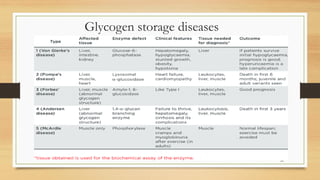
• Glycogen storage diseases
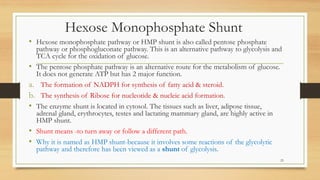
• Hexose monophosphate shunt
2
Biochemistry
• The branch of science that explore the chemical process with in and related
to living organism.
• It is a laboratory based science that brings together biology and chemistry.
• Father of modern biochemistry is Carl Alexander Newberg where as father
of indian biochemistry is Bires Chandra guha.
• Biochemistry comprises all metabolic pathways or cell reaction inside the
cytoplasm.
3
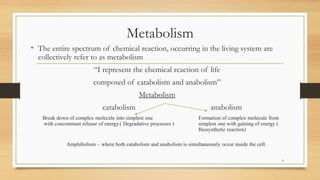
Metabolism
• The entire spectrum of chemical reaction, occurring in the living system are
collectively refer to as metabolism
“I represent the chemical reaction of life
composed of catabolism and anabolism”
Metabolism
catabolism anabolism
Break down of complex molecule into simplest one Formation of complex molecule from
with concomitant release of energy.( Degradative processes ) simplest one with gaining of energy (
Biosynthetic reaction)
Amphibolism – where both catabolism and anabolism is simultaneously occur inside the cell.
4
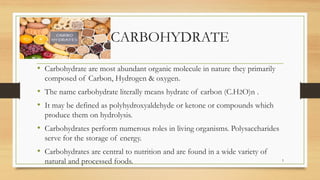
CARBOHYDRATE
• Carbohydrate are most abundant organic molecule in nature they primarily
composed of Carbon, Hydrogen & oxygen.
• The name carbohydrate literally means hydrate of carbon (C.H2O)n .
• It may be defined as polyhydroxyaldehyde or ketone or compounds which
produce them on hydrolysis.
• Carbohydrates perform numerous roles in living organisms. Polysaccharides
serve for the storage of energy.
• Carbohydrates are central to nutrition and are found in a wide variety of
natural and processed foods. 5
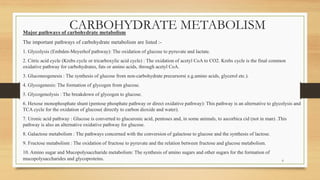
CARBOHYDRATE METABOLISM
Major pathways of carbohydrate metabolism
The important pathways of carbohydrate metabolism are listed :-
1. Glycolysis (Embden-Meyerhof pathway): The oxidation of glucose to pyruvate and lactate.
2. Citric acid cycle (Krebs cycle or tricarboxylic acid cycle) : The oxidation of acetyl CoA to CO2. Krebs cycle is the final common
oxidative pathway for carbohydrates, fats or amino acids, through acetyl CoA.
3. Gluconeogenesis : The synthesis of glucose from non-carbohydrate precursors( e.g.amino acids, glycerol etc.).
4. Glycogenesis: The formation of glycogen from glucose.
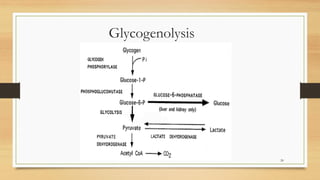
5. Glycogenolysis : The breakdown of glycogen to glucose.
6. Hexose monophosphate shunt (pentose phosphate pathway or direct oxidative pathway): This pathway is an alternative to glycolysis and
TCA cycle for the oxidation of glucose( directly to carbon dioxide and water).
7. Uronic acid pathway : Glucose is converted to glucuronic acid, pentoses and, in some animals, to ascorbica cid (not in man) .This
pathway is also an alternative oxidative pathway for glucose.
8. Galactose metabolism : The pathways concerned with the conversion of galactose to glucose and the synthesis of lactose.
9. Fructose metabolism : The oxidation of fructose to pyruvate and the relation between fructose and glucose metabolism.
10. Amino sugar and Mucopolysaccharide metabolism: The synthesis of amino sugars and other sugars for the formation of
mucopolysaccharides and glycoproteins. 6
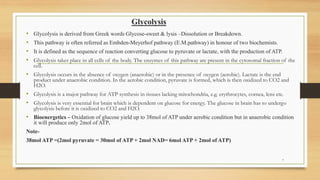
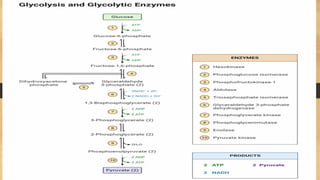
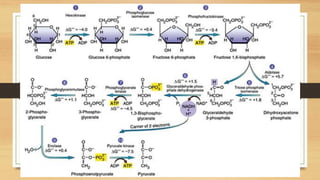
Glycolysis
7
• Glycolysis is derived from Greek words Glycose-sweet & lysis –Dissolution or Breakdown.
• This pathway is often referred as Embden-Meyerhof pathway (E.M.pathway) in honour of two biochemists.
• It is defined as the sequence of reaction converting glucose to pyruvate or lactate, with the production of ATP.
• Glycolysis takes place in all cells of the body. The enzymes of this pathway are present in the cytosomal fraction of the
cell.
• Glycolysis occurs in the absence of oxygen (anaerobic) or in the presence of oxygen (aerobic). Lactate is the end
product under anaerobic condition. In the aerobic condition, pyruvate is formed, which is then oxidized to CO2 and
H2O.
• Glycolysis is a major pathway for ATP synthesis in tissues lacking mitochondria, e.g. erythrocytes, cornea, lens etc.
• Glycolysis is very essential for brain which is dependent on glucose for energy. The glucose in brain has to undergo
glycolysis before it is oxidized to CO2 and H2O.
• Bioenergetics – Oxidation of glucose yield up to 38mol of ATP under aerobic condition but in anaerobic condition
it will produce only 2mol of ATP.
Note-
38mol ATP =(2mol pyruvate = 30mol of ATP + 2mol NAD= 6mol ATP + 2mol of ATP)
8
9
Significance of Glycolysis Pathway
• 1. It is the only pathway that is taking place in all the cells of the body.
• 2. Glycolysis is the only source of energy in erythrocytes.
• 3. In strenuous exercise, when muscle tissue lacks enough oxygen, anaerobic
glycolysis forms the major source of energy for muscles.
• 4. The glycolytic pathway may be considered as the preliminary step before
complete oxidation.
• 5. The glycolytic pathway provides carbon skeletons for synthesis of non-essential
amino acids as well as glycerol part of fat.
• 6. Most of the reactions of the glycolytic pathway are reversible, which are also
used for gluconeogenesis.
10
Citric acid cycle
• The citric acid cycle was proposed by Hans Adolf Krebs in 1937, based on the studies of oxygen consumption in
pigeon breast muscle.
• Citric acid cycle essentially involves the oxidation of acetyl CoA to CO2 and H2O.
• It is located in mitochondrial matrix.
• Oxaloacetate is considered to play a catalytic role in citric acid cycle.
• Summary –
Acetyl CoA + 3 NAD+ + FAD + GDP + Pi + 2H2O ------>2CO2 + 3NADH + 3H+ + FADH2 +GTP + CoA
• Vitamins (thiamine, riboflavin, niacin, pantothenic acid)play a vital role in Krebs cycle.
• It operate only in aerobic condition.
• It regulated by 3 enzymes namely- Citrate synthase, isocitrate dehydrogenase, α-ketoglutarate dehydrogenase.
• Bioenergetics- total 32mol of ATP generated which is nearly equals to 976kj/mol.
Note-
1 NAD(Nicotinamide adenine dinucleotide)=2.5 ATP 1 FAD(Flavin Adenine Dinucleotide)=2 ATP
11
12
Significance of citric acid cycle
• 1. Complete oxidation of acetyl CoA
• 2. ATP generation
• 3. Final common oxidative pathway
• 4. Integration of major metabolic pathways
• 5. Fat is burned on the wick of carbohydrates ( Wick-(Salita) bundle of fibers which are loosely
bonded )
• 6. Excess carbohydrates are converted as neutral fat
• 7. No net synthesis of carbohydrates from fat
• 8. Carbon skeletons of amino acids finally enter the citric acid cycle
• 9. Amphibolic pathway(both catabolic and anabolic)
• 10. Anaplerotic role. (Greek word, ana = up; plerotikos = to fill). Anaplerotic reactions are “filling
up” reactions or “influx” reactions or “replenishing” reactions which supply 4-carbon units to the
TCA cycle
13
Flame needs a wick; oxidation of
fat needs carbohydrate
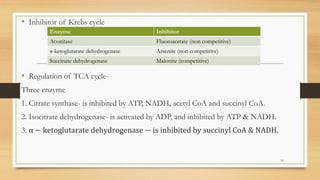
• Inhibitor of Krebs cycle
• Regulation of TCA cycle-
Three enzyme
1. Citrate synthase- is inhibited by ATP, NADH, acetyl CoA and succinyl CoA.
2. Isocitrate dehydrogenase- is activated by ADP, and inhibited by ATP & NADH.
3. α − ketoglutarate dehydrogenase − is inhibited by succinyl CoA & NADH.
14
Enzyme Inhibitor
Aconitase Fluoroacetate (non competitive)
α-ketoglutarate dehydrogenase Arsenite (non competitive)
Succinate dehydrogenase Malonite (competitive)
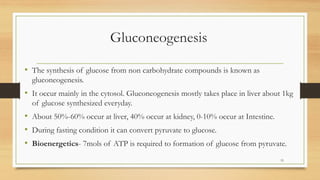
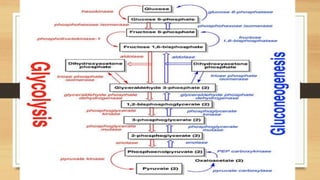
Gluconeogenesis
• The synthesis of glucose from non carbohydrate compounds is known as
gluconeogenesis.
• It occur mainly in the cytosol. Gluconeogenesis mostly takes place in liver about 1kg
of glucose synthesized everyday.
• About 50%-60% occur at liver, 40% occur at kidney, 0-10% occur at Intestine.
• During fasting condition it can convert pyruvate to glucose.
• Bioenergetics- 7mols of ATP is required to formation of glucose from pyruvate.
15
16
17
(Aas-Atomic absorption spectrophotometry)
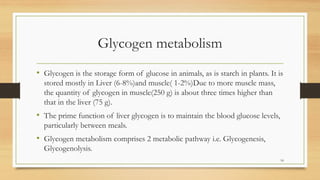
Glycogen metabolism
• Glycogen is the storage form of glucose in animals, as is starch in plants. It is
stored mostly in Liver (6-8%)and muscle( 1-2%)Due to more muscle mass,
the quantity of glycogen in muscle(250 g) is about three times higher than
that in the liver (75 g).
• The prime function of liver glycogen is to maintain the blood glucose levels,
particularly between meals.
• Glycogen metabolism comprises 2 metabolic pathway i.e. Glycogenesis,
Glycogenolysis.
18
19
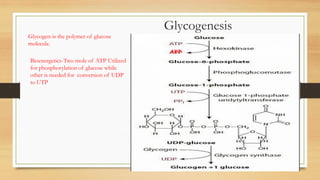
Glycogenesis
Glycogen-is the polymer of glucose
molecule.
Bioenergetics-Two mole of ATP Utilized
for phosphorylation of glucose while
other is needed for conversion of UDP
to UTP
ADP
20
Glycogenolysis
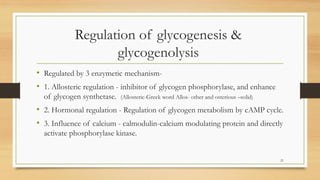
Regulation of glycogenesis &
glycogenolysis
• Regulated by 3 enzymetic mechanism-
• 1. Allosteric regulation - inhibitor of glycogen phosphorylase, and enhance
of glycogen synthetase. (Allosteric-Greek word Allos- other and osterious –solid)
• 2. Hormonal regulation - Regulation of glycogen metabolism by cAMP cycle.
• 3. Influence of calcium - calmodulin-calcium modulating protein and directly
activate phosphorylase kinase.
21
22
Glycogen storage diseases
Hexose Monophosphate Shunt
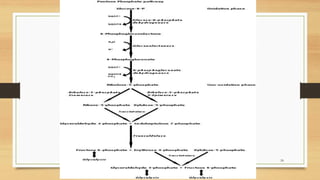
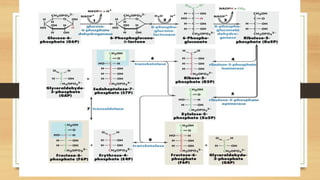
• Hexose monophosphate pathway or HMP shunt is also called pentose phosphate
pathway or phosphogluconate pathway. This is an alternative pathway to glycolysis and
TCA cycle for the oxidation of glucose.
• The pentose phosphate pathway is an alternative route for the metabolism of glucose.
It does not generate ATP but has 2 major function.
a. The formation of NADPH for synthesis of fatty acid & steroid.
b. The synthesis of Ribose for nucleotide & nucleic acid formation.
• The enzyme shunt is located in cytosol. The tissues such as liver, adipose tissue,
adrenal gland, erythrocytes, testes and lactating mammary gland, are highly active in
HMP shunt.
• Shunt means -to turn away or follow a different path.
• Why it is named as HMP shunt-because it involves some reactions of the glycolytic
pathway and therefore has been viewed as a shunt of glycolysis.
23
24
25
Significance of HMP shunt
• HMP shunt is unique in generating two important products-pentoses and NADPH needed for
the biosynthetic reactions and other functions.
• PENTOSE- (example- Ribose, xylose-5-phosphate) synthesis of nucleic acids(RNA & DNA)
and many nucleotide such as ATP, NAD+, FAD and CoA.
• NADPH-
a. Biosynthesis of fatty acid and steroids (adipose tissue, liver)
b. Glutamate dehydrogenase.
c. Glutathione mediated reduction of H2O2 in the living cell which can chemically damage
unsaturated lipids , protein and DNA prevented by antioxidant reaction(free radical
scavenging).
d. Phagocytosis is the engulfment of foreign particles by WBC, This process requires
NADPH.
e. Preserve the integrity of RBC membrane by preventing the conversion of Fe2+ to Fe3+.
26
G6PD Deficiency
• G6PD deficiency is a hereditary disease characterized by hemolytic anemia caused by the inability to
detoxify oxidizing agents. G6PD deficiency is the most common disease producing enzyme
abnormality in humans, affecting more than 400 million individuals worldwide.
• G6PD deficiency is an inherited sex-linked trait. Although the deficiency occurs in all the cells of
the affected individuals, it is more severe in RBC.
• HMP shunt is the only means of providing NADPH in the erythrocytes. Decreased activity of
G6PD impairs the synthesis of NADPH in RBC. This results in the accumulation of
methemoglobin and peroxides in erythrocytes leading to hemolysis.
• Hydrogen peroxide is continuously formed inside the RBC. Peroxide will destroy RBC cell
membrane. Glutathione and NADPH will prevent this process. Therefore, NADPH is very
essential for preserving the RBC integrity.
• The transketolase reaction is measured in RBCs as an index of the thiamine status of an
individual. The occurrence and manifestation of Wernicke’s Korsakoff’s syndrome
(encephalopathy / mental disorder, loss of memory and partial paralysi) which is seen in alcoholics
and those with thiamine deficiency is due to a genetic defect in the enzyme transketolase.
27
28
• A clinical manifestation of G6PD deficiency is neonatal jaundice appearing 1–4 days after birth. The
jaundice, which may be severe, typically results from increased production of unconjugated bilirubin.
• This negative effect of G6PD deficiency has been balanced in evolution by an advantage in survival—an
increased resistance to Plasmodium falciparum malaria.
• Most individuals who have inherited one of the G6PD mutations do not show clinical manifestations
(that is, they are asymptomatic). However, some patients with G6PD deficiency develop hemolytic
anemia if they are treated with an oxidant drug, ingest fava beans, or contract a severe infection.
1. Oxidant drugs: antibiotics (for example, sulfamethoxazole and chloramphenicol), antimalarials (for
example, primaquine but not chloroquine or quinine), and antipyretics (for example, acetanilide but not
acetaminophen).
2. Favism: Some forms of G6PD deficiency, for example the Mediterranean variant, are particularly
susceptible to the hemolytic effect of the fava (broad) bean, a dietary staple in the Mediterranean region.
Favism, the hemolytic effect of ingesting fava beans, is not observed in all individuals with G6PD
deficiency, but all patients with favism have G6PD deficiency.
3. Infection: Infection is the most common precipitating factor of hemolysis in G6PD deficiency. The
inflammatory response to infection results in the generation of free radicals in macrophages, which can
diffuse into the RBC and cause oxidative damage.
Hormonal regulation of blood
glucose level & Diabetes
mellitus
29
30
HORMONAL INFLUENCES: (ENDOCRINE INFLUENCES) ON CARBOHYDRATE METABOLISM
Endocrine organs play an important key role in this homeostatic mechanism.
There are two categories of endocrine influences:
(a) Those which exert a fundamental regulatory influence, their normal function being essential for normal carbohydrate metabolism,
for example, hormones of pancreatic islet cells specially Insulin and hormones of adrenal cortex and anterior pituitary as stated above.
(b) Those which influence carbohydrate metabolism, but are not essential for its autoregulation under normal physiological conditions,
e.g. hormones of adrenal medulla and hormones of thyroid gland.
1. Insulin
Administration of insulin is followed by a fall ↓ in blood glucose concentration to hypoglycaemic levels, if adequate amounts are given.
This results from:
(A) Diminished supply of glucose to blood is due to:
• Decreased hepatic glycogenolysis
• Increased hepatic glycogenesis by its direct action on Protein phosphatase-1.
• Decreased gluconeogenesis
• The liver glycogen tends to increase although this may be obscured by the hypoglycaemia, which itself tends to accelerate hepatic
glycogenolysis.
(B) Increase in the rate of utilisation of glucose by tissue cells:
Glucose is removed from the blood more readily and is utilised more actively for:
• Oxidation for energy production
• Increases lipogenesis, and
• For glycogenesis.
31
BLOOD SUGAR LEVEL AND ITS CLINICAL SIGNIFICANCE
1. Normal values: The range for normal fasting or Postabsorptive blood glucose taken at least three
hours after the last meal is:
• As per glucose-oxidase method (“true” glucose) 60 to 100 mg%, some authorities give as 60 to 95 mg%.
• As per “Folin and Wu’s method”: 80 to 120 mg%.
2. Abnormalities in Blood Glucose Level
• Increase in blood glucose level above normal is called hyperglycaemia.
• Decrease in blood glucose level below normal is called hypoglycaemia.
Causes of Hyperglycaemia
• Most common cause is Diabetes mellitus in which the highest values for fasting blood glucose is obtained, in which it may vary
from normal to 500 mg% and over, depending on the severity of the disease.
• Emotional ‘stress’ can increase the blood glucose level.
• Increase in blood glucose in appreciable amount may be seen in sepsis and in a number of infectious diseases.
Causes of hypoglycaemia:
Hypoglycaemia may be considered to be present when the blood glucose is below 40 mg% (“true” glucose value by glucose
oxidase method).
• Most common cause and clinically important to be considered first is overdosage of Insulin in treatment of diabetes mellitus.
• Severe exercise may produce hypoglycaemia due to depletion of liver glycogen.
32
GLYCOSURIA
• Under ordinary dietary conditions, glucose is the only sugar present in the free state in blood plasma in
demonstrable amounts. Although normal urine contains virtually no sugar; under certain circumstances, glucose or
other sugars may be excreted in the urine. This condition is called melituria (excretion of sugar in urine).
• The terms glycosuria, fructosuria, galactosuria, lactosuria and pentosuria are applied specially to the urinary
excretion of glucose, fructose, galactose, lactose, and pentose respectively.
Definition: Glycosuria is defined as the excretion of glucose in urine which is detectable by Benedict’s Qualitative
test.
MECHANISM OF GLYCOSURIA
Excretion of abnormal amounts of glucose in the urine may be due to two types of abnormalities:
(a) Increase in the amount of glucose entering in the tubule/mt.
(b) Decrease in the glucose reabsorption capacity of the renal tubular epithelium.
TYPES OF GLYCOSURIAS
From above the glycosuria can be divided into two main groups:
A. Hyperglycaemic Glycosuria
1. Alimentary glycosuria: When a large carbohydrate diet is taken, blood sugar rises and may cross renal threshold in
occasional case and may produce glycosuria. This condition does not seem to be a normal process, as homeostatic
control is so efficient in normal healthy person that such glycosuria should not occur. Alimentary glycosuria, therefore,
is only possible in those subjects in whom the power of glucose utilisation is impaired and such people should be
kept under observation and should be screened regularly for diabetes.
33
2. Nervous or “emotional” glycosuria: Stimulation of the sympathetic nerves to the Liver or of the
splanchnic nerves, breakdown of liver glycogen occurs and produces hyperglycaemia and glycosuria.
Nervous stimulation mentioned above causes:
• Glycogenolysis directly, and
• Also by increased secretion of catecholamines, producing glycogenolysis. Thus anything that stimulates
sympatheticsystem such as excitement, stress, etc. may produce glycosuria. In one study, college students going for
examination 1.6 per cent showed glycosuria.
3. Glycosuria due to endocrine disorders: Deranged function of a number of endocrine glands
produces hyperglycaemia which may result in glycosuria.
B. Renal Glycosuria
1. Hereditary: A milder glycosuria occurs spontaneously, as hereditary familial traits, persisting
throughout life, due to absence of “carrier Protein” or altered kinetics of the carrier system due to
failure of development.
2. Lowering of renal threshold: 15 to 20 per cent cases of Pregnancy may be associated with the
physiological glycosuria with advancement of pregnancy, due to lowering of renal threshold. But
Pregnancy may be associated with Diabetes mellitus in which there will be hyperglycaemic glycosuria.
These two can be differentiated by performing a fasting blood sugar level.
Factors maintaining blood sugar
• 1. The plasma glucose level at an instant depends on the balance between glucose entering and
leaving the extracellular fluid
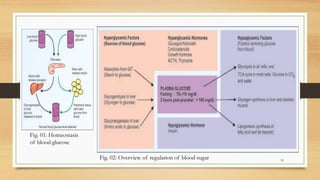
• 2. Hormones maintain this balance (Fig-01)
• 3. The major factors which cause entry of glucose into blood are:
1. a. Absorption from intestines
2. b. Glycogenolysis (breakdown of glycogen)
3. c. Gluconeogenesis
4. d. Hyperglycemic hormones (glucagon, steroids)
• 4. Factors leading to depletion of glucose in blood are:
1. a. Utilization by tissues for energy
2. b. Glycogen synthesis
3. c. Conversion of glucose into fat (lipogenesis)
4. d. Hypoglycemic hormone (insulin)
34
35
Fig. 01: Homeostasis
of blood glucose
Fig. 02: Overview of regulation of blood sugar
Effects of hormones on glucose level in
blood
• A. Effect of insulin (hypoglycemic hormone)
1. 1. Lowers blood glucose
2. 2. Favors glycogen synthesis
3. 3. Promotes glycolysis
4. 4. Inhibits gluconeogenesis
• B. Glucagon (hyperglycemic hormone)
1. 1. Increases blood glucose
2. 2. Promotes glycogenolysis
3. 3. Enhances gluconeogenesis
4. 4. Depresses glycogen synthesis
5. 5. Inhibits glycolysis (Details given below)
36
• C. Cortisol (hyperglycemic hormone)
1. 1. Increases blood sugar level
2. 2. Increases gluconeogenesis
3. 3. Releases amino acids from the muscle
• D. Epinephrine or Adrenaline (hyperglycemic)
1. 1. Increases blood sugar level
2. 2. Promotes glycogenolysis
3. 3. Increases gluconeogenesis
4. 4. Favors uptake of amino acids
• E. Growth hormone (hyperglycemic)
1. 1. Increases blood sugar level
2. 2. Decreases glycolysis
3. 3. Mobilizes fatty acids from adipose tissue
Diabetes Mellitus
• The term is derived from the Greek words dia (=through), bainein (=to go) and
diabetes literally means pass through. The disease causes loss of weight as if the
body mass is passed through the urine. The Greek word, mellitus, means sweet, as
it is known to early workers, that the urine of the patient contains sugar.
• Diabetes mellitus is a metabolic disease due to absolute or relative insulin
deficiency. Diabetes mellitus is a common clinical condition. About 10% of the
total population, and about 1/5th of persons above the age of 50, suffer from
this disease. It is a major cause for morbidity and mortality.
• Insulin deficiency leads to increased blood glucose level. In spite of this high
blood glucose, the entry of glucose into the cell is inefficient. Hence all cells are
starved for glucose.
37
DM Symptom
• Diabetes may present with characteristic symptoms such as thirst, polyuria,
blurring of vision, and weight loss. Genital yeast infections frequently occur. The
most severe clinical manifestations are ketoacidosis or a non-ketotic hyperosmolar
state that may lead to dehydration, coma and, in the absence of effective
treatment, death. However, in T2DM symptoms are often not severe, or may be
absent, owing to the slow pace at which the hyperglycaemia is worsening. As a
result, in the absence of biochemical testing, hyperglycaemia sufficient to cause
pathological and functional changes may be present for a long time before a
diagnosis is made, resulting in the presence of complications at diagnosis. It is
estimated that a significant percentage of cases of diabetes (30–80%, depending
on the country)
38
39
40
Type 1 Diabetes Mellitus
(formerly known as Insulin-dependent diabetes mellitus; IDDM). About 5% of total diabetic patients are of type 1. Here
circulating insulin level is deficient.
It is subclassified as:
a. Immune mediated and
b. Idiopathic.
Type 2 Diabetes Mellitus
(Formerly known as non-insulin dependent diabetes mellitus; NIDDM). Most of the patients belong to this type. Here
circulating insulin level is normal or mildly elevated or slightly decreased, depending on the stage of the disease. This type is
further classified as:
a. Obese
b. Non-obese
Diabetic Prone States
a. Gestational diabetes mellitus (GDM);
b. Impaired glucose tolerance (IGT);
c. Impaired fasting glycemia (IFG)
d. Metabolic syndrome (described below)
Secondary to Other Known Causes
a. Endocrinopathies (Cushing's disease, thyrotoxicosis, acromegaly);
b. Drug induced (steroids, beta blockers, etc.);
c. Pancreatic diseases (chronic pancreatitis, fibrocalculus pancreatitis, hemochromatosis, cystic fibrosis)
d. Anti-insulin receptor autoantibodies (Type B insulin resistance)
e. Mutations in the insulin gene or insulin receptor gene (acanthosis nigricans)
41
42

CARBOHYDRATE METABOLISM BY BISWANATH PRUSTY

  • 1.
    CARBOHYDRATE METABOLISM Mr Biswanath prusty Lecturerat College of pharmaceutical sciences, Mohuda 1
  • 2.
    CONTENT • Introduction ofbiochemistry • Metabolism • Carbohydrate • Carbohydrate metabolism • Glycolysis • Citric acid cycle • Gluconeogenesis • Glycogen metabolism- Glycogenesis & Glycogenolysis • Glycogen storage diseases • Hexose monophosphate shunt 2
  • 3.
    Biochemistry • The branchof science that explore the chemical process with in and related to living organism. • It is a laboratory based science that brings together biology and chemistry. • Father of modern biochemistry is Carl Alexander Newberg where as father of indian biochemistry is Bires Chandra guha. • Biochemistry comprises all metabolic pathways or cell reaction inside the cytoplasm. 3
  • 4.
    Metabolism • The entirespectrum of chemical reaction, occurring in the living system are collectively refer to as metabolism “I represent the chemical reaction of life composed of catabolism and anabolism” Metabolism catabolism anabolism Break down of complex molecule into simplest one Formation of complex molecule from with concomitant release of energy.( Degradative processes ) simplest one with gaining of energy ( Biosynthetic reaction) Amphibolism – where both catabolism and anabolism is simultaneously occur inside the cell. 4
  • 5.
    CARBOHYDRATE • Carbohydrate aremost abundant organic molecule in nature they primarily composed of Carbon, Hydrogen & oxygen. • The name carbohydrate literally means hydrate of carbon (C.H2O)n . • It may be defined as polyhydroxyaldehyde or ketone or compounds which produce them on hydrolysis. • Carbohydrates perform numerous roles in living organisms. Polysaccharides serve for the storage of energy. • Carbohydrates are central to nutrition and are found in a wide variety of natural and processed foods. 5
  • 6.
    CARBOHYDRATE METABOLISM Major pathwaysof carbohydrate metabolism The important pathways of carbohydrate metabolism are listed :- 1. Glycolysis (Embden-Meyerhof pathway): The oxidation of glucose to pyruvate and lactate. 2. Citric acid cycle (Krebs cycle or tricarboxylic acid cycle) : The oxidation of acetyl CoA to CO2. Krebs cycle is the final common oxidative pathway for carbohydrates, fats or amino acids, through acetyl CoA. 3. Gluconeogenesis : The synthesis of glucose from non-carbohydrate precursors( e.g.amino acids, glycerol etc.). 4. Glycogenesis: The formation of glycogen from glucose. 5. Glycogenolysis : The breakdown of glycogen to glucose. 6. Hexose monophosphate shunt (pentose phosphate pathway or direct oxidative pathway): This pathway is an alternative to glycolysis and TCA cycle for the oxidation of glucose( directly to carbon dioxide and water). 7. Uronic acid pathway : Glucose is converted to glucuronic acid, pentoses and, in some animals, to ascorbica cid (not in man) .This pathway is also an alternative oxidative pathway for glucose. 8. Galactose metabolism : The pathways concerned with the conversion of galactose to glucose and the synthesis of lactose. 9. Fructose metabolism : The oxidation of fructose to pyruvate and the relation between fructose and glucose metabolism. 10. Amino sugar and Mucopolysaccharide metabolism: The synthesis of amino sugars and other sugars for the formation of mucopolysaccharides and glycoproteins. 6
  • 7.
    Glycolysis 7 • Glycolysis isderived from Greek words Glycose-sweet & lysis –Dissolution or Breakdown. • This pathway is often referred as Embden-Meyerhof pathway (E.M.pathway) in honour of two biochemists. • It is defined as the sequence of reaction converting glucose to pyruvate or lactate, with the production of ATP. • Glycolysis takes place in all cells of the body. The enzymes of this pathway are present in the cytosomal fraction of the cell. • Glycolysis occurs in the absence of oxygen (anaerobic) or in the presence of oxygen (aerobic). Lactate is the end product under anaerobic condition. In the aerobic condition, pyruvate is formed, which is then oxidized to CO2 and H2O. • Glycolysis is a major pathway for ATP synthesis in tissues lacking mitochondria, e.g. erythrocytes, cornea, lens etc. • Glycolysis is very essential for brain which is dependent on glucose for energy. The glucose in brain has to undergo glycolysis before it is oxidized to CO2 and H2O. • Bioenergetics – Oxidation of glucose yield up to 38mol of ATP under aerobic condition but in anaerobic condition it will produce only 2mol of ATP. Note- 38mol ATP =(2mol pyruvate = 30mol of ATP + 2mol NAD= 6mol ATP + 2mol of ATP)
  • 8.
  • 9.
  • 10.
    Significance of GlycolysisPathway • 1. It is the only pathway that is taking place in all the cells of the body. • 2. Glycolysis is the only source of energy in erythrocytes. • 3. In strenuous exercise, when muscle tissue lacks enough oxygen, anaerobic glycolysis forms the major source of energy for muscles. • 4. The glycolytic pathway may be considered as the preliminary step before complete oxidation. • 5. The glycolytic pathway provides carbon skeletons for synthesis of non-essential amino acids as well as glycerol part of fat. • 6. Most of the reactions of the glycolytic pathway are reversible, which are also used for gluconeogenesis. 10
  • 11.
    Citric acid cycle •The citric acid cycle was proposed by Hans Adolf Krebs in 1937, based on the studies of oxygen consumption in pigeon breast muscle. • Citric acid cycle essentially involves the oxidation of acetyl CoA to CO2 and H2O. • It is located in mitochondrial matrix. • Oxaloacetate is considered to play a catalytic role in citric acid cycle. • Summary – Acetyl CoA + 3 NAD+ + FAD + GDP + Pi + 2H2O ------>2CO2 + 3NADH + 3H+ + FADH2 +GTP + CoA • Vitamins (thiamine, riboflavin, niacin, pantothenic acid)play a vital role in Krebs cycle. • It operate only in aerobic condition. • It regulated by 3 enzymes namely- Citrate synthase, isocitrate dehydrogenase, α-ketoglutarate dehydrogenase. • Bioenergetics- total 32mol of ATP generated which is nearly equals to 976kj/mol. Note- 1 NAD(Nicotinamide adenine dinucleotide)=2.5 ATP 1 FAD(Flavin Adenine Dinucleotide)=2 ATP 11
  • 12.
  • 13.
    Significance of citricacid cycle • 1. Complete oxidation of acetyl CoA • 2. ATP generation • 3. Final common oxidative pathway • 4. Integration of major metabolic pathways • 5. Fat is burned on the wick of carbohydrates ( Wick-(Salita) bundle of fibers which are loosely bonded ) • 6. Excess carbohydrates are converted as neutral fat • 7. No net synthesis of carbohydrates from fat • 8. Carbon skeletons of amino acids finally enter the citric acid cycle • 9. Amphibolic pathway(both catabolic and anabolic) • 10. Anaplerotic role. (Greek word, ana = up; plerotikos = to fill). Anaplerotic reactions are “filling up” reactions or “influx” reactions or “replenishing” reactions which supply 4-carbon units to the TCA cycle 13 Flame needs a wick; oxidation of fat needs carbohydrate
  • 14.
    • Inhibitor ofKrebs cycle • Regulation of TCA cycle- Three enzyme 1. Citrate synthase- is inhibited by ATP, NADH, acetyl CoA and succinyl CoA. 2. Isocitrate dehydrogenase- is activated by ADP, and inhibited by ATP & NADH. 3. α − ketoglutarate dehydrogenase − is inhibited by succinyl CoA & NADH. 14 Enzyme Inhibitor Aconitase Fluoroacetate (non competitive) α-ketoglutarate dehydrogenase Arsenite (non competitive) Succinate dehydrogenase Malonite (competitive)
  • 15.
    Gluconeogenesis • The synthesisof glucose from non carbohydrate compounds is known as gluconeogenesis. • It occur mainly in the cytosol. Gluconeogenesis mostly takes place in liver about 1kg of glucose synthesized everyday. • About 50%-60% occur at liver, 40% occur at kidney, 0-10% occur at Intestine. • During fasting condition it can convert pyruvate to glucose. • Bioenergetics- 7mols of ATP is required to formation of glucose from pyruvate. 15
  • 16.
  • 17.
  • 18.
    Glycogen metabolism • Glycogenis the storage form of glucose in animals, as is starch in plants. It is stored mostly in Liver (6-8%)and muscle( 1-2%)Due to more muscle mass, the quantity of glycogen in muscle(250 g) is about three times higher than that in the liver (75 g). • The prime function of liver glycogen is to maintain the blood glucose levels, particularly between meals. • Glycogen metabolism comprises 2 metabolic pathway i.e. Glycogenesis, Glycogenolysis. 18
  • 19.
    19 Glycogenesis Glycogen-is the polymerof glucose molecule. Bioenergetics-Two mole of ATP Utilized for phosphorylation of glucose while other is needed for conversion of UDP to UTP ADP
  • 20.
  • 21.
    Regulation of glycogenesis& glycogenolysis • Regulated by 3 enzymetic mechanism- • 1. Allosteric regulation - inhibitor of glycogen phosphorylase, and enhance of glycogen synthetase. (Allosteric-Greek word Allos- other and osterious –solid) • 2. Hormonal regulation - Regulation of glycogen metabolism by cAMP cycle. • 3. Influence of calcium - calmodulin-calcium modulating protein and directly activate phosphorylase kinase. 21
  • 22.
  • 23.
    Hexose Monophosphate Shunt •Hexose monophosphate pathway or HMP shunt is also called pentose phosphate pathway or phosphogluconate pathway. This is an alternative pathway to glycolysis and TCA cycle for the oxidation of glucose. • The pentose phosphate pathway is an alternative route for the metabolism of glucose. It does not generate ATP but has 2 major function. a. The formation of NADPH for synthesis of fatty acid & steroid. b. The synthesis of Ribose for nucleotide & nucleic acid formation. • The enzyme shunt is located in cytosol. The tissues such as liver, adipose tissue, adrenal gland, erythrocytes, testes and lactating mammary gland, are highly active in HMP shunt. • Shunt means -to turn away or follow a different path. • Why it is named as HMP shunt-because it involves some reactions of the glycolytic pathway and therefore has been viewed as a shunt of glycolysis. 23
  • 24.
  • 25.
  • 26.
    Significance of HMPshunt • HMP shunt is unique in generating two important products-pentoses and NADPH needed for the biosynthetic reactions and other functions. • PENTOSE- (example- Ribose, xylose-5-phosphate) synthesis of nucleic acids(RNA & DNA) and many nucleotide such as ATP, NAD+, FAD and CoA. • NADPH- a. Biosynthesis of fatty acid and steroids (adipose tissue, liver) b. Glutamate dehydrogenase. c. Glutathione mediated reduction of H2O2 in the living cell which can chemically damage unsaturated lipids , protein and DNA prevented by antioxidant reaction(free radical scavenging). d. Phagocytosis is the engulfment of foreign particles by WBC, This process requires NADPH. e. Preserve the integrity of RBC membrane by preventing the conversion of Fe2+ to Fe3+. 26
  • 27.
    G6PD Deficiency • G6PDdeficiency is a hereditary disease characterized by hemolytic anemia caused by the inability to detoxify oxidizing agents. G6PD deficiency is the most common disease producing enzyme abnormality in humans, affecting more than 400 million individuals worldwide. • G6PD deficiency is an inherited sex-linked trait. Although the deficiency occurs in all the cells of the affected individuals, it is more severe in RBC. • HMP shunt is the only means of providing NADPH in the erythrocytes. Decreased activity of G6PD impairs the synthesis of NADPH in RBC. This results in the accumulation of methemoglobin and peroxides in erythrocytes leading to hemolysis. • Hydrogen peroxide is continuously formed inside the RBC. Peroxide will destroy RBC cell membrane. Glutathione and NADPH will prevent this process. Therefore, NADPH is very essential for preserving the RBC integrity. • The transketolase reaction is measured in RBCs as an index of the thiamine status of an individual. The occurrence and manifestation of Wernicke’s Korsakoff’s syndrome (encephalopathy / mental disorder, loss of memory and partial paralysi) which is seen in alcoholics and those with thiamine deficiency is due to a genetic defect in the enzyme transketolase. 27
  • 28.
    28 • A clinicalmanifestation of G6PD deficiency is neonatal jaundice appearing 1–4 days after birth. The jaundice, which may be severe, typically results from increased production of unconjugated bilirubin. • This negative effect of G6PD deficiency has been balanced in evolution by an advantage in survival—an increased resistance to Plasmodium falciparum malaria. • Most individuals who have inherited one of the G6PD mutations do not show clinical manifestations (that is, they are asymptomatic). However, some patients with G6PD deficiency develop hemolytic anemia if they are treated with an oxidant drug, ingest fava beans, or contract a severe infection. 1. Oxidant drugs: antibiotics (for example, sulfamethoxazole and chloramphenicol), antimalarials (for example, primaquine but not chloroquine or quinine), and antipyretics (for example, acetanilide but not acetaminophen). 2. Favism: Some forms of G6PD deficiency, for example the Mediterranean variant, are particularly susceptible to the hemolytic effect of the fava (broad) bean, a dietary staple in the Mediterranean region. Favism, the hemolytic effect of ingesting fava beans, is not observed in all individuals with G6PD deficiency, but all patients with favism have G6PD deficiency. 3. Infection: Infection is the most common precipitating factor of hemolysis in G6PD deficiency. The inflammatory response to infection results in the generation of free radicals in macrophages, which can diffuse into the RBC and cause oxidative damage.
  • 29.
    Hormonal regulation ofblood glucose level & Diabetes mellitus 29
  • 30.
    30 HORMONAL INFLUENCES: (ENDOCRINEINFLUENCES) ON CARBOHYDRATE METABOLISM Endocrine organs play an important key role in this homeostatic mechanism. There are two categories of endocrine influences: (a) Those which exert a fundamental regulatory influence, their normal function being essential for normal carbohydrate metabolism, for example, hormones of pancreatic islet cells specially Insulin and hormones of adrenal cortex and anterior pituitary as stated above. (b) Those which influence carbohydrate metabolism, but are not essential for its autoregulation under normal physiological conditions, e.g. hormones of adrenal medulla and hormones of thyroid gland. 1. Insulin Administration of insulin is followed by a fall ↓ in blood glucose concentration to hypoglycaemic levels, if adequate amounts are given. This results from: (A) Diminished supply of glucose to blood is due to: • Decreased hepatic glycogenolysis • Increased hepatic glycogenesis by its direct action on Protein phosphatase-1. • Decreased gluconeogenesis • The liver glycogen tends to increase although this may be obscured by the hypoglycaemia, which itself tends to accelerate hepatic glycogenolysis. (B) Increase in the rate of utilisation of glucose by tissue cells: Glucose is removed from the blood more readily and is utilised more actively for: • Oxidation for energy production • Increases lipogenesis, and • For glycogenesis.
  • 31.
    31 BLOOD SUGAR LEVELAND ITS CLINICAL SIGNIFICANCE 1. Normal values: The range for normal fasting or Postabsorptive blood glucose taken at least three hours after the last meal is: • As per glucose-oxidase method (“true” glucose) 60 to 100 mg%, some authorities give as 60 to 95 mg%. • As per “Folin and Wu’s method”: 80 to 120 mg%. 2. Abnormalities in Blood Glucose Level • Increase in blood glucose level above normal is called hyperglycaemia. • Decrease in blood glucose level below normal is called hypoglycaemia. Causes of Hyperglycaemia • Most common cause is Diabetes mellitus in which the highest values for fasting blood glucose is obtained, in which it may vary from normal to 500 mg% and over, depending on the severity of the disease. • Emotional ‘stress’ can increase the blood glucose level. • Increase in blood glucose in appreciable amount may be seen in sepsis and in a number of infectious diseases. Causes of hypoglycaemia: Hypoglycaemia may be considered to be present when the blood glucose is below 40 mg% (“true” glucose value by glucose oxidase method). • Most common cause and clinically important to be considered first is overdosage of Insulin in treatment of diabetes mellitus. • Severe exercise may produce hypoglycaemia due to depletion of liver glycogen.
  • 32.
    32 GLYCOSURIA • Under ordinarydietary conditions, glucose is the only sugar present in the free state in blood plasma in demonstrable amounts. Although normal urine contains virtually no sugar; under certain circumstances, glucose or other sugars may be excreted in the urine. This condition is called melituria (excretion of sugar in urine). • The terms glycosuria, fructosuria, galactosuria, lactosuria and pentosuria are applied specially to the urinary excretion of glucose, fructose, galactose, lactose, and pentose respectively. Definition: Glycosuria is defined as the excretion of glucose in urine which is detectable by Benedict’s Qualitative test. MECHANISM OF GLYCOSURIA Excretion of abnormal amounts of glucose in the urine may be due to two types of abnormalities: (a) Increase in the amount of glucose entering in the tubule/mt. (b) Decrease in the glucose reabsorption capacity of the renal tubular epithelium. TYPES OF GLYCOSURIAS From above the glycosuria can be divided into two main groups: A. Hyperglycaemic Glycosuria 1. Alimentary glycosuria: When a large carbohydrate diet is taken, blood sugar rises and may cross renal threshold in occasional case and may produce glycosuria. This condition does not seem to be a normal process, as homeostatic control is so efficient in normal healthy person that such glycosuria should not occur. Alimentary glycosuria, therefore, is only possible in those subjects in whom the power of glucose utilisation is impaired and such people should be kept under observation and should be screened regularly for diabetes.
  • 33.
    33 2. Nervous or“emotional” glycosuria: Stimulation of the sympathetic nerves to the Liver or of the splanchnic nerves, breakdown of liver glycogen occurs and produces hyperglycaemia and glycosuria. Nervous stimulation mentioned above causes: • Glycogenolysis directly, and • Also by increased secretion of catecholamines, producing glycogenolysis. Thus anything that stimulates sympatheticsystem such as excitement, stress, etc. may produce glycosuria. In one study, college students going for examination 1.6 per cent showed glycosuria. 3. Glycosuria due to endocrine disorders: Deranged function of a number of endocrine glands produces hyperglycaemia which may result in glycosuria. B. Renal Glycosuria 1. Hereditary: A milder glycosuria occurs spontaneously, as hereditary familial traits, persisting throughout life, due to absence of “carrier Protein” or altered kinetics of the carrier system due to failure of development. 2. Lowering of renal threshold: 15 to 20 per cent cases of Pregnancy may be associated with the physiological glycosuria with advancement of pregnancy, due to lowering of renal threshold. But Pregnancy may be associated with Diabetes mellitus in which there will be hyperglycaemic glycosuria. These two can be differentiated by performing a fasting blood sugar level.
  • 34.
    Factors maintaining bloodsugar • 1. The plasma glucose level at an instant depends on the balance between glucose entering and leaving the extracellular fluid • 2. Hormones maintain this balance (Fig-01) • 3. The major factors which cause entry of glucose into blood are: 1. a. Absorption from intestines 2. b. Glycogenolysis (breakdown of glycogen) 3. c. Gluconeogenesis 4. d. Hyperglycemic hormones (glucagon, steroids) • 4. Factors leading to depletion of glucose in blood are: 1. a. Utilization by tissues for energy 2. b. Glycogen synthesis 3. c. Conversion of glucose into fat (lipogenesis) 4. d. Hypoglycemic hormone (insulin) 34
  • 35.
    35 Fig. 01: Homeostasis ofblood glucose Fig. 02: Overview of regulation of blood sugar
  • 36.
    Effects of hormoneson glucose level in blood • A. Effect of insulin (hypoglycemic hormone) 1. 1. Lowers blood glucose 2. 2. Favors glycogen synthesis 3. 3. Promotes glycolysis 4. 4. Inhibits gluconeogenesis • B. Glucagon (hyperglycemic hormone) 1. 1. Increases blood glucose 2. 2. Promotes glycogenolysis 3. 3. Enhances gluconeogenesis 4. 4. Depresses glycogen synthesis 5. 5. Inhibits glycolysis (Details given below) 36 • C. Cortisol (hyperglycemic hormone) 1. 1. Increases blood sugar level 2. 2. Increases gluconeogenesis 3. 3. Releases amino acids from the muscle • D. Epinephrine or Adrenaline (hyperglycemic) 1. 1. Increases blood sugar level 2. 2. Promotes glycogenolysis 3. 3. Increases gluconeogenesis 4. 4. Favors uptake of amino acids • E. Growth hormone (hyperglycemic) 1. 1. Increases blood sugar level 2. 2. Decreases glycolysis 3. 3. Mobilizes fatty acids from adipose tissue
  • 37.
    Diabetes Mellitus • Theterm is derived from the Greek words dia (=through), bainein (=to go) and diabetes literally means pass through. The disease causes loss of weight as if the body mass is passed through the urine. The Greek word, mellitus, means sweet, as it is known to early workers, that the urine of the patient contains sugar. • Diabetes mellitus is a metabolic disease due to absolute or relative insulin deficiency. Diabetes mellitus is a common clinical condition. About 10% of the total population, and about 1/5th of persons above the age of 50, suffer from this disease. It is a major cause for morbidity and mortality. • Insulin deficiency leads to increased blood glucose level. In spite of this high blood glucose, the entry of glucose into the cell is inefficient. Hence all cells are starved for glucose. 37
  • 38.
    DM Symptom • Diabetesmay present with characteristic symptoms such as thirst, polyuria, blurring of vision, and weight loss. Genital yeast infections frequently occur. The most severe clinical manifestations are ketoacidosis or a non-ketotic hyperosmolar state that may lead to dehydration, coma and, in the absence of effective treatment, death. However, in T2DM symptoms are often not severe, or may be absent, owing to the slow pace at which the hyperglycaemia is worsening. As a result, in the absence of biochemical testing, hyperglycaemia sufficient to cause pathological and functional changes may be present for a long time before a diagnosis is made, resulting in the presence of complications at diagnosis. It is estimated that a significant percentage of cases of diabetes (30–80%, depending on the country) 38
  • 39.
  • 40.
    40 Type 1 DiabetesMellitus (formerly known as Insulin-dependent diabetes mellitus; IDDM). About 5% of total diabetic patients are of type 1. Here circulating insulin level is deficient. It is subclassified as: a. Immune mediated and b. Idiopathic. Type 2 Diabetes Mellitus (Formerly known as non-insulin dependent diabetes mellitus; NIDDM). Most of the patients belong to this type. Here circulating insulin level is normal or mildly elevated or slightly decreased, depending on the stage of the disease. This type is further classified as: a. Obese b. Non-obese Diabetic Prone States a. Gestational diabetes mellitus (GDM); b. Impaired glucose tolerance (IGT); c. Impaired fasting glycemia (IFG) d. Metabolic syndrome (described below) Secondary to Other Known Causes a. Endocrinopathies (Cushing's disease, thyrotoxicosis, acromegaly); b. Drug induced (steroids, beta blockers, etc.); c. Pancreatic diseases (chronic pancreatitis, fibrocalculus pancreatitis, hemochromatosis, cystic fibrosis) d. Anti-insulin receptor autoantibodies (Type B insulin resistance) e. Mutations in the insulin gene or insulin receptor gene (acanthosis nigricans)
  • 41.
  • 42.