Synthesis and significance of biological substances -5HT
(Serotonin), Melatonin, Dopamine, Noradrenaline,
Adrenaline.
SEROTONIN (5-hydroxy tryptamine/ 5-HT)
Chemistry
It is 5-OH tryptamine (5-HT). Serotonin is a vasoconstrictor substance.
It is present in the blood and is produced in tissues like gastric mucosa,
intestine, brain, mast cells and platelets (?), probably stored in platelets.
It is produced by special cells called as serotoninproducing cells.
These cells take up silver staining hence also called Argentaffin cells.
The cells are also known as Kultchitsky’s cells.
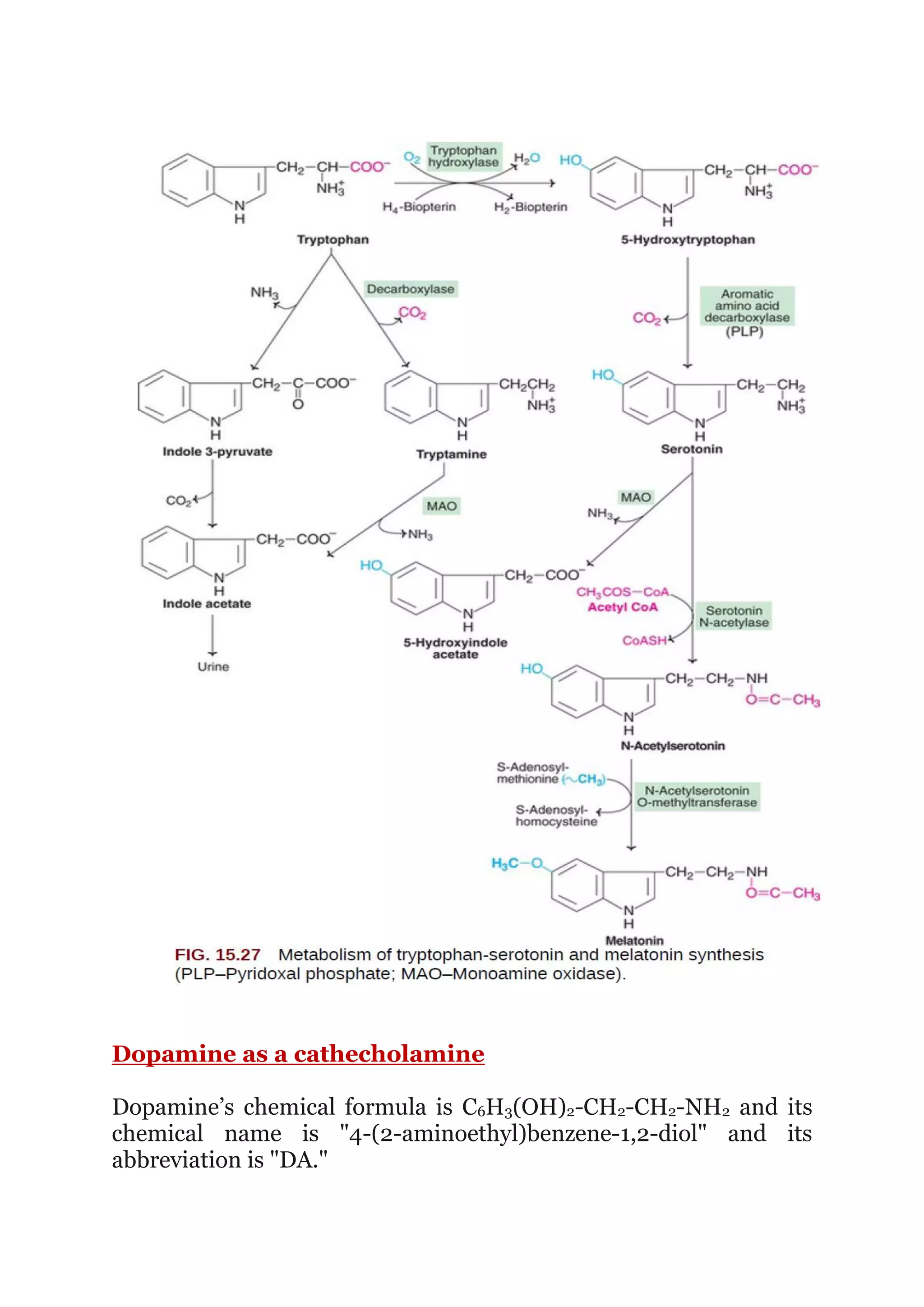
Synthesis of Serotonin
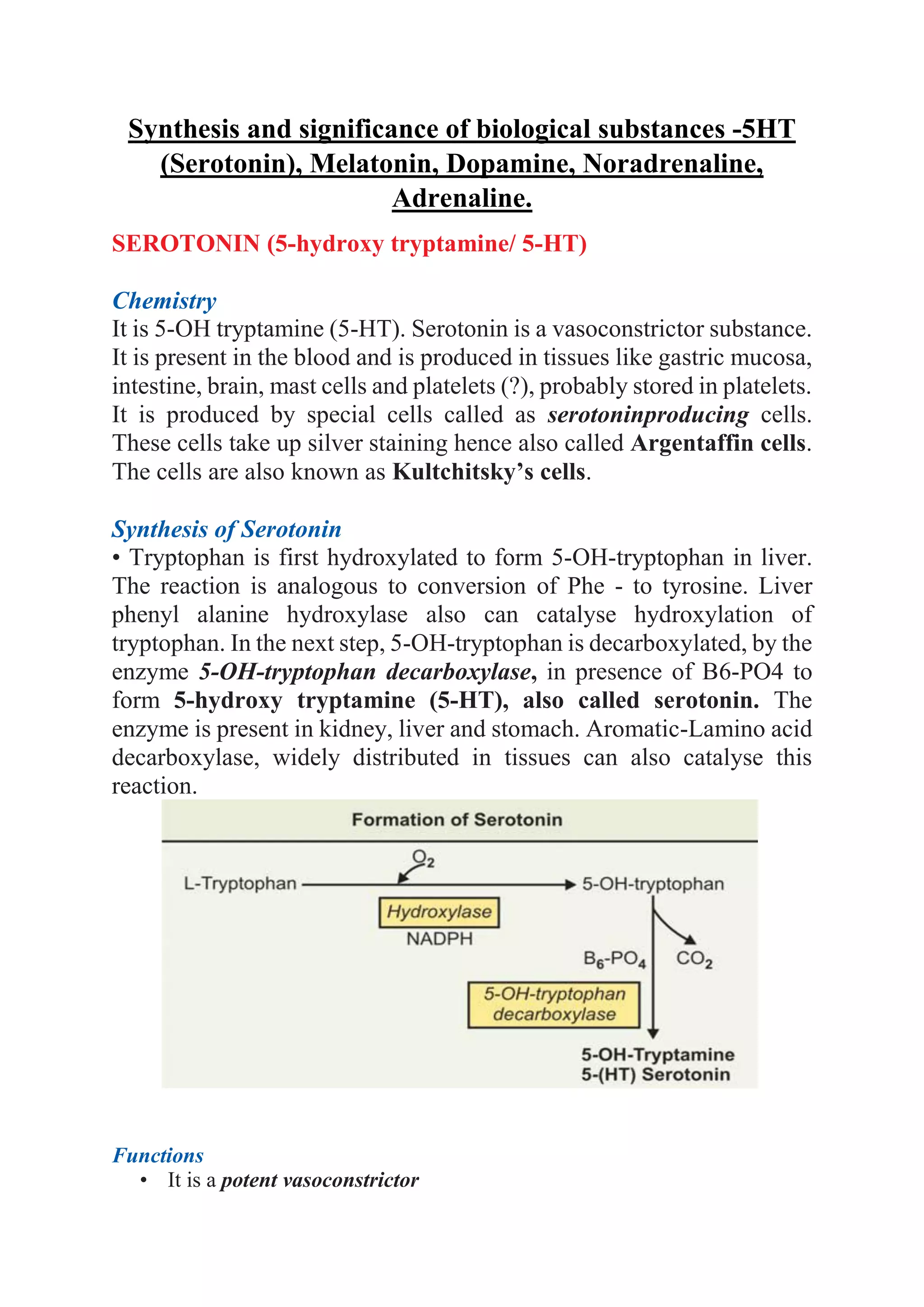
• Tryptophan is first hydroxylated to form 5-OH-tryptophan in liver.
The reaction is analogous to conversion of Phe - to tyrosine. Liver
phenyl alanine hydroxylase also can catalyse hydroxylation of
tryptophan. In the next step, 5-OH-tryptophan is decarboxylated, by the
enzyme 5-OH-tryptophan decarboxylase, in presence of B6-PO4 to
form 5-hydroxy tryptamine (5-HT), also called serotonin. The
enzyme is present in kidney, liver and stomach. Aromatic-Lamino acid
decarboxylase, widely distributed in tissues can also catalyse this
reaction.
Functions
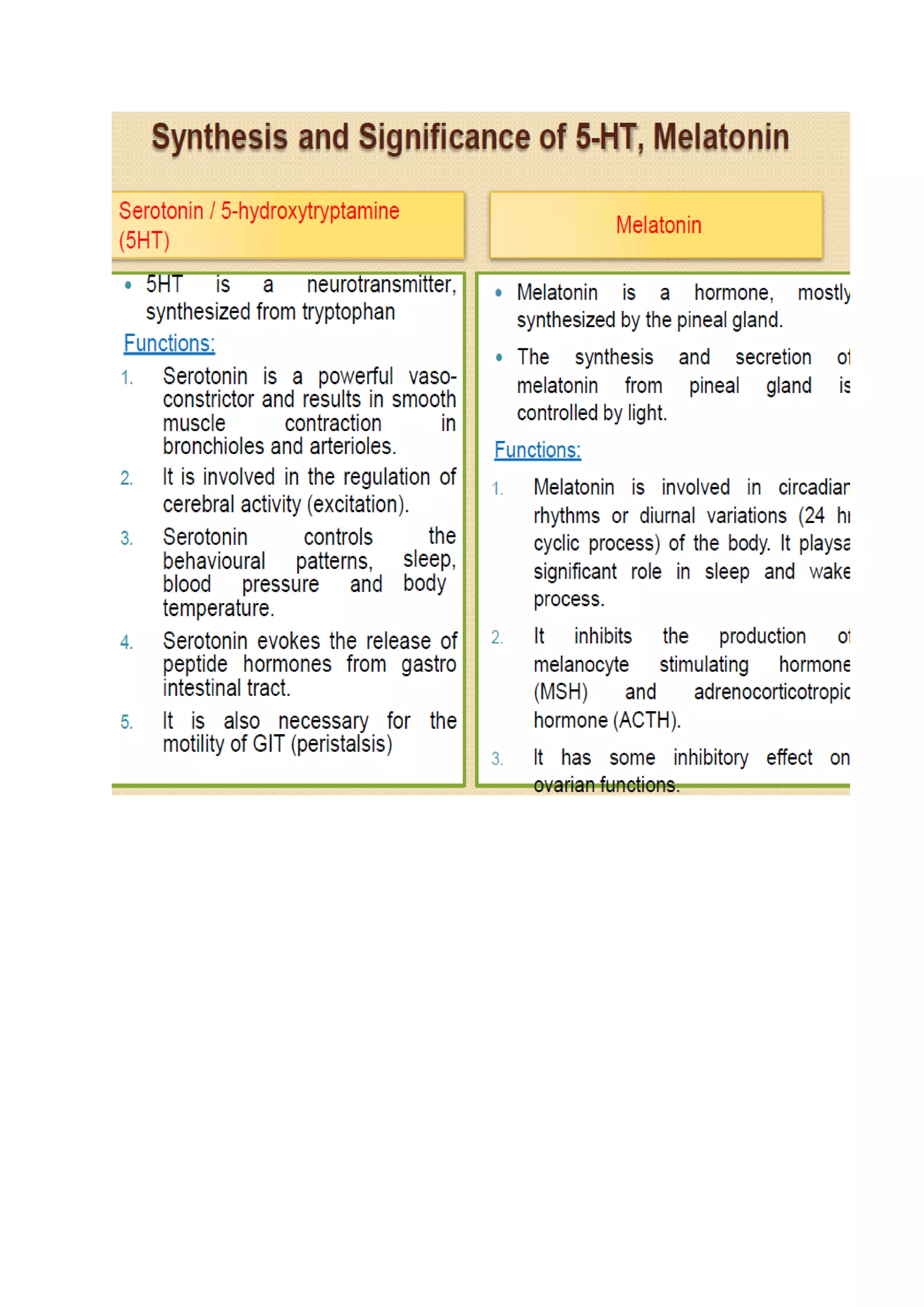
• It is a potent vasoconstrictor
• Produces contraction of smooth muscles
• Stimulator of cerebral activity.
Note: Serotonin is actually synthesised in tissues where it is found rather than
produced in one organ and carried by blood to other organs.
Effects of Serotonin on Brain
Serotonin does not pass blood-brain barrier to any significant amount. For
action it has to be produced locally from the amino acid.
• Excess of serotonin in brain tissues produces stimulation of cerebral
activity (excitation).
• Deficiency of serotonin produces depressant effect.
Catabolism of Serotonin: The enzyme which catalyses the conversion of
serotonin to 5-HIAA (5-OH-Indole acetic acid) is called Monoamine oxidase
(MAO). 5-HIAA is excreted in urine. Normal adults excrete about 7 mg HIAA
per day.
Effects of drugs on enzyme MAO
• Drugs which inhibit the enzyme, e.g. iproniazide, will prolong serotonin
action on the brain and produce a psychic stimulation due to increased
cerebral activity.
• Serotonin of the brain is in a bound form. Drugs like reserpine, a common
anti-hypertensive drug, acts by releasing the serotonin from its bound form
and thus making it readily available to MAO action. Hence reserpine
produces a depression of cerebral activity.
Significance of 5-HT-
Mood
 Serotonin is in the brain. It is thought to regulate mood,
happiness, and anxiety. Low levels of serotonin are linked to
depression, while increased levels of the hormone may
decrease arousal.
Bowel Movements
 Serotonin is found in your stomach and intestines. It helps
control your bowel movements and function.
Nausea
 Serotonin is produced when you become nauseated. Production
of serotonin increases to help remove bad food or other
substances from the body. It also increases in the blood, which
stimulates the part of the brain that controls nausea.
Sleep
 Serotonin is responsible for stimulating the parts of the brain that
control sleep and waking. Whether you sleep or wake depends
on the area is stimulated and which serotonin receptor is used.
Blood Clotting
 Serotonin is released to help heal wounds. Serotonin triggers
tiny arteries to narrow, which helps forms blood clots.
Bone Health
 Having very high levels of serotonin in the bones can lead to
osteoporosis, which makes the bones weaker.
MELATONIN
Melatonin is a hormone of Pineal body and peripheral nerves of man.
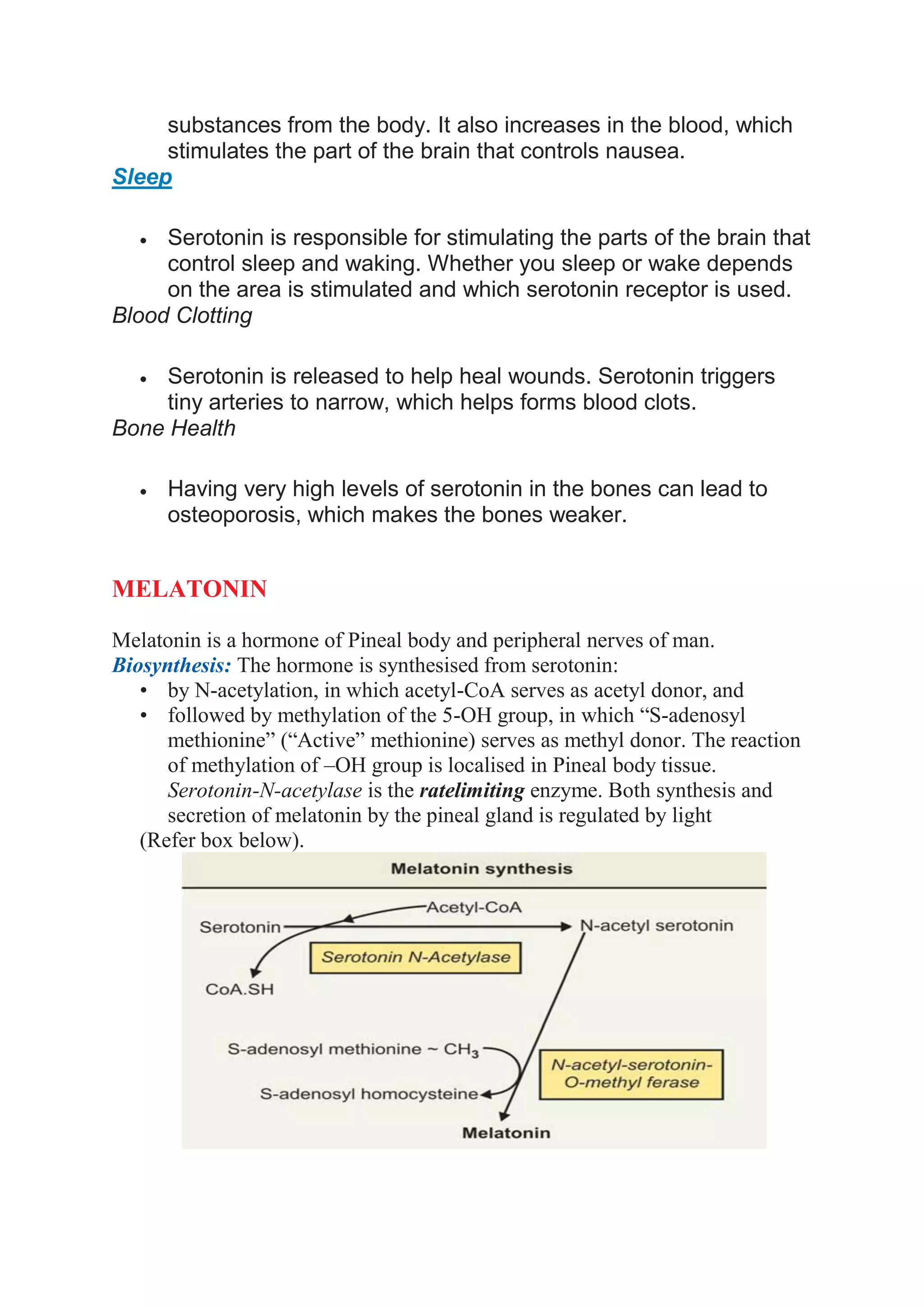
Biosynthesis: The hormone is synthesised from serotonin:
• by N-acetylation, in which acetyl-CoA serves as acetyl donor, and
• followed by methylation of the 5-OH group, in which “S-adenosyl
methionine” (“Active” methionine) serves as methyl donor. The reaction
of methylation of –OH group is localised in Pineal body tissue.
Serotonin-N-acetylase is the ratelimiting enzyme. Both synthesis and
secretion of melatonin by the pineal gland is regulated by light
(Refer box below).
Functions of Melatonin
• Melatonin may mediate in the effect of light on seasonal reproductive
cycles.
• It participates in diurnal biological rhythms.
Significance of Melatonin-
In humans, melatonin plays an important role in the regulation
of sleep cycles (i.e., circadian rhythm). Its production is influenced
by the detection of light and dark by the retina of the eye. For
example, the production of melatonin is inhibited when the retina
detects light and is stimulated in the absence of light. Special
photoreceptor cells in the retina send signals about light status to the
suprachiasmatic nucleus (SCN) in the hypothalamus of the brain.
These signals are then transmitted to the pineal gland. Melatonin
generation by the pineal gland, which peaks during the nighttime
hours, induces physiological changes that promote sleep, such as
decreased body temperature and respiration rate. During the day,
melatonin levels are low because large amounts of light are detected
by the retina. Light inhibition of melatonin production is central to
stimulating wakefulness in the morning and to maintaining alertness
throughout the day.
Melatonin has antiaging properties. For example, it acts as
an antioxidant, neutralizing harmful oxidative radicals, and it is
capable of activating certain antioxidant enzymes. Melatonin
production gradually declines with age, and its loss is associated with
several age-related diseases. Melatonin also plays a role in
modulating certain functions of the immune system.
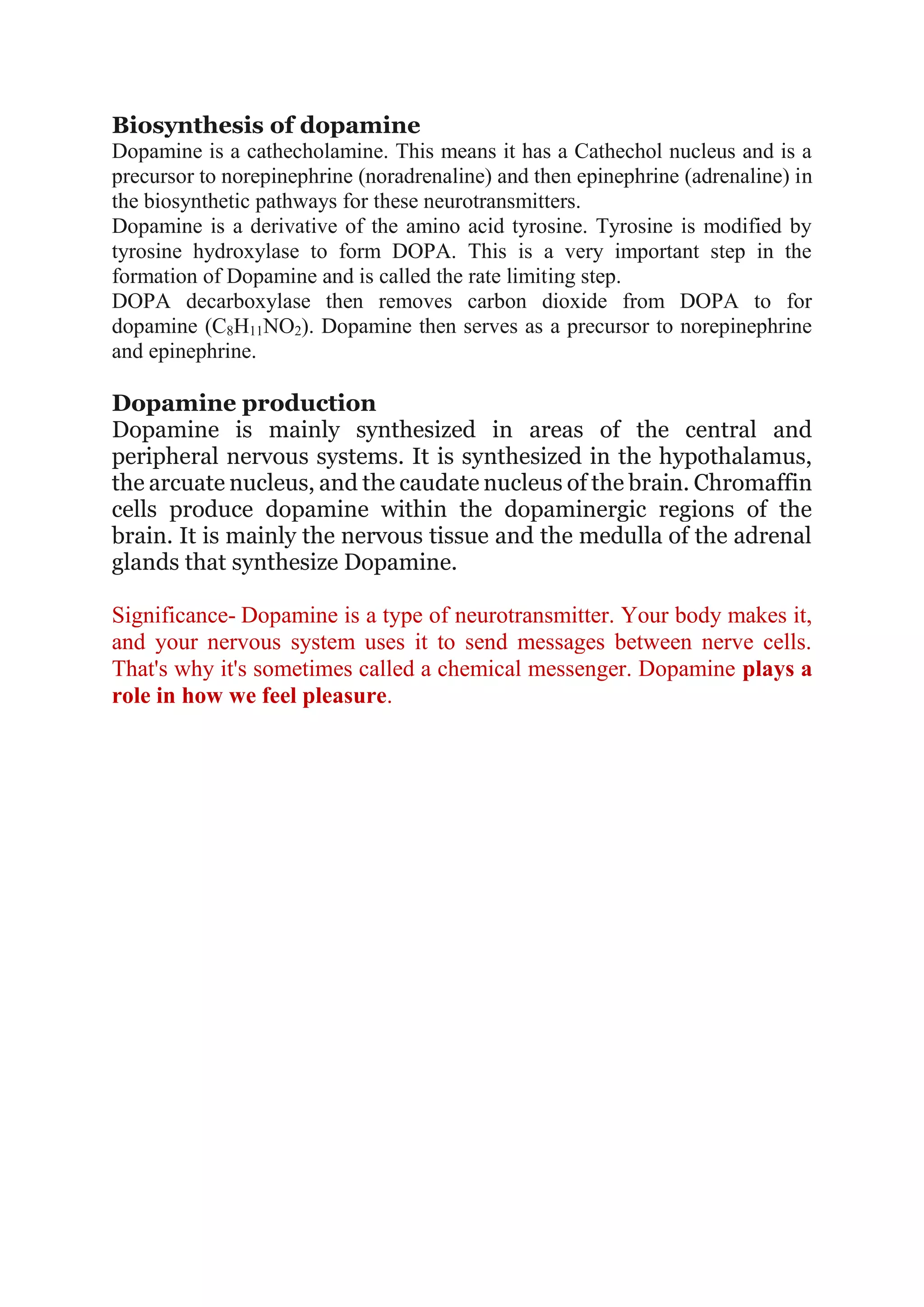
Dopamine as a cathecholamine
Dopamine’s chemical formula is C6H3(OH)2-CH2-CH2-NH2 and its
chemical name is "4-(2-aminoethyl)benzene-1,2-diol" and its
abbreviation is "DA."
Biosynthesis of dopamine
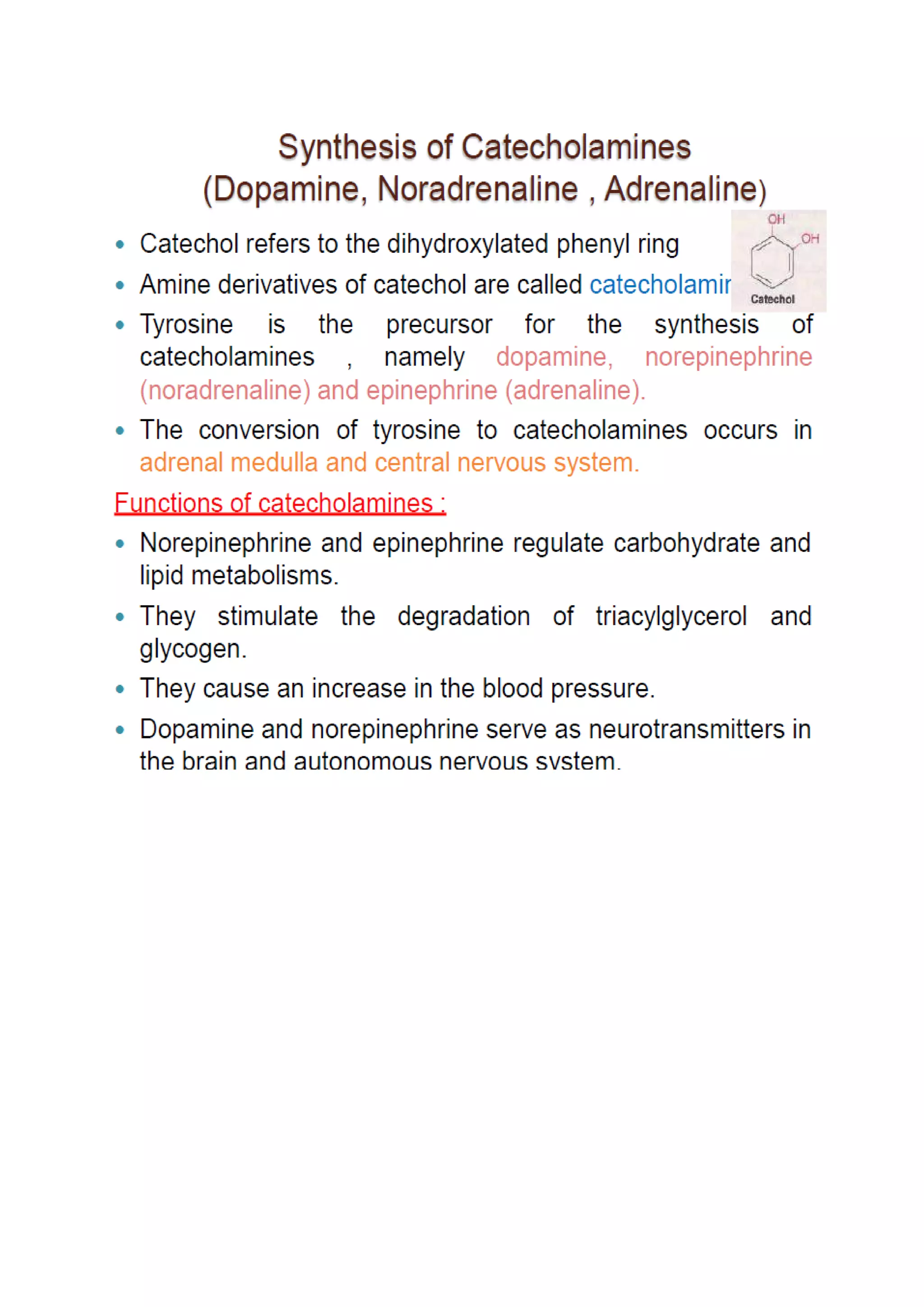
Dopamine is a cathecholamine. This means it has a Cathechol nucleus and is a
precursor to norepinephrine (noradrenaline) and then epinephrine (adrenaline) in
the biosynthetic pathways for these neurotransmitters.
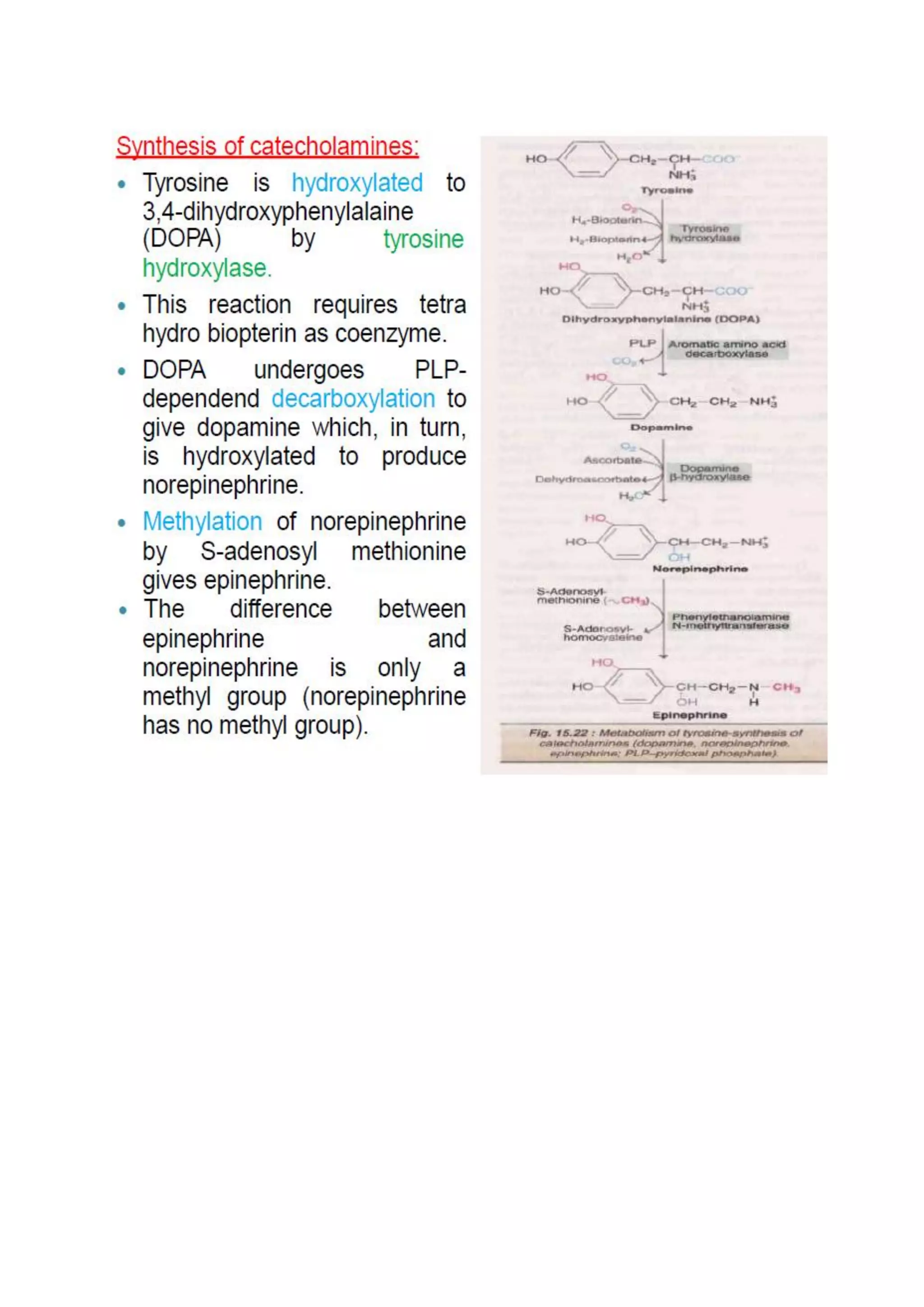
Dopamine is a derivative of the amino acid tyrosine. Tyrosine is modified by
tyrosine hydroxylase to form DOPA. This is a very important step in the
formation of Dopamine and is called the rate limiting step.
DOPA decarboxylase then removes carbon dioxide from DOPA to for
dopamine (C8H11NO2). Dopamine then serves as a precursor to norepinephrine
and epinephrine.
Dopamine production
Dopamine is mainly synthesized in areas of the central and
peripheral nervous systems. It is synthesized in the hypothalamus,
the arcuate nucleus, and the caudate nucleus of the brain. Chromaffin
cells produce dopamine within the dopaminergic regions of the
brain. It is mainly the nervous tissue and the medulla of the adrenal
glands that synthesize Dopamine.
Significance- Dopamine is a type of neurotransmitter. Your body makes it,
and your nervous system uses it to send messages between nerve cells.
That's why it's sometimes called a chemical messenger. Dopamine plays a
role in how we feel pleasure.
Synthesis and significance of biological substances by BNP.pdf

Synthesis and significance of biological substances by BNP.pdf

  • 1.
    Synthesis and significanceof biological substances -5HT (Serotonin), Melatonin, Dopamine, Noradrenaline, Adrenaline. SEROTONIN (5-hydroxy tryptamine/ 5-HT) Chemistry It is 5-OH tryptamine (5-HT). Serotonin is a vasoconstrictor substance. It is present in the blood and is produced in tissues like gastric mucosa, intestine, brain, mast cells and platelets (?), probably stored in platelets. It is produced by special cells called as serotoninproducing cells. These cells take up silver staining hence also called Argentaffin cells. The cells are also known as Kultchitsky’s cells. Synthesis of Serotonin • Tryptophan is first hydroxylated to form 5-OH-tryptophan in liver. The reaction is analogous to conversion of Phe - to tyrosine. Liver phenyl alanine hydroxylase also can catalyse hydroxylation of tryptophan. In the next step, 5-OH-tryptophan is decarboxylated, by the enzyme 5-OH-tryptophan decarboxylase, in presence of B6-PO4 to form 5-hydroxy tryptamine (5-HT), also called serotonin. The enzyme is present in kidney, liver and stomach. Aromatic-Lamino acid decarboxylase, widely distributed in tissues can also catalyse this reaction. Functions • It is a potent vasoconstrictor
  • 2.
    • Produces contractionof smooth muscles • Stimulator of cerebral activity. Note: Serotonin is actually synthesised in tissues where it is found rather than produced in one organ and carried by blood to other organs. Effects of Serotonin on Brain Serotonin does not pass blood-brain barrier to any significant amount. For action it has to be produced locally from the amino acid. • Excess of serotonin in brain tissues produces stimulation of cerebral activity (excitation). • Deficiency of serotonin produces depressant effect. Catabolism of Serotonin: The enzyme which catalyses the conversion of serotonin to 5-HIAA (5-OH-Indole acetic acid) is called Monoamine oxidase (MAO). 5-HIAA is excreted in urine. Normal adults excrete about 7 mg HIAA per day. Effects of drugs on enzyme MAO • Drugs which inhibit the enzyme, e.g. iproniazide, will prolong serotonin action on the brain and produce a psychic stimulation due to increased cerebral activity. • Serotonin of the brain is in a bound form. Drugs like reserpine, a common anti-hypertensive drug, acts by releasing the serotonin from its bound form and thus making it readily available to MAO action. Hence reserpine produces a depression of cerebral activity. Significance of 5-HT- Mood  Serotonin is in the brain. It is thought to regulate mood, happiness, and anxiety. Low levels of serotonin are linked to depression, while increased levels of the hormone may decrease arousal. Bowel Movements  Serotonin is found in your stomach and intestines. It helps control your bowel movements and function. Nausea  Serotonin is produced when you become nauseated. Production of serotonin increases to help remove bad food or other
  • 3.
    substances from thebody. It also increases in the blood, which stimulates the part of the brain that controls nausea. Sleep  Serotonin is responsible for stimulating the parts of the brain that control sleep and waking. Whether you sleep or wake depends on the area is stimulated and which serotonin receptor is used. Blood Clotting  Serotonin is released to help heal wounds. Serotonin triggers tiny arteries to narrow, which helps forms blood clots. Bone Health  Having very high levels of serotonin in the bones can lead to osteoporosis, which makes the bones weaker. MELATONIN Melatonin is a hormone of Pineal body and peripheral nerves of man. Biosynthesis: The hormone is synthesised from serotonin: • by N-acetylation, in which acetyl-CoA serves as acetyl donor, and • followed by methylation of the 5-OH group, in which “S-adenosyl methionine” (“Active” methionine) serves as methyl donor. The reaction of methylation of –OH group is localised in Pineal body tissue. Serotonin-N-acetylase is the ratelimiting enzyme. Both synthesis and secretion of melatonin by the pineal gland is regulated by light (Refer box below).
  • 4.
    Functions of Melatonin •Melatonin may mediate in the effect of light on seasonal reproductive cycles. • It participates in diurnal biological rhythms. Significance of Melatonin- In humans, melatonin plays an important role in the regulation of sleep cycles (i.e., circadian rhythm). Its production is influenced by the detection of light and dark by the retina of the eye. For example, the production of melatonin is inhibited when the retina detects light and is stimulated in the absence of light. Special photoreceptor cells in the retina send signals about light status to the suprachiasmatic nucleus (SCN) in the hypothalamus of the brain. These signals are then transmitted to the pineal gland. Melatonin generation by the pineal gland, which peaks during the nighttime hours, induces physiological changes that promote sleep, such as decreased body temperature and respiration rate. During the day, melatonin levels are low because large amounts of light are detected by the retina. Light inhibition of melatonin production is central to stimulating wakefulness in the morning and to maintaining alertness throughout the day. Melatonin has antiaging properties. For example, it acts as an antioxidant, neutralizing harmful oxidative radicals, and it is capable of activating certain antioxidant enzymes. Melatonin production gradually declines with age, and its loss is associated with several age-related diseases. Melatonin also plays a role in modulating certain functions of the immune system.
  • 5.
    Dopamine as acathecholamine Dopamine’s chemical formula is C6H3(OH)2-CH2-CH2-NH2 and its chemical name is "4-(2-aminoethyl)benzene-1,2-diol" and its abbreviation is "DA."
  • 6.
    Biosynthesis of dopamine Dopamineis a cathecholamine. This means it has a Cathechol nucleus and is a precursor to norepinephrine (noradrenaline) and then epinephrine (adrenaline) in the biosynthetic pathways for these neurotransmitters. Dopamine is a derivative of the amino acid tyrosine. Tyrosine is modified by tyrosine hydroxylase to form DOPA. This is a very important step in the formation of Dopamine and is called the rate limiting step. DOPA decarboxylase then removes carbon dioxide from DOPA to for dopamine (C8H11NO2). Dopamine then serves as a precursor to norepinephrine and epinephrine. Dopamine production Dopamine is mainly synthesized in areas of the central and peripheral nervous systems. It is synthesized in the hypothalamus, the arcuate nucleus, and the caudate nucleus of the brain. Chromaffin cells produce dopamine within the dopaminergic regions of the brain. It is mainly the nervous tissue and the medulla of the adrenal glands that synthesize Dopamine. Significance- Dopamine is a type of neurotransmitter. Your body makes it, and your nervous system uses it to send messages between nerve cells. That's why it's sometimes called a chemical messenger. Dopamine plays a role in how we feel pleasure.