CARBOHYDRATE
METABOLISM
M.Sc. I
Roll No. 12
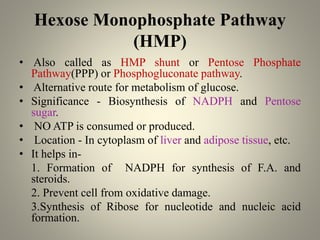
Hexose Monophosphate Pathway
(HMP)
• Also called as HMP shunt or Pentose Phosphate
Pathway(PPP) or Phosphogluconate pathway.
• Alternative route for metabolism of glucose.
• Significance - Biosynthesis of NADPH and Pentose
sugar.
• NO ATP is consumed or produced.
• Location - In cytoplasm of liver and adipose tissue, etc.
• It helps in-
1. Formation of NADPH for synthesis of F.A. and
steroids.
2. Prevent cell from oxidative damage.
3.Synthesis of Ribose for nucleotide and nucleic acid
formation.
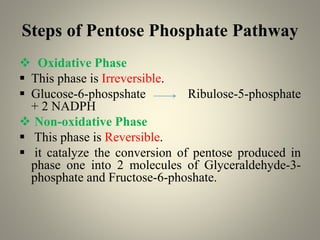
Steps of Pentose Phosphate Pathway
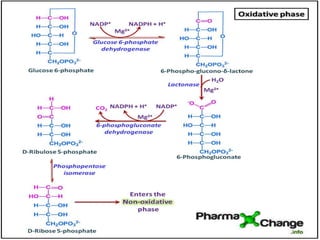
 Oxidative Phase
 This phase is Irreversible.
 Glucose-6-phospshate Ribulose-5-phosphate
+ 2 NADPH
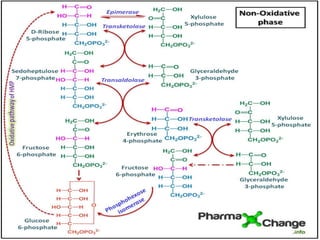
 Non-oxidative Phase
 This phase is Reversible.
 it catalyze the conversion of pentose produced in
phase one into 2 molecules of Glyceraldehyde-3-
phosphate and Fructose-6-phoshate.
Gamma Amino Butyrate Shunt
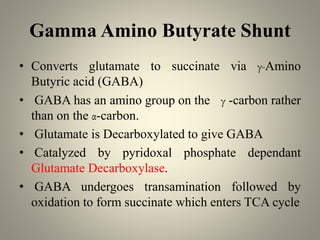
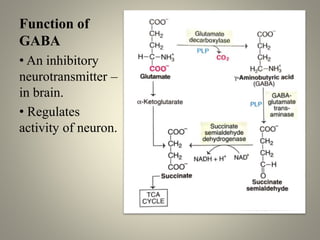
• Converts glutamate to succinate via γ-Amino
Butyric acid (GABA)
• GABA has an amino group on the γ -carbon rather
than on the α-carbon.
• Glutamate is Decarboxylated to give GABA
• Catalyzed by pyridoxal phosphate dependant
Glutamate Decarboxylase.
• GABA undergoes transamination followed by
oxidation to form succinate which enters TCA cycle
Function of
GABA
• An inhibitory
neurotransmitter –
in brain.
• Regulates
activity of neuron.
Glycogen Metabolism
• Glycogen is the storage form
of glucose in animals
• Excess glucose is converted
into glycogen for storage.
• It is stored in cytosol of liver
and muscle cells in the form of
granules.
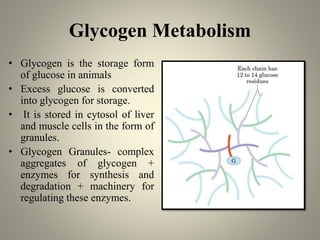
• Glycogen Granules- complex
aggregates of glycogen +
enzymes for synthesis and
degradation + machinery for
regulating these enzymes.
 Functions of Glycogen
1. Maintenance of blood glucose level
2. Muscle glycogen-
- Quick source of energy for metabolism
- Exhausted in less than one hour
3. Liver glycogen-
- Reservoir of glucose for other tissues
- When dietory glucose is not available
- Imp for neurons(which only use glucose as a fuel)
- Can be deployed in 12-24 hours.
 Why To Store Glycogen as a Fuel Reserve?
1. Rapidly mobilized
2. Can generate energy in absence of oxygen
3. Brain depends on continuous supply of glucose- mostly
comes from glycogen.
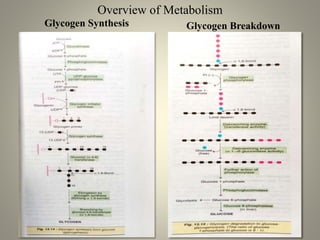
Overview of Metabolism
Glycogen Synthesis Glycogen Breakdown
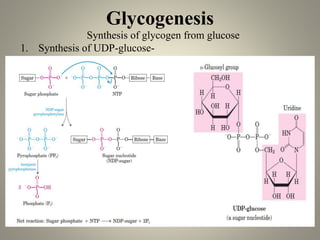
Glycogenesis
Synthesis of glycogen from glucose
1. Synthesis of UDP-glucose-
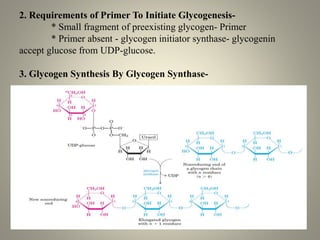
2. Requirements of Primer To Initiate Glycogenesis-
* Small fragment of preexisting glycogen- Primer
* Primer absent - glycogen initiator synthase- glycogenin
accept glucose from UDP-glucose.
3. Glycogen Synthesis By Glycogen Synthase-
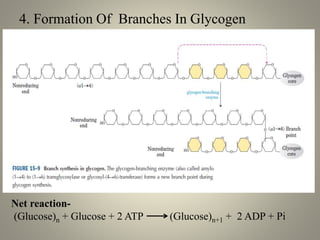
4. Formation Of Branches In Glycogen
Net reaction-
(Glucose)n + Glucose + 2 ATP (Glucose)n+1 + 2 ADP + Pi
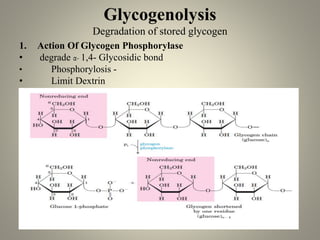
Glycogenolysis
Degradation of stored glycogen
1. Action Of Glycogen Phosphorylase
• degrade α- 1,4- Glycosidic bond
• Phosphorylosis -
• Limit Dextrin
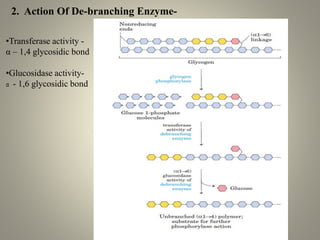
2. Action Of De-branching Enzyme-
•Transferase activity -
α – 1,4 glycosidic bond
•Glucosidase activity-
α - 1,6 glycosidic bond
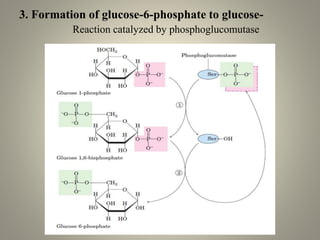
3. Formation of glucose-6-phosphate to glucose-
Reaction catalyzed by phosphoglucomutase
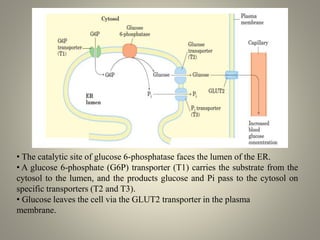
• The catalytic site of glucose 6-phosphatase faces the lumen of the ER.
• A glucose 6-phosphate (G6P) transporter (T1) carries the substrate from the
cytosol to the lumen, and the products glucose and Pi pass to the cytosol on
specific transporters (T2 and T3).
• Glucose leaves the cell via the GLUT2 transporter in the plasma
membrane.
References
• Harper’s Biochemistry- 27th Edition
• Principle Of Biochemistry -Lehninger
• Biochemistry – U. Satyanarayana.
Carbohydrate metabolism

Carbohydrate metabolism

  • 1.
  • 2.
    Hexose Monophosphate Pathway (HMP) •Also called as HMP shunt or Pentose Phosphate Pathway(PPP) or Phosphogluconate pathway. • Alternative route for metabolism of glucose. • Significance - Biosynthesis of NADPH and Pentose sugar. • NO ATP is consumed or produced. • Location - In cytoplasm of liver and adipose tissue, etc. • It helps in- 1. Formation of NADPH for synthesis of F.A. and steroids. 2. Prevent cell from oxidative damage. 3.Synthesis of Ribose for nucleotide and nucleic acid formation.
  • 3.
    Steps of PentosePhosphate Pathway  Oxidative Phase  This phase is Irreversible.  Glucose-6-phospshate Ribulose-5-phosphate + 2 NADPH  Non-oxidative Phase  This phase is Reversible.  it catalyze the conversion of pentose produced in phase one into 2 molecules of Glyceraldehyde-3- phosphate and Fructose-6-phoshate.
  • 6.
    Gamma Amino ButyrateShunt • Converts glutamate to succinate via γ-Amino Butyric acid (GABA) • GABA has an amino group on the γ -carbon rather than on the α-carbon. • Glutamate is Decarboxylated to give GABA • Catalyzed by pyridoxal phosphate dependant Glutamate Decarboxylase. • GABA undergoes transamination followed by oxidation to form succinate which enters TCA cycle
  • 7.
    Function of GABA • Aninhibitory neurotransmitter – in brain. • Regulates activity of neuron.
  • 8.
    Glycogen Metabolism • Glycogenis the storage form of glucose in animals • Excess glucose is converted into glycogen for storage. • It is stored in cytosol of liver and muscle cells in the form of granules. • Glycogen Granules- complex aggregates of glycogen + enzymes for synthesis and degradation + machinery for regulating these enzymes.
  • 9.
     Functions ofGlycogen 1. Maintenance of blood glucose level 2. Muscle glycogen- - Quick source of energy for metabolism - Exhausted in less than one hour 3. Liver glycogen- - Reservoir of glucose for other tissues - When dietory glucose is not available - Imp for neurons(which only use glucose as a fuel) - Can be deployed in 12-24 hours.  Why To Store Glycogen as a Fuel Reserve? 1. Rapidly mobilized 2. Can generate energy in absence of oxygen 3. Brain depends on continuous supply of glucose- mostly comes from glycogen.
  • 10.
    Overview of Metabolism GlycogenSynthesis Glycogen Breakdown
  • 11.
    Glycogenesis Synthesis of glycogenfrom glucose 1. Synthesis of UDP-glucose-
  • 12.
    2. Requirements ofPrimer To Initiate Glycogenesis- * Small fragment of preexisting glycogen- Primer * Primer absent - glycogen initiator synthase- glycogenin accept glucose from UDP-glucose. 3. Glycogen Synthesis By Glycogen Synthase-
  • 13.
    4. Formation OfBranches In Glycogen Net reaction- (Glucose)n + Glucose + 2 ATP (Glucose)n+1 + 2 ADP + Pi
  • 14.
    Glycogenolysis Degradation of storedglycogen 1. Action Of Glycogen Phosphorylase • degrade α- 1,4- Glycosidic bond • Phosphorylosis - • Limit Dextrin
  • 15.
    2. Action OfDe-branching Enzyme- •Transferase activity - α – 1,4 glycosidic bond •Glucosidase activity- α - 1,6 glycosidic bond
  • 16.
    3. Formation ofglucose-6-phosphate to glucose- Reaction catalyzed by phosphoglucomutase
  • 17.
    • The catalyticsite of glucose 6-phosphatase faces the lumen of the ER. • A glucose 6-phosphate (G6P) transporter (T1) carries the substrate from the cytosol to the lumen, and the products glucose and Pi pass to the cytosol on specific transporters (T2 and T3). • Glucose leaves the cell via the GLUT2 transporter in the plasma membrane.
  • 18.
    References • Harper’s Biochemistry-27th Edition • Principle Of Biochemistry -Lehninger • Biochemistry – U. Satyanarayana.