Presented by
Nagendra P
16PBT2004
Capsule Staining
1
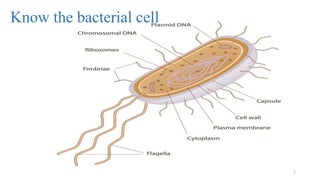
Know the bacterial cell
2
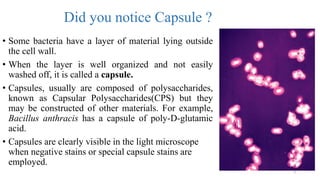
Did you notice Capsule ?
• Some bacteria have a layer of material lying outside
the cell wall.
• When the layer is well organized and not easily
washed off, it is called a capsule.
• Capsules, usually are composed of polysaccharides,
known as Capsular Polysaccharides(CPS) but they
may be constructed of other materials. For example,
Bacillus anthracis has a capsule of poly-D-glutamic
acid.
• Capsules are clearly visible in the light microscope
when negative stains or special capsule stains are
employed.
3
What does these capsules do ?
• Help bacteria resist phagocytosis.
• Protect bacteria against desiccation.
• Provide a food reserve when certain organic compounds are in excess.
• A virulence determinant of pathogenic microbes. E.g. Streptococcus pneumonia
• Prevention of complement-mediated bacterial cell lysis.
• Protection of anaerobes from oxygen toxicity.
• They exclude bacterial viruses and most hydrophobic toxic materials such as
detergents.
• It also aids bacterial attachment to surfaces of solid objects in aquatic
environments or to tissue surfaces in plant and animal hosts.
4
Few Strains having Capsules
• Capsules are widely distributed and are found in such diverse pathogens as
• Escherichia coli,
• Neisseria meningitidis,
• Actinobacillus
• pleuropneumoniae,
• Sinorhizobium meliloti,
• as well as in important Gram-positive pathogens including
• Staphylococcus aureus and
• Streptococcus pneumoniae.
5
Staining
• Staining -It’s a process of adding a dye to a microbial culture.
• Simple Staining (shapes and arrangements)
• Differential Staining (Gram reactions)
• Special Staining (Capsule, flagella, spores)
• Dye-Is a colored substance that has an affinity to the substrate to which it is
being applied.
• Basic dye—possess a positive charge (methylene blue, basic fuchsin, crystal
violet, safranin, malachite green)
• Acidic dye—possess a negative charge (eosin, rose bengal, and acid fuchsin)
6
Why Capsule Staining ?
• Bacterial capsules are non-ionic, so neither acidic nor basic stains will adhere to
their surfaces.
• Because most capsule materials are water soluble, simple stains will not adhere to
them.
• Since the capsule is a major virulence factor in the major disease-causing bacteria,
it is essential to identify the strain.
7
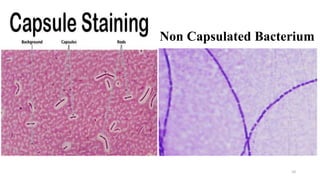
Principle of Capsule staining
• Negative staining methods contrast a translucent, darker colored, background
with stained cells but an unstained capsule. The background is formed with
• india ink or
• nigrosin or
• congo red.
• Next counterstaining with dyes like crystal violet or methylene blue, bacterial
cell wall takes up the dye.
• Capsules appear colourless with stained cells against dark background.
• Capsules are fragile and can be diminished, desiccated, distorted, or destroyed by
heating. A drop of serum can be used during smearing to enhance the size of the
capsule and make it more easily observed with a typical compound
light microscope.
8
Procedure
• Place a small drop of a negative stain on the slide.
• Using sterile technique, add a loopful of bacterial culture to slide, smearing it in
the dye.
• With an other slide, drag the ink-cell mixture into a thin film along the first slide
and let stand for5-7 minutes.
• Allow to air dry (do not heat fix).
• Flood the smear with crystal violet stain (this will stain the cells but not the
capsules) for about 1 minutes.
• Drain the crystal violet by tilting the slide at a 45 degree angle and let stain run off
until it air dries .
• Examine the smear microscopically (100X) for the presence of encapsulated cells
as indicated by clear zones surrounding the cells. 9
Non Capsulated Bacterium
10
Quality Control
• Positive control: Klebsiella pneumoniae (ATCC e13883)
• Negative control: Alacilgenes denitrificans (ATCC 15173)
11
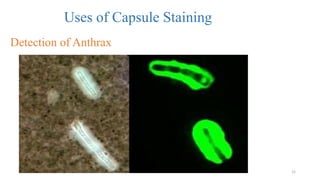
Uses of Capsule Staining
Detection of Anthrax
12
References
1. http://homeinsurancequotations.com/post/bacterial-cell-diagram-and functions.html
2. http://www.microbiologyinfo.com/capsule-staining-principle-reagents-procedure-and-
result
3. http://microbeonline.com/bacterial-capsule-structure-and-importance-and-examples-
of-capsulated-bacteria
4. https://www.ncbi.nlm.nih.gov/books/NBK310485/#annex1.s68
5. http://textbookofbacteriology.net/Anthrax_3.html
6. Willis LM, Whitfield C. Structure, biosynthesis, and function of bacterial capsular
polysaccharides synthesized by ABC transporter-dependent pathways. Carbohydrate
research. 2013 Aug 30;378:35-44.
7. Rautemaa R, Meri S. Complement-resistance mechanisms of bacteria. Microbes and
infection. 1999 Aug 31;1(10):785-94.
8. Microbiology; 5th Edition; Lansing M. Prescott; October 2002. 13
Thank YOU
14

Capsule staining

  • 1.
  • 2.
  • 3.
    Did you noticeCapsule ? • Some bacteria have a layer of material lying outside the cell wall. • When the layer is well organized and not easily washed off, it is called a capsule. • Capsules, usually are composed of polysaccharides, known as Capsular Polysaccharides(CPS) but they may be constructed of other materials. For example, Bacillus anthracis has a capsule of poly-D-glutamic acid. • Capsules are clearly visible in the light microscope when negative stains or special capsule stains are employed. 3
  • 4.
    What does thesecapsules do ? • Help bacteria resist phagocytosis. • Protect bacteria against desiccation. • Provide a food reserve when certain organic compounds are in excess. • A virulence determinant of pathogenic microbes. E.g. Streptococcus pneumonia • Prevention of complement-mediated bacterial cell lysis. • Protection of anaerobes from oxygen toxicity. • They exclude bacterial viruses and most hydrophobic toxic materials such as detergents. • It also aids bacterial attachment to surfaces of solid objects in aquatic environments or to tissue surfaces in plant and animal hosts. 4
  • 5.
    Few Strains havingCapsules • Capsules are widely distributed and are found in such diverse pathogens as • Escherichia coli, • Neisseria meningitidis, • Actinobacillus • pleuropneumoniae, • Sinorhizobium meliloti, • as well as in important Gram-positive pathogens including • Staphylococcus aureus and • Streptococcus pneumoniae. 5
  • 6.
    Staining • Staining -It’sa process of adding a dye to a microbial culture. • Simple Staining (shapes and arrangements) • Differential Staining (Gram reactions) • Special Staining (Capsule, flagella, spores) • Dye-Is a colored substance that has an affinity to the substrate to which it is being applied. • Basic dye—possess a positive charge (methylene blue, basic fuchsin, crystal violet, safranin, malachite green) • Acidic dye—possess a negative charge (eosin, rose bengal, and acid fuchsin) 6
  • 7.
    Why Capsule Staining? • Bacterial capsules are non-ionic, so neither acidic nor basic stains will adhere to their surfaces. • Because most capsule materials are water soluble, simple stains will not adhere to them. • Since the capsule is a major virulence factor in the major disease-causing bacteria, it is essential to identify the strain. 7
  • 8.
    Principle of Capsulestaining • Negative staining methods contrast a translucent, darker colored, background with stained cells but an unstained capsule. The background is formed with • india ink or • nigrosin or • congo red. • Next counterstaining with dyes like crystal violet or methylene blue, bacterial cell wall takes up the dye. • Capsules appear colourless with stained cells against dark background. • Capsules are fragile and can be diminished, desiccated, distorted, or destroyed by heating. A drop of serum can be used during smearing to enhance the size of the capsule and make it more easily observed with a typical compound light microscope. 8
  • 9.
    Procedure • Place asmall drop of a negative stain on the slide. • Using sterile technique, add a loopful of bacterial culture to slide, smearing it in the dye. • With an other slide, drag the ink-cell mixture into a thin film along the first slide and let stand for5-7 minutes. • Allow to air dry (do not heat fix). • Flood the smear with crystal violet stain (this will stain the cells but not the capsules) for about 1 minutes. • Drain the crystal violet by tilting the slide at a 45 degree angle and let stain run off until it air dries . • Examine the smear microscopically (100X) for the presence of encapsulated cells as indicated by clear zones surrounding the cells. 9
  • 10.
  • 11.
    Quality Control • Positivecontrol: Klebsiella pneumoniae (ATCC e13883) • Negative control: Alacilgenes denitrificans (ATCC 15173) 11
  • 12.
    Uses of CapsuleStaining Detection of Anthrax 12
  • 13.
    References 1. http://homeinsurancequotations.com/post/bacterial-cell-diagram-and functions.html 2.http://www.microbiologyinfo.com/capsule-staining-principle-reagents-procedure-and- result 3. http://microbeonline.com/bacterial-capsule-structure-and-importance-and-examples- of-capsulated-bacteria 4. https://www.ncbi.nlm.nih.gov/books/NBK310485/#annex1.s68 5. http://textbookofbacteriology.net/Anthrax_3.html 6. Willis LM, Whitfield C. Structure, biosynthesis, and function of bacterial capsular polysaccharides synthesized by ABC transporter-dependent pathways. Carbohydrate research. 2013 Aug 30;378:35-44. 7. Rautemaa R, Meri S. Complement-resistance mechanisms of bacteria. Microbes and infection. 1999 Aug 31;1(10):785-94. 8. Microbiology; 5th Edition; Lansing M. Prescott; October 2002. 13
  • 14.