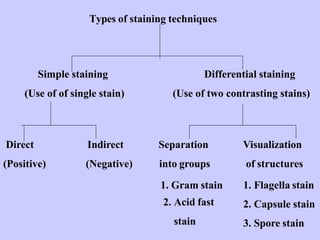
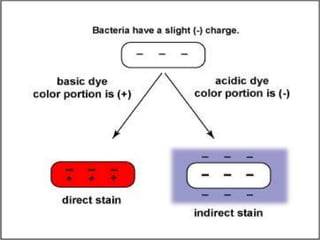
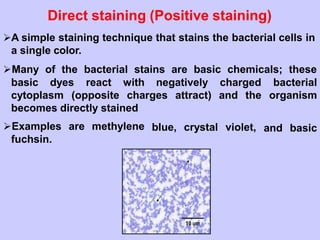
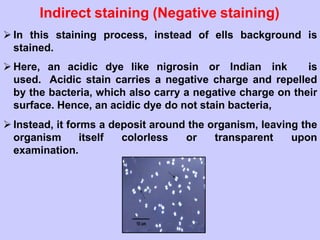
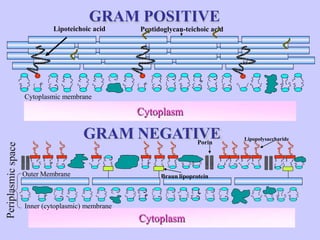
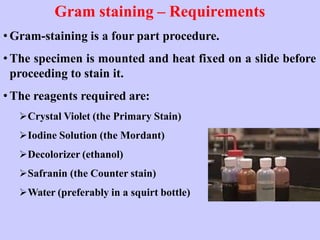
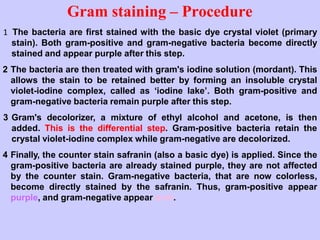
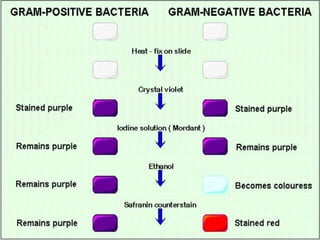
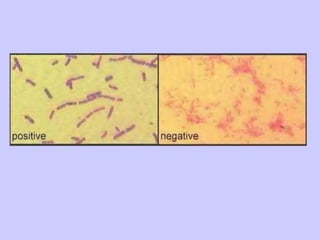
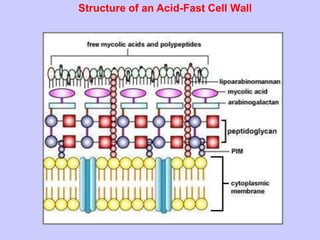
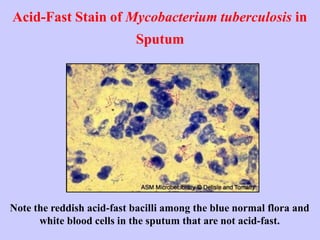
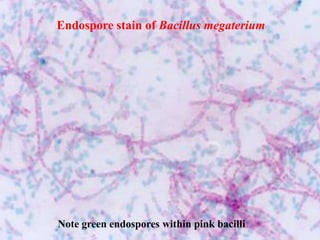
Staining improves the visibility of organisms by increasing contrast with the background. It can differentiate morphological types, determine staining characteristics, diagnose diseases, and demonstrate culture purity. Stains contain a chromophore that imparts color and an auxochrome that allows staining. Requirements for staining include basic stains for bacteria, mordants to fix stains, accentuators to intensify reactions, and decolorizers. Staining techniques include simple, differential, direct, indirect, and special staining for structures like capsules and endospores. Gram staining separates bacteria into gram-positive and gram-negative groups based on cell wall composition and stain retention. Acid-fast staining relies on lipid-rich cell walls retaining stains despite