Presented by:
        Sandeep Sasidharan
         IIT Kanpur
   Purpose of camera calibration

   Calibration distortion models

   Methods of calibration
   Determine the IOP of camera

       Focal length (f)

       The principal point co-ordinates (x0,y0)

       Image distortion parameters
   For carrying out photogrammetry
       Camera lens must provide perfect central projection
       Camera focal plane is perfectly flat

                            OR

       Camera lens perspective centre, the ground point
        and the corresponding point on the image lies in a
        straight line
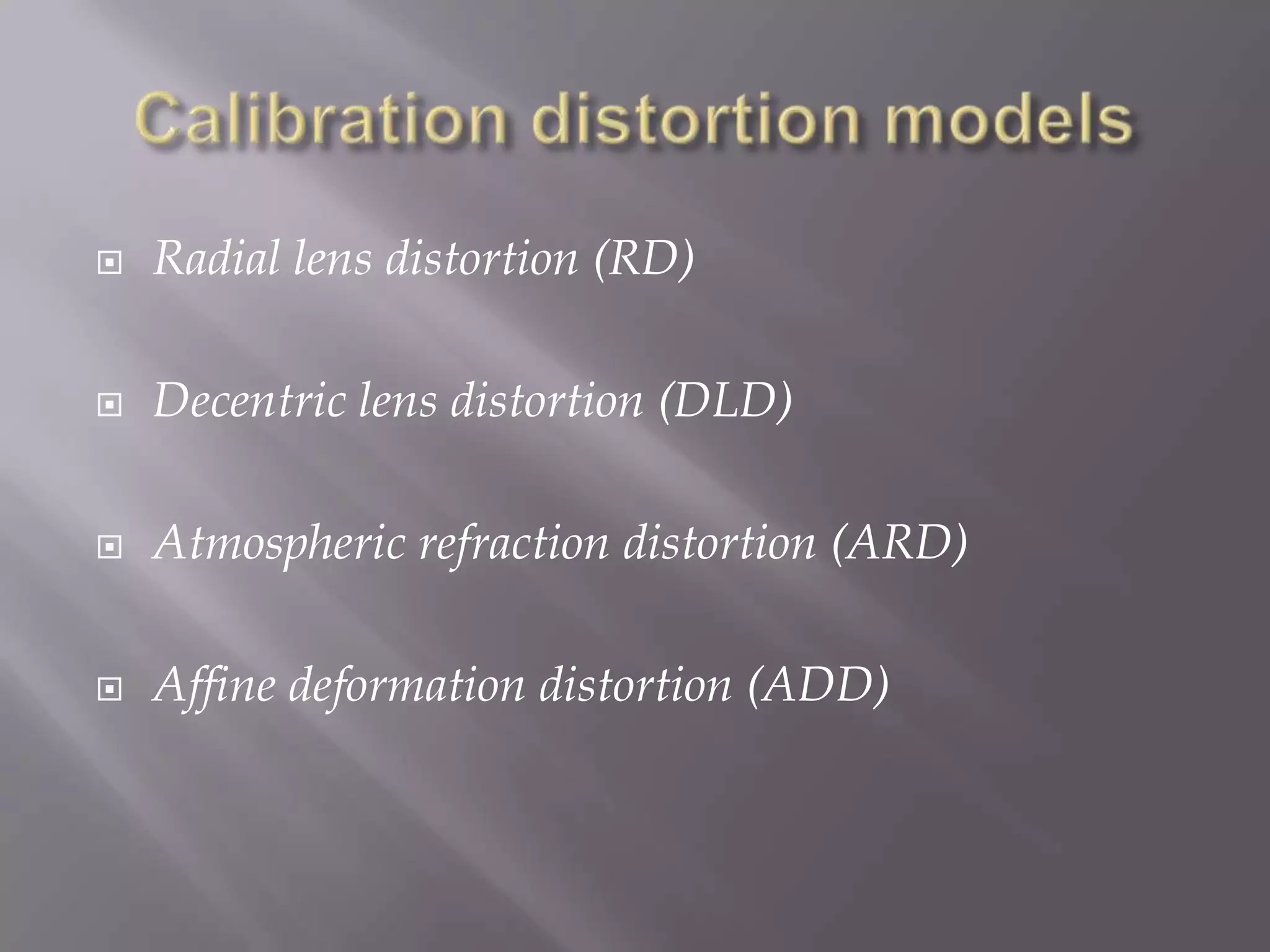
   Radial lens distortion (RD)

   Decentric lens distortion (DLD)

   Atmospheric refraction distortion (ARD)

   Affine deformation distortion (ADD)
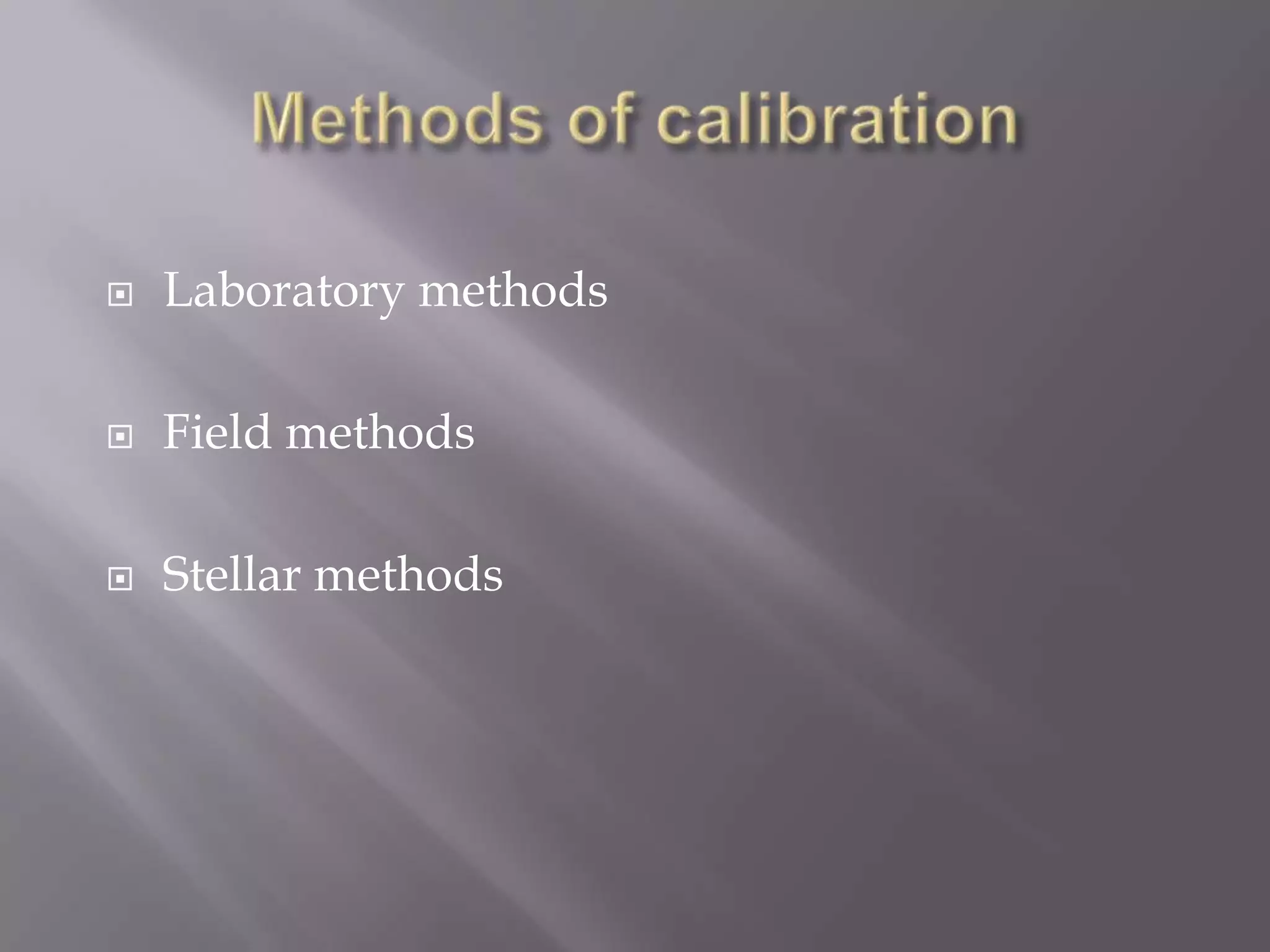
   Laboratory methods

   Field methods

   Stellar methods
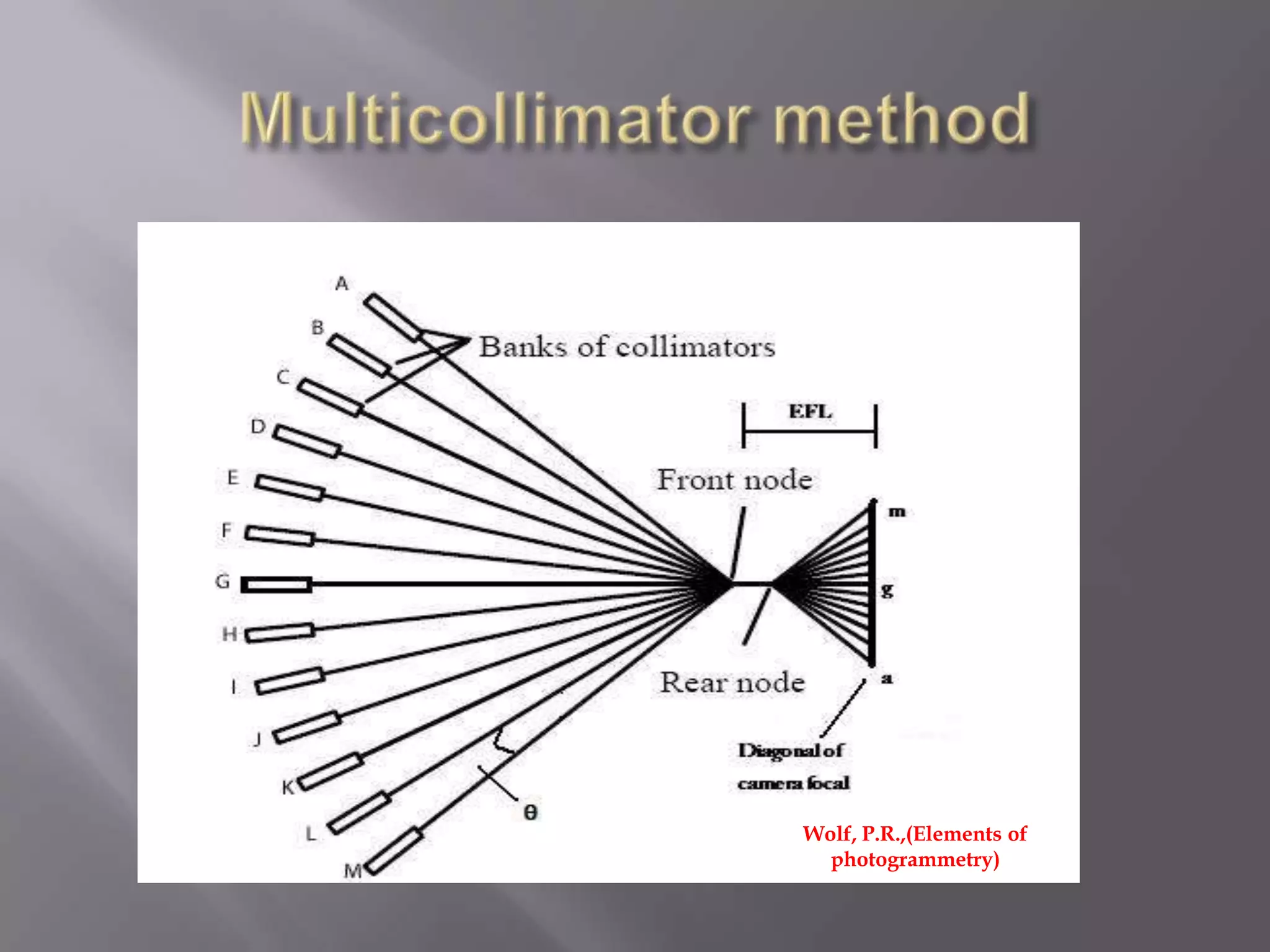
Wolf, P.R.,(Elements of
  photogrammetry)
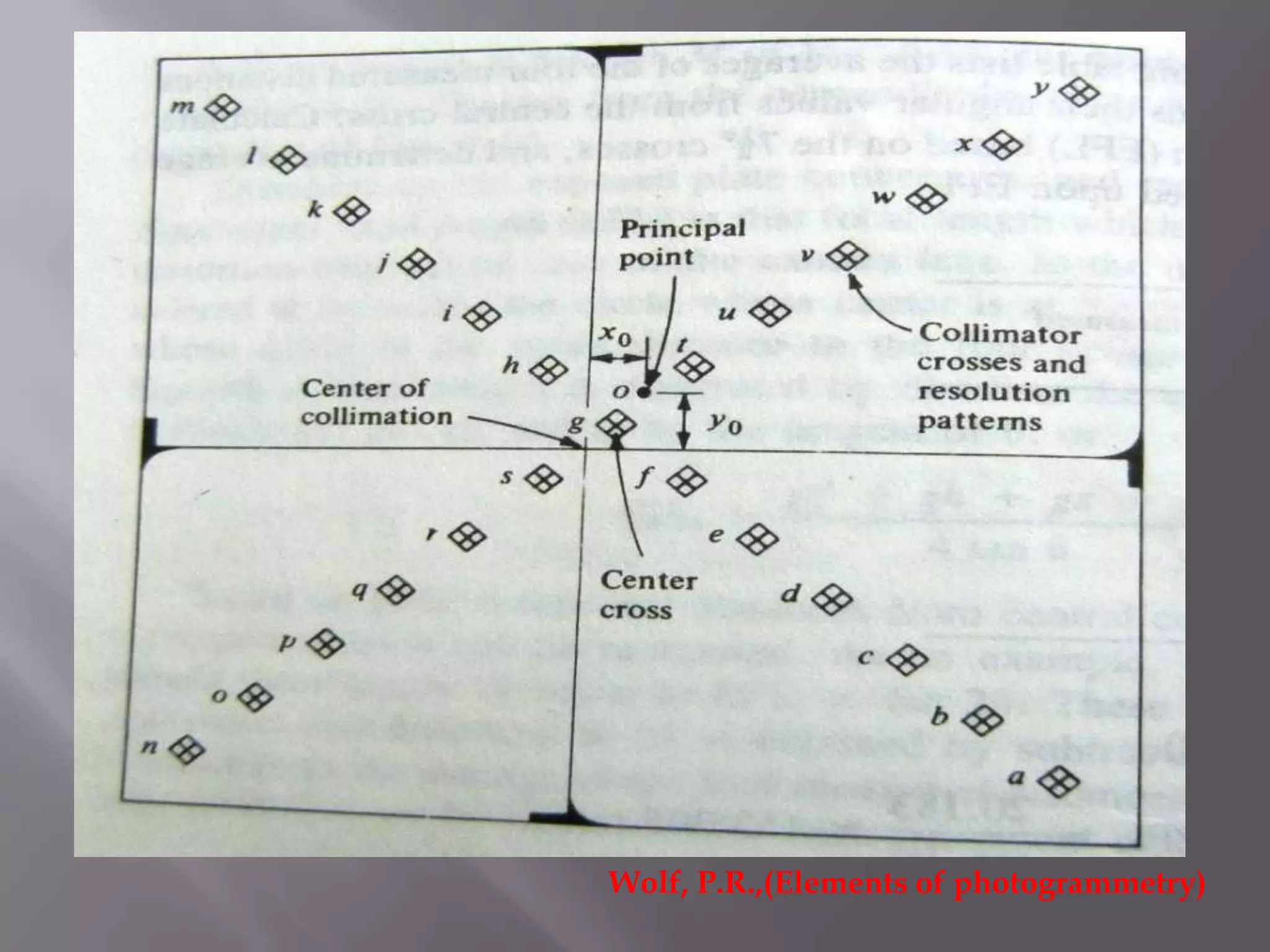
Wolf, P.R.,(Elements of photogrammetry)
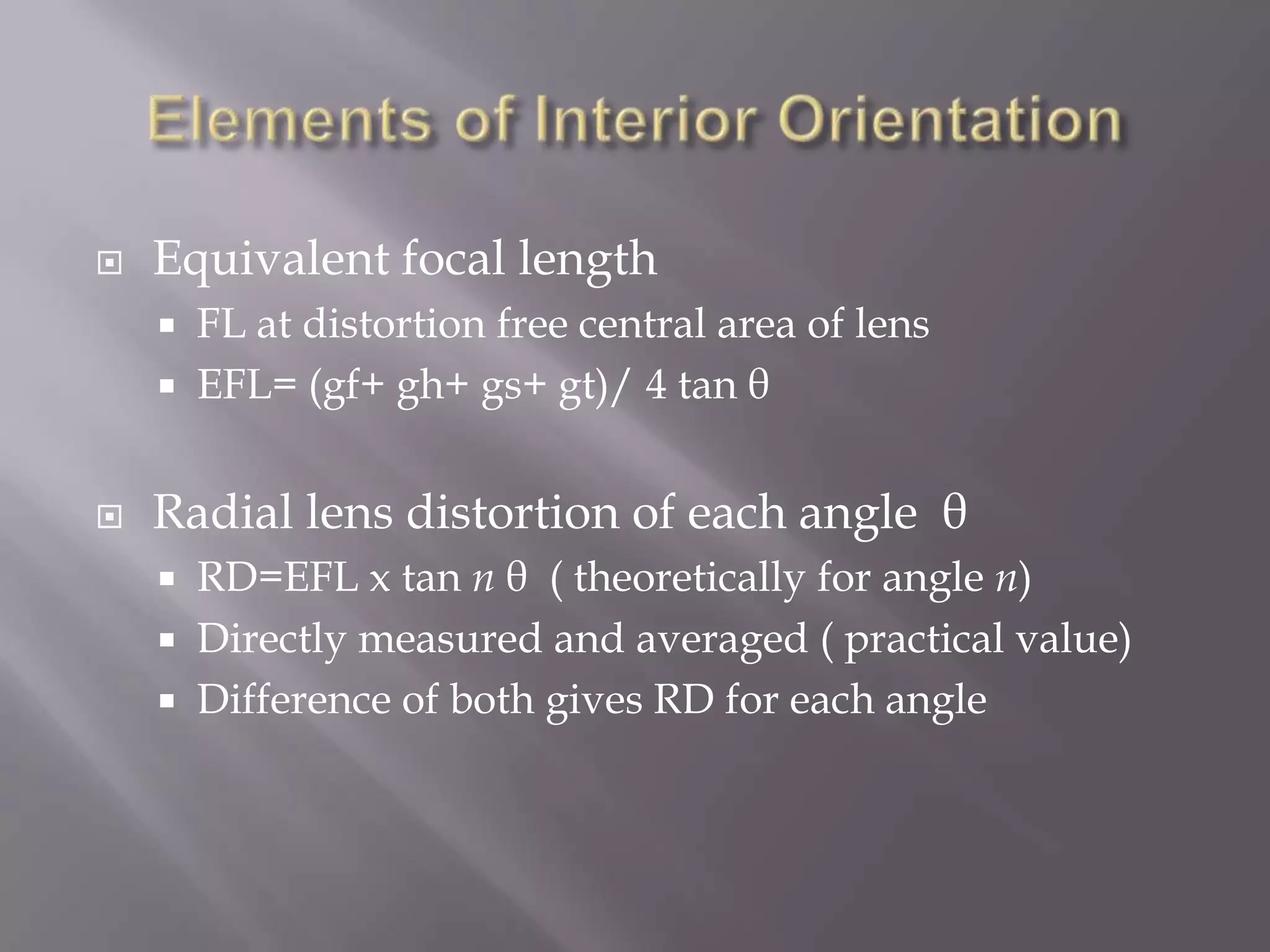
   Equivalent focal length
       FL at distortion free central area of lens
       EFL= (gf+ gh+ gs+ gt)/ 4 tan θ


   Radial lens distortion of each angle θ
       RD=EFL x tan n θ ( theoretically for angle n)
       Directly measured and averaged ( practical value)
       Difference of both gives RD for each angle
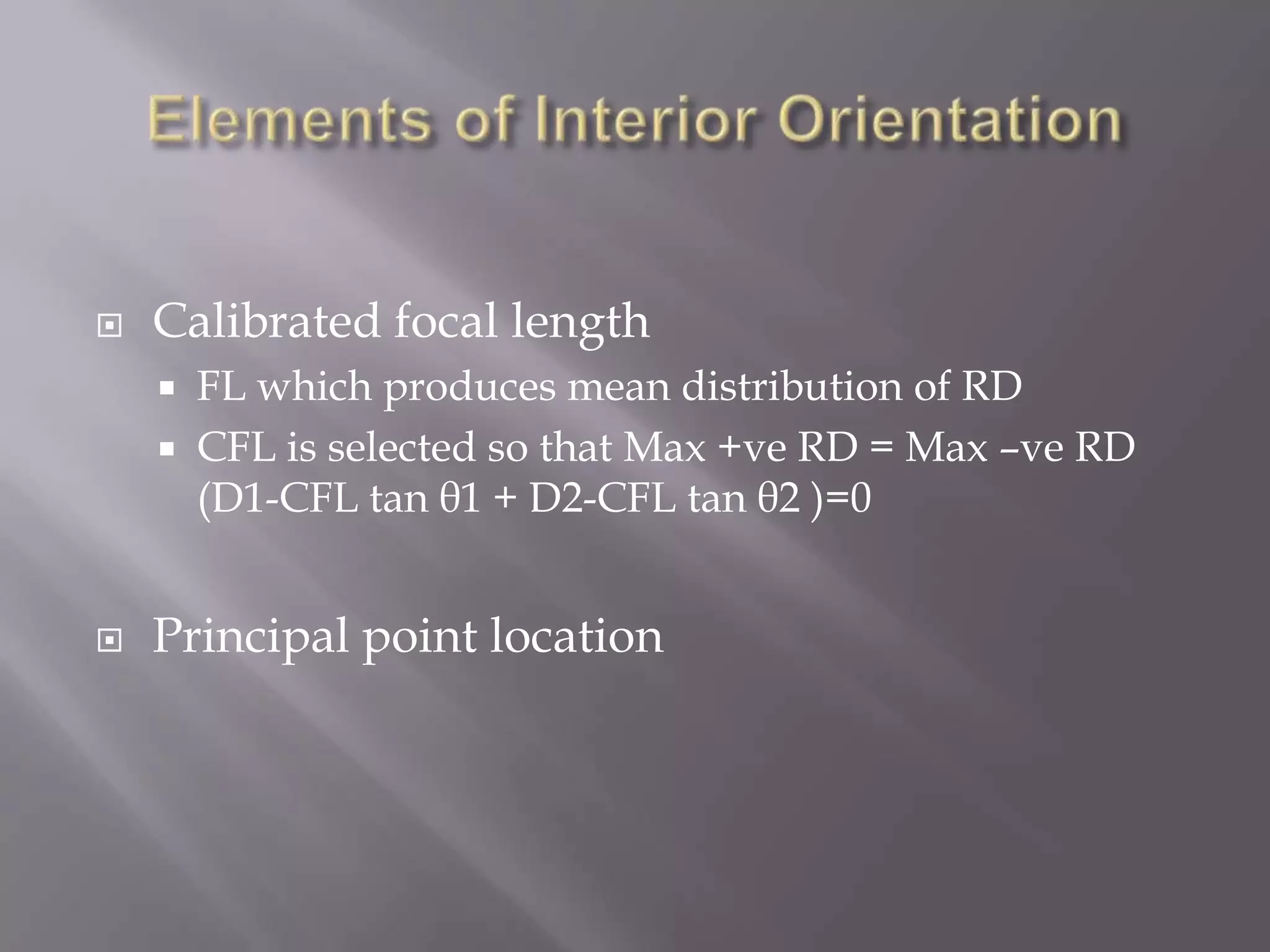
   Calibrated focal length
       FL which produces mean distribution of RD
       CFL is selected so that Max +ve RD = Max –ve RD
        (D1-CFL tan θ1 + D2-CFL tan θ2 )=0


   Principal point location
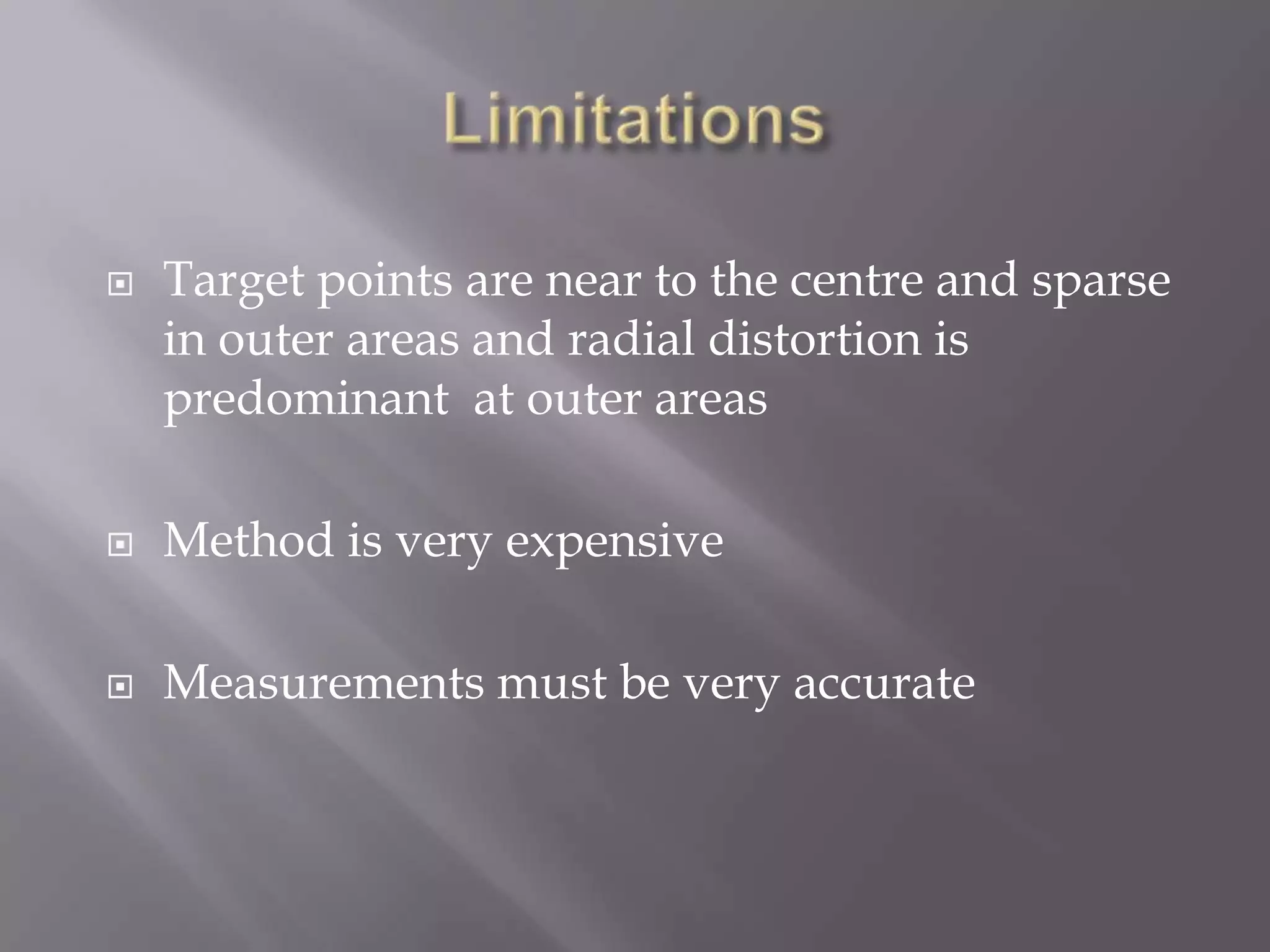
   Target points are near to the centre and sparse
    in outer areas and radial distortion is
    predominant at outer areas

   Method is very expensive

   Measurements must be very accurate
   Self calibration

   Calibration using 2D/3D calibration objects

   Bundle Adjustment Method
   Development of new algorithms for IOP
    determination

   Helped using less expensive digital cameras for
    conventional photogrammetry
 camera calibration

camera calibration

  • 1.
    Presented by: Sandeep Sasidharan IIT Kanpur
  • 2.
    Purpose of camera calibration  Calibration distortion models  Methods of calibration
  • 3.
    Determine the IOP of camera  Focal length (f)  The principal point co-ordinates (x0,y0)  Image distortion parameters
  • 4.
    For carrying out photogrammetry  Camera lens must provide perfect central projection  Camera focal plane is perfectly flat OR  Camera lens perspective centre, the ground point and the corresponding point on the image lies in a straight line
  • 5.
    Radial lens distortion (RD)  Decentric lens distortion (DLD)  Atmospheric refraction distortion (ARD)  Affine deformation distortion (ADD)
  • 6.
    Laboratory methods  Field methods  Stellar methods
  • 7.
    Wolf, P.R.,(Elements of photogrammetry)
  • 8.
    Wolf, P.R.,(Elements ofphotogrammetry)
  • 9.
    Equivalent focal length  FL at distortion free central area of lens  EFL= (gf+ gh+ gs+ gt)/ 4 tan θ  Radial lens distortion of each angle θ  RD=EFL x tan n θ ( theoretically for angle n)  Directly measured and averaged ( practical value)  Difference of both gives RD for each angle
  • 10.
    Calibrated focal length  FL which produces mean distribution of RD  CFL is selected so that Max +ve RD = Max –ve RD (D1-CFL tan θ1 + D2-CFL tan θ2 )=0  Principal point location
  • 11.
    Target points are near to the centre and sparse in outer areas and radial distortion is predominant at outer areas  Method is very expensive  Measurements must be very accurate
  • 12.
    Self calibration  Calibration using 2D/3D calibration objects  Bundle Adjustment Method
  • 13.
    Development of new algorithms for IOP determination  Helped using less expensive digital cameras for conventional photogrammetry