07/09/13
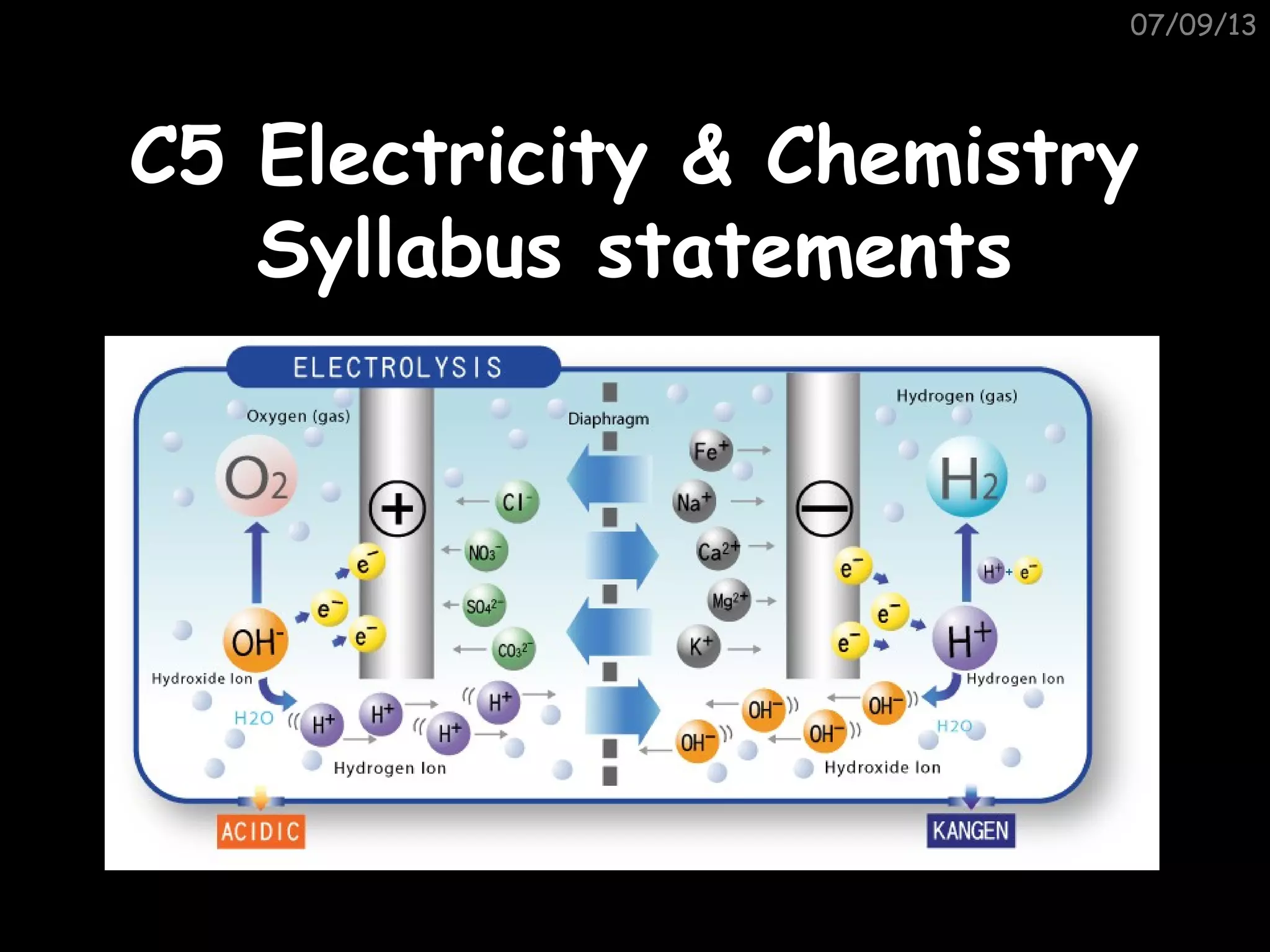
C5 Electricity & ChemistryC5 Electricity & Chemistry
Syllabus statementsSyllabus statements
C5 Electricity & ChemistryC5 Electricity & Chemistry
1. State that electrolysis is the chemical effect of
electricity on ionic compounds, causing them to
break up into simpler substances, usually elements.
2. Use the terms electrode, electrolyte, anode and
cathode.
3. Describe electrolysis in terms of the ions
present and the reactions at the electrodes.
C5 Electricity & ChemistryC5 Electricity & Chemistry
4. Describe the electrode products, using inert
electrodes, in the electrolysis of:
•molten lead(II) bromide;
•aqueous copper chloride;
•dilute sulfuric acid.
6. Relate the products of electrolysis to the
electrolyte & electrodes used, exemplified by the
above, together with aqueous copper(II) sulfate
using carbon electrodes and using copper
electrodes (as used in the refining of copper).
C5 Electricity & ChemistryC5 Electricity & Chemistry
5. State and use the general principle that metals
or hydrogen are formed at the negative electrode
(cathode), and that non-metals (other than
hydrogen) are formed at the positive electrode
(anode).
8. Predict the products of the electrolysis of a
specified binary compound in the molten state, or
in aqueous solution.
C5 Electricity & ChemistryC5 Electricity & Chemistry
7. Describe the electroplating of metals, using
laboratory apparatus.
9. Describe, in outline, the chemistry of the
manufacture of
•aluminium from pure aluminium oxide in molten
cryolite,
•chlorine, hydrogen and sodium hydroxide from
concentrated aqueous sodium chloride.
C5 Electricity & ChemistryC5 Electricity & Chemistry
7. Describe the electroplating of metals, using
laboratory apparatus.
9. Describe, in outline, the chemistry of the
manufacture of
•aluminium from pure aluminium oxide in molten
cryolite,
•chlorine, hydrogen and sodium hydroxide from
concentrated aqueous sodium chloride.

C5 syllabus statements

  • 1.
    07/09/13 C5 Electricity &ChemistryC5 Electricity & Chemistry Syllabus statementsSyllabus statements
  • 2.
    C5 Electricity &ChemistryC5 Electricity & Chemistry 1. State that electrolysis is the chemical effect of electricity on ionic compounds, causing them to break up into simpler substances, usually elements. 2. Use the terms electrode, electrolyte, anode and cathode. 3. Describe electrolysis in terms of the ions present and the reactions at the electrodes.
  • 3.
    C5 Electricity &ChemistryC5 Electricity & Chemistry 4. Describe the electrode products, using inert electrodes, in the electrolysis of: •molten lead(II) bromide; •aqueous copper chloride; •dilute sulfuric acid. 6. Relate the products of electrolysis to the electrolyte & electrodes used, exemplified by the above, together with aqueous copper(II) sulfate using carbon electrodes and using copper electrodes (as used in the refining of copper).
  • 4.
    C5 Electricity &ChemistryC5 Electricity & Chemistry 5. State and use the general principle that metals or hydrogen are formed at the negative electrode (cathode), and that non-metals (other than hydrogen) are formed at the positive electrode (anode). 8. Predict the products of the electrolysis of a specified binary compound in the molten state, or in aqueous solution.
  • 5.
    C5 Electricity &ChemistryC5 Electricity & Chemistry 7. Describe the electroplating of metals, using laboratory apparatus. 9. Describe, in outline, the chemistry of the manufacture of •aluminium from pure aluminium oxide in molten cryolite, •chlorine, hydrogen and sodium hydroxide from concentrated aqueous sodium chloride.
  • 6.
    C5 Electricity &ChemistryC5 Electricity & Chemistry 7. Describe the electroplating of metals, using laboratory apparatus. 9. Describe, in outline, the chemistry of the manufacture of •aluminium from pure aluminium oxide in molten cryolite, •chlorine, hydrogen and sodium hydroxide from concentrated aqueous sodium chloride.