Introduction to Electrolysis
Definitions and Terminology
Examination Requirements
i) Electrolysis
1.39 understand an electric current as a flow of
electrons or ions
1.40 understand why covalent compounds do not
conduct electricity
1.41 understand why ionic compounds conduct
electricity only when molten or in solution
1.42 describe simple experiments to distinguish
between electrolytes and non-electrolytes
Examination Requirements
1.43 recall that electrolysis involves the formation
of new substances when ionic compounds
conduct electricity
1.44 describe simple experiments for the
electrolysis, using inert electrodes, of molten
salts such as lead(II) bromide
1.45 write ionic half-equations representing the
reactions at the electrodes during electrolysis.
Definitions
Electric current - a flow of electrons through
a wire, or a flow of electrical charge through
a conducting material.
Electrode - a device for putting current into
or taking current out of a conductor.
Electrolysis - a process in which a compound is
decomposed by an electric current.
Definitions (continued)
Cathode - a negative electrode. An electrode
with a surplus of electrons.
Anode - a positive electrode. An electrode
deficient in electrons.
Electrolyte - a substance which, when
liquid(molten) or in solution, conducts
electricity and is decomposed by the current.
Definitions (continued)
Ion - an atom, or group of atoms, with an
electric charge. Metal ions are positively
charged. Non‑metal ions are negatively
charged.
Anion - a negative ion which flows towards the
anode during electrolysis.
Cation - a positive ion which flows towards the
cathode during electrolysis.
Electrolytes
To be an electrolyte, the compound must contain ions
to carry the electric current through the compound.
The ions must be free to move so that they are
attracted to the electrode of opposite charge. The
ions are free to move in molten(melted) compounds
or when the compound is dissolved in water.
Electrolytes are;
a) Ionic compounds (metal/non-metal compounds).
b) Acids or alkalis.
c) Salts.
Electrolysis of Lead(II) Bromide
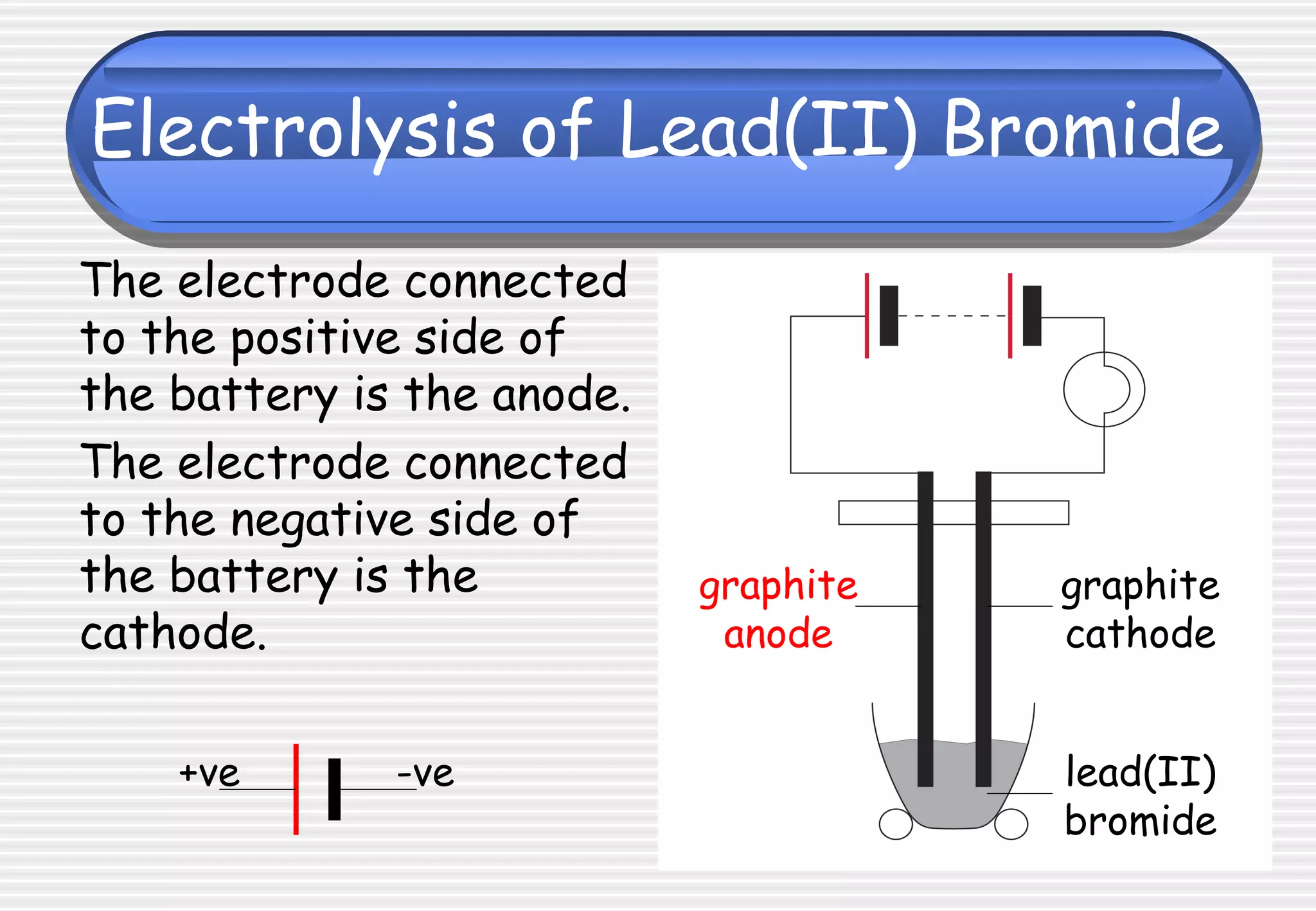
The electrode connected
to the positive side of
the battery is the anode.
The electrode connected
to the negative side of
the battery is the
cathode.
+ve -ve
graphite
anode
graphite
cathode
lead(II)
bromide
Electrolysis of Lead(II) Bromide
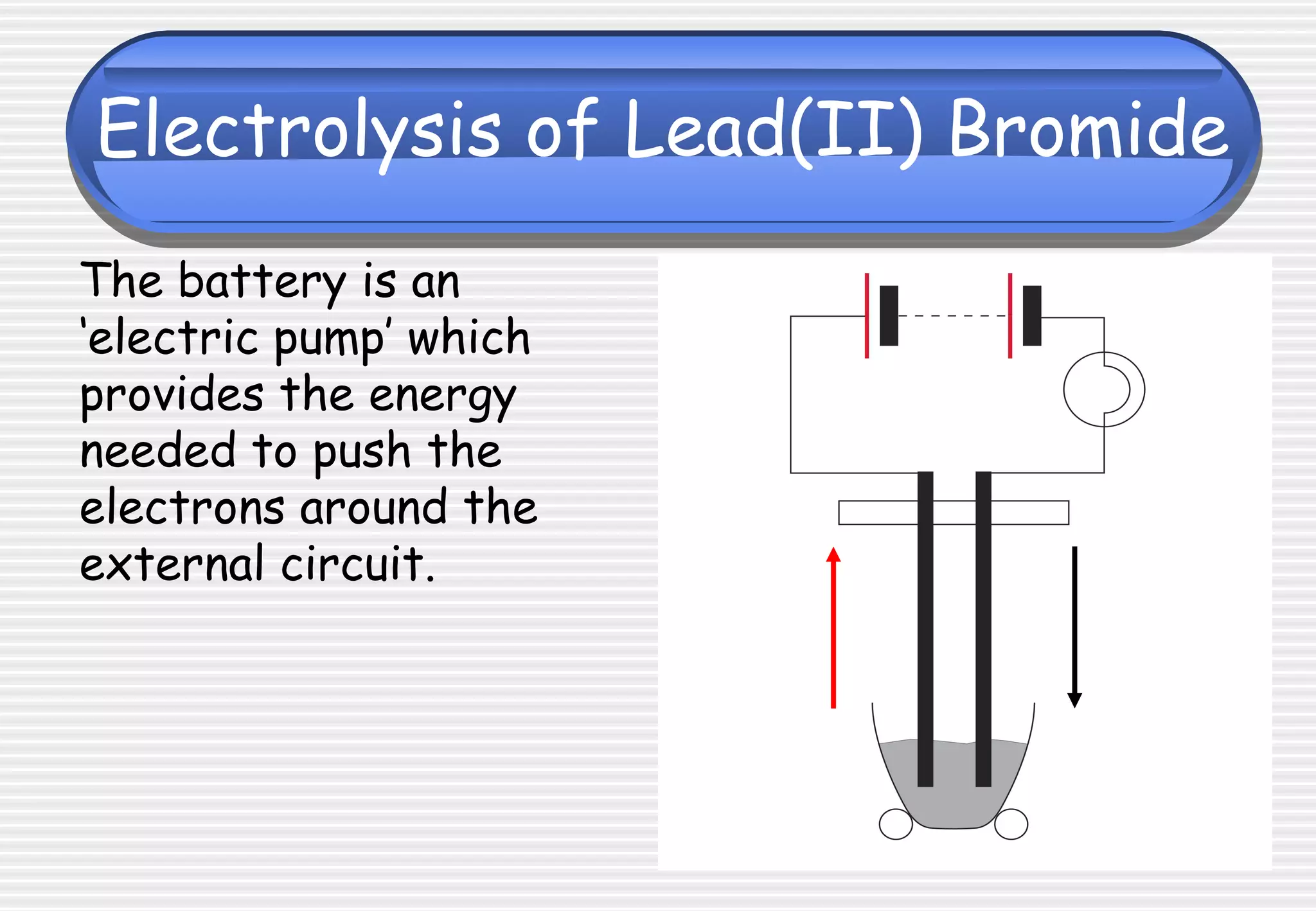
The battery is an
‘electric pump’ which
provides the energy
needed to push the
electrons around the
external circuit.
Electrolysis of Lead(II) Bromide
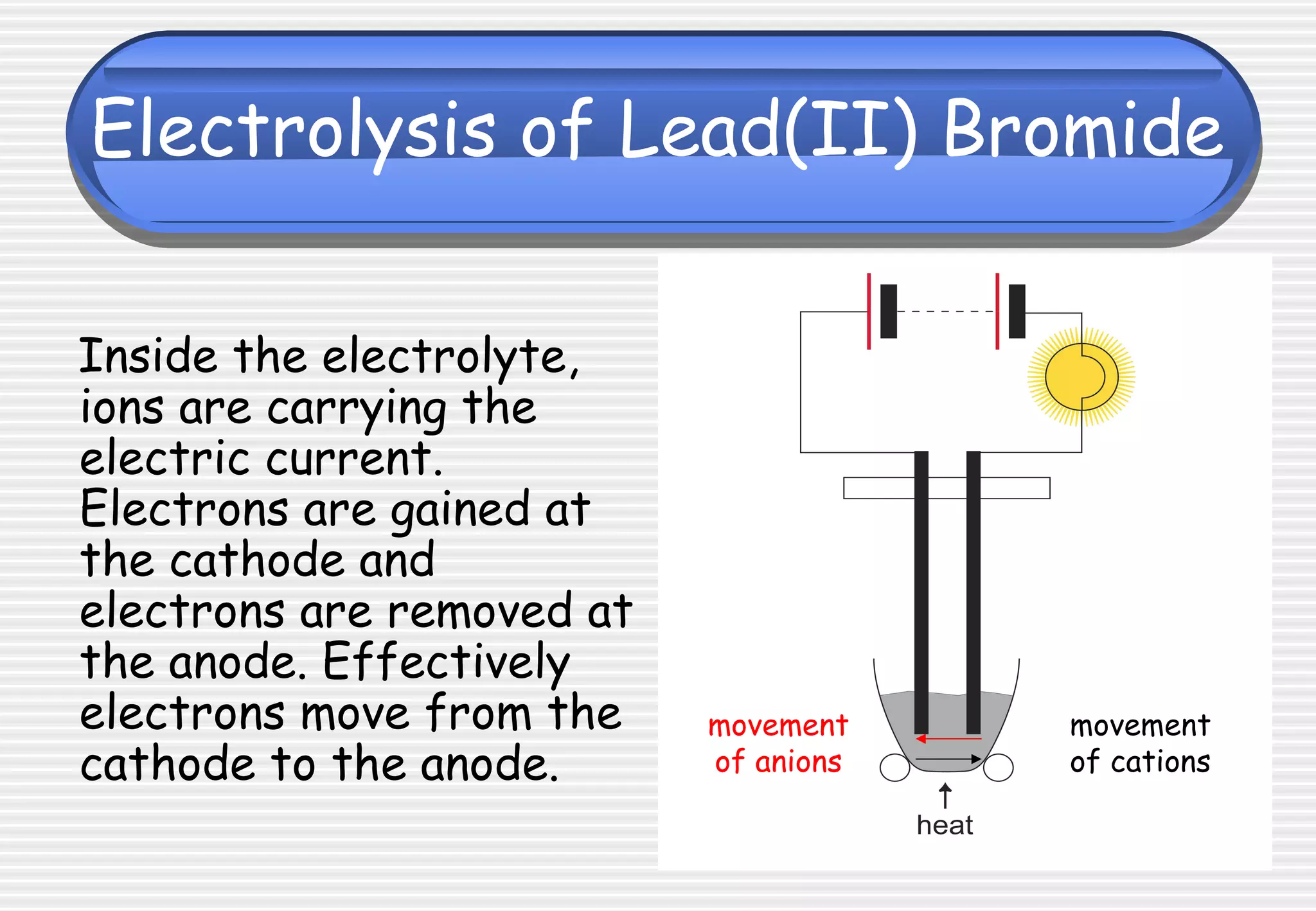
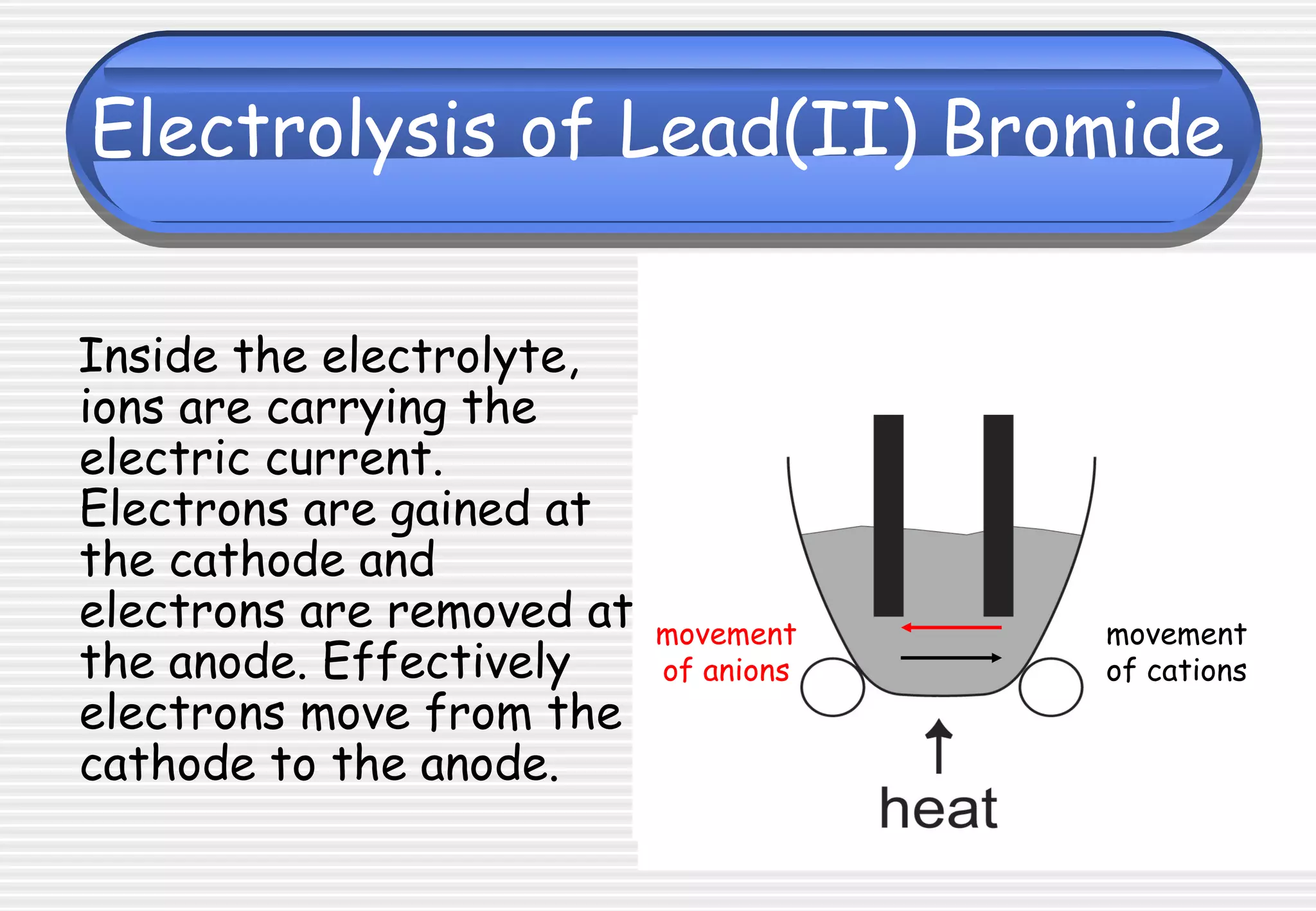
Inside the electrolyte,
ions are carrying the
electric current.
Electrons are gained at
the cathode and
electrons are removed at
the anode. Effectively
electrons move from the
cathode to the anode.
movement
of anions
movement
of cations
Electrolysis of Lead(II) Bromide
Inside the electrolyte,
ions are carrying the
electric current.
Electrons are gained at
the cathode and
electrons are removed at
the anode. Effectively
electrons move from the
cathode to the anode.
movement
of anions
movement
of cations
Movement of Ions
During electrolysis, ions move through the molten
electrolyte.
The negative ions, anions, flow towards the anode.
The positive ions, cations, flow towards the cathode.
The bulb only lights when a current is flowing. If the
electrolyte is solid, there are no free ions, so the
charge (electric current) cannot be carried through
the electrolyte.
Questions 1-3
1. What could be used instead of the bulb to
show an electric current is flowing through
the electrolyte?
2. Why is electrolysis classed as a
decomposition reaction?
3. Is electrolysis exothermic or
endothermic? Give a reason for your
answer.
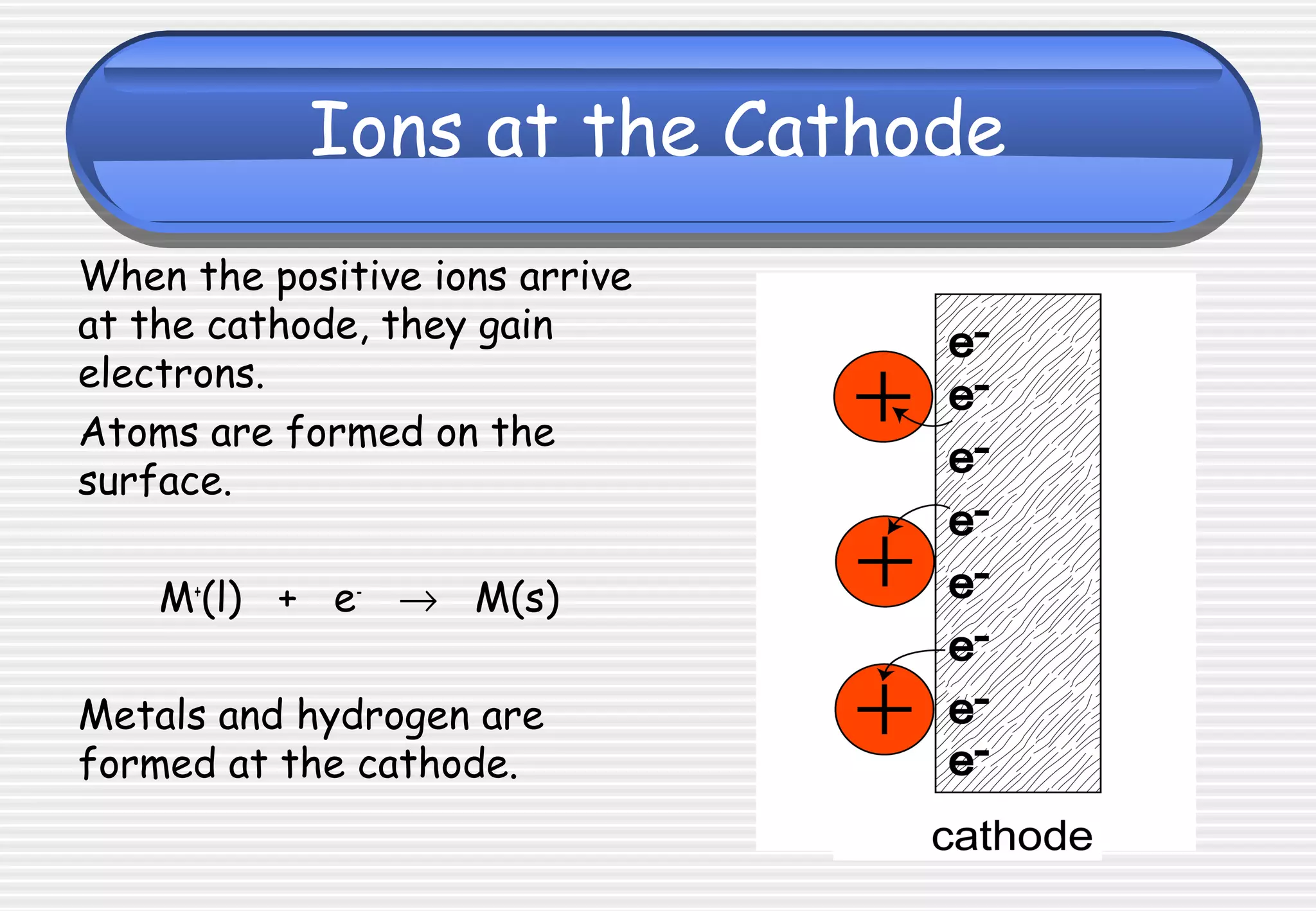
Ions at the Cathode
When the positive ions arrive
at the cathode, they gain
electrons.
Atoms are formed on the
surface.
M+
(l) + e-
→ M(s)
Metals and hydrogen are
formed at the cathode.
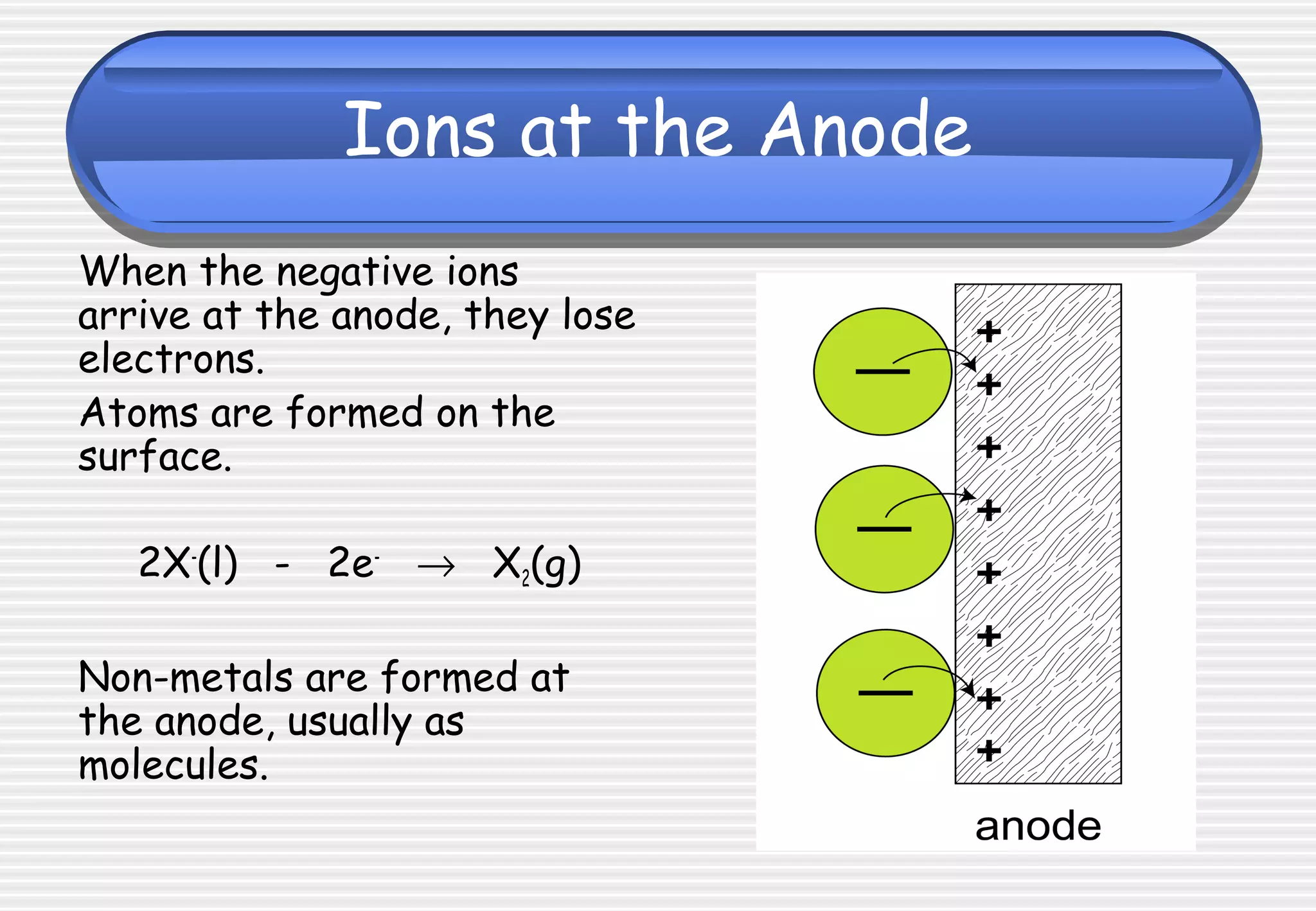
Ions at the Anode
When the negative ions
arrive at the anode, they lose
electrons.
Atoms are formed on the
surface.
2X-
(l) - 2e-
→ X2(g)
Non-metals are formed at
the anode, usually as
molecules.
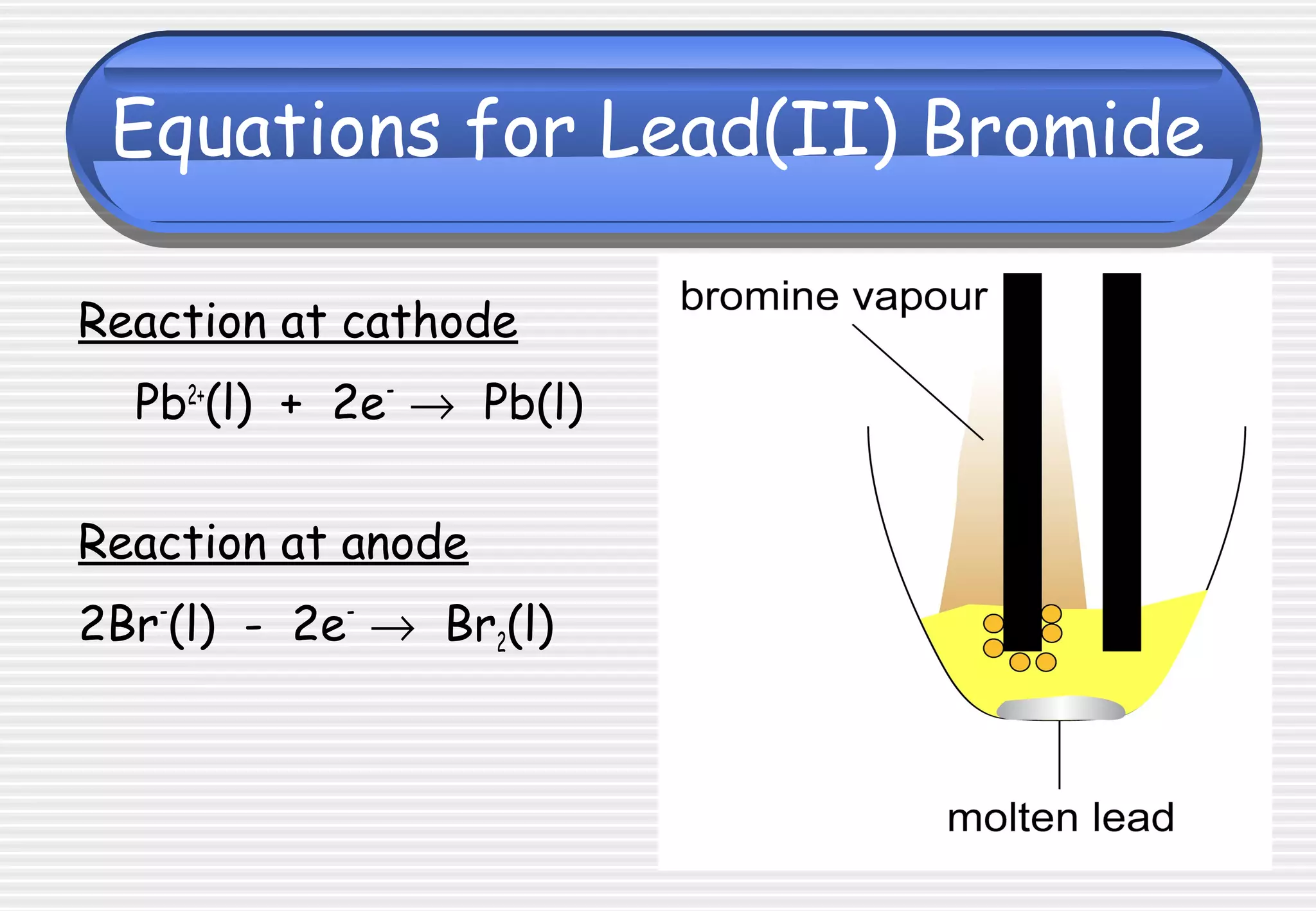
Equations for Lead(II) Bromide
Reaction at cathode
Pb2+
(l) + 2e-
→ Pb(l)
Reaction at anode
2Br-
(l) - 2e-
→ Br2(l)
Questions 4-5
4. What are the products for the electrolysis of
the following compounds? For each compound,
write the equations for the reactions at the
anode and cathode.
a) Sodium chloride,
b) Magnesium oxide,
c) Calcium fluoride,
d) Iron(III) bromide.
5. What would be the products if a mixture of
potassium fluoride and lead(II) iodide were
electrolysed?
Metal Extraction
Metals low down in the Reactivity Series can
be extracted from solutions by electrolysis.
This method is more often used for the
purification of the metal, rather than the
extraction of the metal from its ore.

Introduction to electrolysis(older)

  • 1.
  • 2.
    Examination Requirements i) Electrolysis 1.39understand an electric current as a flow of electrons or ions 1.40 understand why covalent compounds do not conduct electricity 1.41 understand why ionic compounds conduct electricity only when molten or in solution 1.42 describe simple experiments to distinguish between electrolytes and non-electrolytes
  • 3.
    Examination Requirements 1.43 recallthat electrolysis involves the formation of new substances when ionic compounds conduct electricity 1.44 describe simple experiments for the electrolysis, using inert electrodes, of molten salts such as lead(II) bromide 1.45 write ionic half-equations representing the reactions at the electrodes during electrolysis.
  • 4.
    Definitions Electric current -a flow of electrons through a wire, or a flow of electrical charge through a conducting material. Electrode - a device for putting current into or taking current out of a conductor. Electrolysis - a process in which a compound is decomposed by an electric current.
  • 5.
    Definitions (continued) Cathode -a negative electrode. An electrode with a surplus of electrons. Anode - a positive electrode. An electrode deficient in electrons. Electrolyte - a substance which, when liquid(molten) or in solution, conducts electricity and is decomposed by the current.
  • 6.
    Definitions (continued) Ion -an atom, or group of atoms, with an electric charge. Metal ions are positively charged. Non‑metal ions are negatively charged. Anion - a negative ion which flows towards the anode during electrolysis. Cation - a positive ion which flows towards the cathode during electrolysis.
  • 7.
    Electrolytes To be anelectrolyte, the compound must contain ions to carry the electric current through the compound. The ions must be free to move so that they are attracted to the electrode of opposite charge. The ions are free to move in molten(melted) compounds or when the compound is dissolved in water. Electrolytes are; a) Ionic compounds (metal/non-metal compounds). b) Acids or alkalis. c) Salts.
  • 8.
    Electrolysis of Lead(II)Bromide The electrode connected to the positive side of the battery is the anode. The electrode connected to the negative side of the battery is the cathode. +ve -ve graphite anode graphite cathode lead(II) bromide
  • 9.
    Electrolysis of Lead(II)Bromide The battery is an ‘electric pump’ which provides the energy needed to push the electrons around the external circuit.
  • 10.
    Electrolysis of Lead(II)Bromide Inside the electrolyte, ions are carrying the electric current. Electrons are gained at the cathode and electrons are removed at the anode. Effectively electrons move from the cathode to the anode. movement of anions movement of cations
  • 11.
    Electrolysis of Lead(II)Bromide Inside the electrolyte, ions are carrying the electric current. Electrons are gained at the cathode and electrons are removed at the anode. Effectively electrons move from the cathode to the anode. movement of anions movement of cations
  • 12.
    Movement of Ions Duringelectrolysis, ions move through the molten electrolyte. The negative ions, anions, flow towards the anode. The positive ions, cations, flow towards the cathode. The bulb only lights when a current is flowing. If the electrolyte is solid, there are no free ions, so the charge (electric current) cannot be carried through the electrolyte.
  • 13.
    Questions 1-3 1. Whatcould be used instead of the bulb to show an electric current is flowing through the electrolyte? 2. Why is electrolysis classed as a decomposition reaction? 3. Is electrolysis exothermic or endothermic? Give a reason for your answer.
  • 14.
    Ions at theCathode When the positive ions arrive at the cathode, they gain electrons. Atoms are formed on the surface. M+ (l) + e- → M(s) Metals and hydrogen are formed at the cathode.
  • 15.
    Ions at theAnode When the negative ions arrive at the anode, they lose electrons. Atoms are formed on the surface. 2X- (l) - 2e- → X2(g) Non-metals are formed at the anode, usually as molecules.
  • 16.
    Equations for Lead(II)Bromide Reaction at cathode Pb2+ (l) + 2e- → Pb(l) Reaction at anode 2Br- (l) - 2e- → Br2(l)
  • 17.
    Questions 4-5 4. Whatare the products for the electrolysis of the following compounds? For each compound, write the equations for the reactions at the anode and cathode. a) Sodium chloride, b) Magnesium oxide, c) Calcium fluoride, d) Iron(III) bromide. 5. What would be the products if a mixture of potassium fluoride and lead(II) iodide were electrolysed?
  • 18.
    Metal Extraction Metals lowdown in the Reactivity Series can be extracted from solutions by electrolysis. This method is more often used for the purification of the metal, rather than the extraction of the metal from its ore.