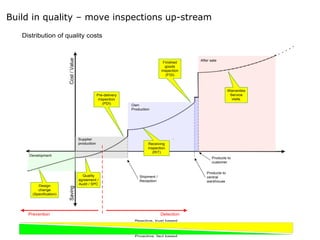
Build in quality – move inspections up-stream

Cost / Value

Distribution of quality costs

Finished
goods
inspection
(FGI)

Pre-delivery
inspection
(PDI)

Supplier
production

Warranties
Service
visits.
Own
Production

Receiving
inspection
(RIT)

Development

Prevention

Products to
customer

Saving

Design
change
(Specification)

After sale

Quality
agreement /
Audit / SPC

Products to
central
warehouse

Shipment /
Reception

Detection
Reactive, trust based

Proactive, fact based
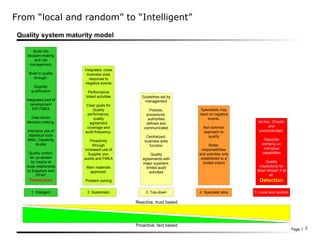
From “local and random” to “Intelligent”
Quality system maturity model
Build into
decision-making
and risk
management.
Build in quality
through:
Supplier
qualification
Integrated part of
development
D/P-FMEA
Data driven
decision-making.
Intensive use of
statistical tools
MSA, Capability
studes
Quality control,
far up-stream
by means of
close relationship
to Suppliers and
PPAP

Integrated, cross
business area
response to
negative events
Performance
linked activities
Clear goals for
Quality
performance,
quality
agreement
coverage and
audit frequency.
Proactivity
through
increased use of
Supplier preaudits and FMEA
Main materials
approved.

Prevention

2. Systematic

Policies,
procedures,
authorities
defined and
communicated
Centralized,
business area
function
Quality
agreements with
major suppliers,
limited audit
activities

Specialists may
react on negative
events.
Not common
approach to
quality
Roles,
responsibilities
and activities only
established to a
limited extent

Ad-hoc. Chaotic
and
uncoordinated.
Depends
primarily on
individual
capabilities
Quality
inspections far
down-stream if at
all.

Detection

Problem solving

1. Inteligent

Guidelines set by
management

3. Top-down

4. Specialist silos

5. Local and random

Reactive, trust based

12/04/2010

Title/Department/Archive/Author

Proactive, fact based

Page 1 2

Build in quality +

  • 1.
    Build in quality– move inspections up-stream Cost / Value Distribution of quality costs Finished goods inspection (FGI) Pre-delivery inspection (PDI) Supplier production Warranties Service visits. Own Production Receiving inspection (RIT) Development Prevention Products to customer Saving Design change (Specification) After sale Quality agreement / Audit / SPC Products to central warehouse Shipment / Reception Detection Reactive, trust based Proactive, fact based
  • 2.
    From “local andrandom” to “Intelligent” Quality system maturity model Build into decision-making and risk management. Build in quality through: Supplier qualification Integrated part of development D/P-FMEA Data driven decision-making. Intensive use of statistical tools MSA, Capability studes Quality control, far up-stream by means of close relationship to Suppliers and PPAP Integrated, cross business area response to negative events Performance linked activities Clear goals for Quality performance, quality agreement coverage and audit frequency. Proactivity through increased use of Supplier preaudits and FMEA Main materials approved. Prevention 2. Systematic Policies, procedures, authorities defined and communicated Centralized, business area function Quality agreements with major suppliers, limited audit activities Specialists may react on negative events. Not common approach to quality Roles, responsibilities and activities only established to a limited extent Ad-hoc. Chaotic and uncoordinated. Depends primarily on individual capabilities Quality inspections far down-stream if at all. Detection Problem solving 1. Inteligent Guidelines set by management 3. Top-down 4. Specialist silos 5. Local and random Reactive, trust based 12/04/2010 Title/Department/Archive/Author Proactive, fact based Page 1 2