ā€œBRUCELLOSIS
ā€
ā€œCONTAGIOUS
DISEASEā€
ā€œBANG’S DISEASEā€
Dr Ashish Tanwer
Teaching Associate
V. C.C, C.V.A.S Bikaner
Define:-
• It is an acute or choronic contagious disease animal.
• In India, disease causes an annual economic loss of
Rs 240 million due to abortion, infertility and reduced
milk yield.
• It is comman in sexually mature animal.It is major
zoonatic disease in India.
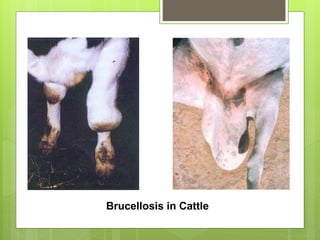
Brucellosis in Cattle
Etiology:-
• It is caused by Brucella abortus.
Transmission:-
The disease spreads through-
 Ingestion of feed & water contaminated with discharge of
abortion foetuses.
 Inhalation
 Vagina during coitus
 Abraded skin or conjnctiva
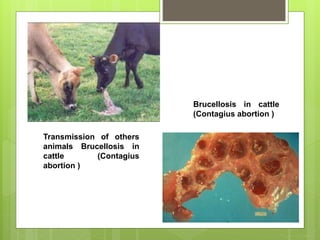
Brucellosis in cattle
(Contagius abortion )
Transmission of others
animals Brucellosis in
cattle (Contagius
abortion )
Symptoms:-
 Abortion mainly during advance or late pregnancy.
 Retention of placenta
 Opaque vagina discharge
 Infetility i.e. swelling of scrotum in bull
 Orchitis i.e. swelling of scrotum in bull
 Weak calves are born fromaffected cows
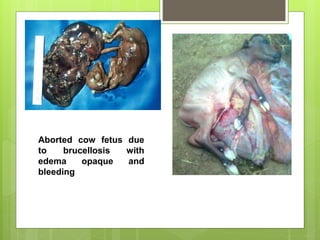
Aborted cow fetus due
to brucellosis with
edema opaque and
bleeding
Diagnosis:-
 History of strom of abortion in herd
 Isolation of the orgeanism from aborted foetuses, placenta etc
 Milk ring test (M.R.T.)
 Plate or tube agglutination test
Treatment:-
 There is no known treatment which can ccure brucellosis in domestic
animal
 Oxytetracycline ,Sterptomycin in may , however, be tried
Control:-
 Test entire herd for brucellosis atleast once in a year.
 Slaughter of infected or carrier animal.
 Adopt AI practice as far as possible.
 Proper disposal of aborted foetuses, placenta and uterine
discharge.
 Disinfection of infected premises.
 Newly purshased animal should be tested for brucellosis twice at
an interval of 30 days before introduction in a herd.
 Pregnant animal should not be purchased.
 General measures:-
 Vaccination:-
 If incidence of disease in herd is more ,then calves between 4-8
month of age should be vaccinated byb using Brucella Cotton -19
stain vaccine @5ml S/C called as calfhood vacccination.
THANKS

Brucellosis in ruminants

  • 1.
  • 2.
    Define:- • It isan acute or choronic contagious disease animal. • In India, disease causes an annual economic loss of Rs 240 million due to abortion, infertility and reduced milk yield. • It is comman in sexually mature animal.It is major zoonatic disease in India.
  • 3.
  • 4.
    Etiology:- • It iscaused by Brucella abortus. Transmission:- The disease spreads through-  Ingestion of feed & water contaminated with discharge of abortion foetuses.  Inhalation  Vagina during coitus  Abraded skin or conjnctiva
  • 5.
    Brucellosis in cattle (Contagiusabortion ) Transmission of others animals Brucellosis in cattle (Contagius abortion )
  • 6.
    Symptoms:-  Abortion mainlyduring advance or late pregnancy.  Retention of placenta  Opaque vagina discharge  Infetility i.e. swelling of scrotum in bull  Orchitis i.e. swelling of scrotum in bull  Weak calves are born fromaffected cows
  • 7.
    Aborted cow fetusdue to brucellosis with edema opaque and bleeding
  • 8.
    Diagnosis:-  History ofstrom of abortion in herd  Isolation of the orgeanism from aborted foetuses, placenta etc  Milk ring test (M.R.T.)  Plate or tube agglutination test Treatment:-  There is no known treatment which can ccure brucellosis in domestic animal  Oxytetracycline ,Sterptomycin in may , however, be tried
  • 9.
    Control:-  Test entireherd for brucellosis atleast once in a year.  Slaughter of infected or carrier animal.  Adopt AI practice as far as possible.  Proper disposal of aborted foetuses, placenta and uterine discharge.  Disinfection of infected premises.  Newly purshased animal should be tested for brucellosis twice at an interval of 30 days before introduction in a herd.  Pregnant animal should not be purchased.  General measures:-
  • 10.
     Vaccination:-  Ifincidence of disease in herd is more ,then calves between 4-8 month of age should be vaccinated byb using Brucella Cotton -19 stain vaccine @5ml S/C called as calfhood vacccination.
  • 11.