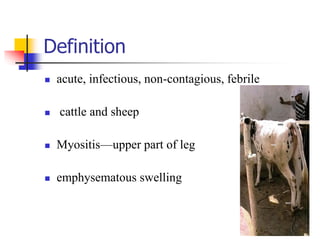
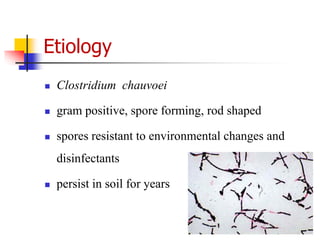
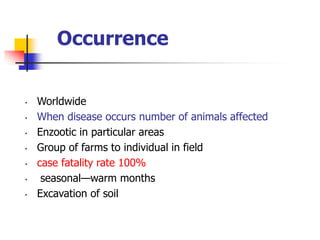
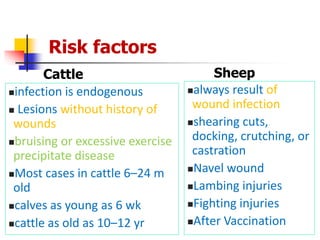
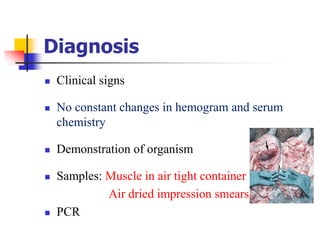
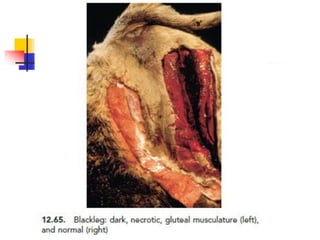
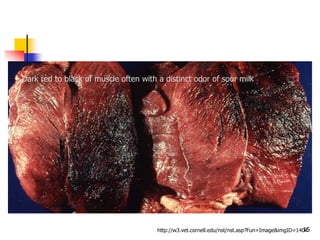
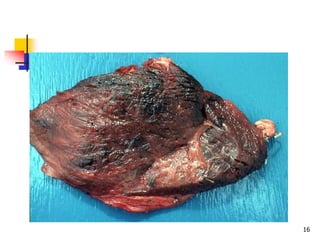
Blackleg disease, also known as black quarter, is caused by the bacterium Clostridium chauvoei. It causes acute, infectious myositis in cattle and sheep. The bacteria forms spores that can survive in soil for years and are ingested, passing through the intestinal wall and entering the bloodstream. The spores then deposit in muscle tissues where they remain dormant until muscle trauma or fatigue activates them, causing necrosis, edema, and gangrene. Clinical signs include severe lameness, swelling of the upper leg, depression, and high fever. Death often occurs within 12-36 hours. Diagnosis is based on clinical signs and identification of the bacteria. Treatment involves antibiotics but success is low.