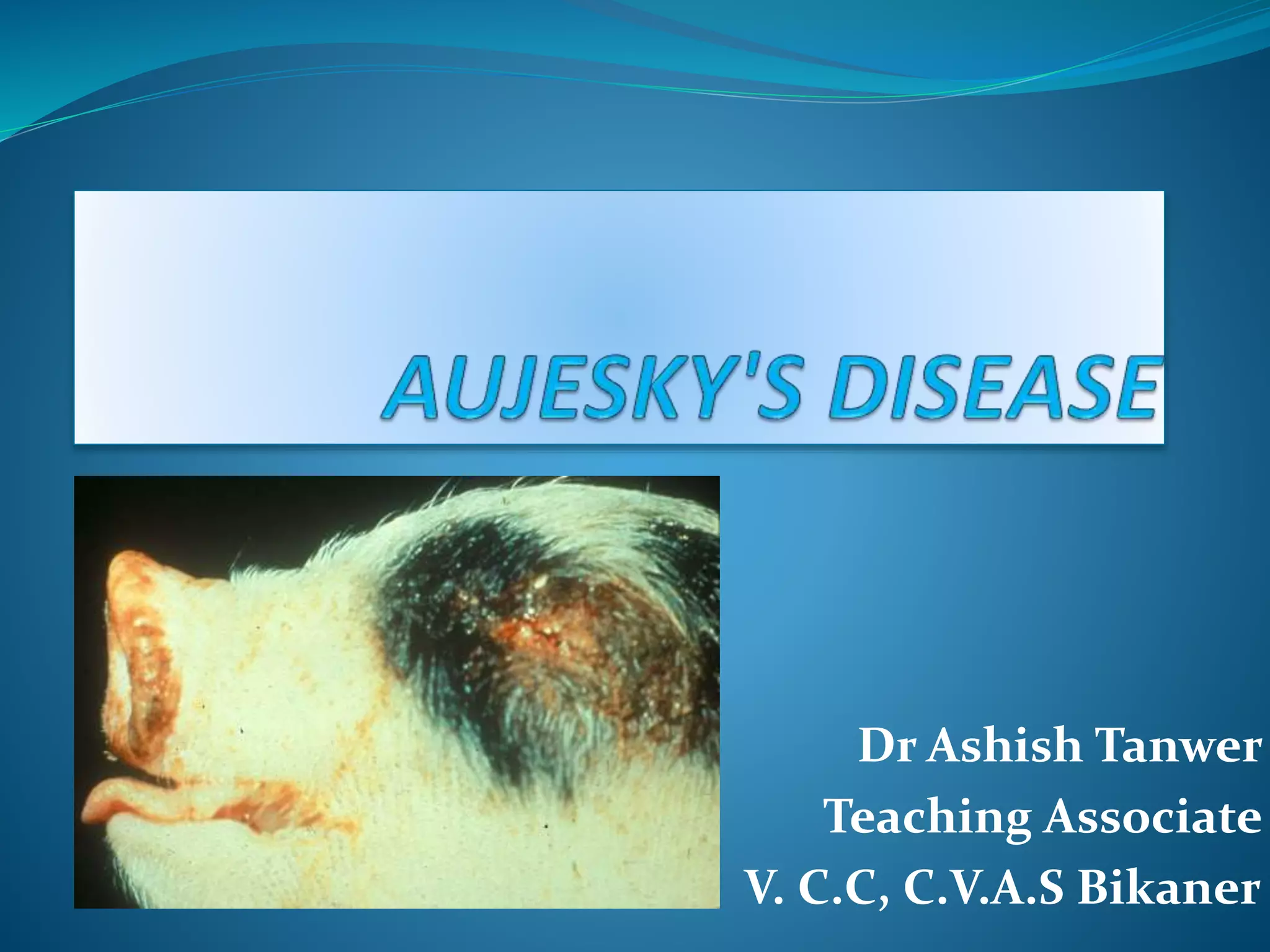
Dr Ashish Tanwer
Teaching Associate
V. C.C, C.V.A.S Bikaner
SYNONYMS AND INTRODUCTION
Synonyms :
Aujeszky’s disease
 Mad itch
 Infectious bulbar paralysis
Introduction
• This is an acute viral infectious disease that primarily affects pigs but may occur
in other species of animals.
• This disease is caused by the DNA virus belongs to the alpha-herpesvirinae
subfamily, family Herpes viridae and is distributed worldwide.
• It infects a wide range of natural hosts including mammals and birds.
• Rodents and pigs are the primary hosts of the virus.
• This disease is reported world-wide except in few countries including Australia,
Canada and Norway.
• The disease is prevalent in cattle, sheep, goat, pig, horses, dog, cat and mink.
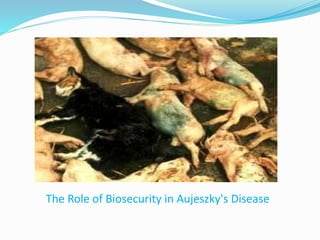
The Role of Biosecurity in Aujeszky's Disease
• Pigs are considered as reservoir host for this virus. The disease is prevalent in
pigs all round the year.
• Pigs may remain as asymptomatic immune carrier and thus may act as a source
of infection to other species of animals.
• The natural way of entry of virus is through a breach in the continuity of skin or
integument due to injury, bite or abrasions.
• Virus may enter through inhalation as aerosol way of transmission.
• The virus can be grown in susceptible cell line such as porcine kidney ( PK-15 ) or
SK6, or primary or secondary kidney cells.
CLINICAL MANIFESTATIONS
Cattle
• Incubation period- 3-6 days.
• Pyrexia along with pruritus starts at the site of entry of virus. Pruritus
mostly observed in the nose, eyes, ears, lower jaw, chest or in the udder,
limbs, flanks and anal region.
• Involvement of central nervous system- tremor, continuous or intermittent
chewing movements of jaws, profuse salivation and sweating, excitement,
bellowing, roll up and down, stumping on the ground, aimless staggering,
aggressiveness and circling.
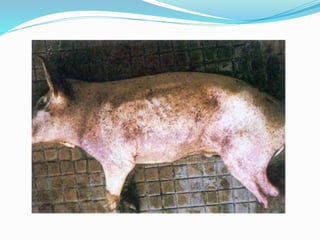
Pigs
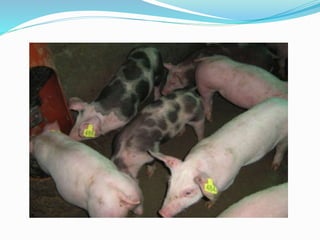
• All ages may be affected but very young pigs are more susceptible than older
ones
• Changes in the respiratory, nervous and reproductive systems
• High rise of temperature, with development of nervous signs
• Incoordination develops in the posterior limbs which force the animal to
move sideways
• Muscle tremors and paddling movements, tilting of head, froth at the
commissure of mouth, nystagmus, ocular discharge and convulsion
• Vomition, diarrhea, signs of blindness
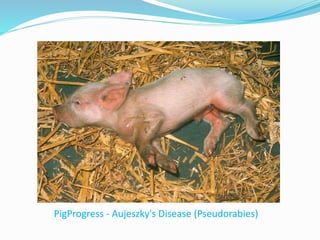
PigProgress - Aujeszky's Disease (Pseudorabies)
Sheep, dog, goat, cat and horses
• Similar to that of cattle
• In dogs and cats – fatal disease where death is eminent within 2 days
following manifestation of clinical signs
Lesions
• Congestion of meninges, brain, haemorrhage, odema and necrosis of
lungs, focal necrosis of liver
DIAGNOSIS AND DIFFERENTIAL DIAGONSIS
Diagnosis
• Samples to be collected- Brain and tonsil, oro-pharyngeal fluid, nasal fluid (swabs)
• Based on clinical signs • Identification of the agent - Isolation of Aujeszky’s disease
virus can be made by inoculating a tissue homogenate, for example of brain and tonsil
or material collected from the nose/throat, into a susceptible cell line such as porcine
kidney (PK-15) or SK6, or primary or secondary kidney cells.
• The specificity of the cytopathic effect is verified by immunofluorescence,
immunoperoxidase or neutralisation with specific antiserum.
• The viral DNA can also be identified using PCR; this can be accomplished using the
real-time PCR techniques.
• Serological tests- Aujeszky’s disease antibodies are demonstrated by virus
neutralisation, latex agglutination or enzyme-linked immunosorbent assay (ELISA).
Differential diagnosis
• Rabies- No pruritus, biting tendency, dropped jaw, ascending paralysis,
demonstration of negri bodies in the neurons of hippocampus and
purkinje cells of the cerebellum
• Listeriosis- History of intake of silage, Facial paralysis
• Polyencephalomalacia- History of carbohydrate engorgement, no pyrexia
• Poisoning- Specific signs depending on the source of poison. Gastric
content analysis to pinpoint the toxin
PREVENTION AND CONTROL
• No treatment.
• Adminstration of hyperimmune serum @ 5ml per piglet by subcutaneous
route.
• Quarantine for a period of three weeks for newly purchased pigs and test the
animals before mingling with other pigs and isolation of pigs from the other
susceptible animals.
• Disinfectants such as 3 percent formaldehyde or chlorine releasing
disinfectants (3 percent chloramine solution).
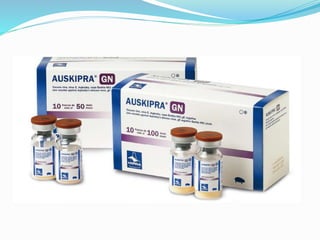
• Due to low incidence of disease no vaccines are available in India.
• Killed vaccine adjuvanted with aluminium hydroxide passaged in egg yolk
administered to reduce the prevalence of disease.
Aujesky's disease
Aujesky's disease

Aujesky's disease

  • 1.
    Dr Ashish Tanwer TeachingAssociate V. C.C, C.V.A.S Bikaner
  • 2.
    SYNONYMS AND INTRODUCTION Synonyms: Aujeszky’s disease  Mad itch  Infectious bulbar paralysis
  • 4.
    Introduction • This isan acute viral infectious disease that primarily affects pigs but may occur in other species of animals. • This disease is caused by the DNA virus belongs to the alpha-herpesvirinae subfamily, family Herpes viridae and is distributed worldwide. • It infects a wide range of natural hosts including mammals and birds. • Rodents and pigs are the primary hosts of the virus. • This disease is reported world-wide except in few countries including Australia, Canada and Norway. • The disease is prevalent in cattle, sheep, goat, pig, horses, dog, cat and mink.
  • 5.
    The Role ofBiosecurity in Aujeszky's Disease
  • 6.
    • Pigs areconsidered as reservoir host for this virus. The disease is prevalent in pigs all round the year. • Pigs may remain as asymptomatic immune carrier and thus may act as a source of infection to other species of animals. • The natural way of entry of virus is through a breach in the continuity of skin or integument due to injury, bite or abrasions. • Virus may enter through inhalation as aerosol way of transmission. • The virus can be grown in susceptible cell line such as porcine kidney ( PK-15 ) or SK6, or primary or secondary kidney cells.
  • 7.
    CLINICAL MANIFESTATIONS Cattle • Incubationperiod- 3-6 days. • Pyrexia along with pruritus starts at the site of entry of virus. Pruritus mostly observed in the nose, eyes, ears, lower jaw, chest or in the udder, limbs, flanks and anal region. • Involvement of central nervous system- tremor, continuous or intermittent chewing movements of jaws, profuse salivation and sweating, excitement, bellowing, roll up and down, stumping on the ground, aimless staggering, aggressiveness and circling.
  • 8.
    Pigs • All agesmay be affected but very young pigs are more susceptible than older ones • Changes in the respiratory, nervous and reproductive systems • High rise of temperature, with development of nervous signs • Incoordination develops in the posterior limbs which force the animal to move sideways • Muscle tremors and paddling movements, tilting of head, froth at the commissure of mouth, nystagmus, ocular discharge and convulsion • Vomition, diarrhea, signs of blindness
  • 9.
    PigProgress - Aujeszky'sDisease (Pseudorabies)
  • 10.
    Sheep, dog, goat,cat and horses • Similar to that of cattle • In dogs and cats – fatal disease where death is eminent within 2 days following manifestation of clinical signs Lesions • Congestion of meninges, brain, haemorrhage, odema and necrosis of lungs, focal necrosis of liver
  • 12.
    DIAGNOSIS AND DIFFERENTIALDIAGONSIS Diagnosis • Samples to be collected- Brain and tonsil, oro-pharyngeal fluid, nasal fluid (swabs) • Based on clinical signs • Identification of the agent - Isolation of Aujeszky’s disease virus can be made by inoculating a tissue homogenate, for example of brain and tonsil or material collected from the nose/throat, into a susceptible cell line such as porcine kidney (PK-15) or SK6, or primary or secondary kidney cells. • The specificity of the cytopathic effect is verified by immunofluorescence, immunoperoxidase or neutralisation with specific antiserum. • The viral DNA can also be identified using PCR; this can be accomplished using the real-time PCR techniques. • Serological tests- Aujeszky’s disease antibodies are demonstrated by virus neutralisation, latex agglutination or enzyme-linked immunosorbent assay (ELISA).
  • 14.
    Differential diagnosis • Rabies-No pruritus, biting tendency, dropped jaw, ascending paralysis, demonstration of negri bodies in the neurons of hippocampus and purkinje cells of the cerebellum • Listeriosis- History of intake of silage, Facial paralysis • Polyencephalomalacia- History of carbohydrate engorgement, no pyrexia • Poisoning- Specific signs depending on the source of poison. Gastric content analysis to pinpoint the toxin
  • 15.
    PREVENTION AND CONTROL •No treatment. • Adminstration of hyperimmune serum @ 5ml per piglet by subcutaneous route. • Quarantine for a period of three weeks for newly purchased pigs and test the animals before mingling with other pigs and isolation of pigs from the other susceptible animals. • Disinfectants such as 3 percent formaldehyde or chlorine releasing disinfectants (3 percent chloramine solution). • Due to low incidence of disease no vaccines are available in India. • Killed vaccine adjuvanted with aluminium hydroxide passaged in egg yolk administered to reduce the prevalence of disease.